

Published 3 November 2025, updated 12 July 2026
Commonly Misunderstood Road Signs and Meanings: UK Guide
Even the most experienced drivers can find themselves scratching their heads when they encounter certain UK road signs. Many common road signs are regularly misunderstood by drivers, leading to confusion, potential fines, and safety risks on our roads. Whether you’re preparing for your theory test or simply want to brush up on your knowledge, understanding these tricky signs can make all the difference to your confidence behind the wheel.
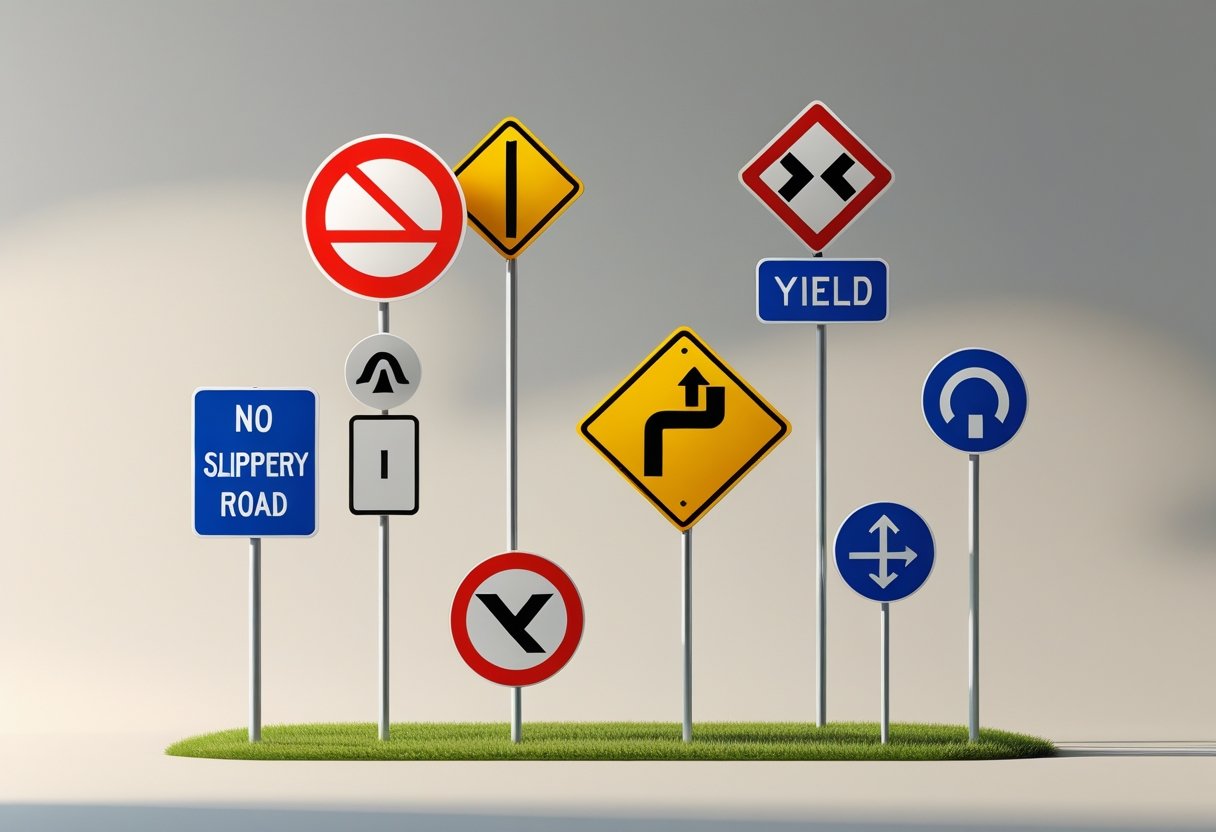
We’ve all been there: you’re driving along and spot a sign that looks familiar, but you’re not quite sure what it actually means. The truth is, road signs can be genuinely confusing, and even seasoned drivers sometimes get caught out. From clearway restrictions that trip up parents on the school run to parking signs that seem to contradict each other, these everyday symbols can be more puzzling than they first appear.
Signs make far more sense once you meet them on real roads with an instructor, which is a core part of every intensive driving course with real road-sign practice we run.
In this guide, we’ll walk you through the signs that cause the most head-scratching moments for UK road users. We’ll explore why certain signs are so easily misunderstood, break down the real meanings behind those tricky symbols, and help you navigate everything from motorway information boards to those mysterious road markings that seem to appear overnight. By the end, you’ll feel much more confident about interpreting what our roads are trying to tell you.
Why Road Signs Are Commonly Misunderstood
Many drivers struggle with road signs because of confusing visual designs, signs that look nearly identical to each other, and older signage that rarely appears on today’s roads. These factors create genuine challenges for even experienced motorists when they’re trying to quickly interpret what a sign means.
Misleading Shapes and Colours
The visual design of traffic signs can trick our brains in ways we don’t expect. Red circles, for instance, might seem straightforward, but they can mean completely different things depending on what’s inside them.
A red circle with a line through it means prohibition. But a plain red circle without the line? That’s also prohibition. This inconsistency catches many of us off guard.
Triangular signs present their own puzzle. Some warn of hazards ahead, whilst others give priority instructions. The subtle differences in colour and symbols inside these triangles determine their meaning, but when you’re driving at speed, these details are easy to miss.
Blue signs add another layer of confusion. We associate blue with information, yet blue circles actually give mandatory instructions. A blue circle with an arrow doesn’t suggest a direction – it commands you to follow it.
The psychological impact of colours also plays tricks on us. We naturally expect red to mean stop and green to mean go, but road signs don’t always follow these intuitive rules.
Size and positioning further complicate recognition. The same symbol can appear on different coloured backgrounds or in various sizes, completely changing its legal meaning.
Similarities Between Signs
Some road signs look so alike that even careful drivers mix them up regularly. The clearway sign confusion demonstrates this perfectly – many drivers mistake it for other prohibition signs.
Give way and stop signs share triangular shapes but have crucial differences. One uses a triangle pointing down, the other uses an octagon. In poor weather or low light, these distinctions become harder to spot.
Priority signs create similar problems. Signs showing which direction has priority on narrow roads often look identical at first glance. The arrow directions and small details make all the difference.
Weight limit signs versus height restrictions use nearly identical formatting. Both show numbers in similar fonts and layouts, but confusing them leads to completely different consequences.
Speed limit signs and speed camera warnings also share visual elements. The circular shape and numbers can look remarkably similar when you’re concentrating on driving.
We often see triangular road signs that confuse UK motorists because they’re so visually similar to other warning signs.
Outdated or Rare Signs
Many of us learned to drive years ago, but road signs evolve with changing traffic laws and modern road conditions. Signs that were common decades ago now appear sporadically, catching drivers unprepared.
Old-style warning signs used different symbols and layouts than current versions. If you encounter one of these vintage signs, your brain might not immediately recognise what it means.
Rural areas often retain older signage longer than urban zones. This creates inconsistency across different regions, making it harder to know your traffic signs reliably.
Temporary signs during roadworks use different designs and colours from permanent signage. These variations throw off our pattern recognition, especially when they’re positioned unusually.
Some signs only appear in specific situations, like school zones or near particular types of junctions. Because we rarely see them, we forget their meanings between encounters.
Electronic variable signs represent another challenge. These digital displays can show different messages and symbols that don’t appear in traditional road sign guides.
The introduction of new traffic management systems also brings unfamiliar signage that wasn’t covered in older driving courses or theory tests.
The Most Misunderstood Signs Giving Orders
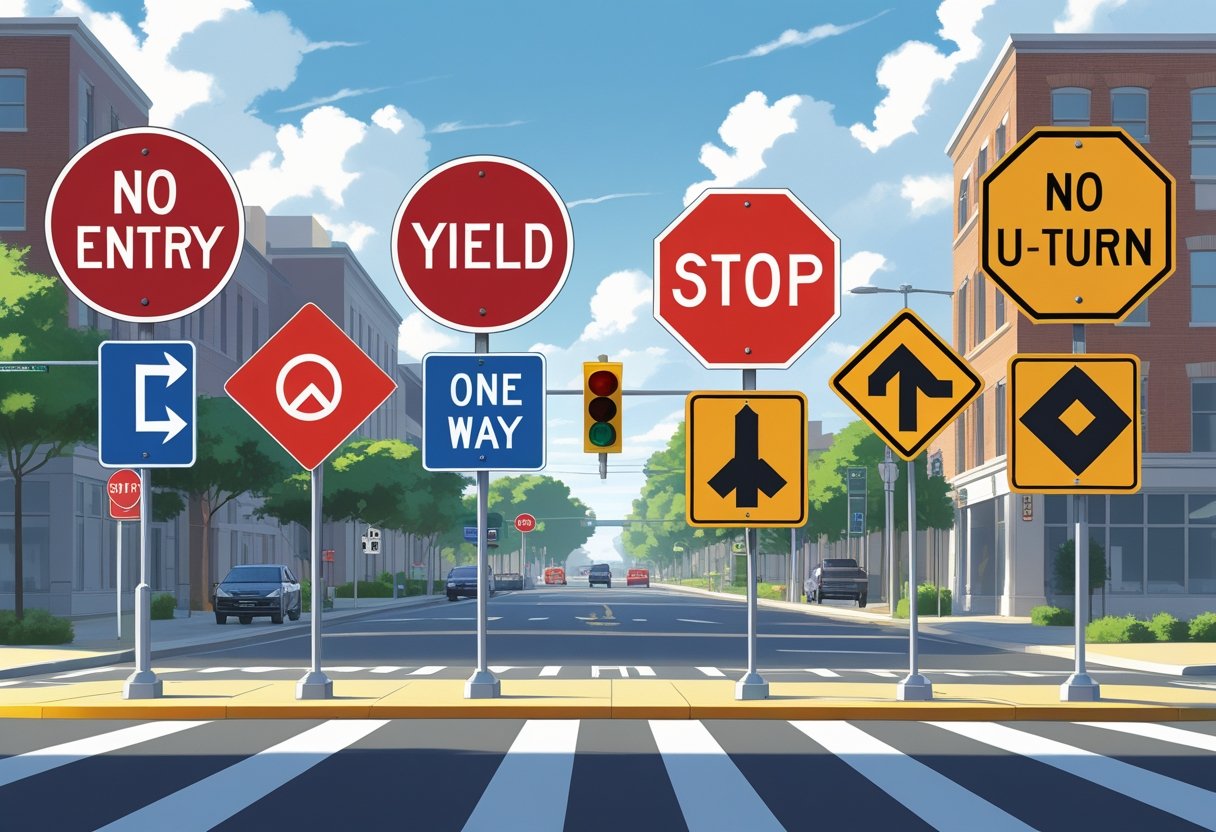
Signs giving orders tell us exactly what we must or mustn’t do on UK roads, yet many drivers struggle with their meanings. The red circles that prohibit actions and blue circles that make things mandatory often cause the most confusion amongst learners and experienced drivers alike.
Red Circle Restrictions
Red circular signs are the strict teachers of the road world. They tell us what we absolutely cannot do, and getting them wrong can lead to hefty fines or penalty points.
The no entry sign with its white bar across a red circle seems straightforward, but drivers often confuse it with road closed signs. We see this most commonly at one-way streets and restricted areas.
Many drivers struggle with weight and height restriction signs too. A red circle showing “7.5T” means vehicles over 7.5 tonnes cannot pass. It’s not a speed limit or parking restriction.
| Sign Type | What It Means | Common Mistake |
|---|---|---|
| No Motor Vehicles | Cars, bikes, lorries banned | Thinking it allows cycles |
| No Entry | Complete prohibition | Confusing with road closed |
| Weight Limit | Max vehicle weight | Thinking it’s about cargo |
The most commonly misunderstood road signs often include turning restrictions. A red circle with arrows showing prohibited turns catches many drivers off guard, especially when they’re trying to navigate busy junctions.
Blue Circle Mandatory Instructions
Blue circles are the helpful guides that show us what we must do. Unlike red signs that say “no,” blue signs give positive instructions we’re legally required to follow.
The compulsory cycle lane sign (blue circle with white bicycle) means only cycles can use that route. Cars aren’t just discouraged here, they’re completely banned.
Mini roundabout signs with blue circles and white arrows show the direction we must travel around the roundabout. Many new drivers miss these entirely or think they’re suggestions rather than legal requirements.
Mandatory route signs for heavy goods vehicles cause confusion too. When we see a blue circle with a lorry symbol and arrow, it means trucks over a certain weight must follow that specific path.
The keep left or keep right arrows in blue circles aren’t polite suggestions. They’re legal orders, and ignoring them can result in dangerous driving charges. We often see these around traffic islands or road works where normal traffic flow changes.
Common No-Entry and No-Turn Signs
No-entry signs trip up more drivers than almost any other road marking. The classic red circle with white horizontal bar means exactly what it says, yet drivers regularly misinterpret when and where it applies.
Bus lanes often use no-entry signs with time restrictions underneath. “No entry 7-9am, 5-7pm” means private cars cannot enter during those hours, but we can use the lane outside peak times.
Left and right turn prohibitions cause headaches at complex junctions. Red circles with curved arrows and diagonal lines show exactly which turns are banned. Missing these signs can put us in dangerous positions or facing traffic violations.
The except cycles plate beneath many no-entry signs confuses drivers and cyclists alike. When we see this combination, it means motor vehicles cannot enter, but cyclists can travel in both directions legally.
Loading restrictions with no-entry elements catch commercial drivers regularly. Understanding when these apply and to which vehicle types requires careful attention to the accompanying time plates and vehicle symbols.
Special Orders for Cyclists and Pedestrians
Cyclists and pedestrians face their own set of confusing order signs that many road users don’t fully understand. These signs affect how we all share the road safely.
Cycle lane signs come in several varieties that cause mix-ups. Blue circles mandate cycle-only areas, while white rectangular signs often show advisory cycle lanes that cars can use when necessary.
Pedestrian zones use red circular signs with walking figure symbols. “No pedestrians” signs protect people from dangerous areas like motorway slip roads, but drivers often don’t realise these exist.
Shared use path signs show both bicycle and walking symbols in blue circles. Both cyclists and pedestrians must use these routes, and neither has automatic priority over the other.
The combination signs showing multiple user types require extra attention. When we see cyclists, horse riders, and pedestrians together on blue mandatory signs, it means all these groups must share the designated space safely and considerately.
Tricky Warning Signs and Their True Meanings
Many road users struggle with triangular warning signs that appear straightforward but carry specific meanings, whilst some unusual symbols can leave even experienced drivers puzzled about what hazards lie ahead.
Triangular Warnings and What They Signal
Triangular signs are the Highway Code’s way of giving you advance notice about potential dangers. These yellow signs with red borders aren’t just suggestions – they’re preparing you for what’s coming next.
Sharp bend warnings show a curved arrow indicating the direction of the turn. The tighter the curve on the sign, the sharper the actual bend will be. It’s brilliant preparation for adjusting your speed early.
Steep hill warnings display either an upward or downward slope percentage. A 10% gradient means serious business for your engine and brakes. These signs help you choose the right gear before you’re halfway up or down.
Some triangular signs feature dual carriageway symbols showing two parallel lines. This warns you’re approaching a major road where traffic moves much faster than country lanes.
Junction warnings come in various forms. T-junctions show exactly which direction traffic flows, whilst roundabout symbols prepare you for circular traffic patterns ahead.
| Warning Type | What It Means | Your Action |
|---|---|---|
| Sharp bend | Tight curve ahead | Reduce speed early |
| Steep hill | Significant gradient | Select appropriate gear |
| Junction | Road intersection | Prepare to give way |
Hidden Hazards: Unusual Symbols
Some warning signs feature symbols that aren’t immediately obvious to new drivers. These commonly misunderstood road signs can catch you off guard if you don’t know their meanings.
Toad crossing signs show a small amphibian silhouette. These appear during migration seasons when toads travel to breeding grounds. You’ll mainly see them on quiet country roads near ponds or streams.
Low-flying aircraft warnings display a plane symbol. These signs appear near airfields where planes cross roads at surprisingly low altitudes. The noise can be startling if you’re not expecting it.
Cattle crossing signs aren’t just about cows. Farmers move sheep, horses, and other livestock across roads regularly. These animals don’t understand traffic rules, so patience is essential.
Electric shock warnings show a lightning bolt symbol. You’ll spot these near level crossings or areas with overhead power lines. They’re particularly important if you’re driving a tall vehicle.
The key is recognising that each unusual symbol represents a real hazard. These aren’t decorative additions – they’re there because specific dangers exist in that location.
Give Way and Stop: When Lines Matter
Road markings work alongside signs to communicate exactly what’s expected from you. The combination of visual cues makes the message crystal clear.
Give way signs pair with broken white lines across the road. You must yield to traffic on the main road, but you can proceed when it’s safe. The triangular sign points downward, almost like it’s bowing to other traffic.
Stop signs always come with a solid white line and the word “STOP” painted on the road surface. You must come to a complete halt, even if the road appears empty. Rolling stops don’t count.
Many drivers don’t realise that the road markings are legally binding on their own. Even without a sign, those white lines tell you exactly what to do.
Double yellow lines at junctions indicate box junctions. You can’t enter the marked area unless your exit is clear. Getting trapped in the box during busy periods will likely earn you a penalty notice.
The white lines aren’t suggestions or rough guidelines. They’re precise instructions that help keep traffic flowing safely through potentially dangerous intersections.
Information Signs That Often Cause Confusion
Information signs use different colours and shapes to guide drivers, but many people struggle with distinguishing between primary routes, non-primary routes, and local directions. The rectangular design and colour coding system creates frequent mix-ups that can lead drivers astray.
Blue Vs. Green Vs. White: Decoding Colours
We often see drivers getting confused by the colour-coding system on information signs. Each colour tells us something specific about the road ahead.
Green signs point us towards primary routes and motorways. These are your main A-roads that connect major cities and towns across the country.
White signs indicate non-primary routes and local destinations. You’ll spot these on smaller A-roads, B-roads, and routes leading to nearby villages or local attractions.
Blue signs appear on motorways and guide us to junction numbers, services, and major destinations. They’re your best friends during long-distance journeys.
The confusion often happens when drivers expect all major routes to use green signs. But a white sign doesn’t mean the road is less important – it just serves a different purpose in our road network.
Rectangular Road Signs Explained
Rectangular road signs might look straightforward, but their layout can trip up even experienced drivers. We need to read these signs from top to bottom and left to right.
Direction arrows on rectangular signs show exactly which lane leads where. The top destinations usually indicate straight ahead, while arrows point left or right for turning lanes.
Distance information appears in miles and helps us plan our route. Some commonly misunderstood road signs include those showing multiple destinations with different distances.
Route numbers (like A1, M25, or B4009) appear in small boxes on these signs. Primary routes show white numbers on green backgrounds, while non-primary routes display black numbers on white backgrounds.
Many drivers make the mistake of focusing only on the destination name without checking which lane they need to be in.
Tourism and Local Guidance Symbols
Brown tourist signs with white symbols guide us to attractions, but the symbols themselves often puzzle drivers. We encounter these rectangular information signs most frequently in tourist areas and market towns.
Castle symbols indicate historic buildings or heritage sites. A camera symbol means scenic viewpoints or tourist information centres.
Crossed knife and fork shows restaurants or dining areas, while a bed symbol points to accommodation. These aren’t just decorative – they help us find services quickly.
The confusion arises because some symbols look similar. A building with a flag might indicate a tourist attraction, museum, or civic building depending on the design.
Local guidance signs in white help us navigate to specific streets, car parks, or facilities within towns. They work alongside the brown tourist signs to create a complete information system for visitors and residents alike.
Understanding Road Markings and Their Relationship to Signs
Road markings work hand in hand with traffic signs to create a complete communication system on UK roads. Different line types at junctions tell us when we can overtake or change lanes, whilst special painted areas mark out zones with unique rules that we need to follow.
Solid and Broken Lines at Junctions
Solid white lines are your absolute no-go zones for overtaking. When you see a continuous white line on your side of the road, you cannot cross it to overtake another vehicle.
The only exception is when you’re passing a stationary vehicle, cyclist, or horse moving at less than 10mph. Even then, you must ensure it’s completely safe.
Broken white lines give you more flexibility. These dashed lines mean you can overtake if it’s safe to do so. The length and spacing of the dashes actually tell you something important too.
Long dashes with short gaps warn you that a hazard is approaching. This might be a sharp bend, hill crest, or junction ahead. Short dashes with longer gaps indicate normal road conditions where overtaking is generally safer.
At junctions, you’ll often see a combination of both line types. The UK road markings guide explains how these work together with junction signs to control traffic flow.
Double white lines create the strictest rules of all. When there are two solid white lines, neither direction can cross them. If there’s a solid line on your side and a broken line on the other side, only traffic on the broken line side can overtake.
Lane and Directional Markings
Lane markings do much more than just separate traffic. Arrow markings painted on the road surface show you exactly which direction each lane must go at junctions and roundabouts.
These arrows often appear well before the actual turning point. This gives you plenty of time to get into the correct lane safely. Missing these markings is one of the most commonly misunderstood road markings that catch drivers out.
Hatched markings create separation zones between opposing traffic flows. If the hatching has a solid white border, you cannot enter it except in an emergency. Broken white borders mean you can enter the hatched area if necessary, but you should avoid it when possible.
Lane divider lines vary in thickness and style depending on their importance. Thicker lines typically mark more significant separations, like those between the carriageway and hard shoulder on motorways.
Chevron markings on motorways and dual carriageways help maintain safe following distances. The rule is simple: keep at least two chevrons between you and the vehicle in front during normal conditions.
Special Zones and Restrictions
Yellow lines create some of the most important parking restrictions on UK roads. Single yellow lines mean no parking during the times shown on nearby signs. Double yellow lines mean no parking at any time.
Red lines take restrictions even further. These appear mainly in London and other major cities. Single red lines mean no stopping during certain hours, whilst double red lines mean no stopping at any time, not even for loading.
Bus lanes have their own special markings and rules. The words “BUS LANE” are painted clearly on the road surface, along with the times when restrictions apply. Some bus lanes allow taxis, motorcycles, or cycles too.
Zigzag lines appear near pedestrian crossings and schools. You cannot park, stop, or overtake in these areas. The markings help keep sight lines clear so pedestrians can see approaching traffic and drivers can spot people waiting to cross.
Box junctions have yellow criss-cross markings that prevent traffic from blocking busy intersections. You can only enter a box junction if your exit is clear. The exception is when you’re turning right and only oncoming traffic is preventing you from completing the turn.
These comprehensive road marking systems work alongside traditional road signs to keep traffic moving safely and efficiently across the UK’s complex road network.
Special Cases: Motorways, Primary, and Non-Primary Routes
The UK’s road network uses distinct colour schemes and symbols to help drivers navigate different route types. Motorway signs feature blue backgrounds, primary routes display green panels, whilst non-primary roads use white backgrounds with black borders.
Motorway Signs and Symbols
Motorway signs are instantly recognisable by their blue backgrounds with white text. These signs guide you through the fastest routes in Britain, connecting major cities and regions.
You’ll spot junction numbers displayed on black backgrounds as you approach exits. These numbers help you plan your route and know exactly where to leave the motorway.
Route confirmatory signs appear after each junction. They reassure you that you’re still on the correct motorway and heading towards your intended destination.
Downward-pointing arrows mean “get in lane” and signal that you need to position your vehicle correctly. The left-hand lane often leads to a different destination from the other lanes.
Blue panels on other road types indicate that a motorway starts at the junction ahead. This helps you prepare for faster traffic speeds and motorway regulations.
When motorway numbers appear on primary route signs, they’re shown in brackets as white numbers on blue patches. This tells you which motorway you can reach by following that particular route.
Green Panels for Primary Routes
Primary roads carry nearly half of all traffic despite being just 12% of Britain’s road network. Their green background signs with white lettering make them easy to identify.
These routes form the backbone of our road system. They connect major towns and cities, offering reliable alternatives to motorways for longer journeys.
Blue panels on primary route signs show you can reach a motorway at that junction. White panels indicate connections to local or non-primary routes.
Brown panels on green signs highlight tourist attractions along your route. The aircraft symbol points you towards airports, whilst other symbols warn of hazards or restrictions ahead.
In Wales, you’ll encounter bilingual signs with both English and Welsh place names. The green background remains consistent, making navigation straightforward regardless of language.
Ring road sections of primary routes use the same green colour scheme. They help you bypass busy town centres whilst staying on major routes.
White and Black Borders: Non-Primary Indicators
Non-primary routes use white backgrounds with black route numbers and lettering. These include local roads with ‘A’ numbers that aren’t part of the primary network.
Black borders frame these white signs, creating clear distinction from other route types. This helps you recognise when you’re on local rather than strategic routes.
Green panels on white signs indicate that a primary route starts at the junction ahead. This signals your opportunity to join faster, more direct routes.
Route numbers on coloured backgrounds provide extra navigation help. Blue backgrounds show directions to motorways, whilst green backgrounds point towards primary routes.
These signs often include practical information like directions to car parks, camping sites, or facilities with disabled access. They’re particularly useful for local navigation and finding specific amenities.
Non-primary routes serve essential local connections. They link smaller communities to the primary network and provide access to residential areas, local businesses, and community facilities.
Frequently Asked Questions
These puzzling signs often leave drivers scratching their heads at the worst possible moments. From flashing amber lights to speed limit mysteries, let’s clear up the confusion around Britain’s most baffling road signs.
What’s the real deal with the ‘No Vehicles Except Bicycles Being Pushed’ sign?
This circular red sign with a bicycle symbol catches many drivers off guard. It means exactly what it says: no vehicles can enter, but cyclists can walk through whilst pushing their bikes.
The key word here is “pushed.” Cyclists cannot ride their bikes in these areas. They must dismount and walk alongside their bicycle.
You’ll typically spot these signs in pedestrian zones, parks, or narrow pathways. The rule protects pedestrians whilst still allowing cyclists reasonable access to their destinations.
Can you shed light on the mystery of those flashing amber lights under a pedestrian crossing sign?
Flashing amber lights at pedestrian crossings create heaps of confusion among drivers. When they’re flashing, you can proceed through the crossing, but only if it’s completely safe to do so.
These lights appear at Pelican crossings during the transition phase. You must give way to any pedestrians still crossing the road.
If someone steps onto the crossing whilst the amber lights flash, you absolutely must stop. The flashing amber simply means “proceed with extreme caution,” not “go regardless.”
Why does the ‘National Speed Limit Applies’ sign not state a specific speed?
The black diagonal stripe on a white circular background indicates different speed limits depending on your vehicle and road type. We know it seems frustrating, but there’s logic behind this approach.
For cars on single carriageways, the national speed limit means 60mph. On dual carriageways and motorways, it’s 70mph.
Different vehicles have different national speed limits too. Lorries, buses, and cars towing caravans face lower limits even when this sign appears.
How can I tell if I’m allowed to overtake when both circular and rectangular signs are present?
Circular signs give orders you must follow, whilst rectangular signs provide information or directions. Signs with red circles are mostly prohibitive, which means they forbid certain actions.
If you see a circular red sign showing “No Overtaking,” you cannot overtake regardless of what rectangular signs might suggest. The circular sign takes priority every time.
Rectangular signs might show lane information or distances, but they never override the mandatory instructions from circular signs. Always follow the most restrictive sign when multiple signs appear together.
Could you offer insight into interpreting the difference between ‘Turn Left Ahead’ and ‘Ahead Only’ road signs?
“Turn Left Ahead” warns you that a compulsory left turn approaches. It’s triangular with a red border and prepares you for an upcoming mandatory direction change.
“Ahead Only” appears as a blue circle with a white arrow. This sign commands you to go straight and prohibits turning left or right at that specific point.
The timing matters enormously here. “Turn Left Ahead” gives advance warning, whilst “Ahead Only” applies immediately at that location. We often see these signs working together on complex road layouts.
What gems of wisdom can you impart about the often overlooked ‘Give Way to Oncoming Traffic’ sign?
This red triangular sign with two arrows shows priority rules at narrow sections of road. You must stop and let oncoming traffic pass before proceeding through the restricted area.
The arrow pointing up represents oncoming traffic, which has right of way. Your direction gets the smaller downward arrow, indicating you must yield.
Many drivers miss this sign or misunderstand its urgency. Ignoring it can lead to dangerous head-on situations, especially on narrow bridges or road works sections where passing becomes impossible.
Ready to pass in weeks, not months?
LPOD Academy runs tailored intensive driving courses from 10 to 50 hours across most of the UK, with your theory and practical test support included.
View our intensive course packages
Find the right course for you
Ready to Book Driving Lessons?
LPOD Academy offers intensive driving courses across the UK. Find your nearest location: