

Published 5 November 2025, updated 14 August 2026
Should You Practise in the Same Car You’ll Use for the Test? Benefits, Drawbacks & Key Advice
When you’re getting ready for your driving test, one question keeps popping up: should you practise in the same car you’ll be tested in? It’s a smart question that could make a real difference to your test day performance.
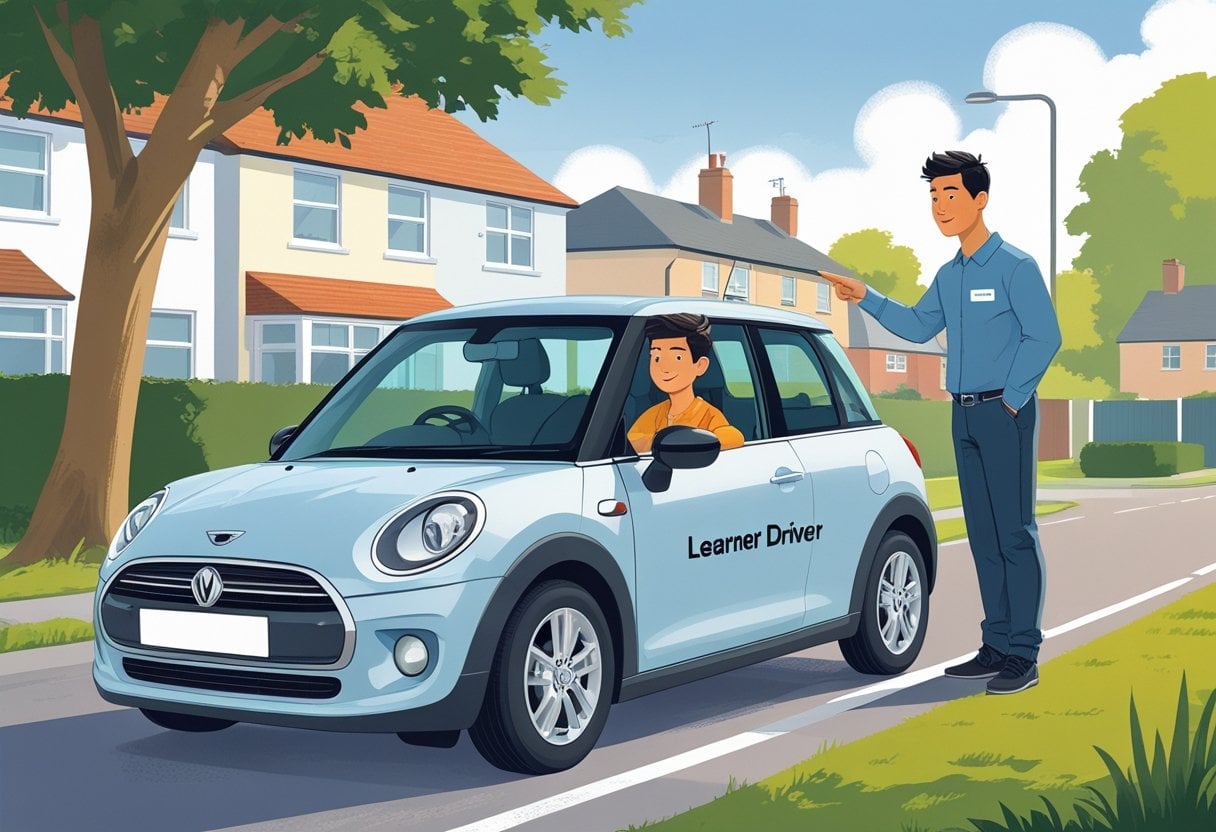
Yes, practising in your test car is one of the best things you can do to boost your chances of passing. Getting familiar with how your car feels, sounds, and responds means you won’t be dealing with surprises when you’re already feeling nervous. Every car has its own personality, from the bite point of the clutch to how sensitive the brakes are.
We know it’s not always possible to practise in your own car, especially if you’re taking most of your lessons with an instructor. But even a few practice sessions in your test vehicle can help you feel more confident and comfortable when it matters most.
Key Takeaways
- Practising in your test car helps you get familiar with its unique controls and handling before the big day
- Your test vehicle must meet strict DVSA requirements including proper insurance, MOT, and safety features
- Whether you choose manual or automatic affects what licence you’ll receive and which cars you can drive afterwards
Familiarity with a single vehicle really does steady test nerves, which is one reason learners choose to log focused hours in one car with an intensive driving course.
Why Practise in the Car You’ll Use for Your Driving Test?
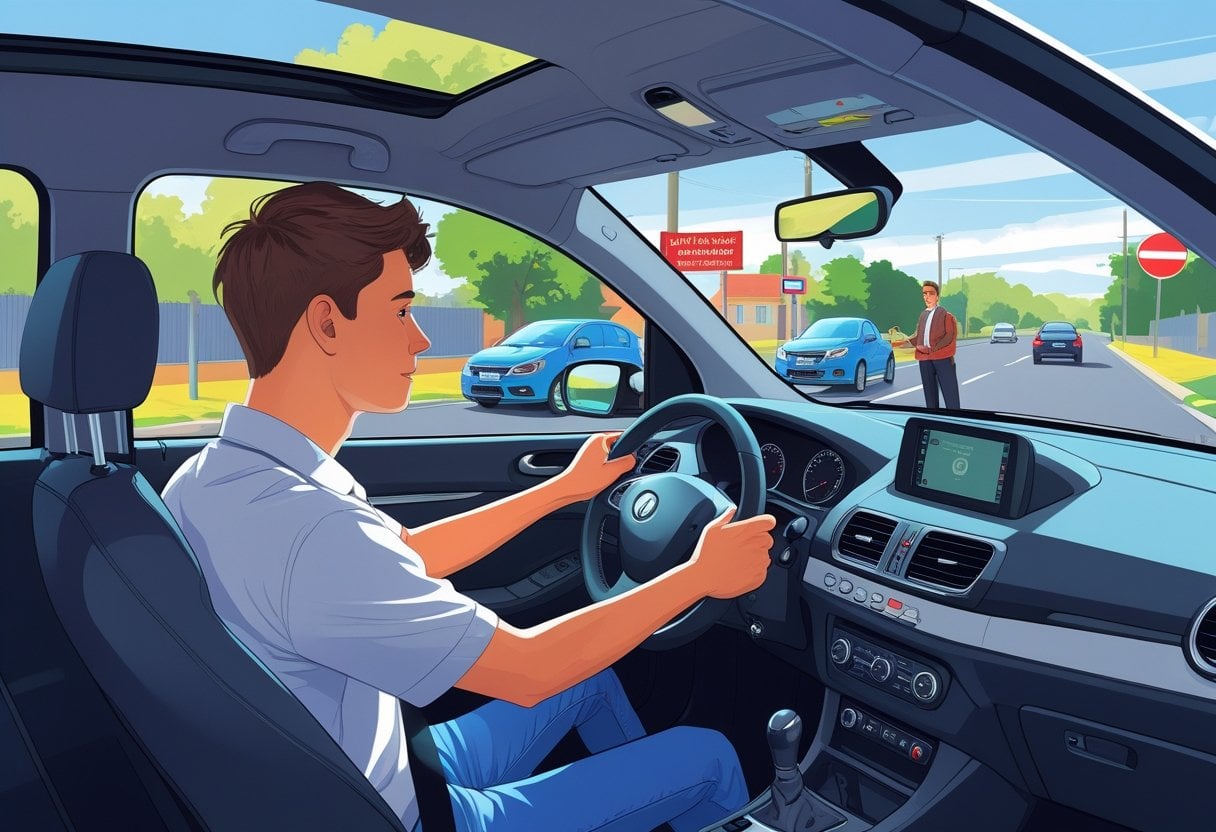
Practising in the same vehicle you’ll take to your driving test creates familiarity with its unique characteristics and helps you perform naturally on test day. This approach builds muscle memory and confidence that can make the difference between passing and needing to retake your test.
Familiarity With Controls and Handling
Every car feels different, even within the same make and model. When you practise consistently in your own car, you develop an intimate understanding of how it responds to your inputs.
The clutch bite point varies significantly between vehicles. In a manual car, knowing exactly where your clutch engages helps you pull away smoothly during manoeuvres like hill starts. This knowledge becomes automatic when you’ve spent hours practising in the same vehicle.
Steering sensitivity differs from car to car. Some vehicles require more input to change direction, whilst others respond to the slightest touch. Your muscle memory adapts to these nuances over time.
The pedal positions and pressure needed for smooth braking and acceleration become second nature. You’ll know exactly how much pressure creates the gentle stops that examiners appreciate.
Mirror positioning and visibility remain consistent when you use the same car. You won’t waste precious seconds adjusting mirrors or struggling to find blind spots during your test.
Building Confidence Behind the Wheel
Confidence grows naturally when you’re comfortable with your vehicle. As a learner driver, every small advantage helps reduce the mental load during your driving test.
You’ll know how your car sounds when it’s running properly. Unusual noises won’t distract you because you understand what’s normal for your vehicle.
Parking becomes more predictable when you understand your car’s dimensions. You’ll know exactly how close you can get to kerbs and how much space you need for parallel parking.
The handbrake tension and gear shift feel become familiar movements. These small details add up to create a smoother, more natural driving experience.
Your spatial awareness improves significantly. You’ll instinctively know where your wheels are positioned relative to road markings and other vehicles.
Reducing Test Day Nerves
Test day nerves affect most learner drivers, but familiarity with your vehicle helps calm those butterflies. When everything else feels uncertain, your car remains a constant.
You won’t spend mental energy figuring out where controls are located. The indicator stalk, windscreen wipers, and handbrake will be exactly where you expect them.
Starting routines become automatic. You’ll naturally adjust the seat, mirrors, and steering wheel without conscious thought, leaving more mental capacity for driving decisions.
There’s no surprise factor with how the car behaves in different situations. You’ll know how it feels during emergency stops, reverse parking, and three-point turns.
Equipment familiarity eliminates small frustrations. You won’t struggle with an unfamiliar radio accidentally coming on or wonder why the handbrake feels different.
Seamless Transition From Practice to Examination
Using your own car for both practice and your driving test creates consistency that benefits your performance. There’s no adjustment period when you arrive at the test centre.
Your recent practice sessions translate directly to test conditions. The manoeuvres you’ve been perfecting will feel identical during your examination.
Muscle memory works in your favour when you don’t need to adapt to different controls or responses. Your hands and feet know exactly what to do without conscious direction.
You can focus entirely on following the examiner’s instructions rather than managing an unfamiliar vehicle. This mental clarity often leads to better decision-making under pressure.
The comfort factor cannot be understated. When your car feels like home, you can concentrate on demonstrating your driving skills rather than battling with unknown vehicle characteristics.
Pros and Cons of Practising in Your Test Car
Practising in the same vehicle you’ll use for your test brings clear benefits like familiarity with controls and seating position, but it also comes with potential drawbacks such as limited availability and insurance considerations.
Advantages of Consistent Practice
Muscle memory becomes your best friend when you stick with one car throughout your learning journey. Every time you reach for the handbrake or check your mirrors, those movements become second nature. You’ll know exactly where the clutch bites and how the steering responds.
Your seating position stays perfectly adjusted. No more fiddling with mirrors or struggling to find the right height. Everything remains exactly where you need it.
Manoeuvres feel much more natural after hours of practice in the same space. You’ll instinctively know where your car’s back end sits during reversing or how much room you need for a three-point turn.
Confidence builds steadily because there are no surprises on test day. The pedal pressure, gear changes, and overall feel remain consistent. This familiarity can really help calm those pre-test nerves.
Your driving instructor might need to adjust their teaching approach if you’re not using their car with dual controls. However, many instructors are happy to work with your vehicle once they understand its characteristics.
Potential Pitfalls to Watch Out For
Insurance complications can catch you off guard. Not all policies cover driving tests, so check your coverage well before booking. Some insurers charge extra fees for test day cover.
Vehicle availability becomes a real concern if family members also use the car. You might find yourself scrambling to reschedule lessons or your test.
Maintenance responsibilities fall entirely on your shoulders. If something goes wrong mechanically, you’re stuck. Your driving instructor’s car usually comes with guarantees about roadworthiness.
Limited vehicle variety means you won’t experience different car types. Some models like the BMW Mini convertible or Ford KA convertible aren’t even allowed for tests due to visibility restrictions.
Cost considerations can mount up quickly. You’ll need L plates, an additional rear-view mirror for the examiner, and potentially higher insurance premiums. Your instructor might also charge differently for lessons in your vehicle versus theirs.
DVSA Rules and Car Requirements for Driving Test Vehicles
The Driver and Vehicle Standards Agency has strict rules about which cars you can use for your practical test. Your vehicle must meet specific safety standards and legal requirements, and certain car models are completely banned from test centres.
Essential DVSA Standards to Meet
Your car needs to tick several important boxes before the DVSA will let you use it. Tax and MOT certificates are absolutely essential if your car is over three years old.
Insurance presents a special challenge. You’ll need to check with your provider that your policy covers driving test use. Many standard policies don’t include this automatically.
Safety features can’t be compromised. We’re talking about proper tyre tread depth, no warning lights on the dashboard, and a roadworthy vehicle throughout.
Your car must reach at least 62mph and display speeds in miles per hour. The maximum authorised mass can’t exceed 3,500kg, and you’ll need four wheels (obviously!).
Electronic features like hill-start assist and parking sensors are perfectly fine to use. However, you can’t rely on self-parking systems, Tesla autopilot, or your own sat nav during the test.
The test centre will cancel your booking if any of these requirements aren’t met. You’ll lose your fee and need to rebook, which nobody wants.
Cars Prohibited for the Practical Test
Some vehicles simply don’t work for driving tests because they limit the examiner’s vision. The DVSA maintains a specific list of banned models.
Convertibles cause particular problems. The BMW Mini convertible, Ford KA convertible, and VW Beetle convertible are all prohibited. These cars don’t give examiners the all-round vision they need.
The Smart Fortwo and Toyota iQ also make the banned list. Panel vans without rear seats or side windows are completely out of the question.
Specialist vehicles like the BMW 218 convertible join this group too. If you’re considering any convertible or coupe, contact the Driver and Vehicle Standards Agency first to check.
Remember that this isn’t a complete list. Some car models haven’t been tested yet, so they might not be suitable either. When in doubt, always verify with the DVSA before booking your test.
Preparing Your Vehicle: Rear-View Mirror, L Plates and More
Getting your car test-ready involves several specific modifications. An extra rear-view mirror for the examiner is mandatory, and it must be properly positioned for their use.
L plates need to go on both front and rear of your vehicle. Welsh learners can use ‘D’ plates instead, but the placement rules stay the same.
Passenger safety equipment matters enormously. Your examiner needs a proper passenger seatbelt and head restraint. Slip-on head restraints won’t pass the requirements.
Clean out your car thoroughly before test day. Remove rubbish from the dashboard, footwells, door pockets, and cup holders. Your vehicle must be completely smoke-free too.
Window tinting on your windscreen and front side windows must follow legal limits. Rear windows can be tinted, but if they’re too dark for the examiner to see properly, your test gets cancelled.
Dashcams are allowed if they face outward only and don’t record interior audio.
Insurance and Legal Considerations for Test-Day Cars
Getting your car insurance sorted for test day is absolutely crucial, and there are specific rules you need to follow depending on your situation. Many learner driver policies have unique conditions around driving tests, and some rental arrangements require special attention to avoid legal trouble.
Learner Driver Insurance Essentials
Your standard learner driver insurance might not automatically cover you for the actual driving test. This catches many people off guard, so it’s worth checking your policy details well before test day.
Some insurers only cover practice sessions with a supervising driver. The moment you sit that test, you could be driving without valid cover, which is illegal.
Key insurance requirements for your test:
- Policy must explicitly cover driving tests
- Insurance should remain valid during travel to and from the test centre
- Coverage must include the test itself, not just practice driving
Ring your insurance company directly to confirm your policy covers the test. Don’t rely on assumptions or general policy wording.
If your current policy doesn’t include test coverage, you’ll need to upgrade it or arrange temporary cover. Short-term learner insurance can fill this gap perfectly, often for just a few days around your test date.
Temporary or Rental Car Cover
Borrowing someone else’s car or using a rental for your test brings its own insurance challenges. You can’t just assume you’re covered under their existing policy.
For rental cars, check that the rental company’s insurance specifically allows learner drivers to take driving tests. Not all rental policies include this coverage, and you could face serious penalties if caught driving uninsured.
Temporary insurance options:
- Hourly cover: Perfect for test day only
- Daily policies: Good if you need extra practice time
- Short-term learner insurance: Ideal for borrowed family cars
Private car owners’ policies rarely cover other people taking driving tests in their vehicle. You’ll almost certainly need your own temporary cover arranged in advance.
Don’t leave this until the last minute. Arrange temporary insurance at least a few days before your test to avoid any panic or administrative delays.
Car Insurance Transitions After Your Test
Here’s something that trips up loads of newly qualified drivers: many learner policies become invalid the second you pass your test. You could legally take your test but then be unable to drive home legally.
Most learner driver insurance only covers provisional licence holders. Once you’ve got that full licence, you’re technically no longer covered under these policies.
Post-test insurance options:
- Policies that automatically convert to full driver cover
- Pre-arranged insurance that activates when you pass
- Family member or friend drives you home while you sort new cover
Check whether your current insurer offers automatic conversion to full driver insurance. This seamless transition means you can drive straight home after passing without any legal worries.
If your policy doesn’t convert automatically, arrange new insurance before test day that starts immediately after you pass. Many insurers now offer this service specifically for test candidates.
Never assume you can drive home just because you’ve passed. Driving without valid insurance carries a £300 fixed penalty and six points on your new licence.
Manual vs Automatic: Your Car Choice Matters
The type of transmission you choose affects your muscle memory, test performance, and licence restrictions. Manual cars require clutch control that you can’t fake on test day, whilst automatic cars need different braking and acceleration techniques.
Impacts of Practising in Manual Versus Automatic Cars
Manual car practice builds specific muscle memory that’s impossible to replicate in an automatic. Your left foot learns the clutch’s bite point. Your right hand develops timing for smooth gear changes.
This coordination becomes second nature after weeks of practice. On test day, you won’t think about these movements. They’ll happen automatically.
Automatic car practice focuses on different skills. You’ll master smooth acceleration without gear changes. Your left foot stays off the brake pedal completely.
We see many learners struggle when they switch between types. A manual driver might reach for a gear stick that isn’t there. An automatic driver might forget to use the clutch properly.
The pass rates tell a story too. Manual tests have historically higher success rates, partly because learners get thorough practice with more complex controls.
Key differences in practice:
- Manual: Clutch control, gear timing, hill starts, stall recovery
- Automatic: Smooth acceleration, two-pedal coordination, parking brake usage
Your brain builds neural pathways specific to whichever type you practice. These pathways become your driving instincts.
What Happens If You Switch Car Types?
Switching from manual to automatic feels jarring at first. Your left foot searches for a clutch that isn’t there. You might press the brake pedal thinking it’s a clutch, which can be dangerous.
We’ve seen learners fail tests because they practised in one type but tested in another. The examiner notices hesitation and confusion immediately.
Common problems when switching to automatic:
- Pressing brake pedal instead of clutch
- Looking for gear stick during manoeuvres
- Forgetting to use parking brake properly
- Over-accelerating without clutch control
Going from automatic to manual creates bigger challenges. You suddenly need clutch timing you’ve never developed. Stalling becomes a real risk during your test.
Hill starts become particularly tricky. In an automatic, you simply release the brake and accelerate. In a manual car, you need clutch control to prevent rolling backwards.
Manual switching problems:
- Stalling at junctions and roundabouts
- Rolling backwards on hills
- Jerky gear changes under pressure
- Poor clutch control in slow traffic
The DVSA data shows lower pass rates for learners who switch car types close to their test date. Your examiner expects confident vehicle control, not fumbling with unfamiliar controls.
Should You Practise in Both?
We don’t recommend splitting your practice between manual and automatic cars. Focus creates better results than dividing your attention.
Choose based on your future driving plans. If you want maximum flexibility, stick with manual car practice. Your licence will allow you to drive any car type later.
If you tend to pick things up quickly once you are behind the wheel, our Silver 30 refresher intensive is our shorter intensive for fast learners with some practice behind them.
Manual car advantages for practice:
- Full licence privileges after passing
- More instructor availability
- Generally lower lesson costs
- Better long-term versatility
Pick an automatic car if you have physical difficulties with clutch control. Some learners find the coordination challenging due to leg strength or mobility issues.
Automatic practice also makes sense if you plan to drive electric vehicles. Most EVs use automatic-style transmissions, so your skills transfer directly.
When automatic practice works better:
- Physical challenges with clutch operation
- Plans to drive mainly electric vehicles
- Severe anxiety about stalling
- Urban driving focus only
The most important rule is consistency. Pick one type early in your learning journey. Stick with it through your test day.
Your driving instructor can help you decide based on your natural abilities and future goals. Trust their expertise about which type suits your learning style best.
Final Test Preparation: Practical Tips for Success
Getting your car test-ready involves more than just checking you’ve got your licence and booking confirmation. A clean, properly equipped vehicle with all legal requirements sorted will help you feel confident and avoid any last-minute hiccups on test day.
Cleaning and Organising Your Car
A spotless car creates the right first impression with your examiner. We recommend giving your vehicle a thorough clean inside and out the day before your test.
Start with the interior. Remove any clutter from seats, door pockets, and the dashboard. Your examiner needs clear space to sit comfortably and observe your driving without distractions.
Pay special attention to your mirrors. Clean windows and mirrors are essential for proper observation during the test. Dirty or smeared glass can actually affect your ability to check blind spots effectively.
Essential cleaning checklist:
- Interior surfaces wiped down
- All mirrors spotless
- Windows cleaned inside and out
- Floor mats vacuumed
- No loose items rolling around
Don’t forget the exterior. A clean car shows you take pride in vehicle maintenance, which can influence the examiner’s overall impression of your driving standards.
Fitting Extra Equipment: Mirrors, L Plates and More
Your test car needs specific equipment to meet DVSA requirements. Getting this sorted early prevents any stress on test morning.
L plates must be clearly visible on both front and rear of the vehicle. Make sure they’re clean, undamaged, and properly attached. Magnetic L plates work well but check they’re secure.
Consider fitting an additional rear-view mirror for your examiner. This clip-on mirror allows them to observe traffic conditions ahead, which can be particularly helpful during manoeuvres and junction approaches.
A dashcam can be left running during your test, but make sure it’s not blocking your view or creating distractions. Position it carefully so it doesn’t interfere with your observation or the examiner’s sightlines.
Check your existing mirrors are properly adjusted for your driving position. The rear-view mirror should frame the entire back window, while door mirrors need positioning for optimal blind spot coverage.
Safety Checks and Legal Readiness
Your test vehicle must meet all legal requirements on the day. We suggest doing these checks the evening before to avoid morning panic.
Verify your insurance covers you for test purposes. Many policies automatically include driving test cover, but it’s worth confirming with your insurer.
Critical safety checks:
- Tyre condition and pressure
- All lights functioning properly
- Handbrake working effectively
- Seatbelts in good condition
- Valid MOT certificate (if required)
Test all electrical systems including indicators, hazard lights, and windscreen wipers. Your examiner may ask you to demonstrate these during the “show me, tell me” questions.
Check fluid levels if you feel confident doing so. Low washer fluid or obvious leaks could potentially affect your test, though examiners understand these aren’t always the candidate’s responsibility.
Having your documents organised and easily accessible helps the process run smoothly. Keep your provisional licence, theory test certificate, and any other required paperwork in a safe, accessible place.
Frequently Asked Questions
Many learner drivers wonder whether vehicle familiarity can make or break their test day performance. The answers often depend on your confidence level, adaptability skills, and how well you’ve prepared for different driving scenarios.
How important is it to familiarise yourself with the vehicle before your driving test?
Getting to know your test car is absolutely crucial for success on exam day. We recommend spending at least 30 minutes before your test checking the basics like mirrors, seat position, and handbrake location.
Your driving test includes vehicle safety questions where you’ll need to demonstrate knowledge of controls. If you can’t find the windscreen wipers or headlights quickly, you might lose valuable points.
The eyesight check happens first, and you’ll need to feel comfortable in the driver’s seat to read number plates accurately. Fumbling with seat adjustments whilst the examiner waits creates unnecessary stress.
Can getting to know your test car’s controls improve your chances of passing?
Absolutely. Knowing where everything is located helps you focus on your actual driving rather than hunting for indicators or hazard lights.
During the ‘show me’ questions, examiners ask you to demonstrate controls whilst driving. If you’re searching for the rear windscreen heater whilst navigating traffic, it affects your concentration and road awareness.
We’ve seen confident drivers struggle because they couldn’t locate basic controls quickly. Simple things like adjusting mirrors or finding the handbrake can throw off your entire performance if you’re not prepared.
Is there an advantage to using your driving instructor’s car for the test?
Using your instructor’s car offers significant benefits for most learners. You’ve already spent hours practising in this vehicle, so the controls and handling feel natural.
Your instructor knows the car’s quirks and can give you specific tips about its clutch bite point or steering sensitivity. This insider knowledge proves invaluable during stressful moments.
Insurance is typically sorted, and your instructor can drive you to the test centre calmly. There’s no last-minute panic about unfamiliar rental cars or borrowing someone else’s vehicle.
The car will be roadworthy and test-ready, with proper L plates and dual controls if needed.
What should you consider when deciding between a familiar car and a rental for your driving exam?
Cost plays a major role in this decision. Instructor cars might seem expensive, but rental fees plus insurance can add up quickly.
Consider your comfort level with new vehicles. Some people adapt easily to different cars, whilst others need time to adjust to varying clutch positions and steering responses.
Check the rental car’s condition thoroughly. You don’t want to discover faulty indicators or a sticky handbrake during your test.
Think about logistics too. Can you collect the rental early enough to practise? Will someone drive you to the test centre, or do you need to drive there yourself on a provisional licence?
How does practicing in various cars impact your ability to drive confidently during the test?
Experience with different vehicles builds adaptability and confidence. You’ll feel more comfortable adjusting to any car’s unique characteristics on test day.
However, this approach requires time and planning. Each new vehicle needs a proper familiarisation session to understand its controls and handling.
Some learners find that switching between cars confuses their muscle memory. If you’ve always used a particular clutch, switching to a different one might feel awkward initially.
The key is balanced exposure. A few practice sessions in different cars can boost confidence without overwhelming you.
Could the comfort and familiarity with a car influence your driving test performance?
Vehicle familiarity directly affects your performance and stress levels. When you know exactly where everything is, you can focus entirely on demonstrating safe driving skills.
Comfortable seating position and familiar mirror angles help you maintain proper observations throughout the test. These small details contribute to smoother, more confident driving.
Stress levels drop significantly when you’re not worried about finding controls or adjusting to different handling characteristics. Lower stress typically leads to better decision-making and fewer minor errors.
We’ve noticed that learners who feel at home in their test vehicle often perform better during challenging manoeuvres like parallel parking or hill starts.
Practising the things examiners actually mark
Faults like this are usually fixed by concentrated practice rather than by more reading.
On an LPOD Academy intensive course you work with one instructor for 10 to 50 hours, so a weak area gets revisited the same week instead of a fortnight later.
Our learners pass first time 86% of the time, across a network of more than 500 instructors.
Compare intensive course packages · Find the right number of hours
Ready to pass in weeks, not months?
LPOD Academy runs tailored intensive driving courses from 10 to 50 hours across most of the UK, with your theory and practical test support included.
View our intensive course packages
Find the right course for you
Ready to Book Driving Lessons?
LPOD Academy offers intensive driving courses across the UK. Find your nearest location: