

Published 4 November 2025, updated 12 July 2026
Parallel Parking: A Step-by-Step Practice Routine for Learners
Parallel parking strikes fear into the hearts of countless learner drivers across the UK, and honestly, we completely understand why. This manoeuvre seems to combine every challenging aspect of driving into one nerve-wracking moment: spatial awareness, precise steering control, and the pressure of other drivers potentially watching your every move.

The good news is that parallel parking becomes second nature when you break it down into a systematic practice routine that you can repeat until it feels automatic. Rather than hoping you’ll somehow figure it out during your driving test, we’re going to show you exactly how to master this essential skill through structured practice sessions.
What makes parallel parking particularly tricky for learner drivers isn’t just the technical aspects, it’s the lack of a clear method to follow. Most people learn through trial and error, which builds frustration rather than confidence. Our step-by-step approach eliminates the guesswork and gives you a reliable framework that works every single time.
Key Takeaways
- Parallel parking becomes manageable when broken into small, repeatable steps rather than one overwhelming manoeuvre
- Regular practice with a structured routine builds the muscle memory and confidence needed for real-world parking situations
- Understanding the key reference points and techniques eliminates guesswork and creates consistent results every time
Reverse manoeuvres click into place with repetition and calm guidance, so the surest way to master them is to drill parallel parking on an intensive driving course.
Why Parallel Parking Matters
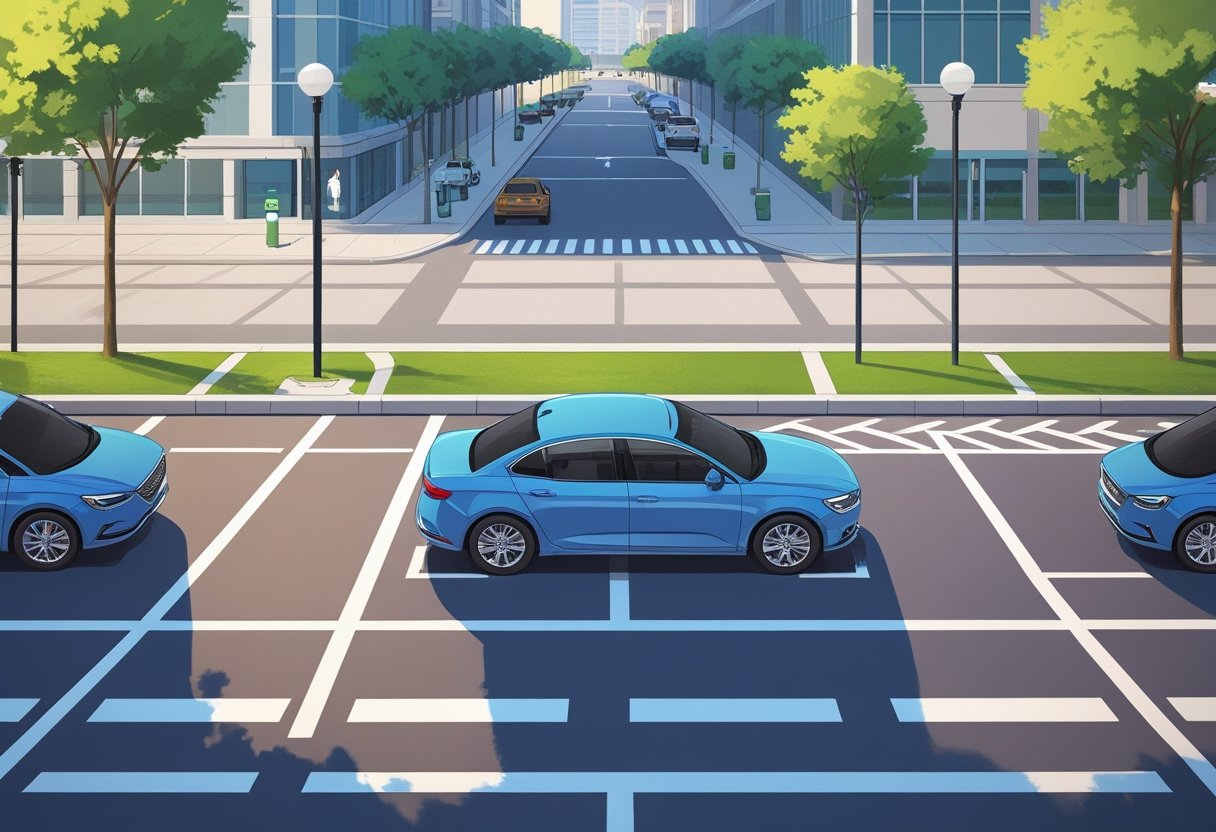
Parallel parking isn’t just another box to tick on your driving test. It’s a skill that transforms how confidently you navigate busy streets and find spaces in tight spots where other drivers give up.
Essential Skill for Real-World Driving
If you’re planning to drive in busy towns or cities, parallel parking becomes part of your daily routine. We see it everywhere: narrow residential streets where cars line both sides, shopping districts with limited parking options, and city centres where every available space counts.
The reality is straightforward. Main roads and busy streets often have the only available parking spaces running parallel to the kerb. If you can’t parallel park, you’ll spend ages hunting for car parks or larger spaces that might not exist.
Urban areas present unique challenges:
- Tight spaces between existing cars
- Heavy traffic moving past whilst you park
- Time pressure from other drivers waiting
- Expensive car park fees as the only alternative
New drivers who master this skill early find themselves with much more freedom. You won’t have to avoid certain areas or rely on others to drive you places simply because parking feels impossible.
Parallel Parking in the Driving Test
Your practical driving test will likely include a parallel parking exercise. It’s one of the manoeuvres that examiners use to check your car control and spatial awareness.
The good news is that test centres use generous spaces compared to real-world parking. You’ll have clear markers and enough room to complete the manoeuvre safely. However, minor faults can still accumulate if your technique isn’t solid.
Common test mistakes include:
- Taking too long to complete the manoeuvre
- Hitting the kerb or getting too close
- Not checking mirrors and blind spots properly
- Ending up too far from the kerb
We find that learner drivers who practice parallel parking regularly pass this section with confidence. The key is building muscle memory so nerves don’t interfere with your technique on test day.
Challenges and Common Fears
Most new drivers feel anxious about parallel parking because it combines several skills at once. You’re reversing, steering, checking mirrors, and judging distances whilst other traffic waits nearby.
The fear often comes from feeling rushed or worrying about damaging someone else’s car. These concerns are completely normal and get easier with practice.
Typical challenges we see:
- Misjudging the size of available spaces
- Getting the initial positioning wrong
- Losing confidence when other drivers wait impatiently
- Struggling with reference points and timing
The truth is that parallel parking becomes much easier once you understand the step-by-step process. Your spatial awareness improves with experience, and you’ll start recognising which spaces are worth attempting and which ones to skip.
Getting Ready To Parallel Park
The secret to successful parallel parking lies in smart preparation before you even start moving. We need to pick the right space, understand our car’s dimensions and key reference points, and make thorough safety checks.
Choosing a Suitable Parking Space
Not all parking spaces are created equal, and as learner drivers, we should be selective about where we attempt our first parallel parks.
Look for spaces that are generous in size. A good rule of thumb is finding a space that’s at least 1.5 times the length of our vehicle. This gives us plenty of room to manoeuvre without the stress of tight squeezes.
Quiet streets are our friends when we’re practising. We can take our time without worrying about impatient traffic behind us. Save the busy streets for when we’ve built up our confidence and speed.
Check the parked vehicle in front and behind. Make sure they’re properly parked and not too close to the kerb or sticking out awkwardly. We don’t want to inherit someone else’s poor parking decisions.
Avoid spaces near corners, driveways, or bus stops. These areas often have parking restrictions, and the extra obstacles make the manoeuvre trickier than it needs to be.
Knowing Your Vehicle and Reference Points
Every car is different, so we need to get familiar with our specific vehicle’s dimensions and sight lines.
Learn where our car’s corners are from the driver’s seat. The rear bumper is particularly important since we can’t see it directly. Practice in an empty car park to understand how our car moves and where it ends.
Identify key reference points on our dashboard or bonnet. Many drivers use the wing mirror, door handle, or specific dashboard points to gauge alignment with other vehicles. These reference points become our parking guides.
Understand our blind spots thoroughly. Know exactly where our mirrors can’t reach and when we need to physically turn around to check. Modern cars often have parking sensors or parking assistance, but we shouldn’t rely on these completely.
Get comfortable with the steering wheel responsiveness. Know how much steering input creates how much movement, especially at slow speeds.
Preparing with Proper Observations
Safety checks aren’t just about passing the test; they’re about protecting ourselves and others throughout the manoeuvre.
Start with checking mirrors before we even slow down. We need to know what traffic is behind us and whether it’s safe to stop and begin parking.
Signal our intentions early and clearly. Other road users need time to react and adjust their position around us.
Position your vehicle correctly alongside the front car. We should be roughly two feet away from the parked vehicle, with our mirrors aligned. This starting position sets us up for success.
Keep checking mirrors and blind spots throughout the entire process. Traffic conditions change quickly, and we need to stay aware of pedestrians, cyclists, and other vehicles that might appear while we’re focused on parking.
Step-by-Step Parallel Parking Routine
Breaking down the parallel parking manoeuvre into simple steps makes this challenging skill much more manageable. We’ll guide you through proper positioning, precise steering control, and using key reference points to nail this essential driving technique every time.
Positioning Your Car and Signalling
Finding the right parallel parking spot is your first victory. Look for a space that’s roughly one and a half times your car’s length. Trust us, attempting to squeeze into a tiny gap will only lead to frustration.
Pull up alongside the parked car you want to park behind. Position your vehicle about one metre away from the side of that car. Your door mirrors should be roughly aligned.
Check that your car is parallel to the parked vehicle. If you’re at an odd angle now, you’ll struggle with the rest of the manoeuvre.
Signal left if there are other cars or pedestrians nearby. This tells everyone what you’re planning to do.
Take a moment to check all your mirrors and look over your shoulder. The rear window should give you a clear view behind. Other drivers need to know you’re about to reverse, so don’t rush this step.
Put the car in reverse gear. Keep your foot ready on the clutch if you’re driving a manual car.
Initial Reversing and Turning In
Now comes the trickiest part of the parallel parking manoeuvre. Start reversing very slowly while keeping the steering wheel straight.
Watch your left mirror carefully. You want to reverse until your rear wheels line up with the back bumper of the car beside you. This is one of the most important reference points in the whole process.
Some instructors teach different reference points, like lining up the door handles or using the passenger window. Find what works best for your car and stick with it.
Once you’ve reached your reference point, turn the steering wheel one full turn to the left. Keep reversing slowly as your car begins to angle into the parking space.
Your car’s rear end will start swinging towards the kerb. Watch through your rear window and nearside mirror to judge your progress.
When your car’s front bumper clears the parked car beside you, it’s time for the next step.
Aligning and Straightening Up
This is where precise control really matters. While your car is still moving slowly in reverse, turn your steering wheel two full turns to the right.
Your car’s front end will now start swinging towards the kerb. Watch your left mirror closely to see how close you’re getting to the pavement.
Don’t panic if you’re getting close to the kerb. The nearside mirror will show you exactly how much space you have left.
Keep reversing until your car is roughly parallel to the kerb and the cars around you. You’ll feel when the car is straight.
Turn the steering wheel one full turn to the left to straighten up completely. This should leave your wheels pointing straight ahead.
Stop the car when you’re happy with your position. You should be sitting comfortably between the two cars with even spacing front and back.
Making Final Adjustments
Don’t worry if your first attempt isn’t perfect. Even experienced drivers need to make final adjustments sometimes.
Check your position relative to the kerb. You want to be within 30 centimetres of the pavement edge but not touching it.
If you’re too far out, pull forward slightly and reverse back with the steering turned a bit more towards the kerb. Small movements make big differences.
Make sure you haven’t blocked any driveways or left your car sticking out into traffic. Other drivers need to get past safely.
Check that you have enough room to open your doors. There’s nothing worse than parking perfectly only to find you can’t get out of your car.
Take a moment to look in all your mirrors one final time. You’ve successfully completed the parallel parking manoeuvre, and with practice, these parking tips will become second nature.
Practical Tips for Consistent Success
Getting comfortable with parallel parking takes more than knowing the steps. You’ll need to practice in different situations, master your mirror checks, and learn how to handle the unpredictable moments when other people are around.
Practising in Different Environments
We always recommend starting your practice routine in quiet car parks or empty streets. This gives you space to learn the basic movements without pressure. Use cones or markers to create your practice space, roughly 1.5 times your car’s length.
Once you feel confident there, it’s time to graduate to busier areas. Try residential streets during quieter periods first. The parked vehicles will be different sizes, and you’ll encounter varying kerb heights.
Key environments to practice:
- Empty car parks (beginner stage)
- Quiet residential roads
- Busy high streets (advanced practice)
- Hills and slopes
- Different weather conditions
Each environment teaches you something new. On hills, you’ll need clutch control to prevent rolling. In busy areas, you’ll learn to work under pressure whilst maintaining your parking manoeuvre technique.
Your driving instructor will gradually introduce these challenges. Don’t rush this progression, even minor faults can develop into bad habits if you practice incorrectly.
Using Mirrors and Spotting Blind Spots
Checking mirrors effectively is crucial for safe parallel parking. Your door mirrors show you the parked vehicle you’re reversing alongside, whilst your rear-view mirror helps you monitor traffic behind.
Start by adjusting your nearside mirror slightly downward before beginning. This lets you see the kerb and judge your distance better. Some learner drivers find this helpful, though others prefer their normal mirror position.
Mirror check sequence:
- Rear-view mirror – check for approaching traffic
- Offside mirror – monitor vehicles in the road
- Nearside mirror – watch your reference points and kerb distance
Your blind spots are areas your mirrors can’t show. The biggest blind spot is directly behind your boot and along your passenger side. Turn your head to check these areas, especially before you start reversing.
Watch for cyclists and motorcyclists, they move quickly and can appear in your blind spots suddenly. A quick shoulder check takes seconds but prevents accidents.
Dealing with Pedestrians and Road Users
Real-world parallel parking means dealing with people walking past, impatient drivers, and unexpected situations. Stay calm and prioritise safety over speed.
If pedestrians walk behind your car whilst you’re reversing, stop immediately. Wait for them to pass completely before continuing. Don’t try to reverse around them, this creates unnecessary risk.
Managing road users effectively:
- Impatient drivers: Let them pass if safe, don’t feel pressured to rush
- Pedestrians: Always give way, they have right of way on pavements
- Cyclists: Check mirrors frequently, they can appear quickly
- Delivery drivers: Be patient, they often need to park nearby
When another driver is waiting for your space, acknowledge them but don’t rush your parking manoeuvre. A quick wave shows you’ve seen them. Take your time to park safely rather than making mistakes under pressure.
Some pedestrians might offer to guide you, but politely decline. You need to develop your own spatial awareness and reference points. Well-meaning help can actually confuse your practice routine and lead to dependency on others.
Avoiding Common Mistakes and Building Confidence
Learning to correct your position during parallel parking and recognising typical errors will help you succeed in your practical driving test. Managing nerves whilst gaining real-world experience transforms this challenging manoeuvre into a skill you can master with practice.
Correcting Your Position Safely
Sometimes your first attempt won’t be perfect, and that’s completely normal. The key is knowing how to adjust your position without creating hazards for other road users.
If you’re too far from the kerb, reverse slightly whilst turning your steering wheel towards the kerb. Make small adjustments rather than dramatic corrections.
When you’re too close to the kerb:
- Straighten your wheels and reverse a bit
- Turn the wheel away from the kerb
- Move forward slowly to create proper spacing
Always check your mirrors and blind spots before making any adjustments. Signal your intentions clearly to other drivers.
During your driving lesson, practice these corrections in a safe area first. Your instructor will help you understand the right amount of steering input needed.
Safety reminders:
- Keep movements slow and controlled
- Check for pedestrians and cyclists
- Use your hazard lights if you’re taking longer than usual
Mistakes to Watch Out For
New drivers often make the same errors during parallel parking. Recognising these patterns helps you avoid them during your practical driving test.
Misjudging space is the most common problem. Many learners attempt spaces that are simply too small for their vehicle. A good rule is ensuring the space is at least 1.5 times your car’s length.
Starting position errors throw off the entire manoeuvre. Position your car alongside the front vehicle with your mirrors aligned. Don’t start too close or too far away.
Steering too early or too late creates awkward angles. Wait for your reference points before turning the wheel. Each car has different reference points, so practice in the same vehicle you’ll use for your test.
Rushing the process leads to poor positioning. Take your time during driving lessons to build muscle memory. Speed comes naturally with experience.
Forgetting observations can fail you instantly. Check mirrors, blind spots, and look for pedestrians throughout the manoeuvre.
Managing Test Nerves and Gaining Experience
Feeling nervous about parallel parking during your driving test is perfectly normal. We’ve all been there, and there are practical ways to build your confidence.
Practice in different locations rather than just one car park. Try various road widths, different sized spaces, and different times of day. This variety prepares you for whatever your test presents.
Start with larger spaces during practice sessions. As your confidence grows, gradually attempt tighter spots. Success in easier situations builds the mental foundation for harder challenges.
Breathe steadily during the manoeuvre. Many learners hold their breath when concentrating, which actually makes coordination harder.
Remember your examiner wants you to succeed. They’re assessing your safety and control, not expecting absolute perfection on the first attempt.
Book extra driving lessons specifically focused on parking if needed. Some driving instructors offer intensive parking sessions before your test.
Create positive experiences by practising regularly between lessons. Even 15 minutes of practice twice a week makes a huge difference to your confidence levels.
Beyond the Basics: Mastery and Modern Aids
Once you’ve got the basic parallel parking moves down, it’s time to tackle the trickier stuff. We’ll look at how different cars change the game, what to do when you’re dealing with slopes or tight spots, and how today’s clever parking tech can give you a helping hand.
Adapting Parallel Parking for Different Vehicles
Every car has its own personality when it comes to parallel parking. A tiny city car will slip into spaces that would make a large estate driver weep, but that doesn’t mean bigger vehicles are impossible to park.
Smaller cars like hatchbacks are brilliant for beginners. They’re forgiving if your positioning isn’t spot-on, and you can often squeeze into tighter parking spaces. The turning circle is usually sharper too, which means less back-and-forth shuffling.
Larger vehicles need more room and patience. If you’re driving an estate or MPV, add an extra car length to what you think you need. Your reference points change dramatically. The wing mirrors might be your best friends here, giving you a clearer view of the parked vehicle behind you.
Height matters as well. Sitting higher up in an SUV gives you better visibility of the parking space, but it can throw off your depth perception. Those kerbs seem closer than they actually are.
Different cars also have varying parking sensors sensitivity. Some beep frantically at the slightest obstacle, whilst others stay silent until you’re practically touching bumpers. Get to know your car’s quirks during practice sessions.
Navigating Hills and Tricky Situations
Hills turn parallel parking from tricky to proper challenging. Gravity isn’t your mate anymore, and you’ll need to adjust your technique accordingly.
On uphill slopes, your car wants to roll backwards. Keep gentle pressure on the accelerator whilst you’re manoeuvring. Use the handbrake more frequently, especially if you’re driving a manual. The reference points you’ve learned might shift slightly because of the angle.
Downhill parking means fighting the urge to roll forward. Your parking space will look different from this angle, and judging distances becomes trickier. Take it slower and use your mirrors more than usual.
Narrow streets with parked vehicles on both sides create their own challenges. You might not have room for the usual wide approach. Sometimes you’ll need to reverse further down the street to get the right angle for your parking space.
Night-time parking relies heavily on your headlights and street lighting. Those familiar reference points disappear, so you’ll depend more on parking sensors if you’ve got them. Don’t be shy about getting out to check your position.
Some driving instructors recommend practising these scenarios specifically, because they’re exactly the sort of thing that crops up in real driving situations.
Leveraging Parking Technology for a Smoother Experience
Modern cars are packed with clever bits that make parallel parking less stressful. Parking assistance systems have come a long way from simple beepers.
Parking sensors are the most common helper. Front and rear sensors give you audio warnings as you get closer to obstacles. Some systems change the beeping frequency, whilst others use different tones for various distances. Learn what your car’s particular symphony means.
Rear-view cameras show you exactly what’s happening behind your car. The guidelines on screen help you judge angles and distances. Some even have dynamic lines that move as you turn the steering wheel, showing where your car will actually go.
360-degree camera systems give you a bird’s-eye view of your car and the surrounding parking space. It’s like having eyes in the sky, showing you exactly how much room you’ve got on all sides.
Semi-automatic parking systems can steer the car whilst you control the pedals. The car identifies suitable parking spaces and guides you through the manoeuvre. You’re still in charge, but it’s like having a very patient driving instructor helping with the steering.
Fully automatic parking systems do everything for you. Press a button, take your hands off the wheel, and watch your car slide perfectly into the space. It’s impressive technology, but don’t let it replace your own skills entirely.
Frequently Asked Questions
These questions cover the essential aspects of mastering parallel parking, from understanding the basic steps to perfecting your technique. We’ll address proper distance judgement, mirror positioning, and practical tips to help you stay confident during practice.
What are the key steps to mastering parallel parking with ease?
We recommend following a clear sequence every time you practice. Start by positioning your car alongside the vehicle in front of the space, keeping about 60cm between the cars.
Put your car in reverse and check all mirrors. When your rear bumper aligns with the rear bumper of the car beside you, turn your steering wheel fully to the left.
Reverse slowly until your car reaches a 45-degree angle to the kerb. You’ll know you’re there when you can see the rear car’s number plate clearly in your side mirror.
Straighten the wheel and continue reversing until your car’s front bumper clears the rear of the front vehicle. Then turn the wheel fully right to swing the front of your car into the space.
How can you accurately judge the distance between your car and the kerb during parallel parking?
We find that using your passenger side mirror is the most reliable method. Adjust it slightly downward before you start so you can see the kerb clearly.
During the manoeuvre, watch for the kerb line in your mirror. Ideally, you want to see about 15-20cm of space between your car and the kerb edge.
If you can’t see any kerb in your mirror, you’re likely too close. If you see too much road surface, you’re probably too far away.
Your door mirrors should show a clear view of the kerb throughout the parking process. This visual reference helps you maintain the proper distance without guessing.
Can you share some top tips for beginners to stay calm while parallel parking?
We always tell our learners that slow and steady wins every time. There’s no rush, so take your time with each step of the process.
Practice in quiet car parks first using cones or markers instead of real cars. This removes the pressure and lets you focus purely on the technique.
Remember that everyone finds parallel parking challenging at first. Even experienced drivers had to learn these skills gradually through repetition.
Keep your breathing steady and don’t panic if you need to pull forward and try again. Most driving instructors expect learners to need multiple attempts during practice sessions.
What’s the best way to adjust your mirrors for optimal visibility when parallel parking?
We suggest adjusting your passenger side mirror so you can see the kerb clearly. Tilt it down slightly from your normal driving position.
Your driver’s side mirror should show you the rear of your car and the space behind you. You want to see about one-quarter of your car’s body in the mirror.
Make these adjustments before you begin the parking manoeuvre. Trying to adjust mirrors whilst reversing can be dangerous and confusing.
After parking, remember to readjust your mirrors back to their normal positions for regular driving. We recommend practising these adjustments until they become automatic.
Could you provide some insight into common mistakes to avoid when practicing parallel parking?
We notice that many learners turn the steering wheel too early or too late. Wait until your rear bumper aligns with the other car’s rear bumper before making your first turn.
Another frequent error is reversing too quickly. Slow speeds give you better control and more time to make corrections if needed.
Don’t forget to check all around your car regularly. Many beginners focus only on one mirror and miss important visual cues from other angles.
Avoid over-correcting your steering. Small, gradual adjustments work much better than large, sudden movements that can put you in an awkward position.
Are there any foolproof techniques to ensure perfect alignment every time you parallel park?
We recommend using consistent reference points every time you park. Find specific landmarks on other cars or street furniture that work reliably for your vehicle.
The “mirror method” works well for most drivers. When you can see the rear car’s full number plate in your side mirror, you’ve reached the right angle to straighten your wheel.
Practice the same routine repeatedly until it becomes muscle memory. Consistency in your approach leads to consistent results over time.
Count your steering wheel turns so you know exactly how much lock to apply at each stage. Full lock left, then straight, then full lock right creates the proper S-shaped path into the space.
Ready to pass in weeks, not months?
LPOD Academy runs tailored intensive driving courses from 10 to 50 hours across most of the UK, with your theory and practical test support included.
Compare intensive driving courses
Get a course recommendation
Ready to Book Driving Lessons?
LPOD Academy offers intensive driving courses across the UK. Find your nearest location: