

Published 5 November 2025, updated 12 July 2026
Step-by-Step Guide to Booking Your Practical Driving Test in the UK
Getting behind the wheel for your practical driving test represents one of life’s most exciting milestones, yet many learners find themselves overwhelmed by the booking process itself. The good news is that securing your test appointment doesn’t have to be complicated or stressful.
With your slot booked, the smartest preparation is an intensive course timed around your test date so you peak at just the right moment.
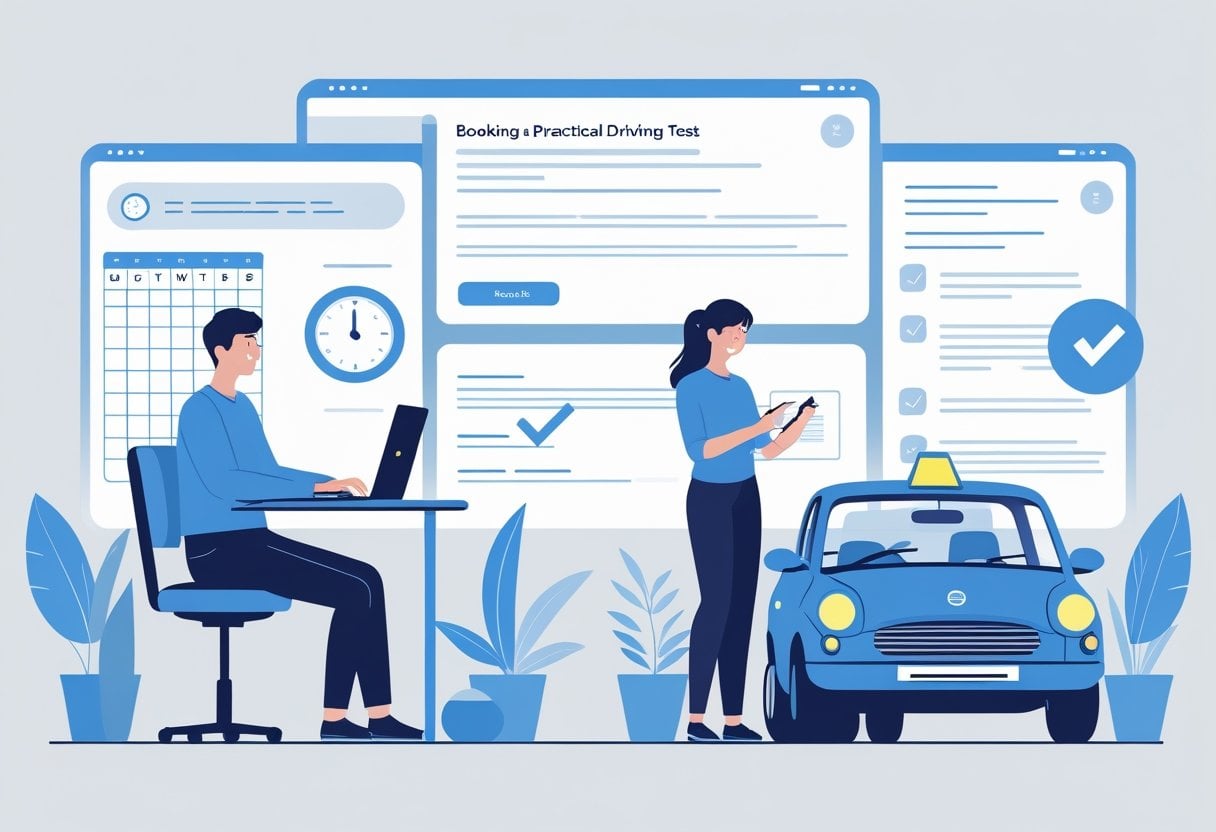
Booking your practical driving test through the DVSA’s official online system takes just a few minutes when you have the right information and documents ready. The key lies in understanding exactly what you need before you start, from your driving licence number to your instructor’s reference details.
This comprehensive guide walks learners through every aspect of the booking journey, covering everything from checking eligibility requirements to finding those coveted earlier appointment slots. Whether you’re booking for the first time or need to reschedule, you’ll discover practical strategies to secure the perfect test date and feel completely prepared for what lies ahead.
Understanding the Practical Driving Test
The practical driving test evaluates a learner’s ability to drive safely on real roads whilst demonstrating proper vehicle control and hazard awareness. Test centres assess candidates through various exercises including independent driving, parking manoeuvres, and the “show me, tell me” questions about vehicle safety.
What the Test Involves
The car driving test begins with an eyesight check where candidates must read a number plate from 20 metres away. Those who wear glasses or contact lenses should bring them along.
The examiner will then ask two vehicle safety questions. One “tell me” question happens before driving starts, covering topics like checking tyre pressure or oil levels. The “show me” question occurs during the drive, asking candidates to demonstrate something like operating the windscreen wipers or hazard lights.
The main driving portion lasts approximately 40 minutes and includes:
- General driving in various road conditions
- Independent driving for about 20 minutes using either sat nav directions or road signs
- One parking manoeuvre (such as parallel parking, bay parking, or pulling up on the right)
- Possibly an emergency stop exercise
Examiners watch for the candidate’s ability to drive safely, follow traffic rules, and handle different situations confidently. They’re looking for smooth control of the vehicle and good awareness of other road users.
Differences Between Manual and Automatic Licence
Choosing between manual and automatic significantly affects future driving options. A manual licence allows driving both manual and automatic vehicles, whilst an automatic licence restricts drivers to automatic cars only.
The practical driving test differs slightly between the two. Manual tests require candidates to demonstrate clutch control, gear changes, and hill starts. Automatic tests focus more on steering control, acceleration, and braking without the complexity of manual transmission.
Many learners find automatic tests easier to pass initially. However, they might later need an upgrade test to gain manual driving privileges. This upgrade test doesn’t require passing the theory test again, making it a straightforward process for those who change their minds.
Manual driving skills remain valuable because manual cars are often cheaper to buy and run. They also provide better control in certain driving conditions like steep hills or towing situations.
Eligibility Criteria
Candidates must hold a valid provisional driving licence and have lived in England, Wales, or Scotland for at least 185 days within the 12 months before their test date. Northern Ireland has separate booking arrangements.
Most learners need a valid theory test pass before booking their practical driving test. However, some situations don’t require theory tests, including tractor tests, automatic to manual upgrades, and certain licence progression categories.
The minimum age varies by vehicle type. Car tests can be taken from age 17, whilst motorcycle categories have different age requirements depending on engine size and power output.
Candidates should ensure they’re genuinely ready for the test. This means consistent performance during lessons, confidence in various driving conditions, and the ability to drive safely without constant instructor guidance.
Having proper documentation ready speeds up the booking process, including the driving licence number and payment method.
Getting Ready: Are You Prepared to Book?
Before rushing to book that practical driving test, learner drivers need to tick several important boxes first. The theory test must be passed, driving skills properly assessed, and confidence built through mock tests and professional guidance.
Passing the Theory Test
Every learner driver must pass their theory test before booking a practical driving test. This isn’t just a box-ticking exercise. The theory test genuinely prepares drivers for real-world situations they’ll face on the roads.
The theory test has two parts: multiple choice questions and the hazard perception test. Both sections must be passed on the same day. If either section fails, the entire test needs retaking.
What the theory test covers:
- Highway Code knowledge
- Road signs and markings
- Stopping distances
- Vulnerable road users
- Vehicle safety checks
Once passed, learners receive a theory test pass certificate. This certificate stays valid for two years. The practical test must be taken and passed within this timeframe, or the theory test expires.
Many driving instructors recommend taking the theory test early in the learning process. This helps reinforce important safety knowledge during practical lessons.
Role of Your Driving Instructor
A qualified driving instructor plays a crucial role in determining readiness for the practical test. They’ve seen hundreds of learners progress and know exactly what examiners look for.
Good instructors won’t just teach basic car control. They’ll prepare learners for the specific demands of the UK driving test. This includes practising manoeuvres, independent driving, and the show me, tell me questions.
Key ways instructors help with test preparation:
- Assessing when skills reach test standard
- Practising on actual test routes
- Building confidence in challenging situations
- Providing honest feedback about readiness
Trust builds between instructor and learner over time. When an experienced instructor says someone’s ready, they usually are. However, learners shouldn’t feel pressured to book before they feel confident.
Some instructors offer intensive courses or test preparation packages. These can be brilliant for learners who want focused practice before their test date.
Assessing Your Driving Skills
Honest self-assessment helps determine test readiness. Learners should feel comfortable with all aspects of driving, not just the basics.
Essential skills to master before booking:
- Smooth clutch control (manual cars)
- Confident reversing and parking
- Safe roundabout navigation
- Independent driving using sat nav
- Emergency stops and vehicle checks
Test standard means consistently performing these skills correctly, not just occasionally getting them right. Bad habits or hesitant driving often lead to test failures.
Many learners underestimate how long it takes to reach test standard. The DVSA suggests most people need around 45 hours of professional lessons plus 22 hours of private practice.
Keep a driving diary to track progress. Note areas that need improvement and celebrate small victories. This helps build a realistic picture of current ability levels.
Mock Tests and Building Confidence
Mock tests provide invaluable practice for the real thing. They simulate actual test conditions and help identify any remaining weak spots.
Most driving instructors offer mock tests as part of their service. These typically last the full 40 minutes and follow the same format as real tests. Instructors mark performance using official DVSA standards.
Benefits of mock tests:
- Reduces test day nerves
- Highlights areas needing extra practice
- Builds familiarity with test procedures
- Provides realistic feedback on readiness
Aim to pass at least two mock tests consistently before booking the real thing. This builds genuine confidence rather than false hope.
Some test centres offer familiarisation visits. These let learners see the actual test routes and get comfortable with the local area. It’s worth checking if this service is available locally.
Remember that feeling slightly nervous is completely normal. Even confident drivers get test day butterflies. The key is feeling prepared and knowing the skills are there when needed.
Step-by-Step Booking Process
Getting your practical driving test booked involves using DVSA’s online system or calling their booking line, gathering essential documents like your driving licence number, and selecting your preferred test centre and date. The process requires specific information and documentation to complete successfully.
How to Book a Driving Test Online
The DVSA online booking system is the fastest way to secure your driving test appointment. The service runs from 6am to 11:40pm daily, giving you plenty of flexibility.
When you start the online booking process, you’ll join a queue system. Don’t worry about the wait – the system will tell you exactly how long you’ll need to wait once you begin.
What you’ll need ready:
- Your UK driving licence number
- A credit or debit card for payment
- Your driving instructor’s personal reference number (if you want to check their availability)
The online system lets you book up to 24 weeks ahead. There’s no waiting list, so you’ll see all available slots straight away.
You can check the cost of your specific driving test before you start booking. This helps you prepare the right payment method.
After booking, you’ll receive an email confirmation with all your test details. Keep this safe as you’ll need it on test day.
Phone Booking: What to Expect
Phone booking is available through the Driver and Vehicle Standards Agency (DVSA). However, expect longer wait times as phone lines are extremely busy.
DVSA driving test booking support:
- Phone: 0300 200 1122
- Hours: Monday to Friday, 8am to 4pm
You’ll need the same information as online booking. Have your driving licence number, payment card, and instructor details ready before calling.
Phone booking is essential for upgrade tests, such as changing from automatic to manual car licences. The online system doesn’t handle these special test types.
The phone service can help if you’re having technical problems with the online system. They can guide you through any error messages or loading issues.
Required Documents and Details
Your provisional driving licence is the foundation of your booking. You must have your full UK driving licence number ready – not just the paper counterpart.
Essential requirements:
- Valid UK driving licence number
- Proof of UK residency (185 days in the past 12 months)
- Valid theory test pass certificate (for most test types)
- Payment method (credit or debit card)
You don’t need a theory test for certain situations. These include tractor tests, automatic to manual upgrades, and some commercial vehicle progressions.
Your driving instructor’s personal reference number helps coordinate scheduling. This ensures your instructor can attend your test if needed.
Double-check all details before submitting. Incorrect information can delay your booking or cause problems on test day.
Choosing Your Test Centre and Date
Your test centre choice affects availability and convenience. Popular centres in busy areas often have longer waiting times.
Consider centres slightly further from major cities. These locations typically offer more appointment slots and shorter waiting times.
Booking timeline tips:
- Book as soon as you’re test-ready
- Check for cancellation appointments after booking
- Avoid busy periods like school holidays if possible
The system shows available dates up to 24 weeks ahead. Don’t feel pressured to book immediately – take time to choose a date that works for your preparation schedule.
After booking, you can search for earlier appointments. These cancellation slots appear when other learners reschedule or cancel their tests.
Your chosen date should give you enough practice time without losing momentum. Most instructors recommend booking when you’re nearly test-ready rather than months in advance.
Optimising Your Booking for the Best Results
Getting the timing right and choosing the best booking method can make a real difference to your test experience. The key factors to consider are when you book, which test centre you choose, and whether to go through your instructor.
Timing Your Booking for Success
The DVSA driving test booking system releases new test slots at different times, and knowing these patterns gives learners a significant advantage. Most new slots appear early in the morning, typically between 6am and 8am on weekdays.
Many test centres release additional slots when other candidates cancel their tests. These cancellations happen most frequently on Sunday evenings and Monday mornings. Setting up notifications or checking regularly during these peak times increases your chances of finding an earlier slot.
Avoid booking during school holidays when demand shoots up dramatically. Young drivers often book tests during these periods, creating longer waiting lists. Similarly, the period between September and November sees heavy demand as students return to education.
Consider booking your test for Tuesday through Thursday mornings. These slots tend to have better availability than popular Friday afternoon or weekend slots. Examiners are often fresher earlier in the week, which can create a more relaxed testing environment.
Test Centre Availability and Wait Times
Rural test centres typically offer shorter waiting times than busy urban locations. A centre 20 miles away might have slots available weeks earlier than your local centre. The extra travel time is often worth it for a much sooner test date.
Some test centres have notably longer waiting lists due to their location or reputation. Research which centres near you consistently offer better availability. The DVSA website shows approximate waiting times, but these change regularly.
Newly opened test centres or those that have recently expanded their capacity often have excellent availability. Keep an eye on DVSA announcements about new facilities in your area.
Consider the practical aspects too. A centre with good parking and clear signage reduces stress on test day. Some centres are located in challenging areas with heavy traffic, which might affect your performance.
Booking Through Your Instructor
Most driving instructors have access to the same booking system as private candidates, but they often know the best times to look for cancellations. Your instructor understands local test centre patterns and can advise which locations suit your driving style best.
Some instructors offer to handle the booking process entirely. This saves you the hassle of constantly checking for earlier slots. They can also coordinate your lessons to ensure you’re test-ready when your slot comes up.
Your instructor knows when you’re truly ready for the test. Booking too early wastes money and damages confidence if you fail. Too late, and you might lose momentum or forget key skills.
However, booking independently gives you complete control over timing and location. You can check for cancellations whenever suits you and grab slots immediately when they appear.
Dealing With Changes, Cancellations, and Finding Earlier Test Dates
Sometimes life gets in the way of your perfectly planned driving test booking. You might need to reschedule your appointment or hunt for an earlier date to fit your timeline better.
How to Change or Reschedule Your Appointment
The DVSA makes it fairly straightforward to change your driving test appointment online. The service runs from 6am to 11:40pm, and you can book appointments up to 24 weeks ahead.
What you’ll need:
- UK driving licence number
- Driving test reference number
- Theory test pass certificate number
Important timing rules:
- Give 10 full working days’ notice for car tests to avoid paying again
- Give 3 full working days’ notice for motorcycle or lorry tests
- Working days count Monday to Saturday (not Sundays or bank holidays)
You can change your driving test appointment up to 6 times maximum. After that, you’ll need to cancel completely and start fresh with a new booking.
If you’re changing at short notice due to illness, bereavement, school exams, or licence theft, you might get a refund. Email the DVSA with proof and your booking details.
Making the Most of Driving Test Cancellations
Driving test cancellations happen all the time. Other learners cancel their slots, creating opportunities for you to snag an earlier date.
The official DVSA website shows available cancellation slots when you try to change your appointment. Check regularly, especially in the mornings and evenings when people often make changes.
Best times to look:
- Early morning (around 6am when the system opens)
- Late evening
- Weekends when people review their schedules
- After theory test results are released
Cancellation slots often appear for dates just a few days away. Be ready to take a test at short notice if you find one.
Keep your practical skills sharp so you can grab any last-minute opportunity that comes up.
Using a Driving Test Cancellation Finder
A driving test cancellation finder is a third-party service that automatically searches for earlier test dates on your behalf. These tools monitor the DVSA system continuously and alert you when slots become available.
How they work:
- You provide your current booking details
- The service searches for earlier dates at your preferred test centres
- You get notifications when cancellations appear
- You can then change your appointment through the official DVSA website
Most cancellation finder services charge a fee, typically between £10-50. They can save you hours of manual searching and increase your chances of finding an earlier slot.
Before choosing a service:
- Check reviews from other learners
- Understand their refund policy
- Make sure they’re legitimate and established
- Read the terms about success rates
Remember, these services can’t guarantee results, but they do improve your odds of finding cancellations.
What to Do if You Fail and Need to Rebook
Failing your driving test isn’t the end of the world. About 47% of learners don’t pass first time, so you’re in good company if it happens to you.
You’ll need to wait 10 working days before taking another practical test. Use this time wisely to work on the areas your examiner highlighted.
Book your next test as soon as possible after failing. Popular test centres get booked up quickly, and you don’t want to wait months for another chance.
Your options after failing:
- Book directly through the DVSA website
- Use a cancellation finder to get an earlier date
- Consider different test centres if yours has long waiting lists
Take a few lessons with your instructor to address specific issues from your first attempt. Most learners who fail first time pass on their second or third go.
Stay positive and remember that each attempt is valuable experience. Your next test will feel much more familiar and manageable.
Special Considerations and Test Day Tips
The Driver and Vehicle Standards Agency has specific requirements for different situations, and knowing these details beforehand can save you time and stress. Regional variations also exist across England, Wales, Scotland, and Northern Ireland that could affect your booking strategy.
Booking for Candidates With Disabilities
The DVSA provides excellent support for candidates with disabilities or special requirements. You’ll need to book by phone rather than online to arrange these accommodations.
Essential requirements to mention when booking:
- Hearing difficulties (BSL interpreter available)
- Physical disabilities affecting vehicle controls
- Learning difficulties requiring extra time
- Visual impairments needing specific adjustments
The DVSA can arrange modified test vehicles if needed. You might require hand controls, left-foot accelerators, or other adaptations. These must match your UK provisional driving licence restrictions.
Booking timeline matters here. Allow extra time when requesting special arrangements. The DVSA typically needs 2-3 weeks to organise interpreters or adapted vehicles.
Your driving instructor should help coordinate these requirements. They’ll know which local test centres have the best facilities for your specific needs.
Vehicle Requirements for the Test
Your test car must meet strict DVSA standards, and arriving with an unsuitable vehicle means instant test cancellation.
Mandatory vehicle checklist:
- Valid insurance covering your supervising driver
- Current MOT certificate (if over 3 years old)
- Road tax up to date
- Clean L plates displayed front and rear
Safety requirements include:
- Working seatbelts for examiner and candidate
- All lights and indicators functioning properly
- No dashboard warning lights illuminated
- Adequate tyre tread depth (minimum 1.6mm)
Manual transmission tests require manual cars. Automatic tests allow either transmission type, but passing in an automatic restricts your licence.
Interior standards matter too. The car should be clean and tidy inside. Remove air fresheners or anything that might distract the examiner during your assessment.
Regional Differences Across the UK
Test availability and requirements vary significantly depending on your location within the United Kingdom.
Current average waiting times:
- England: 21 weeks
- Wales: 13 weeks
- Scotland: 15 weeks
- Northern Ireland: Separate booking system applies
Northern Ireland uses a different process entirely. Residents there cannot book through the standard DVSA system used across the rest of the UK.
Rural vs urban considerations:
Rural test centres often have higher pass rates (around 60-66%) compared to busy city locations. However, they typically have fewer available slots throughout the year.
Pricing remains consistent across most regions. Weekday tests cost £62, whilst evening and weekend slots are £75. Some Scottish Highlands locations may have slightly different arrangements.
Travel strategies work well. Many candidates successfully reduce their waiting time by expanding their search radius to include neighbouring counties or regions with better availability.
Frequently Asked Questions
Many learners have similar concerns when booking their practical driving test, from understanding the initial steps to picking the right test centre. These common questions cover everything from required documents to test fees and rebooking options.
What’s the initial step to kick off the booking process for a practical driving test?
The first thing any learner needs to do is pass their theory test. Without this certificate, they simply cannot book a practical driving test through the DVSA system.
Once they’ve got their theory test pass certificate in hand, they can head straight to the official GOV.UK website to start the booking process. The system will ask for their theory test pass certificate number during registration.
It’s worth noting that there’s no minimum number of lessons required before booking. However, learners should only book when they can drive confidently without constant instruction from their driving instructor.
How can one verify the earliest available dates for a practical driving test appointment?
The DVSA booking system shows available dates in real time when learners search for appointments. They simply need to enter their postcode or preferred test centre to see what’s available.
The system displays a calendar view with available slots highlighted. Learners can scroll through different months to find dates that work for their schedule.
If no suitable dates appear initially, it’s worth checking back regularly. Cancellations happen frequently, and new slots often become available at short notice.
Is there a straightforward way to change an already booked test date if plans go awry?
Yes, learners can change their test date after booking through the same online system they used originally. They’ll need their booking reference number and driving licence details to access their booking.
The DVSA allows date changes, though they may charge a fee depending on how much notice is given. Changes made with plenty of advance notice typically cost less than last-minute alterations.
If someone fails their test and needs to rebook, they must wait at least 10 working days before taking another attempt. This waiting period gives them time to practice and improve their skills.
What crucial documents should I bring with me on the day of my practical driving test?
Every test candidate must bring their valid UK provisional driving licence. This serves as their primary form of identification and proof they’re legally allowed to take the test.
They’ll also need their theory test pass certificate. Without this document, the examiner cannot proceed with the practical test, regardless of when they passed their theory.
The vehicle they’re using for the test must have valid insurance that covers them as a learner driver. They should bring proof of this insurance along with the vehicle’s MOT certificate and registration documents.
Could you shed some light on how the practical driving test fees are structured?
The standard cost for a car practical driving test starts from £62 for weekday appointments. This covers the basic test fee during normal business hours.
Evening and weekend tests typically cost more, with prices varying depending on the specific time slot and test centre. The DVSA website shows exact pricing when learners select their preferred appointment time.
Payment must be made online when booking the test. The system accepts most major debit and credit cards, making the process straightforward for most learners.
Are there any insider tips for choosing the best test centre for my practical driving exam?
Learners should pick a test centre they’ve practised around extensively with their instructor. Familiarity with local roads, roundabouts, and traffic patterns can boost confidence significantly.
Some test centres have higher pass rates than others, though this often reflects the local driving conditions rather than easier examiners. Rural centres might have quieter roads, while urban centres offer more varied traffic situations.
It’s wise to visit the chosen test centre beforehand to locate the parking area and check in point. This small step can reduce nerves on test day and ensure they arrive feeling prepared and confident.
Ready to pass in weeks, not months?
LPOD Academy runs tailored intensive driving courses from 10 to 50 hours across most of the UK, with your theory and practical test support included.
Ready to Book Driving Lessons?
LPOD Academy offers intensive driving courses across the UK. Find your nearest location: