

Published 5 November 2025, updated 12 July 2026
Taking the Test in Your Own Car: Requirements and Preparations for Success
Taking your driving test in familiar territory sounds brilliant, doesn’t it? Many learner drivers wonder if they can swap their instructor’s car for their own vehicle on the big day. The good news is that using your own car is absolutely possible, and it might even help calm those pre-test nerves.
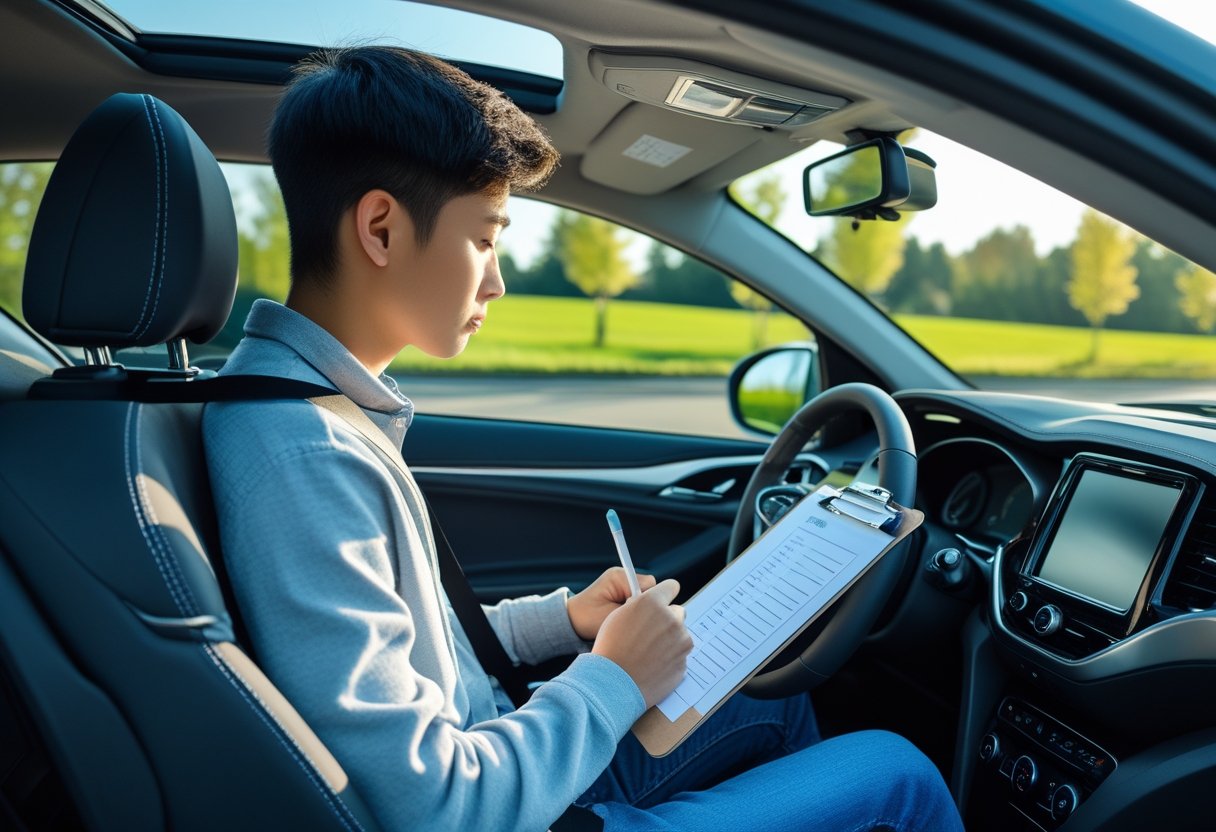
You can take your driving test in your own car, but it must meet strict legal and safety requirements set by the DVSA. Your vehicle needs proper insurance, valid MOT (if over three years old), current tax, and specific safety features like an extra rear-view mirror for the examiner. We’ll walk you through everything from essential paperwork to which car models are banned from test centres.
Getting your car test-ready involves more than just checking the basics. We’ll cover the legal requirements that could see your test cancelled, safety checks that examiners look for, and practical preparations that give you the best chance of success. Whether you’re wondering about tinted windows, dashcams, or why certain convertibles aren’t allowed, we’ve got the answers you need to make test day as smooth as possible.
Using your own car on the day only works if it and you are fully ready, so it is wise to prepare your own vehicle properly with an intensive driving course.
Can You Take Your Driving Test in Your Own Car?
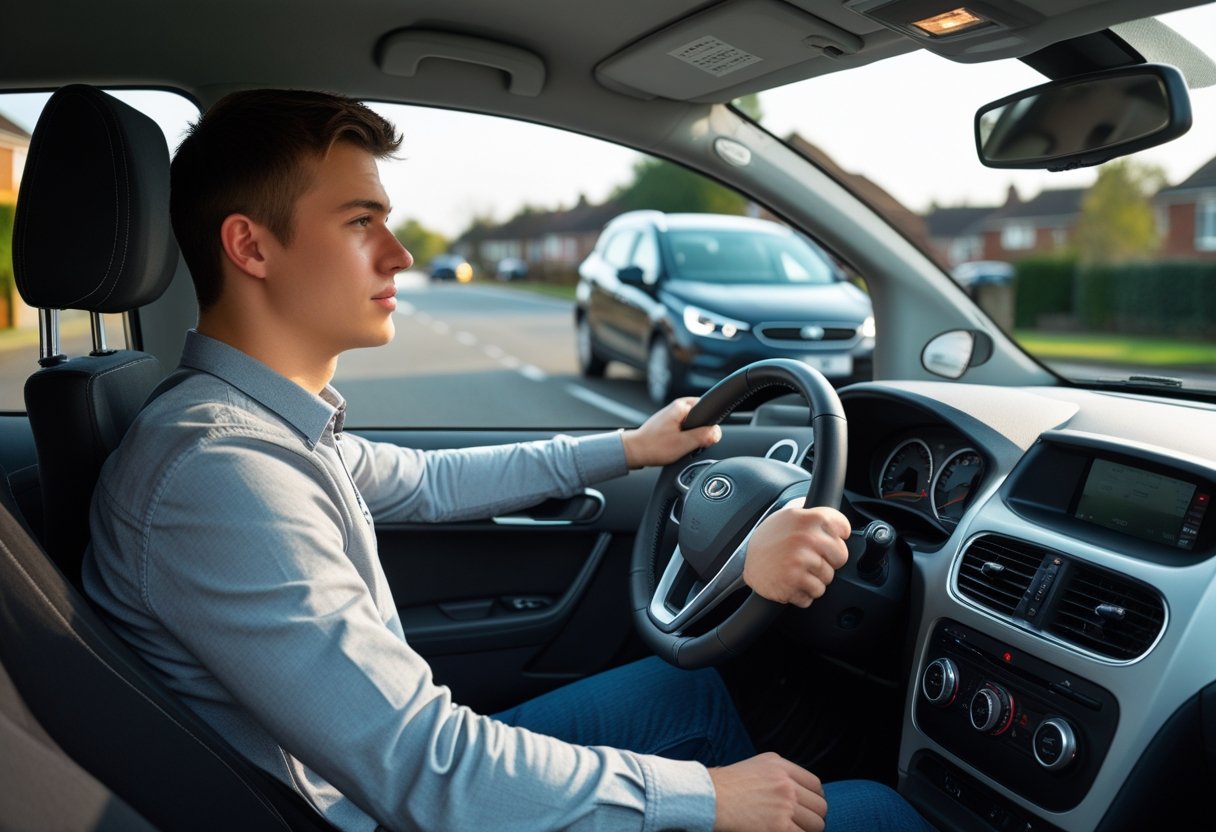
Yes, you absolutely can take your driving test in your own car, and it’s a choice that many learner drivers find beneficial. The DVSA allows this option as long as your vehicle meets specific requirements, though there are important differences from using an instructor’s car that you’ll want to consider before making your decision.
Who Can Use Their Own Car for the Test
Any learner driver can use their own car for the DVSA driving test, provided the vehicle meets all the necessary requirements. There’s no special qualification or permission needed beyond ensuring your car complies with the rules.
Your car must tick several important boxes:
- Be roadworthy with no warning lights showing
- Have legal tyre tread depth on all tyres (no space-saver spares allowed)
- Include an extra interior rear-view mirror for the examiner
- Feature a passenger seatbelt and head restraint for the examiner
- Display L-plates on front and rear
- Reach at least 62mph with an mph speedometer
The vehicle also needs proper documentation. This includes current tax, valid MOT (if over three years old), and insurance that specifically covers driving test use.
Check with your insurance company about test coverage before booking. Many policies don’t automatically include this, and driving without proper cover could invalidate your test.
You’ll need to clean your car thoroughly, removing any clutter from the dashboard, footwells, and seats. The vehicle must be smoke-free during and immediately before your test.
How Taking the Test in Your Car Differs from Using an Instructor’s Vehicle
Using your own car creates a different test experience compared to an instructor’s vehicle. The most significant difference is the absence of dual controls, which means the examiner cannot intervene if something goes wrong.
Key differences include:
- No dual brake or clutch pedals for examiner safety intervention
- Responsibility for ensuring all legal requirements are met
- Potential test cancellation if your car fails to meet standards
- Need to fit an additional rear-view mirror specifically for the examiner
Your examiner will conduct a brief vehicle check before starting the test. They’ll verify that all equipment works properly and meets DVSA standards.
If your car fails this check, your test will be cancelled immediately, and you’ll lose your fee. This makes preparation absolutely crucial.
The test format remains identical regardless of which car you use. You’ll complete the same manoeuvres, follow the same routes, and face the same assessment criteria.
Some modern features can actually be used during your test, including electronic parking brakes, hill-start assist, and parking sensors. However, self-parking systems and sat navs are strictly forbidden.
Benefits of Using Your Own Car
Taking your test in your own car offers several practical advantages that can boost your confidence and performance on the day.
Familiarity is the biggest advantage. You know exactly how your car responds, where all the controls are, and how it handles in different situations. This comfort can significantly reduce test-day nerves.
Your muscle memory is already programmed for your car’s specific clutch bite point, steering sensitivity, and brake feel. These small details can make a huge difference when you’re already feeling nervous.
Financial benefits can also be substantial. Many driving instructors charge extra fees for test-day car hire, which can add £50-100 to your test costs.
You’ll have already practised all your manoeuvres in this exact vehicle. The turning circle, visibility, and spatial awareness you’ve developed won’t change on test day.
Your car might also have helpful features that make driving easier. Modern safety systems like parking sensors or cameras can assist with manoeuvres, provided they’re allowed under DVSA rules.
There’s also practical convenience. You don’t need to coordinate with an instructor’s schedule or worry about last-minute car availability issues.
Potential Drawbacks to Consider
Despite the benefits, using your own car does come with some risks and challenges that deserve careful consideration.
The biggest risk is test cancellation. If your car fails the pre-test check, you’ll lose your test slot and fee immediately. This can be devastating if you’ve waited months for an appointment.
Your car needs that additional rear-view mirror, which means extra cost and installation time. Some vehicles make this modification tricky or expensive.
Insurance complications create another hurdle. Not all policies cover driving tests, and arranging special coverage can be costly or time-consuming.
Without dual controls, there’s no safety net if something goes seriously wrong. This puts extra pressure on you to perform perfectly and can increase anxiety levels.
Your car might lack modern features that instructor vehicles typically have. Things like light power steering, clear visibility, or advanced safety systems could make the test easier in a different vehicle.
Maintenance becomes your responsibility entirely. If something breaks down on test day, there’s no backup plan or alternative vehicle available.
Some test centres see higher failure rates among candidates using personal vehicles, possibly due to added pressure or unfamiliarity with the modified setup including the examiner’s mirror.
Essential Legal Requirements for Your Vehicle
Your car must meet strict legal standards set by the Driver and Vehicle Standards Agency (DVSA) before you can use it for your driving test. These requirements cover three main areas: proper taxation and MOT certification, appropriate insurance coverage, and complete roadworthiness standards.
Car Taxation and Valid MOT Certificate
Your car needs current road tax to be legally driven on public roads during your driving test. Check your tax status online using your vehicle registration number before test day.
MOT requirements depend on your car’s age:
- Cars under 3 years old don’t need an MOT certificate
- Cars over 3 years old must have a current, valid MOT
We recommend checking your MOT status well before your test date. An expired MOT will result in automatic test cancellation, and you’ll lose your test fee.
Keep your MOT certificate handy on test day. The examiner may ask to see it as part of their vehicle checks. If your MOT expires soon after your test date, consider renewing it early to avoid any last-minute stress.
Digital MOT records are acceptable, but having a physical copy provides extra peace of mind.
Insurance Cover for the Driving Test
Standard car insurance policies don’t always cover driving tests automatically. Contact your insurance company directly to confirm your policy includes driving test coverage.
Key insurance points to verify:
- Your policy covers you during the practical driving test
- The examiner is covered as a passenger
- Coverage remains valid with L-plates displayed
Some insurers charge extra for driving test coverage, while others include it free. Get written confirmation from your insurance company about your coverage status.
Provisional licence holders need to ensure their policy covers supervised driving and test situations. Full licence holders using their own car should confirm the policy covers test conditions.
Without proper insurance, your test will be cancelled immediately. The DVSA takes insurance requirements seriously, and there’s no flexibility on this rule.
Guidelines for Roadworthiness and Safety
Your car must be completely roadworthy and safe for both you and the examiner. The DVSA has specific standards that go beyond basic legal requirements.
Essential safety checks include:
- No warning lights showing on your dashboard
- All tyres in good condition with legal tread depth
- No space-saver spare tyres fitted
- Working lights, indicators, and hazard lights
- Functioning brakes and steering
Additional equipment your car needs:
- Extra interior rear-view mirror for the examiner
- Passenger seatbelt and proper head restraint (slip-on types aren’t allowed)
- L-plates on front and rear
- Clean interior free from rubbish or unnecessary items
Your car must be smoke-free before and during the test. This means no smoking in the vehicle beforehand, as lingering odours count as violations.
The vehicle should reach at least 62mph and have a working mph speedometer. Cars must have four wheels and weigh no more than 3,500kg when fully loaded.
Vehicle Features and Safety Checks for Test Day
Your car needs to meet strict safety standards on test day, and the examiner will check these before your test begins. The most critical areas include dashboard warning lights, tyre condition, all lighting systems, and visibility through windows and mirrors.
No Warning Lights or Dashboard Alerts
Before we head to the test centre, let’s make sure your dashboard is completely clear of warning lights. Any illuminated warning light will result in your test being cancelled immediately.
The airbag warning light is one of the most common issues that catches people out. If this light appears on your dashboard, your test simply cannot go ahead. We recommend checking this a few days before your test date.
Other warning lights to watch for include:
- Engine management lights
- Oil pressure warnings
- Battery alerts
- Brake system warnings
- ABS lights
Your mph speedometer must be working properly and clearly visible. The examiner needs to see your speed throughout the test. If your speedometer is faulty or the display is dim, this could cause problems.
Start your car the morning of your test and let it run for a few minutes. Check every warning light has switched off after the initial startup sequence.
Legal Tread Depth and Tyre Conditions
Tyre safety is absolutely crucial for your driving test. We need to ensure all four tyres meet legal requirements and show no signs of damage.
Legal tread depth must be at least 1.6mm across the central three-quarters of the tyre. However, we recommend having more than this minimum for better safety and to avoid any concerns on test day.
Check each tyre carefully for:
- Cuts or bulges in the sidewall
- Exposed wire or cord
- Uneven wear patterns
- Proper inflation pressure
Space-saver spare tyres cannot be fitted during your test. If you’ve had a puncture recently and are using a temporary spare, you’ll need to replace it with a full-size tyre first.
Use a 20p coin to check tread depth quickly. Insert it into the tyre grooves, and if you can see the outer band of the coin, your tread might be too shallow.
Fully Working Lights, Indicators, and Horn
Every single light on your car must work perfectly on test day. The examiner will check these before your test starts, so we need to be thorough.
Test all lights the evening before your test:
- Headlights (dip and main beam)
- Brake lights (all bulbs)
- Indicators (front and rear)
- Hazard lights
- Reversing lights
- Number plate lights
Your horn must produce a clear, audible sound. Press it briefly to make sure it works properly. A weak or muffled horn could cause your test to be cancelled.
Windscreen wipers need to clear your windscreen effectively without leaving streaks or missing areas. Replace worn wiper blades before your test if they’re not working well.
Ask someone to help you check lights that are difficult to see from the driver’s seat. Walk around your car systematically to inspect each light.
Windows, Mirrors, and Obstructions
Clear visibility is essential for your driving test. The examiner needs to see clearly in all directions, and so do you.
Your windscreen and front side windows must comply with legal tinting limits. If your windows are too dark, your test will be cancelled. Rear windows can be darker, but they shouldn’t prevent the examiner from seeing clearly.
Extra interior rear-view mirror installation is required for the examiner. This mirror must be properly positioned so the examiner can monitor traffic behind your car. Clip-on mirrors are usually acceptable if they’re secure.
The passenger seatbelt and passenger head restraint must be in perfect working order. The examiner will use these throughout your test. Slip-on head restraints are not allowed, so make sure yours is properly integrated or firmly attached.
Remove all unnecessary items from:
- Dashboard surfaces
- Door pockets
- Cup holders
- Footwells
- Seats
Clean your windows inside and out the night before your test. Even small smudges can affect visibility and create a poor impression.
Test-Specific Equipment and Modifications
Your car needs several specific pieces of equipment before it can be used for a driving test. We’ll cover the essential L-plates positioning, mirror setup for your examiner, proper safety restraints, and technical requirements that keep your test on track.
Correct L-Plates Placement
Getting your L-plates right is more straightforward than you might think, but it’s crucial for test day success. You’ll need to display L-plates on both the front and rear of your vehicle, and if you’re in Wales, you can choose between L-plates or D-plates.
The plates must be clearly visible and properly attached. We recommend checking they’re secure the night before your test, as loose plates that fall off during driving could cause problems.
Make sure your L-plates aren’t damaged, faded, or obscured by dirt. Clean plates show you’ve prepared properly and help your examiner spot your vehicle easily.
Your plates should be the standard size and design. Magnetic L-plates work well and won’t damage your car’s paintwork.
Extra Interior Rear-View Mirror for the Examiner
Your examiner needs their own clear view of the road behind, which means fitting an additional interior rear-view mirror. This isn’t negotiable, and your test will be cancelled if you don’t have one properly installed.
The extra interior rear-view mirror must give your examiner a full view of traffic approaching from behind. Position it where they can easily see without straining or blocking your own mirror.
Most driving schools and car accessory shops sell examiner mirrors. They typically attach with suction cups or clips to your existing mirror or windscreen.
Test the mirror’s stability before your test day. A wobbly mirror that needs constant adjustment will distract both you and your examiner during crucial moments.
Seatbelt and Head Restraint Rules
Your examiner’s safety is just as important as yours, so proper restraints are mandatory. Your car must have a functioning passenger seatbelt and an appropriate passenger head restraint for the examiner’s seat.
The passenger seatbelt must work perfectly, with no fraying, sticking, or mechanical problems. Test it several times to ensure it clicks securely and releases smoothly.
Head restraints are equally critical. The passenger head restraint must be adjustable and properly positioned. Slip-on head restraints aren’t acceptable, so make sure yours is the permanent type that came with your car.
If your passenger seat has any damage or the restraints don’t work properly, you’ll need to fix these issues before test day. Don’t risk a cancelled test over something this preventable.
Speedometer Requirements and Maximum Authorised Mass
Technical specifications matter when it comes to test-ready vehicles. Your car must have an mph speedometer that’s clearly readable and your vehicle can’t exceed the maximum authorised mass limits.
The speedometer requirement is simple: it must display miles per hour clearly. If your car shows kilometres per hour instead, or if the mph markings are too small to read easily, this could cause problems.
Your vehicle’s maximum authorised mass (
Cars Not Allowed for the Driving Test
The Driver and Vehicle Standards Agency maintains a specific list of vehicles that can’t be used during your practical test, mainly because they don’t provide the examiner with proper all-round vision. Several popular convertibles and compact cars fall into this category, and we’ll need to check with DVSA if you’re unsure about your vehicle.
DVSA Restrictions on Specific Makes and Models
The DVSA has compiled a definitive list of cars that are banned from driving tests. Panel vans top this list because they lack rear seats or rear side windows, making it impossible for examiners to see properly.
Several convertible models are specifically prohibited:
- BMW 218 convertible
- BMW Mini convertible
- Ford KA convertible
- VW Beetle convertible
Additionally, certain compact cars can’t be used:
- Smart Fortwo (2-door model)
- Toyota iQ
These restrictions aren’t arbitrary. Each banned vehicle has been tested and found wanting when it comes to examiner visibility.
Why Some Convertibles and Other Cars Are Banned
The primary reason these cars are banned comes down to examiner safety and visibility. During your test, the examiner needs clear sightlines in all directions to properly assess your driving skills and intervene if necessary.
Convertibles often have thick roof pillars or structural elements that create blind spots. The Smart Fortwo and Toyota iQ are simply too small inside for an examiner to sit comfortably whilst maintaining proper observation angles.
Panel vans present the most obvious problem. Without rear windows, examiners can’t monitor traffic behind you or assess your rear observation skills properly.
The DVSA takes examiner safety seriously. If they can’t see what’s happening around your car, they can’t do their job effectively or step in during emergencies.
If you tend to pick things up quickly once you are behind the wheel, our Silver 30 top-up refresher is our shorter intensive for fast learners with some practice behind them.
Checking with DVSA Before Test Day
If you’re planning to use a convertible or coupé, we strongly recommend contacting the Driver and Vehicle Standards Agency before booking your test. Not every model has been assessed yet, and you don’t want any nasty surprises on test day.
Coupés (fixed-roof, two-door cars with sloping rears) need particular attention. Whilst some are acceptable, others may have visibility issues that aren’t immediately obvious.
You can contact DVSA directly through their official channels to verify your car’s suitability. They’ll check their records and give you a definitive answer about whether your specific make and model can be used.
Remember, if you turn up with a banned vehicle, your test will be cancelled immediately and you’ll lose your fee. It’s always better to check beforehand than face disappointment on the day.
Final Preparations and Practical Test Tips
Getting your own car ready for the driving test takes more than just checking the basics. We’ll walk you through the essential vehicle inspections, cleanliness standards, and practice strategies that help you feel completely prepared and confident when test day arrives.
Essential Pre-Test Vehicle Checks
Start your preparations at least a week before your test date. This gives you time to fix any issues without the stress of last-minute panic.
Check your brake fluid levels first. Look at the reservoir under the bonnet and make sure it sits between the minimum and maximum marks. Low brake fluid can trigger warning lights, which means an automatic test cancellation.
Your windscreen wipers need special attention too. Test them on both slow and fast settings. Replace worn blades if they streak or leave patches of water behind. Clean wipers are crucial for the examiner’s visibility during your test.
Walk around your car and inspect each tyre carefully. Look for cuts, bulges, or embedded nails. Check the tread depth using a 20p coin in the main grooves. If the outer band is visible, you need new tyres immediately.
Test all your lights systematically. Turn on headlights, indicators, brake lights, and hazard lights. Ask someone to help you check the brake lights work properly. A single faulty bulb will cancel your test.
Look at your dashboard when you start the engine. Any warning lights that stay on after starting mean your test gets cancelled. This includes engine management, airbag, or ABS warning lights.
Keeping Your Car Clean and Ready
Your car’s cleanliness affects more than just appearances. It shows respect for the examiner and creates a professional atmosphere for your test.
Remove all unnecessary items from the dashboard, door pockets, and cup holders. The examiner needs clear space and shouldn’t be distracted by personal belongings scattered around.
Clean your interior thoroughly, especially if you’ve been eating or drinking in the car recently. Your own car must be completely smoke-free before and during the test. Even the smell of old cigarettes can be off-putting.
Wash your windows inside and out for maximum visibility. Dirty windows make it harder for the examiner to see potential hazards and assess your driving properly.
Check that your L-plates are clean, straight, and securely attached. Damaged or faded plates look unprofessional and might even invalidate your test.
Fill up your petrol tank the day before. Running low on fuel during the test creates unnecessary stress and could potentially end your test early.
Make sure your extra interior mirror for the examiner is properly positioned and clean. The examiner uses this to monitor your driving and road awareness throughout the test.
Practice Sessions in Your Own Vehicle
Spending quality time practising in your test car makes an enormous difference to your confidence levels. Book several lessons with your instructor using your own vehicle before the test date.
Focus on manoeuvres that feel different in your car compared to the instructor’s vehicle. Parallel parking, bay parking, and three-point turns can vary significantly between different cars.
Practice your cockpit drill until it becomes automatic. Adjust your seat, mirrors, and steering wheel position exactly the same way every time. This routine calms your nerves on test day.
Drive the roads around your test centre in your own car. Local routes will feel more familiar when you know how your car handles the specific roundabouts, hills, and parking areas.
Work on smooth gear changes and clutch control if you’re driving a manual car. Every clutch feels different, and yours might be lighter or heavier than your instructor’s car.
Test your parking sensors, if fitted, so you understand their sounds and warnings. Don’t rely on them completely, but know how they work in your specific vehicle.
Ensuring Comfort and Confidence on Test Day
Arrive at the test centre 10 minutes early to settle your nerves. Use this time for one final check of your documents and a quick walk around your car.
Adjust everything before the examiner gets in. Set your seat, mirrors, and climate controls exactly how you like them. You want to feel completely comfortable from the moment you start driving.
Keep some tissues and a bottle of water in easy reach. Nerves can make your mouth dry, and having water available helps you stay calm and focused.
Wear comfortable shoes that give you good pedal control. Avoid new shoes, high heels, or anything that might slip off while driving.
If you wear glasses or contact lenses, bring a spare pair. Your driving test will be cancelled if you can’t see properly and don’t have backup eyewear.
Remember that using your own car gives you a real advantage. You know exactly how it sounds, feels, and responds. Trust in your preparation and let that familiarity boost your confidence throughout the test.
Frequently Asked Questions
Getting your own car ready for test day involves meeting specific legal requirements, preparing proper documentation, and ensuring your vehicle passes the examiner’s inspection. These common questions cover everything from essential safety checks to documentation requirements that can make or break your test day.
What essentials should I double-check in my car before the big day arrives?
Start with the basics that could get your test cancelled on the spot. Check that no warning lights are showing on your dashboard, especially the airbag warning light. Your tyres need proper tread depth and no visible damage.
Make sure you’ve fitted L-plates on both the front and rear of your car. Your vehicle needs an extra interior rear-view mirror for the examiner to use. Don’t forget the passenger seatbelt and head restraint for the examiner’s seat.
Give your car a proper clean inside and out. Remove any clutter from the dashboard, footwells, and seats. The car must be completely smoke-free before and during your test.
Check that your speedometer shows mph and that your car can reach at least 62mph. These might seem obvious, but they’re absolute requirements that we’ve seen catch people out.
Could you give me a rundown of the necessary documentation I’ll need to present when using my own vehicle for the test?
You’ll need proof that your car is taxed and has a valid MOT certificate if it’s over three years old. Contact your insurance company to confirm your policy covers driving tests. Some policies don’t automatically include this coverage.
If you’re using a Citroën model built between 2009 and 2019, you’ll need additional proof regarding airbag recalls. Check Citroën’s online recall service using your vehicle identification number (VIN). Print a screenshot or bring official documentation from the manufacturer.
The examiner will verify your documents before the test begins. Missing or invalid documentation means your test gets cancelled and you’ll lose your fee.
Keep all documents easily accessible on test day. We recommend putting them in a folder so you’re not scrambling around looking for paperwork when you’re already nervous.
Are there particular vehicle checks an examiner will perform, and how should I prepare for these?
Your examiner will walk around your car checking the basics before you even start. They’ll look for the L-plates, check tyre condition, and make sure no warning lights are illuminated on the dashboard.
Inside the car, they’ll adjust the extra rear-view mirror and check their seatbelt and head restraint work properly. They might test the handbrake and check that the speedometer is clearly visible.
The examiner will verify your insurance documents and MOT certificate. For certain Citroën models, they’ll check the recall status online or review your documentation proving the vehicle is safe.
Prepare by doing these same checks yourself a few days before your test. This gives you time to fix any issues rather than discovering problems on test day.
I’m curious, what might be some ‘red flags’ for examiners when inspecting a personal car for test purposes?
Tinted windows that are too dark will raise immediate concerns. Your windscreen and front side windows must meet legal requirements, and rear windows can’t be so dark that the examiner can’t see properly.
Any visible damage to tyres or space-saver spare tyres fitted will stop your test before it starts. Warning lights on the dashboard are an instant red flag, particularly airbag warnings.
Missing or incorrect L-plates catch many people out. The plates must be the right size and properly displayed on both front and rear. Slip-on head restraints won’t meet requirements either.
A cluttered or dirty interior suggests you haven’t prepared properly. Strong smells from smoking or air fresheners can also concern examiners about the vehicle’s condition.
How can I ensure my vehicle meets the legal safety standards for a road test?
Book an MOT check even if your car doesn’t legally require one yet. This professional inspection will catch any safety issues you might miss. Make sure your tyres have proper tread depth across the entire width.
Test all your lights, indicators, and warning systems. Check that your handbrake holds the car securely on a slope. Ensure your speedometer works accurately and displays in miles per hour.
Verify that your car weighs no more than 3,500kg when loaded. Check your vehicle handbook for the maximum authorised mass (MAM). Most normal cars meet this requirement, but it’s worth confirming.
Have a qualified mechanic check your brakes, steering, and suspension if you have any doubts. It’s better to spend money on checks than lose your test fee and have to rebook.
What are the top tips to get my car in perfect shape, giving me confidence for the driving test?
Start your preparations at least a week before your test date. This gives you time to fix any problems without the stress of last-minute panic. Book any necessary repairs or MOT work well in advance.
Practice in your test car as much as possible beforehand. Familiarise yourself with all the controls, especially if they’re different from your instructor’s car. Check where everything is located so you’re not searching during the test.
Clean your car thoroughly inside and out. A spotless vehicle shows respect for the process and creates a professional impression. Remove any personal items that might distract you or the examiner.
Fill up your fuel tank and check all fluid levels. The last thing you want is to worry about running out of petrol during your test. Make sure your car starts reliably and runs smoothly before heading to the test centre.
Ready to pass in weeks, not months?
LPOD Academy runs tailored intensive driving courses from 10 to 50 hours across most of the UK, with your theory and practical test support included.
View our intensive course packages
Find the right course for you
Ready to Book Driving Lessons?
LPOD Academy offers intensive driving courses across the UK. Find your nearest location: