


Published 6 November 2025, updated 3 August 2026
Dreaming of getting your license fast? The demand for quick, effective driving solutions is soaring, and a 2 week driving crash course is now the go to choice for those who want results in record time. This guide is designed for beginners in 2025, giving you clear, step by step support to master driving in just two weeks.
Inside, you’ll discover how these courses are structured, what preparation you’ll need, a daily breakdown of your journey, tips to boost your success, and what to expect on the big test day. Ready to take the wheel and pass with confidence? Let’s get started.
If a fortnight is all the time you can spare, the Gold 40 two-week intensive course fits roughly forty hours of concentrated tuition into about two weeks.
Understanding 2 Week Driving Crash Courses
Are you wondering what makes a 2 week driving crash course stand out from traditional driving lessons? This section breaks down everything you need to know, so you can decide if this fast-track option is right for you in 2025.
What Is a 2 Week Driving Crash Course?
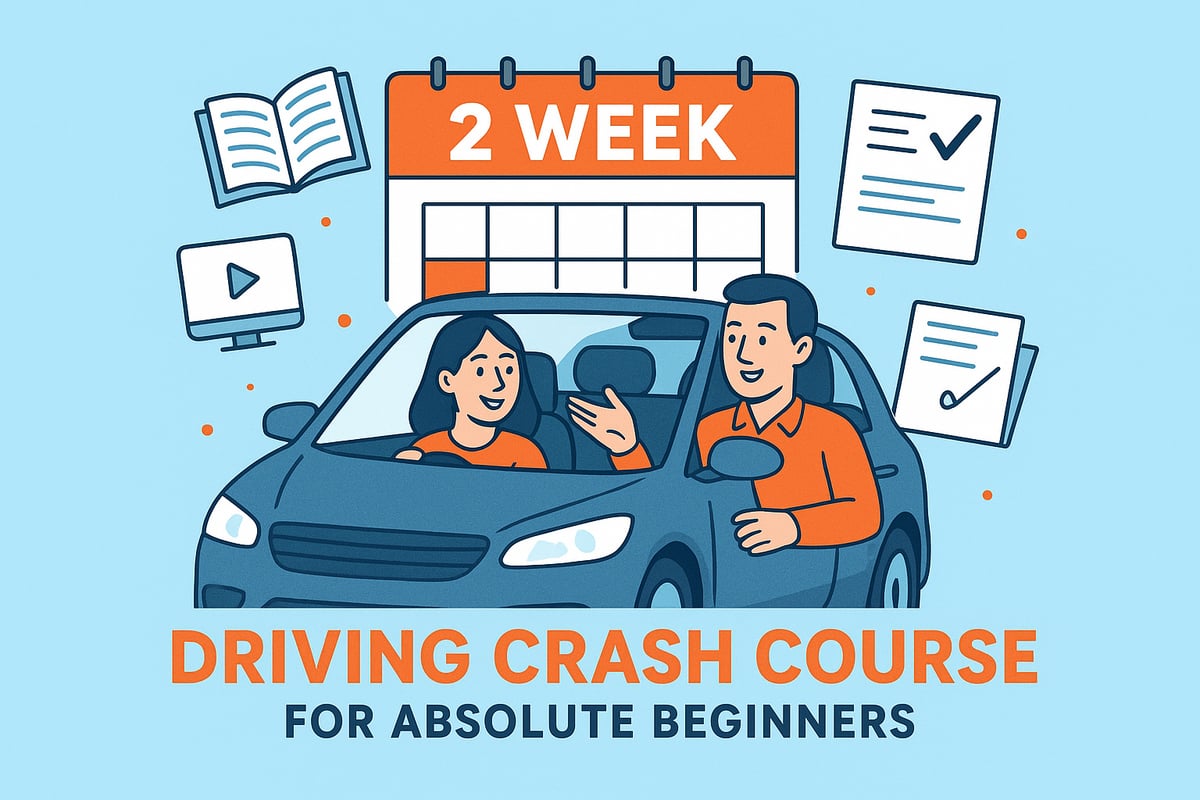
A 2 week driving crash course is an intensive program designed to help learners achieve driving test readiness in just 14 days. Unlike traditional weekly lessons that might stretch over months, this format compresses all the essential learning into a focused, daily schedule.
These courses typically include several hours of tuition each day, covering both theory and practical skills. In 2025, the popularity of such courses is soaring across the UK, especially among absolute beginners eager to pass their test quickly. On average, pass rates for intensive courses are higher than standard lessons, making them an attractive option for many.
Who Should Consider a 2 Week Course?
A 2 week driving crash course is ideal for students on school breaks, busy professionals with limited free time, or anyone facing an upcoming deadline, like starting a new job. If you learn best in immersive settings and can dedicate time daily, this approach could suit you well.
Recent success stories include nervous beginners who gained confidence quickly, thanks to the focused learning environment. However, if you experience high anxiety behind the wheel, consider your comfort level with fast-paced learning before enrolling.
Pros and Cons of Intensive Courses
Choosing a 2 week driving crash course brings several advantages: rapid skill progression, total immersion, and flexible scheduling to fit around your commitments. Many learners appreciate the momentum these courses provide. On the flip side, the fast pace can lead to fatigue or information overload if you are not prepared.
Costs can be similar to spreading lessons over months, but you save time and may require fewer total hours. According to Pass Rates for Intensive Driving Courses, intensive learners in 2025 see notably higher success rates compared to traditional methods. Satisfaction levels are also high, though it's important to be honest about your stamina and focus.
What’s Included in a Typical Package?
Most 2 week driving crash course packages include a set number of tuition hours, usually between 20 and 40, plus theory and practical test fees. Expect perks like online learning resources, mock tests, and sometimes home or work pickup for each lesson.
Flexible lesson times and dedicated instructor support are standard. For complete beginners in 2025, packages often feature online theory modules and frequent practice tests to boost confidence and knowledge ahead of the real exam.
Choosing the Right Provider
When selecting a 2 week driving crash course provider, prioritize those with ADI-approved instructors and a strong track record aligned with DVSA guidelines. Check reviews, published pass rates, and make sure their packages can be tailored to your individual needs.
Be cautious of hidden fees or providers who do not offer support with test bookings. Transparency and good communication are key. Choosing a reputable provider will set you up for the best possible experience, making your journey to passing both smooth and successful.
How to Prepare for Your 2 Week Driving Crash Course
Getting ready for your 2 week driving crash course is all about setting yourself up for success before you even turn the ignition. Preparation is your secret weapon, helping you make the most of every lesson and feel confident from day one.
Pre-Course Essentials: What You Need
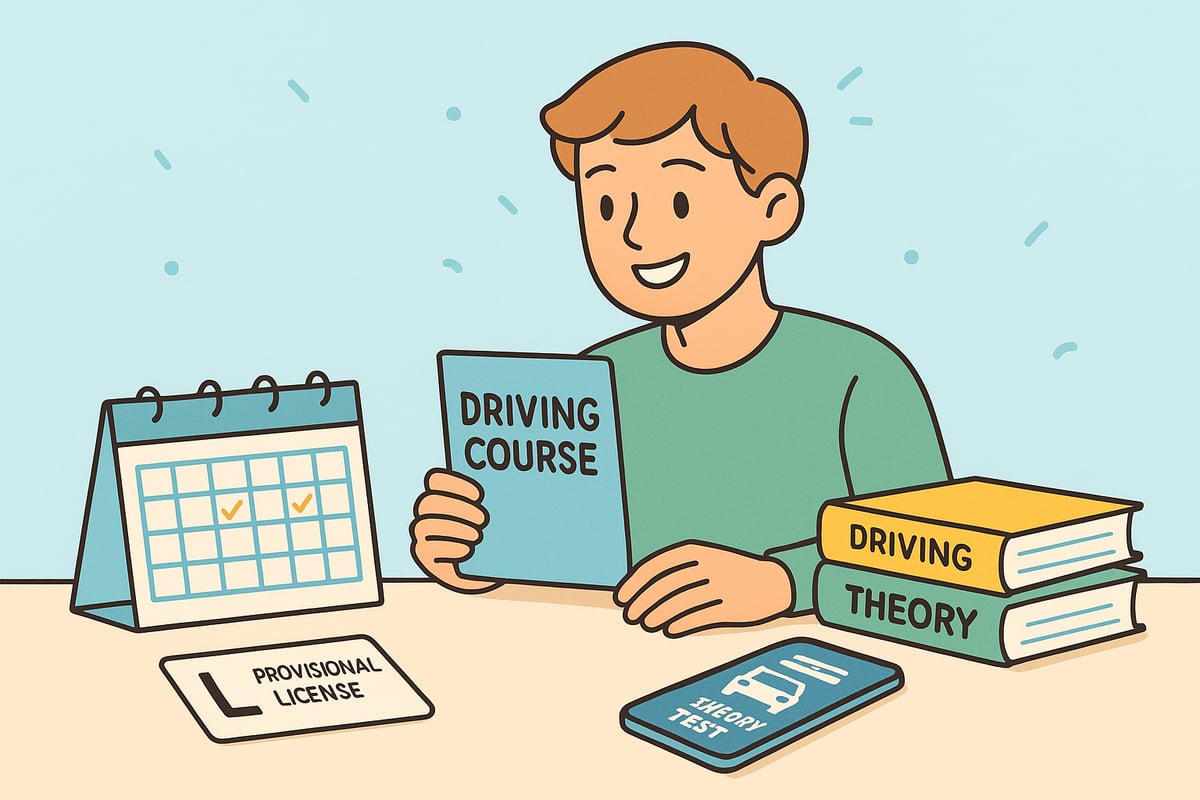
Before you start your 2 week driving crash course, make sure you have all the basics covered. You will need a valid provisional driving license, so apply early if you do not have one yet. Book your course well in advance, as driving test waiting lists are at a record high in 2025, and slots fill up quickly.
Check your eyesight by reading a number plate from 20 metres and ensure you meet any medical requirements. Gather learning resources such as the DVSA app, theory books, and practice materials. Set up a folder or app to keep all your documents in one place. Being organized from day one sets a positive tone for your 2 week driving crash course.
Theory Test Preparation
A big part of succeeding in your 2 week driving crash course is acing the theory test. Try to pass your theory test before or in the early days of your course, as you cannot book the practical test without it. Use the DVSA Theory Test app, online courses, and official books to study.
Practice mock tests daily, including hazard perception clips, to get familiar with the format. Most beginners need around 10 to 15 hours of focused study time. Creating a study schedule and tracking your progress can help you stay on target. Remember, a strong theory foundation will boost your confidence during practical lessons.
Setting Realistic Expectations
Honest self-assessment is key when starting your 2 week driving crash course. Think about your current knowledge, comfort around cars, and any nervousness you might have. These courses require a big daily time commitment, often 2 to 4 hours of instruction plus self-study.
Expect to feel challenged, especially in the first few days, but stay motivated by focusing on daily progress. Managing nerves is normal; try deep breathing or short walks before lessons. On average, students spend 20 to 30 hours behind the wheel over two weeks, so pace yourself and celebrate small wins along the way.
Organizing Your Schedule for Success
Balancing a 2 week driving crash course with work, school, or personal commitments takes planning. Use a weekly planner to block out lesson times, study sessions, and rest periods. Prioritize sleep and downtime, as your brain needs recovery to absorb new driving skills.
Communicate clearly with your instructor about your availability and any challenges you face. Flexibility is often possible, especially if you need to adjust lesson times. Staying organized and proactive will help you avoid burnout and keep you focused on your goal of passing your test quickly.
Day-by-Day Breakdown: What to Expect During Your 2 Week Course
Embarking on a 2 week driving crash course is a transformative experience that packs months of learning into just 14 days. Wondering what your journey will look like, day by day? Here’s a detailed breakdown to help you visualize your progress, manage your expectations, and maximize your chances of passing quickly.
Week 1: Building the Foundations
Your 2 week driving crash course starts with the basics, ensuring you develop a solid foundation before moving onto more advanced skills.
Day 1-2: You’ll meet your instructor, get familiar with the car, and learn cockpit drill essentials. Expect to cover seat and mirror adjustment, dashboard controls, and safety checks.
Day 3-4: Now, you’ll practice moving off and stopping smoothly. Clutch control and gear changes become second nature as you repeat these core actions.
Day 5: Simple junctions are introduced. You’ll tackle left and right turns, while mastering mirror checks and signaling.
Day 6: It’s time for basic maneuvers. Practice turn in the road and reverse parking, building confidence with car positioning.
Day 7: Your instructor will recap everything, offer feedback, and focus on areas needing extra attention.
Here’s a sample progress table for Week 1:
| Day | Focus Area | Typical Progress |
|---|---|---|
| 1-2 | Cockpit drill, controls | Understanding basics |
| 3-4 | Moving off, gear use | Smoother starts/stops |
| 5 | Junctions, turns | Controlled turning |
| 6 | Maneuvers | Building control |
| 7 | Recap, feedback | Confidence boost |
By the end of Week 1, most beginners in a 2 week driving crash course can handle the car independently in quiet areas. You’ll likely spend 2-3 hours daily behind the wheel, with each skill building on the last. This immersive approach helps you retain knowledge and progress faster than traditional lessons.
Week 2: Advancing Skills and Test Readiness
The second week of your 2 week driving crash course shifts gears to more complex skills and test preparation.
Day 8-9: You’ll face complex junctions, roundabouts, and multi-lane roads. These sessions introduce busier environments and higher speeds.
Day 10: Emergency stops and hazard perception are key. You’ll also start independent driving exercises, following sat nav or road signs.
Day 11-12: Advanced maneuvers like bay parking and parallel parking are tackled. Your instructor will tailor these sessions to your strengths and areas for improvement.
Day 13: It’s mock test day. You’ll complete a full practical test simulation, receiving feedback on any weak spots.
Day 14: The final day is all about review and confidence building. Your instructor will address any last concerns and help you feel test-ready.
Progress during week two is rapid. Learners often notice a dramatic improvement in handling busy roads and responding to hazards. According to Average Hours to Pass UK Driving Test 2025, students on a 2 week driving crash course typically require fewer total hours to reach test standard compared to weekly lessons.
By the end of this week, you’ll be familiar with the practical test format, common routes, and examiner expectations. Most importantly, you’ll have the skills and confidence to pass.
Common Challenges and How to Overcome Them
A 2 week driving crash course is intense, and it’s normal to face a few bumps along the way. Here are the most common challenges, with tips to help you overcome them:
- Fatigue and Information Overload: Intensive learning can be tiring. Make sure to rest, eat well, and take regular breaks.
- Test Anxiety and Nerves: Nervousness is natural. Practice mindfulness, deep breathing, or short walks to reset your mind.
- Adapting to Conditions: You might drive in rain, bright sun, or at dusk. Embrace the variety, as it builds real-world skills.
- Staying Motivated: Set daily goals and celebrate small wins. Tracking your progress can keep spirits high.
If you find yourself struggling, communicate openly with your instructor. They can adjust lesson pacing or revisit challenging topics. Remember, every learner is different, and a 2 week driving crash course is tailored to help you succeed on your own terms.
LPOD Academy: Your Partner in Intensive Driving Success
Choosing the right support is crucial for your 2 week driving crash course journey. LPOD Academy offers comprehensive packages designed for beginners who want to pass fast.

With nationwide coverage, flexible pickup options from home or work, and tailored lesson plans, LPOD Academy ensures your course fits your schedule. Their instructors guide you through every stage, from online theory modules to practical test day.
You’ll benefit from fast-track test booking, real-time progress tracking, and ongoing feedback. LPOD Academy’s high pass rates and glowing testimonials showcase their commitment to learner success.
Getting started is simple: explore their packages, speak with an advisor, and book your 2 week driving crash course in just a few clicks. With the right partner, mastering driving in two weeks is truly within reach.
Essential Tips for Maximizing Your Crash Course Success
If you want to ace your 2 week driving crash course, these practical tips will help you get the most out of every lesson. By focusing on active learning, building confidence, and managing stress, you set yourself up for a higher chance of passing on your first try. Let’s dive into the essentials that make all the difference.
Effective Learning Strategies for Beginners
The key to mastering a 2 week driving crash course is to stay engaged and proactive. Ask questions during every lesson, and don’t be afraid to clarify anything you find confusing. Taking notes after each session helps you track your progress and spot areas needing improvement.
Try using driving apps or simulators at home. These can give you extra practice with theory and hazard perception. Reflection is crucial. Spend a few minutes each evening reviewing what you learned. A daily learning journal is a great way to record milestones and feelings throughout your 2 week driving crash course journey.
- Ask your instructor for real-life tips.
- Practice with friends or family if possible.
- Keep your learning environment distraction-free.
Building these habits early will pay off on test day.
Building Confidence Behind the Wheel
Confidence grows with each session of your 2 week driving crash course. Start by getting comfortable in quiet areas before gradually tackling busier roads. If you can, practice outside of lessons with a family member or friend, just make sure they’re insured and qualified.
Visualization is a powerful tool. Imagine yourself handling tricky situations calmly. Positive self-talk, like reminding yourself of past successes, helps keep nerves at bay. Remember, many successful drivers started out feeling unsure, but regular practice and support made a huge difference in their 2 week driving crash course.
As your skills develop, you’ll notice your confidence increase, making every lesson more productive.
Communication with Your Instructor
Clear, open communication is vital during your 2 week driving crash course. Begin by sharing your goals and any areas where you feel less confident. Don’t hesitate to ask for feedback or clarification whenever you’re unsure.
If you would rather pass in one focused block than stretch lessons over many months, the Gold 35 course takes you from your first lesson through to test day.
If you encounter a specific challenge, bring it up right away. Instructors can then tailor lessons to target your needs. Regular check-ins help you stay on track and prevent small issues from becoming bigger obstacles.
For example, if you struggle with parallel parking, ask for extra practice. This personalized approach speeds up your learning during the 2 week driving crash course and boosts your chance of passing.
Managing Stress and Staying Motivated
Intensive courses can feel overwhelming, so managing stress is crucial for your 2 week driving crash course. Practice deep breathing before lessons and take short breaks if you feel overloaded. Mindfulness techniques, like focusing on your breathing or surroundings, can help you reset.
Set small, achievable goals each day. Celebrate milestones, such as mastering a maneuver or scoring well on a mock test. Stay connected with supportive friends, family, or online communities. They can offer encouragement and motivation.
Research shows that managing stress effectively leads to higher pass rates in a 2 week driving crash course, so don’t underestimate the power of mental preparation.
Making the Most of Mock Tests
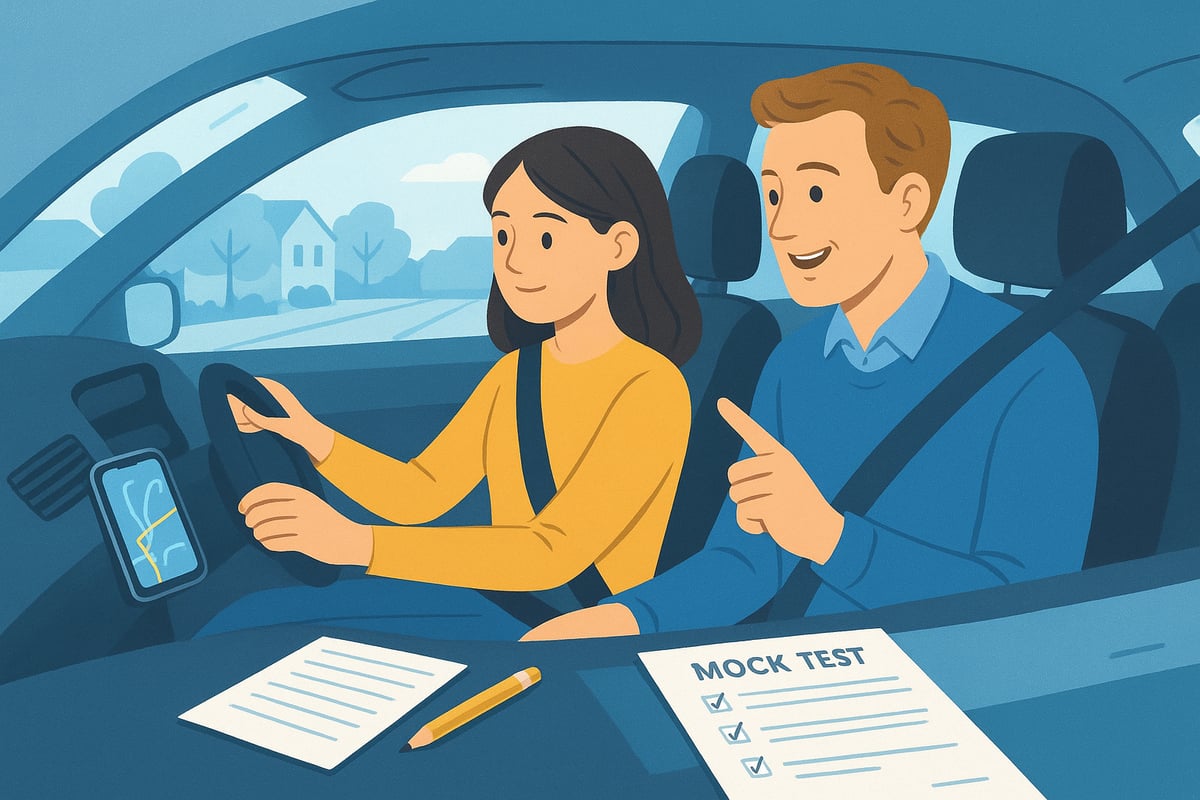
Mock tests are an essential part of any 2 week driving crash course. Treat each mock as if it’s the real thing, following the same procedures and time limits. The feedback you receive after each test is invaluable. Use it to pinpoint weak spots and adjust your practice accordingly.
Aim to take at least two mock tests: one midway through your course and one near the end. Track your progress to see how your skills improve over time. Many learners notice significant performance gains between their first and final mock in a 2 week driving crash course.
This preparation helps reduce nerves and boosts your confidence for the actual test.
Common Mistakes to Avoid During Intensive Learning
Avoid cramming too many lessons into one day. Your brain needs time to process new information during a 2 week driving crash course. Don’t neglect your theory revision, even if you’re focused on practical driving. Hazard perception is just as important as steering and clutch control.
Stay open to feedback and adapt your approach if needed. Becoming complacent or ignoring advice can slow your progress. Also, be mindful of budgeting, as intensive courses can be costly. For more on rising lesson prices and test fees, see this guide on the Cost of Learning to Drive in the UK.
By avoiding these mistakes, you’ll make the most of your 2 week driving crash course and be better prepared for success.
What Happens After Your Crash Course? Preparing for the Practical Test
Completing your 2 week driving crash course is a huge achievement, but the journey isn’t over yet. The next big step is preparing for your practical driving test. Let’s walk through what happens after your intensive learning, how to get ready for the test, and what to expect as you move towards becoming a fully licensed driver.
Booking and Preparing for Your Practical Test
After finishing your 2 week driving crash course, the next step is to book your practical driving test as soon as possible. Fast-track test slots are in high demand, so check the DVSA website regularly for any cancellations or last-minute openings.
To prepare, make sure you gather all the required documents:
- Provisional driving license
- Theory test pass certificate
- Confirmation of your test booking
Double-check your test details, including the date, time, and location. Arrive at the test centre at least 15 minutes early to avoid any last-minute stress. Typically, learners move from completing their 2 week driving crash course to test day within one to two weeks.
What to Expect on Test Day
Test day can feel a bit nerve-wracking, but knowing what to expect helps. The UK practical driving test includes several key parts:
- Eyesight check
- “Show me, tell me” vehicle safety questions
- Around 40 minutes of driving, covering common test routes
- Assessment on maneuvers like parking, emergency stops, and independent driving
Examiners are looking for safe, confident driving and your ability to follow road rules. Test routes are designed to include a mix of road types and traffic situations, so you’ll need to demonstrate everything you learned during your 2 week driving crash course. Remember, nerves are normal, but preparation pays off.
Last-Minute Revision and Practice
The night before your test, focus on reviewing key skills and building your confidence. Here are some last-minute revision tips for those finishing a 2 week driving crash course:
- Go over “show me, tell me” questions
- Practice short drives in different conditions
- Review your weakest maneuvers and parking
- Check road signs and speed limits
Many successful learners find that a quick practice session with their instructor the day before helps to settle their nerves. Keep things relaxed and avoid cramming, as a clear mind helps you recall everything from your 2 week driving crash course.
Dealing with Test Day Anxiety
Feeling anxious before your test? You’re not alone. Managing nerves is a big part of passing after a 2 week driving crash course. Try these simple techniques:
- Deep breathing exercises to calm your mind
- Visualize a successful drive from start to finish
- Bring a bottle of water and a snack for comfort
- Talk to your instructor or a supportive friend beforehand
Studies show that learners who use relaxation techniques often perform better. Remember, your examiner wants you to succeed just as much as you do. Confidence built during your 2 week driving crash course will help you handle those test day jitters.
Understanding Results and Next Steps
Once your test is over, you’ll get your results right away. If you pass, you’ll receive a pass certificate and instructions on how to get your full driving license. Next steps include:
- Applying for your full license online or by post
- Celebrating your success
- Planning your first drive as a qualified driver
If you don’t pass, don’t get discouraged. Review the feedback from your examiner and discuss improvement strategies with your instructor. Most learners who complete a 2 week driving crash course and don’t pass on the first try succeed on their next attempt. Retest rates are high, and support is available to help you get back on track.
Continuing Your Driving Journey Post-Test
Passing your practical test is just the beginning. Consider taking post-test lessons, such as Pass Plus or motorway driving, to build your confidence and skills. Insurance is another important step for new drivers, so shop around for the best deals.
Ongoing learning is key to staying safe on the road. Statistics show that newly qualified drivers are more likely to have accidents, but those who continue their training after a 2 week driving crash course significantly reduce their risk. Keep practicing, stay alert, and enjoy the freedom that comes with your new license.
So, if you’re ready to take the fast lane to driving success in 2025, there’s no better time to start. We’ve covered everything you need to know about two week crash courses, how they work, who they’re for, and what to expect each day. With LPOD Academy’s trusted instructors and flexible packages, you can go from beginner to confident driver in just a fortnight. Why wait and miss out on the freedom of the open road? You’ve got everything you need to make this happen. Book Your Course and take that exciting first step today!
Ready to pass in weeks, not months?
LPOD Academy runs tailored intensive driving courses from 10 to 50 hours across most of the UK, with your theory and practical test support included.
Ready to Book Driving Lessons?
LPOD Academy offers intensive driving courses across the UK. Find your nearest location: