

Published 7 November 2025, updated 14 August 2026
Driving in Bad Weather, Safety Tips for Learners: Stay Confident and Safe on the Road
Learning to drive in challenging weather conditions can feel overwhelming, but it’s one of the most valuable skills you’ll develop as a new driver. Bad weather affects road safety in ways that catch many learners off guard, from reduced visibility in fog to longer stopping distances on wet roads. The key to driving safely in adverse weather is understanding how different conditions impact your vehicle and adjusting your driving techniques accordingly.
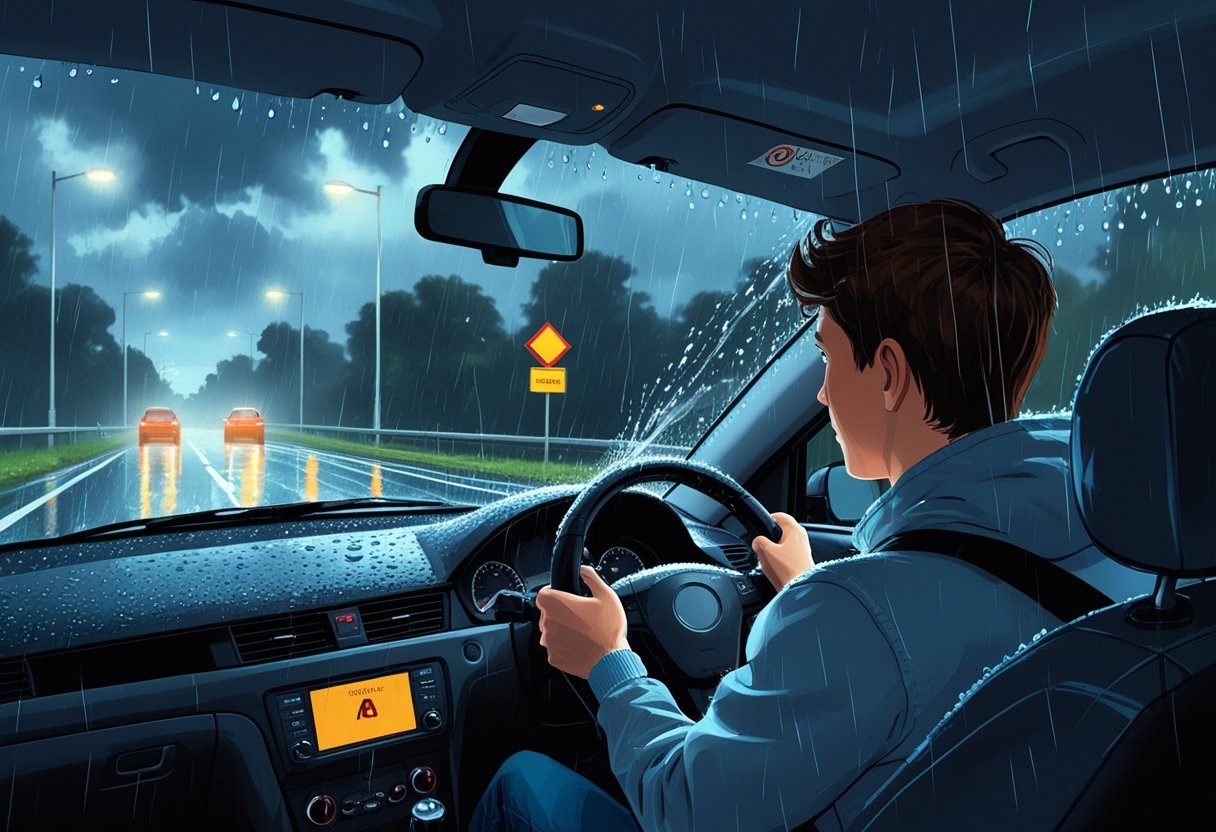
We know that as a learner driver, encountering your first heavy rainstorm or patch of morning fog can be nerve-wracking. The good news is that with proper preparation and the right approach, you can navigate these conditions with confidence. Whether you’re dealing with torrential rain, strong winds, or even those surprisingly tricky hot summer days, there are specific techniques and preparations that will keep you safe.
Wet and windy conditions are far less daunting once you have practised them with an instructor, which an intensive driving course with all-weather practice builds in from the start.
Throughout this guide, we’ll walk you through everything from getting your vehicle ready before you set off to mastering the driving techniques that work best in different weather types. You’ll discover how to adjust your driving style for maximum safety, handle special situations that often catch learners unprepared, and build the confidence you need to drive safely regardless of what the British weather throws at you.
Understanding Bad Weather and Its Impact on Learner Drivers
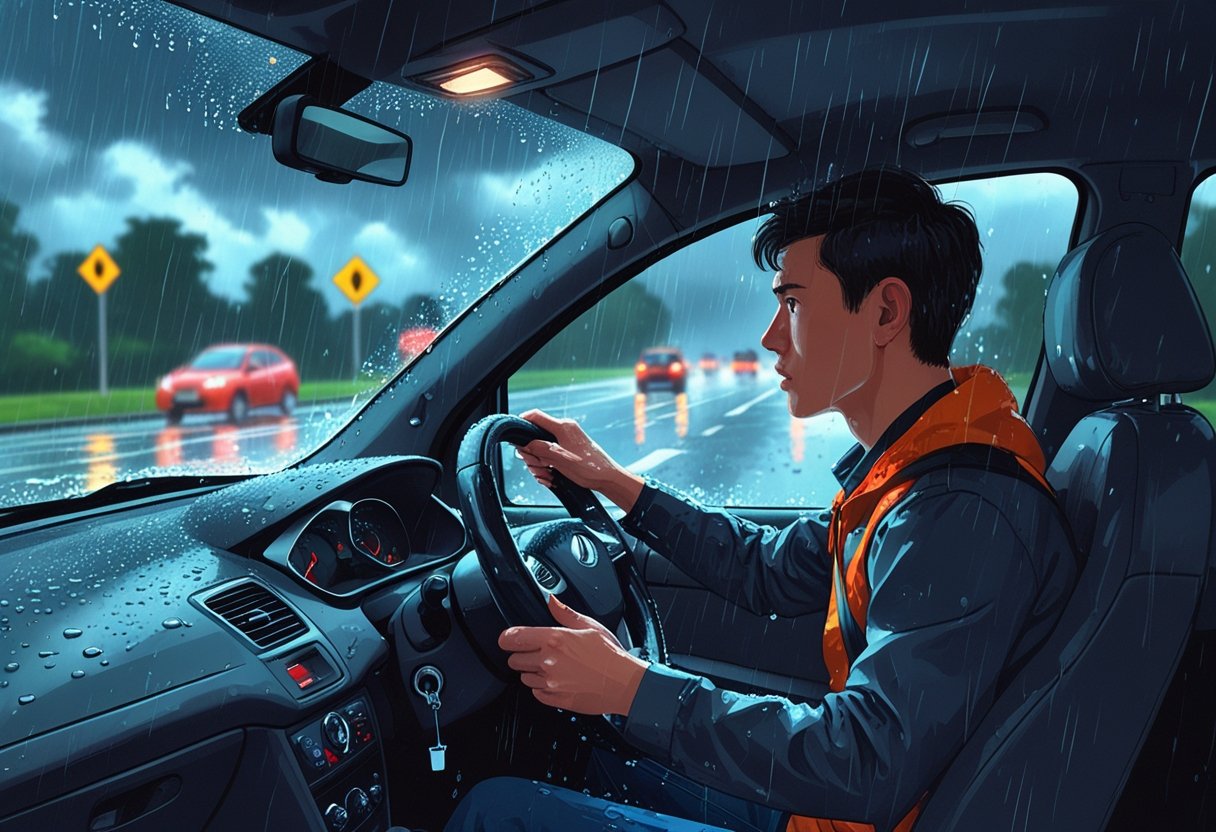
Bad weather transforms familiar roads into challenging environments where stopping distances increase dramatically and visibility drops. UK drivers face unique seasonal challenges that require specific skills and mental preparation to navigate safely.
Common Weather Challenges Faced by UK Drivers
Rain creates the most frequent hazard we encounter on British roads. When water mixes with oil and rubber deposits, road surfaces become incredibly slippery.
Heavy rainfall reduces visibility to just a few metres ahead. Your windscreen wipers might struggle to keep up. Standing water can cause aquaplaning, where tyres lose contact with the road surface entirely.
Strong winds buffet vehicles unexpectedly. Crosswinds on exposed stretches feel particularly unsettling for new drivers. High-sided vehicles like vans and lorries can suddenly veer sideways.
Fog appears without warning, especially during autumn mornings. Visibility can drop below 100 metres in seconds. Other drivers often forget to use appropriate lighting.
Snow and ice transform road grip completely. Black ice remains invisible until you’re sliding. Even light snow makes steering responses feel delayed and unpredictable.
Hail creates temporary but dangerous conditions. The noise inside your car becomes deafening. Road surfaces turn treacherous within minutes.
How Adverse Conditions Change Road Safety Dynamics
Wet roads double your stopping distance compared to dry conditions. At 30mph, you need 23 metres to stop on dry roads but 46 metres when wet.
Visibility challenges mean other drivers can’t see you clearly. Your brake lights and indicators become crucial communication tools. Pedestrians and cyclists become nearly invisible.
Vehicle handling changes dramatically in poor weather. Steering feels less responsive. Braking requires gentler pressure to avoid skidding.
Traffic behaviour becomes more unpredictable. Some drivers crawl along unnecessarily slowly. Others maintain dangerous speeds despite conditions.
Road surface variations create different grip levels. Painted lines, manhole covers, and metal drain covers become skating rinks when wet. Bridge surfaces ice over first.
Following distances must increase significantly. The two-second rule becomes four seconds in wet weather. Leave even more space in fog or snow.
Building Awareness: Why Preparation Matters
Mental preparation starts before you turn the key. Check weather forecasts and plan alternative routes. We recommend postponing non-essential journeys during severe weather warnings.
Pre-journey checks become essential. Test your wipers, lights, and horn. Clear all windows completely, not just small peepholes.
Emergency supplies should live in your boot. Pack a torch, warm clothing, water, and snacks. Keep your mobile phone fully charged.
Route planning helps avoid problem areas. Know which roads flood regularly. Identify alternative paths around exposed hilltops or bridges.
Skill development requires practice in varied conditions. Ask your instructor for specific bad weather lessons. Experience different challenges whilst you have professional guidance.
Confidence building happens gradually through exposure. Start with light rain before tackling heavier downpours. Build your experience systematically rather than avoiding difficult conditions entirely.
Essential Vehicle Preparation Before Setting Out
Getting your car ready before heading out in challenging weather conditions can make the difference between a safe journey and a dangerous situation. We’ll cover the crucial checks you need to make, the essential items to pack, and the proper techniques for clearing your vehicle.
Checking Tyres, Lights, and Windscreen Wipers
Your tyres are your first line of defence against slippery roads. Check the tread depth using a 20p coin – if you can see the outer band when inserted into the tyre grooves, it’s time for new tyres. We recommend maintaining at least 3mm of tread for winter driving, well above the legal minimum of 1.6mm.
Test your tyre pressure when tyres are cold. Under-inflated tyres struggle with grip and can overheat, especially in hot weather conditions. Your vehicle’s manual or the sticker inside the driver’s door will show the correct pressure.
Lights require a thorough inspection before every journey. Clean any dirt or snow from all light units. Check that headlights, brake lights, indicators, and hazard lights work properly. Remember, if visibility drops below 100 metres, you’ll need functioning fog lights.
Your windscreen wipers play a vital role in maintaining clear vision. Replace worn blades that leave streaks or miss patches of glass. Test both the wipers and washers, ensuring the washer fluid reservoir stays topped up with quality screenwash.
Emergency Supplies: What to Always Carry
Smart preparation means packing supplies that could prove invaluable if weather conditions deteriorate unexpectedly. Keep a basic emergency kit in your boot throughout winter months and challenging weather periods.
Essential items include:
- Warm blanket and extra clothing
- First aid kit and any required medications
- Torch with spare batteries
- Phone charger or power bank
- Bottled water and non-perishable snacks
- Jump leads or portable battery starter
We also suggest carrying a small shovel for clearing snow, sand or cat litter for extra grip under wheels, and warning triangles. A paper map provides backup navigation if your phone loses signal.
Keep these supplies in a waterproof bag or container. Check expiry dates on food and medications regularly, replacing items as needed.
Using De-Icer and Clearing Windows Properly
Proper window clearing protects both your safety and your wallet. Driving with restricted visibility can result in penalties and accidents that were easily preventable.
Start your preparation the night before. Apply de-icer to windows and mirrors before frost forms. This prevents ice from bonding strongly to the glass, making morning clearing much easier.
Never use hot water on frozen windows, as rapid temperature changes can crack the glass. Instead, use proper de-icer spray and allow it time to work. We recommend keeping de-icer inside your house overnight so it doesn’t freeze solid.
Clear all windows completely, not just small peepholes. Remove snow from your roof, bonnet, and boot to prevent it sliding onto your windscreen whilst driving. Don’t forget wing mirrors and number plates.
Run your engine and heating system whilst clearing external surfaces. This warms the cabin and helps prevent internal condensation. Use air conditioning to remove moisture from inside the car, even during cold weather.
Mastering Driving Techniques for Different Bad Weather Types
Each type of challenging weather brings its own unique hazards and requires specific techniques to keep you safe. Learning how to adjust your speed, following distance, and vehicle control for wet roads, limited visibility, icy surfaces, and gusty conditions will build your confidence behind the wheel.
Driving in Rain: Handling Slippery Roads and Hydroplaning
When driving in rain, your stopping distance doubles compared to dry conditions. This happens because your tyres lose grip on wet surfaces.
We recommend keeping at least a four-second gap between you and the car ahead. Count “one thousand one, one thousand two” to measure this distance properly.
Watch for hydroplaning signs:
- Steering feels light or unresponsive
- Engine revs higher than usual
- You hear a swooshing sound from the tyres
If you feel your car hydroplaning, don’t panic or brake suddenly. Gently ease off the accelerator and keep your steering wheel straight. Your tyres will regain contact with the road surface.
Drive more slowly through puddles and standing water. Even shallow water can cause you to lose control if you hit it too fast.
Check your windscreen wipers before rainy weather hits. If they leave streaks or don’t clear water properly, replace them straight away.
Turn on your headlights in heavy rain, even during daytime. This helps other drivers see you better through the spray and reduced visibility.
Driving in Fog: Maximising Road Visibility and Using Fog Lights
Fog creates some of the most dangerous driving conditions because it severely limits how far you can see ahead.
Use your fog lights only when visibility drops below 100 metres (roughly 20 car lengths). Turn them off as soon as visibility improves because they can dazzle other drivers.
Key fog driving techniques:
- Slow down before entering foggy patches
- Use your windscreen wipers and washers to keep glass clear
- Listen for traffic sounds with your radio turned down
- Follow road markings and cat’s eyes for guidance
Don’t follow the rear lights of the car ahead too closely. This gives you a false sense of security and reduces your reaction time.
At junctions, listen carefully for approaching traffic before pulling out. Once you decide it’s safe, move with confidence rather than hesitating in the road.
If visibility becomes extremely poor, pull over safely and wait for conditions to improve. Use your hazard lights if you must stop on the roadside.
Keep your movements smooth and steady. Sudden steering or braking can be especially dangerous when you can’t see potential hazards clearly.
Driving in Snow: Staying in Control When Roads Are Treacherous
Driving in snow requires the gentlest touch on all your controls. Harsh acceleration, braking, or steering can send you into a skid.
Leave up to 10 car lengths between you and the vehicle ahead. Snow and ice dramatically increase your stopping distance, sometimes by up to 10 times normal.
Essential snow driving tips:
- Start in second gear to reduce wheel spin
- Use the highest gear possible when moving
- Brake very gently and early for hazards
- Steer smoothly around corners
Clear all snow and ice from your car before setting off. This includes your roof, windows, mirrors, and number plates. Failing to do this is actually illegal and dangerous.
When climbing hills, try to maintain steady momentum without changing gears. If traffic is crawling uphill, wait at the bottom until the road clears.
Going downhill, select a low gear before you start descending. Use engine braking rather than your foot brake to control your speed.
If you start to skid, steer gently in the direction you want to go and avoid braking. This technique, called “steering into the skid,” helps you regain control.
Driving in Strong Winds: Coping with Gusts and Large Vehicles
Strong winds affect all vehicles, but high-sided vehicles like vans and lorries struggle the most. As a learner, you’ll mainly drive cars, but you still need to be prepared.
Expect sudden gusts when passing gaps between buildings, bridges, or areas with few trees. These spots channel wind and can push your car sideways.
Keep both hands firmly on the steering wheel and maintain a relaxed but secure grip. This lets you react quickly to sudden wind pressure.
Wind driving strategies:
- Reduce speed to give yourself more reaction time
- Leave extra space on both sides of your car
- Be extra cautious when overtaking large vehicles
- Watch for debris blown into the road
Large vehicles create turbulence as they pass you. Their size acts like a sail, and they can rock back and forth. Give them plenty of room and be ready for your car to move slightly as they go by.
If winds become too strong, find a safe place to stop and wait. Service stations or car parks away from trees offer good shelter until conditions improve.
Adjusting Your Driving Style for Safety
When the weather turns nasty, we need to completely rethink how we approach driving. The key changes involve giving ourselves much more time and space to react, slowing down significantly, and being extra careful around corners and junctions where conditions can catch us off guard.
Increasing Stopping Distances in Wet and Icy Conditions
This is absolutely crucial for road safety in poor weather. Our stopping distances increase dramatically when roads become slippery.
In wet conditions, we should double our normal following distance. If we usually keep a two-second gap, we need to make it four seconds. The roads become much less grippy, and our tyres struggle to find traction when we brake.
Icy conditions are even trickier. We might need up to ten times the normal stopping distance on ice. That means if we usually stop in 20 metres, we could need 200 metres on icy roads.
Here’s what happens to stopping distances in different conditions:
- Dry roads: Normal stopping power
- Wet roads: 2x longer stopping distance
- Snow: 4-6x longer stopping distance
- Ice: Up to 10x longer stopping distance
We can test our grip gently by applying the brakes lightly at low speed. This gives us a feel for how slippery the road surface is. If the car slides easily, we know to be extra cautious.
Remember, modern cars have ABS brakes, but they can’t work miracles. We still need to brake earlier and more gently than usual.
Managing Speed and Following Distances
Speed management becomes our best friend in bad weather. We need to slow down much more than most new drivers realise.
A good rule is to reduce our speed by at least a third in wet conditions. If the speed limit is 60 mph, we should consider 40 mph as our maximum. In snow or ice, we might need to go even slower.
The two-second rule doesn’t work in poor weather. Instead, we use the four-second rule for wet roads. We pick a landmark ahead, count when the car in front passes it, then count how long until we reach the same spot.
For icy conditions, we extend this to six or even eight seconds. It might feel excessive, but it could save our lives.
Here’s how we judge appropriate following distances:
- Count “one-thousand-and-one, one-thousand-and-two”
- In wet weather, aim for four counts
- In snow or ice, aim for six to eight counts
We also need to avoid sudden movements. Harsh braking, quick acceleration, and sharp steering can all cause us to lose control. Everything should be smooth and gradual.
Navigating Bends and Junctions in Poor Weather
Corners and junctions are where things can go wrong quickly in bad weather. The combination of steering, braking, and changing road surfaces creates perfect conditions for skids.
We should approach bends much more slowly than usual. The golden rule is to do all our braking on the straight sections before the corner, not while we’re turning. Once we’re in the bend, we maintain steady speed or accelerate gently.
At junctions, we need extra time to assess what’s happening. Other drivers might be struggling with the conditions too, so we can’t predict their behaviour as easily.
Key techniques for corners:
- Brake before the bend, not during it
- Use gentle steering inputs
- Look well ahead to plan our path
- If we start to skid, ease off the accelerator and steer gently in the direction we want to go
Hills present special challenges. Going uphill, we need steady momentum without harsh acceleration. Going downhill, we use engine braking by selecting a lower gear rather than relying on our brakes.
Roundabouts need particular care because we’re combining steering with potential braking. We approach them slowly and leave plenty of space for other vehicles who might be struggling with grip.
Special Situations and Extra Cautions for Learners
Learner drivers face unique challenges when dealing with large vehicles during bad weather, and you’ll need specific strategies when unexpected conditions suddenly change whilst you’re on the road.
Dealing with Large and High-Sided Vehicles in Adverse Conditions
Large vehicles create extra hazards in bad weather that we don’t always think about during fair conditions. Lorries, buses, and delivery vans behave very differently when rain, wind, or ice affects the roads.
Wind creates the biggest challenge. High-sided vehicles act like sails in strong gusts, and they can suddenly swerve into your lane without warning. We recommend staying well back from these vehicles, especially on exposed stretches of road or near bridges.
When a lorry overtakes you in windy conditions, grip your steering wheel firmly. The turbulence from large vehicles can push your car sideways unexpectedly. This effect becomes much stronger during storms or high winds.
Spray from large vehicles makes visibility terrible. Their tyres throw up massive amounts of water that can completely blind you for several seconds. Don’t follow closely behind lorries in wet weather, even if traffic feels heavy.
Large vehicles take much longer to stop on wet or icy roads. We suggest doubling your normal following distance behind them, then adding even more space for safety.
Responding to Unexpected Weather Changes on the Move
Weather can change quickly whilst you’re driving, and knowing how to respond keeps you safe. Sudden rain showers, fog banks, or icy patches often catch learner drivers off guard.
Slow down immediately when conditions worsen. Don’t wait to see how bad it gets. The moment you notice heavier rain, reduced visibility, or slippery surfaces, reduce your speed straight away.
Check your mirrors before you brake or slow down. Other drivers might not have noticed the weather change yet, so give them warning with your brake lights.
Find a safe place to pull over if conditions become dangerous. Service stations, car parks, or lay-bys provide shelter until weather improves. Never stop on the hard shoulder unless it’s an emergency.
Turn on your headlights when visibility drops, even during daytime. Other drivers need to see you clearly when weather conditions deteriorate suddenly.
Keep your windscreen wipers and demisters working properly. Clear vision becomes critical when weather changes unexpectedly, so test these systems regularly.
Tips for Hot Weather and Unusual UK Conditions
Hot weather can catch us off guard, especially when we’re still building our driving confidence. Engine overheating and sudden weather changes present unique challenges that require specific preparation and awareness.
Driving in Hot Weather: Risks You Might Not Expect
When temperatures soar, our cars face stress that we don’t often think about. Your engine works harder in hot weather conditions, and cooling systems can struggle to keep up.
Check your coolant levels before long journeys. Low coolant is the quickest route to an overheated engine on the motorway.
Keep an eye on your temperature gauge whilst driving. If it starts climbing into the red zone, pull over safely and switch off the engine immediately.
Tyre pressure changes dramatically in heat. Hot tarmac and high temperatures can cause tyres to expand, leading to blowouts if they’re already overinflated.
Check tyre pressure when tyres are cold, preferably in the morning. Remember that underinflated tyres are just as dangerous, creating more friction and heat.
Plan rest stops every two hours during hot weather. This gives both you and your car a chance to cool down properly.
Air conditioning puts extra strain on your engine, so don’t hesitate to use windows instead on shorter trips. However, at motorway speeds, air con is actually more fuel efficient than open windows.
Staying Safe After Sudden Weather Shifts
British weather loves to surprise us, and sudden changes can create hazardous driving conditions within minutes.
Heavy rain after dry spells creates particularly slippery roads. Oil and rubber deposits mix with water, making surfaces more dangerous than usual rain.
Reduce your speed immediately when conditions change. What felt safe moments ago might now require completely different driving techniques.
After storms or high winds, watch for debris on roads. Fallen branches, displaced signs, and scattered materials can appear around blind corners.
Flash flooding happens faster than we expect. If you encounter standing water and can’t see the bottom, don’t risk it. Turn around and find an alternative route.
Keep emergency supplies in your boot year-round: a torch, blanket, water, and snacks. Weather can trap us unexpectedly, and being prepared reduces stress enormously.
Trust your instincts about weather conditions. If something feels unsafe, find somewhere secure to wait it out. Arriving late beats not arriving at all.
Frequently Asked Questions
New drivers often have specific concerns about handling challenging weather conditions. These answers tackle the most common worries, from preparing your car for fog to staying composed during storms.
What are the essential preparations I should make to my vehicle before I set off in foggy conditions?
Your windscreen needs to be spotless inside and out. Any smears or dirt will scatter light and make visibility worse.
Check your headlights and tail lights are clean and working properly. Fog lights should only be used when visibility drops below 100 metres.
Top up your windscreen washer fluid. You’ll use it more than usual to clear road spray and grime.
Make sure your wipers are in good condition. Old blades leave streaks that become dangerous in fog.
Test your heating and ventilation system. You’ll need it to keep your windows clear of condensation.
Could you walk me through the steps to safely handle my car when I encounter unexpected ice on the roads?
Stay calm and avoid sudden movements with the steering wheel, brakes, or accelerator. Harsh inputs will make things worse.
If your car starts to slide, ease off the accelerator gently. Don’t slam on the brakes or you’ll lose control completely.
Steer in the direction you want to go, not against the skid. This feels wrong at first but it works.
Keep your movements smooth and gradual. Think of everything in slow motion.
Once you regain control, reduce your speed significantly. Ice patches often appear in clusters, especially on bridges and shaded areas.
How can I best adjust my driving technique to maintain control during heavy rain and reduced visibility?
Slow down more than you think you need to. Your stopping distance doubles on wet roads, so leave at least four seconds between you and the car ahead.
Use dipped headlights even during the day. This helps other drivers see you through the spray and murk.
Stay in the wheel tracks of the vehicle in front when possible. These areas have less standing water.
Avoid sudden steering movements. Wet roads reduce your tyres’ grip dramatically.
If you can’t see clearly, pull over safely and wait. Heavy downpours often pass quickly, and it’s better to arrive late than not at all.
What’s the most effective way to manage the dazzling glare from other vehicles’ headlights in the dark?
Look towards the left edge of your lane rather than directly at oncoming lights. This keeps you oriented without being blinded.
Keep your windscreen clean inside and out. Dirty glass scatters light and makes glare much worse.
Avoid looking at your phone or sat nav screen before driving. Bright screens reduce your night vision for several minutes.
Slow down when you’re being dazzled. You can’t react to hazards you can’t see properly.
If someone behind you has their full beams on, adjust your rear view mirror to its night setting. This reduces the glare significantly.
I’d love to know, what are the key strategies for staying calm and focused when driving through a storm?
Plan your journey before you leave. Know alternative routes in case you need to change direction or find shelter.
Pull over safely if conditions become too severe. There’s no shame in waiting for the worst to pass.
Keep your radio on for weather updates and traffic information. Knowledge helps reduce anxiety.
Focus on your breathing if you feel stressed. Take steady, deep breaths to stay centred.
Remember that you’re in control of your speed and following distance. These are your main tools for staying safe.
Talk to yourself positively. Remind yourself that you’ve trained for this and you can handle it.
Could you share some wisdom on how to predict and respond to the behaviour of other drivers in adverse weather conditions?
Watch for erratic speeds and sudden lane changes. Some drivers panic in bad weather and make poor decisions.
Give extra space to larger vehicles like lorries and buses. They create more spray and take longer to stop.
Be especially cautious around motorcycles and cyclists. They’re more vulnerable to wind and slippery surfaces.
Expect some drivers to have their hazard lights on inappropriately. Don’t assume they’re indicating or stopping.
Look for drivers who seem hesitant or overly slow. They might be struggling with visibility or confidence.
Be patient with others who are driving cautiously. We’re all trying to get home safely, and aggressive behaviour helps nobody.
Getting this right with an instructor beside you
Car control comes from repetition with someone watching and correcting you, which is hard to replicate from an article.
LPOD Academy intensive courses run from 10 to 50 hours with the same instructor throughout, covering around 95% of England, Wales and Scotland.
If you are not sure how many hours you need, the recommendation tool asks a few questions and suggests a package.
Ready to pass in weeks, not months?
LPOD Academy runs tailored intensive driving courses from 10 to 50 hours across most of the UK, with your theory and practical test support included.
View our intensive course packages
Find the right course for you
Ready to Book Driving Lessons?
LPOD Academy offers intensive driving courses across the UK. Find your nearest location: