


Published 11 November 2025, updated 3 August 2026
Want to get your driving licence in just seven days? One week driving courses are quickly changing the way UK learners hit the road, offering a fast track for anyone with a packed schedule. With demand for speedy, intensive options soaring, these courses promise efficiency and the chance to pass your test sooner.
If you’re wondering whether one week driving courses are the right fit for you, this guide is here to help. Inside, you’ll discover how these courses work, who benefits most, what they cost, and tips to boost your chances of success. Ready to accelerate your journey? Let’s dive in and explore everything you need to know for 2025.
What Are One Week Driving Courses?
If you are looking for a fast and efficient way to learn to drive, one week driving courses could be the answer. These courses are designed for learners who want to get on the road quickly, offering a streamlined approach compared to the traditional weekly lesson format.
Definition and Overview
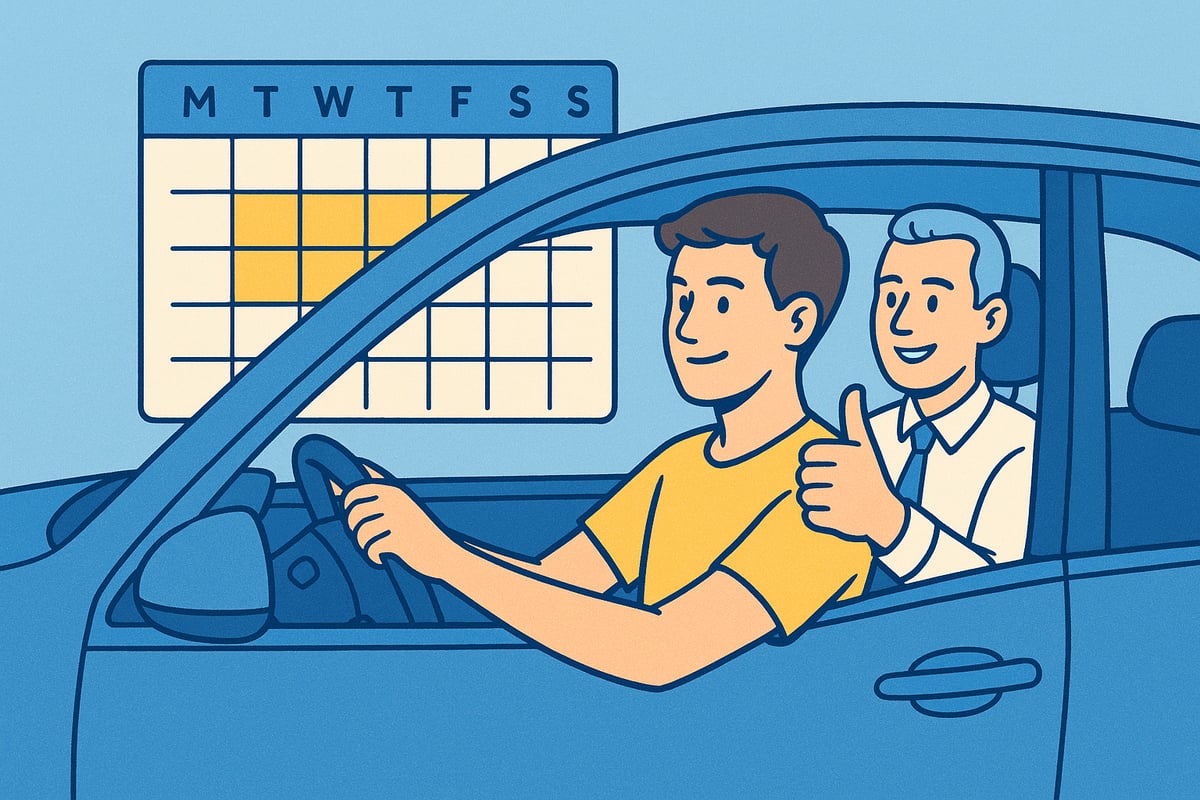
One week driving courses are intensive programmes that condense the process of learning to drive into just five to seven days. Unlike traditional lessons that spread out over several months, these courses pack daily sessions into a single week, often with two to five hours of one-on-one instruction each day.
The structure is tailored to maximize learning in a short timeframe. Most providers include both practical and theory test preparation, so you cover everything from basic controls to advanced maneuvers. Some even offer online resources and classroom-style theory revision to help you pass both parts of your test.
Why are one week driving courses so popular in the UK? For many, busy schedules and the need for quick results mean that waiting months for a licence is not practical. Since the pandemic, demand for these fast-track options has soared, as learners look for ways to catch up on postponed tests and lessons.
These courses are suitable for a wide range of learners, including:
- Complete beginners starting from scratch
- Intermediates who have had some lessons already
- Test re-takers aiming for a pass after previous attempts
A standout feature is the flexibility some providers offer. For example, if you are not local, certain companies provide residential packages, so you can stay nearby while you focus solely on your driving.
If you are curious about the detailed structure and what to expect, you can learn more from this overview on How Intensive Driving Courses Work.
Compared to semi-intensive courses or weekly lessons, one week driving courses offer a much quicker route to your test, often with fast-track test bookings included.
Who Should Consider a One Week Driving Course?
One week driving courses are designed for people who need results, fast. Are you a student trying to fit driving lessons into school holidays? Maybe you are a professional with limited time off, or someone who has failed the test before and wants a fresh approach. These courses can be ideal in all these scenarios.
Different learning styles and experience levels can benefit, but commitment and stamina are essential. The pace is demanding, so you need to be ready to focus intensely each day.
Here’s a quick look at who these courses suit best:
- Students with a break in their timetable
- Busy professionals needing a licence for work
- Those who have failed their test and want a new strategy
- People who learn best through immersion and repetition
For example, some learners find traditional weekly lessons frustrating after multiple failed attempts. Switching to an intensive format, they discover that daily practice and constant feedback help them finally succeed.
However, one week driving courses are not for everyone. If you get overwhelmed easily or prefer to take things slowly, you might find the intensity challenging. Flexibility and a willingness to commit fully for a week are key to making the most of this opportunity.
How One Week Driving Courses Work: Step-by-Step
Curious about the journey from booking to passing with one week driving courses? Let’s break down the process so you know exactly what to expect. Each step is designed to maximize your learning, build your confidence, and get you ready for your driving test fast. If you want a deeper dive, you can always check the Intensive Driving Courses Overview for further details.
Step 1: Initial Assessment and Choosing the Right Course
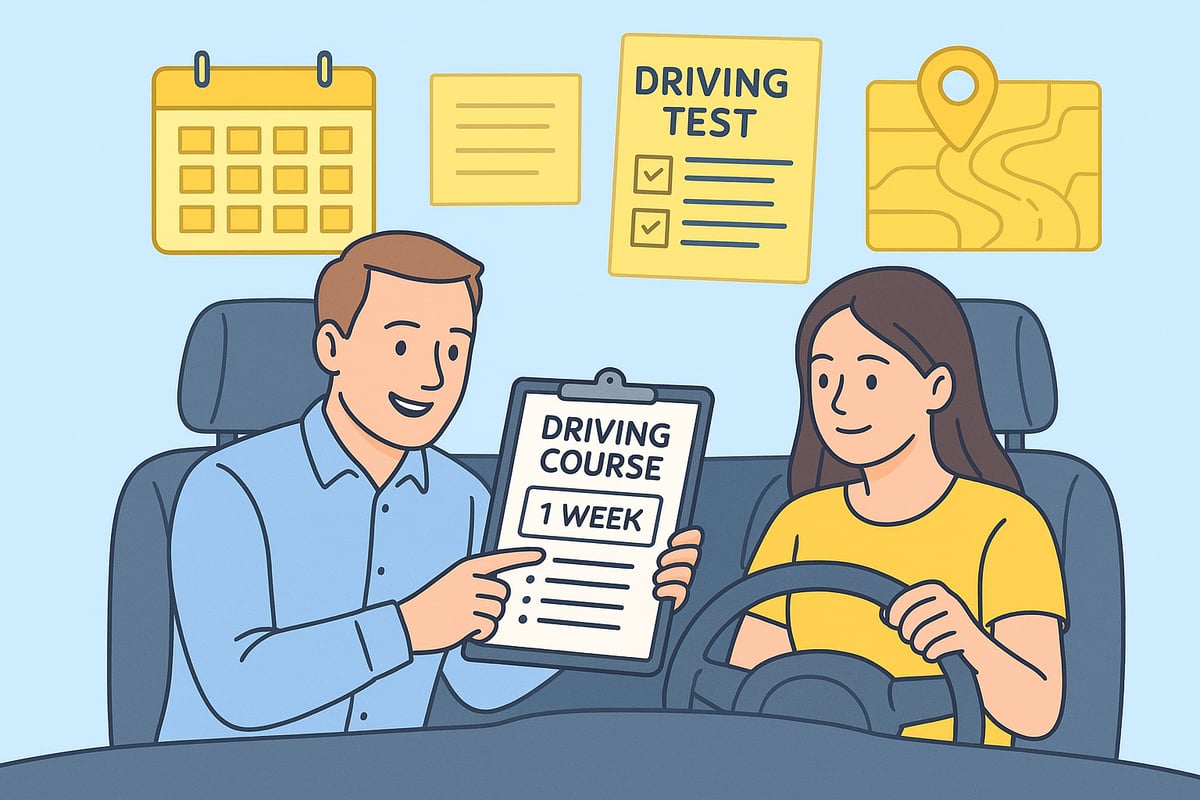
The first step with one week driving courses is an honest assessment of your driving experience. Are you a complete beginner, someone with a few lessons under your belt, or a test re-taker? Providers will often recommend a course package, such as 10, 20, or 30+ hours, tailored to your current skill level.
This initial evaluation may include a short assessment drive or a detailed questionnaire. Being truthful here is key, as it ensures your one week driving course is matched to your needs and maximizes your chances of success.
Some companies, like LPOD Academy, specialize in custom packages, helping you choose the right path. Remember, the right fit makes all the difference in your learning journey.
Step 2: Booking and Scheduling
Once you’ve chosen your one week driving course, it’s time to book your place. Most providers offer simple online forms, phone bookings, or even in-person sign-ups. Fast-track test slots are a major advantage, but booking early is crucial. DVSA test dates can fill up quickly, especially in busy periods.
Scheduling is flexible, with options for weekday or weekend courses, and even morning or evening lessons to fit your lifestyle. However, be aware that waiting times for test availability may still occur due to ongoing DVSA backlogs.
Organize your schedule ahead of time, and keep in close contact with your provider to secure your preferred dates.
Step 3: Theory Test Preparation (If Needed)
If you haven’t passed your theory test yet, most one week driving courses include resources to help you succeed. Expect access to mobile apps, online study materials, or even classroom sessions, all designed to boost your knowledge of road rules and hazard perception.
Some packages offer free theory retests or extra online modules for added support. You’ll usually take your theory test before or during the course, depending on availability and your starting point.
This integrated approach ensures you’re not only ready for the practical but also confident in your theory knowledge, an essential part of the process.
Step 4: Intensive Practical Lessons
Here’s where one week driving courses truly shine. You’ll have daily one-on-one sessions with an approved instructor, often ranging from 2 to 5 hours each day. Lessons are structured to cover everything: vehicle controls, basic maneuvers, defensive driving, and advanced road skills.
The compressed schedule means you progress quickly from fundamentals to complex situations. Immersive learning like this can actually help you retain information better, as you’re practicing consistently without long gaps between lessons.
Expect your instructor to adjust the pace based on your strengths and weaknesses, maximizing every hour behind the wheel.
Step 5: Mock Tests and Feedback
Before your real test, you’ll take mock practical exams designed to mirror the DVSA format. These practice tests help pinpoint areas for improvement and get you used to the test environment.
Instructors give detailed feedback, often using DVSA-style marking sheets, to highlight strengths and target weak spots. This guidance is vital for last-minute tweaks and boosting your confidence.
Mock tests are a core part of one week driving courses, ensuring you go into your final exam prepared and calm.
Step 6: The Practical Driving Test
At the end of your one week driving course, it’s time for the real thing, the practical driving test. Your test will be scheduled as close to the course’s finish as possible, making the most of your fresh skills and knowledge.
If you pass, you’ll walk away with your licence in hand. If not, many providers offer options for retests or additional lessons, so you’re not left stranded. Interestingly, pass rates for intensive learners are often higher than traditional routes, thanks to the focused preparation and recent practice.
Whatever the outcome, you’ll have gained valuable skills and the confidence to tackle UK roads safely.
Pros and Cons of One Week Driving Courses
Choosing one week driving courses can be a game changer for learners who want to get on the road quickly. These courses are designed to deliver results fast, but they are not the right fit for every learner. Before you sign up, it is essential to weigh the benefits and drawbacks, so you can make the best decision for your circumstances.
Advantages
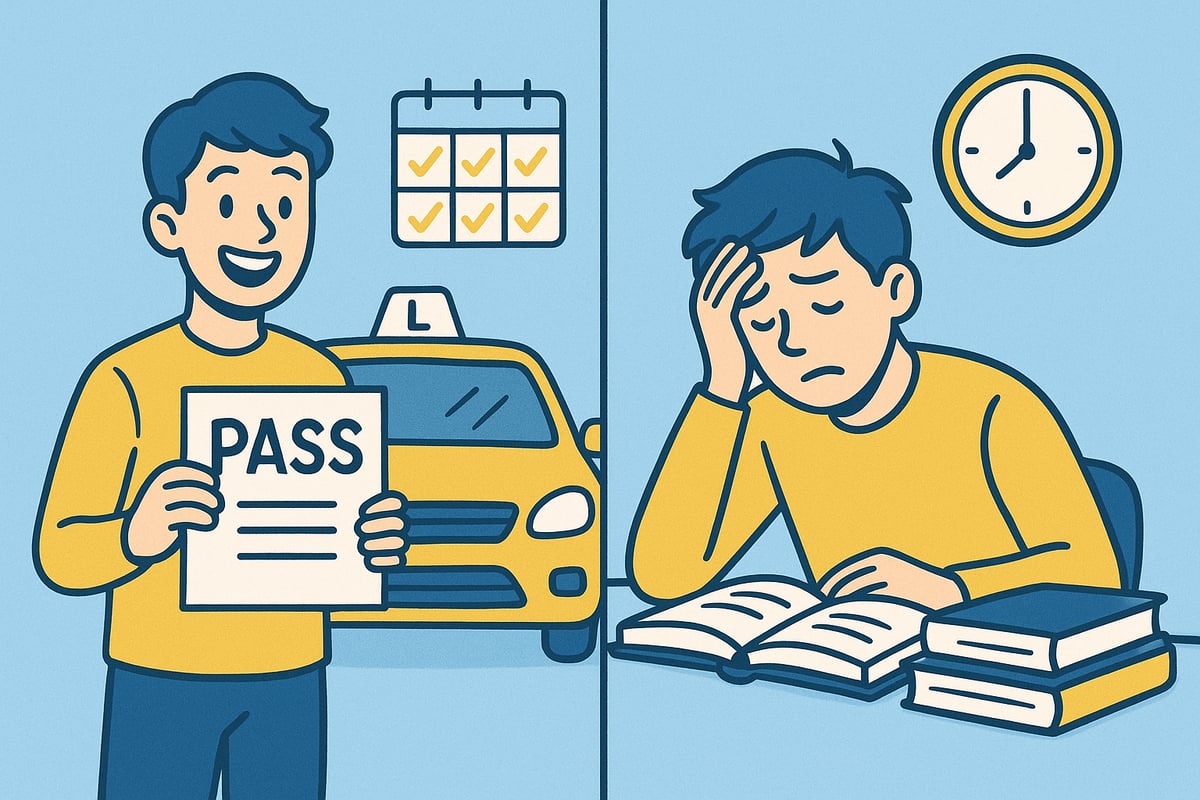
One week driving courses offer several compelling benefits, especially for motivated learners. The most significant advantage is speed. You can potentially earn your licence in just seven days, making these courses ideal for those with tight schedules or urgent needs.
Another benefit is focus. Intensive lessons immerse you in driving, helping you build skills quickly without long gaps between sessions. This can lead to better retention and faster progress. Efficiency is also a key factor. Many find that condensing practice into a short period can save money compared to spreading lessons out over months.
Fast-track test booking is often included, which means you do not have to wait long for your practical test slot. This is especially useful when test centre backlogs are an issue.
Here is a quick summary of the main advantages:
| Advantage | Why It Matters |
|---|---|
| Speed | Pass in as little as 7 days |
| Focus | Immersive daily learning experience |
| Efficiency | Potential cost savings and less time off work/school |
| Fast-track | Early test booking included |
| Flexibility | Fits into holidays or short breaks |
For example, busy professionals and students often choose one week driving courses during university breaks or annual leave. According to Intensive driving course pass rates, these courses have pass rates between 70-85 percent, much higher than the national average of about 47 percent. This shows how effective the format can be for dedicated learners.
Disadvantages
Despite the benefits, one week driving courses come with notable challenges. The pace is intense and can be physically and mentally demanding. Not every learner thrives under pressure, especially those who need time to build confidence behind the wheel.
Another downside is the higher upfront cost. You will need to pay for the entire course at once, which can be a barrier for some. There is also a risk factor. If you do not pass your test at the end of the week, you may have to pay for extra lessons or tests, increasing the total expense.
Some learners may find the format overwhelming, especially if they are prone to test anxiety or need more time to process new information. There is a risk of "cramming," where you learn enough to pass the test but may not retain all the skills for long-term safe driving.
Here are the main disadvantages:
- Intense schedule can be exhausting
- Not ideal for nervous or anxious learners
- Higher upfront payment required
- May need extra lessons if you do not pass
- Potential for short-term skill retention only
For example, learners with anxiety often struggle with the daily pressure and quick pace of one week driving courses, finding it difficult to keep up.
Who Should Avoid Intensive Courses?
While one week driving courses are a great fit for many, they are not suitable for everyone. Learners with certain medical conditions, learning difficulties, or language barriers may find the intensive format too challenging.
If you need more time to absorb information or lack stamina for daily lessons, consider alternatives like semi-intensive or traditional weekly lessons. These formats provide a gentler pace and allow for more gradual skill development.
It is important to be honest with yourself about your learning style and needs. If you are unsure, speak with a driving instructor before committing to one week driving courses. Remember, the right course should set you up for safe, confident driving, not just a quick pass.
What’s Included in a One Week Driving Course?
Thinking about one week driving courses and curious what you actually get? These courses are designed to be all-in-one packages, making your journey to passing the driving test as smooth as possible. Let’s break down the essentials and the extras you can expect.
Course Components
Every one week driving course aims to cover everything you need to go from learner to licenced driver in just a few days. Here’s what’s typically included:
- Practical Driving Lessons: You’ll receive intensive, daily, one-on-one lessons. Most one week driving courses offer between 10 and 40 hours, tailored to your current experience.
- Theory Test Preparation: If you haven’t passed your theory test, many providers supply online resources, apps, or classroom sessions to get you ready. Some even include mock tests and free retests.
- Test Booking: Fast-track booking for both the theory and practical tests is often managed for you, saving time and hassle.
- Pickup and Drop-off: Many courses include home or work pickup, making it easy to fit lessons into a busy schedule.
- Online Resources: Access to digital materials like video tutorials, progress trackers, and workbooks is common.
- Free Retests or Additional Support: Some packages offer a free retest or extra lessons if you don’t pass first time.
Here’s a quick comparison of what you might get:
| Component | Included in Standard Course? | Notes |
|---|---|---|
| Practical lessons | Yes | 10–40 hours, tailored to you |
| Theory prep | Often | Online/apps, classroom, or both |
| Test booking | Yes | Fast-track where available |
| Pickup/drop-off | Often | Home or work, for convenience |
| Online resources | Yes | Videos, workbooks, progress tracking |
| Free retest | Sometimes | Depends on provider/package |
For example, LPOD Academy includes home pickup, test fees, and flexible scheduling as standard in their one week driving courses. To compare what different providers offer, check out their Course Packages and Options.
Optional Extras and Upgrades
Looking for more from your one week driving courses? Many providers offer a range of upgrades and add-ons to suit different needs:
- Residential Accommodation: Ideal for non-local learners, some courses include nearby accommodation so you can focus fully on learning.
- Extended Hours or Extra Lessons: If you feel you need a few more hours behind the wheel, you can often add extra lessons to your package.
- Support for Nervous Drivers: Some providers offer confidence-building modules or extra support for those who want to boost their comfort on the road.
- Pass Protection: Certain packages include a free retest or additional lessons if you don’t pass the first time, giving extra peace of mind.
For instance, a student who travelled from another city booked a residential intensive package and took advantage of extra practice sessions. They found the immersive environment key to their success with one week driving courses.
Optional extras let you tailor your experience, making sure your one week driving courses fit your unique circumstances. Whether you want more practice, extra support, or the convenience of accommodation, there’s usually a package to match your needs.
How to Choose the Best One Week Driving Course Provider
Choosing the right provider for one week driving courses can make all the difference in your learning experience and test success. With so many options, knowing what to look for is crucial to ensure you get value, support, and the best possible chance of passing.
Key Criteria to Evaluate
When comparing one week driving courses, start by checking if the provider is approved by the DVSA and employs fully qualified instructors. This ensures you receive professional guidance and up-to-date training.
Flexibility is key. Look for providers that offer customizable packages, including tailored lesson hours and scheduling options. Some providers include fast-track test booking and pick up from home or work, adding convenience to your intensive week.
Transparent pricing is essential. Make sure you understand what’s included in your course fee. Does it cover both theory and practical test fees? Are there any hidden charges? For a cost comparison, see the average driving lesson costs in the UK to weigh intensive course value against standard lessons.
Customer reviews and pass rates provide insight into a provider’s reputation. Look for recent testimonials and published success statistics. A provider with a proven track record in one week driving courses is more likely to help you achieve your goal quickly.
LPOD Academy: Intensive Driving Course Experts
LPOD Academy stands out as a leading specialist in one week driving courses across the UK. They offer tailored packages for all learning levels, ensuring every student receives the right amount of support and training.
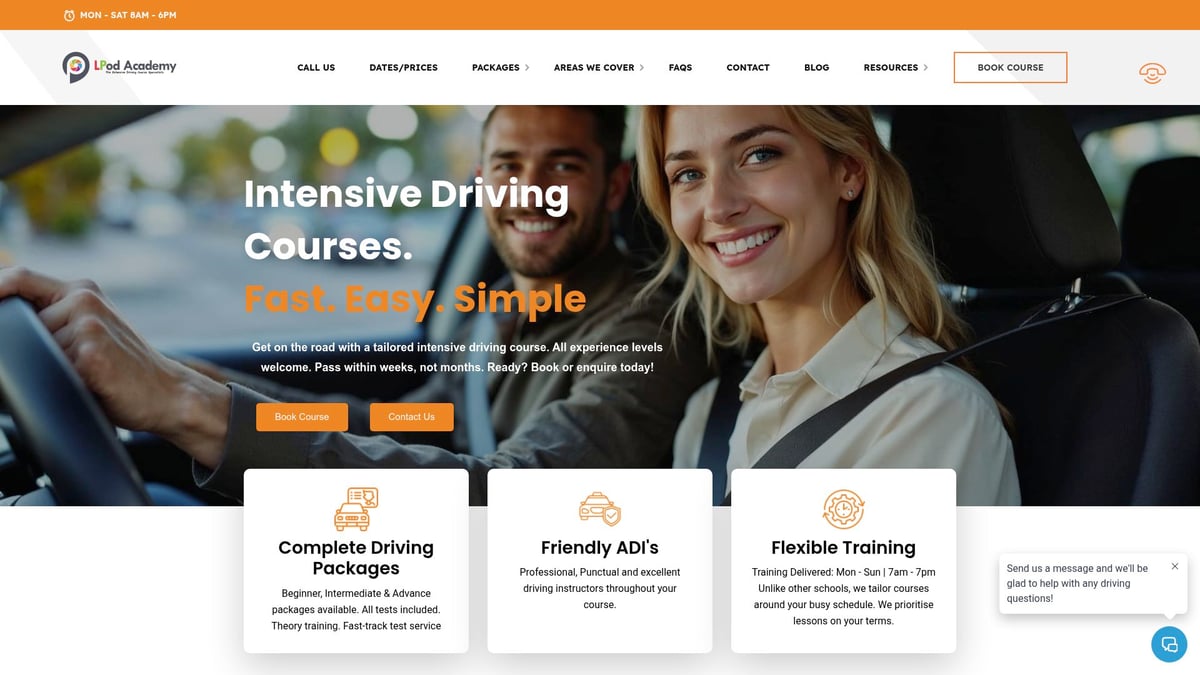
With over 500 approved instructors and coverage in 95% of the UK, LPOD Academy provides flexible scheduling, home or work pick up, and all-inclusive pricing. Their packages cover both theory and practical test fees, so there are no surprises when it comes to payment.
Learners benefit from a comprehensive online theory course, speedy customer support, and a free retest included with beginner packages. LPOD Academy’s reputation is built on thousands of successful learners, making them a trusted choice for those wanting to pass their driving test efficiently through one week driving courses.
Questions to Ask Before Booking
Before committing to one week driving courses, ask potential providers these important questions:
- What experience does your instructor have with intensive formats?
- What happens if I need a retest? Is it included or extra?
- Are there any hidden fees or costs not mentioned upfront?
- Can the course be rescheduled if something unexpected comes up?
- May I see recent pass rates or testimonials from previous students?
For further peace of mind, review the provider’s Frequently Asked Questions to clarify any additional concerns. Doing your homework will help ensure your intensive driving experience is smooth and successful.
Tips for Succeeding with a One Week Driving Course
Ready to make the most of one week driving courses? Success is all about preparation, mindset, and knowing what to expect. Here are practical tips to help you pass your test and hit the road with confidence.
Preparation Before the Course
Start strong by brushing up on the Highway Code and familiarizing yourself with basic car controls. Get plenty of rest the night before your one week driving courses begin, as a clear mind helps you absorb new skills.
Plan your schedule so you can fully commit. Arrange time off work, sort out childcare, or book accommodation if your course is far from home. Gathering all necessary documents and making a checklist can help you avoid last minute stress.
During the Course
Stay focused and keep a positive attitude throughout your one week driving courses. Intensive learning means a lot of information in a short time, so take notes and ask questions if anything is unclear.
Communicate openly with your instructor about areas where you feel strong or need extra help. If possible, practice outside of lessons with a qualified supervisor. Short, regular breaks can help your brain process new skills and prevent burnout.
Test Day Strategies
Review your mock test feedback and focus on any weak spots before the big day. Arrive at the test centre early to settle your nerves and get comfortable with the environment. Use relaxation techniques like deep breathing to stay calm and focused.
Make sure you understand the format and marking criteria for the practical test. If you are unsure about fees or booking details, check the official DVSA driving test fees page to avoid surprises.
Common Pitfalls to Avoid
Avoid underestimating the intensity of one week driving courses. Some learners try to rush through theory preparation or neglect to ask questions during lessons, which can hurt their progress.
Do not skip meals or important breaks, as this can drain your energy and concentration. If you feel overwhelmed, talk to your instructor immediately. Remember, steady progress is more important than cramming everything at once.
Maximizing Your Chances of Passing
Take advantage of all resources included in your one week driving courses, such as apps, video tutorials, and workbooks. Schedule your lessons for times when you are most alert, like mornings if that is when you focus best.
Practice outside of lessons whenever possible. According to DVSA data, learners who put in extra practice tend to have higher first-time pass rates. Tracking your progress and reviewing feedback regularly can boost your confidence and performance.
Example Success Stories
Many learners have achieved their licence quickly with one week driving courses. For example, a student who struggled with weekly lessons found success after switching to an intensive format, thanks to focused daily practice and supportive feedback.
Another learner, balancing work and family, passed after organizing her schedule and staying consistent with preparation. Their stories show that determination, preparation, and using all available support are key to passing fast.
If you’ve been thinking about getting your licence fast but don’t want to compromise on quality or support, you’re in the right place. We’ve covered everything you need to know about one week driving courses, from how they work to choosing the provider that fits your lifestyle. At LPOD Academy, you’ll find flexible options, expert instructors, and friendly guidance every step of the way. Ready to take the next step toward freedom on the road? Book Your Course and see how quickly you can be test ready!
Ready to pass in weeks, not months?
LPOD Academy runs tailored intensive driving courses from 10 to 50 hours across most of the UK, with your theory and practical test support included.
View our intensive course packages
Find the right course for you
Ready to Book Driving Lessons?
LPOD Academy offers intensive driving courses across the UK. Find your nearest location: