

Published 26 November 2025, updated 14 August 2026
How to Judge Stopping Distances in Wet and Icy Conditions: The Complete Learner’s Guide
Driving in wet and icy conditions can feel overwhelming, especially when you’re still building your confidence behind the wheel. The truth is, these weather conditions dramatically change how your car behaves, and understanding stopping distances becomes absolutely crucial for your safety. In wet weather, your stopping distance doubles compared to dry roads, whilst icy conditions can increase it by up to ten times.
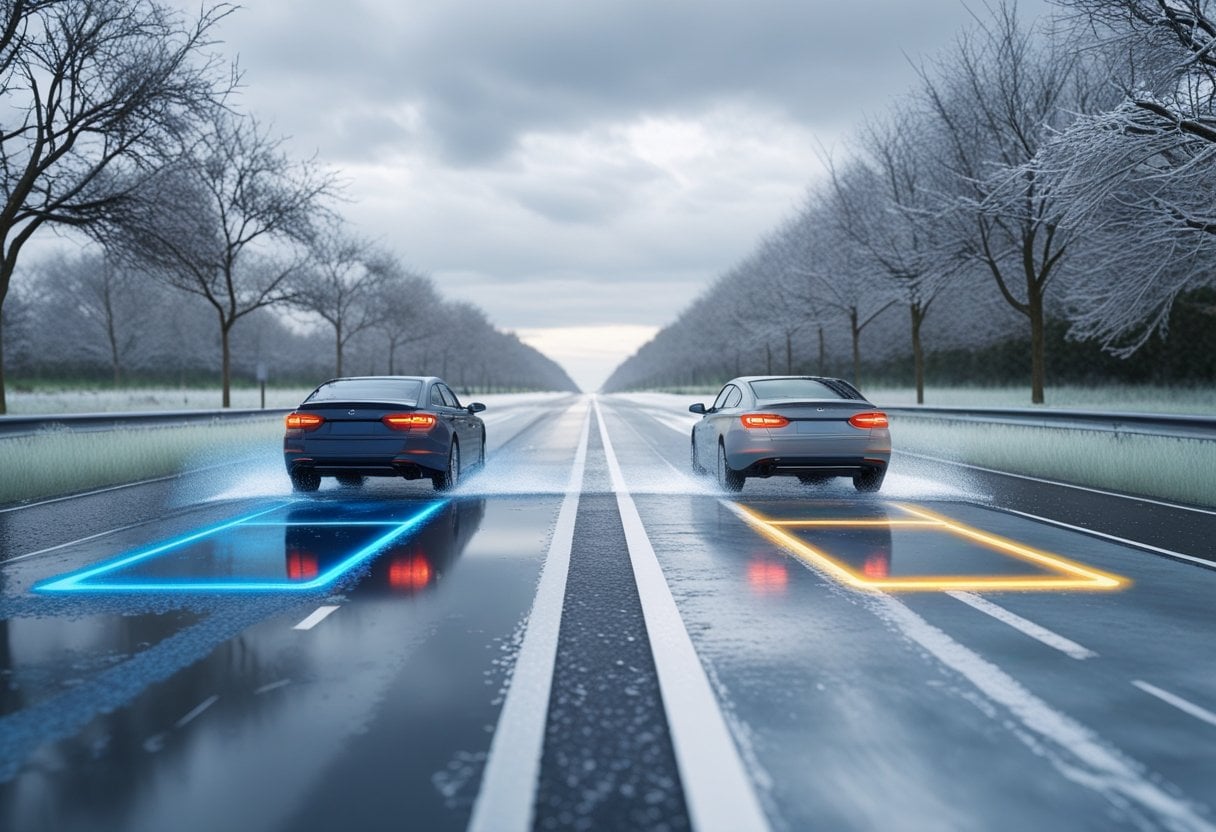
We know it sounds scary, but here’s the good news: once you understand the principles behind stopping distances in adverse weather, you’ll feel much more confident tackling these challenging conditions. It’s not about avoiding driving altogether when the weather turns nasty. Instead, it’s about making smart adjustments to your driving style and knowing exactly what to expect from your vehicle.
The skills we’re about to share will transform how you approach wet and icy roads. You’ll learn practical techniques to judge safe following distances, recognise when conditions are affecting your grip, and develop the confidence to drive safely in all weather. These aren’t just theory test facts, they’re real-world skills that will keep you and other road users safe throughout your driving journey.
Key Takeaways
- Stopping distances double in wet conditions and can be ten times greater on ice compared to dry roads
- Gentle acceleration, higher gears, and smooth steering help maintain control on slippery surfaces
- Increasing your following distance and reducing speed are essential strategies for safe driving in adverse weather
Reading the road in rain and ice takes practice, and an intensive driving course in all weather conditions helps you build that judgement quickly.
Understanding Stopping Distances in Adverse Weather

Wet and icy conditions can transform your stopping distance from manageable to potentially dangerous in seconds. We’ll explore how reduced tyre grip, longer braking distances, and impaired visibility work together to create hazardous driving situations that require your complete attention and adjusted technique.
What Makes Wet and Icy Conditions So Dangerous?
When water covers the road surface, it creates a slippery barrier between your tyres and the tarmac. This dramatically reduces the grip that keeps your vehicle under control.
Wet conditions present several challenges:
- Reduced tyre contact with the road surface
- Increased risk of aquaplaning at higher speeds
- Poor visibility from rain and spray
- Longer reaction times due to limited sight lines
Icy conditions amplify these dangers significantly. Ice transforms even the most careful driving into a delicate balancing act where sudden movements can spell disaster.
On icy roads, your tyres lose nearly all their grip. What feels like normal steering input can send your car sliding sideways. The surface becomes so slippery that even gentle braking can lock your wheels.
Temperature changes make ice particularly treacherous. Black ice forms when temperatures hover around freezing, creating an invisible hazard that catches drivers off guard.
The Importance of the Highway Code
The Highway Code provides essential guidance for driving in adverse weather conditions. These aren’t suggestions but legal requirements designed to keep everyone safe on Britain’s roads.
Rule 227 states that stopping distances in wet weather will be at least double those required on dry roads. This isn’t just good advice, it’s based on physics and real-world testing.
For icy conditions, the Highway Code warns that stopping distances can become ten times greater than on dry surfaces. Imagine trying to stop from 30mph and needing the space you’d normally use at 10mph.
We must follow these guidelines because they’re built on decades of accident data and scientific research. The Code also requires us to:
- Keep well back from the vehicle in front
- Use appropriate lighting in reduced visibility
- Clear all windows and mirrors before setting off
These rules aren’t bureaucratic box-ticking. They’re lifelines that help us navigate dangerous conditions safely.
Breaking Down Stopping, Braking, and Thinking Distances
Understanding the components of your total stopping distance helps you make better decisions behind the wheel. Every stop involves three distinct phases that work together.
Thinking distance covers the time between spotting a hazard and pressing the brake pedal. Even alert drivers need time to process information and react. In wet conditions, reduced visibility extends this crucial period.
Braking distance measures how far your car travels once you apply the brakes. This varies dramatically based on road conditions, tyre quality, and vehicle weight.
Here’s how conditions affect your stopping distances at 30mph:
| Conditions | Thinking Distance | Braking Distance | Total Distance |
|---|---|---|---|
| Dry | 9 metres | 14 metres | 23 metres |
| Wet | 9 metres | 28 metres | 37 metres |
| Icy | 9 metres | 140 metres | 149 metres |
These figures show why we need to adjust our driving style completely in adverse weather. What works on a sunny day becomes inadequate when conditions deteriorate.
Key Factors That Affect Stopping Distances

Several critical elements work together to determine how quickly you can bring your car to a complete stop. Your reaction time, vehicle condition, driving speed, and the road surface all play vital roles in keeping you safe behind the wheel.
Reaction Time and Driver Awareness
Your reaction time is the gap between spotting a hazard and pressing the brake pedal. This might seem instant, but it typically takes us about 1.5 seconds to react in normal conditions.
During wet or icy weather, we need to stay extra alert. Distractions like mobile phones, loud music, or even chatting with passengers can slow our reaction time significantly.
Fatigue is particularly dangerous when road conditions are challenging. If you’re tired, your brain processes information more slowly, which means longer reaction times.
Cold medications, alcohol, or even stress can affect how quickly we respond to sudden situations. The faster we’re travelling, the further our car moves during those crucial reaction seconds.
Practice makes perfect when it comes to hazard awareness. Regular driving in different conditions helps build the instincts we need for quick, safe decisions.
How Vehicle Maintenance Influences Stopping
Well-maintained brakes are absolutely essential for safe stopping distances. Worn brake pads or damaged discs can dramatically increase the distance needed to stop your vehicle.
Tyre condition matters enormously, especially in challenging weather. Tyres with insufficient tread depth (less than 3mm) struggle to grip wet or icy surfaces effectively.
Your vehicle’s weight also affects stopping performance. A fully loaded car takes longer to stop than an empty one, particularly on slippery surfaces.
Regular MOT checks help identify potential braking issues before they become dangerous. We recommend checking your tyres monthly and having your brakes inspected annually.
Suspension problems can reduce tyre contact with the road surface. This creates longer stopping distances and less predictable handling in wet conditions.
Role of Speed and Distance Rules
The two-second rule works brilliantly in dry conditions, but wet weather demands at least double that distance. In icy conditions, we need up to ten times more space.
Higher speeds mean dramatically longer stopping distances. At 30mph, you’ll travel about 23 metres before stopping on dry roads, but this doubles in wet conditions.
Speed affects both thinking distance and braking distance. The thinking distance increases proportionally with speed, whilst braking distance increases exponentially.
| Speed | Dry Stopping Distance | Wet Conditions |
|---|---|---|
| 20mph | 12 metres | 24 metres |
| 30mph | 23 metres | 46 metres |
| 50mph | 53 metres | 106 metres |
Maintaining appropriate speeds for conditions gives us more time to react and reduces the energy our brakes need to absorb.
Impact of Road and Weather Conditions
Wet roads reduce tyre grip significantly, making it harder for your brakes to stop the car effectively. Water creates a barrier between your tyres and the road surface.
Icy conditions are far more challenging than wet weather. Ice can reduce grip by up to 90%, turning a routine stop into a potential slide.
Road surface quality affects stopping performance too. Smooth tarmac provides better grip than worn, uneven surfaces covered in leaves or debris.
Temperature changes create additional hazards. Bridge surfaces freeze first, and shaded areas stay icy longer than sunny spots.
Oil spills, diesel fuel, and wet leaves can create unexpectedly slippery patches. These hazards often appear suddenly, requiring immediate speed adjustments and increased following distances.
Judging Stopping Distances in Wet Weather
Wet roads demand extra caution and significantly longer stopping distances. The key principle is doubling your usual following gap, whilst staying alert to additional hazards like diesel spills that can turn roads into skating rinks.
Doubling Your Stopping Gap: The Golden Rule
When driving in adverse weather, we need to accept that our cars simply won’t stop as quickly. Rain creates a slippery film between our tyres and the road surface.
The Highway Code makes this crystal clear: stopping distances double in wet conditions. If you normally leave a 2-second gap behind the car in front, you’ll need at least 4 seconds when it’s raining.
Here’s how we can judge this properly:
- Use the 4-second rule: Pick a fixed point ahead like a lamppost or road sign
- Count “one thousand and one” through to “one thousand and four”
- If you pass that point before finishing the count, you’re too close
At 30 mph on wet roads, we’re looking at roughly 36 metres to stop instead of the usual 18 metres on dry tarmac. That’s about 9 car lengths rather than 4.
Speed also matters enormously. At 60 mph in wet weather, our stopping distance jumps to around 144 metres. That’s nearly the length of 1.5 football pitches!
Spotting Hazards and Staying Safe
Wet weather brings unique challenges that we need to recognise early. Our ability to spot potential problems becomes absolutely crucial when stopping distances increase so dramatically.
Reduced visibility is often the first issue we’ll encounter. Heavy rain can make it harder to see brake lights, pedestrians, and road markings. We should switch on our headlights and use windscreen wipers effectively.
Watch out for these common wet weather hazards:
- Puddles and standing water that can cause aquaplaning
- Painted road markings that become incredibly slippery when wet
- Manhole covers and metal drain covers that turn into slip hazards
- Other drivers who haven’t adjusted their speed or following distances
Planning ahead becomes even more important in these conditions. We need to anticipate what might happen at junctions, roundabouts, and pedestrian crossings well before we reach them.
If we spot potential trouble ahead, gentle early braking gives us the best chance of stopping safely.
Being Alert to Spilt Diesel and Other Risks
The dangers of spilt diesel on wet roads cannot be overstated. This combination creates some of the most treacherous driving conditions we’ll ever encounter.
Diesel fuel doesn’t evaporate like petrol, so it lingers on road surfaces for hours or even days. When mixed with rainwater, it forms an incredibly slippery mixture that can cause complete loss of grip.
Common locations for diesel spills include:
- Petrol station entrances and exits
- Lorry parks and industrial estates
- Busy A-roads where HGVs frequently travel
- Motorway slip roads and service areas
We can often spot diesel contamination by looking for rainbow-coloured patches on the wet road surface. The tarmac might appear unusually shiny or dark compared to surrounding areas.
If we suspect diesel on the road, we should reduce speed immediately and avoid sudden steering movements or harsh braking. Smooth, gentle inputs are essential.
Other substances to watch for include oil leaks from broken-down vehicles and mud from construction sites. These create similar hazards and demand the same careful approach we’d use for diesel spills.
Managing Stopping Distances on Icy and Snowy Roads
When ice and snow transform our roads into treacherous surfaces, stopping distances can increase by up to ten times their normal length. We’ll need to master anticipating these dramatic changes, adopt proven winter driving techniques, and safely navigate around essential road maintenance vehicles.
Anticipating Tenfold Increases in Stopping Distance
The mathematics of winter driving can be genuinely frightening. What normally takes us 23 metres to stop at 30mph becomes a staggering 230 metres on icy roads.
That’s the length of two football pitches. It’s crucial we understand this isn’t just theory, it’s the difference between arriving safely and becoming another winter accident statistic.
Normal vs Icy Stopping Distances:
- 30mph: 23m normal / 230m icy
- 40mph: 36m normal / 360m icy
- 50mph: 53m normal / 530m icy
We must start braking much earlier than feels natural. This means scanning the road ahead constantly for potential hazards like traffic lights, roundabouts, or other vehicles.
Variable message signs often warn us about icy conditions ahead. When we spot these warnings, it’s time to immediately reduce our speed and increase our following distance.
The two-second rule becomes completely inadequate on ice. We need at least a twenty-second gap to account for the dramatically extended stopping distances our vehicles will require.
Best Practices for Safe Winter Driving
Gentle inputs are our best friends when roads turn treacherous. Every movement we make should be smooth and deliberate, treating our controls like they’re made of delicate glass.
We should brake much earlier and with lighter pressure than normal. Harsh braking leads to skidding, which means we lose all control over our stopping distance.
Essential winter driving techniques:
- Reduce speed by 50% in snowy conditions
- Use engine braking on downhill sections
- Keep movements smooth and gradual
- Test grip levels carefully in safe areas
Our tyres become absolutely critical in these conditions. We need adequate tread depth (ideally 3mm minimum for winter conditions) and proper tyre pressure to maintain any semblance of grip.
Starting our journeys earlier gives us the luxury of driving slowly without feeling rushed. This single decision can transform a stressful winter drive into a manageable one.
We should clear all snow and ice from our windscreens, mirrors, and lights before setting off. Visibility issues compound the challenges we already face with extended stopping distances.
Dealing with Snowploughs and Road Treatment Vehicles
Snowploughs and gritting lorries are our allies in winter driving, but they present unique challenges we need to understand. These vehicles move slowly and require special consideration from other road users.
We must never overtake snowploughs that are actively working. The road behind them is treated and safer, whilst the road ahead remains hazardous and untreated.
Key points when encountering winter maintenance vehicles:
- Stay well back (minimum 20 metres)
- Don’t overtake when they’re spreading grit
- Use their cleared path when safe to do so
- Watch for salt spray affecting visibility
These vehicles often display flashing amber lights and move in convoy formations. We need to be patient and follow at a safe distance rather than attempting risky overtaking manoeuvres.
Road treatment vehicles sometimes work overnight or in poor visibility conditions. Their presence usually indicates that conditions are particularly challenging, so we should take this as a warning to reduce our speed further.
The areas they’ve just treated will still be slippery initially, as salt and grit need time to work effectively. We shouldn’t assume treated roads offer normal grip levels immediately.
Practical Strategies for Learner Drivers
Learning to judge stopping distances takes practice and proper guidance. We’ll show you how to master the two-second rule in different weather conditions, work effectively with your instructor, and build confidence through controlled practice scenarios.
Applying the Two-Second Rule in Real Situations
The two-second rule becomes your best mate when roads turn slippery. Pick a fixed point like a lamp post or road sign ahead. When the car in front passes it, start counting: “Only a fool breaks the two-second rule.”
If you pass the same spot before finishing the phrase, you’re too close. Simple as that.
In wet conditions, we double this to four seconds. Rain cuts your grip in half, so your stopping distance doubles too. It feels like ages at first, but trust the process.
For icy roads, increase the gap to six or eight seconds. Ice transforms your tyres into something closer to skating boots. The extra space gives you precious thinking time when everything goes sideways.
Practice this technique during every driving lesson. Your instructor will help you spot good reference points and judge distances accurately. Start on quiet roads before tackling busier routes.
Watch how experienced drivers maintain their gaps. Notice how they adjust for weather without even thinking about it. That’s the skill you’re building towards.
Practising with a Driving Instructor
Your driving instructor knows the local roads where conditions get tricky fast. They’ll take you to hills that ice up first, corners where water pools, and stretches where the surface changes suddenly.
During driving lessons, ask to practice emergency stops in different conditions. Wet car parks are brilliant for this. Feel how your car behaves when the surface isn’t perfect.
Professional instructors carry dual controls for good reason. They’ll let you experience longer stopping distances safely, stepping in only when needed. This builds real confidence.
Request lessons during light rain if possible. Many learners only drive in sunshine, then panic when weather turns nasty after passing their test.
Your instructor will teach you to read road surfaces. Shiny tarmac means water. Darker patches often signal ice. These visual clues become second nature with practice.
Don’t feel embarrassed about asking questions. Every instructor has seen learners struggle with distance judgement. They’re there to help you crack it.
Learning from Simulated Adverse Weather Scenarios
Some driving schools offer skid pan experiences or advanced courses. These controlled environments let you feel what happens when grip disappears completely.
Even without specialist facilities, your instructor can create learning opportunities. Empty supermarket car parks become perfect classrooms for understanding how stopping distances stretch.
Role-playing exercises work brilliantly too. Your instructor might suddenly call “hazard ahead” so you can practice your emergency response. These scenarios stick in your memory.
Modern driving simulators are appearing in more training centres. They recreate icy motorways and torrential rain without the actual danger. It’s like a video game that saves lives.
Study online videos showing stopping distance demonstrations. Watching cars slide helplessly past their intended stopping points really hammers the message home.
Keep a learning diary during your driving lessons. Note how different weather affects your car’s behaviour. Patterns emerge that textbooks can’t teach you.
The goal isn’t to avoid challenging conditions forever. We want you driving confidently when the weather turns against you.
Extra Caution: Other Adverse Conditions and Tips
Driving in wet and icy conditions requires extra vigilance, but other weather challenges like fog demand similar respect and preparation. Variable message signs provide crucial real-time updates about changing road conditions, whilst maintaining composure helps you make better driving decisions when conditions become tricky.
Adjusting Stopping Distances in Fog
Fog creates unique challenges that go beyond wet or icy surfaces. When visibility drops, we naturally slow down, but many drivers don’t increase their following distance enough.
In thick fog, we recommend doubling your normal dry-weather following distance at minimum. This gives you precious extra seconds to react when brake lights suddenly appear ahead.
Key fog driving principles:
- Use dipped headlights, never full beam
- Follow the white line on your left as a guide
- Resist the urge to follow another car’s tail lights closely
The most dangerous mistake? Assuming the car ahead is travelling at a safe speed. They might brake suddenly for an obstacle you can’t see yet.
Keep your speed comfortable for your visibility range. If you can only see 20 metres ahead, your speed should allow you to stop well within that distance.
Reacting to Road Signs and Real-Time Warnings
Variable message signs are your best friends during adverse weather. These electronic displays provide up-to-the-minute information about conditions ahead.
When signs warn of “fog” or “surface water,” take action immediately. Reduce your speed before you encounter the hazard, not after.
Common warning signs to watch for:
- Ice warning signs: Often appear on bridges and elevated roads first
- Flood warnings: Usually indicate standing water ahead
- Speed restrictions: Temporary limits during poor weather
Matrix signs on motorways often display recommended speeds for current conditions. These aren’t suggestions, they’re based on real-time data from weather stations and traffic monitoring.
Smart motorway systems automatically adjust speed limits when sensors detect dangerous conditions. Following these recommended speeds helps prevent accidents and keeps traffic flowing safely.
Staying Calm and Building Confidence
Driving in challenging conditions can feel overwhelming, especially when you’re still building experience. The key is staying relaxed and making deliberate decisions.
When conditions deteriorate, focus on what you can control. Maintain smooth steering inputs, gentle acceleration, and progressive braking. Sudden movements upset your car’s balance.
Confidence-building techniques:
- Practice in quiet car parks during light rain
- Start with familiar routes in poor weather
- Keep a safe refuge plan (services, lay-bys) in mind
Remember that other drivers are dealing with the same conditions. Leave extra space, be patient with slower vehicles, and don’t feel pressured to match other drivers’ speeds.
If conditions become too severe, there’s no shame in pulling over safely and waiting. Service stations and car parks provide excellent refuges until visibility or road conditions improve.
Your growing experience in adverse weather will make you a more confident, capable driver overall.
Frequently Asked Questions
Wet and icy roads create unique challenges that require specific driving adjustments and techniques. These common questions address the practical skills you need to calculate stopping distances, modify your driving style, and stay safe when conditions turn challenging.
What adjustments should I make to my driving style to ensure safe stopping distances on slick roads?
We need to completely rethink our approach when roads become slippery. The most crucial change is increasing our following distance dramatically.
In wet conditions, we should leave at least double the normal gap behind the vehicle ahead. On icy roads, this distance needs to increase up to ten times the normal amount.
Our speed must drop significantly too. We can’t rely on the same braking power we have on dry roads.
Gentle movements become essential. Sharp turns, sudden braking, or quick acceleration can cause us to lose control instantly.
We should also check our grip occasionally by testing our brakes gently in a safe area. This helps us understand exactly what our tyres can handle.
Could you shine a light on the essential techniques for calculating increased stopping distances in adverse weather conditions?
The “two-second rule” becomes our best friend in tricky conditions. We pick a fixed point ahead and count the seconds between the car in front passing it and us reaching the same spot.
In wet weather, this gap needs to extend to at least four seconds. On ice, we’re looking at six to eight seconds minimum.
Another practical method involves using distance markers. We can estimate roughly one metre per mph of our speed, then double or triple this based on conditions.
At 30mph in wet conditions, we need around 60 metres of clear space ahead. On ice, this jumps to 180 metres or more.
We can practise these calculations during good weather. This builds our instincts for when conditions deteriorate suddenly.
I’m curious, how does rainfall impact the overall stopping distance of a vehicle, and what can I do to stay safe?
Rain creates a film of water between our tyres and the road surface. This dramatically reduces the grip our tyres can achieve.
Even light rainfall can double our stopping distance compared to dry conditions. Heavy downpours make things much worse.
The first few minutes of rain are particularly dangerous. Oil and debris on the road surface mix with water, creating an especially slippery cocktail.
We should reduce our speed as soon as we notice the first drops. Many drivers wait until visibility drops, but the danger starts much earlier.
If our steering feels light or unresponsive, we’re likely experiencing aquaplaning. The solution is to ease off the accelerator gently and avoid any sudden movements.
New tyres and proper tread depth make an enormous difference. We should check our tyres regularly and replace them before they reach the legal minimum.
In a winter wonderland of ice and snow, what are the golden rules for maintaining a safe distance behind other vehicles?
Ice transforms our vehicle into something completely different. Normal stopping distances become almost meaningless.
We need to leave enormous gaps between us and other vehicles. Ten times the normal distance isn’t excessive on truly icy roads.
The key is starting our journey with realistic expectations. We can’t maintain normal speeds and expect to stop safely.
We should also consider the vehicles around us. A lorry or bus ahead needs even more space to stop than we do.
Bridges and shaded areas often remain icy long after other roads clear. We need to adjust our distance constantly based on the specific conditions we’re encountering.
If we can see other vehicles struggling to stop or change direction smoothly, we know we need even more space than we thought.
Can you guide me through the best practices for braking smoothly and safely when the tarmac turns treacherous?
Smooth, progressive braking becomes absolutely critical on slippery surfaces. We want to avoid any sudden pressure on the brake pedal.
We should start braking much earlier than normal. This gives us time to apply gentle pressure and feel how the car responds.
If we feel the wheels beginning to lock up, we need to ease off slightly and reapply pressure more gently. Modern ABS systems help, but they can’t work miracles.
Using engine braking helps too. We can change down to a lower gear and let the engine slow us down naturally.
The golden rule is anticipation. We need to read the road ahead and begin slowing down long before we normally would.
Testing our brakes gently in safe areas helps us understand our vehicle’s limits. This knowledge becomes invaluable when we need to stop quickly.
How can a driver effectively judge the stopping distance when facing the unexpected slipperiness of black ice on the road?
Black ice is particularly treacherous because it’s nearly invisible. We often don’t realise we’re on it until we try to brake or turn.
The first sign is usually a change in how our car feels. The steering might become very light, or we might notice we’re not slowing down as expected.
We should assume black ice is present whenever temperatures hover around freezing, especially on bridges, in shaded areas, or early in the morning.
Our safest approach is extreme caution. We need to leave massive gaps and reduce speed dramatically whenever conditions suggest black ice might be present.
If we suspect we’re on black ice, gentle testing of our brakes in a safe area can help us gauge the available grip. We apply very light pressure and see how the car responds.
The most important thing is staying calm if we do encounter black ice. Panic reactions like sharp braking or steering changes will almost certainly make things worse.
Getting this right with an instructor beside you
Car control comes from repetition with someone watching and correcting you, which is hard to replicate from an article.
LPOD Academy intensive courses run from 10 to 50 hours with the same instructor throughout, covering around 95% of England, Wales and Scotland.
If you are not sure how many hours you need, the recommendation tool asks a few questions and suggests a package.
Ready to pass in weeks, not months?
LPOD Academy runs tailored intensive driving courses from 10 to 50 hours across most of the UK, with your theory and practical test support included.
View our intensive course packages
Find the right course for you
Ready to Book Driving Lessons?
LPOD Academy offers intensive driving courses across the UK. Find your nearest location: