

Published 18 November 2025, updated 14 August 2026
Rural Driving Challenges: Animals, Mud, and Narrow Lanes Explained
Rural driving presents unique obstacles that urban drivers rarely encounter, and these challenges can feel overwhelming for new drivers. Country roads demand specific skills to handle animals crossing unexpectedly, muddy surfaces that reduce grip, and narrow lanes where two cars can barely pass. Statistics show that rural roads have 70% more deaths than urban areas, making proper preparation essential.
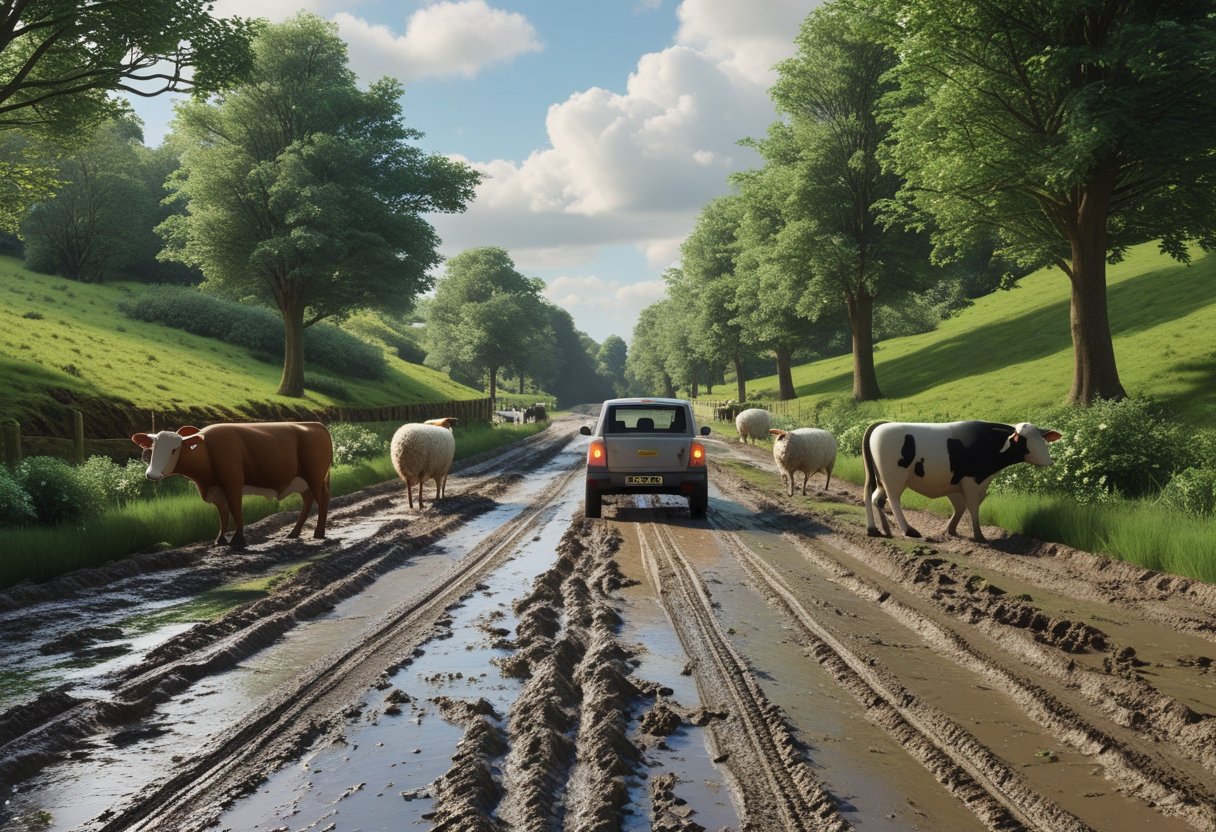
We understand that learning to drive on countryside roads can feel intimidating. The peaceful scenery masks real hazards like blind corners, farm vehicles appearing suddenly, and livestock wandering into your path. These roads often lack proper lighting, clear road markings, and the safety features you’ll find in town centres.
The good news is that with the right knowledge and techniques, you can master rural driving confidently. Once you understand how to read the road ahead, position your vehicle correctly, and respond calmly to unexpected situations, country lanes become far less daunting. Let’s explore the practical skills that will help you navigate these challenging roads safely.
Country lanes demand skills that only come with real seat time, so an intensive driving course with rural road practice that includes narrow roads and blind bends will leave you far more assured than town driving alone.
Key Takeaways
- Rural roads require specific skills to handle narrow lanes, poor surfaces, and unexpected animals safely
- Reduced speed and increased awareness are essential for managing blind corners and unpredictable hazards
- Proper positioning and confident decision-making help you navigate single-track roads and challenging weather conditions
Understanding the Realities of Rural and Country Roads
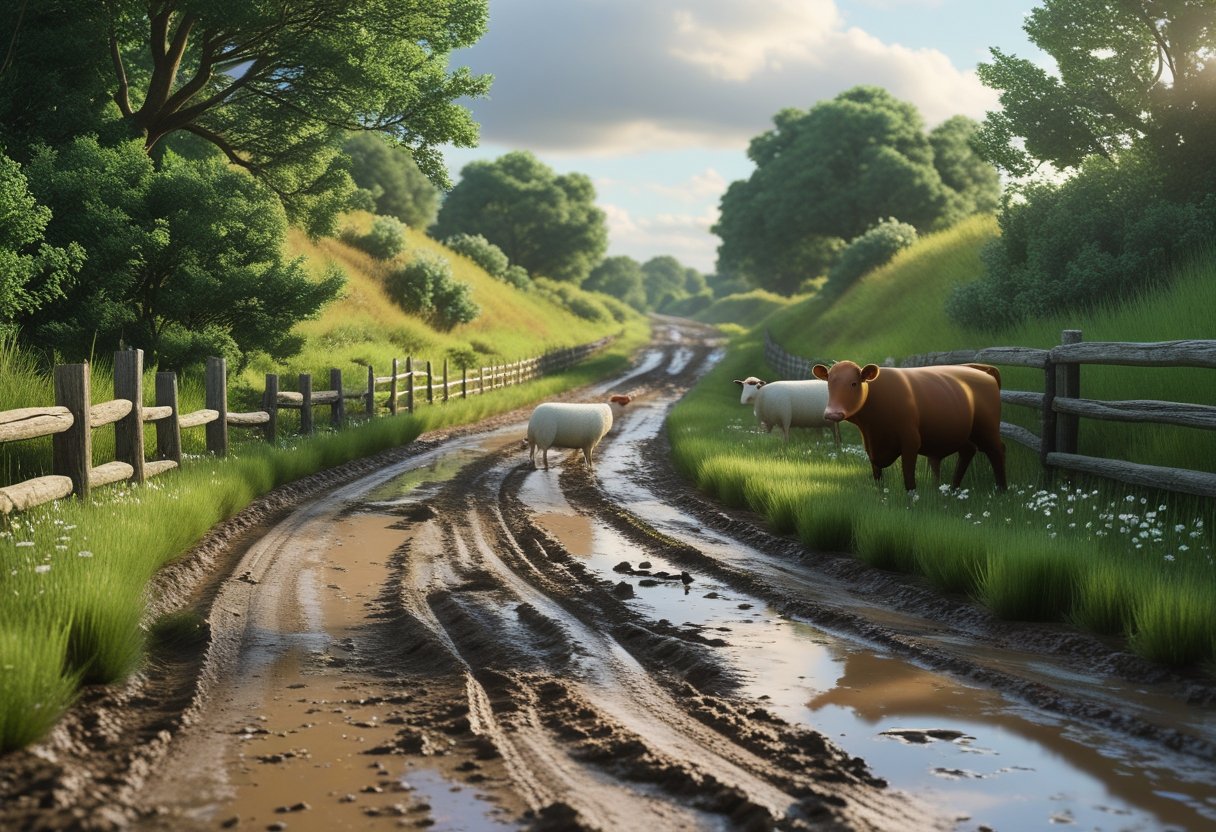
Rural roads present a completely different driving experience compared to city streets, with unique challenges that catch many drivers off guard. These routes feature everything from single-track lanes barely wide enough for one car to winding country paths where tractors and livestock share the tarmac with regular traffic.
Types of Rural Roads in the UK
Single-track roads are perhaps the most challenging type we encounter in the countryside. These narrow routes have passing places marked by white diamond signs or small lay-bys.
You’ll need to reverse to the nearest passing place if another vehicle approaches. This can feel daunting at first, but it becomes second nature with practice.
B-roads and unclassified roads make up the majority of rural routes. These are typically wider than single-track roads but still much narrower than urban streets.
Many lack centre line markings, making it harder to judge your position. The road surface can vary dramatically, from smooth tarmac to pothole-riddled stretches.
Farm access roads connect agricultural areas to main routes. These often have loose gravel, mud patches, and steep gradients.
Tractors and farm machinery frequently use these roads, creating additional width restrictions and slower-moving traffic situations.
Identifying Unique Rural Hazards
Wildlife crossings pose one of the biggest risks on country roads. Deer, rabbits, and birds can appear suddenly, especially during dawn and dusk hours.
Weather-related hazards affect rural roads more severely than urban routes. Flooding, ice, and fog linger longer without the heat island effect of cities.
Mud and debris from farm vehicles create slippery conditions. Fresh manure, fallen leaves, and loose gravel reduce tyre grip significantly.
Limited visibility around blind corners and over hill crests makes overtaking dangerous. Many rural roads have high hedgerows or stone walls that block your view.
Poor lighting means country roads become much more challenging after dark. Street lamps are rare, leaving only your headlights to illuminate potential hazards.
How Rural Roads Differ from Urban Routes
The Highway Code applies equally to rural and urban roads, but the practical challenges are vastly different. Speed limits might be higher, but actual safe speeds are often much lower.
Rural roads lack the predictable traffic patterns of city driving. You might encounter a horse rider, a combine harvester, or a flock of sheep around any corner.
Road maintenance standards vary widely on country routes. While main A-roads receive regular attention, smaller lanes might have potholes, crumbling edges, or overgrown vegetation.
Emergency services take longer to reach rural locations. This makes defensive driving and hazard awareness even more critical than in urban areas.
The isolation factor means mobile phone coverage can be patchy. Planning your route and informing others of your journey becomes more important for safety.
Mastering Narrow Lanes and Single-Track Roads

Narrow country lanes test your skills in ways motorways never will. We’ll show you how to spot the warning signs, use passing places properly, and tackle those nerve-wracking blind bends with confidence.
Recognising and Navigating Narrow Lanes
Narrow country lanes don’t always announce themselves with warning signs. We need to read the clues around us.
Look for hedgerows that seem to close in on both sides of the road. Stone walls barely a car’s width apart are another telltale sign. The road surface might change from smooth tarmac to rougher materials.
Key warning signs include:
- Vegetation brushing against your wing mirrors
- No visible road markings or centre lines
- Grass growing down the middle of the carriageway
- Road width that feels uncomfortably tight
When you spot these signs, slow down immediately. Drop your speed to around 15-20 mph, even if the speed limit allows more.
Position your car slightly left of centre when possible. This gives you a clearer view ahead and more reaction time. Keep your eyes moving between the road ahead and your door mirrors.
Watch for mud, loose gravel, or farm debris that might affect your grip. These narrow lanes often serve working farms, so expect the unexpected.
If you’re driving a wider vehicle, consider whether the route is suitable at all. Sometimes the sensible choice is turning back and finding an alternative path.
Passing Places and Rural Driving Etiquette
Single-track roads come with their own set of unwritten rules that every country driver knows by heart.
Passing places appear as small widened sections, often marked with white diamond signs. Some are purpose-built lay-bys, whilst others might be farm gates or field entrances.
The golden rules we follow:
- Pull into passing places on your left when meeting oncoming traffic
- If the passing place is on your right, wait opposite it, not in it
- Let the other vehicle use the space and pass you
- Always give way to vehicles travelling uphill
Don’t assume you always have right of way. The most practical solution wins every time. If you’re closer to a passing place, use it, regardless of who was there first.
Wave to acknowledge other drivers. This simple gesture builds goodwill and shows you understand country driving courtesy. Most rural drivers are patient and helpful, especially with learners.
When someone reverses to let you pass, give them a friendly wave or nod. They’ve done you a favour, and appreciation goes a long way on quiet country roads.
If you’re unsure about a situation, be the one who reverses. It’s better to be cautious than create a standoff on a narrow lane.
Techniques for Dealing with Blind Bends and Corners
Blind bends on narrow lanes require a completely different approach than anything you’ve learned in town driving.
Slow right down before you reach the bend. We’re talking about 10-15 mph maximum. You need to be able to stop within the distance you can see ahead.
Position yourself towards the left side of your lane as you approach. This gives you the earliest possible view around the corner. Keep your hands ready on the steering wheel for quick adjustments.
Sound your horn gently before sharp blind bends, especially on single-track roads. Three short beeps warn oncoming traffic of your presence. Listen carefully for responding horn signals.
Look for clues that might tell you what’s around the corner:
- Shadows on the road surface
- Reflections in windows or puddles
- Dust clouds that might indicate farm vehicles
- Movement in hedgerows or trees
Be prepared to stop completely. You might find a tractor, horse rider, or another car right around that bend. Your stopping distance must be well within your sight line.
Practice makes these techniques second nature. Start with less challenging country lanes before tackling the really narrow, twisty ones that would test even experienced drivers.
Managing Animals and Unexpected Hazards
Rural roads bring us face-to-face with animals and farm machinery that rarely appear on city streets. Learning to handle these encounters safely means understanding animal behaviour, respecting other road users, and navigating around agricultural equipment.
Staying Safe Around Wildlife and Livestock
Wildlife crossings happen most often during dawn and dusk when animals move between feeding areas. Deer, rabbits, and birds can dart into the road without warning.
We should slow down when we see wildlife warning signs. These signs mark areas where animals frequently cross roads.
Keep your eyes moving between the road ahead and the verges. Animals often travel in groups, so if we spot one, others might follow.
Farm animals present different challenges. Sheep and cattle can block entire roads during movement between fields. Never sound your horn near livestock as this frightens them and makes them unpredictable.
If animals block the road ahead:
- Stop your vehicle completely
- Switch off the engine
- Wait patiently for them to move
- Keep windows closed if animals approach the car
Wild animals behave differently from farm animals. They’re more likely to bolt suddenly or freeze in headlights. Reduce speed immediately when entering wooded areas or crossing moorland where wildlife is common.
Approaching Horses, Pets, and Other Road Users
Horse riders need extra space and patience from drivers. Horses can spook at loud noises, sudden movements, or bright colours.
When we approach horses on the road, we should slow to 15 mph or less. Pass wide and slow gives both horse and rider confidence.
Turn off loud music before reaching horses. The radio or conversation should be kept quiet too.
Wait for the rider’s signal before overtaking. Experienced riders know their horse’s temperament and will indicate when it’s safe to pass.
Some horses wear red ribbons on their tails. This warns us that the horse kicks or is young and unpredictable. Extra caution is essential with these animals.
Dog walkers often use country lanes for exercise. Dogs on leads can suddenly pull into the road or become excited by passing cars.
Give pedestrians with dogs plenty of space. Slow down and be ready to stop if the dog behaves unexpectedly.
Understanding Farm Vehicles and Heavy Machinery
Farm vehicles move slowly but take up significant road space. Tractors, combine harvesters, and crop sprayers often exceed standard vehicle widths.
Be patient behind farm vehicles. These machines cannot speed up or pull over easily on narrow roads.
Agricultural vehicles leave mud, straw, and debris on road surfaces. Watch for slippery patches especially after rain when mud becomes treacherous.
Farm machinery has limited visibility. Drivers cannot see smaller vehicles in their blind spots, particularly when towing wide equipment.
Never overtake farm vehicles on bends or hills. Wait for a long, straight stretch with clear visibility ahead.
Some farm vehicles display flashing amber beacons. This means they’re moving between fields and may turn suddenly into field entrances.
During harvest season, expect increased farm traffic. Combine harvesters and grain trailers use roads more frequently in late summer and autumn months.
Plan extra journey time during busy agricultural periods when farm vehicles are common on rural routes.
Coping with Mud, Potholes, and Poor Road Surfaces
Country roads throw plenty of challenges our way, from slippery mud patches that can send wheels spinning to sneaky potholes hiding in puddles. We’ll need sharp eyes and steady nerves to handle these tricky conditions safely.
Recognising and Handling Muddy Conditions
Mud on rural roads isn’t just messy, it’s genuinely dangerous. Fresh mud from farm vehicles can turn our tyres into skating boots, especially when it’s mixed with rain or morning dew.
Spotting mud hazards early gives us the best chance of staying safe. Look for warning signs near farm entrances or after seeing tractors ahead of us. Patches of wet mud on tarmac appear darker and often have tyre tracks running through them.
Speed is everything when we encounter muddy stretches. Drop our speed well before reaching the mud, not while we’re already on it. Sudden braking or steering on mud can send us sideways faster than we’d expect.
Here’s how we tackle muddy roads:
- Gentle inputs: Smooth acceleration, light steering, and gradual braking
- Maintain momentum: Keep steady speed rather than stopping and starting
- Increase following distance: We’ll need much more space to stop safely
- Avoid sudden movements: No sharp turns or heavy braking on mud
If we start skidding, ease off the accelerator and steer gently in the direction we want to go. Fighting the skid usually makes things worse.
Spotting and Avoiding Potholes
Potholes are like rural road booby traps. They damage our tyres, wheels, and suspension whilst jolting us about like a fairground ride gone wrong.
Prevention beats cure when it comes to pothole damage. Scan the road ahead constantly, especially after rain when potholes fill with water and become nearly invisible.
Common pothole hiding spots include:
- Puddles and standing water
- Shaded areas where water lingers longer
- Road edges where the surface breaks down first
- After heavy vehicles have passed regularly
Safe pothole navigation requires planning ahead. If we spot one early, we can often change lanes or adjust our position safely. When avoidance isn’t possible, slow down before reaching the pothole, not whilst driving through it.
Sometimes we’ll hit potholes despite our best efforts. Maintain a firm grip on the steering wheel and check our vehicle afterwards. Listen for unusual noises and watch for steering problems or vibrations that might signal damage.
Responding to Floods and Debris
Standing water and debris turn familiar roads into obstacle courses. Autumn leaves, fallen branches, and seasonal flooding create fresh hazards that change daily.
Water assessment requires careful judgement. If we can’t see the road surface through the water, it’s too deep. Generally, water deeper than six inches poses serious risks to most cars.
Debris navigation means staying alert for:
- Fallen branches blocking lanes
- Loose gravel from construction or weather
- Leaves creating slippery surfaces
- Agricultural spills like grain or straw
When we must drive through shallow standing water, maintain steady progress at walking pace. Driving too fast creates waves that can flood our engine. Too slow, and we might stall.
After water crossings, test our brakes gently. Wet brake pads lose effectiveness, so a few light applications will help dry them out. Check our mirrors to ensure following drivers can see our intentions clearly.
Never attempt to drive through flood water where we can’t see the road beneath. Turn around and find an alternative route instead.
Safe Driving Techniques for Rural Environments
Rural roads demand a completely different approach from city driving, where slower speeds and heightened awareness become your best defence against unpredictable hazards. We need to master specific techniques for handling everything from muddy surfaces to wildlife encounters whilst navigating Britain’s narrow country lanes.
Adapting Speed to Road and Weather
Speed control is absolutely crucial when we’re driving through rural areas. Those national speed limit signs don’t mean we should barrel along at 60mph on every country lane.
We should reduce our speed well below the official limit when conditions warrant it. Wet leaves in autumn can be as slippery as ice. Mud from farm vehicles creates treacherous surfaces that can send us sliding into hedgerows.
During poor weather, we need to slow down even more dramatically. Rain makes those narrow lanes incredibly dangerous, especially when we can’t see around sharp bends.
Here’s what works best for different conditions:
- Dry conditions: 40-45mph maximum on unfamiliar lanes
- Wet roads: Drop to 30-35mph
- Ice or snow: 20mph or less
- Heavy rain/fog: Whatever speed allows us to stop within our visible distance
We must remember that our brakes need much more distance on rural surfaces. Gravel, mud, and wet tarmac all increase our stopping distance significantly.
Defensive Driving Mindset for the Countryside
Defensive driving becomes even more important when we’re surrounded by unpredictable rural hazards. We can’t rely on traffic lights or painted lanes to keep us safe out here.
We should always assume something unexpected is around the next corner. That might be a tractor, a flock of sheep, or a deer darting across the road.
Scanning ahead constantly helps us spot potential problems early. Look for movement in hedgerows that might indicate animals. Watch for mud on the road that signals farm activity ahead.
We need to maintain much larger following distances on country roads. This gives us time to react when the car ahead suddenly brakes for a pheasant or navigates around a pothole.
Using our horn gently can alert animals to our presence without startling them too much. A brief, soft beep often encourages wildlife to move away from the carriageway.
The key is staying relaxed but alert. Tension makes us react poorly to sudden situations.
Cornering, Braking, and Tyre Awareness
Sharp bends are everywhere on rural roads, and many hide serious dangers. We can’t see oncoming traffic, animals, or obstacles until we’re already committed to the turn.
Our approach to corners needs to be methodical. Slow down before the bend, not during it. This prevents our tyres from losing grip when we need it most.
Proper braking technique involves doing most of our slowing before we enter the corner. Hard braking mid-turn can cause us to skid, especially on loose surfaces or wet roads.
We should check our tyre condition regularly when driving rural routes frequently. Country roads are tough on rubber, with sharp stones, thorns, and rough surfaces all taking their toll.
The golden rule for cornering: if we can’t stop within the distance we can see, we’re going too fast. This applies whether we’re worried about oncoming vehicles or wandering livestock.
Position our car slightly left of centre on right-hand bends to improve our view around the corner. On left-hand bends, stay closer to the centre line but never cross it.
Remember that our tyres are our only contact with the road surface. When grip disappears, everything else becomes irrelevant.
Dealing with Challenging Visibility and Weather Conditions
Poor visibility and rapidly changing weather can transform a peaceful country drive into a nerve-wracking experience. Using proper lighting techniques and adjusting our driving style helps us stay safe when conditions deteriorate.
Using Dipped Headlights and Fog Lights
Dipped headlights become our best friend when visibility drops below 100 metres. We should switch them on during heavy rain, mist, or when dusk approaches earlier than expected on tree-lined country roads.
Many drivers forget that dipped headlights aren’t just for darkness. They help other road users spot us from a distance, which is crucial on winding rural lanes where oncoming traffic appears suddenly.
Fog lights serve a different purpose entirely. We only use them when visibility drops below 100 metres due to fog or heavy snow.
| Light Type | When to Use | When to Switch Off |
|---|---|---|
| Dipped headlights | Poor daylight conditions, rain, mist | When visibility improves |
| Front fog lights | Visibility under 100m | As soon as fog clears |
| Rear fog lights | Severe fog only | When following traffic appears |
Remember to switch off fog lights once conditions improve. They dazzle other drivers and can mask our brake lights, creating unnecessary hazards.
Preparing for Poor Visibility in Rural Settings
Country roads often catch us off guard with sudden visibility changes. Dense woodland can plunge us into unexpected darkness, whilst morning mist lingers longer in valleys and near water sources.
We should reduce our speed significantly before visibility becomes seriously compromised. If we can’t see the road ahead clearly, we’re driving too fast for the conditions.
Keep windscreens spotlessly clean inside and out. Rural driving kicks up more dirt and debris, which becomes problematic when combined with low-angle sunlight or oncoming headlights.
Consider these practical steps:
- Check weather forecasts before setting off, particularly for fog warnings
- Know alternative routes in case conditions become treacherous
- Keep spare screen wash in the boot, as rural garages can be sparse
Pull over safely if visibility becomes dangerously poor. Many country roads have designated passing places or farm gateways where we can wait for conditions to improve.
Driving Responsibly in Changing Weather
Weather conditions in rural areas can shift dramatically within minutes. What starts as light drizzle can become torrential rain, whilst sunny spells can quickly give way to blinding downpours.
We need to adjust our speed long before conditions become truly challenging. Rural roads often lack the drainage systems found on major routes, so surface water builds up quickly.
Increase following distances substantially in wet conditions. The two-second rule becomes four seconds minimum on slippery surfaces. Country roads frequently have loose gravel or mud, which reduces grip even further.
Watch for localised hazards that urban drivers rarely encounter:
- Flooding at ford crossings and low-lying sections
- Ice forming first on bridges and shaded areas
- Mud deposits from farm vehicles creating slippery patches
Never attempt to drive through flood water that looks deeper than the bottom of our doors. It’s impossible to judge depth accurately, and even shallow water can sweep vehicles away.
When caught in sudden heavy rain, we should find a safe place to stop rather than pressing on with severely compromised visibility. Layby’s, car parks, or wide verges provide temporary shelter whilst the worst passes.
Boosting Your Confidence as a Rural Learner Driver
Building confidence on country roads takes practice and the right approach. The Highway Code provides solid foundations for rural scenarios, whilst understanding common pitfalls helps you develop safer habits from the start.
Applying the Highway Code in Countryside Scenarios
The Highway Code becomes your best friend when tackling rural roads. Rule 155 specifically addresses country roads, reminding us to take extra care on bends and hills where vision is limited.
Single-track roads require special attention to rules 159-160. We must use passing places correctly, pulling into them on the left or waiting opposite if they’re on the right. Never reverse long distances to reach a passing place.
Rule 214 covers animals on roads. Slow right down when you spot livestock ahead. Keep plenty of space and avoid sounding your horn near animals, as this might startle them.
Weather conditions change the game completely on rural routes. Rules 226-237 about adverse weather become crucial when rain turns country lanes slippery or fog reduces visibility to metres.
The two-second rule stretches to four seconds on wet rural roads. We recommend practising this timing until it becomes second nature.
Night driving rules (249-252) take on extra importance in countryside areas without street lighting. Dipped headlights help you see better whilst avoiding dazzling oncoming traffic on narrow lanes.
Common Mistakes and How to Avoid Them
Speed misjudgement tops our list of rural driving errors. Many learner drivers assume empty roads mean faster speeds, but country lanes demand slower, steadier progress.
Approaching blind bends too quickly catches many people out. We always slow down before the bend, not during it. This gives you time to react to oncoming traffic or obstacles.
Incorrect positioning on narrow roads causes problems. Stay left but don’t hug the verge so closely that you risk hitting the soft edge or getting stuck in mud.
Poor planning for passing places creates awkward situations. Look ahead constantly and decide early which passing place you’ll use. Don’t wait until you’re face-to-face with another vehicle.
Many learners panic when meeting farm vehicles. Remember, these drivers know their roads well. Stay calm, follow their lead, and don’t rush the manoeuvre.
Inadequate preparation for weather changes causes stress. Check forecasts before rural journeys and adjust your driving plan accordingly.
Next Steps for Gaining Rural Road Experience
Start with quieter country lanes during daylight hours. Choose familiar routes initially, then gradually explore new areas as your confidence builds.
Book specific rural driving lessons with your instructor. Many driving schools offer countryside-focused sessions that target single-track roads, hill starts, and animal encounters.
Practice with a qualified supervising driver who knows rural roads well. Their local knowledge proves invaluable for understanding specific challenges in your area.
Join a Pass Plus course after passing your test. This advanced training includes rural road modules designed specifically for new drivers.
Consider defensive driving courses that focus on hazard perception in countryside settings. These help develop the forward-thinking skills essential for safe rural driving.
Build experience gradually through different seasons. Summer country driving differs vastly from winter conditions, so spread your learning across various weather scenarios.
Connect with local driving communities or forums where experienced rural drivers share practical tips and route suggestions for practice sessions.
Frequently Asked Questions
Rural driving brings up plenty of questions about handling livestock crossings, slippery conditions, and the art of squeezing past oncoming vehicles on lanes barely wide enough for one car. We’ve gathered the most common concerns drivers have about countryside challenges.
How can you safely adapt your driving to cope with animals on the road in rural areas?
We always recommend slowing right down when you spot those yellow diamond signs warning about animals. These aren’t just suggestions, they’re telling you exactly where sheep, cattle, or horses regularly cross.
Keep your speed gentle during dawn and dusk hours. This is when most wildlife decides to wander across roads. You’ll have precious extra seconds to react if a deer suddenly bolts from the hedgerow.
Never use your horn around livestock or horses. The noise can spook them badly and make them panic. Instead, switch off your engine and wait patiently until they move along naturally.
If you encounter a herd being moved by farmers, pull over completely and turn off your engine. Farm animals can get stressed by running engines and might scatter unpredictably.
What strategies are effective for dealing with mud-slicked lanes without losing control of your vehicle?
Gentle pressure on everything becomes your new motto when roads turn muddy. We’re talking soft acceleration, gradual braking, and smooth steering movements that won’t upset your car’s grip.
Drop your speed well before you think you need to. Mud acts like a slippery coating that reduces your tyres’ contact with the solid road surface underneath.
Choose your line through muddy patches carefully. The centre of the lane often has better grip because it gets more traffic. Avoid the edges where mud tends to collect thickest.
If you feel your wheels starting to slip, ease off the accelerator immediately. Don’t slam on the brakes or you’ll likely slide further. Let the car slow down naturally while keeping your steering straight.
Could you offer some tips on navigating the hidden hazards of single-track rural lanes?
We always tell drivers to treat every blind bend like there’s a tractor coming the other way. This mindset keeps you prepared for anything that might appear around those overgrown corners.
Use your ears as much as your eyes on quiet country lanes. Wind down your window on nice days so you can hear approaching vehicles before you see them.
Look for passing places as you drive and remember where the most recent one was. You might need to reverse back to it if you meet oncoming traffic.
Keep well to the left but don’t hug the verge too closely. Soft edges can grab your wheels, and overhanging branches might scratch your paintwork or damage your wing mirrors.
In the countryside, what’s the best way to anticipate and react to oncoming traffic in narrow spaces?
Watch for telltale signs of approaching vehicles before you can actually see them. Headlight reflections bouncing off hedges and trees give you advance warning, especially at night.
If you spot someone coming towards you, quickly assess which of you is closer to a passing place. The driver furthest away should usually reverse back to let the other through.
Flash your headlights or give a friendly wave to communicate your intentions. Most country drivers appreciate clear signals about who’s giving way to whom.
Don’t panic and swerve into hedges or walls if space gets tight. Take a breath, assess the situation calmly, and inch forward slowly while keeping maximum distance from the other vehicle.
What are your key pieces of advice for adjusting speed responsibly on undulating rural roads?
Hills and dips hide all sorts of surprises, so we recommend treating every crest like there might be a stationary vehicle just over the top. This approach has saved countless drivers from nasty accidents.
Slow down before you reach the brow of hills rather than braking on the way down. You’ll have much better control and won’t risk startling other drivers with sudden brake lights.
Use engine braking on steep descents by dropping into a lower gear. This technique helps prevent your brakes from overheating on long downhill stretches.
Remember that your stopping distance increases dramatically on slopes. What feels like plenty of space on flat roads becomes dangerously tight when gravity is working against you.
How should a new driver approach passing places in narrow lanes to avoid mishaps?
Think of passing places as team efforts rather than competitions. The goal is getting both vehicles through safely, not proving who has right of way.
Pull in completely when you’re using a passing place. Half measures leave your car sticking out and create unnecessary stress for the other driver trying to squeeze past.
If the passing place is on your right, don’t drive across to it unless you’re absolutely certain no one’s coming. It’s often safer to stop opposite the passing place and let the other vehicle use it.
Take your time reversing to passing places behind you. There’s no shame in backing up, and experienced country drivers expect this kind of considerate behaviour on narrow lanes.
Getting this right with an instructor beside you
Car control comes from repetition with someone watching and correcting you, which is hard to replicate from an article.
LPOD Academy intensive courses run from 10 to 50 hours with the same instructor throughout, covering around 95% of England, Wales and Scotland.
If you are not sure how many hours you need, the recommendation tool asks a few questions and suggests a package.
Ready to pass in weeks, not months?
LPOD Academy runs tailored intensive driving courses from 10 to 50 hours across most of the UK, with your theory and practical test support included.
Ready to Book Driving Lessons?
LPOD Academy offers intensive driving courses across the UK. Find your nearest location: