

Published 23 November 2025, updated 12 July 2026
Testing Yourself with Independent Driving Tasks Before Your Exam: Boost Confidence & Skills
Independent driving makes up 20 minutes of your UK driving test, and it can feel like the most nerve-wracking part of the entire exam. During this section, you’ll need to follow directions from a sat nav or road signs with minimal guidance from your examiner. The good news is that practising these skills beforehand can transform what feels overwhelming into your strongest test performance.

Regular practice with independent driving tasks before your exam builds the confidence and skills you need to handle this section calmly and safely. When you’ve already navigated tricky roundabouts using only sat nav directions or followed road signs to unfamiliar destinations, doing the same thing during your test feels much more manageable. We’ve seen countless learners turn their biggest worry into their proudest moment simply by preparing properly.
Throughout this guide, we’ll walk you through everything from understanding what independent driving really involves to mastering complex road situations during practice. You’ll discover practical ways to simulate real test conditions, overcome common challenges that trip up many candidates, and build genuine confidence for your big day. By the time you finish reading, you’ll have a clear roadmap for transforming independent driving from a source of stress into proof of your driving capabilities.
Independent driving grows easier with repetition, which is why an intensive driving course with built-in mock tests prepares candidates so thoroughly.
Understanding Independent Driving Tasks

Independent driving forms the heart of your practical driving test, lasting 20 minutes and testing your ability to navigate safely without constant guidance. The examiner will assess how you handle real-world driving situations using either a sat nav or traffic signs.
What Is Independent Driving?
Independent driving is a specific section of your practical driving test where you’ll drive for about 20 minutes following directions on your own. This part makes up nearly half of your entire test time.
You’ll encounter one of two scenarios:
- Sat nav navigation (4 out of 5 tests): Following a TomTom Start 52 device provided by the examiner
- Traffic sign navigation (1 out of 5 tests): Following road signs to reach a specific destination
The examiner will pull you over safely before this section begins. They’ll explain what’s happening and set up the sat nav or tell you which destination to follow using signs.
During this time, you’re expected to drive as you would after passing your test. We know it sounds daunting, but remember that wrong turns don’t automatically fail you. Safety always comes first.
Key things to remember:
- Use your mirrors, signal, position, speed, and look routine throughout
- Ask for clarification if you’re unsure about directions
- Stay calm if you take a wrong turn
- Focus on safe driving rather than perfect navigation
Why It’s a Key Part of Your Driving Test
Independent driving reflects how you’ll actually drive once you pass your test. Most of your future journeys will involve following sat nav directions or reading road signs to reach new destinations.
The DVSA introduced this extended section to make the driving test more realistic. They want to see that you can think independently and make safe decisions without an instructor guiding every move.
This section tests several crucial skills:
- Decision making under pressure
- Route planning and anticipation
- Safe driving whilst processing directions
- Confidence in unfamiliar areas
We’ve found that many new drivers struggle with navigation after passing because they haven’t practised these skills enough. The independent driving section ensures you’re truly ready for solo driving.
The 20-minute duration gives examiners a proper chance to assess your natural driving ability. It’s long enough to encounter various road situations, from roundabouts to dual carriageways.
The Role of the Driving Examiner
During independent driving, your examiner takes a step back from giving constant directions. They become more of a silent observer, watching how you handle the responsibility of navigation.
The examiner will:
- Set up the sat nav or give you the destination
- Provide help if you ask for clarification
- Guide you back on route if you go wrong
- Continue assessing your driving skills throughout
The examiner won’t:
- Give you turn-by-turn directions
- Criticise wrong turns if driven safely
- Rush you or add pressure
- Interfere unless there’s a safety concern
We want you to know that examiners understand this section can feel nerve-wracking. They’re trained to be patient and supportive during independent driving.
If road signs become obscured or difficult to see, the examiner will step in with directions until clear signage returns. They’re there to ensure your safety, not to trick you.
Remember, the examiner wants you to pass. They’re looking for evidence that you can drive safely and independently, just like millions of other drivers do every day.
Essential Skills for Success in Independent Driving
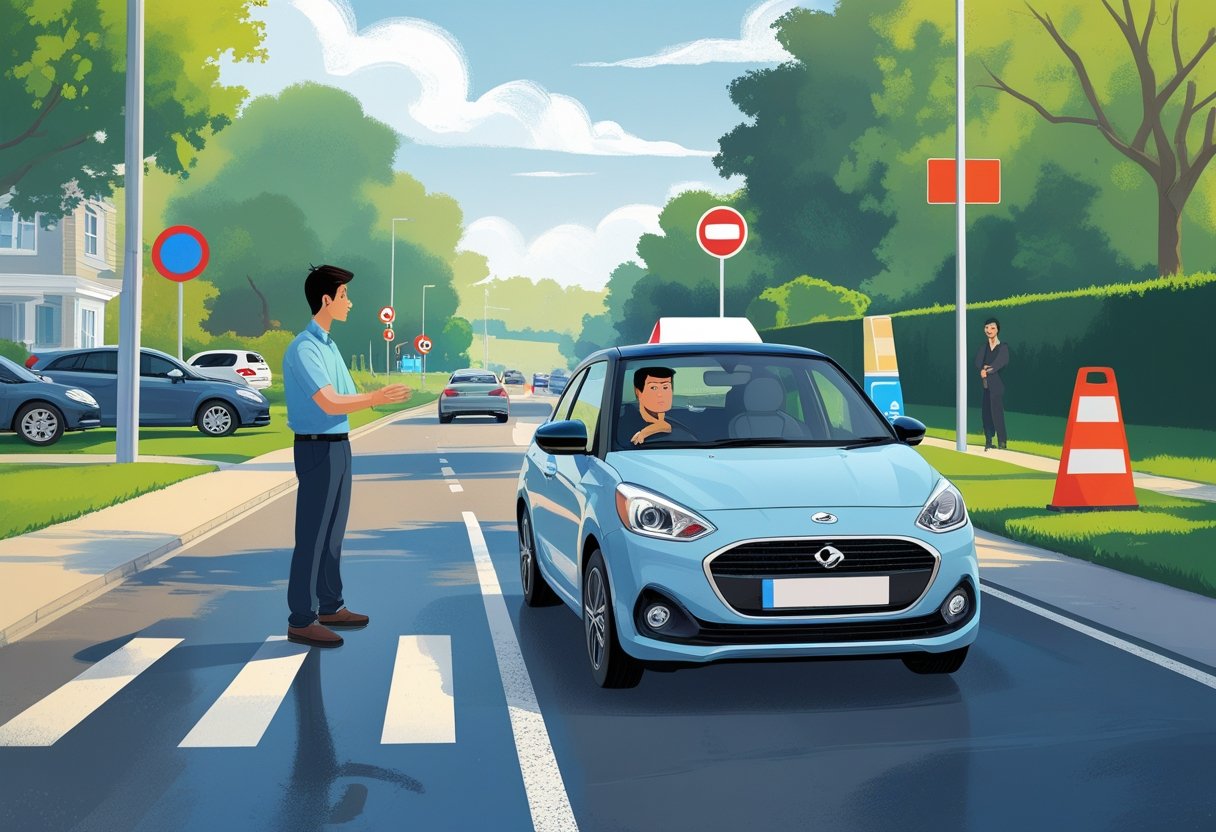
Mastering independent driving requires solid planning abilities, confident sat nav use, quick traffic sign recognition, and clear communication with fellow road users. These core competencies work together to create the foundation for safe, autonomous driving during your test.
Planning Ahead and Decision Making
Good planning starts before you even touch the steering wheel. We need to scan the road constantly, looking at least 12 seconds ahead to spot potential hazards or route changes.
Key planning behaviours include:
- Checking mirrors every 5-8 seconds
- Positioning your car early for turns
- Slowing down gradually rather than braking suddenly
- Identifying alternative routes if you miss a turning
Decision making becomes crucial when unexpected situations arise. If you realise you’re in the wrong lane approaching a junction, don’t panic or make dangerous lane changes.
Stay in your current lane and continue safely. It’s far better to take a slightly longer route than risk an accident.
Practice making quick decisions during lessons. Ask yourself “what if” questions whilst driving. What if that pedestrian steps out? What if the car ahead stops suddenly?
This mental preparation builds the confidence you need for independent driving success.
Following Sat Nav Directions Effectively
Modern driving tests use TomTom Start 52 devices, but the principles apply to any sat nav system. The secret lies in listening to instructions early and preparing for manoeuvres well in advance.
Essential sat nav techniques:
- Glance briefly at the screen, don’t stare
- Listen carefully to voice commands
- Prepare early when you hear “in 400 metres”
- Ask for help if directions seem unclear
Position the sat nav where you can see it without taking your eyes off the road for more than two seconds. Mount it high on the windscreen or dashboard.
Don’t worry about wrong turns during your test. Examiners expect occasional navigation mistakes. They’re more interested in how safely you drive whilst following directions.
If you miss a turning, continue driving normally. The sat nav will recalculate automatically, and your examiner will guide you back on track if needed.
Practice with different sat nav voices and display settings during lessons. Familiarity breeds confidence.
Reading and Reacting to Traffic Signs
Traffic signs provide vital information about speed limits, directions, and road conditions. Quick recognition and appropriate responses demonstrate your readiness for independent driving.
Priority sign categories:
- Regulatory signs (speed limits, no entry)
- Warning signs (sharp bends, pedestrian crossings)
- Information signs (town centres, motorway junctions)
Start reading signs early. Look for directional signs at least 100 metres before junctions. This gives you time to position correctly and signal appropriately.
Brown tourist signs often contain useful directional information. They’re particularly helpful when following traffic signs rather than sat nav during your test.
Don’t ignore temporary signs. Orange roadworks signs or yellow warning boards provide crucial safety information that overrides normal road rules.
Speed limit signs require immediate attention. Check your speedometer within seconds of passing a new speed limit sign and adjust accordingly.
Communicating with Other Road Users
Clear communication prevents confusion and keeps everyone safe. Your indicators, positioning, and timing send important messages to other drivers, cyclists, and pedestrians.
Effective communication methods:
- Signal early but not too early (generally 3-5 seconds before manoeuvring)
- Use eye contact with pedestrians at crossings
- Position clearly to show your intentions
- Maintain steady speeds to help others predict your actions
Indicating at the right moment takes practice. Signal too early near side roads and other drivers might think you’re turning sooner. Signal too late and nobody has time to react.
Watch for other road users’ signals and body language. Cyclists often look over their shoulders before changing direction. Pedestrians at crossings usually glance towards approaching traffic.
Your car’s position speaks volumes. Moving towards the centre line suggests you might turn right. Staying left indicates you’re continuing straight or turning left.
Remember that communication works both ways. Stay alert for signals from other road users and respond appropriately to create a safer driving environment for everyone.
Simulating Real Independent Driving Tasks Before Your Exam
Practising realistic scenarios helps you master the independent driving section of your practical driving test. You’ll want to focus on creating authentic mock situations, exploring different road environments, and building confidence with navigation systems.
Creating Mock Scenarios
Set up practice sessions that mirror the actual test experience. Ask your instructor or a qualified driver to act as an examiner during these mock runs.
Start with basic independent tasks:
- Following simple directions for 10-15 minutes
- Making decisions at roundabouts without guidance
- Choosing appropriate lanes independently
Gradually increase the complexity as your confidence grows. Try practising in unfamiliar areas where you can’t rely on local knowledge.
Essential mock scenario elements:
- 20-minute continuous driving periods
- Minimal verbal input from your supervisor
- Real-world decision making at junctions
- Parking manoeuvres without step-by-step instructions
Record your practice sessions if possible. This helps you spot areas where you hesitate or need improvement.
Create scenarios that test your ability to read road signs quickly. Practice following written directions given at the start of a journey rather than turn-by-turn guidance.
Varying Road Types and Environments
Your independent driving test could happen anywhere within your test centre’s routes. Practice on different road types to build versatility and confidence.
Urban environments challenge you with:
- Heavy traffic and frequent stops
- Multiple lane changes
- Pedestrian crossings and cyclists
- Complex junction layouts
Dual carriageways require different skills:
- Higher speed decision making
- Safe overtaking judgements
- Proper use of acceleration lanes
Rural roads present unique challenges:
- Narrow lanes with passing places
- Farm vehicles and horse riders
- Sharp bends with limited visibility
Practice during different times of day when possible. Morning rush hour creates different pressures than quiet afternoon driving.
Weather conditions also affect your independent driving performance. Light rain or bright sunshine can change how easily you spot road signs and navigate safely.
Practising Sat Nav and Sign-Following Routes
Most independent driving sections use sat nav systems during the practical driving test. Familiarise yourself with different devices and their voice commands.
Sat nav practice tips:
- Use various apps and devices, not just one type
- Practice with volume at realistic levels
- Learn to glance at the screen safely
- Understand how to continue if the system fails
Set up routes that combine sat nav following with traditional road signs. This mirrors real driving where you use multiple information sources.
Practice “missing” a sat nav instruction deliberately. Learn how to safely find alternative routes or rejoin your planned journey without panic.
Sign-following skills remain crucial:
- Quick recognition of destination signs
- Understanding lane markings and arrows
- Following brown tourist signs for specific locations
Some test centres still use written directions instead of sat nav. Practice following simple instructions like “follow signs for the town centre” for several miles.
Create practice routes that include common test destinations: industrial estates, retail parks, and residential areas. These locations often appear in independent driving tasks.
Mastering Complex Road Features During Practice
Practising with challenging junctions and busy roundabouts builds the skills you need for confident independent driving. These features require quick decision-making and smooth navigation without examiner guidance.
Tackling Junctions with Confidence
Complex junctions can feel overwhelming when you’re navigating them alone during your test. We recommend starting with quieter T-junctions before moving to busier crossroads and mini-roundabouts.
Box junctions need special attention during practice. Look for the yellow hatched markings and remember you can only enter if your exit is clear. Practice stopping just before the box if traffic ahead might trap you inside.
Traffic light sequences vary between junctions, so familiarise yourself with different timings. Some lights have filter arrows whilst others use standard three-colour systems. Watch for pedestrian crossings near junction exits too.
Right turns at busy junctions require patience and positioning skills. Practice waiting in the centre of the junction when it’s safe, then complete your turn when oncoming traffic clears. Don’t rush these manoeuvres during independent driving sections.
Navigating Roundabouts Independently
Multi-lane roundabouts test your lane discipline and mirror work without instructor prompts. Start practising on smaller roundabouts before tackling larger ones with multiple exits.
Lane selection matters most before you enter. Check road markings and signs to choose the correct lane early. Left lane for left turns and straight ahead, right lane for right turns and U-turns in most cases.
Spiral roundabouts need extra care because lanes merge as you travel around. Signal left as you pass the exit before yours, then check mirrors carefully before moving to the exit lane.
Give way rules stay the same regardless of size. Traffic from your right has priority, but watch for cyclists and motorcycles that might be harder to spot in busy conditions.
Common Challenges and How to Overcome Them
Even well-prepared drivers can face unexpected hurdles during independent driving practice. The three most common issues involve missing crucial directions, making split-second choices under pressure, and bouncing back from errors without losing confidence.
Missing Directions or Road Signs
We’ve all been there – you’re concentrating on the road ahead when suddenly you realise you’ve sailed past that crucial turning or missed a vital traffic sign. It’s one of the most frequent challenges during independent driving, but it doesn’t have to derail your progress.
The key is developing a systematic approach to information gathering. Scan ahead regularly rather than focusing solely on the car in front of you. Look for directional signs at least 100 metres before junctions.
Practice the “commentary driving” technique during your preparation sessions. Speak aloud about what you see: “Speed limit sign ahead, 30mph zone approaching, junction signs pointing left to town centre.”
When using a sat-nav, listen to the audio prompts rather than staring at the screen. Most devices give you advance warning like “in 400 metres, turn left.” Use this time to position yourself in the correct lane early.
Create a mental checklist for approaching junctions:
- Check mirrors and signals
- Read overhead signs or road markings
- Identify your exit route
- Position appropriately
If you do miss a direction, stay calm. Signal safely when you can and find a legal place to stop if needed. Remember, examiners care more about your safe driving than perfect navigation.
Handling Last-Minute Decisions
Sudden changes during independent driving can feel overwhelming. Perhaps the sat-nav updates its route, or you spot a road closure sign at the last moment. These scenarios test your ability to adapt whilst maintaining safety.
The golden rule is never panic. Take a deep breath and prioritise safety over speed. If you’re unsure which lane to use, choose the one that keeps you moving safely rather than making a risky last-minute change.
Practice these decision-making skills by driving in unfamiliar areas. Ask a friend or instructor to give you unexpected directions like “turn right at the next junction” with minimal notice.
If you tend to pick things up quickly once you are behind the wheel, our Silver 30 intensive refresher is our shorter intensive for fast learners with some practice behind them.
Build your confidence with these techniques:
- Keep a safe following distance so you have time to react
- Stay in the left lane unless overtaking or turning right
- Use your mirrors constantly to know what’s around you
- Signal early and clearly to show your intentions
When facing unexpected traffic signs or road changes, remember that slowing down slightly is perfectly acceptable. Taking an extra few seconds to process information shows good judgement, not hesitation.
Regaining Focus After Mistakes
Making errors during independent driving practice is completely normal, but recovering your composure quickly is what separates confident drivers from anxious ones. The mistake itself rarely matters – it’s how you handle what comes next.
Acknowledge the error briefly, then immediately shift your attention forward. Dwelling on what just happened takes your focus away from current hazards and upcoming decisions.
Use positive self-talk to reset your mindset. Instead of “I can’t believe I missed that turn,” try “I’m driving safely and learning from this experience.”
Develop a quick recovery routine:
- Take two deep breaths
- Check your mirrors and speed
- Scan ahead for the next decision point
- Remind yourself of one thing you’re doing well
Practice this recovery process during your preparation sessions. Ask your instructor to simulate mistakes or unexpected situations so you can rehearse staying calm under pressure.
Remember that even experienced drivers make navigation errors. What matters is maintaining safe driving standards whilst adapting to new information or recovering from minor mistakes.
Building Self-Assurance for Your Test Day
Confidence on test day stems from proper mental preparation and honest self-assessment of your driving abilities. Smart strategies for managing nerves, combined with thoughtful reflection on your practice sessions, create the foundation for success when facing your driving examiner.
Managing Test Nerves Positively
Test nerves are completely normal, but we can transform that nervous energy into focused concentration. Start your morning with positive self-talk rather than dwelling on what might go wrong.
Morning preparation makes a real difference:
- Eat a proper breakfast even if you feel queasy
- Arrive at the test centre 10 minutes early, not too soon
- Bring water and a small snack if your test is later in the day
Deep breathing exercises work wonders during those final moments before meeting your driving examiner. Try the 4-4-4 technique: breathe in for four counts, hold for four, then exhale for four counts.
Replace worried thoughts with practical reminders. Instead of “What if I fail?” think “I’ve practised these manoeuvres dozens of times.” This mental shift keeps your focus on familiar skills rather than imagined problems.
If you make a mistake during your practical driving test, don’t let it derail your confidence. One error rarely means failure, and dwelling on it often leads to more mistakes.
Reflecting on Practice Drives
Honest reflection on your independent driving practice reveals genuine progress and highlights areas needing attention. Keep a simple driving diary noting specific improvements and challenging situations you’ve handled well.
Track your development with these questions:
- Which routes felt comfortable during independent driving?
- What decisions did you make confidently without instructor guidance?
- Where did you recover well from minor mistakes?
Notice patterns in your driving abilities. Perhaps roundabouts feel natural now, or you’re reading road signs more quickly than before. These observations build genuine confidence based on real skills.
Review recent practice sessions where you successfully navigated without step-by-step instructions. Remember specific moments when you made good judgements about lane positioning, junction approaches, or responding to other road users.
Don’t ignore areas where you still feel uncertain, but balance this awareness with recognition of your improvements. Every learner has stronger and weaker skills on test day.
Seeking Constructive Feedback
Regular feedback from your driving instructor provides an accurate picture of your test readiness and builds realistic confidence. Ask specific questions rather than seeking general reassurance.
Request targeted feedback on:
- Your decision-making during independent driving scenarios
- How well you recover from navigation errors
- Your observation skills at complex junctions
Listen carefully when your instructor explains why certain techniques work better than others. Understanding the reasoning behind good driving habits strengthens your confidence in applying them during your practical driving test.
Ask your instructor to simulate examiner conditions during lessons. This means receiving minimal guidance while driving, similar to what you’ll experience with your driving examiner during the independent driving section.
Don’t be afraid to ask for extra practice on specific skills if you’re feeling uncertain. Most instructors appreciate learners who take responsibility for their preparation rather than hoping weaknesses won’t appear on test day.
Frequently Asked Questions
These common questions cover everything from building confidence and practising navigation skills to staying calm under pressure during your independent driving assessment.
How can I best prepare myself for unexpected scenarios on the road during my test?
We recommend practising in different weather conditions and during various times of day. Rain, bright sunlight, and evening drives all present unique challenges you might face during your test.
Try driving through roadworks, around temporary traffic lights, and past parked cars that force lane changes. These real-world situations happen frequently during tests.
Practice dealing with aggressive drivers, cyclists appearing suddenly, and pedestrians crossing unexpectedly. Your instructor can create scenarios where you must make quick, safe decisions.
Emergency stops aren’t part of independent driving, but practising sudden braking builds the reflexes you need. This helps you stay composed when unexpected situations arise.
What are some key skills I should practice to ace the independent driving portion of the exam?
Focus on following sat-nav instructions whilst maintaining proper observation. Most tests use satellite navigation, so you need to listen carefully whilst watching the road.
Practice reading road signs quickly and understanding directional arrows. Some tests rely entirely on signs rather than sat-nav systems.
Work on your junction approach technique. Slow down early, check mirrors, and position yourself correctly without needing prompts from your instructor.
Master roundabout navigation independently. Practice different types: mini-roundabouts, large multi-lane ones, and those with unusual lane markings.
Develop smooth gear changes and speed control. You want to focus on navigation, not struggling with basic car control during your test.
Could you suggest effective ways to build up my confidence for driving solo during the test?
Start with short solo practice sessions in quiet car parks or familiar residential streets. Gradually increase the time you spend driving without constant guidance.
Ask your instructor to stay silent for 10-minute periods during lessons. This simulates test conditions whilst keeping you safe with dual controls nearby.
Practice positive self-talk before and during drives. Replace “I can’t do this” with “I’m learning and improving every time I drive.”
Record yourself giving directions to familiar destinations. Play these back and follow them, building confidence in your ability to process navigation instructions.
Drive to new places using only a map or basic directions. This old-school method strengthens your natural navigation instincts.
What sort of practice routes or conditions will give me a solid foundation for the big day?
Practice on roads similar to your test centre’s common routes. Local driving instructors often know which areas examiners frequently use.
Include busy high streets, quiet residential areas, and dual carriageways in your practice sessions. Tests typically cover all these road types.
Try unfamiliar areas where you can’t rely on local knowledge. This forces you to depend on signs and sat-nav instructions rather than memory.
Practice during rush hour traffic when safe to do so. Stop-start conditions and busy junctions require different skills than quiet Sunday drives.
Include car parks, retail parks, and industrial estates in your practice. These locations often appear in test routes and have unique navigation challenges.
How do I ensure my navigational skills are up to scratch without relying on my instructor?
Use different sat-nav apps during practice drives. Each system gives instructions slightly differently, so variety helps you adapt quickly.
Practice the “commentary drive” technique. Speak aloud about signs you see, directions you’re following, and decisions you’re making.
Learn to glance at sat-nav screens without taking your eyes off the road for more than a second. Quick glances are safer than long stares.
Study local road layouts using online maps before driving in new areas. Understanding the general direction helps when following detailed instructions.
Practice recovering from wrong turns calmly. Missing a junction isn’t a test failure if you handle it safely and follow new directions.
What techniques should I use to stay calm and focused during the independent tasks of my driving exam?
Use controlled breathing when you feel stressed. Breathe in for four counts, hold briefly, then exhale for four counts.
Focus on one instruction at a time rather than worrying about the entire route. Take each junction, roundabout, or turning as it comes.
Remember that wrong turns don’t automatically fail your test. Examiners care more about safe driving than perfect navigation.
Keep your hands relaxed on the steering wheel. Tension in your grip often spreads to your shoulders and affects your whole driving posture.
Practice mindfulness techniques during lessons. Stay present in the moment rather than worrying about what might happen next.
Create a pre-drive routine that calms your nerves. This might include adjusting mirrors, checking controls, and taking three deep breaths before starting.
Ready to pass in weeks, not months?
LPOD Academy runs tailored intensive driving courses from 10 to 50 hours across most of the UK, with your theory and practical test support included.
Ready to Book Driving Lessons?
LPOD Academy offers intensive driving courses across the UK. Find your nearest location: