

Published 18 November 2025, updated 14 August 2026
When to Use the Handbrake vs Footbrake at Junctions: Confident Choices for Safer Stops
Knowing when to reach for the handbrake or keep your foot planted on the footbrake at junctions can feel like a tricky puzzle when you’re learning to drive. We’ve all been there, sitting at traffic lights wondering which brake to trust, especially when that car behind seems a bit too close for comfort.
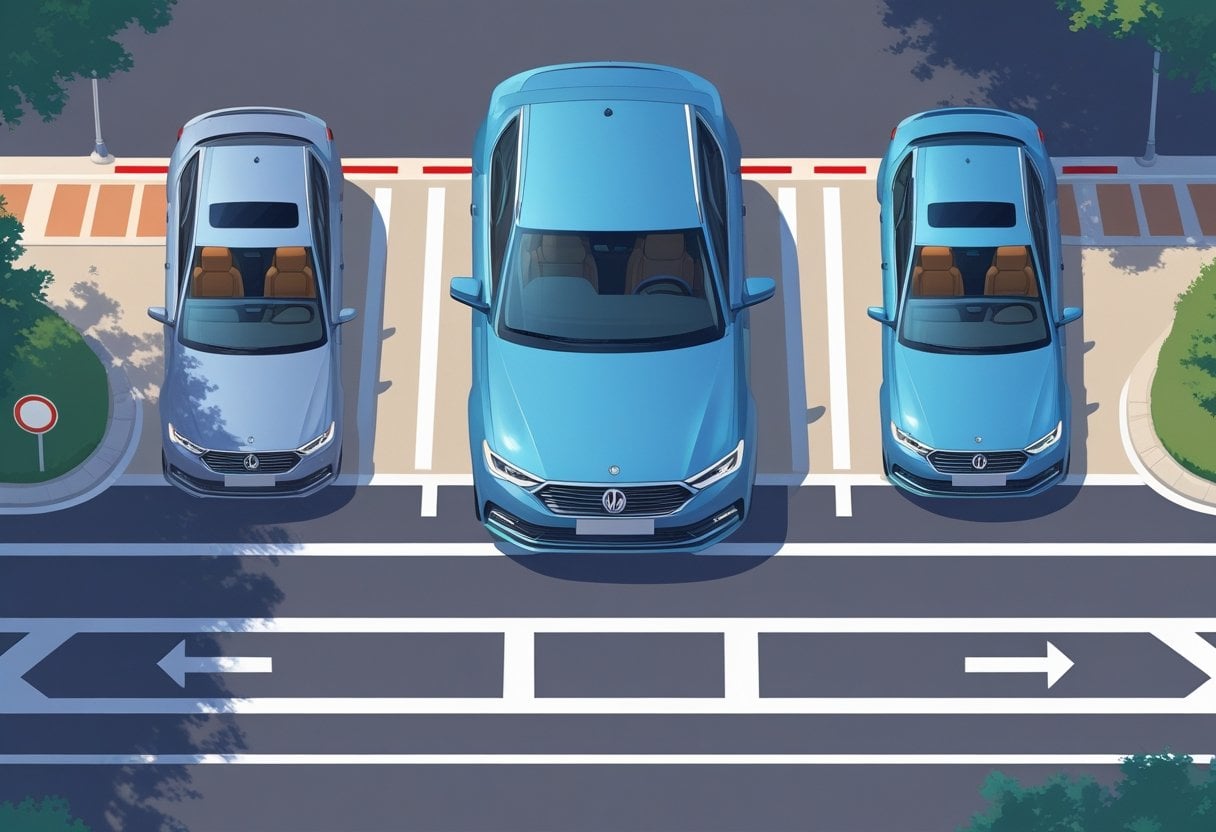
Use the handbrake at junctions when you expect to wait for more than a few seconds, but rely on the footbrake for quick stops where you might need to move again straight away. The choice isn’t just about personal preference. Your decision affects your safety, helps prevent rolling backwards on slopes, and shows examiners that you understand proper vehicle control.
Getting this balance right makes all the difference between smooth, confident driving and those awkward moments where you’re fumbling with controls whilst traffic builds up behind you. We’ll walk you through the practical side of brake choices, help you understand what your driving examiner expects to see, and share techniques that work in real driving situations you’ll face every day.
Smooth braking at junctions comes with repetition, and an intensive driving course focused on car control gives you plenty of it in a short space of time.
Understanding the Handbrake and Footbrake
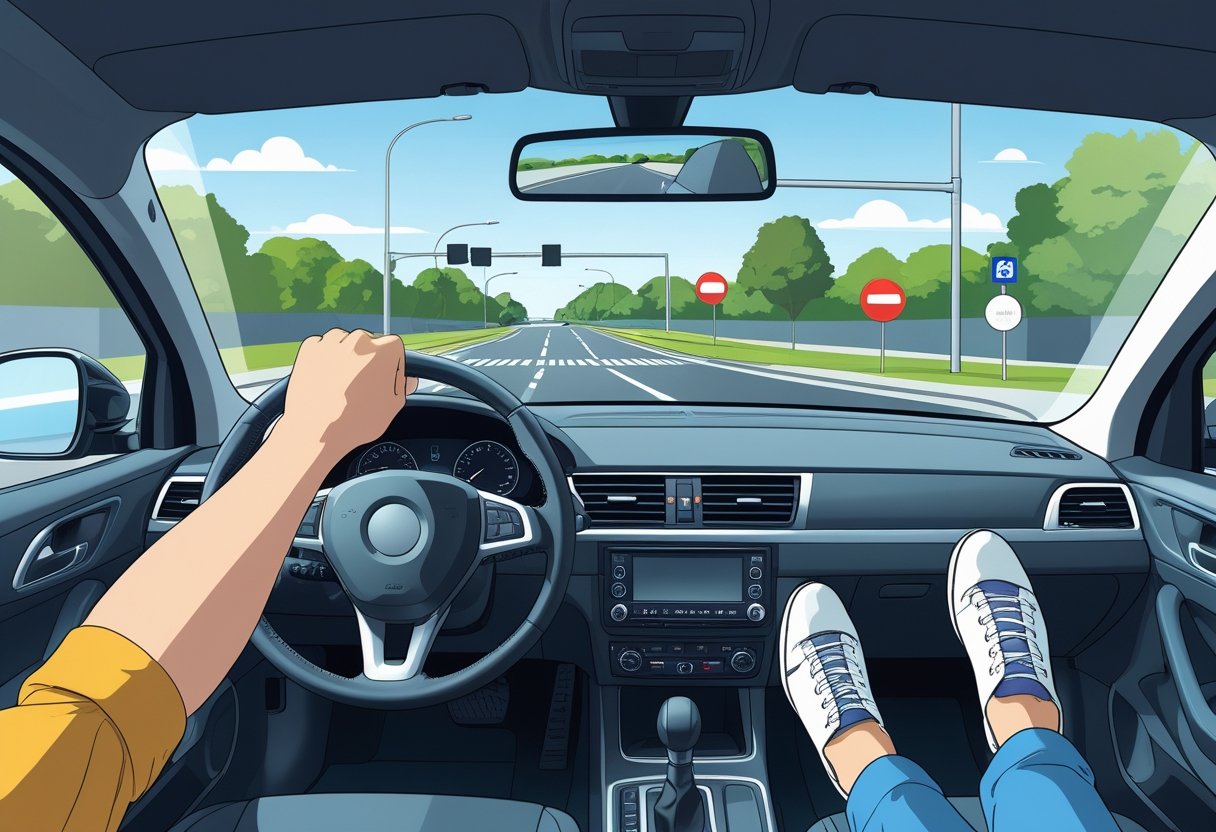
We’ll explore how these two distinct braking systems work together to keep you safe on the road, with the foot brake serving as your primary stopping power whilst the handbrake acts as your parking companion and emergency backup.
Key Differences Between the Braking Systems
The foot brake sits right in the middle of your pedals, positioned between the clutch and accelerator. This is your main braking system, the one you’ll rely on every single time you need to slow down or stop whilst driving.
Your handbrake (also called the parking brake) works quite differently. It’s either a lever between your front seats or a button on modern cars. This system only controls your rear wheels, making it less powerful than the footbrake.
Here’s what makes them different:
| Feature | Foot Brake | Handbrake |
|---|---|---|
| Power | High stopping power | Limited stopping power |
| Wheels controlled | All four wheels | Rear wheels only |
| Primary use | Active driving | Parking and stationary periods |
| Frequency of use | Constant throughout journey | Specific situations only |
The footbrake connects to all your wheels through a hydraulic system. When you press the pedal, brake fluid creates pressure that stops your car quickly and safely.
Your handbrake uses cables to engage the rear brakes directly. It’s not designed to stop a moving vehicle effectively, which is why we never use it alone whilst driving.
How Each Brake Operates Mechanically
Your braking system works through completely different mechanisms for each brake. Understanding this helps you use them properly and safely.
The footbrake uses hydraulic pressure to multiply the force from your foot. When you press the pedal, brake fluid flows through lines to all four wheels, creating tremendous stopping power almost instantly.
Modern cars have disc brakes on the front wheels and often the rear too. The system applies brake pads against spinning discs, creating friction that stops your wheels.
Your handbrake operates mechanically through cables and levers. When you pull the lever or press the button, cables tighten to engage the rear brake pads or shoes directly.
This mechanical system means the handbrake works independently from your main braking system. If your hydraulic brakes ever failed (which is extremely rare), you’d still have the handbrake as backup.
The handbrake’s mechanical nature also explains why it takes more effort to engage and why it’s perfect for keeping your car stationary when parked.
Appropriate Situations for Each Brake
We use the footbrake for virtually all active driving situations. Every time you approach a junction, slow for traffic, or stop at lights, your foot brake does the work.
At junctions specifically, your footbrake brings you to a complete stop safely and gives you precise control over your stopping distance. You can ease off gradually if traffic starts moving again.
The handbrake becomes essential when you’re stationary for longer periods. At busy junctions where you’re waiting more than five seconds, applying the handbrake gives your foot a rest and shows good car control.
Perfect handbrake situations include:
- Waiting at red traffic lights
- Queuing in heavy traffic
- Hill starts (prevents rolling backwards)
- Parking anywhere
- Emergency backup if footbrakes fail
Never apply the handbrake whilst your car is still moving, as this can damage your braking system and reduce your control. Always stop completely with the footbrake first, then engage the handbrake if needed.
At junctions, use both brakes together when appropriate. Your footbrake stops you safely, then your handbrake keeps you secure whilst you wait.
The Role of the Handbrake at Junctions

The handbrake becomes your trusted ally at junctions, offering control and safety when you need to hold your position. We’ll explore when to engage it, how it helps during longer waits, and why it’s absolutely essential for hill starts.
When and Why to Apply the Handbrake
The five-second rule works brilliantly here. If we’re stopped at a junction for more than five seconds, it’s time to engage the handbrake.
This applies perfectly when you’re waiting at red traffic lights that won’t change quickly. We also use it when queuing behind other vehicles at busy T-junctions or roundabouts.
Never reach for the handbrake during brief stops. If the lights are about to turn green or traffic is moving slowly, keep your foot on the brake pedal instead.
The handbrake only controls your rear wheels, so we must always apply the footbrake first. Once you’ve stopped completely, then engage the parking brake.
Safety comes first at junctions. The handbrake acts as a backup if your footbrake fails, though this rarely happens with modern cars. It also prevents accidental rolling if you lift your foot off the brake pedal.
During your driving test, examiners expect you to use the handbrake appropriately. They’ll look for it during emergency stops and whenever you pull up at the roadside.
Benefits of the Handbrake for Stationary Periods
Your right foot gets a proper rest when you engage the handbrake during longer waits. This reduces fatigue and keeps you comfortable during busy traffic periods.
Brake lights matter more than you might think. When we hold the footbrake for ages, those bright red lights can dazzle drivers behind us, especially at night.
Using the handbrake switches off your brake lights once you release the footbrake. This courtesy helps other drivers, particularly during evening rush hour or winter months.
However, switching off brake lights has a downside. Other drivers can’t easily tell when you’re about to move off again. We need to be extra careful with our signals and observations.
The handbrake gives you better control over your pedals. With your right foot free, you can position it ready on the accelerator. Your left foot can work the clutch without feeling rushed or unbalanced.
This becomes crucial when the traffic starts moving again. You’ll pull away smoothly instead of fumbling between pedals.
Handbrake Usage During a Hill Start
Hill starts become manageable when we use the handbrake properly. It prevents rolling backwards into the car behind you, which could cause an accident.
Apply the handbrake after stopping on any uphill slope at a junction. Even gentle inclines can cause rolling, so don’t take chances with steep gradients.
The technique works like this: Keep your footbrake pressed while engaging the handbrake. Release the footbrake to check the car stays still.
When it’s time to move off, find the clutch biting point first. Add a little accelerator, then slowly release the handbrake as you feel the car wanting to move forward.
Practice makes perfect with hill starts. The handbrake gives you confidence to coordinate clutch, accelerator, and handbrake release without panic.
On very steep hills, even the handbrake might struggle. Keep your footbrake ready as extra security, especially when you’re still learning.
The parking brake transforms challenging uphill junctions into routine manoeuvres. You’ll handle them with confidence once this technique becomes second nature.
Using the Footbrake Effectively at Junctions
The footbrake serves as your primary tool for stopping at junctions, and mastering its use builds confidence in your driving. We’ll explore smart techniques for brief stops, proper coordination with the clutch, and how your brake lights communicate with other drivers.
Best Practice for Brief Stops
When you’re approaching traffic lights that might change soon, the footbrake becomes your best friend. Keep your right foot gently pressed on the brake pedal to hold the car steady.
Quick decision rule: If you think you’ll be moving again within 5 seconds, stick with the footbrake. This keeps you ready to go without fumbling about with the handbrake.
At busy roundabouts, you’ll often find yourself in stop-start situations. The footbrake gives you instant control here. You can ease off slightly to creep forward or press down firmly to stop completely.
Watch the traffic flow ahead of you. If cars are moving slowly but steadily, your foot on the brake pedal lets you match their pace smoothly.
Here’s what works brilliantly:
- Keep your heel on the floor for stability
- Use gentle, steady pressure rather than jabbing motions
- Stay alert and ready to release or apply more pressure
Footbrake and the Clutch: Timing Your Release
Getting the footbrake and clutch working together takes practice, but it’s absolutely doable. When you’re ready to move off from a junction, your timing matters enormously.
Start by finding the clutch biting point whilst keeping the footbrake pressed. You’ll feel the car wanting to move forward slightly. This is perfect preparation.
The golden sequence: Clutch to biting point, then gradually release the footbrake as you lift the clutch further. This prevents rolling backwards on slopes and gives you smooth control.
On flat ground, you can release the footbrake just before the clutch reaches its biting point. The car won’t roll, and you’ll move off seamlessly.
Practice this coordination in quiet areas first. Each car feels different, so spend time getting familiar with your vehicle’s particular clutch and brake response.
Never rush this process at junctions. Taking an extra second to coordinate properly keeps you safe and confident.
Managing Safety With Brake Lights
Your brake lights tell a story to drivers behind you, and understanding this helps everyone stay safe. When your foot’s on the brake pedal, those bright red lights warn other drivers you’re stopped.
This communication becomes crucial at busy junctions. Drivers approaching from behind can see you’re stationary and adjust their speed accordingly.
During evening drives, your brake lights become even more important. However, sitting with them blazing for ages can dazzle the driver behind you, which isn’t particularly considerate.
Night driving tip: If you’re stopped for more than 10 seconds in darkness, consider switching to the handbrake. This gives the person behind you relief from the glare.
Remember that when you release the footbrake, your brake lights go out. Other drivers might interpret this as you preparing to move, so be mindful of mixed signals.
Keep your movements deliberate and clear. Press the brake firmly when stopping, and release decisively when you’re ready to proceed.
Adapting Braking Technique to Different Junctions
Different types of junctions require distinct braking approaches based on their unique challenges and traffic patterns. Road conditions and gradients also play a crucial role in determining whether we should rely on the footbrake or handbrake for optimal control.
T-Junctions, Roundabouts, and Traffic Lights
T-junctions often catch us off guard with their quick stop-and-go nature. When we’re turning right at a busy T-junction, we’ll likely need to wait for gaps in traffic.
If we’re stopped for more than five seconds, the handbrake becomes our best friend. It frees up our right foot to prepare for acceleration when that perfect gap appears.
Roundabouts present a different challenge altogether. Most stops here are brief as we yield to traffic from the right. The footbrake usually does the job perfectly.
We only need the handbrake if we’re stuck behind a queue of cars waiting to enter. Quick stops rarely justify reaching for the handbrake.
Traffic lights offer the most predictable stopping patterns. Red lights typically last 30 to 90 seconds, making them ideal candidates for handbrake use.
Here’s when we should engage the handbrake at traffic lights:
- Always use: When we’re first or second in the queue
- Usually use: During nighttime driving (prevents dazzling drivers behind us)
- Sometimes use: In heavy traffic with long red phases
- Avoid using: When lights are clearly about to change
Slopes, Inclines, and Varying Road Surfaces
Hill starts represent the handbrake’s moment to shine. Whether we’re facing uphill or downhill at junctions, the handbrake prevents embarrassing (and dangerous) rolling.
On steep inclines, we should apply the handbrake every single time we stop. This gives us complete control over the clutch and accelerator when it’s time to move off.
The hill start technique becomes second nature with practice:
- Stop using the footbrake
- Apply the handbrake firmly
- Select first gear
- Find the biting point with the clutch
- Add gentle acceleration
- Release the handbrake smoothly
Wet or icy surfaces at junctions demand extra caution. Our braking system works harder on slippery roads, so gentle pressure on the footbrake prevents skidding.
The handbrake provides additional security on slopes when road conditions are poor. We’re essentially giving ourselves a safety net while managing the more delicate pedal work required in challenging conditions.
Influencing Factors: Vehicle, Law, and Test Expectations
Your braking choices at junctions depend on three key elements: official guidance from the Highway Code, practical advice from driving instructors, and specific requirements during your driving test. Each factor shapes when you should reach for the handbrake or rely on the foot brake.
The Highway Code and Braking Recommendations
The Highway Code provides clear guidance on braking behaviour in stationary traffic situations. When you’re stopped in traffic queues, you should apply the parking brake and lift your foot off the footbrake.
This approach serves two important purposes. First, it prevents your brake lights from dazzling drivers behind you. Second, it reduces fatigue in your braking leg during longer waits.
The official recommendation becomes particularly relevant at busy junctions where traffic regularly builds up. Traffic lights with long phases create ideal situations for following this guidance.
However, the Highway Code doesn’t mandate handbrake use for every brief stop. Quick pauses at give way lines or short red lights often don’t require the parking brake.
Your judgement matters here. If you expect to move within a few seconds, keeping your foot on the brake pedal is perfectly acceptable and often more practical.
Driving Instructor Advice and Real-World Learning
Driving instructors often have varying approaches to handbrake use at junctions. Some emphasise using it whenever you stop, whilst others teach a more flexible approach based on circumstances.
Many instructors focus on three key scenarios where the handbrake becomes essential. These include stops on inclines, situations where you’re close to other vehicles, and any extended waits at junctions.
The practical reality is that handbrake use depends heavily on road conditions and traffic flow. Busy roundabouts might require frequent stops where the handbrake proves beneficial for vehicle control.
Your instructor’s local knowledge plays a crucial role too. Areas with steep hills or challenging junctions often demand more frequent handbrake use than flat, quiet roads.
Real-world driving experience teaches you to adapt your braking choices. You’ll develop instincts about when the extra security of the handbrake outweighs the convenience of foot brake control.
Not sure which course length is right for you, our guided course finder matches you to the package that suits your experience and timeline.
Driving Test Tips and Common Mistakes
During your driving test, examiners expect sensible handbrake use rather than rigid rules. They look for situations where you demonstrate good vehicle control and safety awareness.
When examiners expect handbrake use:
- Parking up when asked
- Emergency stop completion
- Extended waits in traffic
- Hill starts and slopes
The biggest mistake learners make is applying the handbrake too early, sometimes whilst still moving. This creates a dangerous situation and can result in test failure.
Wait about five seconds after stopping before deciding whether to engage the handbrake. This prevents premature application and gives you time to assess whether you’ll be moving again quickly.
Another common error involves frantically grabbing the handbrake the moment you stop. Examiners prefer measured, thoughtful decisions about when the parking brake truly benefits your situation.
Remember that overusing the handbrake can be just as problematic as never using it. Your examiner wants to see confident, appropriate choices that match real driving conditions.
Looking After Your Brakes and Driving Smoothly
Smart brake habits at junctions protect your car’s components and create a more pleasant experience for everyone in the vehicle. Simple changes to how we use our braking system can prevent unnecessary wear whilst keeping our journeys comfortable.
Preventing Wear on Clutch and Brake Components
Our braking system works hard every time we drive, especially at busy junctions where we’re constantly stopping and starting. When we rest our foot on the footbrake for extended periods, we create unnecessary heat in the brake pads and discs.
The handbrake becomes our best friend during longer waits at traffic lights or roundabouts. By switching to the handbrake after a few seconds, we give the main braking system a proper break. This simple habit can extend the life of our brake components significantly.
Our clutch also benefits from thoughtful brake use. When we apply the handbrake and shift into neutral at junctions, we’re not holding the clutch pedal down unnecessarily. This reduces wear on the clutch plate and release bearing.
Here’s what damages our components most:
- Keeping our foot pressed on the footbrake for minutes at a time
- Riding the clutch whilst waiting in traffic
- Using the wrong gear for hill starts without the handbrake
Smart timing makes all the difference. Count to five when stopped at junctions. If traffic isn’t moving, engage that handbrake and give your leg muscles a rest too.
Avoiding Bad Habits at Junctions
We’ve all seen drivers who seem to brake at the last possible moment or those who creep forward constantly at red lights. These habits create problems for everyone around us and put extra stress on our braking system.
Smooth, early braking shows other drivers our intentions clearly. When we spot a junction ahead, gentle pressure on the footbrake signals our plans to vehicles behind us. This prevents that jarring stop-start motion that makes passengers feel queasy.
The handbrake isn’t meant for emergency stops whilst we’re moving. Some new drivers panic and grab the handbrake instead of the footbrake, which can cause the rear wheels to lock up. Always use the footbrake first to bring the car to a complete stop, then apply the handbrake if needed.
Bad habits we should avoid include:
- Pumping the brakes repeatedly at junctions
- Forgetting to release the handbrake when setting off
- Using the handbrake whilst the car is still rolling
Practice makes these decisions automatic. The more we drive with proper technique, the more natural it becomes to choose the right brake for each situation.
Keeping the Journey Comfortable for Everyone
Our passengers notice everything about how we drive, especially our braking technique. Smooth stops and starts create a much more pleasant experience for everyone in the car, from small children to elderly relatives.
Harsh braking throws people forward in their seats, whilst gradual stops allow everyone to stay comfortable and relaxed. When we use the handbrake appropriately at junctions, we can focus on smooth acceleration when it’s time to move off again.
The footbrake and handbrake work together to create seamless journeys. At traffic lights, we can brake smoothly with our foot, apply the handbrake for longer waits, then release it gently when preparing to move. This gives us better control over the clutch and accelerator pedals.
Night driving requires extra consideration for other road users. When we switch from footbrake to handbrake during extended stops, our brake lights turn off. This prevents dazzling the driver behind us, which is particularly important in dark conditions.
Our gear selection also affects comfort levels. Staying in neutral with the handbrake applied means we’re not straining the engine or creating vibrations through the car. Everyone appreciates a driver who thinks about these small details that make journeys more enjoyable.
Frequently Asked Questions
Many drivers wonder about the right moments to apply the handbrake versus keeping pressure on the footbrake. These questions cover everything from proper stop light etiquette to protecting your vehicle’s long-term health.
What are the best practices for using your handbrake at stop lights?
We recommend applying the handbrake if you’re stopped for more than five seconds at traffic lights. This gives your foot a rest and prevents you from accidentally rolling forward.
Keep your foot on the brake pedal for quick stops where the lights might change soon. You don’t want to delay other drivers by fumbling with the handbrake when traffic starts moving.
During nighttime driving, using the handbrake is particularly courteous. Your brake lights won’t dazzle the driver behind you when you release the footbrake.
Always remember to release the handbrake smoothly when you’re ready to move off. This keeps traffic flowing and shows you’re in full control of your vehicle.
Could you explain when it’s more efficient to rely on a footbrake rather than a handbrake?
The footbrake works best for quick stops and brief pauses at junctions. If you can see traffic moving ahead or lights about to change, stick with the footbrake.
We find the footbrake more efficient during busy roundabouts where you need to stop and start frequently. You can react faster without reaching for the handbrake lever.
Heavy traffic situations often call for footbrake use. When cars are moving in short bursts, the handbrake becomes more trouble than it’s worth.
The footbrake also gives you better control during precise manoeuvres. You can modulate pressure more easily than with the handbrake’s on-off nature.
In what situations is it safest to engage the handbrake instead of holding the footbrake?
Hill junctions absolutely require the handbrake for safety. Without it, you risk rolling backwards into the car behind you.
We strongly advise using the handbrake when you’re very close to another vehicle. If your foot slips off the brake pedal, the handbrake prevents a collision.
Emergency stops demand handbrake use once you’ve stopped completely. This secures your vehicle and shows you’re in control during your driving test.
Long waits at level crossings or roadworks call for handbrake engagement. Your leg won’t get tired, and you’re less likely to make mistakes from fatigue.
How does using the handbrake at hill junctions improve control of the vehicle?
The handbrake frees up both feet for clutch and accelerator work on hills. This prevents the dreaded backward roll that terrifies many learner drivers.
We’ve seen countless drivers gain confidence once they master handbrake hill starts. You can take your time finding the clutch bite point without pressure.
The technique gives you a safety net during tricky uphill junctions. Even if you stall, the handbrake keeps you stationary while you restart.
Your vehicle control improves dramatically when you’re not worried about rolling back. You can focus on observation, signalling, and smooth acceleration instead.
What are the key differences in using the handbrake versus the footbrake in busy traffic?
Busy traffic requires different brake strategies depending on flow patterns. Stop-start queues benefit from handbrake use to reduce driver fatigue.
We notice the footbrake works better when traffic moves in short, frequent bursts. You can respond quickly without handbrake delays.
The handbrake becomes essential in stationary traffic jams. Your brake lights won’t overheat, and following drivers appreciate the reduced glare.
Consider other road users when choosing your brake method. Handbrake use at night shows consideration, whilst footbrake readiness keeps traffic moving smoothly.
Can you give insights into the long-term benefits for car maintenance when choosing to use the handbrake at stops?
Regular handbrake use actually keeps the mechanism in good working order. Like any car part, it needs exercise to stay functional and reliable.
We’ve found that handbrake use reduces brake light bulb failures. Constant footbrake pressure generates heat that shortens bulb life significantly.
Your brake pads and discs experience less continuous heating when you alternate between systems. This can extend their lifespan with proper use patterns.
The clutch benefits too when you use proper handbrake technique on hills. You’ll avoid riding the clutch whilst balancing on slopes, reducing wear and tear.
Getting this right with an instructor beside you
Car control comes from repetition with someone watching and correcting you, which is hard to replicate from an article.
LPOD Academy intensive courses run from 10 to 50 hours with the same instructor throughout, covering around 95% of England, Wales and Scotland.
If you are not sure how many hours you need, the recommendation tool asks a few questions and suggests a package.
Ready to pass in weeks, not months?
LPOD Academy runs tailored intensive driving courses from 10 to 50 hours across most of the UK, with your theory and practical test support included.
Compare intensive driving courses
Get a course recommendation
Ready to Book Driving Lessons?
LPOD Academy offers intensive driving courses across the UK. Find your nearest location: