

Advice for International Drivers Taking the UK Theory Test: Essential Tips for Success
Moving to the UK and ready to get behind the wheel? The journey to your British driving licence starts with passing the theory test, and as an international driver, you’ll face some unique challenges along the way. During your first year in the UK, you can drive with your home country licence or International Driving Permit, but after that, you’ll need to obtain a provisional UK licence and pass the UK theory test.
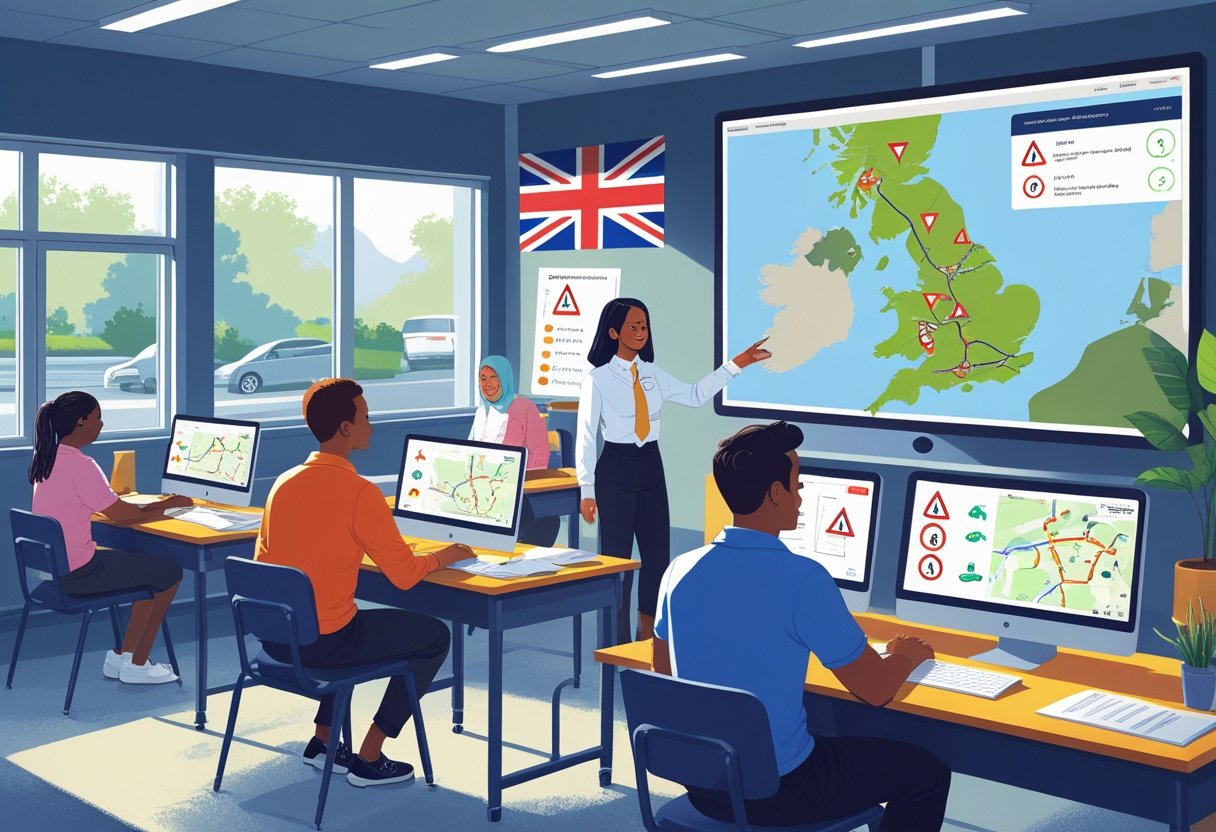
We understand that adapting to left-hand traffic, unfamiliar road signs, and British driving laws can feel overwhelming when you’re already adjusting to life in a new country. The good news is that thousands of international drivers successfully pass their UK theory test every year, and with the right preparation, you can join them.
From understanding the booking process and mastering multiple-choice questions to conquering the hazard perception test, we’ll guide you through every step of your theory test journey. Whether you’re wondering about revision strategies, test day procedures, or how your international experience translates to UK roads, we’ve got the practical advice you need to approach your test with confidence.
Understanding the UK Theory Test Process
The UK theory test serves as your gateway to becoming a licensed driver, combining multiple-choice questions with hazard perception assessments. We’ll walk you through who needs to take this essential exam, what components you’ll face, and the eligibility requirements that apply to your situation.
Who Needs to Take the UK Theory Test
Most aspiring drivers must pass the car theory test before earning their full driving licence. This requirement applies to nearly everyone seeking to drive independently on UK roads.
However, there are some exceptions we should mention. You won’t need to take the theory test if you’re upgrading from an automatic to manual car licence. The same applies if you hold a category B1 driving licence for light vehicles that was issued before 1 February 2001.
If you already hold a motorcycle licence, you’ll still need to pass a separate car theory test before taking your car driving test. Your motorcycle qualification doesn’t exempt you from this requirement.
International drivers should also check whether their existing licence allows them to drive in Great Britain without taking both theory and practical tests. The rules vary depending on your country of origin and licence type.
Key Components of the Test
The UK theory test consists of two distinct sections that you’ll take during a single appointment. Both parts must be passed to achieve an overall pass.
Multiple-choice questions form the first component. These cover road signs, traffic laws, vehicle safety, and driving techniques. You’ll face 50 questions with a time limit, and we recommend practising extensively beforehand.
The hazard perception test uses video clips showing real driving scenarios. You’ll click when you spot developing hazards, and your timing affects your score. This section tests your ability to identify dangerous situations quickly and appropriately.
Both sections require different preparation strategies. The multiple-choice element relies on memorising facts and rules, whilst hazard perception develops through repeated practice with video scenarios.
Eligibility and Age Requirements
You can take your driving theory test from your 17th birthday onwards in most circumstances. This aligns with the standard age for obtaining a provisional driving licence.
There’s an important exception for those receiving Personal Independence Payment. If you receive or have applied for the higher weekly rate of the mobility component, you can take your theory test from age 16.
You must hold a provisional driving licence before booking your theory test appointment. This serves as proof of your eligibility and identity during the examination process.
We’d recommend booking your theory test well in advance, as popular test centres often have waiting lists. You can always change your appointment date later if needed, giving you flexibility in your preparation timeline.
Booking Your Theory Test as an International Driver
Booking your theory test as an international driver requires specific documentation and understanding of the DVSA’s requirements. The process involves gathering proper identification, navigating the online booking system effectively, and knowing what information you’ll receive after completing your reservation.
Required Documents and Identification
You’ll need your UK provisional driving licence number to book your theory test through the official DVSA system. This is non-negotiable, so make sure you’ve applied for your provisional licence well in advance.
International drivers must have lived in England, Wales, or Scotland for at least 185 days in the 12 months before taking the test. Keep records of your residency to prove this requirement if needed.
Your email address and a valid credit or debit card complete the essential documentation list. The email will receive your booking confirmation and important updates about your test.
Additional considerations for international drivers:
- Bring your original foreign driving licence to the test centre
- Have your passport ready as backup identification
- Consider bringing proof of UK residency (utility bills, bank statements)
If you have a reading difficulty, health condition, or disability, mention this during booking. The DVSA provides accommodations including BSL translation for candidates who need additional support.
Online Booking Options and Tips
The official government website offers the most reliable way to book a theory test for £23. Avoid third-party booking sites that might charge extra fees or cause confusion.
Smart booking strategies:
- Book during off-peak hours (weekday mornings) for better availability
- Choose test centres in less busy areas if you’re flexible with location
- Allow 2-4 weeks lead time, especially in major cities
The system shows available slots in real-time. If your preferred date isn’t available, check back regularly as cancellations create new openings throughout the day.
Payment and timing tips:
- Have your card details ready before starting
- Complete the booking in one session to avoid losing your slot
- Screenshot your booking reference immediately after payment
Remember that you can reschedule or cancel your test, but you’ll need at least three working days’ notice to avoid losing your fee.
What to Expect From the Booking Confirmation
Your confirmation email arrives within minutes of successful payment and contains crucial information you’ll need on test day. Save this email and consider printing a copy as backup.
Key details in your confirmation:
- Unique booking reference number
- Test centre address and contact details
- Date and arrival time (usually 15 minutes before your test slot)
- What to bring on the day
The confirmation explains the test format: 50 multiple-choice questions followed by the hazard perception section. You’ll have 57 minutes total, with a short break between sections if needed.
Important reminders included:
- Arrive with valid photo identification
- Bring your provisional driving licence
- Mobile phones must be switched off and stored away
If you need to contact the test centre or make changes, use the reference number from your confirmation email. Keep this number handy until after you’ve completed your theory test successfully.
Mastering the Multiple-Choice Questions
The multiple-choice section tests your knowledge through 50 questions covering road rules, traffic signs, and driving scenarios. You’ll need to score at least 43 correct answers to pass, making thorough preparation with the Highway Code and regular mock tests absolutely essential.
Types of Multiple-Choice Questions
We’ll encounter several distinct question formats during the multiple-choice section of the UK driving theory test. The most common type presents straightforward scenarios about road rules and regulations.
Scenario-based questions describe driving situations and ask what action you should take. These might involve overtaking, parking restrictions, or responding to emergency vehicles.
Definition questions test your understanding of specific terms. You might need to identify what “tailgating” means or explain the purpose of particular road markings.
Visual questions show images of road signs, traffic situations, or vehicle components. We’re expected to identify signs, spot hazards, or recognise different vehicle types.
Legal requirement questions focus on driving laws, including speed limits, insurance obligations, and penalty points. These questions often include specific numbers or timeframes that require precise knowledge.
The key to success lies in recognising each question type and applying the appropriate knowledge from your studies.
Understanding Road Rules and Scenarios
Road rules form the backbone of the theory test, and we must grasp both basic regulations and complex scenario applications. Speed limits vary significantly across different road types and conditions.
Built-up areas typically have 30mph limits, whilst dual carriageways allow 70mph unless otherwise marked. However, weather conditions, road works, and specific signs can override these standard limits.
Right of way rules frequently appear in questions about roundabouts, junctions, and pedestrian crossings. We need to understand who has priority in different situations.
Priority goes to traffic already on roundabouts, vehicles turning right must give way to oncoming traffic, and pedestrians always have right of way on zebra crossings.
Stopping distances combine thinking distance and braking distance. At 30mph, total stopping distance is 23 metres (75 feet). This increases dramatically with speed and poor weather conditions.
Vulnerable road users require special consideration. Motorcyclists, cyclists, pedestrians, and horse riders have specific rights and needs that drivers must respect and accommodate.
Essential Study Resources: Highway Code and Traffic Signs
The Highway Code serves as our primary study resource for understanding UK driving rules and regulations. Every section contains vital information that could appear in questions.
Rules 1-35 cover general road user guidance, including vulnerable road users and animals. Rules 36-46 explain vehicle maintenance and safety requirements.
Traffic signs fall into three main categories: regulatory signs (circles), warning signs (triangles), and information signs (rectangles). Each shape and colour combination has specific meanings.
Red circles typically prohibit actions, whilst blue circles provide mandatory instructions. Yellow warning signs highlight temporary hazards like roadworks or diversions.
We should use multiple study methods for maximum retention. Flashcards work brilliantly for memorising sign meanings and speed limits.
Practice tests and mock exams help identify knowledge gaps and build confidence. Taking at least 10 full-length practice tests ensures we’re thoroughly prepared.
Mobile apps offer convenient study options during commutes or breaks. Many provide progress tracking and focus on areas needing improvement, making revision more efficient and targeted.
Conquering the Hazard Perception Test
The hazard perception test challenges international drivers to spot developing hazards quickly and accurately through 14 video clips. You’ll need to understand the scoring system and practice identifying real road dangers to achieve the required 44 points out of 75.
How the Video Test Works
The hazard perception test presents you with 14 video clips showing everyday driving situations from a driver’s perspective. Each clip lasts about one minute and contains at least one developing hazard.
One special clip includes two developing hazards, giving you 15 hazards total to spot. You’ll watch these videos on a computer screen and click your mouse when you see a hazard starting to develop.
The scoring works like this:
- Up to 5 points per hazard
- Higher scores for clicking early when the hazard begins
- No points lost for wrong clicks
- Zero points if you click continuously or in patterns
The pass mark is 44 points out of a possible 75. This means you need to spot most hazards reasonably quickly to succeed.
You get only one attempt at each clip. There’s no going back to review or change your responses once you’ve moved forward.
Spotting Developing Hazards
A developing hazard is something that would make you take action whilst driving, such as changing speed or direction. Static objects like parked cars aren’t hazards until they start moving or creating danger.
Common developing hazards include:
- Pedestrians stepping into the road
- Cars pulling out from side roads
- Cyclists swerving around obstacles
- Children playing near the roadside
- Animals crossing the path
The key is recognising when a potential hazard becomes an actual developing hazard. For example, a parked car becomes a hazard when its indicator starts flashing and it begins to move.
Look for early warning signs like brake lights ahead, pedestrians looking towards the road, or vehicles edging forward at junctions. These often signal that a hazard is about to develop.
Don’t click too early when you just see potential hazards. Wait until you can clearly see the situation developing into something that requires driver action.
Effective Hazard Perception Training
We recommend using official practice materials and taking multiple mock tests before your real exam. Different hazard perception tests help you experience various scenarios you might encounter.
Practice strategies that work:
- Take regular breaks between practice sessions
- Focus on different types of hazards each time
- Watch real driving videos to improve hazard awareness
- Practice clicking at different stages of hazard development
Start with easier practice clips and gradually move to more challenging scenarios. This builds your confidence and improves your reaction timing naturally.
Consider practicing with a driving instructor who can explain what makes each hazard dangerous. They often spot details that learner drivers miss initially.
Timing your clicks correctly takes practice. Click too early and you won’t score points. Click too late and you’ll miss the optimal scoring window entirely.
Regular practice sessions work better than cramming everything into one long study period.
Revision Strategies and Preparation Tools
Smart preparation combines proven study methods with quality practice materials and regular progress tracking. The key is building confidence through consistent practice whilst identifying your weak areas early.
Top Study Techniques for Success
Active reading transforms boring theory into memorable knowledge. Don’t just read the Highway Code passively. Instead, quiz yourself after each section and explain the rules out loud.
Visual learning works brilliantly for road signs and markings. Create flashcards or use mind maps to connect related concepts. Many international drivers find drawing diagrams helps cement the UK’s unique traffic rules.
Spaced repetition beats cramming every time. Review difficult topics every few days rather than studying everything once. This technique helps information stick in your long-term memory.
Practice in your native language initially, then switch to English. Theory Translated offers multilingual support in 13 languages, making complex concepts clearer before tackling them in English.
Set realistic daily goals. Thirty minutes of focused study beats three hours of distracted reading. Break sessions into chunks: theory questions, hazard perception, then Highway Code review.
Using Official Practice Materials and Apps
The DVSA provides the gold standard for theory test preparation. Their official materials match exactly what you’ll see on test day.
Official DVSA apps contain authentic questions and current pass marks. These aren’t optional extras but essential tools that mirror the real test environment.
Multiple platforms offer comprehensive revision courses with over 600,000 successful learners. Look for apps that provide detailed explanations, not just correct answers.
TheoryPass and similar platforms offer PDF learning materials for offline study. Download these for revision during commutes or when internet access is limited.
Key features to prioritise:
- Updated question banks matching current DVSA standards
- Detailed explanations for wrong answers
- Hazard perception videos with scoring feedback
- Progress tracking to identify weak areas
Avoid unofficial or outdated materials. They often contain incorrect information that could harm your chances.
Taking Practice Tests and Tracking Progress
Mock tests simulate real exam conditions perfectly. Take at least five full practice tests before booking your actual theory test.
Time yourself strictly during mock test sessions. You’ll have 57 minutes for 50 multiple-choice questions, so practise managing your time effectively.
Track your scores religiously using this approach:
| Week | Target Score | Focus Areas |
|---|---|---|
| 1-2 | 35/50 (70%) | Basic rules, signs |
| 3-4 | 40/50 (80%) | Hazard perception |
| 5-6 | 43+/50 (86%+) | Weak topic review |
Analyse your mistakes after each practice session. Write down why you chose wrong answers and review those topics immediately.
Hazard perception requires separate focus. Practise clicking at the right moment, not too early or late. Aim for scores above 44 out of 75 consistently.
Book your real test only when you’re scoring 43+ on multiple-choice and 50+ on hazard perception regularly.
Essential Test Day Guidance for International Drivers
Your car theory test day can feel daunting, but proper preparation makes all the difference. Knowing exactly what to bring, how the test centre operates, and managing your nerves will help you approach the day with confidence.
Arriving Prepared: What to Bring
We recommend arriving at your test centre with all required documents organised in advance. You’ll need your provisional driving licence and your passport if you’re not a UK citizen.
Essential items checklist:
- Valid provisional UK driving licence
- Passport (for non-UK citizens)
- Test booking confirmation
- Glasses or contact lenses if you need them for reading
Your test centre won’t accept photocopies or digital versions of these documents. Always bring the original paperwork to avoid disappointment.
We suggest arriving 15-20 minutes early to complete check-in procedures. This gives you time to settle in and review any last-minute details without feeling rushed.
Keep your documents in a clear folder or envelope. This simple step prevents fumbling through bags and creates a professional impression at reception.
Navigating the Test Centre
Most test centres follow a similar layout and process that we’ll walk you through. After checking in at reception, you’ll wait in a designated area until called for your test.
Typical test centre process:
- Check-in at reception desk
- Identity verification
- Waiting area assignment
- Individual test room allocation
- Computer-based test completion
The staff will guide you through each step, so don’t worry about navigating alone. Test centres are designed to be straightforward and user-friendly.
You’ll sit at an individual computer station in a quiet room. The test software includes clear instructions and practice questions to help you get comfortable with the system.
We find that understanding what happens during your theory test helps reduce uncertainty. The multiple-choice section comes first, followed by the hazard perception test.
Managing Test Nerves and Staying Focused
Feeling nervous is completely normal, and we’ve seen thousands of international drivers successfully manage their test anxiety. Deep breathing exercises work brilliantly for calming pre-test jitters.
Try this simple breathing technique: inhale for four counts, hold for four counts, then exhale for four counts. Repeat this pattern three times before entering the test room.
Focus strategies that work:
- Read each question carefully twice
- Use the flag system for difficult questions
- Take your time with hazard perception clips
- Remember that you can review flagged questions
We encourage you to trust your preparation rather than second-guessing yourself. Your months of study have equipped you with the knowledge needed to succeed.
During the hazard perception test, click steadily when you spot developing hazards. Avoid clicking too frequently, as the system penalises excessive clicking patterns.
Stay positive throughout the entire process. Even if some questions feel challenging, remember that you only need to pass, not achieve a perfect score.
Frequently Asked Questions
International drivers often have specific concerns about taking the UK theory test, from understanding what documents they need to navigating the differences between UK driving laws and those in their home countries. We’ve compiled answers to the most common questions to help make your preparation journey smoother and more confident.
What steps should I take to begin preparing for the UK driving theory test if I’ve just arrived from overseas?
Your first priority should be getting a UK provisional driving licence. You can drive on your international licence for up to 12 months, but international drivers must take the UK theory test after their first year in the country.
Start by familiarising yourself with the Highway Code, which forms the backbone of UK driving law. Purchase the official DVSA theory test app or book, as these contain the most up-to-date questions and scenarios you’ll face.
Set aside time each day for study. Even 20-30 minutes of consistent practice makes a real difference.
Don’t rush the process. Give yourself at least 2-3 weeks of solid preparation before booking your test, especially if driving laws in your home country differ significantly from the UK.
Can you guide me through the process of booking my UK theory test as a driver new to the country?
You’ll need your UK provisional driving licence number to book your test. Visit the official DVSA website or call their booking line to secure your slot.
Choose a test centre that’s convenient for you to reach. There are centres across England, Scotland, and Wales, so you should find one within reasonable travelling distance.
Book well in advance, particularly in busy urban areas where slots fill up quickly. You might wait 2-4 weeks for an appointment in popular locations.
The test costs £23 for cars, and you’ll need to pay by debit or credit card. Keep your confirmation details safe, as you’ll need them on test day.
Consider booking for a weekday if possible. Weekend slots tend to be more competitive and harder to secure.
Are there any specific documents I need to provide as an international applicant for the UK driving theory test?
You must bring your UK photocard driving licence to your test. This is non-negotiable, and your test will be cancelled without a refund if you forget it.
If you still have a paper licence, you’ll need to bring a valid passport alongside it. However, we’d recommend upgrading to a photocard licence to avoid any complications.
Have you changed your name since booking? You’ll need proof of the name change, such as a marriage certificate or deed poll document.
Make sure all your documents are current and valid. Expired identification will result in test cancellation, and you won’t receive a refund.
Double-check everything the night before your test. It’s worth creating a small checklist to ensure you don’t forget anything important.
Could you shed some light on the key differences between driving laws in the UK and other countries that I should be aware of for the theory test?
We drive on the left side of the road in the UK, which affects everything from roundabout navigation to overtaking procedures. This fundamental difference impacts many theory test questions.
UK speed limits are typically lower than many countries. Built-up areas are usually 30mph, single carriageways 60mph, and motorways 70mph, unless signs indicate otherwise.
Our approach to pedestrian crossings is quite specific. Zebra crossings give pedestrians absolute right of way, and you must stop if someone is waiting to cross.
Roundabouts follow a “give way to the right” rule, and the lane discipline can be complex. Study the Highway Code’s roundabout section carefully.
UK drink-drive limits are stricter than some countries. The legal limit is 80mg of alcohol per 100ml of blood in England, Wales, and Northern Ireland, but only 50mg in Scotland.
How do I get to grips with the Highway Code and what’s the most effective way to study it for the theory test?
Start with the official Highway Code book or app. Don’t rely on summarised versions or third-party materials for your primary learning.
Focus on the rules sections first, particularly those covering road signs, traffic lights, and basic driving procedures. These form the foundation for most multiple-choice questions.
Use the “little and often” approach. Reading for 30 minutes daily is more effective than cramming for hours once a week.
Practice with official DVSA theory test questions to see how the Highway Code translates into actual test scenarios.
Pay special attention to vulnerable road users: pedestrians, cyclists, and motorcyclists. The UK places strong emphasis on protecting these groups.
Create flashcards for stopping distances, speed limits, and penalty points. These factual elements often appear in test questions.
Could you offer any tips on how to approach hazard perception training for someone with driving experience outside the UK?
Don’t assume your international driving experience will automatically translate to UK hazard perception success. The test has a very specific format and scoring system.
Practice with official DVSA hazard perception clips only. Third-party materials often don’t match the actual test standard or timing requirements.
Learn to spot “developing hazards” rather than obvious dangers. The test rewards early identification of situations that might become problematic, not reactions to emergencies.
Avoid clicking too frequently or in patterns. The system penalises what it considers “cheating behaviour,” even if you’re genuinely trying to identify hazards.
Focus on pedestrians, cyclists, and other vehicles that might change direction or speed unexpectedly. These create the most common hazard scenarios in UK conditions.
Watch each practice clip multiple times. First for general awareness, then specifically looking for the hazard, and finally to understand the optimal clicking timing.
Remember that you need to score at least 44 out of 75 to pass this section of the theory test, so consistent practice is essential for success.