

Dreaming of passing your driving test quickly and confidently in 2025? You are not alone—automatic car intensive courses are changing how new drivers learn, making it faster and less stressful than ever.
With automatic cars surging in popularity, many beginners are turning to intensive courses for a streamlined path to success. Imagine saving weeks of lessons, feeling more prepared, and saying goodbye to test-day nerves. Ready to discover how you can join this growing trend?
This step-by-step guide covers everything you need to know about enrolling in an automatic car intensive course. Explore course structure, key benefits, tips to pick the best provider, preparation advice, what to expect, costs, and answers to your top questions.
Understanding Automatic Car Intensive Courses
Are you curious about how an automatic car intensive course can help you pass your driving test faster? This section breaks down what these courses are, why they are becoming so popular, and who they are best suited for. If you're considering a new way to learn driving in 2025, read on to see if this approach is right for you.

What is an Automatic Car Intensive Course?
An automatic car intensive course is a focused driving program designed to help learners master automatic vehicles over a short, compact timeframe. Unlike traditional weekly lessons, these courses often run over one or two weeks, combining multiple hours of tuition each day.
This approach is ideal for learners who want to build skills quickly and efficiently. The main difference is the immersive experience—learners spend more time behind the wheel in fewer days, which boosts confidence and familiarity. Beginners, nervous drivers, and those with limited time often benefit most.
If you want to explore real options, check out an Automatic driving lessons crash course to see how these programs are structured.
Key Benefits of Intensive Courses
Choosing an automatic car intensive course offers several major benefits. First, the learning curve is much faster—you can often be test-ready in just a few weeks. Because lessons are concentrated, you retain more knowledge, making it easier to build on new skills each day.
Intensive courses also reduce anxiety, as you stay focused and immersed in the learning process. Did you know that 60 percent of UK learners now consider intensive courses for speed and convenience? For many, this style means less stress and a quicker path to passing.
Automatic vs. Manual: Why Choose Automatic?
Automatic cars are rapidly gaining popularity. With simpler controls, they are easier for beginners to handle, allowing you to focus on road awareness and decision-making. Over 40 percent of new cars sold in the UK are now automatic, a trend fueled by urban driving needs and the rise of eco-friendly electric and hybrid vehicles.
For learners, an automatic car intensive course removes the challenge of clutch control and gear changes. This lets you concentrate on safe driving habits and test success.
Course Structure and Duration
Automatic car intensive courses come in a variety of formats. The most common are 1-week and 2-week packages, but custom schedules are often available to suit your needs. Beginners usually need between 20 and 40 hours of driving time.
A typical day might include a morning warm-up, core driving lessons, a break, then an afternoon session focused on specific skills like parking or hazard perception. This structure keeps you engaged and helps you make steady progress.
Who Should Consider an Intensive Course?
An automatic car intensive course is perfect for students, busy professionals, or anyone with a tight schedule. It's also great for people who might have failed previous tests and need a confidence boost, or for those making the switch from public transport to car ownership.
If you value efficiency, want to reduce learning stress, or simply need to get on the road fast, this learning style could be your best route to success.
Step-by-Step Guide: Enrolling in Your First Automatic Intensive Course
Getting started with your first automatic car intensive course might seem daunting, but breaking it down into manageable steps makes the journey much smoother. Here’s a clear, beginner-friendly roadmap to help you enroll and set yourself up for success.
Assessing Your Readiness and Goals
Before you sign up for any automatic car intensive course, take a moment to reflect on your personal readiness. Are you confident about learning new skills quickly, or do you prefer a slower pace? Think about your schedule—can you commit several days in a row to focused lessons?
Set practical goals for yourself. Decide when you’d ideally like to pass your driving test and how much time you can dedicate each week. Being honest about your learning style and timeline will help you choose the right automatic car intensive course for your needs.
Researching and Comparing Course Providers
Not all intensive courses are created equal, so it pays to do your homework. Look for providers with DVSA-approved instructors, strong pass rates, and positive student reviews. Consider whether you want a national provider with a big network or a local specialist who knows your area well.
To explore different formats and see what’s on offer, check resources like Automatic driving lessons intensive. Comparing options ensures you find an automatic car intensive course that matches your expectations and learning style.
Booking Your Course and Theory Test
Once you’ve chosen your provider, booking your automatic car intensive course is usually straightforward. Most companies offer online booking forms where you select your preferred dates and pay a deposit.
Remember to book your theory test as early as possible if you haven’t already passed it. Coordinating your theory and practical test dates can help you progress efficiently through your automatic car intensive course, minimizing waiting times and keeping your momentum going.
Preparing for the Course: What to Do Before Day One
Preparation is key to making the most of your automatic car intensive course. Gather all required documents, including your provisional license and any forms of ID your instructor might need. Refresh your knowledge of the Highway Code and practice with theory test apps to boost your confidence.
If you’re feeling nervous, try some relaxation techniques or visualize yourself succeeding. Starting your automatic car intensive course with a positive mindset will help you absorb new information and enjoy the process.
What to Expect on Your First Day
The first day of your automatic car intensive course is all about settling in. You’ll meet your instructor, get introduced to the car, and go over the day’s lesson plan. Safety comes first, so expect a briefing on essential procedures and a quick assessment of your current skills.
Don’t worry if you feel a bit anxious—your instructor is there to guide you every step of the way. The goal is to help you feel comfortable and motivated as you begin your automatic car intensive course.
Progress Tracking and Feedback
Throughout your automatic car intensive course, your instructor will monitor your progress with detailed feedback. Many providers use progress logs or dedicated apps to track your development across key driving skills.
Honest feedback and self-reflection are vital. Take time after each lesson to review what went well and what you’d like to improve. This approach ensures you’re always moving forward and making the most of your automatic car intensive course experience.
Choosing the Right Automatic Intensive Course Provider
Finding the best automatic car intensive course provider can make all the difference in your learning journey. Let’s break down what to look for, how to compare options, and which factors will help you succeed.
Factors to Consider When Selecting a Provider
Choosing an automatic car intensive course starts with checking accreditation and instructor qualifications. Make sure your provider is approved by the DVSA, and that their instructors have solid experience teaching beginners.
Reputation matters. Look for student testimonials and consistent pass rates. A provider with a high success rate and positive feedback is often a good bet. Insurance coverage is also essential for peace of mind during your lessons.
Ask yourself:
- Is the provider well-known locally or nationally?
- Are there plenty of recent reviews?
- Do they offer clear, up-to-date information?
Taking these steps will help you find an automatic car intensive course that’s both reputable and reliable.
Course Customization and Flexibility
Not all learners have the same needs. A good automatic car intensive course provider should offer tailored lesson plans, focusing on your strengths and weaknesses.
Look for options like:
- Evening or weekend lessons for busy schedules
- Extra support for nervous or special needs learners
- Flexible rescheduling if life gets in the way
Providers that adapt to your pace and style ensure you get the most from your intensive experience. This flexibility is key for beginners who want the best chance to pass quickly and confidently.
Pricing, Packages, and Hidden Costs
Understanding costs is crucial when picking an automatic car intensive course. Providers offer different packages, so compare what’s included. Watch out for hidden fees like test booking charges or last-minute cancellations.
Here’s a quick comparison table:
| Package Type | What’s Included | Typical Price Range |
|---|---|---|
| Standard | 20-25 hours, test booking | £900-£1,200 |
| Premium | 30-40 hours, retest options | £1,300-£1,600 |
Want a detailed breakdown? Check out this Intensive driving course cost guide to see the full picture before you commit.
Always confirm what’s in your package, and ask about refund or cancellation policies. The right automatic car intensive course should offer transparent pricing and good value.
Location and Test Centre Proximity
Where you train matters. A provider that offers lessons near your local test centre helps you get familiar with the routes and typical traffic.
This local knowledge can ease nerves on test day. It also means less time spent traveling, so you can focus fully on your automatic car intensive course.
If possible, pick a provider who operates in your area or can arrange lessons close to your preferred test location. That way, your practice sessions will be as relevant as possible.
LPOD Academy: Leading Intensive Course Provider
LPOD Academy is a standout choice for anyone seeking an automatic car intensive course. With a network of over 300 DVSA-approved instructors across the UK, they offer flexible scheduling and fast-tracked test arrangements to fit your needs.
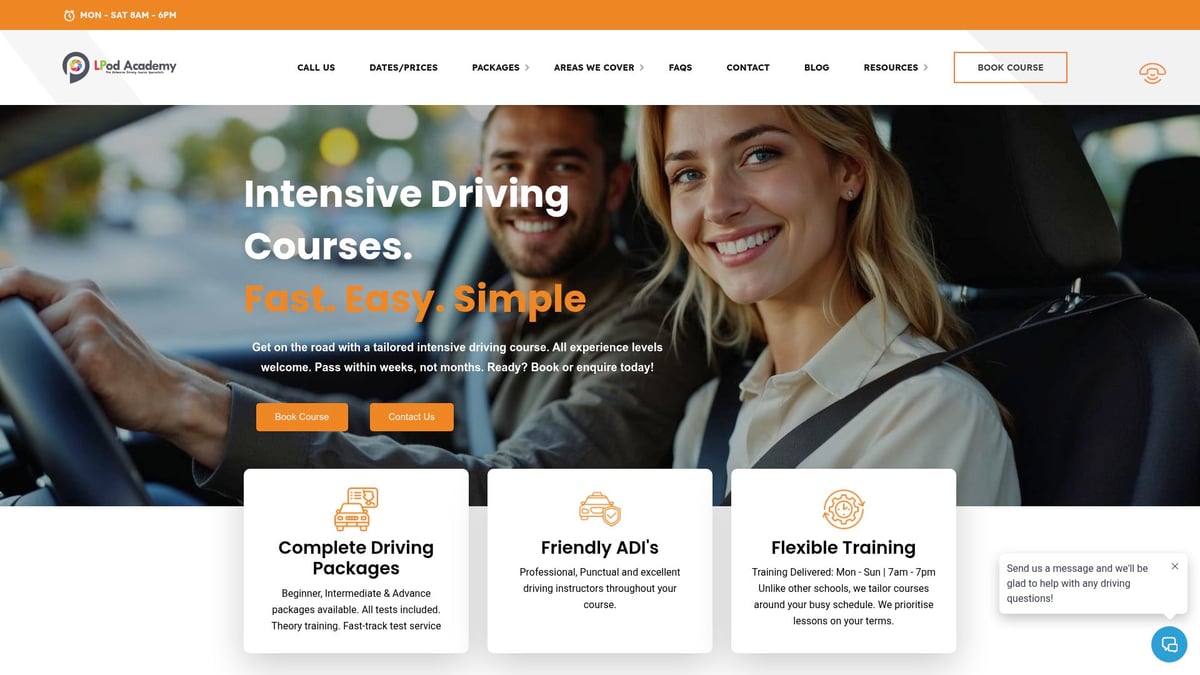
Learners praise LPOD Academy for their supportive teaching style and strong pass rates. Their packages are designed for beginners, returning learners, and those with tight schedules.
If you want a smooth, guided experience from start to finish, LPOD Academy could be your perfect partner on the road to passing your test.
Preparing for Success: Tips and Best Practices for Beginners
Getting ready for your automatic car intensive course is a big step. Success comes from combining the right mindset, practical preparation, and smart learning strategies. Whether you are a complete beginner or brushing up skills, these tips will help you maximize your progress and confidence.
Building Confidence Behind the Wheel
Confidence is the foundation for success in any automatic car intensive course. Start by visualizing yourself driving calmly and safely. Many learners feel nervous, but practice and positive reinforcement work wonders. Try deep breathing exercises before each lesson.
Ask your instructor for regular feedback and celebrate small wins, like mastering a smooth stop or handling a tricky junction. If you are eager to pass quickly, check out the best crash course for learners needing a license fast for practical advice on building confidence rapidly.
Remember, every confident mile brings you closer to your goal.
Mastering Key Driving Skills for the Test
Your automatic car intensive course will focus on essential driving skills. Pay close attention to maneuvers, such as hill starts, parking, and emergency stops, which often appear on the test. Automatic cars simplify clutch control, letting you focus more on steering, observation, and hazard perception.
Ask your instructor to demonstrate each skill, then practice them until you feel comfortable. Use a checklist to track your progress with maneuvers and mirror checks. Consistent practice of these core skills will boost your readiness and help you pass the practical test with confidence.
Effective Practice Strategies Outside Lessons
To get the most from your automatic car intensive course, use every opportunity for extra practice. If you have access to a car and a supervising driver, take short trips to reinforce lesson content. Driving simulators and online resources can also help you practice hazard perception and reaction times.
Break study sessions into manageable chunks, focusing on one skill at a time. Review the Highway Code regularly to keep rules fresh in your mind. These strategies ensure you stay sharp between lessons and make steady progress toward test readiness.
Managing Intensive Course Fatigue
An automatic car intensive course can be demanding, especially with back-to-back lessons. Listen to your body and prioritize rest. Take regular breaks between sessions, hydrate well, and eat nourishing meals to maintain focus.
If you notice signs of fatigue, such as trouble concentrating or irritability, pause and reset. Communicate with your instructor about your energy levels. A well-rested mind and body will help you absorb information more effectively and perform your best during each lesson.
Dealing with Setbacks and Test Anxiety
Setbacks are normal during any automatic car intensive course. If you struggle with a skill or don’t pass a mock test, talk openly with your instructor. They can help identify areas for improvement and suggest targeted practice.
Manage test anxiety by using relaxation techniques, such as deep breathing or visualization. Remember, every driver faces challenges, and setbacks are part of the learning process. Stay patient with yourself and seek support from friends, family, or fellow learners when needed.
Staying Motivated Throughout the Course
Staying motivated is key to success in your automatic car intensive course. Set small, achievable goals, like mastering parallel parking or confidently navigating roundabouts. Celebrate each milestone to keep spirits high.
Track your achievements in a journal or progress app. When motivation dips, remind yourself why you started and visualize the freedom of having your license. Keeping a growth mindset and focusing on progress, not perfection, will carry you through the toughest days.
What to Expect During and After the Course
Stepping into an automatic car intensive course means embracing a unique, fast-paced learning journey. You will experience a blend of structured lessons, ongoing assessments, and clear milestones that help you build confidence quickly. Let us break down what your days will look like, how your progress is measured, and what happens after you pass your test.
Daily Routine and Lesson Breakdown
Each day in your automatic car intensive course is thoughtfully planned to maximize learning in a short time. Lessons usually start with a quick warm-up drive to ease you into the session. Your instructor will then focus on specific skills, such as maneuvering, parking, or navigating busy city roads.
Here is an example of a typical day:
| Time | Activity |
|---|---|
| 9:00–9:30 | Warm-up drive, review basics |
| 9:30–10:30 | Skill focus (e.g., parallel parking) |
| 10:30–11:00 | Break, discussion, feedback |
| 11:00–12:00 | On-road practice, new challenges |
| 12:00–12:30 | Lesson recap, set goals for tomorrow |
This structure helps you make the most of your automatic car intensive course, keeping each session productive and engaging.
Progress Assessments and Mock Tests
Your progress is tracked daily, allowing both you and your instructor to spot strengths and areas for improvement. Most automatic car intensive course providers use mock tests to gauge your readiness for the real thing. These practice exams simulate the official DVSA practical test, giving you a taste of what to expect.
Feedback after each mock test is crucial. It highlights any recurring mistakes and helps you adjust before test day arrives. Honest communication with your instructor ensures you are always moving forward.
The Practical Test: Format and Requirements
At the end of your automatic car intensive course, you will take the DVSA practical test in an automatic vehicle. The test covers a variety of driving scenarios, including independent driving, maneuvering, and responding to road signs.
Being aware of common reasons for failure, such as poor observation or incorrect signaling, can help you focus your practice. With the rise in automatic driving tests, more learners are opting for this pathway, especially as electric vehicles become mainstream. Preparation and familiarity are your best tools for success.
After Passing: Next Steps for New Drivers
Once you have completed your automatic car intensive course and passed the practical test, it is time to apply for your full license. Many new drivers also consider insurance options tailored for automatic vehicles. Shopping around can help you find the best deal for your needs.
When buying your first car, look for models that are reliable and easy to handle. Keep in mind that the cost of learning to drive in the UK has gone up in recent years, so budgeting for your first vehicle and insurance is smart. Enjoy the freedom your new skills bring.
Ongoing Learning and Advanced Skills
Passing your test is just the beginning. Many graduates of an automatic car intensive course choose to take additional lessons, such as Pass Plus or motorway driving. These courses enhance your confidence and broaden your driving experience.
Continued practice is key to becoming a safe, skilled driver. Regularly challenging yourself with new routes and traffic conditions helps you adapt and grow behind the wheel. Remember, learning does not stop after you get your license.
Frequently Asked Questions About Automatic Car Intensive Courses
Have questions about starting your automatic car intensive course journey? Here are some of the most common queries from new learners, along with clear, practical answers.
Is an intensive course suitable for complete beginners?
Yes, an automatic car intensive course can be a great choice for complete beginners. These courses are designed to provide focused instruction over a short period, which helps new drivers build confidence quickly. Beginners benefit from continuous practice, which leads to better retention and faster progress.
However, some learners may find the fast pace challenging. If you are nervous or prefer a slower approach, consider your own learning style. Research, such as the Effectiveness of driver training interventions, shows that targeted, immersive training can improve new driver skills significantly. Assess your comfort level before enrolling.
How many hours of lessons do I really need?
The number of hours needed for an automatic car intensive course varies from person to person. Most beginners typically require between 20 and 40 hours of instruction to feel test-ready. Factors like prior driving experience, natural aptitude, and confidence all play a role.
If you are a complete beginner, aim for the higher end of the range. Some providers offer assessments to help estimate the exact number of hours you need. Remember, quality matters more than quantity, so focus on mastering each skill before moving forward.
Can I choose my instructor or test centre?
Many automatic car intensive course providers allow you to express a preference for a particular instructor or test centre. While not always guaranteed, choosing a familiar location can boost your confidence on test day. Some national providers match you with instructors based on availability, while local companies may be more flexible.
Always ask the provider about their policies before booking. Training near your chosen test centre helps you become comfortable with local roads, junctions, and potential test routes, improving your chances of success.
What if I fail my practical test?
If you do not pass your practical test after completing an automatic car intensive course, do not worry. Most providers offer options for remedial lessons and quick rebooking. It is common to feel disappointed, but remember that many learners pass on their second attempt.
Speak with your instructor to identify areas for improvement. Use honest feedback to focus your practice. Emotional support from family, friends, or peers can help you regain confidence and motivation for your next try.
Are automatic licenses valid for all vehicles?
An automatic car intensive course prepares you for a license that allows you to drive only automatic vehicles. This means you cannot legally drive manual cars unless you pass an additional test. However, with the growing adoption of hybrids and electric vehicles, which are mainly automatic, this restriction is becoming less limiting.
Looking ahead, the Deployment of automated vehicles in Europe suggests that automatic and automated vehicles will become increasingly common. Choosing automatic now can help future-proof your driving skills for the evolving car landscape.
How do intensive courses compare in cost to traditional lessons?
An automatic car intensive course may seem more expensive upfront, but it often provides better value in the long run. Intensive courses bundle lessons, test fees, and sometimes retests into one package, making budgeting easier. Traditional weekly lessons can add up, especially if you need more practice over several months.
Here is a quick comparison:
| Course Type | Average Cost | Duration | Test Fees Included |
|---|---|---|---|
| Intensive (20-40 hrs) | £900-£1800 | 1-2 weeks | Often included |
| Traditional (weekly) | £1200-£2200 | 3-6 months | Usually separate |
Consider your schedule and learning style when deciding which option suits you best.
Are there age or medical restrictions for intensive courses?
To enroll in an automatic car intensive course in the UK, you must be at least 17 years old and hold a valid provisional license. There are no upper age limits, but you must meet the medical standards required to drive safely. If you have a medical condition, check with the DVLA and inform your course provider.
Many providers offer extra support for learners with special requirements. If you are unsure, discuss your needs before booking to ensure a safe and supportive learning environment.
Ready to take the first step towards driving freedom in 2025? With everything you’ve learned about automatic car intensive courses—how they’re faster, less stressful, and perfect for busy beginners like you—it’s clear that a tailored, supportive approach makes all the difference. At LPOD Academy, you’ll find flexible options, expert instructors, and a smooth path from booking to test day. Why wait to start your journey? Explore your options and Choose A Course That’s Right For You!