

Automatic Crash Course Guide: Master Driving Skills in 2025
Are you noticing more automatic cars on the road every year? The demand for mastering automatic driving skills is set to surge in 2025, making now the perfect time to get ahead.
An automatic crash course is becoming the fastest route for new drivers to gain confidence and independence behind the wheel. These courses are designed to help you master essential driving skills quickly and efficiently.
In this guide, you’ll discover the key benefits of automatic transmission, how a typical course is structured, step-by-step strategies for rapid learning, smart exam preparation tips, and a look at future trends in driving.
Whether you want a smoother learning experience, greater confidence, or a faster path to your license, this guide will show you exactly how to master driving with an automatic crash course in 2025.
Why Choose an Automatic Crash Course in 2025?
The driving world is shifting gears in 2025, with automatic vehicles taking the fast lane. As technology evolves, more learners are choosing the automatic crash course route to meet new demands and regulations. Did you know that over 60% of new cars sold in the UK in 2024 were automatics, up from just 37% in 2019? This surge reflects not only changing preferences but also how driving education is adapting to the times. The Rise in Automatic Driving Tests by 2026 underscores how automatic crash course programs are now the top pick for modern drivers.
What makes an automatic crash course so appealing? For starters, you can master driving skills much faster than with traditional lessons. Automatic cars are easier to operate, meaning you spend less time worrying about gears and clutch control. This reduced complexity leads to a shorter learning curve and less stress behind the wheel. Many learners complete their automatic crash course in just 1–2 weeks, compared to several months with manual lessons. That means you can hit the road with confidence sooner, freeing up time for other priorities.
Accessibility is another major advantage of the automatic crash course. Nervous drivers, those with physical limitations, or people with demanding schedules all benefit from the simplicity and flexibility of automatic vehicles. The course structure is designed to accommodate different learning styles and needs, making it easier for everyone to succeed. You no longer have to worry about stalling or tricky gear changes, so your focus can stay on road awareness and safe driving habits.
Cost is often a concern for learners, but an automatic crash course can actually save you money in the long run. While the upfront investment might seem higher, the total number of lessons needed is usually much lower. Fewer lessons mean less spent overall, especially when you factor in the quicker path to passing your test. Plus, passing your test sooner means you can start driving independently, potentially reducing the cost of public transport or ride-hailing services.
Success stories are everywhere. Take, for example, a recent learner who passed their test in under 10 days using an automatic crash course. Their journey highlights how intensive, focused instruction can deliver rapid results without sacrificing safety or skill. With the right support and structure, mastering driving is not just possible, it is achievable for almost anyone.
The environmental impact of choosing an automatic crash course is also worth noting. Many modern automatic vehicles are hybrids or fully electric, which means lower emissions and improved fuel efficiency. As electric vehicles become more common, automatic crash course training prepares you for the future of driving. This eco-friendly approach benefits both you and the planet, making your learning experience even more rewarding.
Understanding the Structure of an Automatic Crash Course
Mastering driving skills quickly is all about having a clear, organized plan. If you’re considering an automatic crash course, understanding its structure is key to making the most of your learning journey.
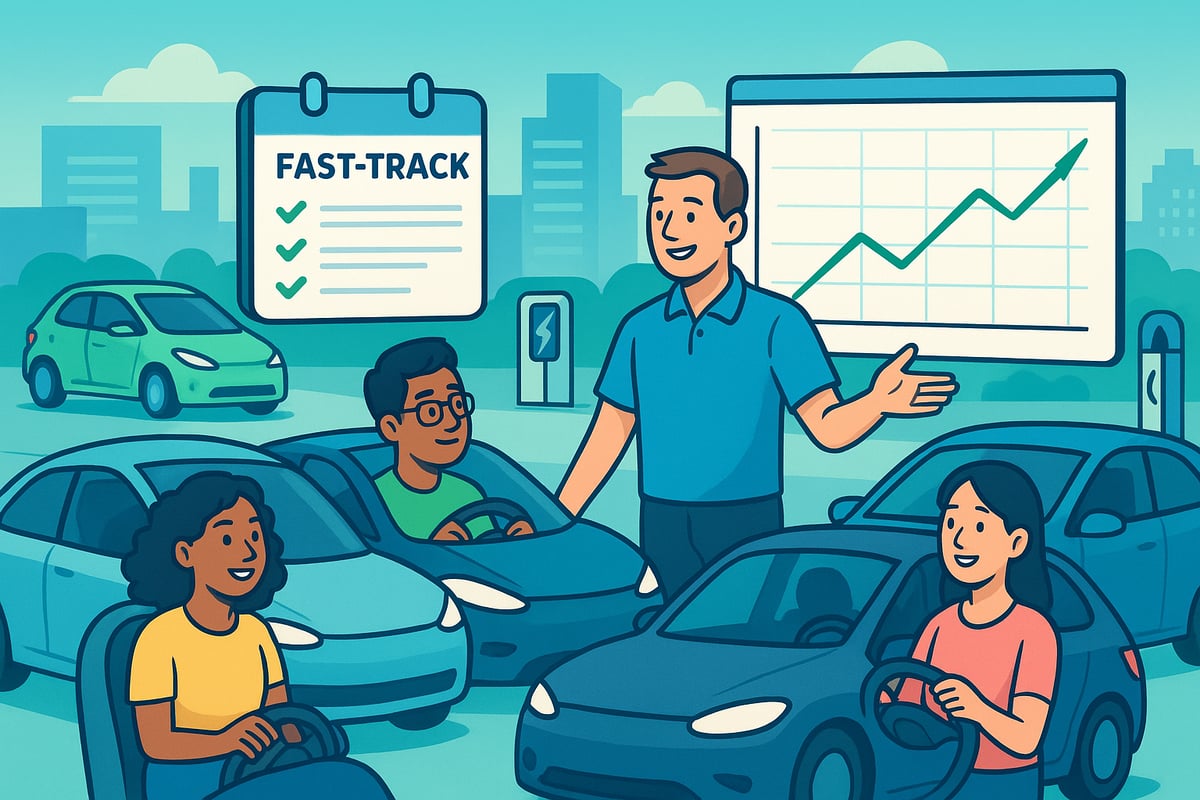
An automatic crash course is designed for efficiency and focus. Unlike traditional weekly lessons, it condenses learning into a shorter period, making it ideal for those eager to get on the road fast. These courses typically last from a few days up to two weeks, with daily sessions that build your confidence and ability step by step.
Types of Automatic Crash Course Packages
Choosing the right package is essential. Here’s a quick comparison to help you decide:
| Package | Ideal For | Hours | Duration | Focus Areas |
|---|---|---|---|---|
| Beginner | New drivers | 20-40 | 1-2 weeks | Basics, confidence |
| Intermediate | Some experience | 15-25 | 5-10 days | Maneuvers, test prep |
| Refresher | Returning drivers | 5-15 | 2-5 days | Confidence, updates |
| Intensive | Quick test readiness | 30-50 | 1 week | All-round skills |
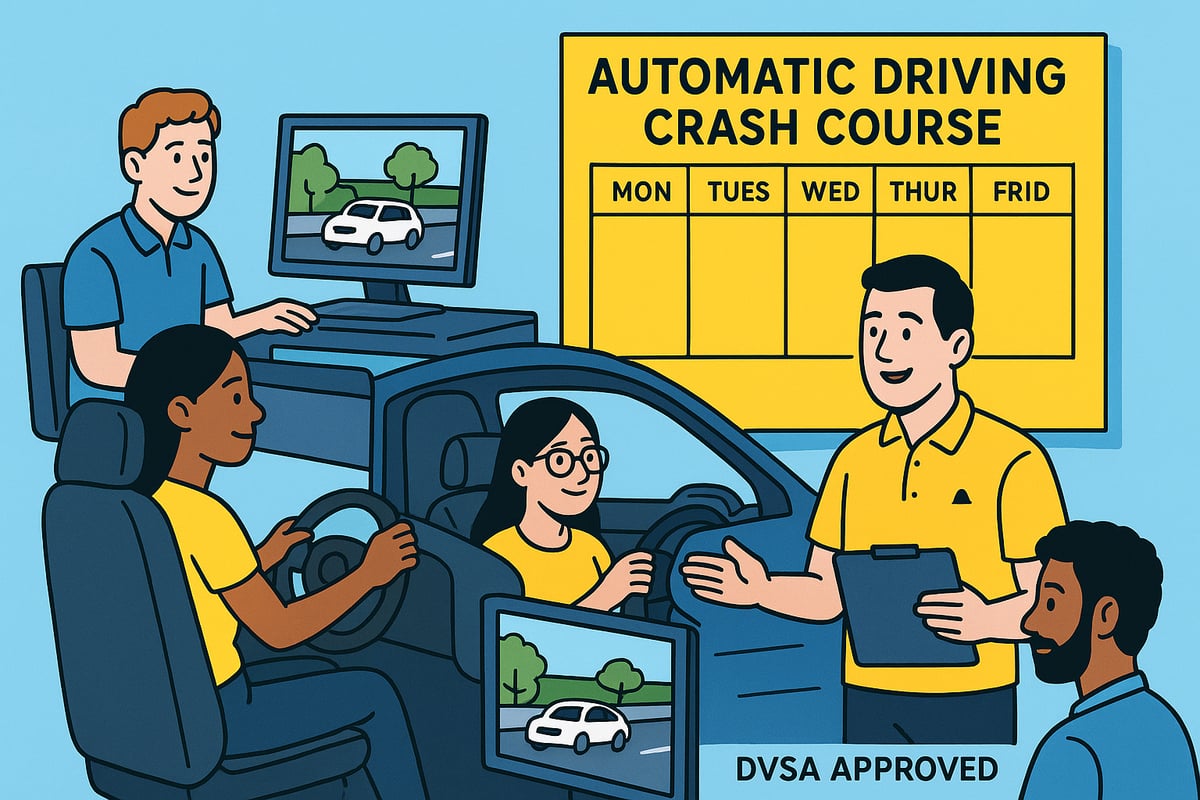
Every automatic crash course is led by DVSA-approved instructors who tailor lessons to your needs. They’ll assess your starting level and create a personalized lesson plan, ensuring you spend more time on areas where you need the most improvement. This individualized approach helps boost both skill and confidence.
Modern automatic crash courses use a blend of tools to enhance learning. Driving simulators offer a safe, stress-free way to practice tricky maneuvers before hitting the road. Online theory resources let you revise road rules at your own pace, while in-car technology supports real-time feedback and progress tracking.
Flexibility is a huge advantage of the automatic crash course model. Many providers offer weekend, evening, and even fast-track schedules. This means you can fit your learning around work, school, or family commitments. The integration of theory and practical lessons ensures a holistic approach, so you’ll never feel unprepared.
Curious what a typical week looks like? Here’s a sample timetable for an intensive automatic crash course:
| Day | Focus |
|---|---|
| 1 | Assessment, vehicle controls, basics |
| 2 | Basic maneuvers, simple roads |
| 3 | Complex junctions, roundabouts |
| 4 | Parking, reversing, mock scenarios |
| 5 | Test routes, final prep, mock test |
Throughout your automatic crash course, you’ll progress from the basics to advanced driving situations, always with clear milestones. If you want a deeper look at what to expect, check out this Intensive driving course guide for more details on structure and daily expectations.
With the right structure and support, an automatic crash course can turn even the most nervous beginner into a confident, test-ready driver in record time.
Step-by-Step Guide: Mastering Driving Skills with an Automatic Crash Course
Ready to fast-track your driving journey? This step-by-step guide will help you unlock the full potential of an automatic crash course. Each phase is designed to make your learning smooth, efficient, and confidence-boosting. Whether you’re a total beginner or just want to sharpen your skills, let’s break down the process so you know exactly what to expect.
Step 1: Preparing for Your Intensive Driving Experience
The first step in your automatic crash course is all about preparation. Start by selecting the right course package that matches your experience and personal goals. Are you a complete newbie, or do you need a refresher? Many providers offer flexible options, so take time to compare.
Gather all necessary documentation before your first lesson. This usually includes your provisional license, a valid form of ID, and any required paperwork from your driving school. Double-check with your instructor to avoid any surprises.
Familiarize yourself with local test routes and typical driving conditions. This can give you a head start, especially if you want to book your test as soon as possible. If you’re aiming for a fast-track approach, check out tips on how to get a quick test date so you can plan your schedule efficiently.
Remember, the automatic crash course is designed to streamline your learning, saving you weeks compared to traditional lessons. Start with a positive mindset and clear objectives.
Step 2: Building Fundamental Driving Skills
Now it’s time to get hands-on. Your automatic crash course will focus heavily on mastering the basics—no clutch or gear changes to worry about, so you can concentrate on control and awareness.
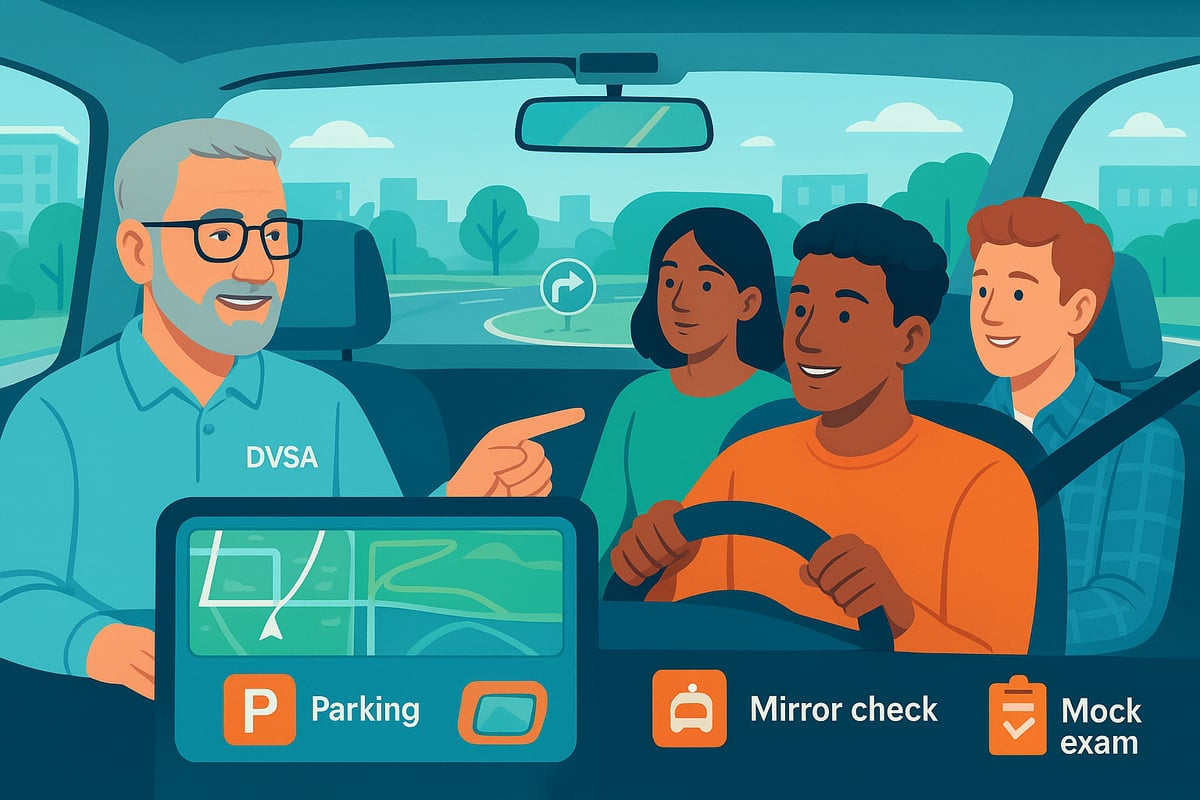
Begin with simple maneuvers: starting the car, stopping smoothly, and steering accurately. Parking is another key skill, so expect to practice both parallel and bay parking from the very beginning.
Observation is crucial. Get into the habit of regular mirror checks, checking blind spots, and staying alert to your surroundings. Learn to interpret road signs, markings, and speed limits confidently.
Your instructor will use a mix of in-car teaching, visual aids, and sometimes simulators to reinforce these fundamentals. Each lesson builds on the last, ensuring you never feel overwhelmed. With an automatic crash course, you’ll notice your progress accelerating quickly.
Step 3: Navigating Complex Traffic Scenarios
Once you’re comfortable with the basics, your automatic crash course will shift gears to more advanced scenarios. You’ll learn how to handle multi-lane roads, roundabouts, and busy junctions without the added stress of manual gear changes.
Practicing overtaking, lane changes, and safe merging becomes far less intimidating in an automatic vehicle. Your instructor will guide you through real-world challenges, like rush hour traffic, unpredictable weather, and night driving.
You’ll also develop situational awareness, learning to anticipate what other drivers might do. This phase is crucial for building real confidence on the road, making sure you’re fully prepared for anything your test—or daily driving—might throw at you.
Step 4: Developing Defensive and Eco-Friendly Driving Habits
Defensive driving is a core part of any automatic crash course. You’ll be trained to spot hazards early, manage risks, and adapt to changing road conditions.
Instructors emphasize the importance of adjusting your driving style based on traffic flow, the behavior of other road users, and environmental factors. You’ll learn how to make safe decisions quickly and responsibly.
Eco-driving techniques are also built into the curriculum. By adopting smooth acceleration, gentle braking, and smart route planning, you’ll reduce your carbon footprint and save on fuel. These habits not only help the planet but also make you a more efficient driver.
Step 5: Simulated Test Drives and Mock Exams
Practice makes perfect, and your automatic crash course will include simulated test drives to prepare you for the real thing. These mock exams replicate actual test conditions, giving you a taste of what to expect.
Your instructor will assess your performance, point out any areas for improvement, and help you tackle weaknesses head-on. This feedback loop is invaluable for building confidence and ensuring you’re test-ready.
Mock tests also help reduce anxiety, as you’ll become familiar with the format and timing of the practical exam. By the time test day arrives, you’ll feel comfortable and capable behind the wheel.
Step 6: Final Preparation and Test Day Strategy
As your automatic crash course wraps up, focus shifts to test day readiness. Make a checklist: bring all required documents, ensure your vehicle meets test standards, and confirm your appointment time.
Spend your final lesson reviewing key maneuvers, clarifying any last-minute questions, and practicing relaxation techniques to stay calm. Remember, a positive mindset can make all the difference.
Know the test format, including what the examiner will be looking for and how you’ll be assessed. With the right preparation and a clear strategy, you’ll step into your driving test ready to succeed.
Essential Tips for Passing Your Automatic Driving Test in 2025
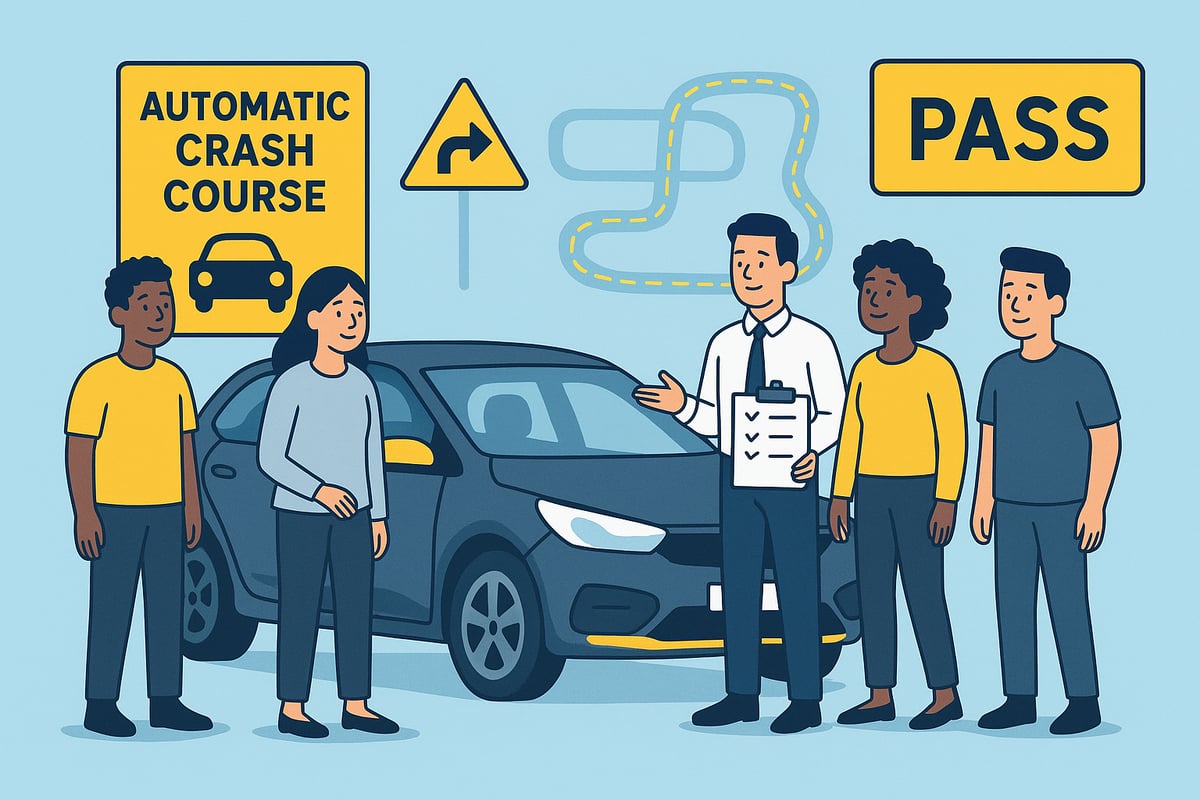
Passing your driving test is a huge milestone, and with the right approach, you can make your automatic crash course experience a success. Whether you are a first-time learner or returning to driving after a break, these essential tips will help you feel confident and prepared for your automatic driving test in 2025.
Avoiding Common Mistakes on Test Day
Even the most prepared learners can make avoidable errors. To boost your chances of passing, be aware of the most frequent pitfalls. These include:
- Hesitating at junctions or roundabouts
- Failing to check mirrors regularly
- Speeding or driving too slowly
- Missing road signs or markings
- Not showing proper lane discipline
Reviewing Common driving test mistakes can help you recognise and avoid these issues during your automatic crash course. Practice recognizing these situations during lessons and mock exams, and ask your instructor for targeted feedback.
Understanding Examiner Expectations in 2025
The driving test in 2025 follows updated guidelines, with a focus on safety, awareness, and eco-friendly driving. Examiners look for:
- Smooth control of the vehicle
- Confident use of automatic transmission features
- Consistent observation and anticipation of hazards
- Clear signals and communication with other road users
The marking criteria are transparent, so discuss these with your instructor throughout your automatic crash course. Understanding what the examiner wants helps you prepare for every aspect of the test.
Staying Calm and Focused Under Pressure
Test nerves are normal, but managing them is key to success. Try these strategies:
- Arrive early for your test to settle in
- Practice deep breathing before starting the car
- Focus on each task, not the outcome
- Remember, mistakes do not always lead to failure—recovering well is just as important
During your automatic crash course, simulate test conditions to get comfortable under pressure. Confidence grows with practice, so trust your preparation.
Making the Most of Mock Exams and Feedback
Mock tests are a vital part of your automatic crash course. They help identify weak points and give you a feel for the real test environment. After each mock exam:
- Review your feedback with your instructor
- Set specific goals for improvement
- Celebrate progress, not just perfection
Pass rates for automatic test-takers have risen significantly. For example:
| Year | Automatic Pass Rate | Manual Pass Rate |
|---|---|---|
| 2019 | 41% | 47% |
| 2024 | 53% | 46% |
This trend highlights the effectiveness of a focused automatic crash course approach.
Next Steps After Passing Your Test
Once you pass, celebrate your achievement! Next, complete any required paperwork and update your insurance to reflect your new status. Plan your first solo drive in a familiar area to build confidence.
If you do not pass on the first attempt, use your automatic crash course feedback to strengthen your skills and try again. Remember, persistence pays off.
By following these tips and making the most of your automatic crash course, you will be well-equipped to pass your driving test and hit the road safely in 2025.
The Future of Automatic Driving: Trends, Technologies, and Opportunities
The world of driving is changing faster than ever. By 2025, automatic transmission cars and electric vehicles are taking center stage, reshaping how we learn and master new skills. If you’re considering an automatic crash course, you’re stepping into a landscape filled with exciting technology and opportunities.
Electric vehicles are now mainstream, and most new models in the UK feature automatic transmissions by default. This shift means an automatic crash course is not just practical but future-proof. As more people choose automatics, the demand for manual licenses is dropping, with experts predicting they could be nearly obsolete by 2030.
Driver education is evolving too. Autonomous and semi-autonomous features, such as adaptive cruise control and lane assist, are becoming standard. These technologies are influencing how instructors teach and how learners approach their automatic crash course. Understanding these systems is now part of becoming a safe and confident driver.
Legal and insurance landscapes are adapting to these changes. Insurers are beginning to offer tailored plans for automatic and electric vehicle drivers. New rules around autonomous features also mean you’ll need to stay up to date with licensing requirements and safety regulations if you enroll in an automatic crash course.
Modern training methods are making a big impact on success rates. The rise in UK driving test pass rates in 2025, highlighted in Driving Test Pass Rate Rise in 2025, shows that intensive and tech-enhanced courses are helping more learners pass quickly, even with high demand and long wait times.
Technology is transforming how you learn. Online platforms now offer interactive theory training, while advanced simulators prepare you for real-world scenarios before you even get behind the wheel. These tools make your automatic crash course more flexible and effective, fitting around your schedule and boosting your confidence.
The growth in automatic-only instructors and specialised courses is another sign of the times. More learners, especially those focused on eco-friendly driving, are seeking instructors who understand both electric vehicles and the latest driving technologies. This creates new opportunities for advanced learning, such as eco-driving and defensive driving workshops.
A recent rise in zero-fault test passes, as reported in Increase in Zero-Fault Driving Test Passes, reflects how well these new methods are working. Intensive courses, paired with modern tools, are helping learners achieve higher standards and greater confidence.
Here’s a quick look at how the future of automatic driving is shaping up:
| Trend | Impact on Learners | Opportunity |
|---|---|---|
| Electric/automatic vehicles | More accessible, less to learn | Future-proof your license |
| Autonomous tech | New skills needed, safer driving | Stay ahead with extra training |
| Online/simulator learning | Flexible, faster skill building | Personalized learning paths |
| Legal/insurance changes | New requirements, better coverage | Specialized policies |
As the driving landscape continues to evolve, choosing an automatic crash course in 2025 puts you at the forefront of these trends. You’ll be ready not just to pass your test, but to drive confidently in a world where technology and sustainability are key.
Frequently Asked Questions About Automatic Crash Courses
Curious about how an automatic crash course works? Here are answers to the most common questions learners ask.
Who is eligible for an automatic crash course?
Anyone with a valid UK provisional license can enroll. Courses are open to new learners, nervous drivers, and even those switching from manual.
How quickly can I expect to pass with an intensive course?
Most students complete an automatic crash course and take their test within 1 to 2 weeks. For detailed statistics, see the UK Driving Test Pass Rates 2025.
Can I switch from manual to automatic during training?
Yes, many providers allow you to transfer your progress from manual lessons to an automatic crash course, streamlining your learning.
Are automatic licenses valid for all vehicles?
An automatic license lets you drive only automatic vehicles. If you want to drive a manual, you’ll need to pass a separate test.
What happens if I fail the test?
You can book another test and arrange extra lessons as needed. Many instructors offer tailored support after a setback.
Is an automatic crash course suitable for nervous or older learners?
Absolutely. The structure and pace of an automatic crash course are designed to boost confidence. For extra support, check out how to deal with driving test nerves.
Do employers and insurers view automatic licenses differently?
Most employers and insurers accept automatic licenses, but if you need to drive a manual for work, consider your career path before choosing.
How do I choose a reputable crash course provider?
Look for DVSA-approved instructors, positive reviews, and clear course details. Compare packages and ask about instructor experience.
Ready to turn what you’ve learned into real driving skills? With automatic cars becoming the new norm and so many advantages to a fast tracked course—like flexible scheduling, DVSA approved instructors, and tailored learning—it’s never been easier to gain confidence behind the wheel. Whether you’re a total beginner or just want to pass quickly, you deserve support that adapts to you every step of the way. Why not take the next step and see how you could be driving in as little as one to two weeks? Book Your Course and let’s get you on the road to success!