

Common Manoeuvres You May Be Asked to Perform: A Confident Learner’s Guide
Learning to drive brings excitement and nerves in equal measure, and the practical test manoeuvres often top the worry list for most learner drivers. We completely understand why these skills can feel daunting at first glance. During your driving test, you’ll be asked to demonstrate one of four main manoeuvres: parallel parking, bay parking, reversing two car lengths after pulling up on the right, or performing a three-point turn.

The good news is that these manoeuvres aren’t designed to trip you up. They’re actually practical skills you’ll use regularly once you’re driving independently. Whether you’re squeezing into a tight parking space at the supermarket or safely pulling over to let an emergency vehicle pass, these techniques become second nature with proper practice.
We’re here to guide you through each manoeuvre step by step, breaking down the key techniques that will help you approach test day with genuine confidence. From mastering those tricky parking manoeuvres to handling emergency stops with calm precision, you’ll discover that these skills are entirely achievable with the right approach and plenty of practice.
Understanding Driving Test Manoeuvres
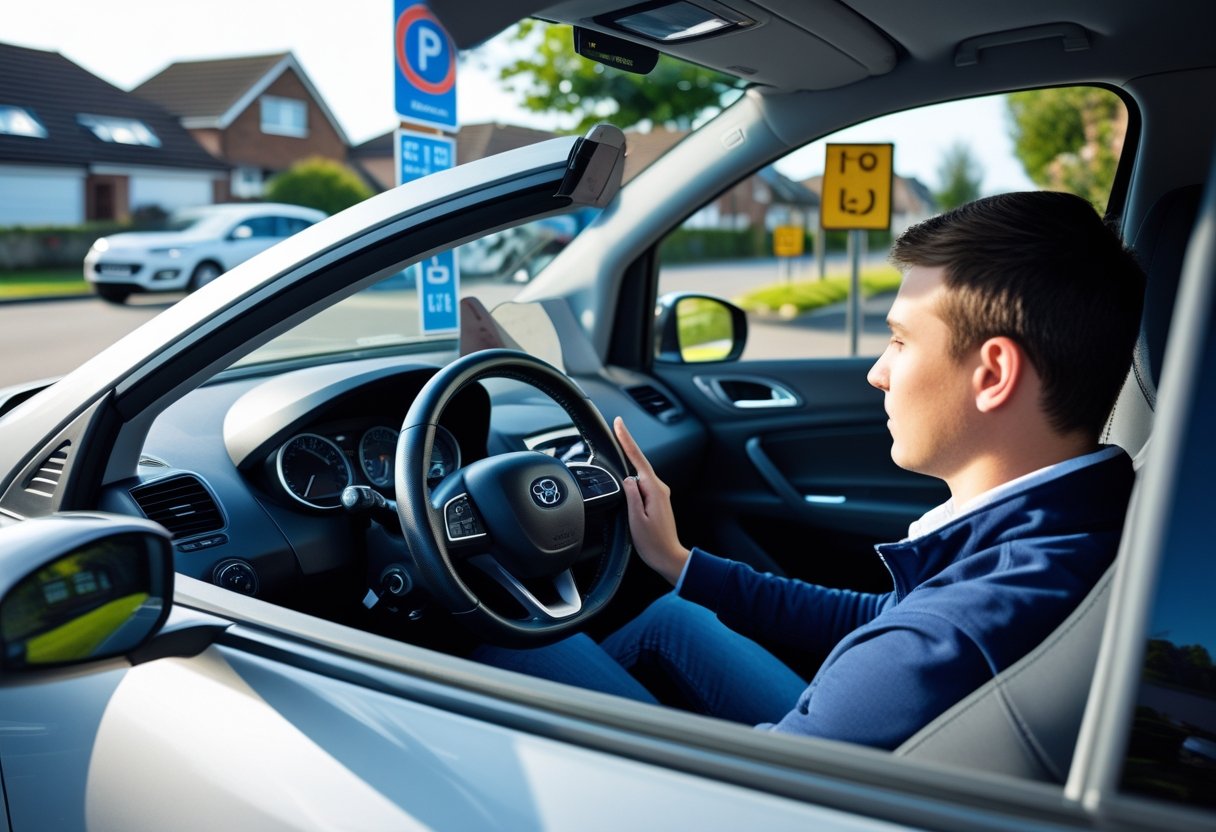
Driving test manoeuvres form the cornerstone of your practical exam, testing your ability to control your vehicle with precision and awareness. During your test, you’ll face one reversing manoeuvre and potentially an emergency stop, each designed to assess specific skills that you’ll use throughout your driving life.
Why Manoeuvres Matter in the Driving Test
Manoeuvres aren’t just test requirements. They represent real situations you’ll encounter as a driver every single day.
Practical Skills Assessment
Your examiner uses these manoeuvres to evaluate your car control, spatial awareness, and decision-making abilities. These aren’t arbitrary challenges but genuine reflections of everyday driving scenarios.
Every time you park at the supermarket, reverse out of your driveway, or need to stop suddenly for a child chasing a ball, you’re using these exact skills. We see learners who master these manoeuvres become more confident drivers overall.
Building Confidence
Successfully completing manoeuvres during your test demonstrates that you can handle your vehicle safely in various situations. This confidence transfers directly to your everyday driving experience.
Safety Foundation
These manoeuvres teach you to check mirrors, assess your surroundings, and move your car precisely. These habits become second nature and keep you safe on Britain’s roads.
The driving test manoeuvres also help examiners understand how you respond under pressure. Your ability to remain calm and execute these skills shows you’re ready for independent driving.
Types of Manoeuvres You Could Encounter
Your driving test will include one reversing manoeuvre from several possibilities. You won’t know which one until your examiner gives you instructions during the test.
The Main Manoeuvres Include:
| Manoeuvre | What It Involves | Common Locations |
|---|---|---|
| Bay Parking | Reversing or driving forward into a marked parking space | Car parks, shopping centres |
| Parallel Parking | Parking between two cars alongside the kerb | Residential streets, town centres |
| Pull Up on Right | Stopping on the right side of the road and reversing two car lengths | Quiet residential roads |
Bay Parking
This involves either reversing into a parking bay or driving forward into one. Most examiners prefer the reverse bay park as it mirrors real-world situations better.
Parallel Parking
You’ll need to slot your car into a space between two parked vehicles. This requires excellent judgement of distances and smooth steering control.
Emergency Stop
Though not guaranteed, you might face an emergency stop. Your examiner will give you a signal, and you’ll need to stop quickly and safely without locking the wheels.
Each manoeuvre tests different aspects of your driving ability, from precision and control to observation and safety awareness.
Assessment Criteria and What Examiners Look For
Examiners focus on three key areas during driving test manoeuvres: control, observation, and accuracy. Understanding these criteria helps you prepare effectively.
Control and Smoothness
We want to see smooth, controlled movements. Jerky steering, harsh braking, or stalling will count against you. Your examiner looks for confident handling of the clutch, steering, and speed.
Observation Skills
Constant checking of mirrors and surroundings is essential. Look over your shoulder when reversing, check for pedestrians, and be aware of other vehicles. Your examiner wants to see you’re alert and responsible.
Key Observation Points:
- All-round checks before starting
- Regular mirror usage throughout
- Shoulder checks when reversing
- Awareness of other road users
Accuracy and Positioning
You don’t need perfection, but you must stay within reasonable boundaries. Mounting the kerb, getting too close to other cars, or ending up crooked will likely result in a fault.
Common Faults to Avoid:
- Taking too long to complete the manoeuvre
- Insufficient observation
- Poor positioning or accuracy
- Lack of control
Your examiner understands that nerves can affect performance. They’re looking for safe, competent driving rather than absolute perfection. Minor adjustments and corrections are perfectly acceptable.
Remember, these manoeuvres become much easier with practice. The more you rehearse them, the more natural they’ll feel during your test.
Parallel Parking: Mastering the Classic Challenge
Parallel parking requires precise positioning, careful observation, and smooth steering control to successfully reverse your car into a roadside space. The key lies in finding reliable reference points and maintaining steady control throughout the manoeuvre.
Step-by-Step Guide to Parallel Parking
We’ll break down parallel parking into manageable steps that you can practice and perfect. This method works consistently once you understand the reference points.
Position your car correctly by pulling up alongside the vehicle in front of your target space. Leave about half a metre gap between the cars. Your door mirrors should be roughly level.
Find your first reference point when the centre of your passenger window aligns with the front of the parked car. This gives you the perfect starting position for reversing.
Begin reversing slowly whilst looking over your left shoulder through the rear windscreen. Keep your steering wheel straight initially. Watch for your back tyres to align with the rear bumper of the car in front.
Apply full left lock once you reach this position. Turn your steering wheel completely to the left with quick, smooth movements. Continue reversing at a steady, slow pace.
Watch your nearside mirror to see the kerb appearing. When you can see the kerb clearly and you’re clear of the front car, stop and prepare for the next phase.
Apply full right lock to bring your car parallel to the kerb. This is the trickiest part, requiring fast hands but slow feet. Keep your reversing speed very gentle.
Straighten up by turning your steering wheel back to the centre position. You should now be neatly tucked into the space, roughly 15-20cm from the kerb.
Essential Observations and Safety Checks
Safety checks make the difference between a smooth manoeuvre and a dangerous situation. We cannot stress enough how important these observations are.
Check all mirrors before you begin reversing. Look for pedestrians, cyclists, and approaching vehicles. Your car will swing out slightly as you turn, so awareness is crucial.
Use your blind spot checks at key moments during the manoeuvre. Turn your head to look directly behind you, not just rely on mirrors. This catches anything your mirrors might miss.
Monitor both ends of your vehicle throughout the manoeuvre. Keep checking your distance from the car in front and behind. You need at least 30cm clearance at both ends.
Watch for moving hazards like children, dogs, or other drivers who might not see what you’re doing. Be ready to stop if someone walks behind your car.
Listen for your examiner’s guidance during your driving test. They may ask you to stop if they spot a safety concern you’ve missed.
Common Mistakes and How to Avoid Them
Even experienced drivers make these errors, but knowing what to watch for helps you avoid them completely.
Steering too early is the most frequent mistake we see. If you turn the wheel before reaching your reference point, you’ll end up too far from the kerb or hit the front car.
Moving too quickly causes loss of control and poor positioning. Parallel parking works best when you reverse very slowly. This gives you time to make adjustments and spot problems early.
Poor observations lead to serious driving faults on your test. Always check your blind spots before and during the manoeuvre. Missing these checks often results in test failure.
Incorrect final positioning happens when drivers don’t straighten up properly. You should end up parallel to the kerb, not at an angle. Take time to make small adjustments if needed.
Mounting the kerb occurs when you get too close or misjudge your distance. Use your nearside mirror to monitor the kerb throughout the manoeuvre.
Getting too close to other vehicles creates dangerous situations and potential damage. Always maintain safe clearances and be prepared to start again if positioning goes wrong.
Bay Parking: Precision in Tight Spaces
Bay parking requires you to navigate your vehicle into marked spaces using either forward or reverse techniques. We’ll explore the key reference points and steering methods that help you position your car accurately while maintaining control throughout the manoeuvre.
Reverse Bay Parking Explained
Reverse bay parking means backing your car into a parking space, then driving forward when you leave. This technique offers better visibility when exiting and reduces the risk of reversing into traffic later.
Start by positioning your car about one car’s width away from the bay you want to enter. Drive slowly past your chosen space until the middle of your passenger door aligns with the white line two bays along from your target.
Select reverse gear and check all around your vehicle. Turn the steering wheel to full lock in the direction of your bay and begin moving backwards slowly.
Watch your wing mirrors carefully. The left-hand line of your parking bay will appear in your left mirror first, followed by the right-hand line in your right mirror.
Once both white lines appear equally in your wing mirrors, straighten your steering wheel. Your car is now parallel to the bay lines.
Continue reversing slowly until you’re properly positioned within the space. Use your mirrors to judge the distance from kerbs or walls behind you.
Forward Bay Parking Techniques
Forward bay parking involves driving straight into a parking space, which means you’ll need to reverse out when leaving. This method can feel more natural but requires careful planning for your exit.
Position your car on the opposite side of the road from your chosen bay. Leave plenty of space for a wide turning circle into the parking area.
Drive forward slowly until the right-hand line of your target bay appears just below your right wing mirror. This gives you the perfect angle for entry.
Turn your steering wheel to full lock towards the bay and move forward at a crawling pace. Watch how your car tracks into the space.
Straighten your steering wheel when your dashboard aligns with the horizon line. This helps you enter the bay squarely rather than at an awkward angle.
Continue moving forward until the front kerb or line marking appears underneath your wing mirror. This reference point ensures you’re fully within the space without overstepping.
Adjusting Your Position and Getting Out Safely
Don’t worry if your first attempt isn’t perfect. Minor adjustments are completely normal and won’t fail your driving test.
If you’re slightly crooked, select the appropriate gear and make small steering corrections. Move forward or backward in tiny increments until you’re properly centred between the white lines.
Getting out safely requires the same careful observation you used when parking. Check all mirrors and blind spots before moving.
When reversing out of a forward bay park, move backwards slowly until you’re about one-third out of the space. Then steer full lock in the opposite direction to where you want to go.
For example, if you want to turn right after exiting, steer full left lock while reversing. This technique helps you clear the adjacent cars safely.
When driving out of a reverse bay park, edge forward slowly and check that no pedestrians or vehicles are approaching. Wait until you’re well clear of neighbouring cars before turning your steering wheel.
Remember to follow any one-way systems in car parks and always give way to pedestrians who have right of way.
Reversing: Control and Awareness in Motion
Reversing requires smooth steering control and keen awareness of your surroundings at all times. Your ability to observe whilst maintaining precise control over the vehicle will determine how safely and accurately you complete these manoeuvres.
Smooth Steering for Straight Reversing
Getting the basics right starts with understanding how your steering responds when you’re moving backwards. We recommend starting with gentle movements because the car reacts more sharply when reversing.
Keep your hands in the proper position on the steering wheel. Place one hand at the 12 o’clock position whilst the other maintains light contact at 6 o’clock.
Key techniques for straight reversing:
- Make small steering adjustments rather than large turns
- Use reference points like the rear window’s centre line
- Keep your speed slow and steady
Your mirrors become vital tools during straight reversing. Check them frequently but don’t rely on them completely. Turn your body to look through the rear window for the clearest view.
If you notice the car drifting to one side, correct it with a gentle steering input in the opposite direction. Remember that steering left makes the rear of the car go left when reversing.
Handling Curves and Corners in Reverse
Reversing around corners requires precise timing and smooth control of both steering and speed. We find that many learners rush this manoeuvre, but patience leads to better results.
Start by positioning your car correctly before beginning the reverse. Drive past the corner you’ll reverse into, leaving about two car lengths of space.
Steps for corner reversing:
- Check all mirrors and blind spots
- Begin reversing slowly in a straight line
- When your rear wheel aligns with the kerb, start turning
- Adjust steering as needed to follow the road
Watch for the point where you need to begin steering. This usually happens when you can see about one metre of road between your car and the corner kerb in your nearside mirror.
Control your clutch carefully to maintain a steady, slow speed. Quick movements can cause you to lose control or mount the kerb.
Observation Skills When Reversing
Effective observation combines looking in multiple directions whilst maintaining awareness of pedestrians, cyclists, and other vehicles. We emphasise that your safety checks must be continuous, not just at the start.
Use the 360-degree observation method:
- Mirrors for ongoing awareness
- Direct vision through windows
- Shoulder checks for blind spots
- Frequent glances forward
Pay special attention to vulnerable road users. Children, elderly pedestrians, and cyclists can appear quickly and may not expect a reversing vehicle.
Your observations should follow a pattern but remain flexible. Look where you’re going most frequently, but don’t ignore other areas for too long.
Watch for warning signs like pedestrians walking towards your path or car doors opening. These situations require you to stop immediately and reassess.
Practice coordinating your observations with vehicle control. It takes time to manage steering, speed, and looking around simultaneously, but this skill becomes natural with repetition.
Pulling Up on the Right and Rejoining Traffic
This manoeuvre tests your ability to park against traffic flow and then safely merge back into moving vehicles. You’ll need to pick the right spot, reverse accurately for two car lengths, and rejoin traffic with confidence.
Choosing a Safe Spot on the Right
When your examiner asks you to pull up on the right, take your time finding the perfect spot. We recommend looking for a generous space that gives you plenty of room to straighten up properly.
Avoid these problem areas:
- Directly opposite parked cars on narrow roads
- Close to junctions, bends, or bus stops
- Behind other vehicles (blocks your view)
- Blocking driveways unless absolutely necessary
The key is positioning yourself about 8 car lengths away from where you plan to stop. This distance gives you space to approach at a shallow angle rather than cutting in sharply.
Use your MSM routine carefully here. Check your interior mirror, right wing mirror, and blind spot over your right shoulder. Signal right and move to the right side of your lane, just like you’re preparing for a right turn.
Wait for oncoming traffic to clear completely. Don’t rush this bit! Once it’s safe, approach the kerb at that shallow angle we mentioned. Aim to park about 20-30cm from the kerb with your wheels straight and your car parallel to the road edge.
The Two-Car Length Reverse
Once you’ve stopped and applied your handbrake, select neutral gear and wait for the examiner’s instruction to reverse. This part might feel nerve-wracking, but it’s actually quite straightforward when you break it down.
Select reverse gear first. Before moving, check there’s no oncoming traffic approaching. If vehicles are coming, wait patiently for them to pass.
Now comes the important bit: your observation routine. Work anti-clockwise around your car. Check your right shoulder blind spot, right mirror, interior mirror, left mirror, left shoulder blind spot, then look through your rear window.
Keep your main focus on the rear window whilst reversing, but don’t forget to glance around regularly. Watch for pedestrians, cyclists, or other road users who might appear.
Move slowly and steadily backwards for about two car lengths. Use your reference points to stay parallel with the kerb. Once you’ve covered the distance, stop, apply the handbrake, and select neutral again.
Safely Rejoining the Flow
Getting back into traffic requires careful timing and thorough observations. This is where many learners feel most anxious, but with the right approach, you’ll manage it brilliantly.
Start by selecting first gear. Now for your observation sequence: interior mirror, left wing mirror, then your left shoulder blind spot. Look ahead for oncoming traffic and assess the gaps available.
Key things to watch for:
- Speed of approaching vehicles
- Size of gaps between cars
- Pedestrians who might step out
- Cyclists coming up behind you
When you spot a safe gap, signal left and move off smoothly. Don’t hesitate once you’ve committed to going. Accelerate gently but purposefully to match the traffic flow.
Remember, other drivers expect you to move decisively once you signal. Hesitation can actually create more danger than confident, well-timed movement.
If the first gap doesn’t feel right, don’t worry. Cancel your signal, wait for the next opportunity, and go through your checks again. We’d rather you wait for the perfect moment than rush into an unsafe situation.
Emergency Stop: Reacting Calmly and Quickly
An emergency stop tests your ability to bring your car to a halt quickly whilst maintaining complete control. The key lies in applying firm, steady pressure to the brakes whilst keeping your steering straight and staying alert to what’s happening around you.
What to Expect During an Emergency Stop
Your examiner will pull you over first to explain exactly what will happen. They’ll tell you to drive normally, and when they raise their hand or say “stop,” you need to react immediately.
This usually happens on a quiet 30mph road. You’ll be driving along normally when the signal comes. Don’t worry about checking your mirrors first – there’s no time for that in a real emergency.
One in three driving tests includes an emergency stop. The examiner chooses a safe spot with good visibility and minimal traffic.
You’ll need to:
- Apply maximum pressure to the brake pedal
- Keep both hands firmly on the steering wheel
- Press the clutch down just before you stop completely
- Apply the handbrake once you’ve stopped
The whole manoeuvre happens quite quickly. Most cars stop within a few car lengths when you brake properly.
Staying in Control Under Pressure
The secret to a successful emergency stop is staying calm whilst acting fast. We know that sounds contradictory, but it’s absolutely achievable with practice.
Grip the steering wheel firmly with both hands. This prevents the car from veering left or right as you brake hard. Your car might want to pull slightly, but strong grip keeps you travelling straight.
Press the brake pedal down hard and keep the pressure steady. Don’t pump the brakes or ease off too early. Modern cars have ABS, so you won’t lock the wheels if you brake firmly.
Watch for the clutch timing. Press it down just as the car is about to stop completely. This prevents stalling whilst still using engine braking to help you slow down.
Stay focused on what’s ahead. Keep your eyes up and your body relaxed despite the sudden braking. The examiner wants to see you’re in complete control throughout the manoeuvre.
Moving Off Safely After Stopping
Once you’ve stopped completely, take a moment to compose yourself. Apply the handbrake and put the car in neutral if you haven’t already.
Check all around before moving off again. Look in your mirrors and over your shoulder. Other drivers might have reacted to your sudden stop, so make sure it’s safe to continue.
Follow your normal moving-off routine:
- Mirror checks (centre, then left)
- Signal if necessary
- Find the biting point with clutch and accelerator
- Final safety check over your shoulder
- Release handbrake and move away smoothly
Don’t rush this part. The examiner understands you might feel a bit shaken after the emergency stop. Taking your time to move off safely actually shows good judgement.
Remember to cancel your signal if you used one. Then continue driving normally – you’ve successfully completed one of the trickier parts of your test.
Turns in the Road: Manoeuvring with Confidence
The three-point turn helps you change direction completely when space is tight. We’ll show you how to break down each step, identify the best situations to use this skill, and keep everyone safe while you’re practising.
Three-Point Turn Breakdown
Let’s tackle this manoeuvre step by step. The three-point turn isn’t always done in exactly three moves, so don’t worry if you need four or five attempts.
Step 1: Position and Check
Pull up close to the kerb where you want to turn. Check your mirrors and look for pedestrians, cyclists, and other traffic. Make sure the road is wide enough and relatively quiet.
Step 2: First Forward Movement
Turn your steering wheel fully to the right (or left, depending on your direction). Move forward slowly until you’re nearly at the opposite kerb. Keep your speed gentle and controlled.
Step 3: Reverse Phase
Stop and select reverse. Turn your steering wheel fully the opposite way. Reverse slowly whilst checking all around you, especially behind and to both sides.
Step 4: Final Forward Movement
Select first gear and straighten up. You should now be facing the opposite direction and ready to continue your journey.
Remember to take your time. We’ve all been there, feeling pressure when other cars appear, but safety comes first.
Situations Where a Turn in the Road Is Useful
This manoeuvre becomes incredibly handy in several real-world scenarios. You’ll find yourself using it more often than you might expect.
Dead-end streets are perfect examples. When your satnav leads you down a road that suddenly stops, the three-point turn gets you heading back the right way. It’s much better than trying to reverse all the way back.
Narrow residential roads often require this skill. Perhaps you’ve missed your friend’s house and need to turn around quickly. The three-point turn lets you change direction without hunting for a large car park.
Rural lanes frequently demand this technique. Country roads can be surprisingly narrow, and finding a suitable place to turn around isn’t always easy. When you spot a slightly wider section, use it.
We also use this manoeuvre when road closures catch us off guard. Sometimes the quickest solution is simply turning around rather than following lengthy diversion routes.
Staying Safe on Narrow Roads
Safety becomes absolutely crucial when you’re manoeuvring in tight spaces. Other road users need clear signals about your intentions.
Check constantly whilst performing the turn. Your head should be moving regularly, scanning for approaching traffic, pedestrians, and cyclists. Don’t become fixated on just one direction.
Use your hazard warning lights if the manoeuvre takes longer than expected. This alerts other drivers that you’re temporarily blocking the road and need extra patience.
Choose your location wisely. Avoid turning near bends, hills, or junctions where visibility is poor. Look for straight stretches where everyone can see you clearly.
Keep your speed minimal throughout the entire process. There’s no prize for completing the fastest three-point turn. Slow, controlled movements give you time to react if something unexpected happens.
If traffic appears whilst you’re mid-manoeuvre, don’t panic. Complete your current movement safely, then allow other vehicles to pass before continuing. Most drivers understand these situations and will wait patiently.
Frequently Asked Questions
Mastering driving manoeuvres takes practice, patience, and the right techniques. These questions cover the most challenging aspects of parking, reversing, stopping, and turning that every learner driver needs to know.
How can I master the art of parallel parking without breaking a sweat?
We find that parallel parking becomes much easier when you break it down into simple steps. Start by pulling up alongside the car in front of your parking space, keeping about a metre’s distance between vehicles.
Reverse slowly until your car’s rear is aligned with the other car’s back bumper. Turn your steering wheel fully to the left and continue reversing until your car reaches a 45-degree angle.
Straighten the wheel and reverse until your front bumper clears the car in front. Then turn the wheel fully right to swing your front end into the space.
The key is taking your time and using your mirrors constantly. Don’t rush the process, and remember that even experienced drivers sometimes need a couple of attempts.
What’s the trick to performing a hill start that’s smooth as silk?
Hill starts require perfect coordination between your clutch, accelerator, and handbrake. We recommend finding the biting point before you release your handbrake.
Press the clutch fully down and select first gear. Slowly lift the clutch until you feel the car start to vibrate slightly. This means you’ve found the biting point.
Apply gentle pressure to the accelerator whilst keeping the clutch steady at the biting point. You’ll hear the engine working harder. Release the handbrake smoothly whilst maintaining pressure on both pedals.
Practice this technique on quiet hills until it becomes second nature. The secret is holding that biting point confidently rather than rushing through the sequence.
Could you give me the lowdown on nailing my three-point turn?
A successful three-point turn starts with choosing the right spot. Look for a quiet road with good visibility in both directions and plenty of width for manoeuvring.
Pull up on the left-hand side and check your mirrors thoroughly. When it’s safe, steer quickly to full lock right and move forward slowly until you’re nearly touching the opposite kerb.
Apply full left lock and reverse until you’re close to the kerb behind you. Straighten up and drive forward into your new direction.
We always tell our learners to keep observations going throughout the entire manoeuvre. Other road users might appear suddenly, so be ready to pause and give way when needed.
What is the key to a flawless emergency stop that would impress any examiner?
The emergency stop tests your ability to stop quickly and safely without losing control. When your examiner gives the signal, react immediately but don’t panic.
Keep both hands firmly on the steering wheel and brake progressively harder rather than slamming the pedal straight away. If you’re driving a manual car, press the clutch down just before the car stops completely.
Your car should stop in a straight line without skidding or swerving. Don’t worry about stopping distance too much. The examiner wants to see controlled, safe braking technique.
After stopping, apply the handbrake and select neutral. Check your mirrors and surroundings before moving off again when it’s safe to continue.
I’m eager to learn the best approach for reversing around a corner – any tips?
Reversing around a corner requires excellent clutch control and constant observation. We suggest approaching the corner slowly and positioning your car about a metre from the kerb.
Stop just past the corner and select reverse gear. Use your left door mirror to watch the kerb appear as you reverse slowly. Keep the kerb visible in your mirror throughout the manoeuvre.
If the kerb starts disappearing from your mirror, turn the steering wheel slightly left. If you get too close to the kerb, steer gently right to create more space.
The most important thing is maintaining walking pace speed. This gives you time to make adjustments and spot any hazards like pedestrians or other vehicles.
Can you shed some light on the perfect way to execute bay parking with ease?
Bay parking success depends on your approach angle and reference points. Whether you’re reversing in or driving forward, line yourself up properly before starting the manoeuvre.
For reverse bay parking, drive past your chosen space and stop when your door mirror aligns with the bay’s far line. Turn the steering wheel fully towards your parking space and reverse slowly.
Watch your mirrors carefully as the parking bay lines come into view. When your car is straight within the bay, straighten the steering wheel and continue reversing until you’re properly positioned.
Forward bay parking follows similar principles but requires more precision since you can’t adjust as easily once you’re committed. Take your time and don’t be afraid to start again if your approach isn’t quite right.