

Dealing with Unmarked Crossroads: Who Has Priority? Expert Guidance for UK Learner Drivers
Coming across an unmarked crossroads can feel daunting, especially when you’re still building your confidence behind the wheel. These intersections pop up frequently on quieter roads and residential areas, leaving many drivers wondering who should go first when there are no signs or markings to guide them.
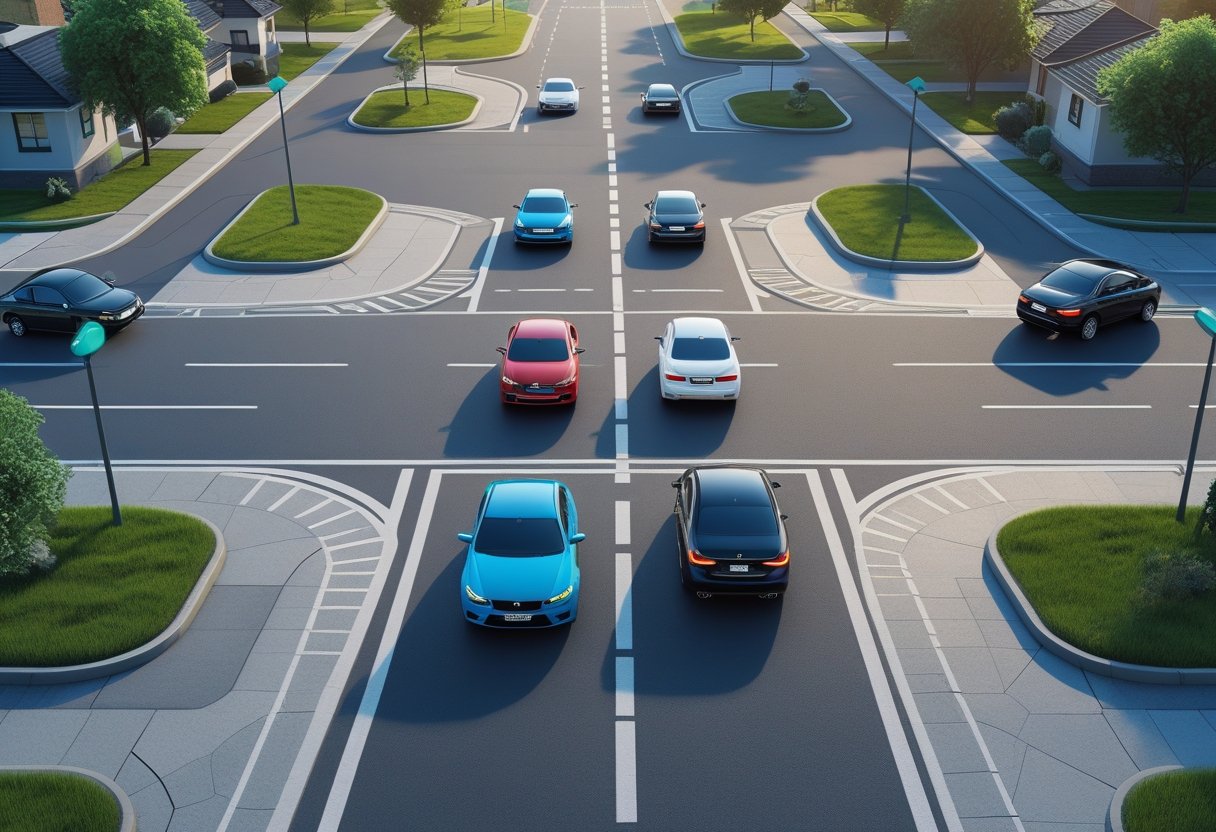
At unmarked crossroads, no one has automatic priority, which means every driver must approach with caution and be prepared to stop. This might sound confusing at first, but it’s actually designed to make roads safer by encouraging all drivers to slow down and pay closer attention to their surroundings.
We’ll walk you through everything you need to know about navigating these tricky junctions safely. From understanding why some crossroads remain unmarked to mastering the art of reading other drivers’ intentions, you’ll soon feel confident tackling any intersection that comes your way.
Key Takeaways
- No vehicle has automatic right of way at unmarked crossroads, so approach slowly and be ready to stop
- Yielding to vehicles on your right is common courtesy, though communication and caution matter more than rigid rules
- These junctions appear mainly in rural and residential areas where slower speeds help keep everyone safe
Understanding Unmarked Crossroads
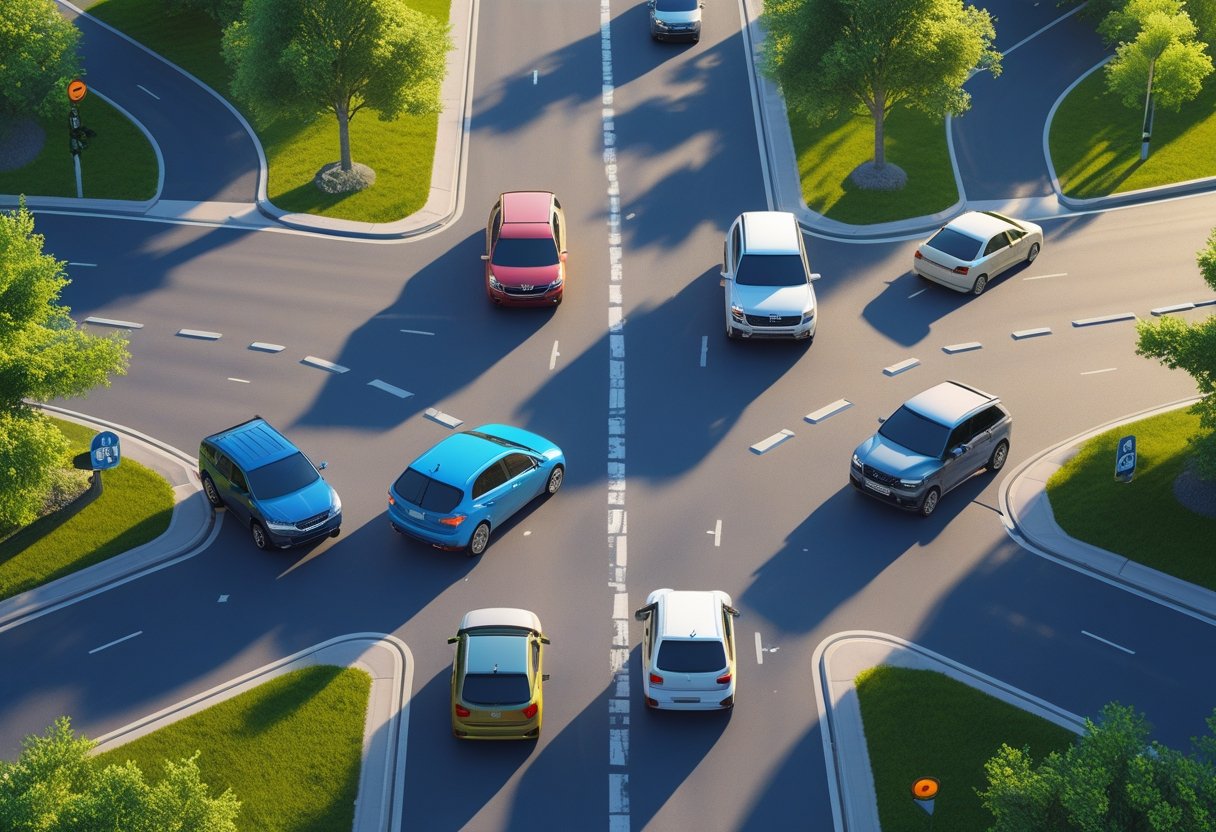
Unmarked crossroads present unique challenges because they lack the visual cues we typically rely on when driving. These junctions operate on different principles than their marked counterparts, requiring heightened awareness and a clear understanding of how to approach them safely.
Definition and Key Features
An unmarked crossroads is exactly what it sounds like: an intersection where two or more roads meet without any traffic lights, road signs, or painted markings to guide you. There’s no “give way” sign, no stop line, and no helpful arrows telling you which way to go.
The most important thing to remember is this: nobody has automatic priority at an unmarked crossroads. This fundamental rule changes everything about how we approach these junctions.
Here are the key features that define an unmarked crossroads:
- No traffic signals or signs of any kind
- No road markings like stop lines or painted arrows
- No clear indication of which road is considered “major”
- Equal status given to all approaching roads
This absence of guidance might feel unsettling at first. However, it’s designed to make all drivers naturally slow down and pay closer attention to their surroundings.
Typical Locations of Unmarked Crossroads
We’ll most commonly encounter unmarked crossroads in three specific environments. Rural areas top the list, where quiet country lanes intersect with minimal daily traffic.
Residential neighbourhoods also feature these junctions frequently. Local councils often leave these crossroads unmarked because the lower traffic volumes don’t justify the expense of installing signs or markings.
Quieter side roads connecting to other minor routes represent the third common location. These areas rarely see heavy traffic, making elaborate marking systems unnecessary.
You’re unlikely to find unmarked crossroads on busy main roads or motorways. The higher traffic volumes and speeds on these routes demand clear signage and markings for safety reasons.
The rural setting deserves special attention. Country crossroads can catch urban drivers off guard, especially when visibility is limited by hedgerows or stone walls.
Unmarked Versus Marked Crossroads
The contrast between marked and unmarked crossroads affects every aspect of how we navigate them. Marked crossroads give us clear instructions through signs, signals, or painted lines that tell us exactly who should give way and when.
At a marked junction, we know immediately which road has priority. Stop signs, give way markings, and traffic lights remove the guesswork entirely.
Unmarked crossroads flip this dynamic completely. Without these visual cues, we must rely on observation, communication with other drivers, and careful judgement.
| Marked Crossroads | Unmarked Crossroads |
|---|---|
| Clear priority rules | No automatic priority |
| Visual guidance provided | No signs or markings |
| Predictable traffic flow | Requires constant assessment |
| Higher traffic volumes | Typically quieter locations |
The psychological impact differs significantly too. Marked junctions let us follow established patterns, whilst unmarked crossroads demand fresh assessment each time we approach.
This difference means our driving technique must adapt completely when we encounter an unmarked junction.
Who Has Priority at Unmarked Crossroads?
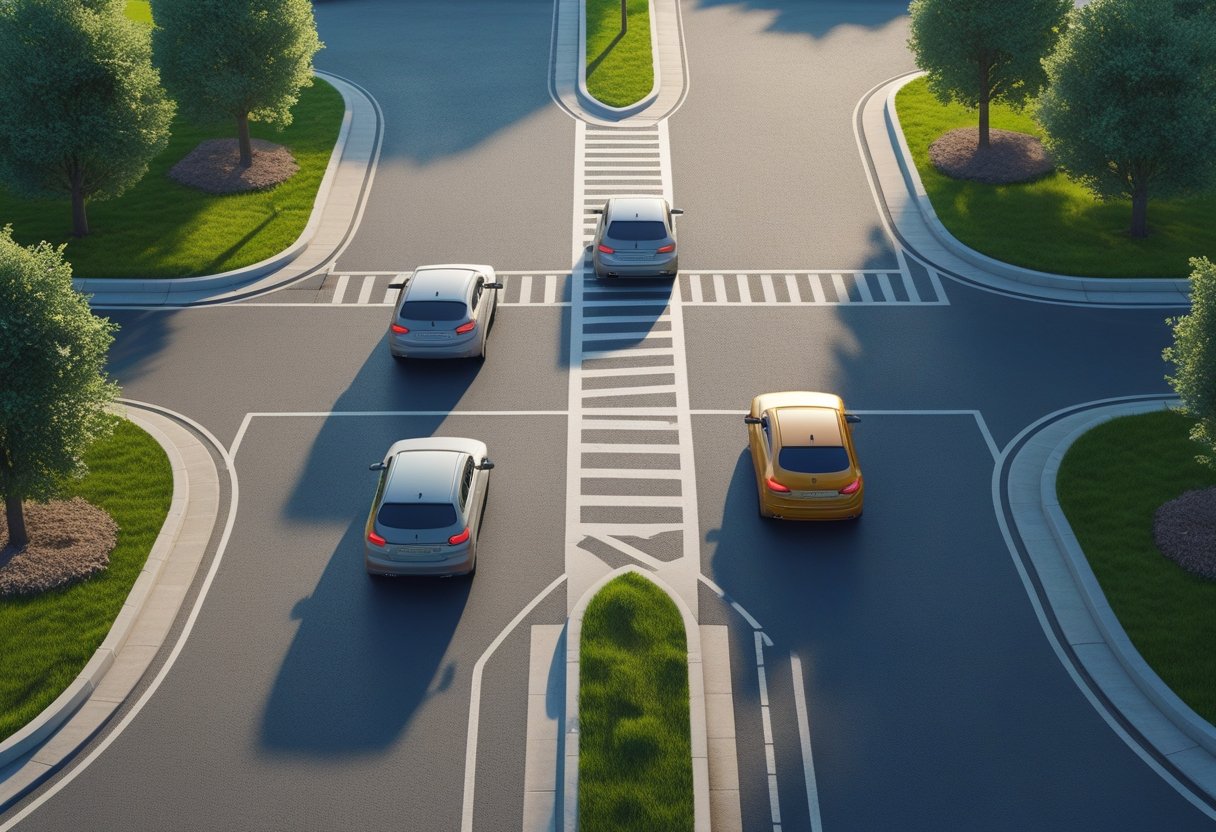
At unmarked crossroads, nobody has automatic right of way regardless of which road they’re on. We approach these junctions with extra caution and courtesy, ready to communicate with other drivers when multiple vehicles arrive simultaneously.
The Golden Rule: Nobody Has Automatic Right of Way
Here’s the most important thing we need to remember: no driver has automatic priority at an unmarked crossroads. It doesn’t matter if we’re on what feels like the main road or if we drive that route every single day.
The Highway Code is crystal clear on this point. Without road signs, traffic lights, or road markings, there’s simply no official right of way established.
This can feel quite unsettling at first. We might think we’re on the more important road, but the driver approaching from our right could believe exactly the same thing about their route.
Even large vehicles don’t have automatic priority. However, it’s good practice to show courtesy to lorries, buses, and emergency vehicles when we can safely do so. They need more time and space to manoeuvre.
This “no priority” rule exists for good reason. It forces all of us to slow down, look carefully, and make thoughtful decisions rather than charging through on assumption.
Approaching with Caution and Courtesy
We should slow right down as we approach any unmarked crossroads. This gives us precious extra seconds to assess what’s happening and react appropriately.
Look in all directions before we even think about proceeding. Check for cars, motorcycles, cyclists, and pedestrians. They could appear from any direction.
Making eye contact with other drivers works wonders. A quick nod or wave can communicate our intentions clearly and help everyone navigate safely.
We need to be prepared to stop completely if the situation requires it. There’s no shame in being the courteous driver who yields when things get confusing.
Rural and residential areas are where we’ll encounter most unmarked crossroads. Traffic tends to be lighter, but that doesn’t mean we can let our guard down. Other drivers might not expect us.
The beauty of approaching with genuine caution is that it usually encourages other drivers to do the same. We create a safer environment for everyone.
Dealing with Vehicles Approaching Simultaneously
When we arrive at the same time as another vehicle, things get interesting. There’s an informal understanding that the vehicle on the right often goes first, but this isn’t a hard rule.
Clear communication becomes absolutely vital. We can use indicators, hand gestures, or simply make eye contact to signal our intentions.
If we’re unsure who should go first, being the driver who yields is always the safer choice. A few seconds’ delay is far better than a collision.
Flash our headlights once to indicate we’re giving way, or ease forward slightly to show we intend to proceed. Keep these signals clear and deliberate.
Sometimes we’ll encounter a proper standoff where nobody wants to move first. A friendly wave or gesture usually breaks the deadlock nicely.
Remember that other drivers might be just as confused as we are. Patience and courtesy will get everyone through safely and keep the roads pleasant for all of us.
Safely Navigating Unmarked Crossroads
Mastering unmarked crossroads requires a systematic approach using proven driving techniques, clear communication with other road users, and the ability to respond calmly when other drivers behave unpredictably.
Using the MSPSL Routine
We always recommend following the MSPSL routine (Mirrors, Signal, Position, Speed, Look) when approaching any unmarked crossroad. This systematic approach keeps you safe and organised.
Check your mirrors first to see what’s happening behind you. Signal your intentions early so other drivers know where you’re heading.
Position your car correctly in your lane. Move to the left for turning left, stay central for going straight, and position slightly right for right turns.
Reduce your speed well before the junction. This gives you time to assess the situation properly and react to any dangers.
Look in all directions as you approach. Scan left, right, and ahead for vehicles, cyclists, and pedestrians. Your driving instructor will have taught you this routine during driving lessons because it works brilliantly at unmarked crossroads.
Keep looking even as you enter the junction. Situations change quickly, and staying alert prevents accidents.
Making Eye Contact and Communicating Intentions
Eye contact is your secret weapon at unmarked crossroads. When you can see another driver’s eyes, you know they’ve seen you too.
Look directly at other drivers and nod slightly to acknowledge them. This simple gesture prevents confusion about who’s going first.
Use your indicators early and clearly. Even if you think it’s obvious where you’re going, other road users need that confirmation.
Hand signals can help in tricky situations. A polite wave can indicate you’re letting someone go first, whilst holding up your hand shows you’re stopping.
Be patient when other drivers seem unsure. Give them time to make their decision rather than pressuring them.
Watch for body language clues. Drivers who lean forward are usually preparing to move, whilst those sitting back are likely waiting.
Adapting to Unpredictable Drivers
Some drivers panic at unmarked crossroads and make sudden decisions. Stay calm and give yourself extra space to react.
Expect the unexpected. Drivers might change their minds about turning or suddenly accelerate when you least expect it.
Keep a safe following distance when behind other vehicles approaching the junction. They might brake suddenly when they spot the crossroad.
Don’t assume other drivers know the informal “give way to the right” courtesy. Some might not follow this unwritten rule.
Have an escape plan ready. Know where you can steer if someone pulls out unexpectedly. Look for gaps between parked cars or wider road shoulders.
Trust your instincts. If something feels wrong about another driver’s behaviour, wait a bit longer before proceeding. Being cautious beats being caught in an accident.
Role of Pedestrians and Vulnerable Road Users
At unmarked crossroads, pedestrians hold the highest priority under current road rules, whilst cyclists and motorcyclists face unique visibility challenges that require our extra attention as drivers.
Giving Priority to Pedestrians
Pedestrians always come first at unmarked crossroads, regardless of who arrived when. This isn’t just good manners – it’s what the Highway Code expects from us.
We need to watch for people crossing from all directions. They might step out without warning because there aren’t any formal crossing points.
Children and elderly pedestrians need our special attention. Kids can dash into the road unexpectedly. Older people might move more slowly or struggle to judge distances.
Some pedestrians have hearing or sight problems. They might not notice our car approaching even when we think we’re being obvious.
Before we move through any unmarked crossroads, we should:
- Scan all four directions for people on foot
- Make eye contact when possible to confirm they’ve seen us
- Wait patiently if someone is crossing, even if it takes time
- Give a friendly wave to acknowledge pedestrians who wait for us
Remember, pedestrians don’t have the protection of a metal shell around them like we do.
Cyclists, Motorcyclists, and Visibility Challenges
Cyclists and motorcyclists can be surprisingly hard to spot at unmarked crossroads. Their smaller size means they often hide behind parked cars, trees, or road signs.
Motorcyclists approach much faster than we expect. What looks like an empty road might have a bike racing towards us just out of sight.
We should check our mirrors and blind spots twice before moving. A quick shoulder check can reveal a cyclist we missed in our wing mirrors.
Cyclists often wobble or change direction suddenly, especially when they’re navigating around potholes or debris. Give them plenty of space to manoeuvre safely.
Poor weather makes visibility even trickier. Rain, fog, or bright sunshine can make vulnerable road users nearly invisible until the last second.
The golden rule? When in doubt, we wait. Taking an extra few seconds beats causing an accident that could change lives forever.
Practical Scenarios and Common Mistakes
Real-world unmarked crossroads present unique challenges that catch many drivers off guard. Understanding how to handle different traffic situations and avoiding common errors can make these junctions much less stressful.
Emerging from Major and Minor Roads
When we approach an unmarked junction from what appears to be a minor road, it’s tempting to assume traffic on the wider road has priority. However, no such rule exists at unmarked crossroads.
We must treat all roads as equal at these junctions. The width of the road doesn’t determine priority when there are no road markings or signs present.
Here’s what we should do:
- Stop completely before entering the junction
- Look both ways multiple times
- Make eye contact with other drivers when possible
- Proceed only when absolutely certain it’s safe
Many drivers make the mistake of rushing through because they think others will give way. This assumption leads to dangerous situations and potential collisions.
Key point: Even if we’re on what looks like a main road, we still need to approach cautiously and be ready to stop for other traffic.
Turning Right at Unmarked Crossroads
Right turns at unmarked crossroads create the most confusion because we cross the path of oncoming traffic. Without clear road markings to guide us, we need extra caution.
The golden rule: Always give way to oncoming traffic when turning right, even though no one technically has priority.
We should position ourselves properly:
- Move towards the centre of our lane
- Signal early and clearly
- Wait for a safe gap in oncoming traffic
- Check our mirrors for following vehicles
Common mistake: Some drivers edge forward too eagerly, blocking the junction for other road users. This creates gridlock and dangerous situations.
When two cars approach from opposite directions and both want to turn right, we typically pass nearside to nearside. However, we must be flexible and ready to adapt based on the specific layout of each crossroads.
Risks of Assumptions and Hesitation
The biggest dangers at unmarked crossroads come from either being too aggressive or too hesitant. Both approaches can cause accidents and frustration for other road users.
Dangerous assumptions we must avoid:
- Thinking we have priority because our road is busier
- Assuming other drivers will definitely give way
- Believing speed gives us right of way
Problems with excessive hesitation:
- Creates confusion for other drivers
- Causes unnecessary traffic buildup
- Can actually increase accident risk
The sweet spot lies in confident caution. We need to be decisive once we’ve properly assessed the situation, but never rush our decision-making process.
Best practice: Take a moment to read the junction properly, make eye contact with other drivers when possible, and then act with clear intent. Other road users appreciate predictable behaviour more than anything else.
Remember that even experienced drivers can struggle with unmarked crossroads. The key is staying alert, being courteous, and always expecting the unexpected.
Tips for Building Confidence with Unmarked Crossroads
Building confidence with unmarked crossroads starts with proper instruction and regular practice under expert guidance. We’ll explore how working with qualified professionals and revisiting key rules can transform these challenging junctions from sources of anxiety into manageable driving situations.
Learning with a Driving Instructor
Working with a qualified driving instructor gives us the safest way to master unmarked crossroads. They know exactly where to find these tricky junctions in your local area. This means we can practise in real conditions without the pressure of going it alone.
Your instructor will teach you the scanning technique that professional drivers use. We learn to look left, right, and straight ahead in a systematic pattern. They’ll also show us how to read other drivers’ body language and intentions through windscreens.
Instructors help us with:
- Judging safe approach speeds
- Understanding when to yield
- Making eye contact with other drivers
- Using hand signals when needed
- Building spatial awareness
Most importantly, they create a calm learning environment. We can make mistakes safely whilst building muscle memory for these situations. Your instructor will gradually increase difficulty as our confidence grows.
They’ll also explain local quirks about unmarked crossroads in your area. Some rural junctions have hidden sight lines or unusual layouts that only experienced local instructors know about.
Reviewing the Highway Code
The Highway Code doesn’t give us detailed rules about unmarked crossroads because there aren’t strict priority rules. However, it does emphasise caution and courtesy as our guiding principles.
We should focus on Rule 146, which covers approaching junctions generally. It reminds us to assess the whole situation before proceeding. The code also stresses the importance of reducing speed well before reaching any junction.
Key Highway Code principles for unmarked crossroads:
- No one has automatic priority
- Approach slowly and be prepared to stop
- Look out for all road users including pedestrians
- Use judgement rather than fixed rules
- Show courtesy to other drivers
The code tells us that communication becomes vital at these junctions. We might need to use hand signals or make eye contact to coordinate with other drivers safely.
Regular revision helps these principles become second nature. We recommend reading the relevant sections monthly rather than just before our driving test.
Practical Exercises During Driving Lessons
Structured practice exercises help us develop real-world skills for unmarked crossroads. We start with quiet residential areas before progressing to busier rural junctions.
Exercise progression we recommend:
| Stage | Location | Focus Area |
|---|---|---|
| 1 | Very quiet residential crossroads | Basic approach technique |
| 2 | Rural crossroads with good visibility | Reading other drivers |
| 3 | Slightly busier junctions | Decision-making under pressure |
| 4 | Multiple unmarked crossroads in sequence | Building consistency |
During lessons, we practise the “creep and peek” method. This involves approaching very slowly whilst gradually improving our view of the junction. We learn to position our car for the best sightlines.
Role-playing exercises work brilliantly too. Your instructor might ask you to predict what other drivers will do. We also practise different scenarios like arriving simultaneously with another vehicle.
Mock scenarios help us prepare for:
- Dealing with impatient drivers
- Managing when visibility is poor
- Handling multiple vehicles arriving together
- Coordinating with cyclists and pedestrians
Regular practice builds our intuitive responses. We develop the ability to read situations quickly and make safe decisions instinctively.
Frequently Asked Questions
Unmarked crossroads can feel confusing, but knowing the basics makes all the difference. No one has automatic priority at these junctions, and arriving first or yielding to the right typically guides who goes when.
Who has the right of way when arriving at an unmarked junction at the same time as another driver?
When we arrive at exactly the same moment, there’s no hard rule in the UK. Neither driver has automatic priority.
The polite approach is to yield to the vehicle on our right. This isn’t written law, but it’s become common courtesy that most drivers understand.
Eye contact and hand signals work brilliantly here. A quick wave or nod can sort out any confusion in seconds.
If we’re unsure, it’s always better to let the other driver go first. Being cautious beats being caught in an awkward standoff.
What’s the proper approach for a driver when entering an unmarked junction with limited visibility?
Slow right down to a crawl when we can’t see clearly. Speed is our enemy when visibility is poor.
We should be ready to stop completely before entering the junction. This gives us time to spot any vehicles, cyclists, or pedestrians we might have missed.
Creeping forward slowly helps us get a better view without committing to crossing. We can always retreat if needed.
Watch for movement, shadows, or any signs of approaching traffic from all directions. Even parked cars can hide other road users.
Could you explain the unwritten rules of courteous driving at an unmarked crossroads?
First to arrive generally goes first. It’s the fairest system when everyone follows it.
Give way to larger vehicles like lorries or buses. They need more time and space to manoeuvre safely.
Keep an eye out for vulnerable road users. Cyclists and motorcyclists can be harder to spot but deserve extra consideration.
Use clear signals to communicate our intentions. A friendly wave or obvious pause tells other drivers what we plan to do.
Patience goes a long way. Rushing through unmarked junctions creates unnecessary risks for everyone.
How should I determine priority at a crossroad that lacks traffic signs or road markings?
Start by remembering that nobody has automatic priority. We’re all equal at unmarked crossroads.
Look for who arrived first. The driver who reaches the junction before others typically has the courtesy right to proceed.
When timing is unclear, check if anyone is obviously waiting to cross. They’ve probably been there longer than us.
Consider the traffic flow and road sizes. Sometimes it makes sense to let traffic from busier roads go first.
Watch other drivers’ body language and positioning. Their behaviour often shows who’s planning to go next.
In an unmarked junction scenario, how does one safely yield priority to avoid mishaps?
Make our intentions crystal clear through positioning and signals. Other drivers need to know we’re giving way.
Come to a complete stop if necessary. There’s no shame in being extra cautious at confusing junctions.
Keep watching all directions even while yielding. New vehicles might appear from unexpected angles.
Don’t wave people through unless we’re absolutely certain it’s safe. We don’t want to guide someone into danger.
Wait for a proper gap before proceeding ourselves. Yielding doesn’t mean we should rush when it’s our turn.
What are the recommended steps drivers should follow to navigate unmarked crossroads without incident?
Reduce speed well before reaching the junction. This gives us thinking time and better control.
Check all directions for traffic, including cyclists and pedestrians. Don’t assume any approach is clear.
Assess who has been waiting longest or arrived first. This usually determines the natural order.
Make eye contact with other drivers when possible. It helps everyone understand what’s happening next.
Proceed smoothly when it’s our turn, but stay alert for unexpected movements. Other drivers might change their minds or make mistakes.
Stay patient throughout the whole process. Unmarked crossroads work best when everyone stays calm and considerate.