

Developing Spatial Awareness for Tight Parking Spaces: Practical Steps for Success
Parking in tight spaces can feel like solving a puzzle whilst other drivers watch impatiently behind you. Your palms get sweaty, your heart races, and that seemingly impossible gap between two cars starts looking smaller by the second. We’ve all been there, staring at a parking space and wondering if our car will actually fit without turning into an expensive game of bumper cars.
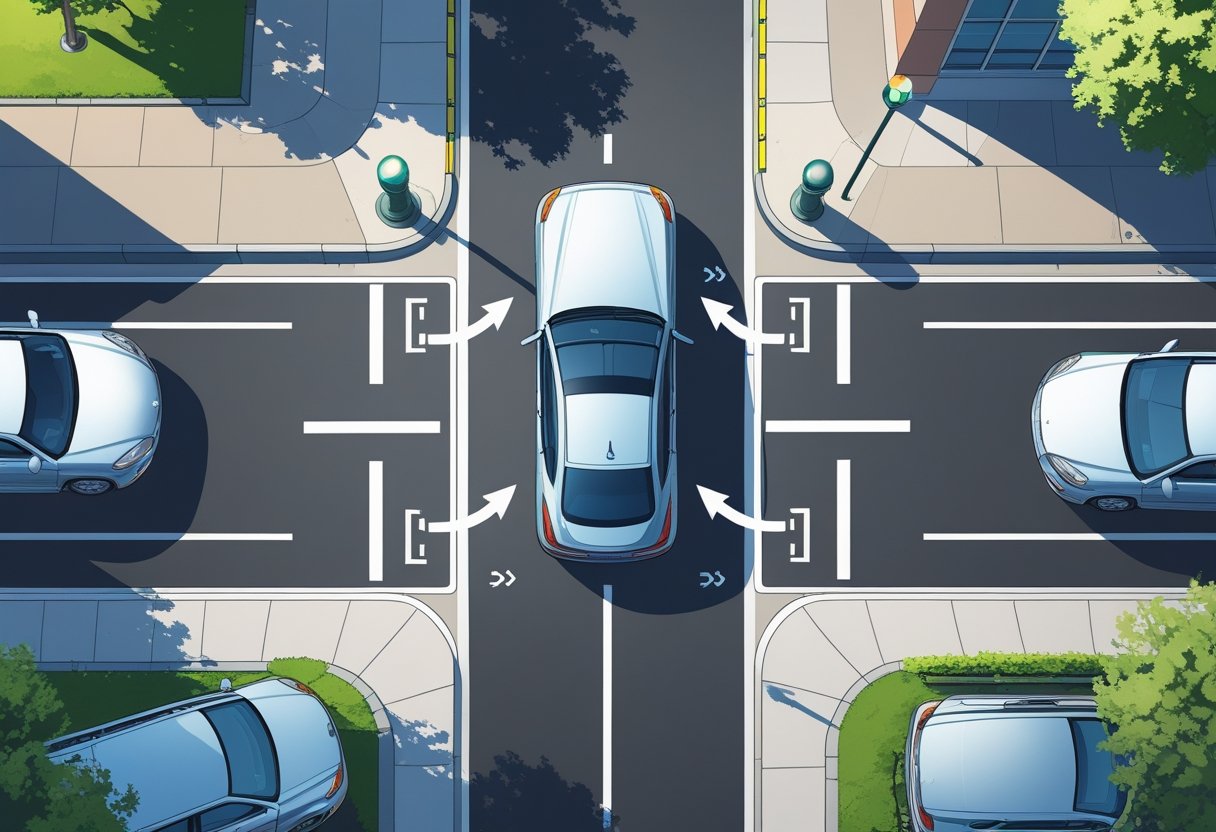
The good news is that spatial awareness for tight parking isn’t some magical talent you’re born with – it’s a skill you can develop through understanding your vehicle’s dimensions, practising specific techniques, and building confidence over time. Most parking mishaps happen because drivers struggle to judge distances accurately or rush through the manoeuvre without proper preparation. When you know exactly where your car begins and ends, plus how to use reference points effectively, those challenging spaces become much more manageable.
Throughout this guide, we’ll walk you through everything from understanding your car’s spatial footprint to mastering step-by-step parking techniques that work in real-world situations. You’ll discover how modern technology can support your efforts, learn practical preparation methods, and explore ways to build your spatial awareness through targeted practice. By the end, you’ll approach tight parking spaces with the confidence of someone who knows exactly what they’re doing.
Understanding Spatial Awareness for Parking
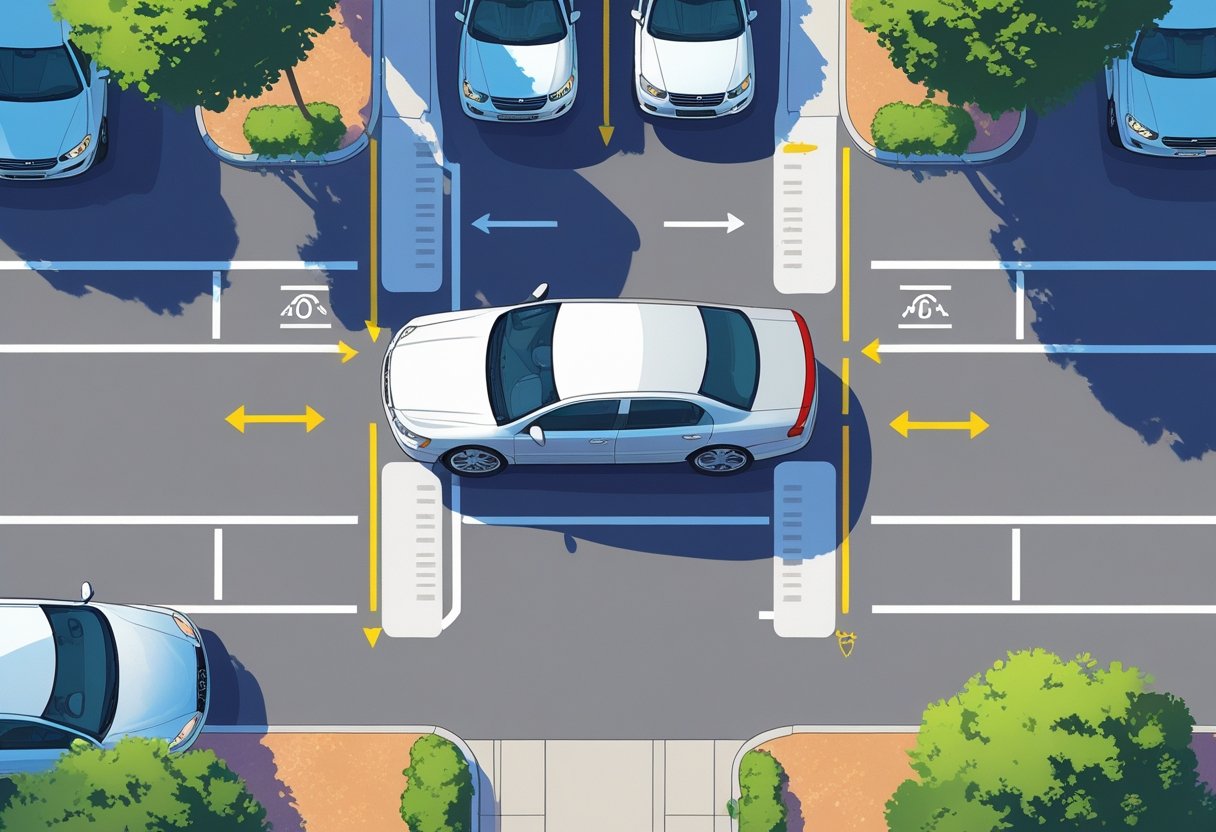
Spatial awareness combines your ability to judge distances accurately with understanding how your vehicle moves through space. When parking becomes challenging, strong spatial skills help you assess tight spots confidently and navigate obstacles safely.
What Is Spatial Awareness in Driving?
Spatial awareness means knowing exactly where your car sits in relation to everything around it. This skill involves judging distances between your vehicle and obstacles like kerbs, other cars, or bollards.
Your brain constantly processes information from your eyes and mirrors. It calculates how much space you need to turn, reverse, or squeeze through gaps. Think of it as your mental measuring tape that works in real-time.
Key components include:
- Distance judgement from all angles
- Understanding your vehicle’s dimensions
- Tracking moving objects around you
- Predicting how steering affects your car’s path
We develop this awareness through practice and experience. New drivers often struggle because their brains haven’t yet calibrated to their vehicle’s size and turning radius.
Good spatial awareness feels natural once developed. You’ll instinctively know whether a parking space suits your car before attempting the manoeuvre.
Why Spatial Awareness Matters in Tight Spaces
Poor spatial judgement leads to costly mistakes. Scratched paintwork, dented panels, and damaged bumpers frequently result from misjudging distances in cramped parking areas.
Safety becomes paramount when space is limited. You must account for pedestrians walking between cars, children who might dart out unexpectedly, and other drivers trying to navigate the same tight area.
Spatial awareness prevents:
- Collisions with stationary objects or moving vehicles
- Property damage to your car and others
- Blocked access that traps other drivers
- Stress and anxiety during parking attempts
Visibility often decreases in confined spaces. Large vehicles, pillars, and walls create blind spots that mask important obstacles. Your spatial skills help fill these visual gaps.
Strong spatial awareness builds confidence. You’ll approach challenging parking situations knowing you can assess the space accurately and execute the manoeuvre safely.
Essential Preparation Before Attempting Tight Parking
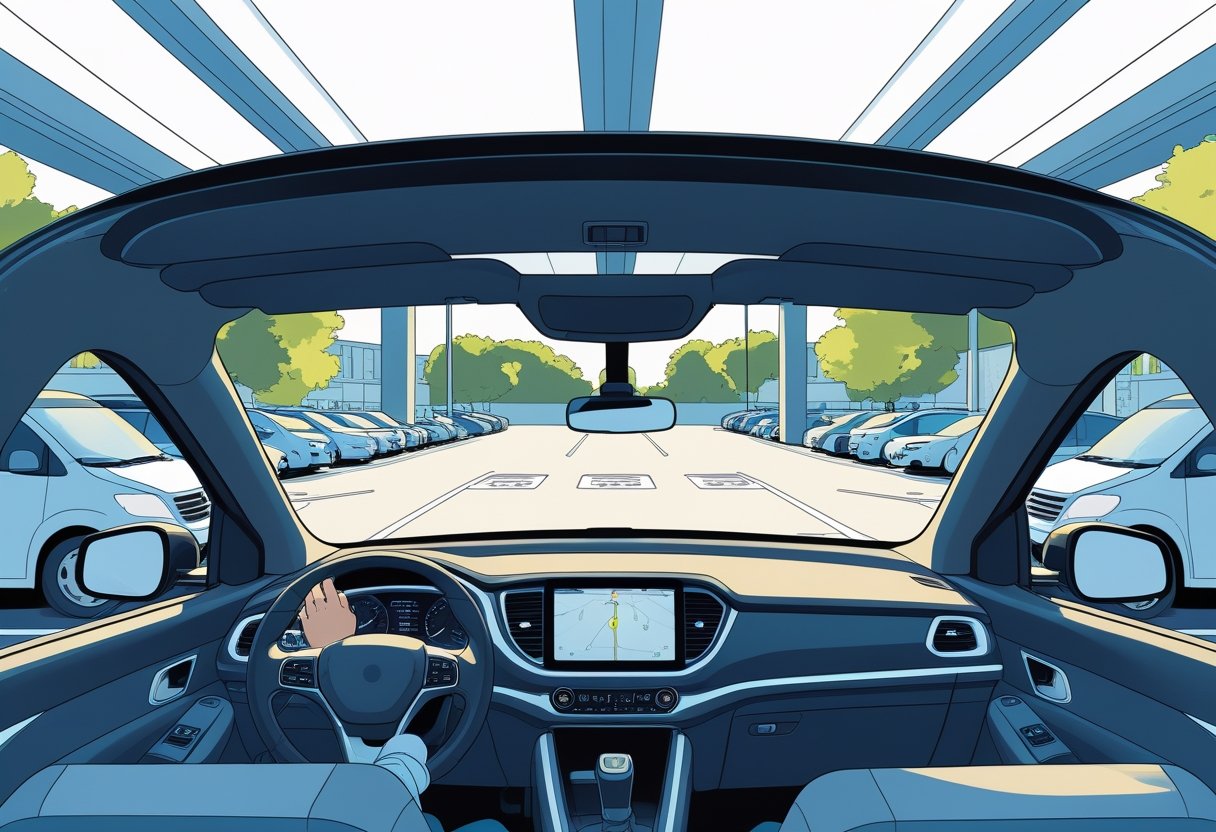
Successful tight parking starts well before we even approach the parking space. We need to understand our vehicle’s measurements, get our mirrors positioned properly, and know how to use visual markers to guide us safely into position.
Knowing Your Vehicle’s Dimensions and Limits
We can’t park confidently if we don’t know how much space our car actually needs. Most drivers have a rough idea of their vehicle’s length and width, but tight parking requires precise knowledge.
Key measurements to know:
- Overall length (including bumpers)
- Width (including wing mirrors)
- Turning radius
- Overhang (how far the car extends beyond the wheels)
Let’s measure our vehicle properly. We can use a tape measure or pace it out (one adult pace equals roughly 75cm). Write these numbers down and keep them in our glovebox until we memorise them.
Different vehicle types need different approaches:
- Compact cars: Usually 3.5-4 metres long
- Saloons: Typically 4.5-5 metres long
- Estate cars: Often 4.7-5.2 metres long
- SUVs: Can be 4.8-5.5 metres long
We should also understand our car’s blind spots. Every vehicle has areas we can’t see directly through mirrors or windows. Knowing these zones helps us avoid obstacles when manoeuvring.
Practice makes perfect here. We can set up cones or markers in an empty car park to get comfortable with our vehicle’s actual size versus what it feels like from the driver’s seat.
Setting and Adjusting Mirrors Correctly
Our side mirrors are absolutely crucial for tight parking success. Many drivers never adjust them properly, which makes spatial judgement nearly impossible.
For the left side mirror:
We should see just a sliver of our car’s body along the right edge. The horizon line should sit roughly in the middle of the mirror. This gives us the best view of approaching vehicles and kerb positioning.
For the right side mirror:
The same rule applies, but we might want to angle this one slightly downward for parking. We should see about one-quarter ground and three-quarters sky. This helps us spot kerbs, white lines, and nearby vehicles.
Interior mirror positioning:
Centre the rear window view completely. We shouldn’t have to move our head to see clearly behind us.
Quick mirror check routine:
- Adjust seat position first
- Set interior mirror
- Adjust left mirror
- Adjust right mirror
- Test visibility angles
We should readjust mirrors every few weeks. Vibration and movement gradually shift them out of position. Taking two minutes to get this right can prevent hours of parking stress later.
Using Reference Points for Alignment
Reference points are specific spots on our car that help us judge distances and positioning. These visual markers transform guesswork into precision.
Bonnet reference points:
The end of our bonnet appears at different distances depending on our height and seat position. We need to calibrate this personally. When our bonnet end aligns with a kerb, we’re typically 1-2 metres away.
Door mirror alignment:
When parking between vehicles, we can use our wing mirrors as guides. If our left mirror aligns with the rear of the car beside us, we’re usually positioned correctly to begin reversing.
Window pillar references:
The A-pillar (beside our windscreen) can help judge angles when parallel parking. When the rear corner of the front car appears in this pillar, we’re often at the right turning point.
Kerb visibility through mirrors:
In our passenger mirror, we should just see the kerb running parallel to our car when we’re properly positioned. If the kerb disappears completely, we’re too far out. If we see too much kerb, we might be too close.
We must remember that reference points vary between drivers and vehicles. What works for our instructor might not work for us. Spend time in quiet car parks discovering our own personal reference points for different parking situations.
Step-By-Step: Parking Techniques for Tight Spaces
These three parking methods form the foundation of confident city driving, each requiring specific positioning and steering timing. Distance judgment becomes second nature once you understand the reference points and mirror positions that guide successful maneuvers.
Parallel Parking with Confidence
Parallel parking feels daunting until you break it down into manageable steps. We’ll help you master this essential skill with clear reference points.
Position yourself correctly first. Pull alongside the front car, keeping about two feet between vehicles. Your mirrors should align roughly with theirs.
Start reversing slowly once you’re properly positioned. When your passenger mirror shows the rear car’s number plate clearly, turn your steering wheel fully towards the kerb.
Continue backing until your car reaches a 45-degree angle to the kerb. You’ll know you’re there when you can see the front car’s rear bumper in your side mirror.
Straighten the wheel and reverse until your front bumper clears the rear of the front vehicle. Then turn the wheel fully away from the kerb to swing your front end into the space.
Practice makes perfect with parallel parking. Start with generous spaces and gradually tackle tighter spots as your confidence builds.
| Reference Point | Action Required |
|---|---|
| Mirrors aligned with front car | Begin reversing |
| Rear car’s number plate visible | Turn wheel towards kerb |
| 45-degree angle achieved | Straighten wheel |
| Front bumper clears | Turn wheel away from kerb |
Mastering Perpendicular Parking
Perpendicular parking requires precise distance judgment and smooth steering control. Most car parks use this layout, making it essential to master.
Approach slowly and position your vehicle about four feet from the parked cars. This gives you enough room to turn without hitting adjacent vehicles.
Use your door mirror as a guide. When the mirror aligns with the white line of your target space, begin turning the steering wheel fully.
Keep reversing at walking pace whilst checking both mirrors constantly. Your car should slide smoothly between the lines without needing major corrections.
Watch for the kerb or back wall through your rear window. Stop when you’re close but not touching. Most spaces give you about two feet of clearance.
If you’re not straight, don’t panic. Pull forward slightly and reverse again with minor steering adjustments. Small corrections work better than dramatic moves.
The key to perpendicular parking lies in that initial positioning. Too close to the cars and you can’t turn properly. Too far away and you’ll struggle to fit into the space neatly.
Angle Parking Essentials
Angle parking appears easier than parallel parking but requires different techniques for success. These diagonal spaces are common in shopping centres and busy streets.
Judge the angle carefully before you start. Most angle parking spaces sit at 45 or 60 degrees to the driving lane.
Drive past your chosen space by about one car length. This positioning allows you to reverse in smoothly without sharp steering movements.
Turn your wheel towards the space and begin reversing slowly. The angle naturally guides your car into position with minimal steering input needed.
Watch your passenger mirror to ensure you’re not getting too close to the car on that side. Distance judgment matters more here than with straight parking.
Centre yourself between the lines by making small adjustments as you reverse. The angle makes it easier to see both sides of your space.
Forward angle parking works too, but reversing in gives you better visibility when leaving. You’ll appreciate this advantage in busy car parks where pedestrians appear suddenly.
Enhancing Awareness While Manoeuvring
The key to successfully navigating tight spaces lies in maximising your visual awareness and understanding your vehicle’s boundaries. We’ll focus on identifying dangerous blind spots, performing thorough shoulder checks, and safely managing obstacles that could damage your car.
Spotting and Managing Blind Spots
Every vehicle has areas where our vision simply can’t reach, and these blind spots become especially dangerous in tight parking situations. The most critical blind spots are directly behind your vehicle, along the rear pillars, and in the lower areas near your bumpers.
We recommend adjusting your mirrors before you start manoeuvring. Your wing mirrors should show a small sliver of your car’s body and as much of the surrounding area as possible. The interior mirror needs to provide a clear view of your rear window.
Modern cars often have additional blind spots created by thicker pillars and higher window lines. These design features improve crash safety but reduce visibility. We need to work around these limitations actively.
Here are the most problematic blind spot areas:
- Directly behind the vehicle (especially low objects)
- Lower corners near the bumpers
- Areas blocked by door pillars
- Spaces immediately beside the car
Technology can help, but it shouldn’t replace good technique. Parking sensors and reversing cameras are brilliant tools, but we still need to use our eyes and mirrors effectively. Sensors might miss thin posts or low kerbs that could scrape your bumper.
Making Effective Shoulder Checks
Shoulder checks are your secret weapon for spotting hazards that mirrors simply can’t show. We need to physically turn our heads to see into those tricky blind spots, especially when we’re moving slowly in tight spaces.
The timing of shoulder checks matters enormously. We should check before we start moving, during the manoeuvre, and before we change direction. A quick glance over your shoulder can spot a pedestrian walking behind your car or a cyclist approaching from the side.
When reversing into a parking space, we recommend checking over both shoulders alternately. Turn left to check the left side of your vehicle, then right to monitor the right side. This creates a mental picture of what’s happening around your entire car.
Don’t rush these checks. It takes a moment for your eyes to adjust and actually register what’s there. A hurried glance might miss something important.
Some drivers worry about looking away from where they’re going, but shoulder checks only take a second or two. The information you gain is invaluable for avoiding costly mistakes.
Navigating Obstacles and Hazards
Tight parking spaces often contain hidden challenges that can catch us off guard. Kerbs, bollards, other cars, and even shopping trolleys can all pose threats to our vehicle’s bodywork.
We need to identify obstacles early and plan our route around them. Look for anything that might scratch your paintwork or damage your wheels. Low kerbs are particularly sneaky because they’re easy to misjudge.
Moving obstacles require special attention. Other cars reversing nearby, pedestrians with pushchairs, and delivery drivers all create dynamic hazards. We must constantly scan for movement and be ready to stop if someone enters our path.
Common obstacles to watch for include:
- Kerbs and raised surfaces that could scrape your bumper
- Trolleys and bins that might roll into your path
- Other vehicles opening doors or reversing
- Pedestrians walking between cars
Visibility can change quickly in car parks. Bright sunlight creates shadows that hide obstacles, while wet weather reduces our ability to see clearly through windows and mirrors. We need to adapt our technique based on conditions and take extra time when visibility is poor.
If you’re unsure about clearance, stop and get out to check. A quick walk around your car beats expensive bodywork repairs.
Leveraging Technology and Support for Safer Parking
Modern parking technology transforms challenging tight spaces into manageable situations, whilst having a trusted spotter can provide the extra guidance needed for tricky manoeuvres.
Using Parking Sensors and Cameras Effectively
Parking sensors are your electronic eyes and ears when space gets tight. These clever devices use ultrasonic waves to detect obstacles around your vehicle, emitting increasingly rapid beeps as you approach objects.
The key is learning to trust your sensors whilst maintaining awareness. Start by understanding your system’s range and blind spots. Most sensors work best at speeds below 6 mph and can detect objects within 1.5 metres.
Backup cameras revolutionise rear visibility, especially when combined with parking sensors. The screen shows exactly what’s behind you, often with helpful gridlines indicating your vehicle’s path.
Here’s how to maximise your camera’s effectiveness:
- Clean the lens regularly – dirt and water spots blur your view
- Learn the gridlines – they predict where your car will go based on steering angle
- Watch for moving objects – cameras show a snapshot, not always real-time movement
Don’t rely solely on technology. Parking sensors and cameras work brilliantly together, but they can’t detect everything. Low objects, narrow posts, or overhanging branches might escape detection.
Practice using your technology in safe environments first. Empty car parks let you experiment with sensor sensitivity and camera angles without pressure.
How a Spotter or Parking Assistance Can Help
A reliable spotter becomes invaluable when technology reaches its limits. Choose someone who communicates clearly and position them where they can see both your vehicle and the space you’re entering.
Establish simple hand signals before starting. A flat palm means stop, pointing indicates direction, and thumbs up signals you’re clear to continue. Avoid complex gestures that create confusion under pressure.
Parking assistance from driving instructors or experienced drivers teaches techniques technology can’t. They spot habits you’ve developed and suggest improvements to your spatial judgement.
Professional parking assistance helps with:
- Mirror adjustment for optimal visibility
- Reference point training to judge distances accurately
- Confidence building through guided practice
Your spotter should stand where you can see them clearly through mirrors or windows. Never rely on someone positioned in your blind spots.
Communication stays crucial throughout the manoeuvre. If you lose sight of your spotter or feel uncertain about their signals, stop immediately and reassess the situation.
Remember that even the best spotter can make mistakes. You remain responsible for your vehicle’s movement, so combine their guidance with your own observations and any parking sensors or cameras available.
Practising and Building Spatial Awareness Over Time
Building strong spatial awareness takes consistent practice with specific techniques that challenge your distance judgement abilities. We’ll explore targeted drills, realistic scenarios, and methods for applying these skills across different parking environments.
Drills for Improving Distance Judgement
Distance judgement forms the backbone of successful parking in tight spaces. We can develop this skill through simple yet effective exercises that train our eyes and brain to work together.
Practice with Reference Objects
Start by using familiar items as measuring tools. A standard car length is roughly 4.5 metres, whilst a parking space is typically 2.4 metres wide. Place cones or water bottles at these distances and practise estimating the gaps between them.
Walk around car parks and guess distances before measuring them with your steps. One adult pace equals about 75cm, so eight steps roughly equal one car length.
Mirror Training Exercises
Set up practice sessions focusing purely on mirror work. Reverse towards a wall or fence, stopping when you judge you’re 30cm away. Check your accuracy and adjust your perception accordingly.
Use your wing mirrors to judge gaps beside parked cars. The closer an object appears in your mirror, the nearer it actually is. Practice until you can reliably estimate when you have 20-30cm clearance on each side.
Simulating Realistic Parking Scenarios
Real-world practice beats theory every time. We need to create challenging scenarios that mirror the tight spaces we’ll encounter on busy streets and crowded car parks.
Progressive Difficulty Training
Begin with generous spaces between cones or markers, then gradually reduce the gaps. Start with spaces 1.5 times your car’s length, then work down to standard bay sizes.
Practice parallel parking between two cars of different sizes. This teaches you to adapt your reference points when vehicles vary in length and height.
Time Pressure Exercises
Once you’ve mastered slow, careful manoeuvres, add gentle time pressure. Practice parking efficiently whilst maintaining accuracy. This builds confidence for busy car parks where other drivers might be waiting.
Try reversing into bays from different angles. Approach from the left, then the right, adapting your technique each time.
Transferring Skills to New Environments
The real test comes when we apply our practiced skills in unfamiliar locations. Different car parks, streets, and parking situations each present unique challenges.
Multi-Environment Practice
Seek out various parking environments: supermarket car parks, residential streets, shopping centres, and railway stations. Each location has different space constraints and traffic flow patterns.
Practice in both marked and unmarked spaces. Many tight parking situations occur where there are no clear lines to guide you.
Adapting to Different Vehicle Heights
Higher vehicles like SUVs require different spatial awareness techniques compared to lower cars. The view angles change significantly, affecting how we judge distances and gaps.
If you regularly drive different vehicles, practice the same parking scenarios in each one. Your reference points and mirror positions will vary, requiring adjusted spatial awareness techniques.
Weather and Lighting Challenges
Rain, snow, and poor lighting dramatically affect our spatial perception. Practice parking in various weather conditions and different times of day to build comprehensive skills.
Evening parking relies more heavily on artificial lighting and shadows, which can distort our distance judgement.
Safety Considerations Beyond the Vehicle
When we’re mastering tight parking spaces, our responsibility extends far beyond protecting our own car. We need to consider the safety of pedestrians walking nearby and ensure we’re contributing to smooth traffic flow rather than creating chaos.
Protecting Pedestrians in Car Parks
Car parks can be surprisingly dangerous places for people on foot. We often forget that pedestrians might be walking between cars, pushing trolleys, or helping children out of vehicles.
Always check for pedestrians before we start reversing or manoeuvring. Children are particularly unpredictable and might dart out from behind parked cars without warning.
When we’re driving slowly through car parks, we should:
- Keep our speed under 5 mph
- Check mirrors frequently
- Look out for people loading shopping or luggage
- Be extra careful near shop entrances where foot traffic is heaviest
Sound awareness matters too. Many modern cars run quietly, so pedestrians might not hear us approaching. A gentle toot of the horn can alert someone who’s walking whilst looking at their phone.
We should also consider sight lines when choosing our parking spot. Parking away from main walkways reduces the chance of pedestrians suddenly appearing in our path.
Ensuring Smooth Traffic Flow and Courtesy
Nothing frustrates other drivers more than someone taking ages to park whilst blocking traffic behind them. We can avoid becoming that driver with some thoughtful planning.
Choose realistic spaces for our skill level. If we’re still building confidence, that tight spot between two large SUVs probably isn’t our best option during busy periods.
Signal our intentions early so other drivers know what we’re planning. This gives them time to change lanes or find alternative routes around us.
When we’re struggling with a particularly tricky manoeuvre, it’s perfectly acceptable to pull forward and try again. Most drivers understand and appreciate when we prioritise safety over speed.
Be mindful of peak times too. Attempting our most challenging parking during Saturday afternoon shopping rushes isn’t fair on other drivers who might be circling for spaces themselves.
Frequently Asked Questions
Learning to park in tight spaces brings up plenty of questions, from judging whether you’ll actually fit to perfecting your manoeuvring technique. These common concerns focus on building the confidence and skills you need to tackle even the most challenging parking situations.
How can I judge the size of a parking space effectively before attempting to park?
Start by using your own car as a reference point. Most standard parking spaces are roughly 2.5 metres wide, which gives you about 30 centimetres of clearance on each side of an average car.
Look for visual cues before you commit. If you can see at least half a metre between the parked cars, you’ve likely got enough room. Compare the gap to your car’s width by imagining it fitting between the vehicles.
Drive slowly past the space first. This lets you assess the length and width without pressure. Check for obstacles like trolleys, kerbs, or tight corners that might complicate your entry or exit.
Use the “door test” mentally. Ask yourself if you and your passengers could open the doors comfortably once parked. If the space looks too narrow for this, it’s probably not worth the struggle.
Trust your instincts. If something feels off about the space, there’s usually a good reason. It’s better to find another spot than risk scratches or getting stuck.
What are some techniques to increase precision while manoeuvring into a tight spot?
Slow and steady wins the race here. Keep your speed to barely more than walking pace. This gives you time to make tiny adjustments and stops you from overshooting your target.
Use reference points on your car. Line up your wing mirror with specific landmarks like the rear bumper of the adjacent car. These consistent markers help you repeat successful parking attempts.
Make small steering inputs rather than large movements. Quarter turns of the wheel often work better than full rotations when space is limited.
Don’t be afraid to stop and restart. If you’re not happy with your position, straighten up and have another go. Most tight parking situations benefit from a second attempt rather than forcing a poor angle.
Practice the “stop and check” method. Pause every few seconds to assess your position from inside the car. This prevents you from getting too committed to a manoeuvre that isn’t working.
In what ways can I improve my peripheral vision for better spatial awareness in constrained areas?
Keep your head moving naturally while parking. Don’t fixate on just one mirror or direction. Glance between your mirrors, windows, and direct vision regularly to build a complete picture.
Adjust your seating position for maximum visibility. Sit up straight and ensure you can see over the bonnet clearly. A good driving position makes peripheral vision much more effective.
Practice scanning techniques in quiet car parks first. Train yourself to quickly gather information from multiple sources without getting overwhelmed or confused.
Learn to read the reflections in other cars’ paintwork and windows. These can show you obstacles or movements that aren’t directly visible in your mirrors.
Use your passenger window and rear window more actively. Many drivers rely too heavily on mirrors and miss the valuable perspective these direct views provide.
Could you offer tips for adjusting mirrors to ensure all angles are covered during parking?
Set your side mirrors wider than normal for parking. You want to see just a sliver of your car’s side in each mirror. This reduces blind spots significantly when manoeuvring.
Angle your passenger mirror downward slightly. This helps you see the kerb or parking space lines more clearly during parallel parking or tight bay parking.
Don’t forget your rear-view mirror positioning. It should give you a clear, centered view of your rear window without tilting your head up or down.
Consider using the mirror adjustment controls during parking if your car has them. Many drivers don’t realise they can temporarily adjust mirrors for specific situations.
Remember that convex mirrors (if fitted) make objects appear smaller and farther away. Factor this distortion into your distance judgements, especially when reversing.
Test your mirror setup by walking around your parked car. Check if you can see all the areas that might cause problems during tight parking manoeuvres.
What’s the best way to practise parking in small spaces to build confidence?
Start in empty car parks with cones or markers. Create parking bays slightly larger than your car, then gradually make them smaller as your skills improve.
Practice during quieter times when there’s less pressure. Early mornings or late evenings in retail parks often provide ideal conditions for focused practice.
Work on one type of parking at a time. Master bay parking before moving on to parallel parking. Building skills systematically prevents confusion and builds genuine confidence.
Bring a patient friend or family member to act as a spotter. Having someone guide you builds trust in your abilities while providing valuable feedback.
Record yourself parking from outside the car if possible. Watching your technique helps identify areas for improvement that you might not notice from the driver’s seat.
Set realistic goals for each practice session. Aim to successfully complete three or four parking attempts rather than practising until you’re tired or frustrated.
Can you recommend exercises to help drivers develop a better sense of their car’s dimensions?
Try the “cone touching” exercise in an empty space. Place cones around your car at bumper level, then practice getting as close as possible without touching them.
Practice parking between two cones that are exactly your car’s length apart. This builds precision in judging your vehicle’s footprint in tight situations.
Use chalk to mark your car’s corners on the ground when parked. Then sit in the driver’s seat and memorise where these points appear in your mirrors and through your windows.
Practice the “box exercise” by creating a rectangle just larger than your car using cones or markers. Manoeuvre into this space from different angles to build spatial awareness.
Try reverse parking into your home garage or driveway repeatedly. Familiar spaces help you understand your car’s dimensions without the stress of public parking areas.
Work on depth perception by judging distances to stationary objects. Practice stopping exactly one metre from a wall or post until you can do it consistently without measuring.