

Do You Need to Revise the Highway Code After Passing? Expert Insights
Many drivers assume their Highway Code knowledge expires the moment they pass their test, but this couldn’t be further from the truth. The roads are constantly evolving, rules get updated, and your driving skills need regular refreshing to stay sharp and safe.

Yes, you absolutely need to keep revising the Highway Code after passing your test. Road rules change regularly, and staying current isn’t just good practice, it’s essential for maintaining your safety and confidence behind the wheel. The Highway Code received significant updates in January 2022, introducing new rules that many drivers missed entirely.
We’ll explore why ongoing Highway Code revision matters, cover the latest rule changes you need to know, and show you how understanding concepts like the road user hierarchy can make you a more considerate driver. From practical everyday scenarios to building lifelong driving confidence, keeping your knowledge fresh benefits everyone on the road.
Why the Highway Code Still Matters After Passing
Breaking traffic rules can lead to serious legal trouble, and all road users share responsibility for keeping everyone safe on our roads. The Highway Code serves as the foundation for road safety, protecting drivers, cyclists, and pedestrians alike.
Legal Consequences of Ignoring the Highway Code
Many people don’t realise that breaking Highway Code rules can result in criminal charges. The rules aren’t just suggestions – they carry real legal weight.
Criminal Offences Include:
- Dangerous driving
- Careless driving
- Failing to give way at junctions
- Improper overtaking distances
Even if you’re not charged criminally, Highway Code violations can be used as evidence in court proceedings. This means insurance companies and legal teams will examine whether you followed the rules when determining fault in accidents.
The RAC reports that many drivers aren’t aware of recent changes to the Highway Code. This lack of knowledge doesn’t protect you in court – ignorance isn’t a valid defence.
Potential Penalties:
- Points on your licence
- Heavy fines
- Driving bans
- Increased insurance premiums
We’ve seen cases where drivers faced serious consequences simply because they hadn’t kept up with updated rules. The code changes regularly, so staying informed protects you legally.
Responsibilities of All Road Users
The Highway Code establishes a hierarchy of road users that places vulnerable people at the top. This means drivers have the greatest responsibility to protect pedestrians, cyclists, and horse riders.
Your Ongoing Responsibilities:
- Giving way to pedestrians at junctions
- Maintaining safe overtaking distances (1.5 metres for cyclists)
- Using the “Dutch Reach” technique when opening car doors
- Being aware of shared spaces
The code reminds us that being considerate to other road users isn’t optional. We all share the roads, and everyone deserves to travel safely.
Recent updates emphasise that drivers must actively look out for vulnerable road users. This includes checking for cyclists before turning and giving pedestrians priority when they’re crossing or waiting to cross.
Key Distances to Remember:
- 1.5 metres minimum when overtaking cyclists
- 2 metres when passing horse riders or pedestrians
- 1 metre clearance when passing parked cars
Role in Promoting Road Safety
Road safety depends on everyone knowing and following the same rules. When drivers ignore Highway Code guidance, accident rates increase significantly.
The code provides crucial safety information that wasn’t covered in detail during your original driving test. New technologies, road layouts, and traffic patterns mean the rules must evolve constantly.
Safety Areas Covered:
- Electric vehicle charging point etiquette
- Cyclist positioning in traffic
- Roundabout priorities
- Junction safety protocols
We know that refreshing your Highway Code knowledge makes you a safer driver. The rules help predict what other road users will do, reducing confusion and preventing accidents.
Modern roads are busier and more complex than when many of us passed our tests. Cycling infrastructure has expanded, electric vehicles are common, and traffic patterns have changed.
Benefits of Staying Updated:
- Reduced accident risk
- Better anticipation of other road users
- Confidence in complex traffic situations
- Protection from legal liability
The Highway Code isn’t just about rules – it’s about creating a shared understanding that keeps everyone safe.
Essential Highway Code Updates Every Driver Should Know
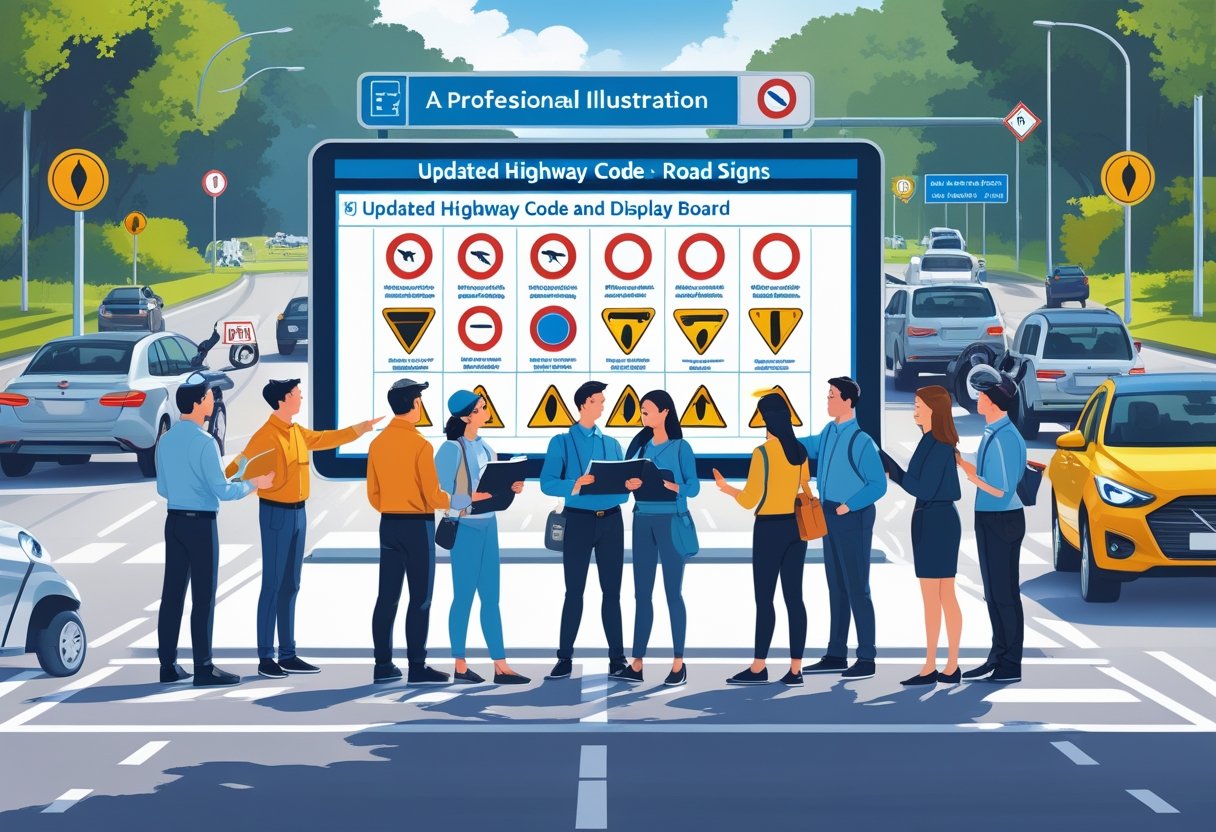
The Highway Code receives regular updates that can catch even experienced drivers off guard, with recent changes affecting everything from motorway emergency areas to towing regulations. Many drivers unknowingly break updated rules, risking hefty fines and penalty points that could have been easily avoided.
Recent Changes and How They Affect You
We’ve seen significant updates to The Highway Code in 2025 that directly impact your daily driving. The most crucial changes focus on emergency areas and breakdown procedures on motorways.
Emergency Area Rules have become stricter. You can no longer use emergency areas for rest breaks when feeling sleepy. These spaces are strictly for genuine emergencies only.
Towing Regulations now require secondary coupling devices by law. If you tow a trailer or caravan, you must also avoid outside lanes on motorways and may need special mirrors.
The updated rules also clarify that provisional licence holders can only drive on motorways with an approved instructor in a dual-control car with L plates (or D plates in Wales).
Tailgating enforcement has increased, with police actively pursuing dangerous driving offences. Safe following distances on icy roads should now be ten times greater than normal conditions.
Staying Informed on New Rules
We recommend checking for Highway Code updates every six months. The official government updates page provides the most reliable information about rule changes.
The RAC and other motoring organisations send regular updates to members about significant changes. Subscribing to their newsletters keeps you informed without having to remember to check manually.
Key places to find updates:
- GOV.UK Highway Code guidance pages
- Motoring organisation websites and apps
- DVSA official communications
- Insurance company newsletters
Many drivers miss important changes because they assume the rules they learned for their test remain unchanged. However, the Highway Code has been updated hundreds of times since its creation in 1931.
Setting up Google alerts for “Highway Code updates” or “DVSA rule changes” ensures you receive notifications about new regulations as they’re announced.
Major Penalties for Outdated Knowledge
Breaking updated Highway Code rules carries the same penalties as violating established ones. We’ve seen drivers receive unexpected fines because they weren’t aware of recent changes.
Emergency area misuse can result in £100 fixed penalty notices and three points on your licence. Using these areas for anything other than genuine emergencies is now strictly enforced.
Towing violations without proper secondary coupling devices can lead to prohibitions from continuing your journey until rectified. Fines can reach £300 plus penalty points.
Motorway lane violations when towing attract £100 fines and three penalty points. Many drivers don’t realise that towing vehicles are banned from outside lanes.
The courts don’t accept “I didn’t know the rules had changed” as a valid defence. Insurance companies may also refuse claims if you’re found breaking current Highway Code regulations, even if you weren’t aware of recent updates.
Police forces now use modern technology to detect rule violations more effectively, making it increasingly difficult to avoid penalties for outdated knowledge.
Understanding the Hierarchy of Road Users
The hierarchy of road users puts those most at risk of injury at the top, giving them priority over vehicles that could cause greater harm. This system ensures drivers take extra responsibility for protecting pedestrians, cyclists, mobility scooter users, and horse riders in everyday situations.
Who Is Prioritised on the Road
The new hierarchy places vulnerable road users at the top of the priority system. Pedestrians sit at the very top, followed by cyclists, horse riders, and mobility scooter users.
Below these vulnerable groups, we find motorcyclists, then car drivers. Heavy goods vehicles and buses sit at the bottom of the hierarchy because they can cause the most damage in collisions.
This doesn’t mean vulnerable road users can ignore traffic rules. Everyone still needs to follow the Highway Code and behave responsibly. The hierarchy simply means those who can cause greater harm must take extra care.
Key Priority Order:
- Pedestrians (highest priority)
- Cyclists
- Horse riders
- Mobility scooter users
- Motorcyclists
- Car drivers
- Large vehicles (lowest priority)
Protecting Vulnerable Groups
We must give extra consideration to those most at risk when sharing the road. Pedestrians have right of way when crossing at junctions, even if they’re just waiting to cross.
Cyclists need space when we overtake them. We should leave at least 1.5 metres when passing cyclists at speeds up to 30mph. More space is required at higher speeds.
Horse riders require special care. We must slow right down to under 10mph when passing horses and leave at least 2 metres of space. Horses can be easily spooked by loud noises or sudden movements.
Mobility scooter users often travel slowly and may need extra time to navigate. We should be patient and give them plenty of room, treating them with the same care we’d show pedestrians.
Implications for Everyday Driving
These changes affect how we drive in real situations every day. At junctions, we must give way to pedestrians who are crossing or waiting to cross, even when turning.
When cyclists are going straight ahead at junctions, they have priority over vehicles turning into or out of side roads. We need to check carefully before making turns.
Practical Changes:
- Wait for pedestrians at junctions before turning
- Give cyclists priority when they’re going straight
- Leave proper gaps when overtaking vulnerable road users
- Use the ‘Dutch Reach’ method when opening car doors
On roundabouts, we mustn’t try to overtake cyclists within their lane. We should let them move across our path as they travel around the roundabout.
These rules help create safer roads for everyone, but they require us to stay alert and considerate in our daily driving habits.
Practical Highway Code Rules You Can’t Afford to Forget
The rules that matter most are often the ones we gloss over during revision, yet they’re absolutely crucial for keeping everyone safe on Britain’s roads. Understanding proper overtaking procedures, mastering roundabout navigation, and using signals correctly can prevent accidents and save lives.
Critical Overtaking Guidelines
We’ve all felt that urge to overtake a slower vehicle, but getting it wrong can have devastating consequences. The key is patience and proper planning.
Before you even think about overtaking, check your mirrors and assess the road ahead. You need a clear view for at least 100 metres beyond the vehicle you’re passing. If there’s any doubt, don’t do it.
The Highway Code emphasises essential rules that many drivers overlook after passing their test. Never overtake at pedestrian crossings, approaching junctions, or where road markings forbid it.
Essential overtaking checklist:
- Mirror, signal, manoeuvre (in that order)
- Ensure you can see the road is clear ahead
- Allow plenty of space when pulling out
- Complete the manoeuvre quickly but safely
- Don’t cut back in too soon
Remember, it’s illegal to cross solid white lines when overtaking. These road markings exist for your safety, marking areas where visibility is limited or accidents are more likely.
Navigating Roundabouts and Junctions
Roundabouts trip up even experienced drivers, but the rules are straightforward once you understand the priorities. Give way to traffic from your right, signal appropriately, and choose the correct lane early.
For mini-roundabouts, many drivers ignore proper navigation rules by cutting across the markings instead of going around them properly. This can result in fines of at least £50.
Left turn: Use the left lane, signal left throughout
Straight ahead: Use the left lane (unless road markings indicate otherwise), no signal on approach, signal left after passing the exit before yours
Right turn: Use the right lane, signal right, then signal left after passing the exit before yours
At junctions, recent Highway Code updates have changed the rules significantly. Drivers must now give way to pedestrians when turning into or out of junctions. Yet studies show only 23% of drivers always follow this rule.
Traffic signs and road markings at junctions tell you exactly what you can and can’t do. Yellow box junctions are particularly important: never enter one unless your exit is clear.
Safe Signals and Warning Signs
Your indicators aren’t just suggestions – they’re legal requirements that keep other road users informed about your intentions. Using them incorrectly or not at all puts everyone at risk.
Signal early enough to give other drivers time to react, but not so early that it confuses them. Generally, signal after passing the road before the one you intend to take in built-up areas.
Flashing headlights cause confusion when used incorrectly. The Highway Code states headlights should only flash to make others aware of your presence. Using them to say “thanks” or warn of speed cameras can result in fines up to £1,000 because improper headlight use leads to road confusion.
Warning signs deserve your full attention. Triangular signs warn of hazards ahead, circular signs give orders, and rectangular signs provide information. Each shape has a purpose, and recognising them quickly helps you respond appropriately.
Remember these signal basics:
- Cancel signals after manoeuvring
- Use hazard lights only when stationary and causing obstruction
- Horn use is for alerting others to your presence, not expressing frustration
Everyday Scenarios Where Knowledge is Key
Real-world driving presents countless situations where your Highway Code knowledge becomes absolutely vital. From navigating tricky parking restrictions to adjusting your speed in changing weather, these scenarios test your understanding every single day behind the wheel.
Waiting and Parking
Waiting and parking rules might seem straightforward, but they’re packed with nuances that catch many experienced drivers off guard. We’ve all witnessed the frustration of returning to find a parking ticket, often because someone misunderstood a seemingly simple sign.
Double yellow lines mean no waiting and parking at any time, unless signs indicate otherwise. Single yellow lines restrict parking during specified hours only. These hours vary dramatically between locations, so we must always check the accompanying signs carefully.
Key parking restrictions to remember:
- Yellow lines: No parking during restricted hours
- Red lines: Absolute no stopping zones (except licensed taxis)
- White lines: Often indicate parking bays or restrictions
- Zigzag markings: No stopping near pedestrian crossings or schools
Loading bays present another common challenge. Blue badge holders have specific rights, but even they must follow time restrictions and proper display requirements.
Evening and overnight parking brings additional complications. Many residential areas enforce parking restrictions between 6pm and 8am to prevent commuter parking. We need to understand these local variations to avoid penalties.
Speed Limits and Hazard Awareness
Speed limits form the backbone of road safety, yet they’re among the most frequently misunderstood aspects of driving. National speed limits apply unless signs indicate otherwise, but recognising these limits requires constant attention to our surroundings.
Built-up areas typically enforce 30mph limits, marked by street lighting rather than repeated signs. Dual carriageways allow 70mph unless restricted, whilst single carriageways permit 60mph maximum. However, local authorities frequently impose lower limits for safety reasons.
Variable speed limits on motorways respond to traffic conditions in real-time. These electronic displays override national limits and help manage congestion. Ignoring them carries the same penalties as exceeding fixed limits.
Hazard awareness extends far beyond simple speed compliance:
- School zones: 20mph limits during school hours
- Residential areas: Watch for children and parked cars
- Country roads: Hidden entrances and agricultural vehicles
- Urban centres: Cyclists, pedestrians, and delivery vehicles
We must adjust our speed according to conditions, not just posted limits. Rain, ice, or heavy traffic might require speeds well below legal maximums.
Crossings and Pedestrian Zones
Crossing the road safely involves understanding various crossing types and their specific rules. Zebra crossings give pedestrians absolute priority once they’ve stepped onto the crossing. We must stop and wait, even if it seems they’re moving slowly.
Pelican crossings use traffic lights to control pedestrian movement. The flashing amber phase allows us to proceed only if the crossing remains clear. Puffin crossings use sensors to detect waiting pedestrians and adjust timing accordingly.
Toucan crossings accommodate both pedestrians and cyclists. These wider crossings require extra vigilance as cyclists move faster than pedestrians and might approach from unexpected angles.
Pedestrian zones in town centres often permit limited vehicle access during specific hours. Delivery vehicles might access these areas early morning, whilst emergency vehicles maintain constant access rights.
Key crossing behaviours:
- Approach slowly: Always reduce speed near pedestrian areas
- Check both sides: Pedestrians might enter from either direction
- Be patient: Never pressure pedestrians to hurry
- Watch for children: They’re unpredictable and harder to spot
School crossing patrols hold legal authority to stop traffic. We must obey their signals completely, treating them with the same respect as traffic lights.
Driving in Adverse Weather Conditions
Adverse weather conditions dramatically alter driving requirements and test our Highway Code knowledge under pressure. Rain reduces visibility and road grip, requiring increased following distances and gentler steering inputs.
Fog presents particular challenges that many drivers underestimate. We must use dipped headlights in fog, never full beams which reflect back and reduce visibility further. Fog lights should activate only when visibility drops below 100 metres.
Following distances become critical in fog. The two-second rule extends to four seconds minimum, with greater distances often necessary. We should use familiar landmarks to gauge stopping distances accurately.
Snow and ice demand completely different driving techniques:
- Gentle acceleration: Avoid wheel spin on slippery surfaces
- Increased stopping distances: Can be ten times normal distances
- Smooth steering: Sudden movements cause skids
- Lower speeds: Often necessary regardless of posted limits
Winter driving essentials:
- Clear all windows before departing
- Carry emergency supplies for breakdowns
- Plan alternative routes avoiding hills
- Check weather forecasts before long journeys
Hot weather creates less obvious but equally important challenges. Tyre pressures increase with temperature, potentially causing blowouts. We need regular breaks to maintain concentration during long summer journeys.
Strong winds affect vehicle stability, particularly when overtaking lorries or crossing bridges. High-sided vehicles and motorcycles face greater risks, requiring extra consideration from other road users.
Safe Driving Beyond the Basics
Once you’ve mastered the fundamentals, proper vehicle maintenance and staying alert to road conditions become essential skills. We’ll explore how regular car care, handling unexpected situations, and maintaining your focus keep you driving safely for years to come.
Vehicle Maintenance Essentials
Keeping your car in top condition isn’t just about passing your MOT. Regular maintenance prevents dangerous breakdowns and keeps you safe on the road.
Weekly checks should include your tyres, lights, and fluid levels. We recommend checking tyre pressure when tyres are cold, as heat from driving affects readings.
Your monthly routine needs to cover:
- Oil level and colour
- Windscreen washer fluid
- Brake fluid levels
- Battery terminals for corrosion
Warning signs you shouldn’t ignore include unusual noises, vibrations, or dashboard warning lights. Strange smells, especially burning odours, need immediate attention.
Don’t wait for problems to worsen. A small oil leak today could become a major engine failure next month. Book regular services with a qualified mechanic, even if your car seems fine.
Many new drivers overlook windscreen maintenance. Keep it clean inside and out, and replace worn wiper blades immediately. Poor visibility causes accidents.
Obstructions and Breakdowns
Even well-maintained vehicles can develop problems unexpectedly. Knowing how to handle obstructions and breakdowns protects you and other road users.
If your car breaks down, get off the carriageway safely if possible. On motorways, use the hard shoulder or emergency refuge areas. Turn on hazard lights immediately.
Essential breakdown kit items:
- High-visibility jacket
- Warning triangle
- Torch with spare batteries
- First aid supplies
- Emergency contact numbers
When you encounter obstructions like fallen trees or debris, slow down gradually. Don’t swerve suddenly, as this can cause loss of control. Signal early to warn other drivers.
Never attempt roadside repairs on busy roads. Even simple tasks like changing tyres can be extremely dangerous. Call for professional help instead.
If you must exit your vehicle, wear high-visibility clothing and stand well away from traffic. On motorways, exit from the side furthest from moving traffic and wait behind barriers.
Road Works, Level Crossings, and Tramways
Construction zones and railway crossings require extra attention and patience. These areas see frequent accidents because drivers become complacent.
Road works often mean narrow lanes, temporary traffic lights, and changed road surfaces. Reduce speed early and maintain larger following distances. Workers’ lives depend on your caution.
Watch for temporary speed limits and lane restrictions. These aren’t suggestions – they’re legal requirements with safety cameras often monitoring compliance.
Level crossings demand complete attention. Never stop on the tracks, even in traffic jams. If barriers start closing while you’re crossing, keep going rather than reversing.
Automatic crossings can be particularly dangerous. Always check both directions for trains before crossing, even when lights aren’t flashing.
Tramways present unique challenges in cities like Manchester and Sheffield. Trams are quiet, heavy, and can’t swerve. Never drive in tram lanes or park where you might block tram movement.
Wet weather makes tram tracks extremely slippery for cars and motorcycles. Cross tracks at right angles when possible to maintain grip.
Fitness to Drive and Avoiding Distractions
Your physical and mental state affects driving safety more than most people realise. Honest self-assessment prevents accidents and saves lives.
Medical conditions that affect driving include diabetes, epilepsy, heart problems, and vision issues. You’re legally required to inform DVLA about conditions that might impair your driving ability.
Prescription medications can cause drowsiness, dizziness, or slower reactions. Always read labels carefully and ask your pharmacist about driving restrictions.
Smoking while driving reduces concentration and reaction times. Hot ash or dropped cigarettes cause dangerous distractions. If you must smoke, pull over safely first.
Mobile phones remain a major distraction despite hands-free technology. Even legal hands-free calls reduce your attention to road conditions.
Fatigue kills. Take breaks every two hours on long journeys. If you feel drowsy, stop immediately. Coffee and energy drinks provide temporary alertness but aren’t substitutes for proper rest.
Emotional stress affects judgement and increases risk-taking. If you’re upset, angry, or distracted by personal problems, consider postponing your journey until you can focus properly on driving.
Building Your Confidence as a Lifelong Driver
Staying current with the Highway Code isn’t just about passing your test. It’s about developing the skills and mindset that keep you safe and confident throughout your entire driving journey.
The Benefits of Continued Learning
We can’t overstate how much continued learning transforms your driving experience. When you stay updated with the latest Highway Code changes, you’re not just ticking boxes. You’re actively building the knowledge that helps you make split-second decisions with confidence.
Think about it this way: road conditions, traffic patterns, and vehicle technology are constantly evolving. The driver who last studied the Highway Code five years ago might miss crucial updates about smart motorways or new cycling infrastructure rules.
Regular revision offers these key advantages:
- Enhanced hazard awareness – fresh knowledge helps you spot potential dangers earlier
- Reduced anxiety in unfamiliar situations
- Better decision-making when faced with complex road scenarios
- Increased respect from other road users who recognise competent driving
Many experienced drivers find that revisiting familiar concepts actually reveals details they’d forgotten or never fully grasped during their initial learning phase.
Where to Find Updated Highway Code Resources
The good news is that accessing current Highway Code information has never been easier. We recommend starting with the official gov.uk website, which always contains the most up-to-date version of the complete Highway Code.
The RAC provides excellent supplementary resources, including practical guides that explain recent changes in plain English. Their website breaks down complex updates into digestible chunks that make sense for everyday drivers.
Top-quality resources include:
- Official Highway Code app – searchable, offline access
- RAC route planners with current road information
- Local driving schools offering refresher courses
- Online forums where experienced drivers share real-world insights
Many drivers overlook their insurance providers as valuable information sources. Most major insurers offer free safety resources and updates about changing regulations that could affect your cover.
Embracing a Proactive Attitude
We believe the most confident drivers are those who take ownership of their ongoing development. This means actively seeking out learning opportunities rather than waiting for problems to arise.
Consider booking an annual driving assessment with a qualified instructor. It’s not about admitting weakness. It’s about maintaining the standards that keep you and other road users safe on increasingly busy roads.
Practical steps for staying proactive:
- Set calendar reminders to check for Highway Code updates every six months
- Join local driver discussion groups or online communities
- Practice challenging manoeuvres in quiet car parks regularly
- Ask family members to quiz you on road signs during car journeys
The drivers who struggle most are often those who assume their test-day knowledge will suffice forever. Road conditions change, new hazards emerge, and our own abilities evolve with age and experience.
Remember that confidence comes from competence. The more current your knowledge remains, the more naturally you’ll handle whatever the roads throw at you.
Frequently Asked Questions
Many new drivers wonder about their ongoing responsibilities with the Highway Code after passing their test. These common questions address how often you should review road rules, where to find the latest updates, and practical ways to stay current with driving regulations.
What’s the best way to keep up to date with road safety changes after I’ve passed my test?
We recommend bookmarking the official Highway Code website on your phone or computer. The government updates this resource whenever new rules come into effect.
Following driving organisations like the DVSA on social media gives you instant notifications about important changes. They often share quick summaries of new regulations as they’re introduced.
Many driving apps send push notifications about Highway Code updates. These apps make it easy to review changes during your commute or spare moments.
Is it necessary to brush up on the Highway Code once I’ve got my full driving licence?
Absolutely! The Highway Code isn’t something you learn once and forget about. Rules get updated regularly to improve safety for all road users.
Recent changes have introduced new priorities at junctions and updated rules for cyclists and pedestrians. Missing these updates could put you and others at risk.
We’ve seen drivers caught out by penalty changes they weren’t aware of. Staying current protects your licence and keeps you legally compliant.
How can I stay informed about new driving regulations post-passing my practical test?
Set up Google alerts for “Highway Code changes” or “UK driving law updates”. You’ll receive emails whenever news outlets report on new regulations.
The DVSA website has a news section that covers all major driving law changes. We suggest checking this quarterly or whenever you renew your insurance.
Many driving instructors share updates on their websites and social media. Following a few local instructors keeps you connected to the driving community.
Could regularly reviewing the Highway Code help improve my driving skills after passing?
Yes, refreshing your knowledge definitely sharpens your driving skills. You’ll spot rules you might have forgotten and discover techniques that make you more confident.
Many experienced drivers find sections on adverse weather conditions particularly helpful for situations they rarely encounter during lessons.
Reviewing stopping distances, speed limits, and road markings reinforces good habits. This knowledge becomes second nature when you practise it regularly.
Where can I find updates about changes to driving laws that might affect me as a new driver?
The official Highway Code guidance remains your most reliable source for accurate, up-to-date information. Government websites don’t include advertising or biased opinions.
Motoring organisations like the RAC and AA publish detailed explanations of new rules. They often include helpful graphics and real-world examples.
Your car insurance provider usually emails customers about major law changes. These updates focus on changes that might affect your premiums or coverage.
After receiving my licence, how often should I check for updates in the Highway Code to ensure safe driving?
We suggest a quick review every six months to catch any significant changes. Major updates typically happen once or twice per year, so this timing works well.
Before long trips or driving in unfamiliar areas, spend ten minutes reviewing relevant sections. Motorway rules and parking regulations can vary between regions.
Whenever you hear about driving law changes in the news, take a moment to read the official details. News reports sometimes miss important nuances that affect how you should actually drive.