

Intensive Car Lessons Versus Traditional Courses: Which Wins in 2025?
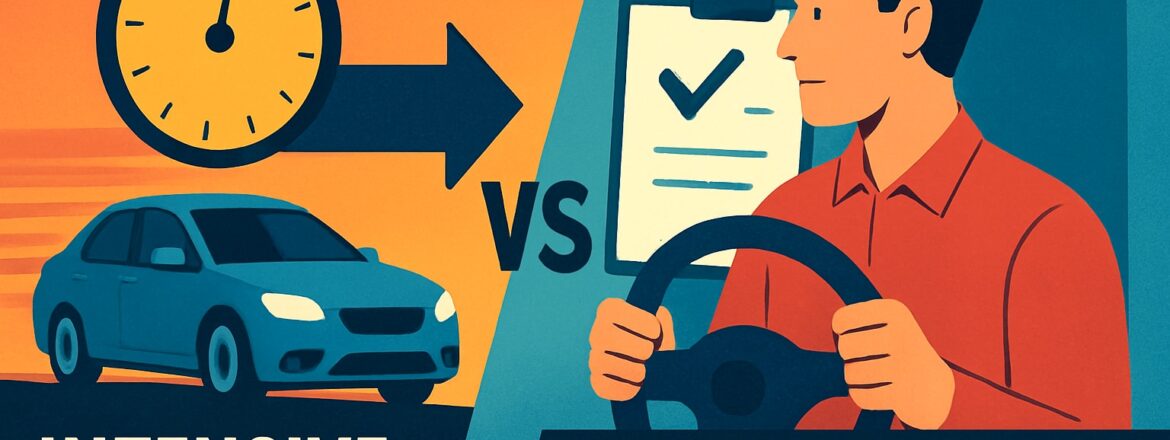
In 2025, the journey to a driver’s license is moving faster than ever. With more people eager to hit the road, the big question is whether intensive car lessons are the right way to go, or if sticking with traditional driving courses is the smarter path.
Many learners want to pass their test quickly, but is the fastest option always the best? As driving test requirements and learner needs evolve, both intensive car lessons and traditional courses now offer new benefits and challenges.
This article will compare these two approaches, exploring costs, effectiveness, flexibility, and the overall learner experience. By breaking down definitions, pros and cons, prices, pass rates, and future trends, you’ll discover which path fits your goals and lifestyle best.
What Are Intensive Car Lessons and Traditional Driving Courses?
Choosing how to learn to drive is a big decision, and understanding the options is the first step. Let’s break down what intensive car lessons and traditional driving courses actually mean, how they work, and who typically offers them.
Defining Intensive Car Lessons
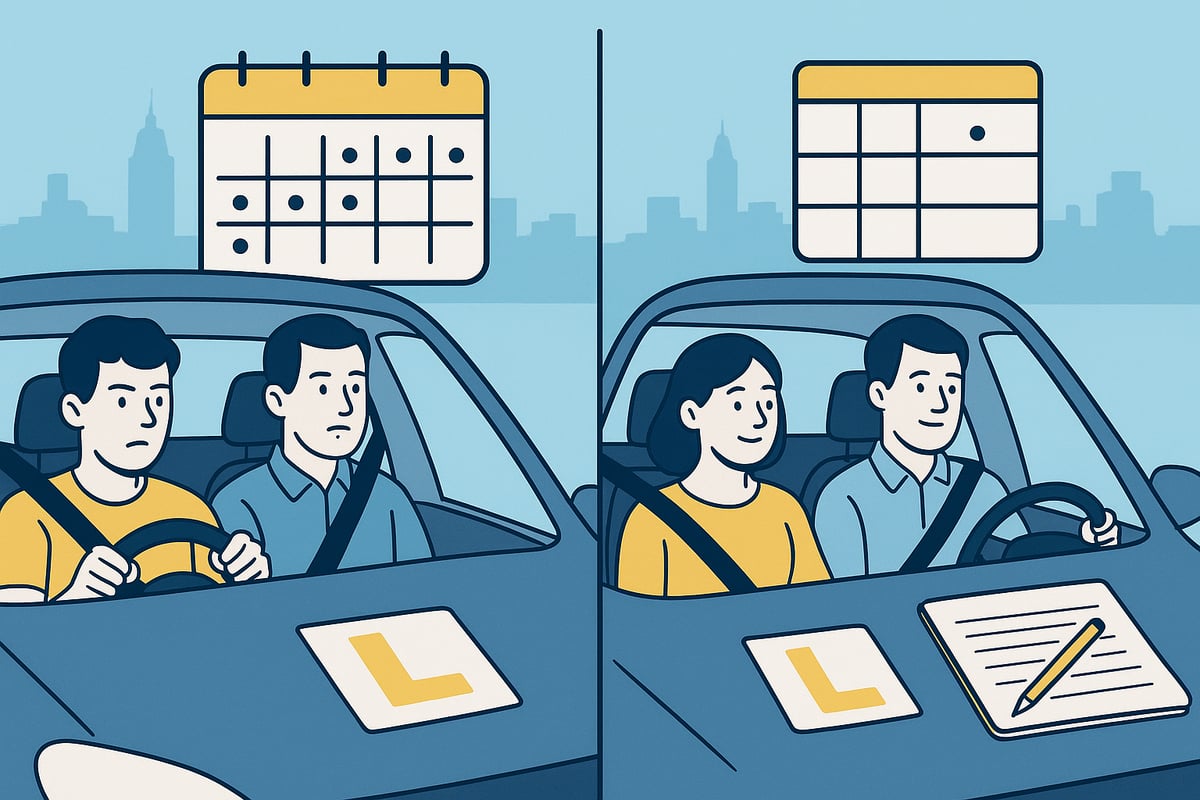
Intensive car lessons are short, focused driving programs designed to help learners pass their test quickly. These courses usually last between one and two weeks, with daily sessions that can last several hours each. The goal is to immerse the learner in driving, building skills rapidly and preparing them for both the theory and practical tests in a condensed time frame.
Many people choose intensive car lessons when they need a license urgently, perhaps due to a new job or relocation. These courses often bundle in test bookings and study materials, making the process streamlined. For example, a typical intensive program might be a 30-hour course completed over just five days. Industry data shows a 20 percent rise in bookings for these courses from 2022 to 2024, reflecting their growing popularity. For a full breakdown of what these courses involve, check out the Intensive Driving Courses Overview.
Defining Traditional Driving Courses
Traditional driving courses offer a slower, more gradual approach to learning. Lessons are usually scheduled once or twice a week and spread over several months. This format allows learners to absorb new skills at their own pace, with time to practice and reflect between each session.
Traditional courses are popular among students, part-time workers, and anyone with a busy or unpredictable schedule. Lessons typically last one to two hours, focusing on long-term skill retention and confidence building. A common example might be a learner taking one lesson per week for four to six months before feeling ready for the test. Despite the rise of intensive car lessons, traditional courses remain the most common learning format in the UK as of 2024.
Key Differences in Structure and Approach
Understanding the core differences between intensive car lessons and traditional courses can help you choose what’s right for you. Here’s a quick comparison:
| Aspect | Intensive Car Lessons | Traditional Driving Courses |
|---|---|---|
| Pace | Fast-tracked, immersive | Gradual, steady |
| Scheduling | Block bookings, daily lessons | Flexible, weekly or bi-weekly |
| Learning Curve | Steep, lots of info quickly | Incremental, time to digest |
| Test Timing | Often includes fast-track booking | Standard scheduling |
| Instructor Interaction | Usually same instructor, short term | Possible changes over long period |
Intensive car lessons push learners to progress quickly, while traditional courses give more space for practice and review. The structure you choose will impact how you experience driving education.
Who Offers These Courses?
Both intensive car lessons and traditional driving courses are widely available across the UK. Intensive courses are typically offered by specialist driving schools, independent instructors, and national providers with expertise in rapid learning formats. Traditional courses can be found at local driving schools, national chains, and through private instructors.
It’s important to note that all instructors for both types of courses must be DVSA-approved, ensuring a consistent standard of teaching. In recent years, online resources and blended learning options have grown in popularity, allowing learners to supplement practical lessons with digital study. Whether you opt for a national driving school or a regional specialist, you’ll find a variety of options tailored to your needs.
Pros and Cons of Intensive Car Lessons
If you’re considering intensive car lessons, it’s important to weigh both the advantages and disadvantages before committing. These fast-paced courses can be a game-changer for many learners, but they’re not a one-size-fits-all solution.

Advantages of Intensive Lessons
The biggest draw of intensive car lessons is speed. Learners can often go from beginner to test-ready in just a week or two. This accelerated pace makes these courses perfect for anyone who needs a license urgently, such as for a new job or a big life change.
Immersive learning is another major plus. With daily lessons, you’re constantly reinforcing new skills, which helps with rapid progress and memory retention. The momentum you gain from back-to-back sessions can boost your confidence and keep motivation high.
Scheduling is flexible in a different way compared to traditional courses. You can book your intensive car lessons during holidays or work breaks, and many providers offer fast-track test bookings as part of their packages. For example, Intensive Driving Courses in York give learners the chance to complete training and tests in a condensed timeframe, making the process as streamlined as possible.
Learner satisfaction is typically high when it comes to speed and convenience. Industry surveys have shown that those who opt for intensive car lessons are often pleased with how quickly they’re able to progress. Imagine completing a 30-hour course in just five days and walking away ready for your practical test, that’s a real possibility with this approach.
- Pass in days or weeks, not months
- Daily practice for stronger skill retention
- Quick results boost confidence and motivation
- Easier to fit into short-term availability
- Fast-track test bookings available
Disadvantages of Intensive Lessons
Despite the appeal, intensive car lessons can also present some challenges. The fast pace can be overwhelming, especially for nervous or inexperienced drivers. With several hours of instruction each day, there’s little downtime to process new information.
The upfront cost is another consideration. Intensive car lessons usually require a full payment before starting, which can be a significant financial commitment compared to pay-as-you-go traditional lessons. While the weekly cost may seem high, the overall investment can add up quickly if you need extra lessons or fail your first test.
Fatigue is a real risk. Long sessions may lead to reduced concentration, making it harder to absorb critical skills. There’s also less opportunity to reflect or practice independently between lessons, which can hinder long-term learning for some people.
Not everyone thrives under pressure. For some, the intensity leads to information overload, resulting in higher stress levels or even test failures. According to DVSA data, very short intensive courses have slightly higher first-time fail rates compared to traditional lessons.
- Fast pace can overwhelm some learners
- High upfront payment required
- Potential for fatigue and burnout
- Limited time for self-reflection and practice
- Not suitable for all learning styles
Suitability and Best Use Cases
Intensive car lessons are best suited for highly motivated, time-pressed learners or those who already have some driving experience. If you need to pass your test quickly, perhaps for a new job or a relocation, this format could be ideal.
However, if you’re a nervous driver, a complete beginner, or have an unpredictable schedule, intensive car lessons might not provide the supportive, gradual environment you need. University students during summer breaks or professionals with a clear window of availability often benefit the most.
When deciding, ask yourself: Can you commit to several hours a day? Are you comfortable with fast-paced learning? If so, intensive car lessons could be your quickest route to the open road.
Pros and Cons of Traditional Driving Courses
Traditional driving courses remain a popular choice for learners who want to take their time and build confidence behind the wheel. Unlike intensive car lessons, traditional courses offer a slower, steadier approach that allows skills to develop over weeks or months.

Advantages of Traditional Courses
Traditional driving courses provide several valuable benefits for new drivers. The gradual pace gives learners time to absorb each skill before moving on. This approach often results in better long-term retention, as there is more opportunity to practice between lessons.
Some key advantages include:
- Lower pressure due to spaced-out lessons
- More time to process feedback and reflect on mistakes
- Flexibility to fit lessons around busy schedules
Learners can discuss their progress with instructors and adapt the lesson plan as needed. Unlike intensive car lessons, which compress training into a short period, traditional courses allow for steady improvement. Many students report feeling more comfortable and confident, especially those who are nervous or just starting out.
Another benefit is the chance to experience a wider variety of driving conditions, such as different weather and traffic scenarios. This exposure can help prepare learners for real-world situations after passing their test. According to recent UK driving test pass rates 2025, learners in traditional courses often achieve high first-time pass rates, reflecting the effectiveness of this steady approach.
Disadvantages of Traditional Courses
While traditional courses offer many strengths, there are also drawbacks to consider. The most obvious is the extended time required to complete the learning process. For those in a hurry, this can be a disadvantage compared to intensive car lessons.
Potential disadvantages include:
- Risk of losing motivation over several months
- Forgetting skills between lessons
- Challenges scheduling lessons with the same instructor
The total cost may also end up higher due to the need for more lessons or refresher sessions if progress is slow. Some learners find that gaps between lessons make it harder to maintain momentum, especially if life gets busy.
Additionally, waiting for available test dates can cause further delays. Unlike intensive car lessons, which often include fast-track test booking, traditional courses may require more patience and planning. Learners who need a driving licence quickly might find the pace frustrating, and the risk of needing extra lessons can impact both confidence and budget.
Suitability and Best Use Cases
Traditional driving courses are best suited for those who prefer a steady, low-pressure environment. Nervous beginners, teenagers, and people balancing school or work commitments often benefit most from this format.
If you value time to reflect, need to build confidence gradually, or have a busy schedule, traditional courses are likely a better fit than intensive car lessons. They provide a supportive environment where learning can happen at your own pace, making them ideal for those who want to focus on building strong foundations for safe, independent driving.
Cost Comparison: Intensive vs. Traditional Courses
When deciding between intensive car lessons and traditional driving courses, cost often plays a huge role. Understanding the breakdown of expenses and hidden fees can help learners choose the best path for their budget and goals.
Upfront and Total Costs
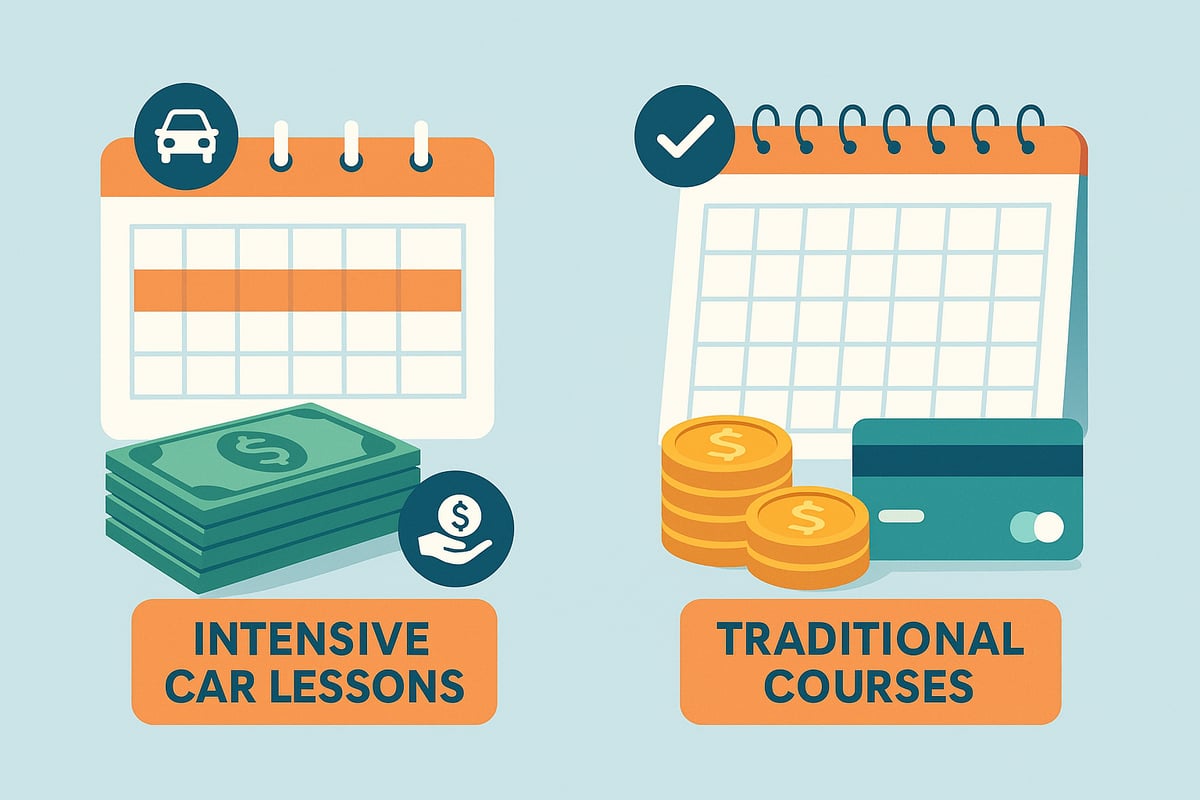
The most noticeable difference between intensive car lessons and traditional courses is how you pay. Intensive car lessons usually require a single upfront payment, covering the entire course, which often ranges from £1,200 to £2,000 for 30 to 40 hours of instruction. In contrast, traditional lessons are typically paid per session, averaging £30 to £40 an hour and spread out over months.
Here’s a simple table comparing typical costs:
| Course Type | Upfront Payment | Typical Total Cost (30–40 hrs) |
|---|---|---|
| Intensive Car Lessons | £1,200–£2,000 | £1,200–£2,000 |
| Traditional Lessons | £30–£40/hour | £1,200–£1,600+ |
This means the total spend can be similar, but intensive courses require budgeting for a larger sum at once.
Value for Money and Hidden Costs
With intensive car lessons, many providers bundle extras such as test booking fees, study materials, and home pickup into the price. This can make budgeting simpler and help avoid surprise expenses. Traditional courses might not include these extras, so you could end up paying separately for tests, refresher lessons, or additional study aids.
Both types can have hidden costs. If you miss lessons or need extra practice, your total spend might increase. According to recent reports, the cost of learning to drive in the UK is rising, so it’s smart to check what’s included in any quoted price.
Financial Flexibility and Payment Options
Intensive car lessons are often less flexible when it comes to payment. Most providers ask for the full fee upfront before you start. This can be a challenge if you’re on a tight budget, but some schools now offer financing or payment plans.
Traditional lessons, on the other hand, are usually pay-as-you-go. You can book a block of lessons or pay per session, spreading out the expense over time. For both methods, some providers allow monthly direct debit or custom installment plans, making it easier to manage your finances while learning to drive.
Long-Term Cost Implications
While intensive car lessons might seem expensive at first, passing quickly can actually save money in the long run, especially if you avoid extra lessons or test retakes. However, if you need to retake the test, the cost can rise fast, as you may need a refresher course.
Traditional lessons may end up costing more overall if you take longer to feel test-ready, as the number of lessons adds up. The average UK learner spends £1,500 to £2,000 to pass, regardless of the method. It’s also important to consider the opportunity cost of your time, spending months versus a week or two in training can impact your schedule and other commitments.
Pass Rates and Success Statistics in 2025
Passing your driving test is the ultimate goal, but success rates can vary depending on your learning approach. Let’s break down the latest data and see how intensive car lessons stack up against traditional courses in 2025.
National Pass Rate Trends
In 2024, the overall UK driving test pass rate hovered around 48 percent. This figure reflects results from all types of learners and lesson formats. Intensive car lessons, which have grown in popularity, tend to show slightly lower first-time pass rates but often lead to faster retakes and eventual success.
Regional differences also play a significant role. For example, urban test centres may see lower pass rates due to busy roads, while rural locations often report higher success. Curious about your local statistics? You can explore driving test pass rates by test centre for more details.
Factors Influencing Success
Success in passing your test is not just about the lesson format. Several factors can tip the scales in your favour or make things tougher. Instructor quality, consistency, and the amount of private practice you get are all crucial.
Previous driving experience and confidence levels matter, too. With intensive car lessons, you may benefit from a single, focused instructor and a condensed schedule. However, test location and examiner style also influence results, making every learner’s journey unique.
Intensive vs. Traditional: Comparative Data
When comparing intensive car lessons to traditional courses, the numbers tell an interesting story. Intensive formats report a 42 percent first-time pass rate, increasing to 61 percent by the second attempt. Traditional courses see a higher first-time pass rate at 50 percent, rising to 68 percent after a retake.
Here’s a quick table to summarize:
| Format | 1st Attempt | 2nd Attempt |
|---|---|---|
| Intensive | 42% | 61% |
| Traditional | 50% | 68% |
Intensive car lessons often allow for quicker retests, which can shorten the journey to success for motivated learners.
Beyond the Pass: Long-Term Driving Confidence
Passing isn’t the only measure of success. Long-term confidence on the road is key. Intensive car lessons can get you test-ready quickly, but some learners find they need more practice after passing to feel truly comfortable.
Traditional courses, with their gradual pace, tend to build stronger confidence and skill retention. Surveys show 65 percent of intensive learners feel confident post-test, compared to 75 percent for traditional learners. Whichever route you choose, ongoing supervised driving is essential for safe, independent journeys.
Who Should Choose Intensive or Traditional Lessons?
Choosing between intensive car lessons and traditional driving courses is a personal decision. Your goals, experience, and daily routine all play a role. Let’s break down who benefits most from each approach, what questions to consider, and real-life examples to help you decide.
Ideal Learner Profiles for Intensive Courses
Intensive car lessons suit specific types of learners. If you want to pass your test quickly and can dedicate full days to training, this route may be ideal.
- Adults with previous driving experience who need a license fast
- People relocating for work, or those with job offers requiring a license
- Highly motivated learners who thrive in focused, immersive settings
- Individuals who can manage a condensed schedule without distractions
Providers like LPOD Academy Homepage offer flexible packages for intensive car lessons, making them accessible for busy professionals and students alike.
Ideal Learner Profiles for Traditional Courses
Traditional courses are often the best fit for those who prefer a steady pace and need time to build confidence behind the wheel.
- Teenagers or young adults with no prior driving experience
- Nervous or anxious drivers who need gentle progression
- People with school, work, or family commitments limiting their availability
- Learners who benefit from reflection and practice between lessons
If you want to take your time, avoid pressure, and learn gradually, traditional lessons may suit you better than intensive car lessons.
Key Questions to Ask Yourself
Before choosing between intensive car lessons and traditional courses, ask yourself:
- How quickly do I need my license?
- What is my current driving confidence and skill level?
- Can I commit to a packed, intensive schedule?
- What is my budget, and do I prefer to pay upfront or in installments?
- Do I learn best with immersive training or steady, spaced sessions?
Honest answers will help you decide if intensive car lessons or a traditional approach is your best match.
Case Studies and Real-Life Examples
Looking at real stories can make the choice clearer:
- A 25-year-old with some driving experience took intensive car lessons and passed in 10 days for a new job.
- A 17-year-old beginner preferred traditional lessons, spreading learning over 8 months and passing on the first try.
- An anxious adult learner found success with traditional courses, building confidence at their own pace.
Your own situation may be unique, but these examples show how intensive car lessons and traditional courses serve different needs.
The Future of Driving Lessons: Trends and Innovations for 2025
The landscape of driving education is changing rapidly. As we move into 2025, both intensive car lessons and traditional courses are being shaped by new technologies, shifting learner needs, and evolving regulations. Let’s explore what’s ahead for aspiring drivers.
Technology in Driving Education
Technology is transforming how intensive car lessons are delivered. Online theory modules, driving apps, and interactive simulators now supplement in-car practice. Many instructors use dashcams and lesson tracking tools to provide feedback.
Digital booking platforms make it easier to schedule lessons or manage payments. AI-powered simulators let learners practice maneuvers in a safe virtual environment before hitting real roads.
These innovations are making intensive car lessons more accessible and effective, especially for tech-savvy learners who want flexible study options.
Evolving Learner Needs and Preferences
Learners in 2025 expect flexibility and speed. Intensive car lessons are popular for those needing quick results, but many want blended learning, combining online study with hands-on driving.
Providers now offer tailored packages that fit around work or study, plus regional options like Intensive Driving Courses in Yeovil to meet local demand. There’s also a growing focus on eco-driving and electric vehicle modules, reflecting changing attitudes toward sustainability.
This means that intensive car lessons continue to adapt, meeting the needs of a diverse and evolving learner base.
Regulatory and Industry Changes
Regulations are also evolving to match the new driving landscape. The DVSA frequently updates test formats and requirements, including stricter standards for instructors and schools. In some regions, pass rates can vary significantly due to local testing conditions, as shown in Driving test pass rates by location.
For intensive car lessons, this means instructors must stay up to date with the latest rules. New hazard perception modules and possible changes in minimum lesson hours are on the horizon, ensuring all learners are better prepared for real-world driving.
Predictions: Will Intensive or Traditional Win in 2025?
Looking ahead, the competition between intensive car lessons and traditional courses is set to continue. Intensive car lessons are gaining popularity, especially among those who value speed and efficiency.
However, traditional courses remain a strong choice for learners who prefer gradual progress. Hybrid models, blending intensive car lessons with modular scheduling, are emerging as a flexible solution.
Ultimately, the best choice depends on individual goals, learning styles, and how new innovations are embraced by driving schools and learners alike.
After weighing up the pros and cons of both intensive and traditional driving courses, you’ve probably got a better sense of which style matches your goals, lifestyle, and learning preferences. Whether you need to hit the road fast or prefer a steady approach, the most important thing is finding a course that fits you so you can build confidence and pass your test with ease. LPOD Academy’s flexible, tailored packages are designed to help you succeed, no matter your timeline. Ready to take the next step toward your independence? Choose A Course That’s Right For You!