

Is Hitting the Kerb an Automatic Fail? Pass Your Driving Test with Confidence
One of the biggest worries for learner drivers is accidentally touching the kerb during their test. The good news? Hitting the kerb doesn’t automatically mean you’ve failed your driving test, but it depends entirely on how it happens and the circumstances surrounding it.
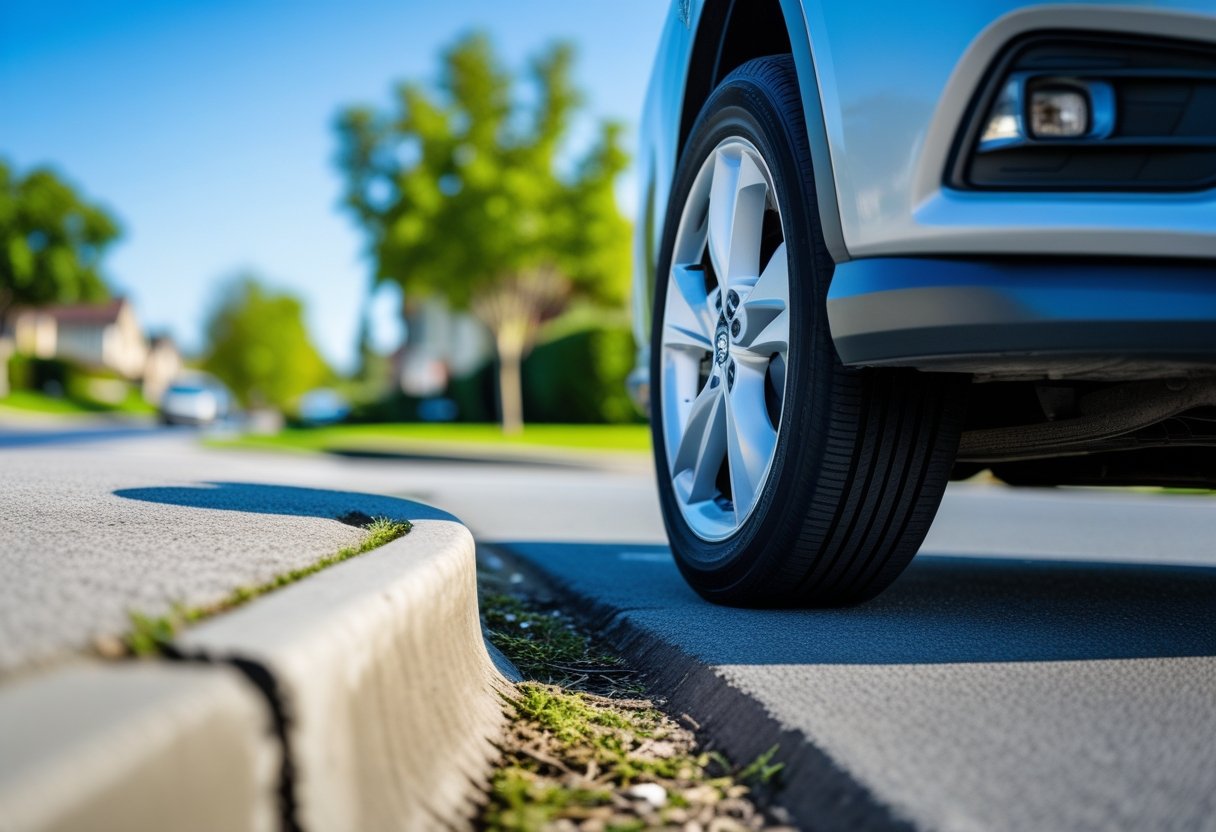
We understand how nerve-wracking this can be. Picture this: you’re carefully reversing around a corner, concentrating hard, and then you hear that dreaded scraping sound. Your heart sinks, thinking your test is over. But here’s what many learners don’t realise: examiners look at the bigger picture, not just isolated incidents.
The reality is more nuanced than most people think. Whether a kerb strike results in failure depends on factors like the force of impact, whether pedestrians were nearby, and how you handle the situation afterwards. We’ll walk you through exactly what examiners consider, the different types of faults, and most importantly, how to avoid this common mistake altogether.
Does Hitting the Kerb Mean You Fail Instantly?
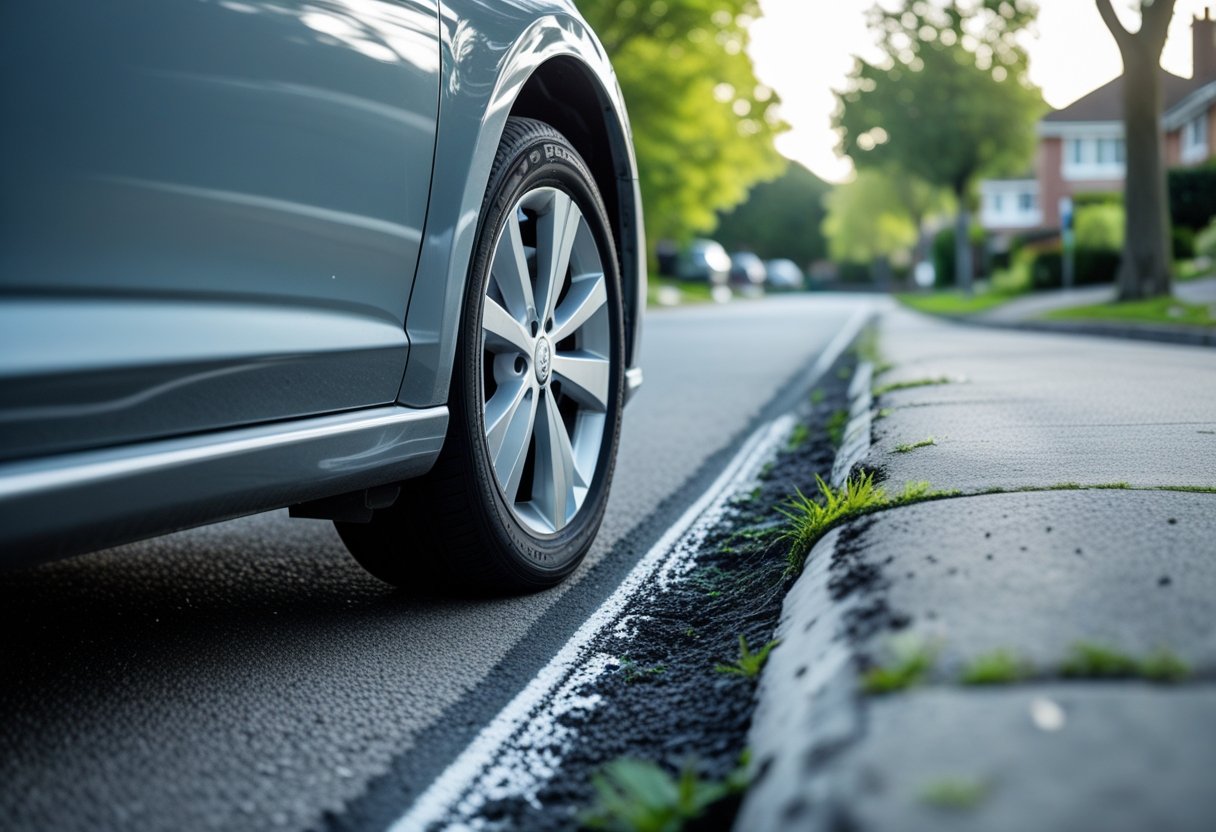
The short answer is no, hitting the kerb doesn’t automatically mean you’ve failed your driving test. What matters most is how you hit it and whether it creates any danger during your manoeuvre.
How Examiners Judge Kerb Strikes
Your driving examiner looks at kerb contact through the lens of vehicle control and safety. They’re asking themselves: “Does this show a lack of control that could be dangerous?”
A gentle brush against the kerb tells a different story than mounting it at speed. The examiner considers your overall handling of the situation.
Speed plays a huge role in their decision. If you’re reversing slowly and barely touch the kerb, that’s vastly different from hitting it hard during a three-point turn.
Context matters enormously too. Hitting the kerb with pedestrians nearby will likely result in a serious fault because you’ve created a potentially dangerous situation.
The examiner also watches how you react. Do you stop safely and regain control, or do you panic and make things worse?
Key factors examiners consider:
- Speed of impact
- Proximity to pedestrians
- Your reaction and recovery
- Whether you mount the kerb or just touch it
- Overall control throughout the manoeuvre
When It Counts as a Minor Fault
A simple touch or clip of the kerb during manoeuvres like turning in the road typically gets marked as a minor fault. This won’t fail you instantly.
Light contact that doesn’t compromise safety usually falls into this category. Think of gently brushing the kerb while parallel parking on a quiet street.
You can receive up to 15 minor faults and still pass your test. However, three identical minor faults often get upgraded to a serious fault.
The examiner views minor kerb contact as a skill you’re still developing rather than a safety concern. We all touch kerbs occasionally, even experienced drivers.
What makes it minor:
- Gentle contact with no mounting
- No pedestrians at risk
- You maintain overall control
- Speed remains appropriate
- Quick recovery without panic
Your confidence after minor contact can actually work in your favour. Stay calm, continue the manoeuvre safely, and don’t let it shake your concentration.
When It Becomes Serious or Dangerous
Mounting the kerb or hitting it hard will result in a serious fault or dangerous fault, meaning instant failure. These situations show significant loss of vehicle control.
Going up onto the kerb at any speed demonstrates you’ve lost proper control of your car. This could easily translate to hitting other obstacles or people.
Hitting the kerb when pedestrians are nearby creates immediate danger. You might frighten someone or cause them to stumble into the road.
Automatic fail scenarios:
- Mounting the kerb completely
- High-speed kerb strikes
- Driving on the verge during manoeuvres
- Stopping with wheels on the kerb
- Creating danger for pedestrians
If you drive onto a raised kerb and damage your tyres or wheels, that’s definitely serious fault territory. The examiner sees this as poor judgement and control.
The key difference is danger. Minor contact poses little risk, but mounting kerbs suggests you might hit more serious obstacles like other vehicles or people.
Common Scenarios Where Learners Hit the Kerb
Most kerb incidents happen during specific manoeuvres where space feels tight and precision matters most. These situations typically involve parking exercises and junction work where you’re managing multiple tasks at once.
Parallel Parking Challenges
Parallel parking creates the perfect storm for kerb contact. You’re reversing into a tight space while juggling steering, reference points, and spatial awareness.
The rear wheel trap catches many learners. As you reverse and turn the steering wheel, your back wheel swings wide before tucking into the space. This creates a moment where the kerb seems closer than it actually is.
Most incidents happen when you:
- Turn the steering wheel too early in the manoeuvre
- Misjudge the distance between your car and the kerb
- Panic and overcorrect your steering position
- Focus too much on the car in front rather than kerb distance
Reference points save the day here. Find a spot on your passenger mirror where the kerb appears when you’re the right distance away. Practice this reference point until it becomes second nature.
The key is staying calm when things don’t go perfectly. Small adjustments work better than dramatic steering changes that often make kerb contact more likely.
Parking on the Left Side
Reverse parking on the left presents unique challenges because you’re working on your passenger side. Many learners struggle with judging distances on this side of the car.
Your passenger mirror becomes crucial during this manoeuvre. You need to see the kerb clearly without getting too close. The trick is positioning your car properly before you start reversing.
Common mistakes include:
- Starting the manoeuvre from the wrong position
- Not using reference points consistently
- Rushing through the exercise
- Forgetting to check your nearside mirror regularly
Practice your reference points until you can trust them completely. When your passenger mirror shows the kerb at your practiced reference point, you’ll know you’re safe.
Remember that slight kerb contact during parking manoeuvres often counts as a minor fault, not an automatic fail. Stay focused and complete the manoeuvre smoothly.
Turning and Emerging from a Junction
Junction work creates kerb contact when you’re managing multiple priorities. You’re watching for traffic, checking mirrors, and controlling your car’s position simultaneously.
Left turns cause most problems. Your front wheel tracks inside your rear wheel, so cutting the corner too tightly brings your rear wheel close to the kerb.
Watch out for these situations:
- Sharp left turns where the road curves tightly
- Narrow side roads with less room for error
- Busy junctions where traffic pressure makes you rush
- Uphill turns where clutch control adds complexity
The solution lies in your road positioning. Take a slightly wider line before turning left. This gives your rear wheels more clearance as they follow the tighter path.
Don’t let other traffic pressure you into cutting corners. A smooth, safe turn impresses examiners more than a rushed manoeuvre that risks kerb contact.
Fault Types: Understanding Minor, Serious, and Dangerous
UK driving tests categorise mistakes into three distinct fault types: minor (driving faults), serious faults, and dangerous faults. While you can accumulate up to 15 minor faults and still pass, just one serious or dangerous fault will result in an instant test failure.
Examples of Minor Faults on the Test
Minor faults are small mistakes that don’t put anyone in danger. We see these happen all the time, and they’re completely normal during a driving test.
Common minor faults include:
- Slightly late mirror checks
- Minor hesitation at roundabouts
- Being a bit too close to parked cars
- Small steering adjustments
- Gentle contact with the kerb during manoeuvres
When it comes to kerb contact, a light touch during parallel parking usually counts as a minor fault. The key word here is “light” – we’re talking about barely brushing the kerb, not hitting it with force.
You might also get a minor fault for positioning errors when driving slightly too close to the kerb. This typically happens when you’re still getting used to judging distances.
The good news? You can make up to 15 of these mistakes and still pass your test. That takes some pressure off, doesn’t it?
What Makes a Fault Serious or Dangerous
Serious and dangerous faults are the big ones that lead to instant failure. The difference lies in the level of risk involved.
A serious fault happens when your actions could have caused danger but didn’t actually put anyone at immediate risk. Think of it as a “near miss” situation.
Kerb-related serious faults might include:
- Mounting the kerb during a turn
- Hitting the kerb hard enough to jolt the car
- Persistently driving too close to the kerb
- Putting pedestrians at potential risk
A dangerous fault is even more severe. This occurs when your actions create actual danger to yourself, your examiner, other road users, or property.
Examples of dangerous kerb contact:
- Mounting the kerb where pedestrians are walking
- Losing control after hitting the kerb
- Creating a hazardous situation for other vehicles
The examiner uses their professional judgement to decide which category your mistake falls into. They consider the context, the potential consequences, and how well you recovered from the situation.
How Many Faults Lead to Failure
The fault system is actually quite straightforward once you understand the numbers.
For minor faults:
- 0-15 faults: You can still pass
- 16 or more faults: Automatic failure
For serious or dangerous faults:
- Just one fault of either type means instant failure
Here’s something important to remember: even if you make a serious fault early in your test, you’ll still continue through all the manoeuvres. You won’t find out the result until the very end.
Multiple minor faults in the same area can sometimes be upgraded to a serious fault. For example, if you consistently drive too close to the kerb throughout your test, the examiner might decide this shows a serious lack of control.
We always tell our learners not to panic if they think they’ve made a mistake. What feels like a major error to you might just be a minor fault to the examiner. Stay focused, keep driving safely, and give yourself the best chance of success on the rest of your test.
How Examiners Decide: Human Judgement on Test Day
When you clip that kerb during your test, your driving examiner won’t just tick a box on their clipboard. They’ll consider the whole picture: how it happened, your reaction, and whether you maintained proper car control throughout.
Dealing with Different Examiner Perspectives
Every driving examiner brings their own experience and judgement to your test. What one considers a minor slip-up, another might view more seriously.
Some examiners focus on the severity of kerb contact. A gentle scrape whilst parallel parking often gets marked as a minor fault. However, a harsh thump that jolts the car could signal poor vehicle control.
The context matters enormously. If you nudge the kerb during a three-point turn but quickly adjust, many examiners see this as normal learning behaviour. Yet hitting the kerb at speed during a corner raises serious safety concerns.
Your examiner also watches for patterns. One kerb touch might be nerves, but repeated contact suggests you’re struggling with spatial awareness. They’re trained to spot the difference between an isolated mistake and a genuine control issue.
Regional differences exist too. Urban test centres often see more kerb incidents, so examiners might be slightly more lenient. Rural areas with wider roads could view kerb contact as more unusual.
Remember, examiners want you to pass. They’re not looking for reasons to fail you, but they must ensure you can drive safely on your own.
Demonstrating Car Control and Self-Awareness
Your response to kerb contact tells your examiner volumes about your car control and awareness. The moment after you touch the kerb becomes crucial for your test outcome.
Good drivers immediately recognise their mistakes. If you feel the kerb contact, acknowledge it internally and make smooth corrections. Jerky movements or panic reactions worry examiners more than the original error.
Spatial awareness plays a huge role here. Can you judge distances accurately? Do you understand where your car sits in relation to the road? These skills matter far more than one minor kerb brush.
Your examiner watches how you recover. Smooth steering adjustments and maintained speed show confidence. Wild overcorrections or sudden braking suggest you’re not fully in control of the vehicle.
Mirror usage becomes vital during manoeuvres. Regular checks demonstrate you’re monitoring your position actively. Examiners notice candidates who rely purely on guesswork versus those using all available references.
The severity of contact makes a difference. Gentle contact that doesn’t affect your car’s path often stays as a minor fault. Heavy impacts that bounce your tyres or jolt passengers cross into serious territory.
Responding After a Mistake
How you handle yourself after kerb contact can actually strengthen your test performance. Your examiner wants to see maturity and learning, not perfection.
Stay calm and continue driving normally. Don’t apologise or draw attention to the mistake. Your examiner has already noted it, and dwelling on errors often leads to more problems.
Focus on the next manoeuvre rather than replaying what just happened. Confident drivers move forward mentally. This resilience impresses examiners and shows you won’t be rattled by minor setbacks on real roads.
Make subtle improvements to your positioning. If you hit the kerb during parallel parking, ensure your final position is spot-on. This demonstrates you learn from immediate feedback.
Keep following instructions precisely. Some candidates become flustered after mistakes and start second-guessing everything. Trust your training and continue as normal.
Your body language speaks volumes too. Tense shoulders and white knuckles suggest you’re struggling mentally. Relaxed posture shows you’re handling the pressure well.
Most importantly, don’t let one kerb touch convince you that you’ve failed. Many successful candidates have minor faults on their record. Your driving test isn’t about perfection; it’s about proving you can drive safely and responsibly.
Practical Strategies to Avoid Hitting the Kerb
Learning to judge distance from the kerb takes practice, but with the right techniques and reference points, you’ll develop the confidence and precision needed to navigate close to kerbs safely. We’ll explore proven methods for building your parking skills, finding reliable visual markers, and mastering the art of proper road positioning.
Building Parking and Manoeuvre Confidence
Regular practice in controlled environments is your best friend when it comes to mastering kerb awareness. We recommend starting in quiet car parks where you can practice parallel parking without the pressure of traffic or time constraints.
Focus on these key areas during your driving lessons:
- Slow speed control: Master your clutch work to crawl at walking pace
- Smooth steering inputs: Avoid jerky movements that throw off your positioning
- Mirror discipline: Check your nearside mirror frequently during manoeuvres
Set up practice cones or markers to simulate kerbs when you’re learning. This removes the fear of actual damage whilst you’re getting comfortable with distances. Your instructor can guide you through the exact clutch and steering coordination needed.
Car control fundamentals make all the difference. When you can hold the car steady at very slow speeds, you have time to make small adjustments. This prevents the rushed corrections that often lead to kerb contact.
Practice the same manoeuvres repeatedly until they become second nature. Muscle memory develops through repetition, and soon you’ll find yourself naturally stopping at the right distance from the kerb.
Reference Points to Stay Well Positioned
Visual reference points are game-changers for accurate positioning. We teach our learners to use consistent markers on their windscreen and bonnet to judge distance.
The windscreen wiper method works brilliantly for most cars. Line up your nearside windscreen wiper with the kerb edge. When the kerb disappears beneath this point, you’re typically about 30cm away from the kerb.
Some instructors place small stickers on the windscreen as reference markers. These create clear visual guides that work consistently across different parking scenarios.
Your wing mirrors tell you everything you need to know during reverse manoeuvres. When parallel parking, watch for the kerb to appear in your nearside mirror. The kerb should run parallel to your car’s body line.
Dashboard reference points vary between vehicles, but most drivers find success using the junction where the bonnet meets the windscreen. Practice finding your car’s specific reference points during lessons.
Door mirrors adjusted properly show you the rear wheels’ position relative to the kerb. This helps enormously during reverse bay parking and parallel parking manoeuvres.
Tips for Better Road Positioning
Approach angles make or break your kerb positioning. We always advise steering gently towards the kerb rather than making sharp turns. Steep angles lead to either kerb strikes or difficulty straightening up afterwards.
The two-stage approach works wonders for nervous drivers. First, get roughly parallel to the kerb, then make fine adjustments. This prevents the panicked over-corrections that catch many learners out.
Speed is absolutely crucial for good road positioning. The faster you approach, the less time you have to judge distance and make corrections. Keep it slow and steady.
Use your peripheral vision alongside direct observation. Your brain naturally processes spatial relationships when you’re not staring directly at the kerb. Trust your instincts whilst using your reference points.
Practice the “feel” of good positioning by noting how the steering wheel sits when you’re correctly positioned. Most cars need slight left lock when driving parallel to a kerb on your nearside.
Remember that different cars have varying dimensions and reference points. What works in your instructor’s car might need adjusting when you drive different vehicles.
Growing Your Skills: What to Do If You Hit the Kerb
Hitting the kerb doesn’t have to derail your entire driving exam, and there are smart ways to handle the situation if it happens. The key is staying composed and showing your driving examiner that you can learn from mistakes whilst maintaining control of the vehicle.
Addressing the Fault Calmly
When you touch or hit the kerb during your driving test, your first instinct might be to panic or apologise profusely. Don’t do either of these things.
Stay focused on the road ahead and continue driving safely. The driving examiner has already noted what happened, so drawing more attention to it won’t help your case.
Take a deep breath and keep your hands steady on the wheel. If you’re in the middle of a manoeuvre, complete it as smoothly as possible.
Don’t immediately try to correct by jerking the steering wheel or making sudden movements. These reactions often look worse to examiners than the original kerb contact.
If you’re parking next to the kerb and you’ve gone up onto it slightly, gently reverse and reposition your car. Make sure you check your mirrors and surroundings properly whilst doing this.
Remember that many learners have hit the kerb and still passed their driving test. Your examiner is looking at your overall driving ability, not just one mistake.
Learning and Adapting During Your Test
The moments after hitting the kerb are crucial for showing your examiner that you’re a thoughtful driver who can adapt.
Adjust your reference points if you realise they weren’t working properly. Many driving lessons teach you to use the windscreen wipers or bonnet edge to judge kerb distance.
Pay extra attention to your door mirrors when approaching kerbs for the rest of your test. A quick glance can help you judge whether you’re getting too close.
Slow down slightly when manoeuvring near kerbs if you feel uncertain about your positioning. It’s better to be cautious than to hit the kerb again.
If you’re struggling with depth perception, sit up straighter in your seat. This small adjustment can improve your view of the road and kerb positioning significantly.
During the remainder of your driving exam, demonstrate that you’ve learnt from the mistake by parking more carefully and taking extra care during turns.
Using Practice to Boost Your Confidence
Building confidence around kerbs requires specific practice techniques that you can work on during your driving lessons.
Set up regular practice sessions in quiet car parks where you can work on stopping next to painted lines. This helps you develop better spatial awareness without the pressure of traffic.
Ask your driving instructor to place cones or markers at different distances from kerbs. Practice stopping at exactly one foot away, which is the ideal distance for most situations.
Work on different types of kerbs during your lessons. Some are raised, others are flush with the road surface, and each requires slightly different techniques.
Practice the most challenging manoeuvres repeatedly. Reverse parking, three-point turns, and parallel parking are where most kerb contact happens during driving tests.
Use empty roads to practice turning left around sharp corners. This is where your rear wheels are most likely to catch the kerb if you cut the corner too tightly.
Consider booking extra driving lessons specifically focused on kerb work if this is your main weakness. Many instructors offer targeted sessions for specific skills.
Frequently Asked Questions
These common questions address the practical concerns most learner drivers have about kerb contact, from understanding examiner reactions to knowing when you can still pass after a minor bump.
What manoeuvres might I have to redo if I brush the kerb during a driving test?
We find that examiners rarely ask you to repeat a manoeuvre simply because you’ve brushed the kerb. Most examiners will let you continue with the test after noting the contact as either a minor or major fault.
However, if you’ve mounted the kerb significantly or created a dangerous situation, the examiner might ask you to reposition your vehicle safely. This typically happens during parking manoeuvres or three-point turns where proper positioning matters for safety.
The key thing we’ve noticed is that examiners focus more on your overall control and safety awareness. If you handle the situation calmly and show good judgement, they’re usually happy for you to carry on.
Can a minor bump against the kerb still let me pass my driving assessment?
Absolutely! A gentle touch or light brush against the kerb typically counts as a minor fault, not an automatic failure. You can accumulate up to 15 minor faults and still pass your test successfully.
We’ve seen many students pass despite light kerb contact during manoeuvres like turning in the road or parallel parking. The examiner looks at the severity and context of the contact when making their decision.
What matters most is that you maintain control of the vehicle and don’t create any danger to pedestrians or other road users. A small bump that doesn’t affect your driving ability usually won’t derail your chances of success.
How can I recover from a slight kerb touch without letting it throw off my entire test?
Take a deep breath and stay focused on the task ahead. We always tell our students that dwelling on a minor mistake can lead to bigger problems later in the test.
Check your mirrors, ensure you’re in a safe position, and continue driving normally. Don’t overcompensate by steering too far away from the kerb, as this can create new hazards.
Keep your confidence up by reminding yourself that many successful candidates have passed despite minor kerb contact. The examiner wants to see that you can handle unexpected situations maturely and safely.
What are the examiner’s reactions to different types of kerb contact during the test?
Examiners assess kerb contact based on severity and safety impact rather than applying blanket rules. A gentle scrape during a tight manoeuvre might earn you a sympathetic understanding, especially if you handle it well.
We’ve observed that examiners become more concerned when kerb contact involves mounting the pavement, particularly near pedestrians. Hard impacts that could damage the vehicle or create danger typically result in major faults.
Different examiners may have slightly varying standards, but most focus on whether the contact demonstrates poor vehicle control or creates genuine safety risks. Your reaction and continued driving performance often influence their final assessment.
Are there tips to avoid clipping the kerb that could save my test from being unsuccessful?
Practice judging your vehicle’s position using reference points on your car bonnet or door mirrors. We recommend finding consistent visual markers that help you maintain proper distance from the kerb.
Take manoeuvres slowly and use your mirrors frequently to monitor your position. There’s no time pressure during most test manoeuvres, so use that to your advantage.
If you’re unsure about your positioning, it’s better to stop and readjust rather than risk kerb contact. Most examiners appreciate cautious, controlled driving over rushed attempts that end badly.
What aspects of kerb contact do driving examiners consider when deciding on a pass or failure?
Examiners evaluate the force of impact, whether you mounted the pavement, and if pedestrians were present nearby. Light contact during careful manoeuvres typically receives more lenient treatment than careless scrapes.
We know that context plays a huge role in their decision-making process. The same level of kerb contact might be viewed differently depending on traffic conditions, pedestrian presence, and your overall driving performance.
Your response to the incident also matters significantly. Examiners want to see that you recognise what happened, maintain control, and continue driving safely without becoming flustered or overcompensating.