

Is Hypnotherapy Effective for Driving Anxiety? Transforming Fear into Confidence
Many of us know that sinking feeling when we think about getting behind the wheel. Your heart starts racing, your palms get sweaty, and suddenly the idea of navigating busy roads feels overwhelming. If this sounds familiar, you’re certainly not alone in experiencing driving anxiety.

Yes, hypnotherapy is highly effective for driving anxiety, helping countless people overcome their fears and build genuine confidence on the road. This therapeutic approach works by accessing your subconscious mind to address the root causes of your anxiety, rather than just managing the surface symptoms. Whether you’re a nervous learner or someone who’s developed fears after years of driving, hypnotherapy offers a proven path forward.
We’ll explore exactly what driving anxiety looks like and why it affects so many people. You’ll discover how hypnotherapy actually works, what techniques therapists use, and how it compares to other treatment options. Most importantly, we’ll show you practical ways to integrate these methods into your daily life, helping you move from anxiety to confidence at your own pace.
Understanding Driving Anxiety
Driving anxiety affects millions of people across the UK, ranging from mild nervousness to overwhelming panic that prevents people from getting behind the wheel. The fear stems from various triggers and manifests through physical symptoms that can seriously impact daily life and independence.
Common Causes and Triggers
Previous traumatic experiences often lie at the heart of driving anxiety. A car accident, near-miss, or even witnessing a collision can create lasting fear associations with driving.
However, many people develop driving anxiety without any clear traumatic event. Gradual onset is actually more common than sudden fear development.
Specific driving situations frequently trigger anxiety responses:
- Busy motorways and dual carriageways
- Night-time driving with reduced visibility
- Roundabouts and complex junctions
- Heavy traffic or rush hour conditions
- Driving in unfamiliar areas
Underlying anxiety disorders can also contribute to driving fears. People with generalised anxiety or panic disorder may find these feelings intensify when driving.
Social pressures play a role too. Fear of making mistakes in front of other drivers or causing accidents can create a cycle of worry that makes driving feel overwhelming.
Recognising the Symptoms
Physical symptoms of driving anxiety mirror those of other phobias and can be quite intense. Racing heart and sweaty palms are amongst the most common early signs.
Many people experience trembling hands, making it difficult to grip the steering wheel properly. Nausea and dizziness can also occur, particularly when thinking about challenging driving scenarios.
Breathing difficulties range from mild shortness of breath to full hyperventilation during panic episodes. These symptoms often worsen the anxiety cycle.
Behavioural symptoms include avoiding certain routes, declining social invitations that require driving, or completely stopping driving altogether. Some people develop elaborate avoidance strategies to prevent facing their fears.
Mental symptoms involve racing thoughts about potential accidents, catastrophic thinking about worst-case scenarios, and persistent worry about driving competence.
These symptoms can appear just thinking about driving, not only when actually behind the wheel.
The Emotional and Practical Impact
The fear of driving extends far beyond simple transport concerns. Loss of independence often hits hardest, particularly for people who previously enjoyed the freedom of driving.
Career opportunities may become limited when job requirements include travel or commuting to different locations. This can create additional stress about professional development.
Social relationships frequently suffer as people decline invitations or rely heavily on others for transport. The guilt and embarrassment around this dependency can be overwhelming.
Daily tasks like grocery shopping, medical appointments, or school runs become complicated logistics exercises. What should be simple errands turn into major planning challenges.
Self-confidence takes a significant knock. Many people feel frustrated with themselves, wondering why they can’t simply “get over” their fears through willpower alone.
Family dynamics can shift when one person’s driving anxiety affects household routines and responsibilities. Partners or family members may need to take on additional driving duties, which can create tension and resentment over time.
What Is Hypnotherapy and How Does It Help?
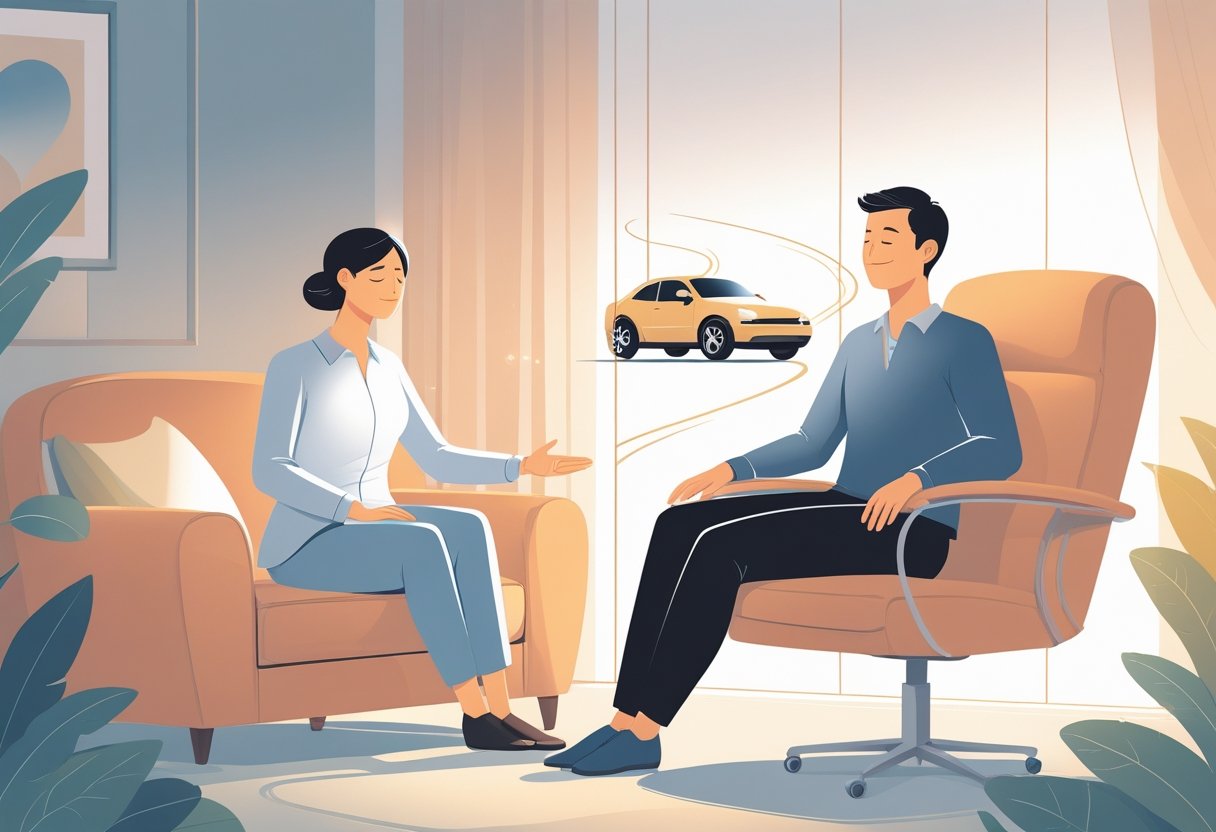
Hypnotherapy works by guiding you into a deeply relaxed state where your mind becomes more open to positive suggestions and new ways of thinking. This natural approach helps tackle the root causes of driving anxiety rather than just masking the symptoms.
Demystifying Hypnotherapy
Let’s clear up the myths straight away. Hypnotherapy isn’t about pocket watches or stage performances where you cluck like a chicken.
Real hypnotherapy is actually quite ordinary. It’s similar to that peaceful feeling you get when you’re completely absorbed in a good book or daydreaming during a long car journey.
During a session, you remain completely aware and in control. You can open your eyes or speak whenever you need to. We simply help guide you into this naturally calm state that you already experience every day.
Think of it as focused relaxation with a purpose. Your conscious mind, which normally chatters away with worries about stalling at traffic lights or forgetting to check mirrors, gets to take a break.
This allows us to work directly with your subconscious mind. That’s where your automatic responses to driving situations are stored. It’s also where we can plant new, more helpful patterns of thinking.
For driving anxiety specifically, hypnotherapy helps by:
- Reducing physical tension whilst behind the wheel
- Building confidence in your driving abilities
- Creating calm responses to challenging situations
- Replacing fearful thoughts with practical focus
The Science Behind Hypnotherapy for Anxieties
Research shows that hypnotherapy genuinely changes how your brain responds to stressful situations. When you’re anxious about driving, your nervous system goes into fight-or-flight mode.
Your body doesn’t distinguish between facing a tiger and approaching a roundabout. The same stress hormones flood your system either way.
Hypnotherapy works by teaching your nervous system to respond differently. During sessions, we help reset these automatic reactions through deep relaxation and positive mental rehearsal.
Studies have found that regular hypnotherapy can:
- Lower cortisol (stress hormone) levels
- Reduce physical anxiety symptoms like rapid heartbeat
- Improve emotional regulation during challenging moments
- Strengthen neural pathways linked to confidence
The brilliant thing about hypnotherapy for driving anxiety is that we can practise difficult scenarios in your mind first. Your brain actually treats these mental rehearsals as real experiences.
This means you can “drive” through busy city centres or navigate tricky junctions whilst feeling completely safe and relaxed. Your subconscious mind stores these positive experiences as memories.
When you encounter these situations in real life, your brain recalls the calm, confident version rather than the anxious one.
Why Hypnotherapy Works Where Logic Fails
You probably already know that driving is statistically safer than walking down stairs. Yet this logical knowledge doesn’t stop your palms from sweating when you approach a dual carriageway.
That’s because anxiety lives in your emotional brain, not your logical one. Trying to think your way out of driving fears is like trying to convince your heart not to beat faster during a horror film.
Hypnotherapy bypasses this problem entirely. Instead of arguing with your anxious thoughts, we work directly with the part of your mind that creates them.
During hypnotherapy sessions, we can:
- Access and modify the emotional memories causing your fear
- Install new automatic responses to driving challenges
- Build inner resources you can tap into whilst driving
- Create positive associations with being behind the wheel
Think of your logical mind as the driver, and your emotional mind as the engine. Logic can plan the route, but emotions provide the power to actually make the journey.
Hypnotherapy for driving anxiety ensures both parts work together smoothly. You’ll still use your practical driving knowledge, but without the emotional interference that creates panic or overwhelm.
Many of our clients describe feeling like they’ve “remembered” how to feel calm whilst driving. The confidence was always there, just buried under layers of worry and self-doubt.
The Effectiveness of Hypnotherapy for Driving Anxiety
Hypnotherapy works by rewiring the subconscious patterns that fuel driving fears whilst building new, confident associations with being behind the wheel. We’ve seen remarkable transformations in people who thought they’d never overcome their driving worries.
Addressing Subconscious Fears and Emotions
Most driving anxiety lives deep in our subconscious mind, where logic can’t reach it. This explains why knowing you’re a capable person doesn’t automatically make the fear disappear.
Hypnotherapy sessions target these hidden fears directly. During a relaxed state, we can access the part of your mind where anxiety takes root. Many fears stem from past experiences or learned responses that happened without you realising.
Common subconscious triggers include:
- Fear of losing control
- Worry about harming others
- Panic about being judged
- Memories of stressful driving moments
The process helps reframe these deep-seated worries. Instead of your mind automatically jumping to worst-case scenarios, hypnotherapy creates new neural pathways. These fresh connections promote calm, rational thinking when you’re driving.
We often discover that driving anxiety connects to broader fears about independence or responsibility. Hypnotherapy gently addresses these underlying emotions, creating lasting change from the inside out.
Building Confidence and Positive Associations
Overcoming driving anxiety requires replacing fearful thoughts with confident ones. Hypnotherapy excels at this transformation by creating vivid, positive mental rehearsals.
During sessions, we guide you through successful driving experiences in your mind. Your brain processes these imagined scenarios as real practice. This mental rehearsal builds genuine confidence before you even start the engine.
Key confidence-building techniques include:
- Visualising smooth, calm journeys
- Practising emergency responses mentally
- Creating positive anchors for stressful moments
- Building self-efficacy through guided imagery
The relaxed state of hypnosis makes your mind more receptive to positive suggestions. We help you develop a new identity as a capable, confident driver. These suggestions become part of your natural thought patterns.
Many people find that hypnotherapy doesn’t just improve their driving anxiety. The confidence and coping skills often transfer to other areas of life, creating broader benefits beyond the car.
Success Stories and Outcomes
Real results speak louder than theories. People who’ve struggled with severe driving anxiety for years often find relief through hypnotherapy within just a few sessions.
Research published in clinical psychology journals shows significant reductions in driving anxiety after hypnosis treatment. Participants reported feeling calmer, more in control, and genuinely excited about driving again.
Typical improvements we see include:
- Reduced physical symptoms (sweating, racing heart)
- Better sleep before driving lessons or tests
- Increased willingness to practice independently
- Greater enjoyment of the learning process
One particularly encouraging aspect is the long-lasting nature of these changes. Unlike temporary fixes, hypnotherapy creates fundamental shifts in how your mind approaches driving.
Success often builds momentum. As people experience small victories behind the wheel, their confidence grows naturally. The positive cycle continues, with each successful journey reinforcing their new, calm relationship with driving.
Many report feeling surprised by how quickly their perspective changed. What once felt impossible becomes achievable, then enjoyable.
Practical Techniques Used in Hypnotherapy
Hypnotherapists use several proven methods to help drivers overcome their anxiety. These techniques work by calming the nervous system, retraining the mind’s response to driving situations, and building lasting confidence behind the wheel.
Progressive Muscle Relaxation
Progressive muscle relaxation forms the foundation of many hypnotherapy sessions for driving anxiety. We guide clients through systematically tensing and releasing different muscle groups throughout their body.
This technique works brilliantly because driving anxiety often creates physical tension. Your shoulders might feel tight, your jaw clenched, or your hands gripping the steering wheel too hard.
The process typically follows these steps:
- Start with your toes and work upwards
- Tense each muscle group for 5-10 seconds
- Release the tension completely
- Notice the difference between tension and relaxation
During hypnotherapy, we teach you to recognise where anxiety lives in your body. Once you know your tension patterns, you can release them quickly whilst driving.
Many clients find this technique particularly helpful during driving lessons. They can use shortened versions at traffic lights or before starting the engine.
The beauty of progressive muscle relaxation is its simplicity. You don’t need special equipment or perfect conditions. Just a few minutes of focused breathing and muscle work can shift your entire state.
Visualisation and Guided Imagery
Visualisation lets us rehearse successful driving experiences in your mind before you face them on the road. We create detailed mental movies where you’re calm, confident, and in complete control.
During hypnotherapy sessions, we might guide you through a peaceful drive through your local area. You’ll imagine yourself checking mirrors smoothly, navigating roundabouts with ease, and parking confidently.
Common visualisation scenarios include:
- Successfully completing your driving test
- Handling challenging situations like motorway merging
- Driving in different weather conditions
- Parallel parking without stress
The subconscious mind can’t always tell the difference between a vividly imagined experience and reality. When you repeatedly visualise successful driving, your brain builds new neural pathways associated with confidence.
We often work backwards during visualisation. You’ll start by imagining yourself arriving safely at your destination, feeling proud and accomplished. Then we rewind through the entire journey, reinforcing positive associations.
This technique works especially well when combined with all your senses. You’ll hear the gentle hum of the engine, feel the steering wheel in your hands, and see familiar landmarks passing by.
Harnessing Self-Hypnosis
Self-hypnosis puts the power directly in your hands. We teach you simple techniques to induce a calm, focused state whenever driving anxiety starts to surface.
Learning self-hypnosis means you’re not dependent on appointments or external support. You can use these skills before driving lessons, during quiet moments in the car, or whenever anxiety begins to build.
Basic self-hypnosis typically involves:
- Finding a comfortable position
- Focusing on slow, deep breathing
- Using a simple countdown from 10 to 1
- Repeating positive driving affirmations
We often create personalised anchor techniques during sessions. You might press your thumb and forefinger together whilst in a deeply relaxed state. This physical anchor becomes linked to feelings of calm confidence.
Many learners use self-hypnosis recordings between sessions. These reinforcement tools help embed positive suggestions and maintain progress between appointments.
The goal isn’t to become dependent on self-hypnosis forever. Instead, we’re building your confidence and teaching your nervous system that driving can feel safe and natural.
Regular practice makes self-hypnosis more effective. Even five minutes daily can create significant shifts in how you approach driving situations.
Integrating Hypnotherapy with Everyday Strategies
Combining hypnotherapy with practical driving techniques creates a powerful approach to overcoming driving anxiety. We’ll explore how to blend therapeutic insights with real-world practice, navigate inevitable setbacks with resilience, and maintain your progress through consistent daily habits.
Blending Therapy with Driving Practice
The magic happens when we connect what you’ve learnt in hypnotherapy sessions with actual time behind the wheel. Your therapist has given you tools like relaxation techniques and positive visualisation. Now it’s time to put them to work.
Start small and build confidence gradually. Begin with familiar routes during quiet times of day. Before you even start the engine, spend two minutes using the breathing techniques from your sessions.
Practice your anchor phrases whilst stationary first. These are the calming words or phrases your hypnotherapist helped you develop. They work best when you’ve rehearsed them in a safe space.
Create a pre-driving routine that incorporates your therapeutic tools:
- Three deep breaths using your learned technique
- Repeat your confidence affirmations
- Visualise a successful, calm journey
- Adjust your posture to feel grounded
Keep a small notebook in your car to jot down wins, no matter how tiny. Did you feel calmer at traffic lights today? Write it down. These victories reinforce the positive patterns you’re building.
Managing Setbacks on the Road
Even with the best preparation, some drives will feel more challenging than others. We’ve all been there, and it doesn’t mean you’re failing.
When anxiety creeps in whilst driving, use your emergency toolkit. Pull over safely if needed and practice the grounding techniques from your sessions. Count five things you can see, four you can hear, three you can touch.
Setbacks often teach us more than smooth sailing ever could. Perhaps you felt overwhelmed on a busy roundabout. That’s valuable information, not a defeat.
Transform difficult moments into learning opportunities:
- Which specific situations triggered your anxiety?
- What thoughts were running through your mind?
- Which coping strategies helped most?
- What would you do differently next time?
Share these experiences with your hypnotherapist. They can help you develop targeted strategies for your specific challenges. Sometimes we need to adjust our approach, and that’s perfectly normal.
Remember that progress isn’t always linear. You might have three brilliant drives followed by one tricky one. That’s part of the journey, not evidence that hypnotherapy isn’t working.
Sustaining Progress in the Long Term
Building lasting confidence requires consistent practice beyond your formal therapy sessions. Think of it like learning to play piano – the real improvement happens through daily practice, not just weekly lessons.
Establish daily habits that reinforce your therapeutic work. Spend five minutes each morning visualising positive driving scenarios. Listen to your personalised relaxation recordings regularly, not just before difficult journeys.
Create a monthly driving challenge for yourself. This might be exploring a new route, driving at a slightly busier time, or tackling a junction that previously felt daunting. Small, planned challenges build genuine confidence.
Track your progress with specific measures:
| Month | Comfort Level (1-10) | New Routes Tried | Challenging Situations Handled |
|---|---|---|---|
| 1 | 4 | 2 | Busy car park |
| 2 | 6 | 4 | Rush hour traffic |
| 3 | 7 | 6 | Motorway slip road |
Build a support network of fellow drivers who understand your journey. Many driving instructors and therapists run support groups where you can share experiences and celebrate progress together.
Keep your hypnotherapy tools sharp by practicing them regularly, even when you feel confident. It’s easier to maintain good habits than to rebuild them after a difficult period.
Comparing Hypnotherapy to Other Approaches
When tackling driving anxiety, medication offers quick relief but comes with side effects and dependency concerns, whilst CBT provides structured thinking tools that work differently than hypnotherapy’s subconscious approach. Many people find the most success when combining hypnotherapy with other treatments rather than relying on a single method.
Medication and Its Limitations
Anti-anxiety medications like beta-blockers or benzodiazepines can provide immediate relief for driving anxiety symptoms. Your GP might prescribe propranolol to reduce physical symptoms like racing heart or sweating hands before driving lessons.
However, these medications don’t address the root cause of your driving fears. They simply mask the symptoms temporarily. Many people find themselves dependent on pills just to get behind the wheel.
Common medication limitations include:
- Drowsiness that affects driving ability
- Potential for dependency with long-term use
- Side effects like dizziness or confusion
- No lasting solution once you stop taking them
Hypnotherapy for driving anxiety works differently. We help you rewire the thought patterns causing your fear rather than just covering up the symptoms. This creates lasting change without the need for ongoing medication.
The beauty of hypnotherapy lies in teaching your mind new responses to driving situations. You’ll develop natural confidence that doesn’t require a pill bottle in your glove compartment.
Cognitive Behavioural Therapy Versus Hypnotherapy
CBT focuses on identifying negative thought patterns and replacing them with more realistic ones. Your therapist might ask you to challenge thoughts like “I’ll definitely crash” with evidence-based alternatives.
This conscious approach works well for many people. You’ll learn practical tools like breathing techniques and thought stopping. However, CBT requires significant homework and practice between sessions.
Research shows hypnotherapy offers comparable results to CBT with some key differences:
| CBT Approach | Hypnotherapy Approach |
|---|---|
| Conscious mind work | Subconscious reprogramming |
| Requires active homework | Changes happen during relaxed sessions |
| Takes 12-20 sessions typically | Often effective in 3-6 sessions |
| Focus on thinking differently | Focus on feeling differently |
Hypnotherapy for driving anxiety bypasses your conscious resistance. We can implant positive suggestions directly into your subconscious mind whilst you’re deeply relaxed. This often creates faster, more profound changes.
Many clients tell us they notice improvements after just one or two hypnotherapy sessions. The relaxed state allows your mind to accept new beliefs about driving more readily.
When to Consider Combining Treatments
Sometimes the most powerful approach involves combining hypnotherapy with other treatments. Research indicates that combining hypnotherapy with CBT can increase effectiveness significantly, with some studies showing enhanced results.
You might benefit from combined treatment if you have severe driving anxiety or past trauma related to vehicles. A phobia that developed after a car accident often responds well to multiple approaches working together.
Effective combination strategies include:
- Hypnotherapy sessions alongside CBT homework
- Using relaxation techniques from both approaches
- Addressing conscious thoughts (CBT) and subconscious patterns (hypnotherapy)
- Starting with hypnotherapy to reduce anxiety, then adding practical CBT skills
We often recommend this integrated approach for people who’ve tried one method alone without complete success. The combination addresses both your thinking patterns and your emotional responses to driving.
Some clients use short-term medication initially whilst building longer-term skills through hypnotherapy. This bridges the gap between needing immediate relief and developing lasting confidence behind the wheel.
Frequently Asked Questions
Hypnotherapy raises many questions for people struggling with driving fears. These range from practical techniques and the therapy process itself to finding qualified professionals and understanding how confidence develops through treatment.
What successful techniques are out there to help overcome nerves behind the wheel?
Hypnotherapy draws from several proven approaches that work together beautifully. We often combine cognitive behavioural therapy (CBT) techniques with neuro-linguistic programming (NLP) to tackle driving anxiety from multiple angles.
Solution-focused hypnotherapy stands out as particularly effective. This approach concentrates on your goals rather than dwelling on what’s going wrong.
EMDR (eye movement desensitisation and reprocessing) can be brilliant for those whose driving fears stem from accidents or traumatic experiences. It helps process these memories in a healthier way.
Many therapists also teach practical breathing techniques and grounding exercises. These give you real tools to use when you’re actually behind the wheel and feeling anxious.
Can you tell me how hypnotherapy unlocks the confidence to drive with assurance?
Hypnotherapy works by accessing your subconscious mind where driving fears often hide. In this deeply relaxed state, we can identify and challenge the root causes of your anxiety.
Your therapist helps reframe negative thought patterns about driving. Instead of “I’m going to crash,” your mind learns to think “I’m a capable, safe driver.”
The process builds new positive associations with driving. Rather than linking cars with danger, you develop connections between driving and freedom, independence, and confidence.
Hypnotherapy also addresses the physical symptoms of anxiety. Your body learns to stay calm and relaxed instead of flooding with adrenaline every time you approach a car.
Many people find their “road awareness” actually improves. You maintain healthy caution whilst shedding the overwhelming fear that once paralysed you.
Could you shed some light on the process of hypnotherapy and how it aids in mastering driving anxieties?
Sessions typically begin with a conversation about your specific fears and driving goals. Your therapist tailors the approach to your unique situation and comfort level.
During hypnosis, you’ll enter a deeply relaxed state. You remain fully aware and in control, but your mind becomes more open to positive suggestions and new perspectives.
Your therapist might guide you through visualising successful driving experiences. This mental rehearsal helps your brain create new neural pathways associated with confident driving.
Between sessions, you’ll often receive homework tasks. These might include listening to relaxation recordings or practising specific techniques whilst parked in your car.
The pace always matches your comfort level. Safety remains paramount, both in sessions and when you’re back on the road.
Most people notice improvements gradually. Your confidence builds session by session until driving feels natural again.
In what ways do individuals find renewed vigour for driving after a hypnotherapy session?
People often describe feeling surprisingly calm about driving after their first session. The overwhelming dread that once consumed them starts lifting almost immediately.
Many rediscover their love of driving’s freedom and independence. They remember why they wanted to drive in the first place, rather than focusing purely on fears.
Motorways become less terrifying. People who once took lengthy detours through country lanes find themselves confidently joining dual carriageways again.
The ripple effects extend beyond driving itself. Successfully conquering driving anxiety often boosts confidence in other life areas too.
Some people report feeling excited about road trips they’d previously avoided. Others simply enjoy the relief of normal, everyday journeys without panic attacks.
Physical symptoms improve dramatically. The racing heart, sweaty palms, and shallow breathing that once plagued every journey start disappearing.
What steps does one take to ensure they’re choosing a qualified hypnotherapist for dealing with driving jitters?
Start by checking professional registrations. Look for membership in recognised bodies like the General Hypnotherapy Register or British Society of Clinical Hypnosis.
Ask about their specific experience with driving anxiety. Not all hypnotherapists specialise in this area, so find someone who regularly helps people with driving fears.
Request information about their training and qualifications. A good therapist will happily share their credentials and explain their approach.
Consider whether they combine hypnotherapy with other techniques like CBT or NLP. This integrated approach often proves more effective for driving anxiety.
Book an initial consultation if possible. This lets you gauge whether you feel comfortable with their style and approach before committing to treatment.
Check reviews and testimonials from previous clients. Look specifically for feedback from people who’ve overcome driving anxiety through their help.
How do stories of triumph over driving fears through hypnotherapy inspire us?
Former professional drivers, including ex-police officers and racing drivers, have successfully overcome driving anxiety through hypnotherapy. This shows that even those with extensive driving experience can develop fears and recover completely.
Many people who’d given up driving entirely return to the roads with renewed confidence. They go from avoiding cars altogether to enjoying regular journeys again.
Some clients progress from taking circuitous routes through quiet lanes to confidently using motorways. Journey times that had tripled due to fear return to normal.
Parents who couldn’t drive their children to school or activities regain this independence. The relief and joy in these stories is genuinely moving.
People often achieve results faster than they expected. Some see improvements in just one to three sessions, though others need more time depending on their anxiety’s depth.
The long-term nature of these successes particularly inspires us. People don’t just get temporary relief, they develop lasting confidence that endures for years.