

Is It Okay to Ask for Clarification During Independent Driving? Essential Guidance for Learner Drivers
Many learner drivers worry about speaking up during the independent driving portion of their test, wondering if asking questions might hurt their chances of passing. The truth is, this 20-minute section can feel intimidating when you’re following sat nav directions or road signs with less guidance from your examiner.

Yes, you absolutely can ask for clarification during independent driving, and doing so shows good judgement rather than weakness. Your examiner understands that real-world driving sometimes requires seeking confirmation, especially when directions seem unclear or you’re unsure about lane positioning. This part of your test isn’t about testing your navigation skills, it’s about demonstrating safe, independent decision-making.
We’ll explore exactly when and how to communicate effectively during this crucial test section, helping you understand the difference between appropriate questions and unnecessary chatter. You’ll discover practical strategies for handling challenging situations, from confusing roundabouts to missed directions, whilst maintaining the confidence and composure that examiners look for in safe, competent drivers.
Understanding Independent Driving in the Practical Test
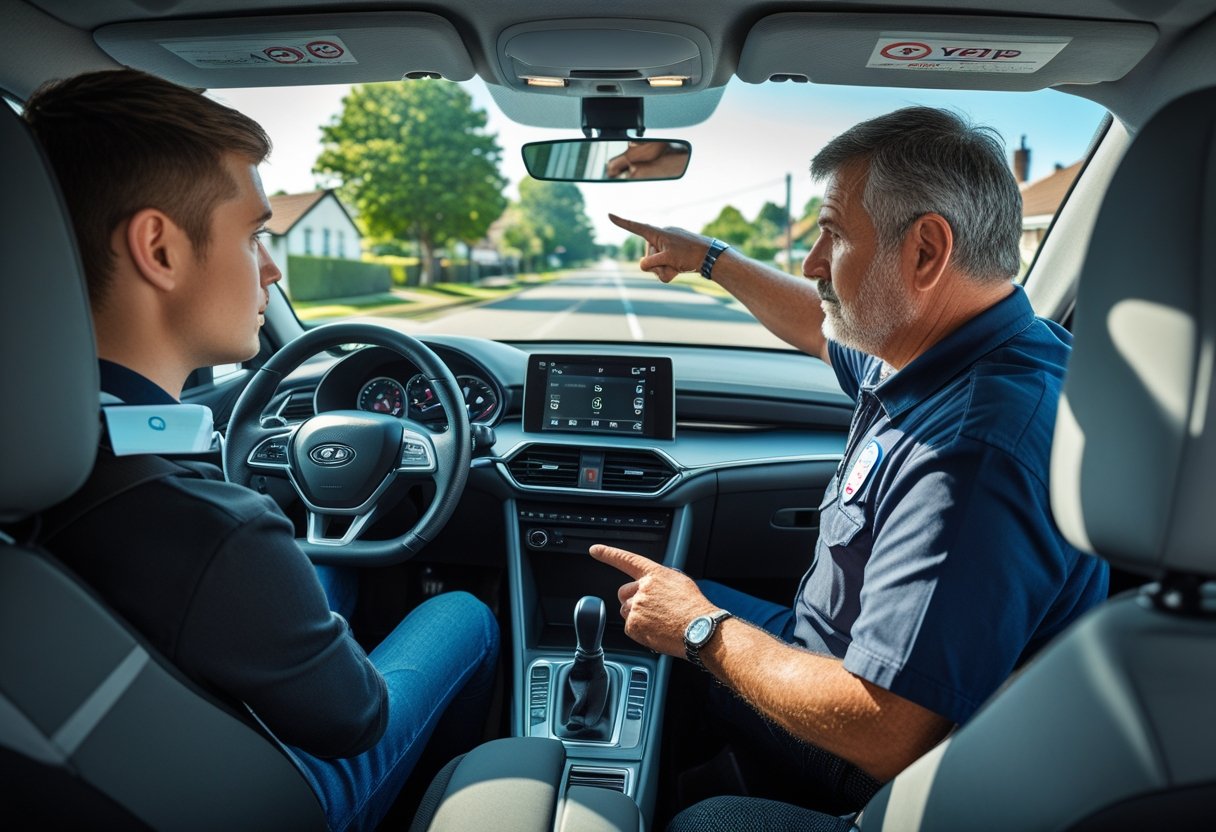
Independent driving forms a crucial part of your practical driving test, lasting 20 minutes and representing nearly half of your entire assessment. The DVSA uses this segment to evaluate whether you can drive safely without constant guidance, either by following sat nav directions or reading traffic signs.
What Is Independent Driving?
Independent driving is your chance to demonstrate that you can make safe driving decisions on your own. During this 20-minute section, you’ll navigate to a specific destination without the examiner giving you turn-by-turn instructions.
Most learners will use a TomTom Start 52 sat nav that the examiner provides. However, one in five candidates will follow traffic signs instead. You won’t know which method you’ll use until the test day.
The examiner will ask you to pull over safely before this section begins. They’ll then explain the route and set up the equipment if needed.
What you’re being tested on:
- Safe decision-making without guidance
- Ability to follow directions whilst maintaining road awareness
- Proper use of mirrors, signals, positioning, speed, and observation (MSPSL)
- Confidence in real-world driving situations
This isn’t about perfect navigation skills. We want you to focus on driving safely rather than worrying about taking a wrong turn.
Evolution of the Independent Driving Segment
The independent driving test has evolved significantly since its introduction in October 2010. Originally, this section lasted just 10 minutes and relied mainly on following traffic signs to reach destinations.
In December 2017, the DVSA made substantial changes. The duration doubled to 20 minutes, making it a much more significant portion of your practical test.
Key changes introduced:
- Extended from 10 to 20 minutes
- Sat nav technology became the primary method
- Traffic sign following reduced to 20% of tests
- Greater emphasis on real-world driving skills
These updates reflect how modern drivers actually navigate. Most of us use sat navs daily, so it makes sense that the test mirrors this reality.
The changes also better assess your ability to drive independently once you pass. Twenty minutes gives examiners a clearer picture of your genuine driving capabilities.
How the DVSA Assesses Independent Driving
The DVSA evaluates your performance during independent driving using the same marking criteria as the rest of your test. You won’t face any special penalties or different standards during this section.
Assessment focuses on:
- Safety first: Maintaining safe driving throughout the route
- Decision-making: Choosing appropriate actions without examiner input
- Hazard awareness: Spotting and responding to potential dangers
- Following procedures: Using MSPSL routine consistently
You won’t lose marks for taking a wrong turn or asking for clarification. The examiner will simply guide you back to the correct route if needed.
What examiners look for:
- Smooth lane changes when safe to do so
- Appropriate speed for road conditions
- Clear signalling with proper timing
- Confident but cautious approach to junctions
Remember, if you’re unsure about directions, asking the examiner for confirmation shows good judgement. They’d rather see you clarify instructions than make unsafe manoeuvres whilst confused.
The key is demonstrating that you can drive safely and responsibly when you’re on your own after passing your test.
Can You Ask for Clarification During Independent Driving?
You absolutely can ask for clarification during the independent driving section of your practical driving test. The DVSA encourages this when you’re genuinely unsure about directions, and it won’t negatively impact your test result.
Examiner Guidance and Boundaries
Your driving examiner is there to help with directions, but they won’t make driving decisions for you. We know this distinction can feel confusing at first.
What examiners will do:
- Repeat directions if you didn’t hear them clearly
- Clarify which road or turning they meant
- Explain the destination again if needed
- Set up and adjust the sat nav for visibility and volume
What examiners won’t do:
- Tell you which lane to be in at roundabouts
- Confirm if you’re in the correct lane
- Make safety decisions for you
- Provide constant guidance like an instructor would
The examiner uses a standard TomTom Start 52 sat nav during your test. You don’t need to bring your own device. If you can’t see the screen properly or need the volume adjusted, just ask.
Remember, the independent driving section tests your ability to make safe decisions without constant direction. This includes knowing when it’s appropriate to seek clarification about your route.
When and How to Request Clarification
Timing and approach matter when asking for help during your driving test. We recommend being proactive rather than waiting until you’re completely lost.
Good times to ask:
- Immediately after receiving directions if something wasn’t clear
- When approaching complex junctions and you’re unsure which way to go
- If the sat nav gives confusing instructions
- Before making a potentially incorrect turn
How to ask effectively:
- Speak clearly and calmly: “Could you repeat those directions please?”
- Be specific: “Which exit did you mean at the roundabout?”
- Ask early: “I’m not sure which road you meant, could you clarify?”
If you realise you’re heading the wrong way, you can pull over safely to get your bearings. Just let the examiner know what you’re doing: “I’m going to pull over here to check the directions.”
Don’t panic if you take a wrong turn. It’s completely acceptable as long as you do it safely. The key is maintaining good driving standards throughout.
The Impact on Your Driving Test Result
Asking for clarification will not cost you marks on your practical driving test. The DVSA makes this very clear in their guidance to examiners.
The independent driving section isn’t testing your navigation skills. We often see learners worry unnecessarily about this. What matters is how safely you drive, not whether you know every street in the area.
What won’t affect your result:
- Taking wrong turns (as long as done safely)
- Getting lost during the 20-minute section
- Asking for directions multiple times
- Needing to pull over to check your route
What will affect your result:
- Dangerous lane changes when you realise you’re in the wrong position
- Sudden braking or accelerating due to confusion
- Not checking mirrors and blind spots properly
- Ignoring traffic signs while focusing on directions
The examiner is looking for safe, independent decision-making. This includes recognising when you need help and asking for it appropriately. Making a calm, safe choice to seek clarification shows good judgement, not weakness.
Navigating Directions: Following Roads Signs and Sat Nav Instructions
During the independent driving section, you’ll need to handle both road signs and sat nav instructions smoothly. The key is building confidence with traditional signage whilst using technology as your backup guide.
Following Road Signs Confidently
Road signs remain your most reliable navigation tool during the test. They provide legal directions that always take priority over any electronic device.
Start by scanning ahead constantly. Look for directional signs well before you reach junctions. This gives you time to check mirrors, signal, and position yourself in the correct lane.
Blue signs show you which lanes go where at major junctions. These rectangular signs appear above or beside the road, clearly marking destinations for each lane.
White signs with black text indicate local directions and street names. You’ll spot these at smaller roundabouts and side roads.
Practice reading signs quickly during lessons:
- Scan from left to right across multi-destination signs
- Focus on your target destination first
- Note which lane you need to be in
- Check for any restrictions or warnings
Don’t panic if you can’t read every word on a sign. Pick out the key destination that matches your route and follow that direction.
Remember that road signs reflect current traffic conditions. They’ll show you about temporary diversions, lane closures, and roadworks that your sat nav might not know about yet.
Mastering the Sat Nav on Test Day
Your examiner will provide and set up the sat nav, but you still need to use it effectively. Listen carefully to the voice instructions whilst keeping your eyes focused on the road ahead.
The device gives you three types of warnings. First comes the early alert: “In half a mile, turn left.” This lets you start preparing by checking mirrors and thinking about lane position.
Next, you’ll hear the preparation prompt: “In 200 yards, turn left.” Now’s the time to signal and move into the correct lane if needed.
Finally comes the action instruction: “Turn left.” This tells you to make your move right now.
Essential sat nav skills for test day:
- Listen to voice prompts rather than staring at the screen
- Glance at the display only when it’s completely safe
- Trust the audio instructions during busy traffic
- Keep the volume at a comfortable level
Don’t worry about memorising the entire route. The sat nav will guide you turn by turn, allowing you to concentrate on driving safely and following all traffic rules.
Adjusting If You Miss a Direction
Missing a turn happens to everyone, even experienced drivers. The most important thing is staying calm and safe rather than making risky moves to get back on track.
Keep driving in your current direction and wait for the sat nav to recalculate. Modern devices work quickly and will have new directions within seconds.
Never attempt dangerous manoeuvres like sudden U-turns, reversing, or cutting across multiple lanes. Your examiner wants to see that you can handle mistakes sensibly and safely.
When you miss a turn, follow these steps:
- Continue straight ahead safely
- Wait for “recalculating” to finish
- Listen carefully to the new instructions
- Follow the alternative route provided
Sometimes the device will guide you in a simple loop back to the same junction. Other times, it finds a completely different path that works just as well.
If you’re genuinely confused about where you are, it’s perfectly acceptable to ask your examiner for clarification. They’re there to help you succeed, not to watch you struggle unnecessarily.
The key is showing that you can adapt to unexpected situations whilst maintaining safe driving standards throughout.
Common Challenges Learners Face During Independent Driving
Independent driving brings unique obstacles that can catch even well-prepared learners off guard. The three biggest challenges we see involve navigating confusing road layouts, managing wrong lane situations, and adapting to changing traffic conditions.
Dealing with Confusing Road Layouts
Complex junctions and roundabouts often become the biggest stumbling blocks during independent driving. We’ve all been there: approaching a multi-lane roundabout with unclear signage whilst trying to follow sat nav directions.
Motorway slip roads present another tricky scenario. The signs might point to multiple destinations, but your sat nav only mentions one. This creates genuine confusion about which lane to choose.
Here’s what works best:
- Look ahead early – scan for signs at least 100 metres before junctions
- Use lane markings as your primary guide when signs conflict with sat nav
- Take your time – there’s no rush to make split-second decisions
Urban areas throw their own curveballs with one-way systems and pedestrianised zones. Construction work makes familiar roads suddenly unfamiliar. We recommend practising these challenging areas with your instructor before test day.
Bus lanes and cycle lanes add extra complexity. Many learners panic when they realise they’re in the wrong lane. Remember, examiners understand that road layouts can be confusing.
Handling the Wrong Lane Scenario
Finding yourself in the wrong lane happens to experienced drivers too. The key is responding safely rather than panicking about the mistake.
Never make dangerous manoeuvres to “fix” your position. If you’re in the left lane but need to turn right, continue straight and find a safe place to turn around. Your examiner would rather see safe decision-making than risky lane changes.
Common wrong lane situations include:
- Motorway exits – staying in the left lane when you need the slip road
- Traffic lights – choosing the straight-ahead lane instead of the turning lane
- Roundabouts – entering in the outside lane for an inside lane exit
Most importantly, signal your intentions clearly. If you need to change lanes, check mirrors, signal early, and only move when it’s completely safe.
Your examiner can redirect you back onto the test route. This isn’t a failure – it’s part of real driving. We all take wrong turns sometimes.
Responding to Traffic Conditions
Traffic conditions change constantly during your test, and adapting quickly shows real driving skill. Heavy traffic might slow your progress, but maintain patience and safe following distances.
School zones during busy periods require extra caution. Children can appear suddenly, and other drivers might stop unexpectedly. Reduce speed even if signs don’t specifically require it.
Weather impacts your independent driving too. Rain makes lane markings harder to see, whilst bright sunshine can obscure traffic signs. Adjust your driving style accordingly.
Emergency vehicles test your response skills. When you hear sirens, look for safe opportunities to move aside. Don’t panic or make sudden movements.
Traffic jams present their own challenges. Maintain concentration even when moving slowly. Keep checking mirrors and maintain awareness of cyclists and motorcyclists filtering through traffic.
Temporary traffic lights at roadworks often catch learners unprepared. These might not appear on your sat nav, so stay alert for signs and other drivers’ behaviour.
Avoiding Faults and Staying Calm Under Pressure
Keeping composed during your driving test whilst avoiding common mistakes requires a blend of preparation and mental resilience. The key lies in recognising potential faults before they happen, managing those inevitable butterflies, and knowing how to bounce back gracefully when things don’t go perfectly.
Recognising and Preventing Driving Faults
We’ve all heard the horror stories about learners failing their tests over silly mistakes. The truth is, most driving faults are entirely preventable once you know what to watch for.
Mirror, signal, manoeuvre remains your golden rule. Yet under test pressure, it’s easy to forget this basic sequence. We recommend creating mental checkpoints throughout your test.
Before every junction or roundabout, pause and think through your actions. Are you checking mirrors early enough? Is your signal clear and timely?
Speed management catches many learners off guard. It’s not just about staying under the limit. We need to match our speed to road conditions, traffic flow, and visibility.
Your driving instructor has likely mentioned observation as crucial. During your test, exaggerate your head movements slightly. This shows the examiner you’re actively checking for hazards.
| Common Fault | Prevention Strategy |
|---|---|
| Poor positioning | Use reference points taught in lessons |
| Late signals | Signal as soon as you’ve decided to turn |
| Harsh braking | Scan ahead and brake progressively |
| Hesitation | Trust your training and commit to decisions |
Clutch control often wobbles under pressure. If you’re feeling tense, your feet become less sensitive. Take a deep breath and remind yourself of the biting point you’ve practised hundreds of times.
Managing Test Nerves Successfully
Test nerves are completely normal, and we can use them to our advantage rather than letting them overwhelm us. The secret lies in channelling that nervous energy into focused concentration.
Breathing techniques work wonders when we feel pressure mounting. Try the 4-7-8 method: breathe in for four counts, hold for seven, exhale for eight. This activates your body’s natural calming response.
We find that positive self-talk transforms nervous thoughts. Instead of “I mustn’t mess this up,” try “I’ve prepared well for this moment.” Your brain responds better to encouraging messages.
Physical preparation matters just as much as mental readiness. Arrive early to settle in. Adjust your seat and mirrors calmly. These familiar actions ground you in routine.
Many learners forget that examiners want you to pass. They’re not looking to trick you or find fault. They’re assessing whether you can drive safely and independently.
Visualisation helps enormously. Picture yourself completing manoeuvres successfully. See yourself parking neatly, navigating roundabouts smoothly, and receiving that pass certificate.
If anxiety peaks during the test, acknowledge it without judgement. Tell yourself, “I notice I’m feeling nervous, and that’s okay.” This prevents the anxiety from spiralling.
Safe Recovery from Mistakes
Even experienced drivers make mistakes, so don’t let one error derail your entire test. How we respond to mistakes often matters more than the mistakes themselves.
Stay focused on the present moment rather than dwelling on what just happened. We can’t change the past, but we can influence what comes next through calm, considered actions.
If you realise you’ve made an error, don’t overcompensate. Sudden corrections often create bigger problems than the original mistake. Make smooth, deliberate adjustments instead.
Keep driving naturally after a mistake. Many learners become overly cautious, which creates new hazards. Trust that your training will guide you through the remainder of the test.
Your driving instructor has probably told you that minor faults are perfectly acceptable. You can accumulate up to 15 minor faults and still pass, so one small error isn’t catastrophic.
Communicate through your actions that you recognise and can correct mistakes safely. This demonstrates maturity and responsible driving behaviour to your examiner.
Sometimes we think we’ve made a mistake when we haven’t. Don’t second-guess every decision. If you followed proper procedures and drove safely, you’re likely doing fine.
Remember that recovery skills are part of real-world driving. Showing you can handle unexpected situations calmly actually demonstrates good driving ability.
Practical Tips to Boost Confidence and Pass with Flying Colours
Building confidence for your driving test requires focused practice in key areas that make the biggest difference. We’ll explore essential techniques for working with your driving instructor, mastering navigation skills, and handling unpredictable traffic situations that you’ll encounter on test day.
Practising with Your Driving Instructor
Regular lessons with your driving instructor are absolutely vital for test success. Most driving instructors recommend around 45 hours of professional tuition before you’re ready to take your test.
Your instructor knows exactly what examiners look for. They’ll spot habits you might not even realise you have. We suggest booking a lesson right before your test day to fine-tune any last-minute concerns.
Mock tests are incredibly valuable. Ask your instructor to run practice tests using actual test routes from your local centre. This helps you get comfortable with the pressure and timing.
Don’t hesitate to ask questions during lessons. If something doesn’t make sense, speak up immediately. Your instructor would rather explain something twice than have you make mistakes on test day.
Focus on your weakest areas. Whether that’s parallel parking, roundabouts, or hill starts, dedicate extra time to practising these skills until they become second nature.
Preparing for Road Signs and Sat Nav Use
Modern driving tests include following directions from a sat nav for about 20 minutes. This might sound easy, but it catches many learners off guard.
Practice using different sat nav systems before your test. Each one gives instructions slightly differently. Some say “turn left in 100 yards” while others might say “turn left at the next junction.”
Road signs become your backup when technology fails. Make sure you can quickly recognise direction signs, speed limits, and warning signs without hesitation.
Listen carefully to sat nav instructions. Don’t panic if you miss a turning. The examiner will help you get back on route, and you won’t automatically fail for going the wrong way.
Study the road signs around your test centre area. Knowing the local road layout gives you extra confidence when following directions.
Adapting to Real-World Traffic Scenarios
Traffic conditions on test day might be completely different from your practice sessions. Rush hour traffic, roadworks, or unexpected situations can throw you off balance.
Stay calm when facing heavy traffic. Use this time to demonstrate your patience and observation skills. Check your mirrors regularly and maintain safe following distances.
School zones, busy shopping areas, and hospital routes often appear on test routes. These areas require extra caution and awareness of pedestrians.
Weather conditions affect your test strategy. Rain means longer stopping distances and more careful cornering. Bright sunshine can create glare and visibility issues.
Practice driving at different times of day to experience various traffic conditions. Early morning tests might have school traffic, while afternoon tests could include rush hour challenges.
Remember that other drivers might not follow the rules perfectly. Stay focused on your own safe driving rather than getting frustrated with inconsiderate motorists around you.
Frequently Asked Questions
Many learner drivers worry about speaking up during their practical test, but asking for clarification is completely normal and acceptable. Here’s what you need to know about communicating with your examiner when things aren’t crystal clear.
What steps should I take if I’m unsure about the examiner’s directions during my practical test?
Take a deep breath and speak up straight away. It’s perfectly fine to say, “Sorry, could you repeat that please?” or “I’m not quite sure what you meant there.”
The examiner won’t mark you down for asking. They’d rather you clarify directions than guess and potentially drive unsafely.
Don’t overthink it or worry about sounding silly. Examiners are used to candidates needing directions repeated, especially during stressful test situations.
Is it permissible to ask the examiner to repeat instructions if I haven’t caught them clearly?
Absolutely, yes. You can ask the examiner to repeat any instruction at any point during your test.
This is particularly common during the independent driving section when directions might involve several steps. The examiner expects some candidates will need reminders.
Simply say something like “Could you go through that again please?” Your examiner will happily repeat the directions without any penalty to your test result.
During the test, what is the best way to handle moments of uncertainty without panicking?
Stay calm and pull over safely if you need a moment to think. You can always ask your examiner for guidance when you’re stationary.
Keep your hands on the steering wheel and take a few steady breaths. Remember, feeling uncertain is normal, even for experienced drivers.
Don’t make sudden decisions or panic turns. It’s better to admit you’re unsure than to make dangerous driving choices.
Can I seek confirmation on where to go if the route isn’t clear during the driving exam?
Yes, you can definitely ask for confirmation about your route. This shows good judgement rather than poor driving skills.
If road signs are confusing or you’re genuinely unsure which way to go, ask your examiner. They’ll guide you back on track without affecting your test score.
Taking a wrong turn won’t fail you unless you commit a driving fault whilst doing it. Your examiner will simply help you get back on route.
What’s the protocol for dealing with ambiguous situations while on the independent driving section?
Use your common sense and don’t be afraid to communicate. If something seems unclear, voice your concern politely to the examiner.
During independent driving, you’re still allowed to ask questions. The examiner won’t constantly guide you, but they’ll respond if you need help.
Make safe decisions first, then worry about directions second. Your examiner values safety above everything else during the test.
How should I communicate with the examiner if I need further guidance on the road?
Keep your communication brief and clear whilst maintaining focus on driving. A simple “Which way at this roundabout please?” works perfectly.
Don’t feel you need to explain why you’re asking or apologise repeatedly. Just ask your question and listen to the response.
Make sure you’re in a safe position when asking questions. If you need to concentrate on a complex junction, deal with that first, then ask for guidance.