

Is It Worth Paying Extra for Motorway Lessons? Your Guide to Gaining Confidence on UK Roads
Getting behind the wheel on a motorway can feel overwhelming, especially when you’re fresh from passing your driving test. The jump from quiet residential streets to fast-moving traffic at 70mph seems enormous, and many new drivers wonder whether investing in additional motorway lessons is worth the extra expense.

Yes, motorway lessons are absolutely worth the investment for most new drivers, offering essential skills, confidence, and safety knowledge that can’t be gained from standard driving lessons. Since 2018, learner drivers in England, Scotland, and Wales have been able to take motorway lessons with approved instructors, giving them a proper foundation before venturing onto these high-speed roads alone.
The reality is that your driving test doesn’t include motorway driving, leaving a significant gap in your practical experience. Professional motorway lessons bridge this gap perfectly, teaching you lane discipline, safe merging techniques, and how to handle the unique challenges of high-speed driving. We’ll explore whether this investment makes sense for your situation and budget.
Key Takeaways
- Motorway lessons provide crucial safety skills and confidence that standard driving tests don’t cover
- Professional instruction costs more upfront but prevents expensive mistakes and builds proper technique from the start
- Most new drivers benefit significantly from at least one professional motorway lesson before driving independently on high-speed roads
What Are Motorway Lessons and Who Needs Them?
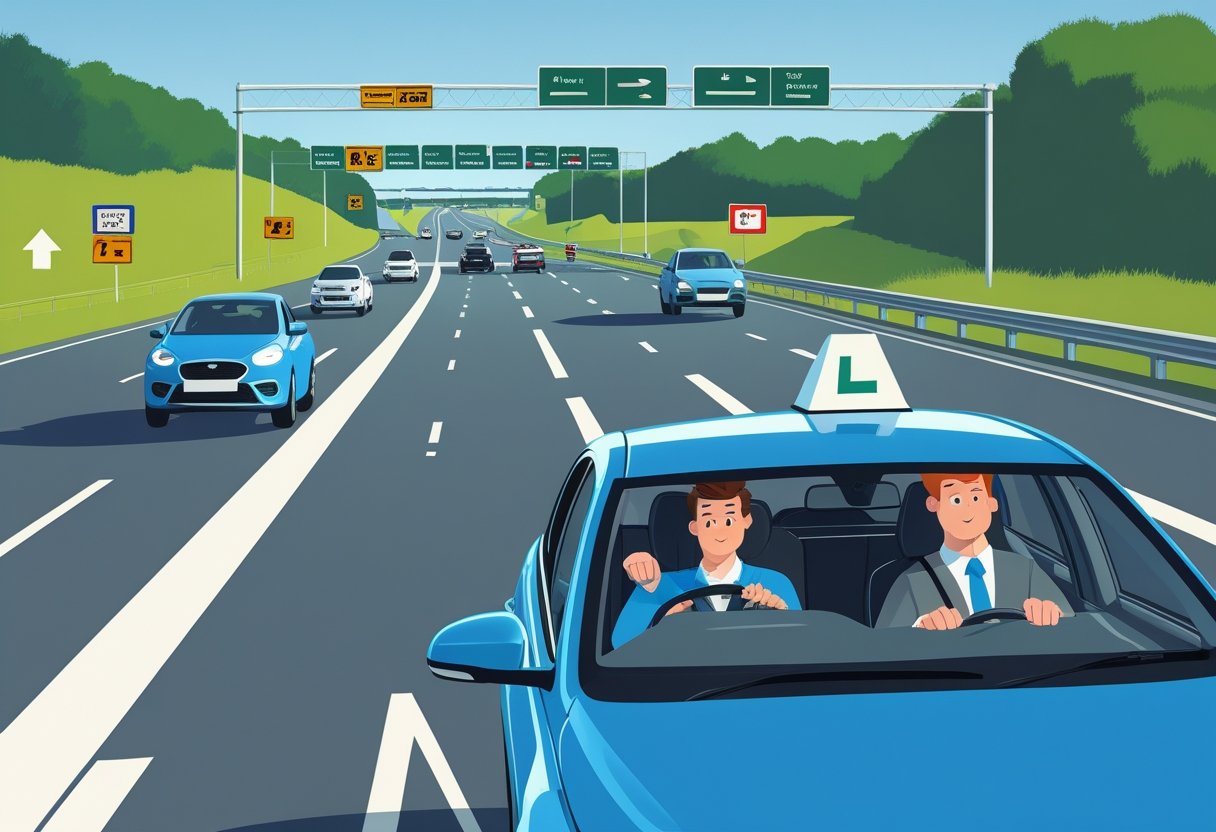
Motorway lessons are specialised driving sessions that teach you how to handle high-speed roads safely and confidently. Only approved driving instructors can deliver this training to learner drivers, and specific legal requirements must be met before you can take these lessons.
Definition and Structure of Motorway Lessons
Motorway lessons focus on teaching you the unique skills needed for high-speed driving. These aren’t your typical driving lessons around town.
During these sessions, we cover essential topics like joining and leaving motorways safely. You’ll learn how to use slip roads properly and merge into fast-moving traffic without causing disruption.
Lane discipline forms a major part of these lessons. We teach you when to stay in the left lane and how to overtake safely on multi-lane carriageways.
The lessons also cover smart motorways and their special rules. You’ll understand variable speed limits and what to do when the hard shoulder becomes a live lane.
Emergency procedures are crucial too. We show you how to handle breakdowns safely and what to do if you encounter an accident.
Most motorway lessons last between 60 to 90 minutes. This gives you enough time to practice different scenarios without feeling overwhelmed.
The structure typically includes a pre-lesson briefing, practical driving time, and a debrief afterwards. We start with quieter motorway sections before moving to busier routes as your confidence grows.
Eligibility and Legal Requirements for Learner Drivers
Since June 2018, learner drivers can legally take motorway lessons in England, Scotland, and Wales. This was a significant change in UK driving law.
You must have a provisional driving licence and be accompanied by an approved driving instructor. Family members or friends cannot supervise motorway practice, even if they’re qualified drivers.
Your vehicle needs dual controls for safety. This means only proper driving school cars can be used for learner motorway sessions.
There’s no minimum number of standard lessons required before motorway training. However, most instructors recommend you’re comfortable with dual carriageways first.
Motorway lessons aren’t compulsory for passing your driving test. You can still get your full licence without ever setting foot on a motorway during lessons.
The lessons must take place during daylight hours in good weather conditions. Night-time motorway training isn’t permitted for learners.
You’ll need to display L-plates clearly on both the front and rear of the vehicle, just like any other lesson.
Who Can Deliver Motorway Driving Training
Only approved driving instructors (ADIs) can teach learner drivers on motorways. Your instructor must have their green ADI badge displayed during lessons.
Trainee instructors with pink badges cannot provide motorway lessons to learners. This is a strict legal requirement that ensures proper supervision and safety.
Qualified driving instructors have undergone extensive training themselves. They understand motorway-specific hazards and teaching techniques for high-speed environments.
Many driving schools now offer motorway lessons as part of their services. Popular chains like BSM and local independent instructors can provide this training.
Some instructors specialise in post-test motorway training for new drivers who’ve already passed. This is different from learner motorway lessons but equally valuable.
Driving instructor qualifications include specific training on motorway teaching methods. They learn how to keep nervous students calm while building confidence gradually.
You can also take motorway lessons after passing your test with any qualified instructor. Many newly qualified drivers find this helpful before tackling motorways alone.
Why Consider Motorway Lessons: Key Benefits
Motorway driving lessons offer distinct advantages that go far beyond basic road skills. These specialised sessions help you master high-speed environments, perfect safe overtaking techniques, and decode the unique signage systems found only on Britain’s fastest roads.
Building Confidence on High-Speed Roads
Many drivers feel anxious about joining fast-moving traffic for the first time. We understand that stepping onto a motorway can feel overwhelming when you’re used to 30mph zones and roundabouts.
Motorway driving lessons tackle this anxiety head-on. You’ll practise merging with traffic moving at 70mph whilst an experienced instructor guides you through each step. This supervised approach helps you build genuine confidence rather than just hoping for the best.
The lessons focus on speed management and maintaining control at higher velocities. You’ll learn how different your car feels at motorway speeds and how to adjust your reactions accordingly.
Key confidence-building areas include:
- Joining motorways from slip roads
- Maintaining steady speeds in traffic
- Managing longer braking distances
- Staying calm when lorries pass nearby
Most importantly, you’ll discover that motorway driving becomes second nature with proper guidance. The structured environment actually makes these roads safer than many urban streets once you understand the rules.
Developing Safe Overtaking and Lane Discipline
Overtaking on motorways requires precise timing and excellent judgement. We know this skill separates confident drivers from those who struggle with motorway travel.
Your instructor will teach you the “mirror, signal, manoeuvre” sequence specifically for high-speed lane changes. You’ll practise checking blind spots thoroughly and leaving appropriate gaps before moving.
Lane discipline forms the foundation of motorway safety. The lessons cover when to use each lane and how to position yourself correctly. You’ll learn why staying in the middle lane unnecessarily frustrates other drivers and creates dangerous situations.
Essential skills you’ll master:
- Judging safe overtaking distances
- Using the correct sequence for lane changes
- Returning to the left lane after overtaking
- Reading other drivers’ intentions
The training emphasises smooth, predictable movements that keep traffic flowing safely. You’ll understand why sudden lane changes cause accidents and learn to plan your moves well in advance.
Understanding Unique Road Signs and Hazards
Road signs on motorways differ significantly from those on regular roads. We’ll help you decode the electronic matrix signs that display speed limits, lane closures, and hazard warnings.
You’ll learn to interpret overhead gantry signs that change throughout the day. These signs might show reduced speed limits during busy periods or warn about incidents ahead. Understanding these quickly becomes crucial for safe motorway travel.
Motorway-specific hazards require special attention. Your lessons will cover recognising and responding to broken-down vehicles, emergency vehicles, and temporary roadworks.
Important sign categories include:
- Variable speed limits
- Lane closure warnings
- Distance countdown markers
- Services and junction information
Road safety improves dramatically when you understand these systems properly. You’ll know how to respond to amber flashing lights on overhead signs and why some speed limits appear on the road surface itself.
The training ensures you can make quick decisions based on sign information whilst maintaining full control of your vehicle.
What to Expect During a Motorway Lesson
Your first motorway lesson will focus on building confidence at higher speeds whilst developing essential skills like joining and leaving motorways safely. Most learners find these sessions incredibly valuable for understanding hazard perception and learning how experienced instructors guide them through complex decisions.
Lesson Content: Joining, Leaving, and Navigating Motorways
Joining the motorway forms a crucial part of every lesson. We’ll practise using slip roads to build up speed gradually until it matches the flow of traffic. Your instructor will guide you through checking mirrors, signalling properly, and finding suitable gaps in the left-hand lane.
The key is never forcing your way in. Traffic already on the motorway has priority, so we’ll work on timing and patience.
Leaving the motorway requires different skills. We’ll focus on watching for junction signs well in advance and moving into the left lane early. Many slip roads have sharp bends, so controlling your speed becomes vital.
You might be surprised how 50mph feels like 30mph after motorway speeds. We’ll practise checking your speedometer and adjusting accordingly.
Lane discipline gets plenty of attention during lessons. We’ll work on keeping left unless overtaking and returning promptly after passing other vehicles. Middle-lane hogging is a common mistake we’ll help you avoid.
Smart motorways feature in most lessons now. We’ll cover variable speed limits, emergency refuge areas, and what those red ‘X’ signs mean. Understanding these systems helps you feel more confident on modern motorway networks.
Hazard Perception and Decision Making
Speed awareness becomes second nature with practice. We’ll teach you to judge the speed of traffic around you and maintain safe following distances. Weather conditions change everything, so stopping distances get particular focus during lessons.
Your instructor will point out potential hazards you might miss. Large vehicles create blind spots, and we’ll show you how to position yourself safely around lorries and coaches.
Mirror checks happen much more frequently on motorways. Things change quickly at higher speeds, so we’ll develop your habit of regular observation. Anticipating what’s ahead by scanning the road becomes instinctive with guidance.
Decision timing improves dramatically during structured lessons. Should you overtake that slower vehicle? Is there enough space to change lanes safely? We’ll work through these choices together until your judgement sharpens.
Emergency situations get covered too. What happens if your car develops problems? We’ll discuss using emergency refuge areas and the importance of getting off the motorway quickly when possible.
Role of the Driving Instructor in Motorway Training
Your instructor brings dual controls for complete safety during learning. This means we can intervene if necessary, giving you confidence to push your boundaries whilst staying protected. Most learners find this reassuring when first experiencing higher speeds.
Verbal guidance helps enormously during complex manoeuvres. We’ll talk you through joining busy motorways, explaining when to accelerate, where to look, and how to judge gaps effectively. This real-time coaching builds skills much faster than solo practice.
Route planning ensures you experience different scenarios during lessons. We might choose quieter sections for your first attempts, then progress to busier stretches as confidence grows. Some instructors include smart motorway sections specifically.
Confidence building remains our primary focus throughout every lesson. We understand that motorway driving feels intimidating initially, and we’ll work at your pace to ensure genuine progress rather than rushing ahead.
Post-lesson feedback helps consolidate learning. We’ll discuss what went well, areas for improvement, and specific techniques to practise. Many instructors provide tips for continuing development after you’ve passed your test.
Some driving schools offer refresher courses for qualified drivers who want extra motorway practice. This shows how valuable professional guidance remains even after gaining your licence.
Is the Investment Worth It? Evaluating Costs and Value
Motorway lessons come with an additional price tag compared to standard driving lessons, but the investment often pays dividends through improved confidence and safety skills. Let’s break down the actual costs and weigh them against the genuine benefits you’ll gain.
Typical Prices for Motorway Lessons
Motorway driving lessons typically cost between £40 and £60 per hour across the UK. This represents a premium of roughly £10 to £15 above standard driving lesson rates.
Most instructors recommend a package of 2-3 motorway sessions. This brings your total investment to around £80 to £180 for comprehensive motorway training.
Regional price variations include:
- London and South East: £50-£65 per hour
- Northern England: £35-£50 per hour
- Scotland and Wales: £40-£55 per hour
Some driving schools offer bundle deals when you book multiple motorway lessons together. These packages can reduce your per-hour cost by £5 to £10.
Comparing Costs to the Benefits Gained
The skills you develop during motorway lessons extend far beyond just motorway driving. We’re talking about enhanced hazard perception, better spatial awareness, and improved confidence at higher speeds.
Key benefits that justify the cost:
- Reduced anxiety when facing motorways independently
- Better understanding of lane discipline and merging techniques
- Improved ability to judge stopping distances at speed
- Enhanced observation skills for fast-moving traffic
Many of our learners report feeling significantly more prepared for real-world driving after motorway training. The confidence boost alone often makes the investment worthwhile, especially if you’ll need to use motorways regularly for work or family commitments.
Consider this: one confident motorway journey is worth more than months of avoiding these roads due to fear.
Potential Insurance Savings and Incentives
Several insurance providers now recognise additional driver training when calculating premiums. Pass Plus courses, which include motorway training, can reduce your insurance costs by 10-30% in your first year.
Insurance benefits include:
- Direct discounts with participating insurers
- Reduced risk profile in insurance calculations
- Some providers offer cashback schemes for additional training
The financial benefits often continue beyond year one. Insurance companies view drivers with extra training as lower risk, which can mean better renewal rates.
Some employers also provide driving training allowances. If you’ll use motorways for work, check whether your company offers reimbursement for professional driving development.
The combination of insurance savings and increased earning potential through confident motorway driving often recovers your lesson costs within 12-18 months.
How Motorway Lessons Fit Into the Learning Journey
Motorway lessons serve as a bridge between passing your driving test and becoming a truly confident driver. These specialist lessons help prepare you for high-speed driving whilst building skills that extend far beyond what you’ll need for your practical test.
Preparing for Motorway Lessons
Before we can tackle motorway driving, you’ll need to have mastered the fundamentals during your standard lessons. Most instructors recommend you’re nearly test-ready or have already passed your driving test.
You should feel comfortable with basic car control, gear changes, and hazard perception. These skills become crucial when dealing with faster traffic and shorter reaction times on motorways.
Key prerequisites include:
- Confident roundabout navigation
- Smooth acceleration and braking
- Good mirror awareness
- Understanding of road signs from your theory test
Your instructor will assess whether you’re ready for this next step. There’s no rush – building a solid foundation first makes motorway lessons far more effective and less overwhelming.
Some driving schools offer motorway preparation sessions. These help bridge the gap between regular lessons and actual motorway driving.
Motorway Lessons Versus Standard Driving Lessons
Motorway lessons focus on completely different skills compared to your usual driving practice. Instead of navigating roundabouts and town centres, you’ll learn about slip roads, lane discipline, and maintaining higher speeds safely.
The pace feels different too. Standard lessons often involve frequent stops and starts, whilst motorway sessions involve sustained concentration over longer distances.
Standard lessons typically cover:
- Manoeuvres like parallel parking
- Urban traffic situations
- Test routes and exam techniques
Motorway lessons concentrate on:
- Joining and leaving motorways smoothly
- Lane positioning and overtaking
- Speed awareness and following distances
- Emergency procedures at high speeds
Your instructor takes a more supervisory role during motorway lessons. You’ll make fewer stops for detailed feedback, instead focusing on building confidence through extended practice.
The learning environment changes dramatically. You’re dealing with real traffic at 70mph rather than the controlled conditions of quieter roads used for learning to drive.
Skills Gained Beyond the Driving Test
Motorway lessons develop advanced driving skills that no driving test can fully assess. These abilities prove invaluable throughout your driving career, not just for occasional long journeys.
You’ll master the art of reading traffic flow and anticipating other drivers’ actions. This skill transfers beautifully to all types of driving, making you a more aware and safer driver overall.
Advanced skills include:
- Judging safe following distances at speed
- Planning lane changes well in advance
- Managing fatigue during longer journeys
- Understanding motorway-specific hazards
The confidence boost from conquering motorway driving often surprises new drivers. Once you’ve handled 70mph traffic successfully, dual carriageways and A-roads feel much more manageable.
These lessons also introduce you to different types of junctions and road layouts. This knowledge proves particularly valuable if you’re planning to drive in unfamiliar areas after passing your test.
Many novice drivers find their overall driving improves after motorway lessons. The enhanced observation skills and forward planning become second nature across all driving situations.
Growing Your Skills and Confidence After Passing
Getting behind the wheel solo for the first time can feel overwhelming, but building your motorway skills through structured lessons helps bridge the gap between test day and real-world driving. The right support from approved driving instructors makes all the difference in developing safe habits early.
Taking the Next Steps Post-Test
We know that passing your test is just the beginning of your driving journey. The practical test doesn’t cover motorway driving, which leaves many new drivers feeling unprepared for these high-speed roads.
Motorway driving lessons with approved driving instructors give you the structured practice you need. These sessions typically cost between £40 and £60 per hour, but the investment pays off quickly.
Most new drivers benefit from 2-3 hours of dedicated motorway experience with a qualified instructor. This covers:
• Joining and leaving motorways safely
• Lane discipline and positioning
• Safe following distances at speed
• Reading motorway signs and signals
We’ve seen countless drivers transform their confidence levels after just one or two sessions. You’ll learn proper mirror checks, signal timing, and how to judge gaps in traffic moving at 70mph.
Pass Plus courses offer another excellent option. These six-hour programmes include motorway modules alongside night driving and adverse weather training. While insurance discounts aren’t guaranteed anymore, the skills you gain are invaluable.
The key is practising with someone who understands motorway-specific challenges. Friends and family mean well, but approved driving instructors know exactly what new drivers struggle with most.
Staying Safe on Motorways as a New Driver
Road safety on motorways requires different skills than you used during your test. We want you to feel confident, not anxious, every time you join a motorway.
Speed management is crucial in those first few months. Many new drivers either crawl along nervously or rush to match traffic speeds too quickly. Professional lessons teach you to build up gradually.
Your instructor will show you how to use slip roads properly. This means accelerating smoothly to match motorway speeds before merging, not hoping for a gap at 40mph.
Lane discipline becomes second nature with practice. You’ll learn when to move lanes, how much space to leave, and why staying in the middle lane unnecessarily frustrates other drivers.
Emergency procedures matter too. Knowing what to do if your car breaks down or you miss your junction prevents panic situations. We cover hard shoulder rules, emergency phone locations, and safe stopping techniques.
Weather conditions add another layer of complexity. Rain, fog, and strong winds affect motorway driving differently than town roads. Professional instruction helps you adjust your driving for these conditions safely.
Most importantly, you’ll develop the confidence to make quick decisions. Motorways don’t allow hesitation, but with proper training, you’ll handle merge situations and lane changes naturally.
Frequently Asked Questions
Motorway lessons raise plenty of practical questions about costs, benefits, and what you’ll actually learn. These answers cover everything from confidence building to insurance savings, helping you decide if the investment makes sense for your driving journey.
How can motorway driving lessons elevate my confidence behind the wheel?
Motorway lessons tackle the biggest fear most new drivers face: high-speed traffic. We know that feeling overwhelmed by fast-moving vehicles is completely normal.
Professional instruction helps you master lane changes at 70mph safely. You’ll learn to judge distances between cars and time your moves perfectly.
The structured approach means you start slowly and build up speed gradually. This prevents the panic that many drivers feel when they first venture onto motorways alone.
Practising with an instructor beside you removes the pressure. You can ask questions immediately and get instant feedback on your technique.
Most students report feeling much calmer about motorway driving after just one or two lessons. The mystery disappears once you understand the patterns and rules.
What are the long-term benefits of investing in motorway-specific driving tuition?
Proper motorway training creates safer driving habits that last for years. We see students who learn correctly from the start rarely develop bad habits like middle-lane hogging.
You’ll save time on journeys by using motorways confidently. Many new drivers avoid them completely, adding hours to longer trips unnecessarily.
Early professional guidance prevents costly mistakes. Learning lane discipline properly means avoiding £100 fines and three penalty points for careless driving.
The skills transfer to other challenging driving situations too. Dual carriageways and busy A-roads become much more manageable after motorway experience.
Confidence on motorways opens up job opportunities. Many positions require travelling between cities, and employers value drivers who can handle all road types.
Are there any particular aspects of driving on motorways that standard lessons might not cover?
Standard lessons focus on town driving, roundabouts, and country roads. Motorways operate under completely different rules and require specific techniques.
Joining and leaving motorways needs particular skills. The acceleration and deceleration lanes work differently from normal junctions, and timing becomes critical.
Lane discipline gets much more attention in motorway lessons. Understanding when to stay left and when overtaking is appropriate prevents dangerous situations.
Emergency procedures are motorway-specific too. Knowing what to do if your car breaks down at high speed could save your life.
Reading road signs at 70mph requires practice. Motorway signs appear quickly, and missing your exit can add miles to your journey.
Weather considerations become more important on motorways. Rain, fog, and wind affect high-speed driving differently than town centre conditions.
Is there a significant difference in the skills required for motorway driving compared to regular road driving?
Motorway driving demands much faster decision-making than regular roads. You have seconds rather than minutes to plan lane changes and exits.
Speed management becomes more complex on motorways. Maintaining steady speeds while other traffic varies requires different techniques from stop-start town driving.
Observation skills need upgrading for motorway conditions. Checking mirrors and blind spots becomes more critical when everyone’s travelling at high speeds.
Following distances change dramatically at motorway speeds. The two-second rule from normal driving extends significantly when you’re doing 70mph.
Concentration levels must stay higher for longer periods. Motorway journeys often last hours, requiring sustained focus that shorter trips don’t demand.
The consequences of mistakes are more serious on motorways. Small errors that might cause minor scrapes in town can lead to major accidents at high speeds.
How do motorway lessons prepare you for varied driving conditions and challenges?
Professional instructors expose you to different weather conditions safely. You’ll experience how rain affects visibility and stopping distances at high speeds.
Rush hour motorway driving teaches patience and planning. Learning to handle heavy traffic prevents the frustration that leads to dangerous overtaking.
Night motorway driving requires different skills from daytime journeys. Judging distances with only headlights takes practice in a controlled environment.
Lessons cover various motorway types and layouts. Different numbers of lanes, smart motorways, and variable speed limits all need specific approaches.
Emergency scenarios get practised in safe conditions. Your instructor can simulate breakdowns and show you proper safety procedures.
Construction zones and temporary restrictions appear regularly on motorways. Learning to adapt to changing conditions builds flexible driving skills.
Could taking additional lessons for motorway driving help in reducing insurance premiums?
Some insurance companies do offer discounts for additional training like Pass Plus courses. Motorway lessons often form part of these recognised programmes.
Demonstrating commitment to safe driving through extra lessons shows insurers you’re serious. This can influence their risk assessment in your favour.
Avoiding accidents through better training keeps your no-claims bonus intact. The cost of lessons often pays for itself by preventing expensive claims.
Young drivers particularly benefit from insurance discounts for extra training. The savings can be substantial in the first few years after passing your test.
Contact your insurance provider before booking lessons. Some companies require specific courses or instructors to qualify for discounts, so check their requirements first.
The confidence gained from proper training often leads to safer overall driving. This typically results in fewer claims and lower premiums over time.