

Is There a Limit on How Many Times You Can Sit the Test? All You Need to Know for UK Learner Drivers
You might be worried about what happens if you don’t pass your driving test on the first try. The good news is simple and reassuring: there’s no official limit on how many times you can take your driving test in the UK. Whether it’s your second attempt or your tenth, you’re free to keep trying until you succeed.
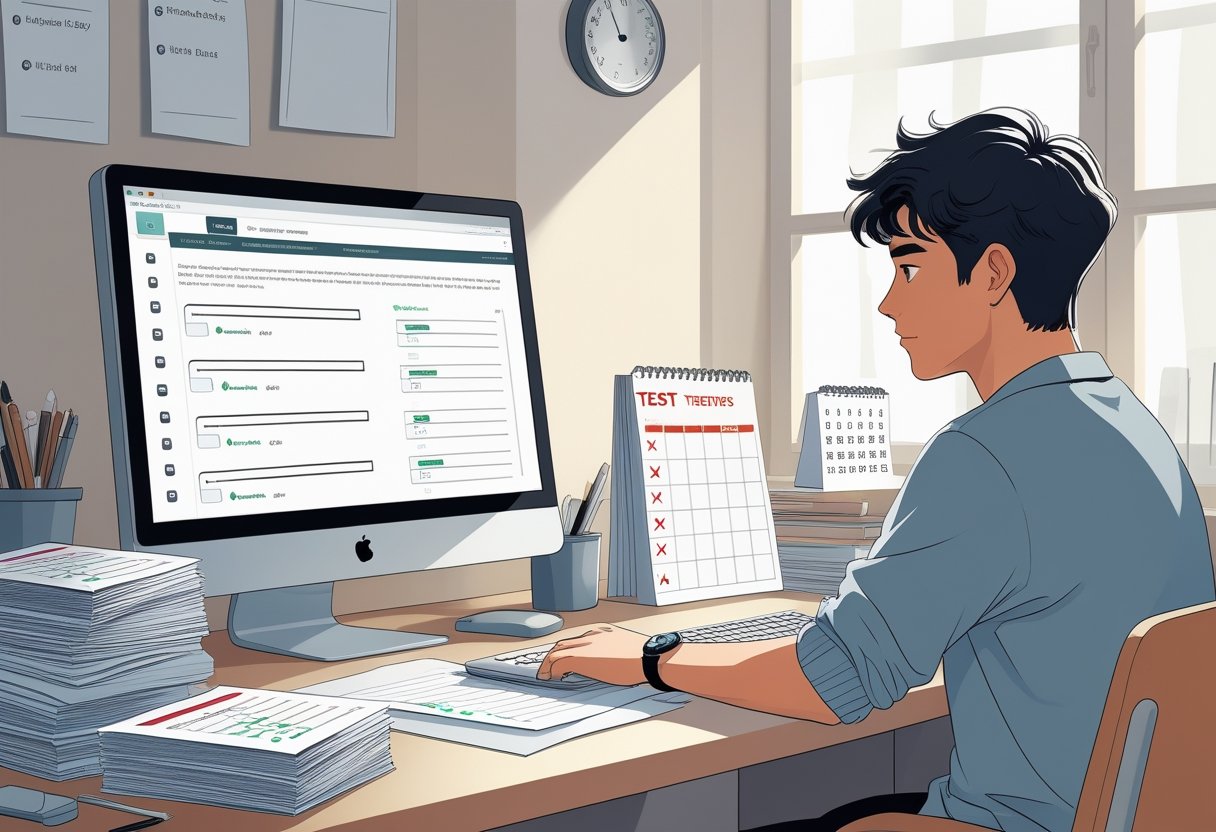
This unlimited approach means you can focus on learning and improving rather than panicking about running out of chances. However, there are important rules about waiting times, costs, and what happens after multiple attempts that every learner driver should understand before booking their next test.
From understanding different test types to learning what examiners look for, this guide covers everything you need to know about retaking your driving test. We’ll explore real statistics about pass rates, share practical tips to boost your confidence, and answer the most common questions that come up when learners are preparing for another go at getting their licence.
Is There a Limit on How Many Times You Can Take the Test?

There’s no official cap on driving test attempts in the UK, whether for theory or practical tests. The system allows unlimited retakes, though each attempt requires new fees and waiting periods between tests.
Current UK Rules on Test Attempts
The DVSA sets no maximum limit on how many times someone can sit their driving theory test or practical test. This applies to all categories of driving licence, from standard car tests to motorcycle and commercial vehicle tests.
For the theory test, candidates must wait at least three working days before rebooking after a failed attempt. The practical test requires a longer gap of 10 working days between attempts.
Each test attempt costs the full fee again. Theory tests cost £23 for cars and motorcycles, whilst practical tests cost £62 for weekday appointments and £75 for evenings, weekends, and bank holidays.
| Test Type | Cost | Waiting Period |
|---|---|---|
| Theory Test | £23 | 3 working days |
| Practical Test (weekday) | £62 | 10 working days |
| Practical Test (evening/weekend) | £75 | 10 working days |
The test centre staff won’t treat repeat candidates any differently. They see learners at various stages of their journey every day, so multiple attempts are completely normal.
Why There Is No Maximum Number of Attempts
The unlimited attempt policy exists because learning to drive safely is more important than passing quickly. Everyone learns at different speeds, and some people need more time to develop the skills and confidence required.
Road safety remains the priority. The DVSA would rather someone take ten attempts and become a genuinely safe driver than restrict attempts and potentially put unsafe drivers on the road.
Some learners face additional challenges that make passing more difficult. These might include anxiety, learning difficulties, language barriers, or simply needing more time to process information under pressure.
The driving test UK system recognises that a person who eventually passes after multiple attempts can become just as competent a driver as someone who passes first time. The certificate looks identical regardless of how many attempts it took.
Financial considerations naturally limit most people’s attempts anyway. At £23 per theory test and up to £75 per practical test, the costs add up quickly without needing artificial restrictions.
Cultural Attitudes Towards Multiple Attempts
British driving culture generally accepts that multiple test attempts are normal. Statistics show that around 54% of people fail their first theory test, making retakes extremely common rather than exceptional.
Most driving instructors actively prepare their pupils for the possibility of needing several attempts. They frame multiple tries as part of the learning process rather than personal failures.
Test centres across the UK see the same faces returning regularly, and this creates no stigma or embarrassment. Staff understand that nerves, bad luck, or simply needing more practice are all valid reasons for unsuccessful attempts.
The record holder in the UK took their theory test 158 times before finally passing. Whilst this is extreme, it demonstrates the system’s commitment to giving everyone the chance to succeed eventually.
Young drivers especially benefit from this approach, as they often face higher anxiety levels and may need several attempts to demonstrate their true abilities under test conditions.
Understanding the Different Types of Driving Tests
In the UK, learner drivers must pass two separate assessments to earn their full licence. The theory test evaluates knowledge of traffic rules and hazard awareness, whilst the practical test demonstrates real-world driving skills.
Theory Test: Multiple-Choice Questions and Hazard Perception
The driving theory test consists of two distinct parts that every learner must tackle before booking their practical exam. You can’t skip this step, no matter how confident you feel behind the wheel.
The multiple-choice questions section presents 50 questions covering traffic laws, road signs, and driving situations. You’ll need to score at least 43 correct answers to pass this portion. These questions draw from the Highway Code and official DVSA materials.
Topics include everything from stopping distances to vulnerable road users. Questions might ask about speed limits in built-up areas or what specific road markings mean.
The hazard perception test follows immediately after. You’ll watch 14 video clips showing real driving scenarios from a driver’s perspective. Each clip contains at least one developing hazard that could require you to change speed or direction.
You must click your mouse when you spot these hazards developing. Click too early or too late, and you’ll miss valuable points. The maximum score per clip is five points, and you need 44 points overall to pass.
Some clips contain two hazards worth scoring, but most have just one. The key is recognising when a potential problem becomes an actual hazard requiring action.
Practical Test: Real-World Driving Assessment
The practical test puts your actual driving abilities under scrutiny during a real-world assessment lasting approximately 40 minutes. This comprehensive evaluation covers multiple driving scenarios you’ll encounter as a qualified driver.
Your examiner will guide you through five key components during the test. The eyesight check comes first, requiring you to read a number plate from 20 metres away. Fail this, and your test ends immediately.
Vehicle safety questions follow, split into ‘tell me’ and ‘show me’ formats. You’ll answer one question before driving begins and demonstrate another whilst actually driving.
The general driving assessment forms the test’s backbone. You’ll navigate various road conditions, from quiet residential streets to busy dual carriageways. Motorways aren’t included, but expect roundabouts, traffic lights, and pedestrian crossings.
Reversing manoeuvres test your close-quarters control. You’ll complete one exercise: parallel parking, bay parking, or pulling up on the right and reversing back.
The independent driving section lasts roughly 20 minutes. You’ll follow either sat-nav directions or traffic signs, demonstrating your ability to navigate without constant instruction. Don’t worry about wrong turns – the examiner won’t penalise these mistakes.
What Happens If You Fail the Test?
Failing your driving test isn’t the end of the road, and you’ll need to wait a specific period before booking again. The process involves understanding what went wrong and planning your next attempt strategically.
Process After Unsuccessful Attempts
When a learner driver doesn’t pass their test, the examiner will provide detailed feedback about what went wrong. This feedback comes in the form of a driving test report that highlights both major and minor faults.
Major faults are serious errors that pose a danger to the driver, other road users, or property. Just one major fault results in an automatic fail. Minor faults are less serious mistakes, but accumulating 15 or more will also lead to failure.
The test centre will keep a record of the unsuccessful attempt. Learners won’t receive a pass certificate, but they’ll get valuable information about areas that need improvement.
Many driving instructors recommend using this feedback as a roadmap for additional practice. The report shows exactly which skills need work before the next attempt.
Some learners feel disheartened after failing, but it’s worth remembering that many successful drivers needed multiple attempts. Learning from mistakes often makes people better, more confident drivers in the long run.
How Soon You Can Retake the Test
The waiting period between driving tests has recently changed. Under current DVSA rules, learners must wait 14 working days before they can book another practical test.
This waiting period gives drivers time to practise the skills they struggled with during their failed attempt. It also helps prevent people from repeatedly booking tests without proper preparation.
Working days don’t include weekends or bank holidays, so the actual wait might be longer than two weeks. Planning ahead helps avoid disappointment when booking the next test.
During this waiting period, most learners benefit from additional lessons with a qualified instructor. These sessions can focus specifically on the areas highlighted in the test report.
Some test centres offer cancellation slots that become available at short notice. Learners who are flexible with timing might find earlier appointments, though this isn’t guaranteed.
Pass Rates, Attempt Statistics, and Common Experiences
Most learners between 17 and 24 pass their driving test uk within the first two attempts, though there’s no reliable national average for how many attempts people typically need. The statistics show encouraging trends for first-time passes, whilst real experiences vary widely based on individual circumstances.
Average Number of Attempts to Pass
The truth is, there’s no definitive answer to how many attempts it takes most people to pass the test. Research hasn’t produced a reliable national average because studies on this specific question remain too small to represent the entire UK population accurately.
What we do know from available data is quite encouraging. Most people aged 17-24 manage to pass the test within their first or second attempt. Even more impressive, over half of drivers aged 45-54 pass first time.
These figures suggest that whilst some learners need multiple attempts, many people do succeed relatively quickly. Age appears to play a role, with older learners often bringing more life experience and patience to their test preparation.
The key factor isn’t how many attempts you need – it’s that you eventually demonstrate the skills required for safe driving. Some people learn faster than others, and that’s perfectly normal.
Notable Records and Real-Life Stories
Whilst official records don’t track the maximum number of attempts individuals have made, driving instructors and test centres have witnessed some remarkable persistence stories. Some learners have taken their test dozens of times before finally succeeding.
These stories highlight an important truth: determination often matters more than natural ability. Many drivers who struggled initially become excellent, cautious road users because they’ve had to work harder for their licence.
The most inspiring cases involve learners who faced additional challenges. Those with learning difficulties, anxiety, or physical limitations sometimes need extra attempts but often emerge as particularly skilled drivers.
Test anxiety affects many capable drivers, leading to multiple attempts despite having strong driving skills. These learners often pass once they find strategies to manage nerves or switch to a more suitable test centre.
First-Time Passes Versus Multiple Attempts
First-time passes don’t necessarily indicate superior driving ability – they often reflect good test preparation, suitable timing, and sometimes a bit of luck with traffic conditions. The official statistics show that pass rates vary significantly between test centres and age groups.
Learners who need multiple attempts shouldn’t feel discouraged. Each test provides valuable experience that helps identify areas for improvement. Many driving instructors report that their students become more confident drivers after overcoming the challenge of retaking their test.
The pressure to pass first time can actually be counterproductive. Learners who focus on thorough preparation rather than speed often develop better long-term driving habits.
Government data shows that whilst first-time pass rates receive attention, the safety record of drivers who needed multiple attempts is just as strong. Once someone demonstrates competency, regardless of attempts taken, they’ve proven they can drive safely.
Practical Tips to Boost Your Confidence and Success
Smart preparation and consistent practice form the foundation of test success. Understanding how different test centres operate can give learners an extra edge when booking their attempts.
Helpful Revision Strategies for the Theory Test
Active learning beats passive reading every time. Rather than simply scrolling through the Highway Code, learners should create their own notes and summary cards for tricky topics.
Multiple-choice questions become much easier when candidates understand the reasoning behind each answer. Practice tests should focus on explaining why wrong answers are incorrect, not just memorising the right ones.
Setting up a proper revision schedule makes all the difference. Twenty minutes of focused study daily works better than cramming for hours the night before.
Mock tests under timed conditions help build familiarity with the real exam format. Many learners find it helpful to take these at the same time of day as their actual test booking.
The hazard perception section requires a different approach entirely. Watching clips repeatedly helps develop the scanning technique needed to spot developing hazards early. Clicking too frequently results in zero points for that clip, so steady observation beats frantic clicking.
Maximising Practice for the Practical Test
Regular lessons with a qualified instructor provide structured learning that self-practice cannot replace. Professional guidance ensures bad habits don’t become ingrained.
Independent practice between lessons accelerates progress significantly. Learners should focus on areas their instructor has highlighted rather than just driving around aimlessly.
Different road types require specific attention. Quiet residential streets, busy roundabouts, dual carriageways, and car parks each present unique challenges that need separate practice sessions.
Manoeuvres cause anxiety for many candidates, yet they’re simply a matter of reference points and practice. Reversing around a corner, parallel parking, and bay parking all follow logical sequences that become automatic with repetition.
Building confidence means gradually tackling more challenging scenarios. Starting with familiar routes and progressively exploring busier areas helps develop the adaptability examiners look for.
Understanding Test Centre Variations
Different test centres have their own characteristics and local challenges. Urban centres often feature complex one-way systems and heavy traffic, while rural locations might include narrow country lanes.
Research the area around your chosen test centre beforehand. Many driving schools offer familiarisation lessons that cover the most commonly used routes and tricky junctions.
Some centres have higher pass rates than others, though this often reflects the local demographics rather than easier tests. Candidates shouldn’t assume a centre with lower pass rates offers unfair testing.
Booking strategies can make a difference. Tuesday to Thursday appointments often have calmer traffic conditions than Friday afternoons or Monday mornings when roads are busiest.
Weather conditions vary between locations too. Coastal centres might deal with sea mists, while inland areas could face different seasonal challenges that affect practical test conditions.
What to Expect After You Pass the Test
Once you’ve conquered the theory test, you’ll receive your pass certificate and can begin preparing for the practical driving test. Your certificate stays valid for two years, giving you plenty of time to book and pass your practical test.
Receiving and Using Your Pass Certificate
Your pass certificate arrives immediately after completing the test at the centre. This document shows your scores for both the multiple-choice questions and hazard perception sections.
Keep this certificate safe. You’ll need it when booking your practical driving test. Without it, you can’t move forward to the next stage of getting your full licence.
The certificate includes important details like your name, test date, and scores. Double-check everything is correct before leaving the test centre. If there’s a mistake, sort it out straight away with the staff.
Your certificate is valid for exactly two years from the date you passed. This gives you a comfortable window to practise your driving skills and book your practical test. If the two years run out before you pass your practical test, you’ll need to retake the theory test from scratch.
Store your certificate somewhere you won’t lose it. Many people pop it in their wallet or keep it with their provisional licence. Some take a photo as backup, though you’ll still need the original document.
Next Steps on Your Driving Journey
With your theory test behind you, it’s time to focus on practical driving lessons. Most people need around 20-40 hours of professional instruction, though everyone learns at different speeds.
Start shopping around for a good driving instructor if you haven’t already. Look for someone with high pass rates and positive reviews from other students. A quality instructor makes a huge difference to your learning experience.
You can book your practical test as soon as you feel ready. Many people book it a few weeks in advance to give themselves a target date to work towards. This helps keep motivation high during lessons.
Don’t rush into the practical test too quickly. Your instructor will guide you on when you’re ready, but you should feel confident handling different road conditions, manoeuvres, and traffic situations.
Use your two-year window wisely. Regular lessons work better than cramming everything into a few intensive weeks. Most successful students take one or two lessons per week alongside plenty of practice with family or friends.
Frequently Asked Questions
Many learner drivers wonder about practical matters when they don’t pass on their first attempt. These questions cover everything from retake limits to insurance implications and booking procedures.
What’s the scoop on retaking my driving test – is there a ceiling to the number of attempts?
There’s absolutely no official limit on how many times someone can attempt their driving test in the UK. The DVSA doesn’t impose any restrictions, whether it’s the second attempt or the twentieth.
Some remarkable examples exist of persistence paying off. One person in the UK famously took their theory test nearly 160 times before finally passing. For practical tests, the record stands at 42 failed attempts before success.
Most drivers pass within their first five attempts. However, some need between six and twelve goes to get there. The key is not giving up and learning from each experience.
If I’m not successful on the first go, how soon can I give the driving exam another whirl?
After an unsuccessful practical driving test, there’s a mandatory waiting period before booking another attempt. Candidates must wait at least 10 working days before their next test.
This cooling-off period gives learners time to practise areas where they struggled. It also prevents rushed rebooking without proper preparation.
The waiting time only applies to practical tests. Theory test retakes can be booked more quickly, though it’s wise to spend time studying weak areas first.
Could you shed some light on the process for rescheduling a driving test if things don’t go as planned?
Rescheduling after an unsuccessful test follows a straightforward process. Candidates can book their next attempt online, by phone, or through their driving instructor.
The DVSA website offers the quickest booking option. It shows available dates and times at local test centres in real-time.
Some test centres have longer waiting lists than others. Candidates might find earlier appointments by checking different locations within reasonable travelling distance.
Payment is required when booking the new test. The standard practical test fee applies each time, regardless of previous attempts.
In the event of a stumble, what are the steps to bounce back and resit the driving test?
After receiving the test results, candidates get a feedback sheet highlighting areas for improvement. This sheet becomes a valuable practice roadmap.
The examiner provides specific details about what went wrong. Common issues include observation problems, steering control, or junction approach mistakes.
Working with a qualified instructor helps address these specific weaknesses. Additional lessons focusing on problem areas often make the difference between failure and success.
Candidates should also practise in the test area when possible. Familiarity with local roads and common test routes builds confidence for the next attempt.
Navigating the rules: Is there a cooling-off period required between driving tests?
Yes, there’s a mandatory 10 working day gap between practical driving test attempts. This applies to standard car tests and other vehicle categories.
The cooling-off period doesn’t include weekends or bank holidays. So if someone fails on a Friday, the earliest rebooking would be the following Wednesday.
Theory tests don’t have the same restriction. Candidates can retake theory tests more frequently, though proper preparation time is still recommended.
This waiting period exists to ensure learners get adequate practice time. Rushing into another test without addressing problems rarely leads to success.
Could multiple driving test attempts affect my record or future insurance premiums?
Insurance companies don’t typically ask about the number of test attempts when calculating premiums. They’re more interested in actual driving convictions and claims history.
However, some insurers might ask when someone passed their test. Multiple attempts could indirectly affect premiums if they delay getting a full licence.
The DVSA keeps records of all test attempts, but this information isn’t shared with insurance companies unless specifically requested. It’s primarily used for statistical purposes and test quality monitoring.
Once someone passes and gains experience, the number of previous attempts becomes irrelevant to insurers. Safe driving records matter far more than initial learning struggles.