

Maintaining Steering Control Through Bends and Roundabouts: Essential Skills for Confident Driving
Steering through bends and roundabouts can feel like a puzzle when you’re learning to drive, but it’s actually one of the most rewarding skills to master. We’ve all been there, gripping the wheel a bit too tightly as we approach that first roundabout or wondering exactly how much to turn the steering wheel on a sharp bend.

The secret to maintaining excellent steering control lies in understanding how to judge the sharpness of turns, choosing the right speed before you enter them, and using smooth, deliberate steering inputs that work with your vehicle rather than against it. When we get this combination right, driving becomes fluid and confident rather than jerky and stressful.
What makes the difference between drivers who navigate bends and roundabouts with ease and those who struggle? It comes down to reading the road ahead, positioning your car correctly, and developing that natural feel for how much steering input you need. We’re going to show you exactly how to build these skills step by step.
Key Takeaways
- Judge bend sharpness early and adjust your speed before entering to maintain smooth control throughout the turn
- Position your vehicle correctly and use progressive steering movements rather than sudden wheel adjustments
- Read road signs, observe other traffic, and adapt your approach based on weather and road conditions for confident navigation
Key Principles for Steering Through Bends
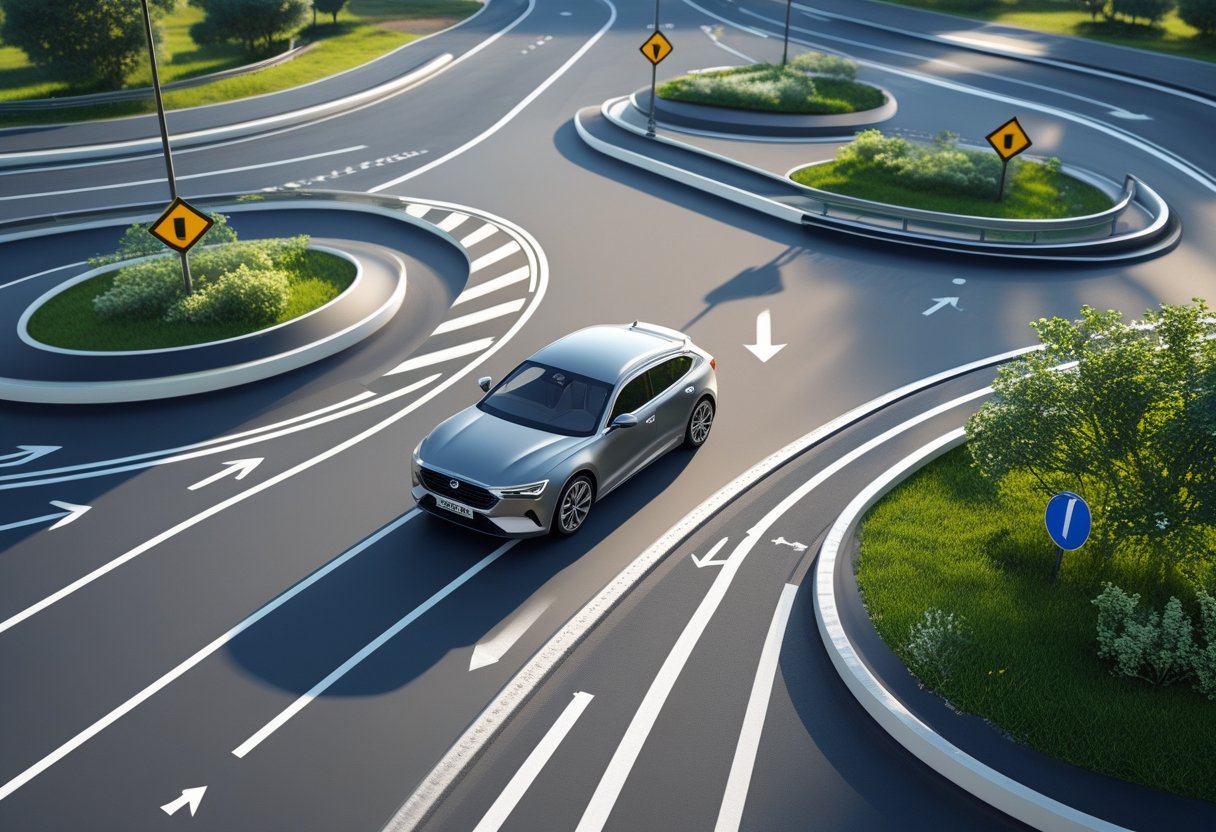
Safe cornering relies on three fundamental skills: reading the bend correctly before you reach it, using smooth steering inputs throughout the turn, and getting your speed and gear selection right from the start. Master these basics, and you’ll handle any bend with confidence.
Assessing Bend Severity and Approach
The secret to smooth cornering starts well before you turn the wheel. We need to read the road like a book, gathering clues about what lies ahead.
Look for the limit point – that’s where the left and right edges of the road appear to meet in the distance. This magical spot tells us everything about the bend’s severity. If the limit point moves away from us, the bend is opening up. If it stays put or comes closer, we’re dealing with a tightening curve.
Road signs give us brilliant advance warning. Those chevron arrows aren’t just decorative – they show us exactly which way the road bends and how sharp it’ll be. Triangular warning signs with curved arrows appear roughly 100 metres before the bend starts.
Check the road markings too. White lines often become more prominent approaching bends. Solid white lines mean no overtaking, which usually indicates limited visibility ahead.
Watch for oncoming traffic patterns. If you can see headlights flickering through trees or reflecting off barriers, that tells us about the bend’s shape and severity.
Position yourself correctly on approach. For right-hand bends, stay towards the left of your lane for the best view. For left-hand bends, position slightly right (but never cross the centre line). This positioning helps us see further around the corner and spot any hazards early.
Optimal Steering Techniques for Safe Navigation
Smooth steering makes all the difference between elegant cornering and white-knuckle moments. Think of your steering wheel as a delicate instrument, not a wrestling opponent.
Feed the steering wheel through your hands rather than crossing your arms. This technique keeps you in complete control and ready for any sudden corrections. Your hands should work like a coordinated team, one guiding while the other supports.
Start your steering input gradually and progressively. Sharp, sudden movements upset the car’s balance and can cause the tyres to lose grip. Imagine you’re stirring honey – smooth and deliberate.
Look where you want to go, not at the kerb or the hedge you’re trying to avoid. Your hands naturally follow your eyes, so focus on your exit point around the bend.
Maintain steady steering pressure through the apex of the bend. This isn’t the time for corrections or adjustments – commit to your line and trust your initial assessment.
As you exit the bend, unwind the steering smoothly. Let the wheel flow back through your hands as the car naturally wants to straighten up. Fighting this natural tendency creates unnecessary work and reduces your control.
Keep both hands on the wheel throughout the entire manoeuvre. We know it’s tempting to rest one hand on the gear stick, but bends demand your full attention and both hands ready for action.
Adjusting Speed and Gears Before Entering a Bend
Getting your speed and gear selection right before you enter the bend is absolutely crucial. Remember: we can’t safely brake or change gear mid-corner without unsettling the car.
Slow in, fast out remains the golden rule. Reduce your speed on the straight approach, not in the bend itself. This gives you maximum stability when you need it most and lets you accelerate smoothly on the exit.
Complete your gear changes before you start steering. The right gear depends on your speed and the bend’s severity. Second gear suits most tight bends, while third gear works for gentler curves. Choose a gear that lets the engine pull cleanly without labouring.
Use the PSGAS sequence: Position, Speed, Gear, Accelerate, Steer. This tried-and-tested method ensures you handle every element in the right order. Don’t rush through these steps – each one sets you up for the next.
Watch for speed limit signs and advisory speed plates on sharp bends. These yellow signs with black numbers aren’t legal limits, but they show safe speeds for normal conditions.
Gentle acceleration through the bend helps maintain stability. A tiny bit of power keeps the car balanced and prevents the unsettling feeling of trailing throttle. Think feather-light pressure on the accelerator, not a heavy foot.
Plan your exit speed carefully. You’ll want to emerge from the bend ready to match the traffic flow ahead, especially important when oncoming traffic might be waiting to overtake slower vehicles.
Perfecting Positioning and Observation
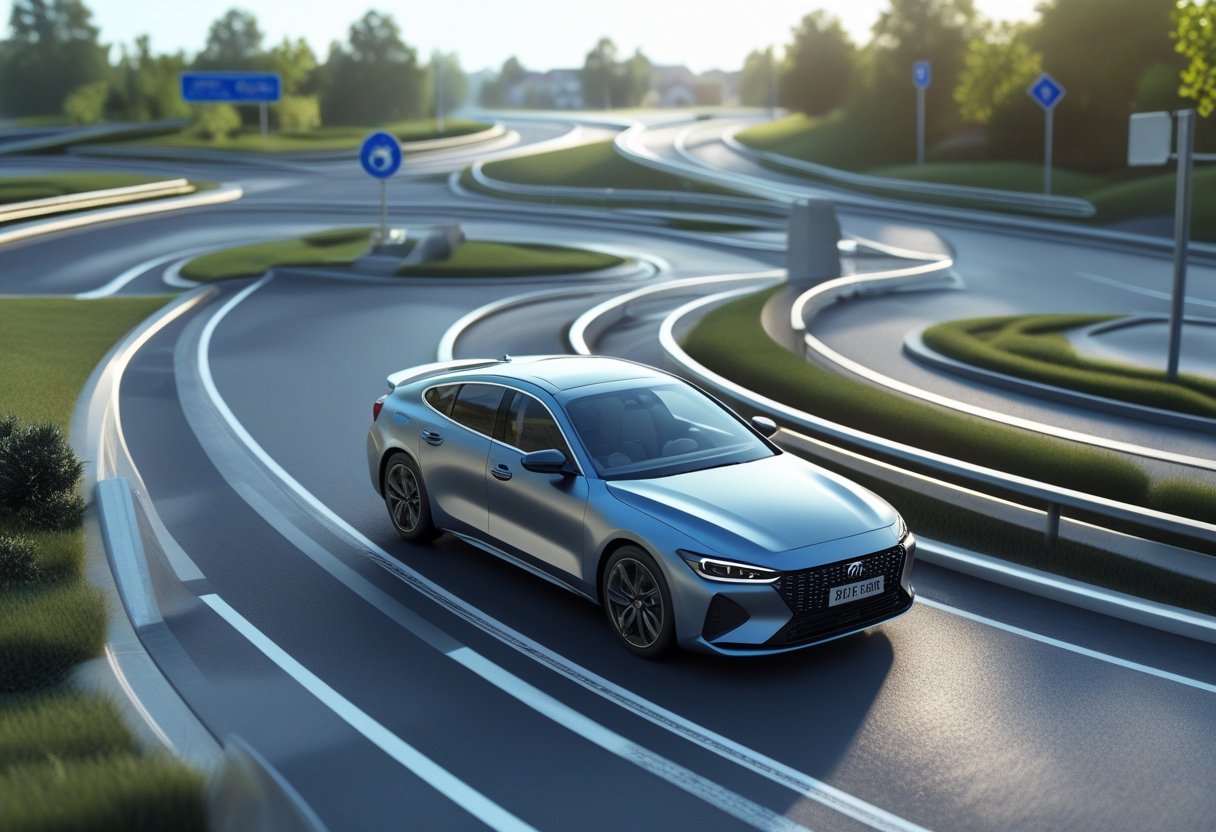
Good positioning comes from smart observation and understanding what you see on the road ahead. We need to check mirrors properly, pick the safest line through each bend, and adapt when visibility drops.
Mirror Checks and Blind Spots
Your mirrors tell the story of what’s happening behind and beside you. We should check them every few seconds, not just when we’re planning a manoeuvre.
The mirror sequence works best when it becomes automatic. Check your rear-view mirror first, then your wing mirrors. This gives you the full picture of traffic around your car.
Blind spots hide cyclists and motorcycles that can appear suddenly. These areas sit just behind your shoulder where mirrors can’t reach.
Before entering any bend, we need to know if oncoming traffic is planning to overtake behind us. A quick mirror check shows if someone’s getting impatient.
Essential mirror checks include:
- Every 8-10 seconds during normal driving
- Before signalling or changing direction
- When slowing down for bends
- After passing cyclists or parked vehicles
The head check matters just as much as mirrors. Turn your head slightly to check blind spots, especially when cyclists might be filtering through traffic.
Choosing the Safest Path Through a Bend
Your road position changes everything about how safely you navigate curves. We want the best view ahead and the smoothest path through.
Position yourself slightly left of centre on right-hand bends. This keeps you away from oncoming traffic and gives you a better view around the curve.
For left-hand bends, stay in your normal road position but avoid drifting wide. Cyclists often use the inside of left turns, so we need to leave them space.
Watch for parked vehicles on the approach to bends. They force you to adjust your line earlier than usual.
The racing line doesn’t work on public roads. We’re not trying to go fast through corners. We want maximum safety and visibility instead.
Plan your positioning before you reach the bend. Once you’re halfway through, it’s too late to make major adjustments safely.
Dealing with Limited Visibility
Poor visibility turns familiar bends into potential hazards. We need different strategies when we can’t see the full picture ahead.
Slow down more than usual when visibility drops. Your stopping distance might be longer than what you can actually see.
Fog, rain, and darkness all reduce how well we spot oncoming traffic and hazards. Use dipped headlights even during the day when visibility is poor.
Cyclists become almost invisible in bad conditions. They might not have lights or might be wearing dark clothing.
Keep extra distance from any parked vehicle when visibility is limited. Someone might step out unexpectedly, or another car could be pulling out.
Key visibility tactics:
- Clean your windscreen and mirrors regularly
- Use wipers and demisters properly
- Slow down before you think you need to
- Signal earlier to give others more warning
Trust your instincts when something doesn’t feel right. If you can’t see clearly, other road users probably can’t either.
Negotiating Roundabouts with Confidence
Mastering roundabouts means understanding priority rules, choosing the right lane from the start, and signalling clearly to communicate your intentions to other drivers and cyclists.
Understanding Roundabout Rules and Priorities
The golden rule at roundabouts is simple: traffic already circulating has priority over vehicles waiting to enter. We always give way to traffic coming from our right, unless road signs or road markings tell us otherwise.
Priority works like this:
- Vehicles already on the roundabout go first
- Traffic from the right has priority when entering
- Emergency vehicles always take precedence
Watch for road signs before you reach the roundabout. These blue circular signs with white arrows show you which lanes serve which exits. Some roundabouts have yield signs or traffic lights that change the normal priority rules.
Road markings paint the picture clearly on the tarmac. White arrows in each lane point towards the exits they serve. Broken white lines separate the lanes, whilst solid white lines mean you shouldn’t change lanes.
Keep your eyes peeled for cyclists who might be taking a different path than expected. They often stay in the left lane regardless of their exit, so give them extra space and patience.
Approach speeds matter enormously. Slow down early so you can assess the traffic flow and spot safe gaps. This gives you time to react if a cyclist appears or another driver makes an unexpected move.
Lane Choice and Smooth Entry
Getting into the correct lane before you enter sets you up for success. We choose our lane based on which exit we’re taking, not where we want to end up after the roundabout.
Lane selection guide:
- Left lane: First exit (turning left) or second exit (straight ahead)
- Right lane: Third exit (turning right) or going full circle
- Middle lanes: Follow the road markings and signs for your specific exit
Multi-lane roundabouts can feel overwhelming at first. The secret is reading the road signs and road markings well before you reach the roundabout. These tell you exactly which lane serves your intended destination.
Enter smoothly when you spot a safe gap. Don’t stop unless you absolutely must. A smooth entry keeps traffic flowing and reduces the chance of rear-end collisions.
Watch for cyclists who might be positioned differently than you expect. They often stay in the inside lane even when turning right, so check your mirrors and blind spots carefully.
Once you’ve committed to a lane, stick with it. Changing lanes inside a roundabout creates confusion and increases accident risk.
Signalling and Exit Strategies
Clear signalling helps everyone predict your next move. We signal our intentions to keep traffic flowing smoothly and safely.
When approaching:
- Signal left for the first exit
- No signal for going straight ahead (second exit)
- Signal right for third exit or beyond
Inside the roundabout:
- Maintain your original signal until you pass the exit before yours
- Then signal left to show you’re leaving
- Cancel your signal after you’ve exited
Exit positioning requires forward planning. Move towards the left side of your lane as you approach your exit. This makes your intentions crystal clear to other drivers and cyclists.
Check your mirrors before exiting. Cyclists might be on your inside, particularly if they’re continuing around the roundabout. A quick shoulder check can prevent a nasty surprise.
Some exits have their own road markings that guide you into the correct lane for your onward journey. Follow these markings to avoid cutting across other traffic or ending up in the wrong lane.
Road signs on the exit will confirm you’re heading in the right direction. If you miss your exit, don’t panic. Simply continue around the roundabout and try again.
Adapting to Hazards and Changing Conditions
When we navigate bends and roundabouts, we’ll encounter various hazards that require quick thinking and smooth adjustments. Successfully managing oncoming traffic, cyclists, and slippery surfaces demands proper positioning, speed control, and heightened awareness of our surroundings.
Responding to Oncoming Traffic and Parked Vehicles
Oncoming traffic creates the most challenging situations on bends. We need to position ourselves closer to the left side of our lane whilst maintaining a safe distance from the kerb.
When we spot oncoming traffic on a narrow bend, reducing speed becomes essential. This gives us more time to react and better control over our vehicle’s position.
Parked vehicles present a different challenge. We must check our mirrors early and signal if we need to move out around them.
The key is planning ahead. Look for gaps in oncoming traffic before we reach the parked vehicle.
If we can’t see around a parked vehicle on a bend, we should slow right down. There might be pedestrians stepping out or doors opening.
Never assume the space around parked cars is clear. Children, pets, or cyclists could emerge unexpectedly.
When passing parked vehicles on bends, we should:
- Reduce speed significantly
- Check mirrors and signal early
- Leave at least a car door’s width when passing
- Be ready to stop if needed
Interacting with Cyclists and Other Vulnerable Road Users
Cyclists often take a wider line through bends than we might expect. They need extra space to maintain balance and stability.
On roundabouts, cyclists may stay in the left lane even when turning right. We shouldn’t overtake them in these situations.
Give cyclists plenty of room when following them through bends. They might need to swerve around potholes or debris we can’t see from behind.
Patience is crucial here. It’s better to wait for a safe, straight section of road before overtaking.
When approaching cyclists on bends:
- Slow down and maintain a safe following distance
- Wait for clear visibility before overtaking
- Leave at least 1.5 metres when passing
- Check mirrors after overtaking
Motorcyclists also need our consideration. They can lean quite dramatically through bends, so we should give them the same space we’d give a car.
Navigating Wet or Slippery Surfaces
Wet surfaces dramatically reduce our tyres’ grip, making bends much more dangerous. We need to slow down well before entering any bend in wet conditions.
The faster we go through a wet bend, the more likely we are to skid. Reduce speed by at least a third compared to dry conditions.
Gentle inputs become even more important on slippery surfaces. Sudden steering, braking, or acceleration can cause us to lose control.
Look out for these hazardous surfaces:
- Wet leaves in autumn
- Ice patches in shaded areas
- Oil spills near junctions
- Standing water after heavy rain
On wet roads, we should brake gently before the bend and maintain steady speed throughout. Avoid changing gear or braking whilst actually cornering.
If we feel the car starting to slide, ease off the accelerator and steer gently in the direction we want to go. Don’t panic or make sudden movements.
Modern cars have electronic stability systems, but these aren’t magic. They can’t overcome the laws of physics if we’re going too fast for the conditions.
Reading the Road: Signs, Markings, and Situational Awareness
Good road reading means spotting and understanding the visual clues that tell us what’s coming next. We need to decode road signs quickly whilst picking up on subtle warning signs that hint at potential trouble ahead.
Interpreting Road Signs and Markings
Road signs and markings give us a constant stream of information about what’s happening on the road ahead. We should treat them like a conversation between us and the highway authorities.
Regulatory signs demand our immediate attention. Stop signs, give way markings, and no entry symbols aren’t suggestions. They’re legal requirements that keep traffic flowing safely.
Warning signs act like friendly nudges from experienced drivers. When we spot a sharp bend sign or see chevron markings on a curve, we’re getting advance notice to adjust our speed and position.
Road markings paint the full picture on the tarmac itself. White lines show us lane boundaries and overtaking zones. Yellow box junctions tell us where not to stop. Arrows guide us into the correct lane well before we need to turn.
The key is reading these signs early enough to react smoothly. We should scan ahead constantly, picking up information about speed limits, lane changes, and upcoming hazards whilst we still have time to respond calmly.
Spotting Hidden Risks and Unexpected Hazards
Beyond official signs and markings, the road itself tells stories about potential dangers. We can become detectives, reading subtle clues that warn us about risks before they become problems.
Visual clues often reveal hidden hazards. Skid marks on the approach to a bend suggest other drivers have struggled with grip there. Oil stains or diesel spills create slippery patches that aren’t always marked with warning signs.
Environmental factors change how we should interpret familiar road markings. Wet weather makes painted lines and manhole covers treacherous. Fallen leaves can hide important road markings completely.
Traffic patterns give us early warning about problems ahead. When we notice other vehicles slowing down or changing lanes unexpectedly, there’s usually a good reason. Emergency vehicle sirens in the distance mean we should prepare for sudden stops or diversions.
We develop this awareness through practice and observation. The more we drive, the better we become at spotting the early warning signs that help us stay safe and in control.
Building Confidence with Practice and Mindset
Good steering control through bends and roundabouts starts with the right mental approach and consistent practice habits. We’ll explore how to develop reliable routines for every drive and techniques for staying composed when the pressure builds.
Developing Good Habits for Every Journey
Building confidence behind the wheel happens one drive at a time. We recommend starting each journey with the same simple checks that become second nature over time.
Essential pre-drive routine:
- Adjust your mirrors and seat position
- Check your steering wheel grip (hands at 10 and 2 o’clock)
- Take three deep breaths to centre yourself
- Plan your route, especially noting any roundabouts or challenging bends
Practice makes progress, not perfection. We suggest finding a quiet car park or empty road where you can rehearse steering through gentle curves without traffic pressure.
Start with slow, deliberate movements. Focus on smooth inputs rather than jerky corrections. Your hands should guide the wheel gently, never fighting it.
Key practice points:
- Look where you want to go, not at obstacles
- Keep your movements fluid and controlled
- Practice the same manoeuvres repeatedly until they feel natural
- Gradually increase speed as your confidence grows
Remember that every experienced driver was once where you are now. We all learned these skills through repetition and patience.
Staying Calm and Focused Under Pressure
Pressure situations test our steering control more than anything else. We’ve found that mental preparation works just as well as physical practice for handling stressful moments.
When approaching a busy roundabout or sharp bend, your breathing often becomes shallow. We recommend using the 4-7-8 technique: breathe in for 4 counts, hold for 7, exhale for 8.
Pressure management strategies:
- Slow down early to give yourself thinking time
- Talk yourself through each step out loud
- Focus on one action at a time, not the whole manoeuvre
- Accept that mistakes happen and learn from them
Your grip tends to tighten when you’re nervous. We notice this creates jerky steering that makes bends feel harder than they actually are. Keep your hands relaxed but secure.
If you feel overwhelmed, it’s perfectly fine to pull over safely and reset. Taking a two-minute break often works better than pushing through anxiety.
Mental reminders for tough moments:
- “I’ve practised this before”
- “Steady hands, steady progress”
- “One smooth movement at a time”
Trust builds with every successful navigation. Each roundabout you complete well adds to your mental bank of positive experiences.
Frequently Asked Questions
These essential questions cover the core techniques for maintaining control through challenging driving situations, from adjusting your speed before curves to reading road camber changes effectively.
What are the best practices for approaching bends in the road with confidence?
The key to confident cornering starts well before you reach the bend itself. We always recommend assessing the sharpness of the curve as early as possible.
Look for warning signs, road markings, and chevrons that give you vital clues about what lies ahead. These visual cues help you prepare mentally and physically for the manoeuvre.
Position your vehicle properly by keeping well to the left on right-hand bends. This improves your visibility around the curve and reduces collision risk.
Check your speed early and make adjustments before entering the bend, not during it. This prevents you from having to brake heavily mid-corner, which can destabilise your vehicle.
Keep both hands firmly on the steering wheel throughout the manoeuvre. Your grip should be relaxed but secure, allowing for smooth steering inputs.
How does one maintain vehicle stability while navigating through tight roundabouts?
Vehicle stability on roundabouts depends largely on your entry speed and lane positioning. We suggest approaching at a controlled speed that allows you to maintain momentum without feeling rushed.
Choose the correct lane before you reach the roundabout. Road markings and signs will guide you, but generally use the left lane for left turns and straight ahead, and the right lane for right turns.
Maintain steady throttle pressure once you’re on the roundabout rather than accelerating or braking suddenly. Gentle pressure on the accelerator helps keep your speed constant.
Keep your steering inputs smooth and progressive. Jerky movements can unsettle the vehicle, especially on smaller roundabouts where the turning radius is tighter.
Watch for other vehicles changing lanes and be prepared to adjust your position safely if needed.
Could you offer guidance on adjusting speed appropriately before entering a curve?
Speed adjustment should happen on the straight section leading up to the curve, never during the bend itself. We recommend using the “slow in, fast out” principle.
Assess the severity of the bend first by looking at warning signs, road markings, and the natural line of the road. Sharp bends require more significant speed reduction.
Use gentle braking rather than harsh, sudden stops. Progressive braking keeps your vehicle balanced and maintains traction on all four wheels.
Select the appropriate gear for your reduced speed before entering the curve. This ensures you have the right amount of power available throughout the manoeuvre.
Remember that wet or icy conditions require even greater speed reductions. Adjust your approach speed based on road surface conditions and visibility.
What techniques are there to ensure smooth steering when driving along winding roads?
Smooth steering comes from looking well ahead and planning your path through each curve. We focus on the exit point of the bend rather than the immediate road in front.
Use gentle, progressive steering inputs rather than sharp corrections. Your hands should move smoothly around the wheel, maintaining the natural rhythm of the road.
Position your hands correctly at the quarter-to-three position on the steering wheel. This gives you maximum control and allows for smooth hand-over-hand movements when needed.
Avoid crossing your hands over the steering wheel during tight turns. Instead, use the push-pull technique to maintain better control.
Keep your body relaxed and your arms flexible. Tension in your shoulders and arms transfers to the steering wheel, making your inputs less smooth.
Can you share insight into perfecting the timing of gear changes on serpentine routes?
Timing gear changes on winding roads requires anticipation and planning. We recommend completing all gear changes before entering each bend, not during it.
Assess the upcoming series of bends and choose a gear that works for multiple curves. This reduces the need for frequent gear changes on twisty sections.
Use engine braking to help control your speed on downhill serpentine routes. Select a lower gear that keeps your engine revs in the optimal range.
Avoid changing gear mid-corner as this can unsettle the vehicle’s balance. The brief interruption in power delivery can affect your traction.
Practice smooth clutch control and quick, decisive gear changes. Hesitation during gear selection can disrupt the flow of your driving through challenging sections.
In what ways can a driver assess and react to the varying cambers of the road surface during a turn?
Road camber affects how your vehicle behaves through corners, and we need to read these changes early. Look for how the road slopes away from or towards your direction of travel.
Positive camber (road sloping away from the corner) helps your vehicle turn naturally. You can often maintain slightly higher speeds through these bends.
Negative camber (road sloping into the corner) fights against your turning movement. Reduce your speed more significantly for these challenging curves.
Feel through the steering wheel how the camber affects your vehicle’s behaviour. The steering may feel lighter or heavier depending on the road surface angle.
Adjust your steering inputs to compensate for camber changes. Sometimes you’ll need more steering lock, other times less, depending on how the road helps or hinders your turn.
Watch for camber changes mid-corner and be prepared to make small adjustments. Sudden camber changes can catch inexperienced drivers off guard if they’re not paying attention.