

Manual vs Automatic Licence: Which Should Learners Choose? UK Guide
Choosing between learning to drive with a manual or automatic licence is one of the biggest decisions you’ll face as a new driver, and it’s completely natural to feel uncertain about which path to take. The choice affects everything from your driving lessons and test experience to the cars you’ll be able to drive for years to come, so getting it right matters more than you might think.
If you pass your test in a manual car, you can legally drive both manual and automatic vehicles, whilst an automatic licence restricts you to automatic cars only. This fundamental difference shapes everything else about your decision, from the flexibility you’ll have in choosing future vehicles to the complexity of your learning journey. Manual tests historically show slightly higher pass rates, but automatic lessons can feel less overwhelming for some learners who struggle with clutch control.
We understand that every learner’s situation is unique, and what works brilliantly for your mate might not suit your needs at all. Whether you’re drawn to the comprehensive skills that come with manual training or prefer the simpler approach of automatic lessons, we’re here to help you weigh up all the factors that matter most to your driving future.
Key Takeaways
- Manual licences allow you to drive both types of transmission, whilst automatic licences restrict you to automatic cars only
- Learning in a manual typically requires more lessons but provides better overall vehicle control skills
- Future car ownership trends favour automatics due to electric vehicles, but manual licences offer more flexibility today
Manual vs Automatic Licence: What’s the Real Difference?
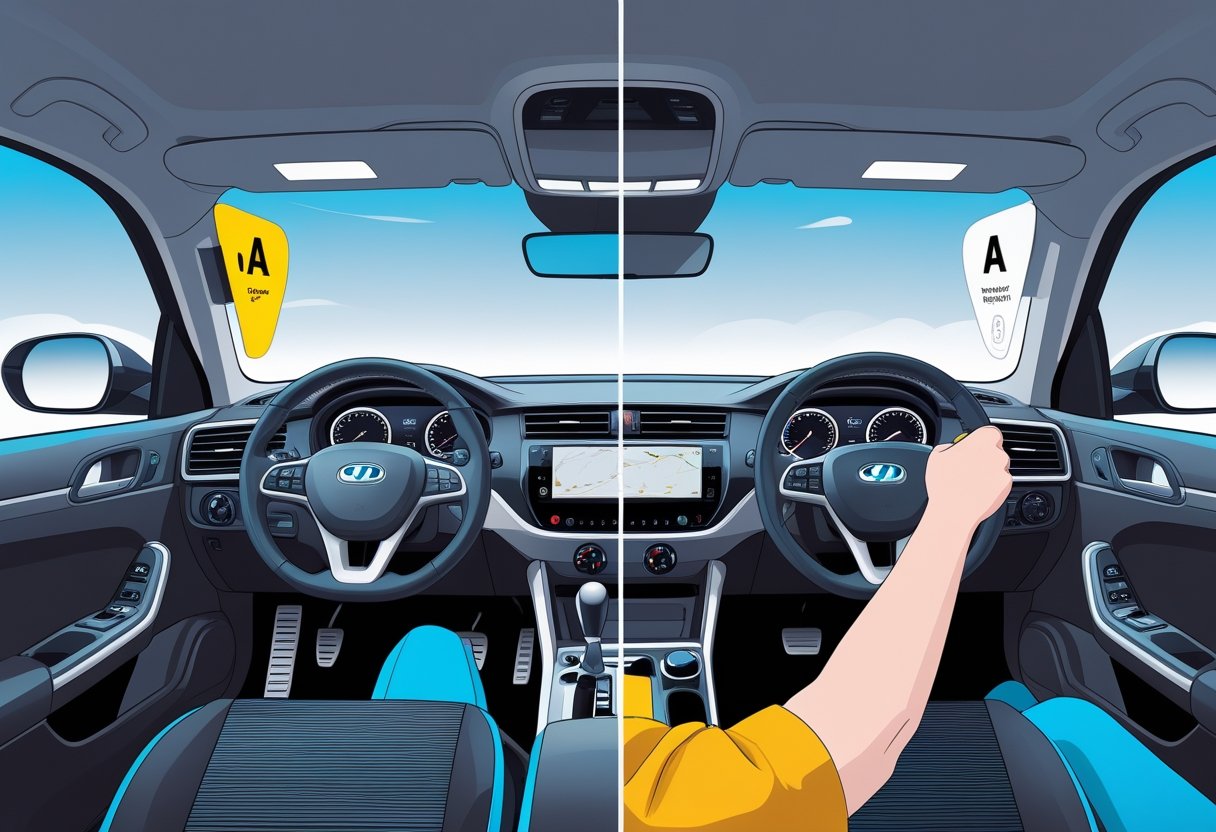
The licence you receive depends entirely on which type of car you take your driving test in, and this decision shapes what vehicles you can legally drive for years to come. Your transmission choice also determines how you’ll experience driving itself, from the daily commute to long motorway journeys.
How Licence Type Impacts Your Driving Future
When you pass your test in a manual car, you receive what we call a full driving licence. This gives you complete freedom to drive any car on UK roads, whether it has a manual gearbox or automatic transmission.
Pass in an automatic car, however, and your licence comes with restrictions. You can only drive vehicles without a manual clutch – primarily automatics and some hybrid models.
Here’s what each licence allows:
| Manual licence | Automatic licence |
|---|---|
| All manual cars | Automatic cars only |
| All automatic cars | Some hybrid vehicles |
| Work vehicles (vans, etc.) | Restricted vehicle choice |
| Holiday car hire flexibility | Limited rental options |
The difference becomes particularly important when life throws you curveballs. Need to borrow a friend’s manual car in an emergency? Drive a work van? Rent a car abroad where automatics cost more?
With an automatic licence, these situations become legally impossible unless you retake your test. We’ve seen countless drivers wish they’d chosen differently when faced with these real-world scenarios.
Understanding Manual and Automatic Transmissions
The fundamental difference lies in how you control the car’s power. Manual cars require you to operate a clutch pedal and gear stick, giving you complete control over when and how the car changes gears.
Automatic cars handle all gear changes for you. The car’s computer system decides when to shift up or down based on your speed and throttle input.
In a manual car, you’ll master clutch control for smooth starts and hill climbs. You’ll learn to coordinate three pedals and anticipate gear changes for overtaking or slowing down.
Automatic transmission removes this complexity entirely. You simply select Drive, Reverse, or Park, then use the accelerator and brake pedals like an advanced go-kart.
Both systems have their charm, but they create vastly different driving experiences. Manual driving connects you more directly to the car’s mechanics, whilst automatic driving lets you focus purely on road awareness and navigation.
The skills you develop during lessons will stick with you throughout your driving life, influencing how confident and capable you feel behind the wheel.
Comparing the Learning Experience: Manual vs Automatic
The learning journey differs dramatically between manual and automatic driving lessons. Manual lessons require mastering clutch control and complex coordination skills, whilst automatic lessons offer a gentler introduction with faster progress towards your test.
The Manual Learning Curve: Clutch Control and Coordination
Learning manual driving means developing several skills at once. You’ll need to master clutch control, which takes practice and patience to get right.
Hill starts often prove the trickiest challenge for new drivers. Finding that perfect balance point where the clutch meets the accelerator can feel overwhelming at first. Many learners stall repeatedly before getting the hang of it.
Manual driving lessons involve coordinating three pedals instead of two. Your left foot controls the clutch, whilst your right manages both brake and accelerator. Add gear changes into the mix, and you’re juggling quite a few tasks.
Key manual skills include:
- Smooth clutch engagement
- Timing gear changes properly
- Managing hill starts confidently
- Coordinating hands and feet together
The good news? Once these skills click, they become second nature. Most driving schools report that manual learners feel tremendous satisfaction when everything comes together. That “lightbulb moment” when clutch control finally makes sense is genuinely rewarding.
Automatic Driving Lessons: Smoother Path, Faster Progress
Automatic driving lessons remove the complexity of manual gears entirely. Without a clutch pedal to worry about, you can focus purely on steering, observation, and road positioning.
This simplified approach often leads to faster progress. You’ll spend less time practising basic car control and more time developing crucial driving skills like hazard perception and decision-making.
Automatic lessons typically cover:
- Smoother acceleration and braking
- Better focus on traffic awareness
- Reduced stress in stop-start traffic
- Quicker confidence building
Many driving schools notice automatic learners feel less overwhelmed during early lessons. You won’t experience the frustration of stalling at traffic lights or rolling backwards on hills.
However, some learners miss the hands-on control that manual driving provides. The connection between driver and car feels different when the gearbox handles everything automatically.
Lesson Costs and Availability in the UK
Manual driving lessons typically cost between £25-£35 per hour across most UK regions. They’re widely available because most driving schools offer manual instruction as standard.
Automatic driving lessons usually cost £30-£40 per hour. The higher price reflects increased demand and fewer available instructors. Some areas face shortages of automatic driving instructors.
| Lesson Type | Average Cost | Availability |
|---|---|---|
| Manual | £25-£35/hour | Excellent |
| Automatic | £30-£40/hour | Good to Limited |
Rural areas often struggle with automatic lesson availability. Urban centres like London, Manchester, and Birmingham offer better choice, though you might wait longer for bookings.
Many driving schools charge premium rates for automatic lessons because automatic cars cost more to purchase and maintain. Insurance costs are also higher for driving school vehicles with automatic transmission.
Book automatic lessons well in advance, especially during peak times like summer holidays when demand soars.
Driving Test Differences and Pass Rates
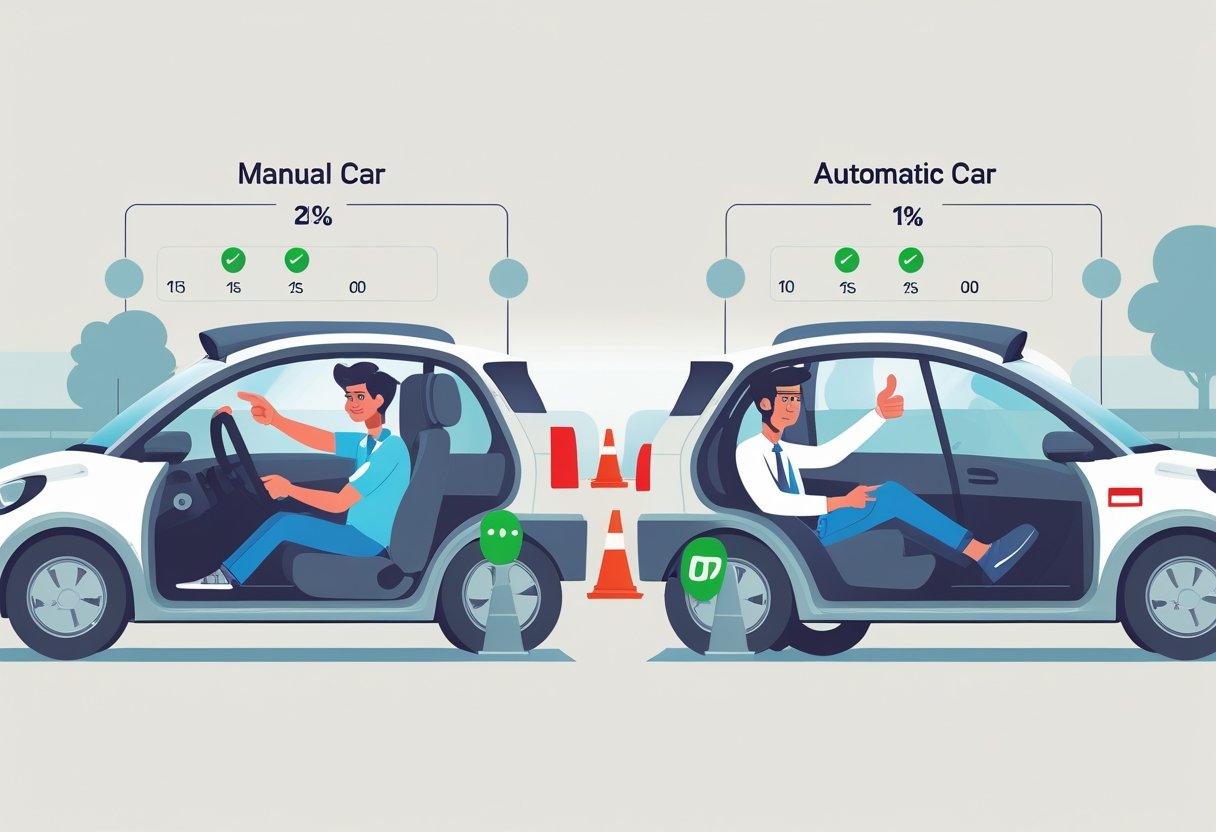
The practical DVSA driving test remains largely identical whether you choose manual or automatic, though the statistics reveal some fascinating trends. Manual tests currently show higher pass rates, whilst automatic tests are growing rapidly in popularity across the UK.
Key Points in the Practical DVSA Driving Test
Your DVSA driving test follows the same structure regardless of transmission type. You’ll tackle identical manoeuvres, navigate using sat-nav or road signs, and demonstrate the same core driving skills.
The test includes:
- Vehicle safety questions (Show Me, Tell Me)
- Independent driving section (20 minutes)
- One reversing manoeuvre
- General driving assessment
The main difference lies in what you won’t be assessed on with automatic tests. There’s no clutch control evaluation, hill starts become simpler, and you won’t face potential stalling situations.
Manual-specific assessments include:
- Smooth gear changes
- Proper clutch control
- Hill start technique
- Engine braking awareness
Your examiner focuses on the same safety standards either way. They’re looking for confident observation, proper positioning, and sound judgement in traffic situations.
Pass Rate Trends: What the Data Shows
Recent DVSA driving test data reveals interesting patterns that might surprise you. Manual tests maintain a slight advantage in pass rates, despite many learners assuming automatic would be easier.
Current pass rates:
- Overall UK average: 48%
- Automatic tests: 42.7% (2022-23)
- Manual advantage: Approximately 5-7% higher success rate
The trend towards automatic tests is undeniable. We’ve seen automatic passes rise from 13.4% to 17% of all successful tests in just one year.
This shift reflects changing car technology and learner preferences. Electric vehicles and urban driving make automatics increasingly attractive.
Growth factors include:
- Electric vehicle popularity
- Urban traffic considerations
- Physical accessibility needs
- Perceived learning simplicity
Yet the statistics suggest this perceived simplicity doesn’t guarantee easier success. Manual test preparation often builds stronger fundamental skills.
Common Challenges Learners Face
Understanding where people struggle helps you prepare more effectively for either test type. We see distinct patterns in manual vs automatic driving test failures.
Manual test challenges:
- Stalling at crucial moments
- Clutch control in slow traffic
- Hill starts under pressure
- Gear selection errors
Automatic test challenges:
- Overconfidence leading to observation errors
- Speed control without engine braking
- Creeping during manoeuvres
- Brake management in traffic
Common issues for both:
- Poor mirror usage and observation
- Inadequate road positioning
- Manoeuvre execution problems
- Independent driving navigation errors
The key insight? Both transmission types demand excellent hazard perception and traffic awareness. Your success depends more on developing solid driving fundamentals than mastering mechanical skills alone.
Many automatic learners underestimate preparation requirements, whilst manual learners sometimes focus too heavily on clutch work rather than broader driving skills.
Advantages of a Manual Licence
A manual licence opens doors that an automatic licence simply cannot. You’ll gain the freedom to drive any car and develop driving skills that put you in complete control of your vehicle.
Skills and Flexibility for the Road Ahead
Learning with a manual gearbox transforms you into a more confident and capable driver. We’ve seen countless learners discover abilities they never knew they had.
Manual driving teaches you to truly understand your car. You’ll feel every gear change, master clutch control, and develop an instinct for engine timing. These skills make you more aware of what’s happening under the bonnet.
Your licence becomes your passport to freedom. With a manual licence, you can drive both manual and automatic cars. An automatic licence restricts you to automatics only.
This flexibility proves invaluable when life throws curveballs your way. Need to borrow a friend’s car for a house move? Want to rent a vehicle abroad where manuals are common? Your manual licence has you covered.
The driving experience becomes richer too. You’ll tackle steep hills with confidence, navigate tricky parking situations with precision, and feel genuinely connected to your vehicle. Manual cars respond to your input in ways that help build proper driving instincts.
Budget-friendly Benefits of Manual Cars
Your wallet will thank you for choosing manual driving lessons. Manual cars typically cost less to buy, and this advantage extends well beyond your first purchase.
Maintenance costs stay lower with manual cars. The gearbox is simpler, with fewer complex parts that might go wrong. You won’t face expensive automatic transmission repairs down the road.
The second-hand market favours manual drivers too. More manual cars are available, giving you better choice and bargaining power. Insurance premiums can also work out cheaper for manual vehicles.
Fuel efficiency often improves with manual cars. You control exactly when to change gear, letting you optimise your driving for better mileage. This translates to real savings every time you fill up.
Even driving lessons themselves usually cost less per hour with manual instruction, though you might need a few extra sessions to master the clutch.
Benefits and Drawbacks of an Automatic Licence
Getting an automatic licence brings brilliant advantages like stress-free city driving and quicker learning, but it also means you’ll only be able to drive cars with automatic transmission. We’ll explore who benefits most from this route and what limitations you should consider.
Simplicity and Comfort: Who Thrives With Automatics
Learning to drive becomes remarkably straightforward when you remove the clutch from the equation. There’s no stalling at traffic lights, no hill starts to worry about, and certainly no frantic gear changes during your test.
Many learners find they need fewer driving lessons with automatic cars. Without clutch control to master, you can focus entirely on road awareness, hazard perception, and safe driving practices.
City driving becomes a breeze with automatic transmission. Stop-start traffic doesn’t phase you when there’s no clutch work involved. Your left foot gets a proper rest whilst your right simply manages the accelerator and brake.
People with certain physical considerations often find automatic driving more comfortable. If you have knee problems or limited mobility in your left leg, automatic cars remove the physical demands of clutch operation entirely.
Electric vehicles are almost always automatic, which means your licence will be perfectly suited for the future of motoring. As more electric cars hit UK roads, automatic drivers are already prepared for this shift.
The learning experience feels less overwhelming for many people. You’re essentially learning one fewer skill, which can boost your confidence behind the wheel from day one.
Restrictions and Things to Consider
Your licence will only allow you to drive automatic cars. This is the biggest limitation – no manual cars, vans, or vehicles with traditional clutch systems until you pass another test.
Job opportunities might be limited if employers need drivers who can handle manual vehicles. Delivery jobs, trade work, or roles requiring van driving often specify manual licence holders.
You’ll need to retake your practical test in a manual car if you ever want full driving privileges. The theory test stays valid, but you’ll pay for lessons and another practical examination.
Automatic cars typically cost more to buy and maintain. Insurance premiums can also be higher, and you’ll have fewer vehicle options when shopping for your first car.
Rental cars abroad are often manual transmission, particularly in Europe. Holiday driving could become tricky or more expensive if you need to specifically request automatic vehicles.
Some driving enthusiasts feel they miss out on the complete driving experience. Manual transmission offers more control over the vehicle, especially on country roads or motorway driving.
Instructor availability can be more limited for automatic lessons in some areas, potentially extending your learning timeline or increasing costs through higher demand.
Future Trends: Electric Cars and Licence Choices
The 2030 ban on new petrol and diesel cars is reshaping how we think about driving licences. With 61% of young drivers planning to get automatic-only licences, the future is becoming clearer every day.
The Rise of EVs: What It Means for Learner Drivers
Electric vehicles don’t have clutches or gears. They use automatic transmission by design.
This simple fact changes everything for new drivers. When most cars on the road are electric, manual licences become less useful.
We’re seeing this shift already. One in four driving tests now happens in automatic cars. That’s double what it was ten years ago.
Young drivers are thinking ahead. They know that by the time they’re buying their second or third car, electric will likely be their main option.
The maths is straightforward too. If you learn automatic now, you’re ready for the electric future. If you learn manual, you might need to adapt later.
Some driving schools already position automatic lessons as the modern choice. They’re not wrong.
Thinking Ahead: How the Car Market is Changing
The car market tells us where we’re heading. Electric car sales keep growing while manual car sales keep dropping.
By 2030, every new car sold will be automatic. The used car market will still have manuals, but they’ll become rarer each year.
Here’s what this means for learners:
- Manual skills become less valuable over time
- Automatic licences match the future car market
- Electric cars are quieter and easier to drive
- Charging networks are expanding rapidly
We expect the tipping point around 2027 to 2029. That’s when most driving instructors will switch to electric cars.
Smart learners are already making this connection. They’re choosing licences that work with tomorrow’s cars, not just today’s.
The transition might feel big, but it’s happening gradually. You have time to make the right choice for your future.
Making Your Decision: Personal Preferences and Practical Tips
Your choice between manual and automatic isn’t just about the test, it’s about how you’ll drive for years to come. Think about where you’ll be driving, what cars you might own, and which option will help you become the safest, most confident driver possible.
Lifestyle and Long-Term Plans
We reckon the best way to choose is by looking at your actual life, not just what sounds easier right now. If you’re planning to live in busy cities like London or Manchester, automatic might suit your daily commute better. Stop-start traffic becomes less tiring when you’re not constantly working the clutch.
Consider these lifestyle factors:
- Budget constraints – Manual cars typically cost less to buy and maintain
- Physical comfort – Automatic reduces leg strain during long journeys
- Career plans – Some jobs require manual licence flexibility
- Family needs – Will you share cars with manual drivers?
Think about the next five years too. Many new cars are going electric, which means automatic transmissions. But plenty of rental cars, work vehicles, and older family cars will still be manual. Getting a manual licence now gives you choices later without retaking your test.
Consulting Instructors and Trying Both Options
The smartest move we’ve seen learner drivers make? Having a lesson in both types before committing. Most driving schools offer trial lessons, and good instructors will be honest about which suits your learning style better.
Questions to ask instructors:
- How do my coordination skills look with clutch control?
- Which option might help me pass faster?
- What’s the local availability for lessons and test cars?
Some learners struggle with clutch control despite multiple manual driving lessons. There’s no shame in switching to automatic driving lessons if that’s what works. Other students find that mastering manual gives them better overall driving skills and confidence.
Ring a few driving schools in your area. Compare their experience with both transmission types and ask about their pass rates.
Building Confidence and Becoming a Safe Driver
Here’s what really matters: becoming a safe driver who feels confident behind the wheel. Whether you choose manual or automatic, focus on developing strong observation skills, smooth vehicle control, and good decision-making.
Key driving skills remain the same:
- Mirror checks and hazard awareness
- Speed control and road positioning
- Clear communication with other road users
- Calm responses to unexpected situations
We’ve noticed that some learners worry automatic is “cheating” somehow. That’s nonsense. What makes you a safe driver is your ability to read the road, anticipate problems, and react appropriately. The transmission type doesn’t change those fundamentals.
Choose the option that lets you focus on these crucial skills rather than fighting with the mechanics of gear changes. Your confidence will grow faster when you’re not constantly worried about stalling at traffic lights.
Frequently Asked Questions
Many learners face similar questions about choosing between manual and automatic licences. These answers cover practical concerns about insurance costs, future flexibility, and how your licence choice affects where and what you can drive.
What are the benefits of learning to drive with a manual transmission compared to an automatic?
Learning to drive with a manual gives you a full Category B licence. This means you can legally drive both manual and automatic vehicles for the rest of your driving life.
Manual training develops stronger car control skills. You’ll master clutch coordination and gear changes, which many driving instructors believe creates more confident drivers overall.
Manual lessons teach you to handle challenging situations better. Hill starts, for instance, require precise clutch control that builds your understanding of how cars actually work.
Your licence flexibility is massive. Whether you fancy driving a classic sports car, need to borrow a friend’s manual vehicle, or take on work requiring manual driving skills, you’ll be ready.
Is there a noticeable difference in insurance costs between manual and automatic cars for new drivers?
Manual cars typically cost less to insure for new drivers. Insurance companies often view manual drivers as having better car control skills, which can translate to slightly lower premiums.
Automatic vehicles sometimes attract higher insurance costs. This happens partly because repair costs for automatic gearboxes can be more expensive than manual clutches and gearboxes.
The difference isn’t always dramatic though. Your age, location, and chosen vehicle model usually have bigger impacts on your insurance costs than transmission type alone.
We’d recommend getting quotes for both types before making your final decision. Some insurers might surprise you with competitive automatic rates, especially as these become more common.
Can you switch to driving an automatic car later if you initially learn and pass your test in a manual vehicle?
Absolutely! This is one of the biggest advantages of getting your manual licence first. You can drive any automatic vehicle immediately without additional tests or paperwork.
Many drivers who pass their manual test end up preferring automatics later. Perhaps they move to a city with heavy traffic, develop mobility issues, or simply want the convenience of automatic driving.
Your manual licence covers everything. Electric vehicles, hybrid cars, traditional automatics – they’re all fair game once you’ve passed your manual test.
This flexibility makes manual licences popular with young drivers. You’re future-proofing your driving options without limiting yourself to one transmission type.
What should I consider when choosing between a manual or automatic driving licence regarding future car choices?
Think about your long-term driving plans. If you dream of driving vintage cars, sports vehicles, or certain commercial vehicles, many of these still use manual transmissions.
Electric vehicles are always automatic, so if you’re planning to go electric soon, an automatic licence might suit your needs perfectly well.
Consider your family situation too. Older family cars, borrowed vehicles, and rental cars abroad often come with manual gearboxes, especially outside major cities.
Work requirements matter as well. Some driving jobs, taxi work, or delivery roles specifically require manual licences because of the vehicles they use.
Your budget plays a role here. Manual cars are generally cheaper to buy and maintain, though this gap is narrowing as automatics become more popular.
Are there any significant restrictions if I opt for an automatic licence over a manual one?
Your automatic licence restricts you to automatic vehicles only. You cannot legally drive any manual car, van, or motorcycle without taking another practical test.
This restriction appears on your licence itself. Traffic police can spot this immediately, and driving a manual vehicle with an automatic-only licence is a serious offence.
Upgrading later requires another practical driving test. You’ll need to book this by phone with the DVSA – online booking isn’t available for upgrades.
The good news is you won’t need to retake your theory test. Once you pass the manual practical test, your licence gets upgraded to full manual privileges.
Some rental car companies abroad might have limited automatic options. This could affect holiday driving or business travel in certain countries.
How might the choice between a manual and an automatic licence impact my driving experience in urban versus rural environments?
Urban driving heavily favours automatic transmissions. Stop-start traffic, frequent gear changes, and hill starts in busy areas become much less tiring with an automatic.
Your left leg will thank you during rush hour commutes. Constant clutch work in heavy traffic can be genuinely exhausting, especially for newer drivers.
Rural driving offers different advantages for manual drivers. Engine braking down steep hills, better control on winding country roads, and precise speed management feel more natural with manual gears.
Automatic cars handle rural driving perfectly well though. Modern automatics are sophisticated enough to cope with any driving environment you’ll encounter.
Consider where you’ll do most of your driving. If it’s mainly city centre commuting, an automatic licence might serve you brilliantly. Mixed driving environments might favour the flexibility of a manual licence.