

Provisional Licence Rules for Motorcycle and Moped Riders: Your Essential Guide
Getting your first motorcycle or moped licence in the UK is an exciting milestone, but understanding the provisional licence rules can feel overwhelming at first.
The good news is that we’re here to break down everything you need to know in simple terms. Whether you’re eager to zip around on a 50cc moped or dream of cruising on a 125cc motorcycle, knowing the rules will help you get on the road safely and legally.
A provisional licence is your gateway to learning, it allows you to ride specific motorcycles and mopeds whilst you’re building your skills, but comes with important restrictions like displaying L-plates and completing CBT training. These rules aren’t meant to hold you back; they’re designed to keep you safe whilst you develop confidence on two wheels. We understand that navigating licensing requirements can seem daunting, but once you grasp the basics, you’ll see it’s quite straightforward.
From understanding what vehicles you can ride to mastering the testing process, we’ll guide you through every step of your journey. You’ll discover how CBT training works, what restrictions apply during your learning phase, and how to progress towards your full licence. Let’s get you prepared for the adventure ahead, because there’s nothing quite like the freedom of riding your first motorcycle or moped.
What Is a Provisional Licence for Motorcycle and Moped Riders?
A provisional licence serves as your legal permission to learn on two wheels, whether you’re drawn to a zippy moped or a powerful motorcycle. You’ll need this essential document before you can start your CBT training, and the age requirements differ depending on what type of bike catches your fancy.
When You Need a Provisional Licence
We can’t stress this enough – you absolutely must have a provisional licence before you begin any motorcycle or moped training. It’s the foundation of your entire riding journey.
You need a provisional licence to:
- Complete your CBT (Compulsory Basic Training)
- Practice riding on public roads
- Take your theory test
- Sit your practical motorcycle tests
If you already hold a full car driving licence, brilliant news! You might already have provisional motorcycle entitlements included. However, we still recommend checking your licence carefully to ensure you have the right categories.
The only exception applies if you passed your car test before 1st February 2001. In this case, you can ride a moped without L plates, though we’d still encourage taking CBT for safety.
Different licence categories cover:
- AM licence: Mopeds up to 28mph (from age 16)
- A1 licence: Light motorcycles up to 125cc and 11kW (from age 17)
- A2 licence: Medium motorcycles up to 35kW (from age 19)
- A licence: Any motorcycle (from age 24, or 20 with A2 experience)
Eligibility and Age Requirements
Your age determines which bikes you can legally learn to ride, and we’ve found that many new riders get confused about these requirements. Let’s clear things up.
For moped riders, you can apply for your provisional licence once you turn 16. This covers vehicles up to 50cc with a maximum speed of 28mph – perfect for nipping around town.
For motorcycle riders, you need to be at least 17 before applying for an A1 provisional licence. This opens up 125cc motorcycles, giving you much more flexibility.
We always tell riders to apply when they’re 15 years and 9 months old. This timing means your licence arrives right around your 16th birthday, so you won’t waste precious riding weather waiting for paperwork.
Age requirements breakdown:
- 16 years: AM category (mopeds)
- 17 years: A1 category (125cc motorcycles)
- 19 years: A2 category (medium motorcycles)
- 24 years: A category (unlimited motorcycles)
Remember, these ages apply to when you can start learning – not when you can ride solo without restrictions.
How to Apply for a Provisional Licence
Getting your provisional licence has never been easier, and we’re here to guide you through the process step by step.
Online application is by far the quickest method. Visit the official DVLA website and use their secure online service. You’ll need your National Insurance number, a valid UK address, and payment details.
The online application costs £34 and typically processes within a few days. You’ll receive your licence by post once approved.
Postal application remains an option if you prefer traditional methods. Download form D1 from GOV.UK, complete it carefully, and post it with the required documents and a cheque for £43.
What you’ll need:
- Valid UK address where you’ve lived for at least 185 days
- National Insurance number
- Passport or birth certificate
- Recent passport-style photograph (postal applications only)
If you hold an EU licence, you’ll need to either exchange it for a GB licence or register it with DVLA before starting CBT training. This extra step ensures everything runs smoothly when you begin your motorcycle journey.
We recommend double-checking all your details before submitting – small mistakes can delay processing and push back your riding plans.
Learning to Ride: Rules and Restrictions with a Provisional Licence
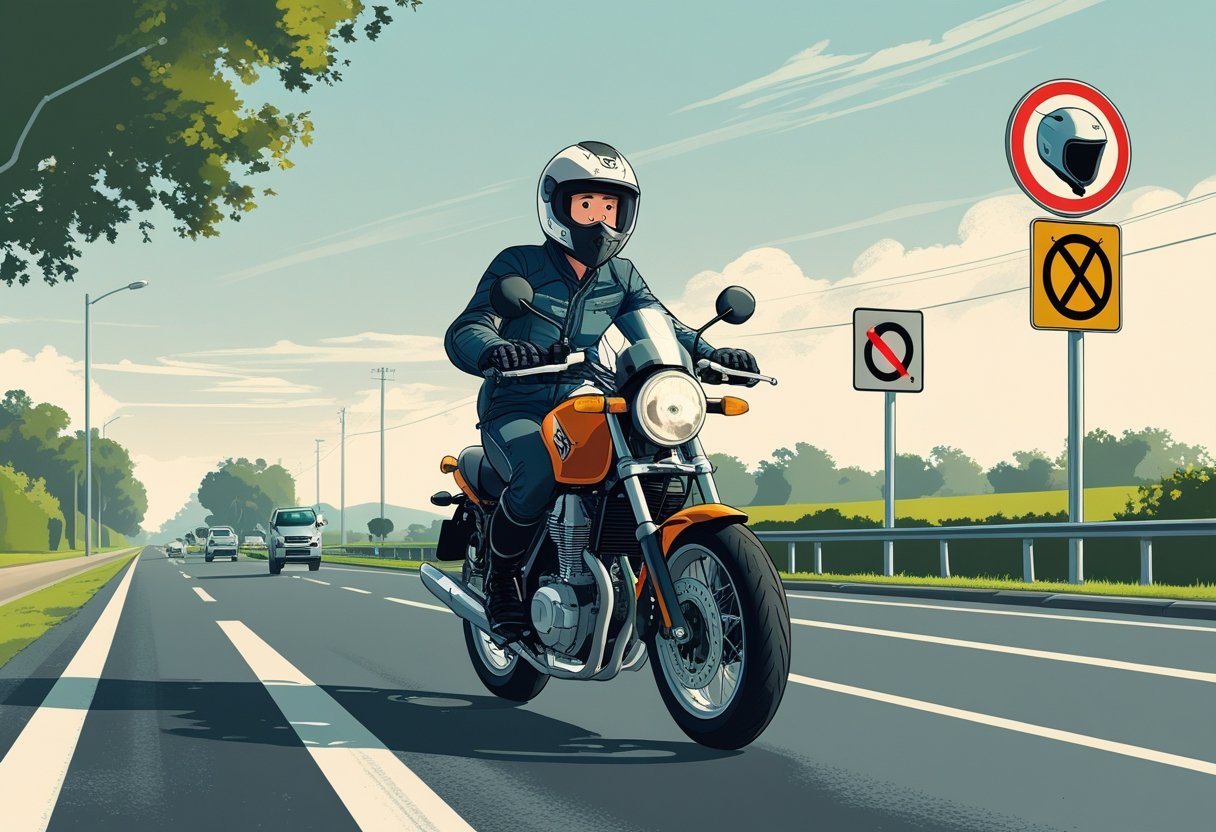
Once you’ve got your provisional licence sorted, there are specific rules about what you can ride and how you need to display your learner status. You’ll also need proper insurance coverage before you can legally hit the road.
Vehicles You Can Ride on a Provisional Licence
With a provisional motorcycle licence, you can ride motorcycles up to 125cc with a maximum power output of 11kW after completing your CBT. This gives you plenty of options for learning the ropes.
For moped licence holders, you’re looking at vehicles with engines up to 50cc and a top speed of 45km/h. These are perfect for building confidence before moving up to larger bikes.
The age requirements are straightforward. You need to be at least 16 to ride a moped and 17 for motorcycles. We recommend starting with a moped if you’re new to two wheels – it’s a brilliant way to develop road sense.
Motor tricycles have different rules. If you’re over 21 with a full car licence, you can ride any power tricycle. Otherwise, you’ll need the appropriate motorcycle entitlement and CBT completion.
Remember, you can only ride unaccompanied after completing your CBT course. Before that, you’re limited to training with an approved instructor.
L Plates: Display and Legal Requirements
L plates are absolutely essential when riding on a provisional licence. You must display them clearly on both the front and rear of your vehicle – no exceptions here.
The plates need to be the correct size and specification. They should measure 178mm by 203mm with a red ‘L’ on a white background. In Wales, you can choose between L plates or D plates (for ‘Dysgwr’).
Position matters enormously. Your plates mustn’t obscure lights, number plates, or indicators. They should be clearly visible to other road users from a reasonable distance.
You can’t carry passengers whilst displaying L plates. This includes pillions on motorcycles or passengers in sidecars. It’s a safety measure that helps you focus completely on developing your riding skills.
Remove your L plates as soon as you pass your test. Keeping them on when you have a full licence is actually illegal and could land you in trouble with the police.
Motorbike Insurance for Provisional Riders
Motorbike insurance is a legal requirement before you can ride on public roads. Don’t even think about heading out without proper cover – the consequences simply aren’t worth the risk.
Provisional riders often face higher premiums, but there are ways to keep costs manageable. Consider third-party cover initially, though comprehensive policies offer better protection for your bike.
Many insurers offer specific policies for learner riders. These often include cover for CBT training and sometimes provide discounts when you pass your test.
Shop around thoroughly – prices vary dramatically between providers. Some specialise in covering new riders and understand the unique challenges you face.
Your CBT certificate is usually required when getting quotes. Keep it handy when contacting insurers, as they’ll need the details to provide accurate pricing.
Compulsory Basic Training (CBT): Your First Key Step
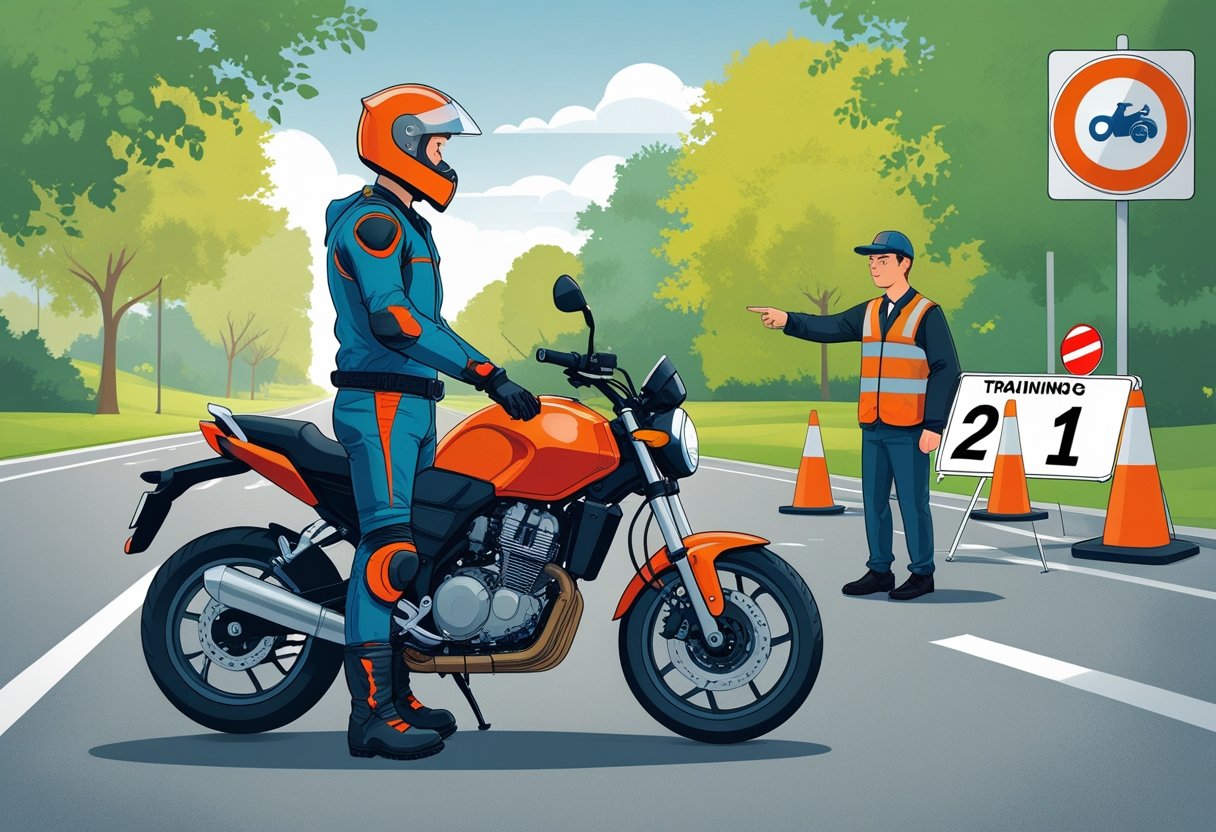
CBT training involves five essential elements including safety equipment introduction, basic machine control, and accompanied road riding. You’ll book through approved training schools and complete this one-day course at your own pace.
What Is Involved in the CBT Course
Your CBT course takes you through five structured elements designed to build your confidence on two wheels. We’ll start with an introduction to safety equipment, ensuring you understand how helmets, gloves, and protective clothing keep you safe.
Next comes getting familiar with your machine. You’ll learn about basic controls, how to start the engine, and essential safety checks. This hands-on approach helps you feel comfortable before moving forward.
Off-road training forms the heart of your CBT experience. Here’s what you’ll master:
- Basic bike control and balance
- Moving off and stopping smoothly
- Slow-speed manoeuvres
- Emergency stops
- Figure-of-eight exercises
The on-road element sees you riding with an instructor nearby. You’ll experience real traffic conditions whilst receiving guidance through a radio system. This builds your road craft skills gradually.
Finally, you’ll receive a debrief covering what you’ve learnt and advice for continued safe riding. Remember, CBT isn’t a test you pass or fail – it’s training that prepares you for solo riding.
How to Book and Pass CBT Training
Booking your CBT training starts with finding an approved training centre near you. Most schools offer online booking systems where you can choose dates that suit your schedule.
You’ll need your provisional licence before attending. Without this, training centres cannot proceed with your course. Bring both parts of your licence on the day.
What to bring:
- Both parts of your provisional licence
- Appropriate clothing (long sleeves, sturdy footwear)
- Payment for the course
The course typically costs between £100-150 depending on your location. Some centres include bike and helmet hire, whilst others charge extra.
There’s no formal test to worry about. Your instructor will assess whether you’re ready to ride independently with L plates. If you need more time, reputable schools offer additional training without pressure.
Most learners complete CBT in one day, but don’t stress if you need longer. Everyone learns at different speeds, and good instructors adapt to your individual needs.
Testing Requirements: Theory and Practical
Getting your full motorcycle or moped licence means conquering two main hurdles: the theory test and the practical assessment. You’ll need to pass both within a two-year window to avoid starting over from scratch.
Motorcycle Theory Test for Provisional Licence Holders
The motorcycle theory test is your first proper challenge on the road to freedom. This computer-based exam covers everything from road signs to hazard perception, and you’ll need to nail it before booking your practical test.
What’s included in the test:
- Multiple-choice questions about road rules
- Hazard perception video clips
- Safety knowledge for motorcycles and mopeds
The theory test isn’t just a box-ticking exercise. It builds the foundation you’ll need when you’re out there on two wheels for real.
You’ve got plenty of study materials to choose from. The official DVSA guides are brilliant starting points, covering all the essential skills you’ll use daily as a rider.
Top tip: Don’t rush into booking your theory test. Spend proper time studying the materials. The knowledge you gain here will serve you well beyond passing the exam.
Motorcycle Practical Test: What to Expect
Once you’ve conquered the theory test, the practical assessment awaits. This hands-on evaluation has two distinct modules that test your real-world riding abilities.
Module 1 covers:
- Off-road manoeuvres and control
- Slow-speed handling skills
- Emergency stops and avoidance
Module 2 includes:
- On-road riding in traffic
- Independent riding sections
- Safety checks and demonstrations
You’ll need to pass both modules to earn your full licence. The good news? Your CBT training will have prepared you for most of what’s coming.
Remember, you have two years from your theory test pass date to complete both practical modules. Miss this deadline, and you’ll be back to square one with the theory test.
The practical test might feel daunting, but thousands of riders pass every month. With proper preparation and practice, you’ll join their ranks soon enough.
Progressing to a Full Motorcycle or Moped Licence
Moving from your provisional licence opens up different categories based on your age and riding goals. You can choose between direct access for immediate full rights or take a step-by-step approach through the progressive route.
Licence Categories: AM, A1, A2 and A Explained
Let’s break down what each licence category actually means for your riding freedom.
Category AM covers mopeds up to 50cc with a maximum speed of 45km/h. You’ll need to be at least 16 years old to get started. This is perfect if you want basic transport around town.
Category A1 lets you ride motorcycles up to 125cc with a power output not exceeding 11kW. You can apply at 17 years old. Once you pass, those L-plates come off and you can carry a passenger.
Category A2 opens doors to motorcycles up to 35kW (about 47bhp). You must be 19 or older to take this test. This gives you access to a brilliant range of mid-sized bikes that are perfect for building confidence.
Category A is the full unrestricted licence. No power limits, no engine size restrictions. You can ride anything from a 125cc commuter to a 1000cc superbike. The minimum age is 24, or 20 if you’ve held an A2 licence for at least two years.
Each category requires passing both theory and practical tests. Your CBT certificate remains valid throughout this journey.
The Direct and Progressive Access Routes
We’ve got two main pathways to help you reach your riding goals, depending on your age and experience.
Direct Access Route gets you straight to the licence you want. If you’re 24 or older, you can jump directly to the full A licence. At 19, you can go straight for the A2 licence. This route saves time but means tackling more powerful bikes from the start.
Progressive Access Route lets you build skills gradually. Start with A1 at 17, then progress to A2 at 19. After holding your A2 licence for two years, you can upgrade to the full A licence at just 20 years old.
The progressive route often feels less daunting. You develop real-world experience on smaller bikes before moving up. Many riders find this builds genuine confidence rather than just test-passing ability.
Both routes require the same tests at each level. You’ll face Module 1 (off-road manoeuvres) and Module 2 (on-road riding). The bike categories for testing get more powerful as you progress up the licensing ladder.
Essential Rules and Safety for Provisional Riders
Once you’ve got your provisional licence sorted, there are crucial safety rules you’ll need to follow whilst you’re learning. Carrying passengers is strictly off-limits, proper safety gear isn’t optional, and developing smart riding habits from day one will set you up for success on the roads.
Carrying Passengers and Pillion Passenger Rules
Here’s something that might surprise new riders – you cannot carry a pillion passenger on your provisional motorcycle licence. This rule applies whether you’ve completed your CBT or not.
The law is crystal clear on this point. Until you pass your full motorcycle test, it’s just you and the bike. No mates, no partners, no exceptions.
This isn’t just red tape – there’s genuine wisdom behind this restriction. Learning to balance a motorcycle takes considerable skill and concentration. Adding a pillion passenger changes everything about how your bike handles, brakes, and corners.
Your bike will feel completely different with extra weight on the back. The suspension behaves differently, braking distances increase, and acceleration changes dramatically.
Even experienced riders need time to adjust when carrying passengers. As a learner, you’ve got enough on your plate mastering the basics without these added complications.
The good news? Once you pass your test, you’ll be free to share the joy of motorcycling with others – but only then.
Helmet and Protective Gear Requirements
Your motorcycle helmet isn’t just recommended – it’s legally required every single time you ride. The helmet must meet British safety standards, specifically BS 6658:1985 or ECE 22.05.
We can’t stress this enough: your helmet could save your life. Choose one that fits properly, sits snugly without being uncomfortable, and doesn’t move around when you shake your head.
Beyond helmets, protective clothing makes an enormous difference to your safety. Whilst not legally required, proper motorcycle gear is your best friend on the roads.
Consider investing in:
- Motorcycle jacket with armour at elbows and shoulders
- Protective gloves for grip and hand protection
- Sturdy boots that cover your ankles
- Motorcycle trousers or reinforced jeans
Your regular clothes won’t protect you in a slide. Motorcycle-specific gear is designed to handle the unique challenges of riding, from weather protection to impact resistance.
Remember, you’re more exposed than car drivers. Every piece of protective kit you wear increases your chances of walking away from an incident unharmed.
Motorcycle Safety Tips for New Riders
Motorcycle safety begins with developing excellent observation skills. Your eyes are your most important safety tool – use them constantly to scan for hazards, check mirrors, and assess road conditions ahead.
Position yourself thoughtfully on the road. Avoid riding in car drivers’ blind spots, and always assume you’re invisible to other road users. Bright, reflective clothing helps enormously with visibility.
Weather changes everything for motorcyclists. Rain makes roads slippery, wind can push you around, and cold affects your reaction times. Adjust your riding style accordingly and don’t be afraid to postpone rides in challenging conditions.
Practice emergency stops and slow-speed manoeuvres regularly. These skills could prove invaluable when you need them most. Find a quiet car park and spend time getting comfortable with your bike’s responses.
Keep your distance from other vehicles. You need more space than you think for emergency braking, especially in wet conditions.
Finally, never ride beyond your abilities or comfort zone. There’s no shame in taking things slowly whilst you build confidence and skills. Every expert rider started exactly where you are now.
Frequently Asked Questions
Let’s tackle the most common questions we hear about provisional licence requirements, age limits, and the journey from learner to fully qualified rider.
What age must I be before I can start learning to ride a moped or motorcycle?
You can start your moped adventure at just 16 years old! This makes mopeds brilliant for getting around when you’re still at college or starting your first job.
For motorcycles, you’ll need to wait until you’re 17. The good news is you can apply for your provisional licence up to three months before your birthday, so you’ll be ready to crack on with training as soon as you hit the right age.
We always recommend getting your application in early. Your licence typically arrives within a week when you apply online, which means no hanging about once you’re legally old enough to start learning.
Are there specific engine size limitations for a provisional motorcycle licence holder?
Absolutely, and these limits are there to keep you safe whilst you’re finding your feet. With a provisional licence, you’re restricted to motorcycles with a maximum engine size of 125cc and a power output no greater than 11kW.
This might sound limiting, but 125cc bikes are actually perfect for learning. They’re nimble, forgiving, and give you plenty of confidence to master the basics without overwhelming power.
Once you’ve completed your CBT, these restrictions remain in place until you pass your full motorcycle test. Think of it as a sensible stepping stone rather than a barrier.
Do I need to display L plates on my motorbike or moped when learning to ride with a provisional licence?
Yes, L plates are absolutely essential when you’re learning. You must display them clearly on both the front and back of your bike, and they need to be visible from a reasonable distance.
In Wales, you can choose to display D plates instead of L plates if you prefer. Both serve exactly the same purpose and are equally valid.
The only exception is if you passed your car driving test before 1st February 2001. In this case, you can ride a moped up to 50cc without L plates, though we’d still recommend some training to stay safe on the roads.
Can you outline the necessary steps to obtain my full motorcycle licence from a provisional status?
Your journey starts with getting that provisional licence sorted, then booking your CBT (Compulsory Basic Training). The CBT gives you the foundation skills you’ll need and allows you to ride on the road with L plates.
Next up is the theory test, which you’ll need to pass before tackling the practical exam. The theory covers everything from road signs to hazard perception, so proper preparation really pays off here.
Your practical test comes in two parts. There’s the off-road section covering manoeuvres and vehicle safety checks, followed by the on-road riding assessment where an examiner follows you via radio.
Remember, you’ve got two years from passing your theory test to complete both parts of the practical. If you don’t manage it within this timeframe, you’ll need to start the whole process again.
What are the restrictions on carrying passengers as a provisional motorcycle licence holder?
Here’s one restriction that’s non-negotiable: no passengers whatsoever whilst you’re on a provisional licence. This applies whether you’ve just started learning or you’re days away from taking your test.
We know it’s tempting to give your mate a lift, especially when they’re offering to split the petrol money! However, carrying passengers requires skills and experience that come with time and proper training.
Once you pass your full test, you’ll be free to carry passengers on suitable motorcycles. Until then, it’s strictly a solo journey, and for very good safety reasons.
Is it compulsory to take professional riding lessons before attempting the motorcycle practical test?
You’re not legally required to take professional lessons beyond your CBT, but we’d strongly encourage you to invest in proper instruction. Most successful candidates do take additional lessons with qualified instructors.
Professional instructors know exactly what the examiners are looking for. They’ll help you polish those tricky manoeuvres and build the road craft that makes all the difference on test day.
You can certainly practise with experienced friends or family members, but they must hold a full motorcycle licence for the category you’re learning. However, nothing quite replaces the structured approach and expertise that comes from professional tuition.
Many riding schools offer intensive courses or pay-as-you-go lessons, so you can find something that fits your budget and learning style.