

Rules About Driving on Motorways with an Instructor: Essential Guide for Learners
Learning to navigate motorways can feel daunting for new drivers, but the good news is you don’t have to wait until after passing your test to gain this crucial experience. Since June 2018, learner drivers in England, Scotland, and Wales can take motorway lessons with an approved driving instructor in a dual-controlled car. This change opens up valuable opportunities to build confidence and skills on these high-speed roads whilst still under professional guidance.
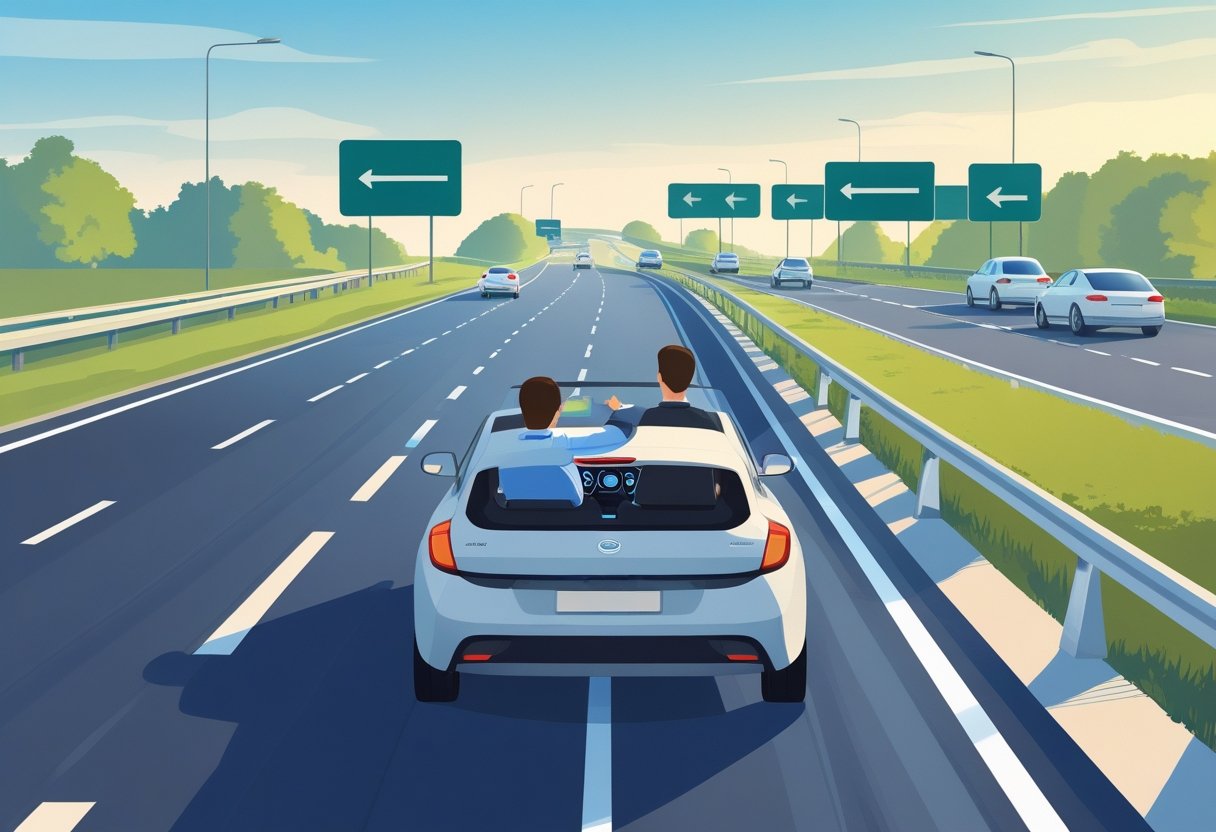
We understand that the thought of joining fast-moving traffic might seem overwhelming at first. However, motorway driving follows clear rules and patterns that, once mastered, can actually make these roads some of the safest to drive on. With proper preparation and the right instructor beside you, you’ll discover that motorways offer predictable driving conditions without the complexity of roundabouts, traffic lights, or pedestrian crossings.
Throughout this guide, we’ll walk you through everything you need to know about motorway lessons, from understanding who’s eligible to take them through to making the most of your learning experience. You’ll learn about essential safety rules, how to prepare for your first lesson, and the specific skills that will help you become a confident motorway driver for life.
Understanding Who Can Drive on UK Motorways
UK motorways have specific rules about who’s allowed to use them, with special provisions for learner drivers since 2018. Most vehicles can access motorways, but certain restrictions apply to provisional licence holders and specific vehicle types.
Eligibility for Learner Drivers
Since June 2018, we’ve seen a welcome change in motorway rules for learner drivers. If you hold a provisional licence, you can now drive on motorways, but only under strict conditions.
You must be accompanied by a DVSA Approved Driving Instructor (ADI). This isn’t negotiable. Your mate who’s been driving for years won’t cut it here.
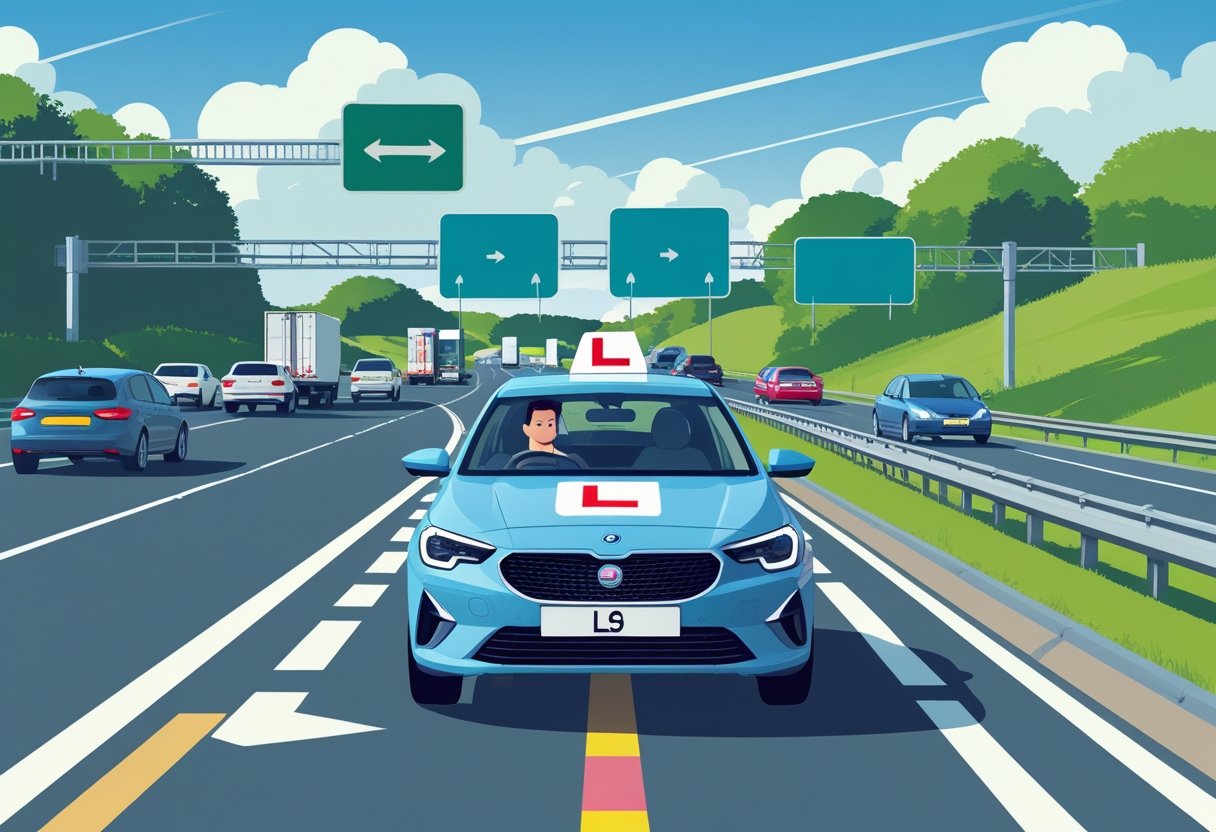
The car needs dual controls and must display red L plates (or D plates if you’re in Wales). These safety measures ensure your instructor can take control if needed.
Key requirements for motorway driving:
- DVSA approved instructor present
- Dual-controlled vehicle
- Proper L or D plates displayed
- Valid provisional licence
Your instructor will assess whether you’re ready for motorway lessons. They won’t take you onto fast-moving traffic until you’ve mastered basic driving skills on quieter roads.
This change has been brilliant for new drivers. Getting motorway experience before your test means you’ll feel more confident when driving independently later.
Motorways Versus Dual Carriageways
Many new drivers get confused about the difference between motorways and dual carriageways. Understanding this distinction matters because different rules apply.
Motorways are major roads designed for fast traffic. They have blue signs with white text and specific entry/exit points called slip roads. You’ll see the M prefix (like M1 or M25).
Dual carriageways are roads with a central reservation separating opposing traffic lanes. They can look similar to motorways but aren’t the same thing legally.
Main differences:
| Feature | Motorways | Dual Carriageways |
|---|---|---|
| Signs | Blue with white text | Green with white text |
| Speed limits | Usually 70mph | Varies (often 70mph) |
| Access | Slip roads only | Various junctions |
| Learner rules | Instructor required | No special restrictions |
On dual carriageways, learner drivers can practise without an instructor. This makes them perfect for building confidence before tackling motorways.
Excluded Vehicles and Restrictions
Not everyone can use UK motorways. The restrictions exist for safety reasons, keeping slower vehicles off high-speed roads.
Vehicles that cannot use motorways:
- Motorcycles under 50cc
- Bicycles and mopeds
- Agricultural vehicles
- Horse riders
- Pedestrians
- Powered wheelchairs and mobility scooters
Provisional motorcycle licence holders face a complete ban from motorways. Unlike car learners, they can’t use motorways even with supervision.
Certain larger vehicles face lane restrictions too. Lorries over 7.5 tonnes and vehicles towing trailers cannot use the right-hand lane on three-lane motorways.
These rules help maintain steady traffic flow and reduce accidents. Mixing very slow vehicles with cars travelling at 70mph creates dangerous situations.
If you’re caught using a motorway illegally, you’ll face penalties. Police actively enforce these rules, particularly around major junctions where prohibited vehicles sometimes slip through.
Essential Rules for Learners on the Motorway
The law changed in June 2018 to allow learner drivers on motorways, but only under strict conditions. You’ll need a DVSA-approved driving instructor and a dual-controlled vehicle with proper L plates displayed.
Legal Requirements for Supervision
We can’t stress this enough: you must have a qualified instructor with you at all times on the motorway. This isn’t just good advice – it’s the law.
Private practice with family or friends is strictly forbidden on motorways. Even if your mum or dad has decades of driving experience, they cannot supervise you on these high-speed roads.
The instructor must be satisfied that you’re competent enough for motorway lessons before taking you onto these roads. They’ll assess your basic driving skills first.
Key legal points:
- Only DVSA-approved instructors can supervise learners on motorways
- Private supervisors (parents, friends, relatives) are not permitted
- Motorway lessons are optional, not compulsory
- The rule applies only to cars, not motorcycles
Breaking these rules can result in penalties for both you and whoever’s supervising. We always recommend checking your instructor’s credentials before booking motorway lessons.
Approved Instructors and Dual-Controlled Vehicles
Your driving instructor must be officially approved by the DVSA (Driver and Vehicle Standards Agency). Look for their green badge or certificate as proof of their qualification.
The vehicle must have dual controls. This means your instructor can take control of the clutch, brake, and accelerator if needed. It’s a crucial safety feature that gives both of you peace of mind.
Standard learner cars without dual controls cannot be used on motorways, even with an approved instructor. The dual-control system allows your instructor to step in quickly during challenging situations.
What to expect:
- Instructor has full control capabilities
- Vehicle meets DVSA safety standards
- Car is specifically designed for instruction
- Insurance covers motorway driving lessons
We recommend asking about the vehicle’s dual-control features before your first motorway lesson. Understanding how these safety systems work will boost your confidence.
Displaying L Plates and the Rooftop Box
Your L plates must be clearly visible on both the front and rear of the vehicle. This alerts other drivers that you’re still learning and may need extra patience.
Many instructor vehicles also display a rooftop box or roof sign. This additional marking makes the car even more noticeable to other motorway users, which improves safety for everyone.
The L plates should be clean and undamaged so other drivers can easily spot them. Faded or broken plates might not provide adequate warning to fellow motorists.
Display requirements:
- L plates on front and rear of vehicle
- Plates must be clearly visible and legible
- Rooftop instructor signs recommended
- Additional markings help identify learner vehicles
We’ve found that proper signage makes other drivers more considerate and patient. Most motorway users will give you extra space when they can clearly see you’re learning.
Preparing for Your First Motorway Lesson
Getting ready for motorway driving lessons requires careful planning and the right mindset. We’ll help you build essential skills beforehand, select appropriate routes for learning, and ensure your vehicle and insurance arrangements are properly sorted.
Building Confidence before High-Speed Driving
Before we tackle motorway driving skills, you’ll need solid foundations in basic driving techniques. We recommend mastering dual carriageway driving first, as these roads share many similarities with motorways but offer more forgiving conditions.
Essential skills to develop include:
- Smooth acceleration and maintaining steady speeds
- Confident lane changing with proper mirror checks
- Understanding slip road techniques
- Reading road signs quickly at higher speeds
Your instructor will assess whether you’re comfortable with speeds above 50mph. Most learners benefit from practicing on A-roads and dual carriageways for several weeks before attempting motorway experience.
We suggest discussing any anxieties with your instructor openly. Many learners worry about high speeds or heavy traffic, which is completely normal. Your instructor can adjust the lesson pace to match your comfort level.
Practice these fundamentals:
- Mirror, signal, manoeuvre routine
- Two-second following distance rule
- Smooth steering inputs at speed
- Anticipating traffic flow changes
Choosing Suitable Motorway Sections
Not all motorways are equal when it comes to learning. We’ll help you and your instructor select routes that offer the best learning environment for your first motorway driving lessons.
Ideal characteristics for beginner-friendly motorways:
- Quieter stretches with moderate traffic
- Good visibility and fewer complex junctions
- Smart motorway sections for learning variable speed limits
- Multiple lanes for practising overtaking safely
Your instructor will likely choose M-roads near your area that they know well. They’ll avoid busy sections during rush hours and pick times when traffic flows smoothly.
Common choices include:
- Outer sections of major motorways
- Weekday mid-morning or early afternoon slots
- Shorter initial journeys of 10-15 minutes
- Familiar routes your instructor uses regularly
We recommend discussing the planned route beforehand. Knowing which motorway you’ll use and roughly which junctions helps reduce anxiety. Your instructor might show you the route on a map or describe key landmarks.
Preparing the Vehicle and Insurance
Standard learner driver insurance won’t cover motorway driving lessons. We need to ensure you’re in an approved vehicle with proper coverage and safety equipment.
Vehicle requirements include:
- Dual controls fitted and working properly
- DVSA-approved instructor supervision only
- L-plates displayed (unless school roof box fitted)
- Instructor’s insurance covering motorway lessons
Your regular learner driver insurance policy specifically excludes motorway driving. Only your instructor’s professional insurance will cover you during these lessons.
Important insurance points:
| Coverage Type | Motorway Allowed |
|---|---|
| Family/friend supervision | No |
| Learner driver insurance | No |
| Instructor’s policy | Yes |
We recommend confirming insurance details with your driving school before booking. Some instructors charge extra for motorway driving lessons due to increased insurance costs and travel time to reach suitable motorways.
Check that your instructor holds full ADI (Approved Driving Instructor) status. Trainee instructors cannot supervise motorway lessons, even in dual-controlled vehicles.
Developing Safe Motorway Driving Skills
Learning proper techniques for high-speed driving helps you handle motorways with confidence, whilst understanding smart motorway features and following distance rules keeps everyone safer on these busy roads.
Lane Discipline and Overtaking
The golden rule of motorway driving is simple: keep left unless overtaking. We call this lane discipline, and it’s what keeps traffic flowing smoothly on high-speed roads.
The left lane is your home base. Think of it as your default position whenever you’re not actively passing another vehicle. Many new drivers worry they’ll look slow, but experienced motorists know this is proper driving technique.
When you need to overtake, follow the mirror, signal, manoeuvre sequence. Check your mirrors first, then signal early to show your intentions. Only move out when you have a clear gap.
Key overtaking points:
- Only overtake on the right
- Complete your overtaking move promptly
- Return to the left lane as soon as it’s safe
- Never undertake (overtaking on the left)
Remember, the right lane isn’t a “fast lane.” It’s purely for overtaking. Once you’ve passed the slower vehicle, move back left. This keeps traffic moving efficiently and reduces congestion.
Maintaining a Safe Following Distance
Safe following distance is your best defence against motorway accidents. At 70mph, you’re covering serious ground every second, so you need space to react and stop safely.
Weather conditions change everything. Rain, fog, or ice mean you need much more space between vehicles. What feels safe in sunshine becomes dangerous when the road surface is slippery.
Factors affecting stopping distance:
- Your speed
- Road conditions
- Tyre condition
- Vehicle weight
- Your reaction time
Think about your car’s condition too. Worn tyres or old brake pads need extra distance to stop effectively. Regular vehicle maintenance isn’t just about passing MOTs, it’s about staying safe at motorway speeds.
Never tailgate, even if traffic is moving slowly. That car length you save isn’t worth the risk of a collision.
Understanding the Two-Second Rule
The two-second rule gives you a practical way to judge safe following distance without doing complex calculations whilst driving at speed.
Here’s how it works: when the car in front passes a landmark (like a bridge or sign), start counting “one thousand and one, one thousand and two.” If you pass the same landmark before finishing this count, you’re too close.
When to increase your following time:
- Wet or icy roads: use four seconds
- Heavy traffic: add extra time
- Poor visibility: double your distance
- Driving a larger vehicle: allow more space
Practice this technique on quieter roads first. It might feel like you’re leaving huge gaps, but this space could save your life. Other drivers might move into your safety gap, and that’s fine. Just ease off the accelerator to recreate your buffer zone.
The two-second rule adapts automatically to your speed. At 30mph, two seconds gives you less distance than at 70mph, which is exactly what you need.
Smart Motorways and Modern Features
Smart motorways use technology to manage traffic flow, but they require different driving skills. Variable speed limits, lane closure signals, and emergency refuges all demand your attention.
Overhead gantries display changing speed limits throughout your journey. These aren’t suggestions, they’re legal requirements. A camera will catch you if you exceed the displayed limit, even if it’s lower than the normal 70mph.
Smart motorway features to watch for:
- Red X signs (lane closed, move out immediately)
- Variable speed limits on overhead signs
- Emergency refuge areas every 1.5 miles
- CCTV monitoring throughout
All Lanes Running (ALR) motorways have removed the hard shoulder permanently. If your car breaks down, you must reach an emergency refuge area or get to the leftmost lane and call for help.
Pay attention to the matrix signs above each lane. A red X means that lane is closed, usually due to an accident or broken-down vehicle ahead. Move out of that lane as soon as you can do so safely.
Smart motorways can feel overwhelming at first, but they’re designed to keep traffic moving smoothly and reduce accidents when used properly.
Navigating Motorway Situations with an Instructor
Learning to drive on motorways presents unique challenges that require proper guidance and practice. Your instructor will help you master the techniques for joining and leaving motorways safely, prepare you for unexpected situations, and build the confidence you need for independent driving after passing your test.
Entering and Exiting Motorways
Getting onto and off motorways smoothly is one of the most crucial skills we’ll help you develop during your lessons. The slip road is your friend here, giving you space to build up speed before merging with fast-moving traffic.
Joining the motorway requires careful timing and observation. We recommend accelerating on the slip road to match the speed of traffic in the left lane, typically around 60-70 mph. Your instructor will guide you through the mirror-signal-manoeuvre sequence, helping you spot safe gaps in traffic.
Check your mirrors frequently and signal early. Look for a gap that’s about four car lengths long. Don’t force your way in or expect other drivers to move over for you.
Leaving the motorway starts well before the junction. We’ll teach you to move to the left lane in good time, usually about a mile before your exit. Watch for the countdown markers (300 yards, 200 yards, 100 yards) that help you prepare.
Start reducing speed gradually as you enter the slip road. Many learners make the mistake of braking too hard on the motorway itself, which can be dangerous.
Dealing with Emergencies and Stopping
Emergency situations on motorways require quick thinking and precise actions. Your instructor will prepare you for various scenarios you might encounter during your driving career.
If your car breaks down, we’ll teach you the essential steps: move to the hard shoulder if possible, stop as far left as you can, and turn on your hazard lights immediately. Exit the vehicle from the side away from traffic and wait behind the barrier.
Smart motorways without hard shoulders present additional challenges. Your instructor will show you how to reach an emergency refuge area or, if impossible, to stop in the left lane with hazard lights on.
Lane closures and accidents happen frequently on busy motorways. We’ll practice the “zip merge” technique, where you stay in your lane until the closure point, then merge alternately with other traffic.
Keep a safe following distance of at least two seconds in normal conditions. Your instructor will help you adjust this distance based on weather and traffic conditions.
Weather emergencies require special attention. Heavy rain, fog, or strong winds can make motorway driving treacherous, and we’ll show you how to adapt your driving accordingly.
Tips for Independent Driving after Passing
Once you pass your driving test, you’ll face the prospect of tackling motorways without your instructor beside you. Many new drivers feel nervous about this transition, but proper preparation makes all the difference.
Build confidence gradually by starting with quieter motorways during off-peak hours. The M40 or sections of the M1 on Sunday mornings offer gentler introduction than the M25 during rush hour.
Plan your route carefully and know your junctions in advance. This reduces the stress of last-minute lane changes or missed exits.
Maintain good habits you learned during lessons. Keep left unless overtaking, maintain safe following distances, and check your mirrors regularly. These fundamentals become even more important when driving independently.
Consider taking a Pass Plus course if you didn’t get motorway experience during your lessons. This DVSA-backed programme includes dedicated motorway training and can boost your confidence significantly.
Practice regularly to build experience. The more time you spend on motorways, the more natural it becomes. Start with familiar routes before exploring new areas.
Remember that even experienced drivers continue learning. Don’t hesitate to take additional lessons if you encounter situations that make you uncomfortable.
Maximising the Benefits of Motorway Experience
Making the most of your motorway driving opportunities requires understanding their optional nature and focusing on building real-world confidence. The experience you gain during these lessons extends far beyond the immediate practice, creating a foundation for safer and more assured driving throughout your motoring life.
Gaining Confidence for Solo Motoring
Building genuine confidence starts with gradual exposure to motorway conditions under expert guidance. We find that learners who practice merging, lane changes, and high-speed driving with their instructor feel significantly more prepared for independent motorway use.
Your instructor will help you master the two-second rule for safe following distances. This simple technique becomes second nature with practice, making your future solo journeys much safer.
Smart motorway features can seem overwhelming at first. Variable speed limits and overhead gantry signs make more sense when explained in real-time during lessons. You’ll learn to spot and respond to changing conditions confidently.
The experience of joining and leaving motorways through slip roads builds crucial spatial awareness. We’ve seen countless learners transform from nervous beginners to capable drivers through this hands-on practice.
Night motorway driving offers additional benefits if your instructor provides it. Traffic patterns differ significantly after dark, and visibility challenges become manageable skills rather than frightening unknowns.
Voluntary Nature of Motorway Lessons
Your instructor decides when you’re ready for motorway experience based on your individual progress. There’s no pressure to rush into high-speed driving before you’ve mastered fundamental skills on quieter roads.
We believe this flexible approach works brilliantly because it respects each learner’s unique journey. Some drivers feel ready after just a few months of learning to drive, whilst others benefit from additional preparation time.
No examination pressure exists around motorway driving since it’s not part of your practical test. This removes anxiety and allows you to focus purely on learning and improvement.
The voluntary system means you can discuss concerns openly with your instructor. Whether you’re worried about speed, other drivers, or technical aspects, honest conversations lead to better preparation.
Multiple sessions might benefit some learners, whilst others gain sufficient confidence from a single motorway lesson. Your instructor will tailor the experience to match your learning style and comfort level.
Long-Term Advantages for Learner Drivers
Immediate post-test benefits become apparent when you pass your driving test. Instead of avoiding motorways entirely, you’ll have practical experience to draw upon for your first independent journeys.
Your motorway experience during learning reduces the likelihood of developing bad habits later. Many drivers who avoid motorways initially struggle with speed management and lane discipline when they finally attempt them.
Pass Plus schemes become more accessible when you already have some motorway experience. These advanced courses build upon your existing knowledge rather than starting from scratch.
We’ve noticed that learners with motorway experience show better hazard perception skills overall. The heightened awareness required for high-speed driving transfers beneficially to all road types.
Insurance considerations may eventually favour drivers with documented advanced training. Whilst learner insurance doesn’t cover motorway driving, your instructor’s records demonstrate commitment to comprehensive driver education.
The broader driving experience you gain helps develop better judgement for all road situations. Motorway driving teaches patience, planning, and smooth vehicle control that enhances your general driving ability significantly.
Frequently Asked Questions
Learning to drive on motorways brings up many questions about safety, requirements, and preparation. Here’s everything you need to know about motorway lessons, from essential skills to instructor qualifications.
What essential skills should I master before venturing onto the motorway with my driving instructor?
Before we tackle motorway driving, you’ll need solid foundations in several key areas. Your instructor will want to see confident control of your vehicle at various speeds.
Mirror checks should become second nature to you. On motorways, staying aware of traffic around you is absolutely crucial for safe driving.
You’ll need to master smooth acceleration and braking techniques. These skills help you merge safely and maintain appropriate following distances.
Lane discipline is another must-have skill. Practice keeping your car positioned correctly within lanes and making clean lane changes.
Your instructor will also assess your ability to judge distances and speeds accurately. This helps you make smart decisions about when it’s safe to overtake or merge.
Could you highlight the specific requirements for taking motorway lessons as a learner driver?
You must be accompanied by an approved driving instructor (ADI) at all times on the motorway. This isn’t optional, and even experienced drivers who supervise your practice cannot take you onto motorways.
The car must have dual controls fitted. This gives your instructor the ability to take control if needed, keeping everyone safe.
Your vehicle needs to display L-plates clearly. Other drivers need to know you’re still learning so they can give you extra space and patience.
Most importantly, your instructor must believe you’re ready for motorway driving. They’ll assess your general driving skills before suggesting motorway lessons.
These lessons are completely voluntary. You don’t have to take motorway lessons if you’d prefer to wait until after you pass your test.
What are some effective strategies for managing nerves when driving on the motorway for the first time?
Start with quiet motorway sections when possible. Your instructor will choose less busy stretches to help you build confidence gradually.
Focus on your breathing and stay relaxed behind the wheel. Tension makes everything harder, so remind yourself that your instructor is right there with you.
Remember that motorways are actually statistically safer than many other roads. The separation of traffic directions and lack of pedestrians reduce many common accident causes.
Take things one step at a time. Don’t worry about mastering everything immediately; each lesson will build on the previous one.
Your instructor has helped countless learners through their first motorway experience. Trust their guidance and don’t hesitate to voice any concerns you have.
Can you tell me about the necessary qualifications an instructor must have for teaching motorway driving?
Your instructor must be a fully qualified and DVSA-approved driving instructor (ADI). They’ll have passed rigorous training and testing to earn this qualification.
All ADIs undergo regular check tests to maintain their standards. This ensures they’re up to date with current driving techniques and safety practices.
Your instructor will have experience teaching motorway skills specifically. They understand the unique challenges that motorways present to learner drivers.
They must also have the right insurance to teach on motorways. This protects both you and them during your lessons.
Look for the green ADI badge displayed in your instructor’s car. This confirms they’re fully qualified to teach all aspects of driving, including motorway skills.
What safety protocols must we follow during motorway lessons to ensure a smooth learning experience?
Your instructor will always start with a thorough briefing before joining the motorway. This covers what to expect and how to handle different situations safely.
We maintain safe following distances at all times. The two-second rule becomes even more important at higher speeds.
Your instructor will choose appropriate lanes for your skill level. Initially, you’ll likely stay in the left lane until you’re comfortable with motorway speeds.
Clear communication is essential throughout the lesson. Your instructor will guide you through each manoeuvre and explain their decisions.
Emergency procedures are covered before you start. You’ll know how to use the hard shoulder safely if needed and what to do if something goes wrong.
How do I incorporate motorway driving into my lesson plan to build confidence and competence?
Start motorway lessons once you’ve mastered basic driving skills on other road types. Your instructor will suggest the right timing based on your progress.
Begin with shorter sessions on quieter stretches of motorway. This allows you to get used to higher speeds without feeling overwhelmed.
Practice specific skills like joining from slip roads and changing lanes safely. These are the foundations of confident motorway driving.
Gradually increase the complexity of your motorway driving. You’ll progress from quiet sections to busier areas as your skills develop.
Regular practice makes the biggest difference. Try to include motorway driving in several lessons rather than cramming it all into one session.
Your instructor will adapt the lessons to your learning pace. Some people need more time to feel comfortable, and that’s perfectly normal.