

Setting Realistic Goals When Practising Reversing Manoeuvres: Your Roadmap to Success
Learning to reverse your car confidently doesn’t happen overnight, and that’s perfectly normal. Many learner drivers feel overwhelmed when they first attempt parallel parking or bay parking because they expect immediate perfection. The truth is, mastering reversing manoeuvres requires patience, practice, and most importantly, realistic expectations about your progress.

Setting achievable, step-by-step goals for your reversing practice will dramatically improve your confidence and success rate whilst reducing frustration. Rather than aiming to perfect every manoeuvre in one session, we’ll show you how to break down complex movements into smaller, manageable tasks that build upon each other naturally.
Throughout this guide, we’ll explore why realistic goal-setting matters specifically for reversing skills, how to create effective practice systems, and practical strategies to turn your driving goals into actual test success. You’ll discover how to make each practice session count, develop consistent habits that stick, and prepare thoroughly for your driving test with confidence.
Why Setting Realistic Goals Matters for Reversing Manoeuvres
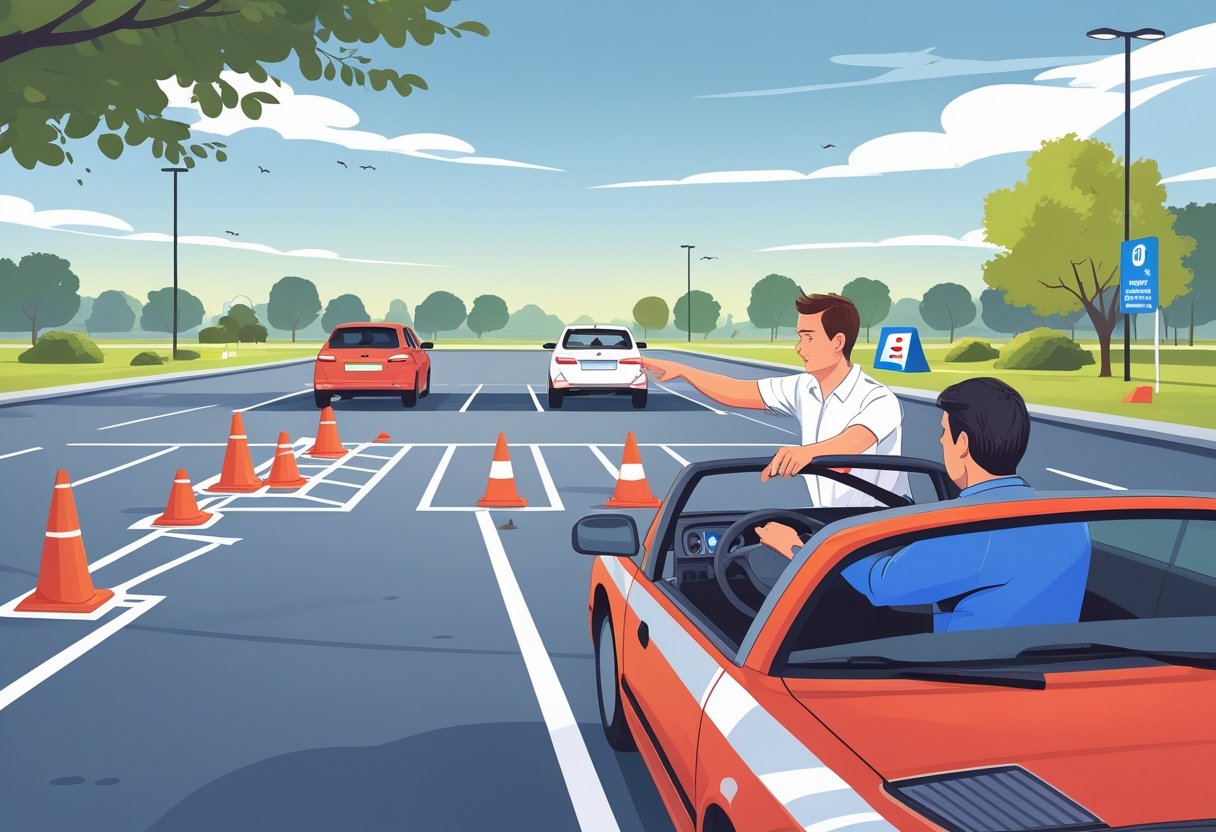
When we approach reversing practice with achievable targets, we create a foundation for steady progress whilst building the confidence needed to master these challenging skills.
The Importance of Goal Setting in Driving Practice
Setting clear goals transforms reversing practice from a frustrating experience into manageable steps. We often see learners attempt complex manoeuvres too quickly, which leads to disappointment and anxiety.
Specific targets work better than vague aims. Instead of saying “I want to get better at reversing,” we recommend goals like “I’ll complete three successful bay park attempts without touching the lines.”
Breaking down reversing skills helps us focus on one element at a time:
• Observation skills – checking mirrors and blind spots properly
• Steering control – smooth, precise wheel movements
• Speed management – maintaining crawling pace throughout
• Reference points – identifying key markers for positioning
When we set weekly targets, our practice sessions become more structured. We might aim to nail reverse parking on Monday, then focus on three-point turns by Friday.
Progress tracking keeps motivation high. Recording small wins, like improving mirror checks or reducing steering corrections, shows us we’re moving forward even when perfection feels distant.
Each successful attempt builds muscle memory. Our hands learn the steering wheel’s feel, whilst our eyes develop spatial awareness around the vehicle.
Building Confidence and Motivation Through Achievable Targets
Realistic goals prevent the overwhelming feeling that reversing is impossible to master. We’ve found that learners who set smaller, daily targets stay motivated longer than those aiming for immediate perfection.
Success breeds success in driving practice. When we achieve our first clean reverse into a bay, confidence grows for tackling parallel parking next.
Start with easier scenarios before progressing:
- Empty car parks with wide spaces
- Quieter roads with less pressure
- Familiar locations where we feel comfortable
- Gradual difficulty increases as skills develop
Celebrating small victories matters enormously. Successfully checking blind spots consistently deserves recognition, even if the final position needs adjustment.
Fear often stems from unrealistic expectations. We reduce anxiety by accepting that multiple attempts are normal, not failure indicators.
Setting time-based goals works well too. Spending 10 minutes daily on reversing builds skills without overwhelming our learning capacity.
When we acknowledge that reversing takes time to master, pressure decreases significantly. Professional drivers didn’t learn overnight, and neither will we.
Breaking Down Complex Manoeuvres Into Manageable Tasks

Learning to reverse doesn’t have to feel like conquering Mount Everest in one giant leap. When we break each manoeuvre into its individual components, suddenly those tricky parking spaces and tight corners become a series of small, achievable steps that build your confidence along the way.
Identifying Each Element of Reversing Manoeuvres
Every reversing manoeuvre contains distinct elements that we can tackle one at a time. Take parallel parking, for instance. We’re not just “reversing into a space” – we’re actually performing several separate actions.
The key elements include:
- Initial positioning alongside the reference car
- Checking mirrors and blind spots
- Steering lock application at the correct moment
- Speed control throughout the manoeuvre
- Straightening up at the right time
Instead of worrying about the entire sequence, focus on mastering each piece. Practice just the initial positioning until it feels natural. Then work on your mirror checks without even moving the car.
Many learners find it helpful to break down the steering movements too. Rather than thinking “turn the wheel lots,” we can be specific: “full lock right after the rear wheel passes their bumper.”
This approach transforms overwhelming manageable tasks into bite-sized skills. You’ll discover that your brain can process and remember these smaller chunks much more easily than trying to juggle everything simultaneously.
Turning Big Challenges Into Small Wins
Reversing becomes far less daunting when we celebrate small victories along the way. Each element you master deserves recognition, even if the complete manoeuvre isn’t perfect yet.
Start with stationary practice. Sit in the car and simply get comfortable with the reversing mirror positions. That’s your first win right there.
Next, practice the steering movements while parked. Turn the wheel and visualise where your car would go. Another victory achieved.
Progressive milestones might look like this:
- Perfect mirror adjustment and observation
- Smooth speed control in reverse
- Accurate initial positioning
- Correct steering timing
- Confident completion
We recommend keeping a simple checklist or mental note of these small successes. When you nail the positioning three times in a row, acknowledge that achievement.
Your confidence grows with each small triumph, making the next step feel more attainable. Before you know it, you’re stringing these individual skills together naturally, and that once-intimidating manoeuvre becomes second nature through consistent practice of these manageable tasks.
Creating Effective Systems and Habits for Consistent Progress
Success with reversing manoeuvres comes from building reliable systems that guide your daily practice sessions. We’ll establish consistent routines that keep you moving forward, whilst creating positive driving habits that become second nature.
Establishing Consistent Practice Routines
Creating a structured approach to reversing practice transforms random attempts into meaningful progress. We need systems that work every single time, regardless of how we’re feeling on any particular day.
Set specific practice times that fit naturally into your weekly schedule. Perhaps twenty minutes every Tuesday and Thursday evening, or thirty minutes on Saturday mornings. The exact timing matters less than sticking to it consistently.
Choose three reversing scenarios to focus on each week. This might include parallel parking, bay parking, and reversing around a corner. We avoid overwhelming ourselves by trying to master everything at once.
Track your practice sessions using a simple logbook or smartphone app. Record what you practised, which areas felt challenging, and small wins you noticed. This creates accountability and helps us spot patterns over time.
Break each reversing manoeuvre into smaller components. For parallel parking, we might focus solely on identifying the correct starting position during one session. The next time, we’ll work exclusively on the first steering movement.
Find a quiet car park or empty street where you can practise without pressure. Consistency requires a safe space where mistakes become learning opportunities rather than stressful situations.
Building Positive Driving Habits That Stick
Developing automatic responses during reversing manoeuvres requires intentional habit formation. We want these skills to feel natural and reliable, especially during your driving test or busy car parks.
Start with observation habits before even touching the steering wheel. Always check mirrors, look over your shoulder, and scan for pedestrians or obstacles. Make this sequence non-negotiable during every reversing attempt.
Use the same reference points consistently. Whether you rely on door mirrors, rear window markings, or specific kerb positions, stick with methods that work for you. Changing techniques constantly prevents habits from taking root.
Practice positive self-talk when reversing feels tricky. Replace “I’m terrible at this” with “I’m still learning this skill.” Your internal dialogue shapes confidence levels and influences how quickly new habits form.
Connect new reversing habits to existing routines. Before starting any reverse manoeuvre, take three deep breaths and adjust your mirrors. This anchors new behaviours to something you already do automatically.
Celebrate small improvements rather than waiting for perfection. Notice when your steering corrections become smoother or when you spot hazards more quickly. These acknowledgements strengthen positive habits and maintain motivation.
Strategies for Setting and Achieving Your Personal Reversing Goals
Success with reversing manoeuvres comes from establishing clear, achievable targets that match your current abilities. We’ll show you how to create specific goals using proven frameworks and adapt them to your skill level.
Using the SMART Approach for Driving Targets
The SMART framework transforms vague reversing aspirations into manageable tasks you can actually tackle. When we apply this method to driving skills, each goal becomes specific, measurable, achievable, relevant, and time-bound.
Specific goals focus on exact manoeuvres rather than general improvements. Instead of saying “get better at reversing,” aim for “successfully complete three-point turns in quiet car parks.” This clarity helps you practise with purpose.
Measurable targets let you track real progress. We recommend counting successful attempts, like “complete five parallel parks with only one adjustment needed.” You’ll see improvement happening week by week.
Achievable objectives match your current skill level. If you’re struggling with basic reversing, don’t immediately target tight parallel parking spaces. Start with wider bays and gradually reduce the space available.
Relevant goals connect to your actual driving needs. Focus on manoeuvres you’ll use regularly, such as reversing into your home driveway or local supermarket spaces.
Time-bound deadlines create urgency without pressure. Set realistic timeframes like “master bay parking within three weeks of regular practice.”
Tailoring Goals to Your Current Skill Level
Your reversing goals must reflect where you are right now, not where you think you should be. We find that learners progress faster when they build confidence through appropriate challenges.
Beginner level focuses on fundamental skills. Start with straight-line reversing in empty car parks, using just your mirrors. Master basic steering corrections before attempting complex manoeuvres.
Intermediate goals introduce more challenging scenarios. Practice reversing between cones spaced generously apart, then gradually narrow the gaps. Add elements like slight inclines or busier environments.
Advanced targets tackle real-world situations. These include parallel parking on busy streets, reversing into angled spaces, or manoeuvring in tight residential areas with parked cars nearby.
Break each skill level into smaller, manageable tasks. For example, parallel parking divides into positioning, initial reverse, straightening, and final adjustments. Master each component separately before combining them together.
Practical Tips to Make the Most of Each Practice Session
Making every reversing practice session count depends on three key factors: finding safe spaces to learn, tracking your development, and keeping your spirits up when things get tricky.
Choosing the Right Environment for Safe Reversing Practice
The location you pick for practising reversing can make or break your progress. Start with quiet car parks during off-peak hours, like early mornings or late evenings when foot traffic is minimal.
Empty supermarket car parks work brilliantly. They offer plenty of space and clearly marked bays that mimic real-world parking situations you’ll face on your driving test.
Avoid busy areas until you’ve built solid confidence. Crowded spaces add unnecessary pressure and increase the risk of accidents whilst you’re still learning the basics.
Look for locations with:
- Clear lane markings
- Good lighting if practising in the evening
- Minimal pedestrian traffic
- Various parking bay sizes
Once you’ve mastered the basics, gradually introduce more challenging environments. Residential streets with parked cars help you practise parallel parking, whilst shopping centres offer bay parking practice.
Always check you’re allowed to use private car parks for learning. Most are fine outside busy periods, but some have restrictions.
Monitoring Your Progress and Adjusting Goals as You Improve
Keeping track of your reversing skills helps you spot patterns and celebrate improvements. Create a simple practice log noting what you worked on and how it went.
Record specific details rather than vague notes. Instead of writing “did okay,” note “successfully reversed into bay parking space three times out of five attempts.”
Use this tracking system:
- Date and duration of practice
- Specific manoeuvres attempted
- Success rate for each attempt
- Areas that need more work
Review your progress weekly and adjust your goals accordingly. If you’re consistently nailing bay parking, it’s time to tackle parallel parking or three-point turns.
Don’t stick rigidly to unrealistic targets. If you set a goal to master reversing in two weeks but need three, that’s perfectly normal.
Celebrate small wins along the way. Successfully checking your mirrors consistently or smoothly controlling the clutch deserves recognition.
Your goals should evolve as you improve. What seemed impossible last month might become your new starting point.
Staying Motivated When Challenges Arise
Reversing can feel overwhelming, especially when preparing for your driving test. Remember that every experienced driver struggled with these skills initially.
Break challenging manoeuvres into smaller steps. Instead of focusing on perfect parallel parking, concentrate on getting the positioning right first, then work on the actual reversing movement.
When frustration kicks in, take a short break. A five-minute walk often provides the mental reset needed to approach the task with fresh eyes.
Connect with other learners or ask your instructor about common struggles. You’ll quickly discover that stalling during reversing or misjudging distances affects nearly everyone at first.
Set realistic daily targets rather than expecting perfection immediately. Aim to improve one specific aspect each session, whether it’s smoother steering or better observation.
Keep your driving test motivation alive by visualising success. Picture yourself confidently completing the reversing exercise whilst your examiner makes positive notes.
Remember why you started learning to drive. Whether it’s independence, career opportunities, or family responsibilities, these deeper motivations help push through temporary setbacks.
Preparing for the Driving Test: Turning Goals Into Success
Transforming your reversing practice into test-day triumph requires strategic alignment with official requirements and mental preparation to stay calm under pressure.
Aligning Your Practice with Test Requirements
The UK practical driving test includes at least one reversing manoeuvre. We need to focus our goal setting on the three main options: parallel parking, reversing into a parking bay, or pulling up on the right and reversing.
Test-specific practice goals should include:
- Completing each manoeuvre within two minutes
- Using no more than reasonable adjustments
- Maintaining proper observation throughout
- Demonstrating smooth control without stalling
We recommend practising in different locations with varying space sizes. Car parks offer excellent bay reversing practice, whilst quiet residential streets help perfect parallel parking skills.
Key assessment criteria to master:
- Accurate positioning before starting
- Effective use of mirrors and direct observation
- Appropriate speed control
- Safe completion without mounting kerbs
Track your progress by noting how many attempts each manoeuvre takes. Set weekly targets to reduce this number whilst maintaining safety standards.
Maintaining Focus and Confidence on Test Day
Mental preparation transforms months of reversing practice into confident test performance. We’ve found that learners who visualise successful manoeuvres beforehand often demonstrate better control during the actual assessment.
Pre-test confidence builders:
- Review your practice log to remind yourself of improvements
- Practise deep breathing techniques for staying calm
- Arrive early to familiarise yourself with the test centre
During the test, remember that minor adjustments are perfectly acceptable. Examiners expect realistic driving, not robotic perfection.
On the day strategies:
- Take your time to assess the parking space or bay
- Use all available reference points you’ve practised
- Don’t panic if you need to straighten up
If you make a mistake during reversing, stay focused on the remaining manoeuvres. One error doesn’t determine your overall result, and maintaining composure shows mature driving judgment.
Frequently Asked Questions
These common questions address the biggest challenges learner drivers face when setting realistic goals for reversing practice. We’ll cover confidence building, spatial awareness techniques, staying calm during practice, setting achievable milestones, effective routines for tight spaces, and optimal practice frequency.
How can I build up my confidence with reversing manoeuvres without getting overwhelmed?
Start with the basics in completely empty spaces where you can’t possibly damage anything. We recommend beginning in a large, empty car park on Sunday mornings when there’s absolutely no pressure.
Focus on understanding how your car moves backwards before worrying about precision. Spend your first few sessions just getting comfortable with the feel of reversing in straight lines and gentle curves.
Break each manoeuvre into tiny steps rather than trying to master the whole thing at once. For parallel parking, practise just the initial positioning first. Once that feels natural, add the reversing phase.
Set micro-goals that feel achievable:
- Successfully reverse in a straight line for 20 metres
- Complete one element of a manoeuvre without correction
- Feel relaxed whilst checking mirrors during reversing
We find that celebrating these small wins builds genuine confidence. Each tiny success creates momentum for the next challenge.
Never attempt a more difficult manoeuvre until the easier version feels completely comfortable. This patient approach prevents the overwhelm that comes from rushing ahead too quickly.
What techniques can I adopt to improve my spatial awareness during reversing manoeuvres?
Physical reference points become your best friends when reversing. We suggest identifying specific parts of your car that line up with kerbs, parking bay lines, or other vehicles during different stages of each manoeuvre.
Use these visual cues consistently:
- Wing mirror positions relative to parked cars
- Where lines appear in your rear window
- Specific points on your bonnet or door frames
- How much kerb you can see in your side mirrors
Practice the same manoeuvre in your driveway or a familiar car park until these reference points become second nature. Repetition in the same location helps your brain map spatial relationships.
We recommend practising with cones or empty cardboard boxes before attempting manoeuvres around real cars. This removes anxiety about potential damage whilst you develop spatial judgment.
Develop your peripheral vision by:
- Scanning all mirrors in a regular pattern
- Turning to look through rear and side windows
- Being aware of your car’s extremities at all times
- Practising depth perception in different lighting conditions
Remember that spatial awareness improves gradually. Don’t expect perfect judgment immediately, especially in unfamiliar locations or different cars.
Could you share some tips on how to stay calm and focussed during practice sessions for reverse parking?
Breathing techniques work wonders when you feel tension building during reversing practice. We suggest taking three deep breaths before starting any manoeuvre and maintaining steady breathing throughout.
Create a pre-manoeuvre routine that calms your nerves:
- Adjust your mirrors and seat position properly
- Check that you can see all reference points clearly
- Take those calming breaths we mentioned
- Remind yourself there’s no time pressure
If a practice session isn’t going well, stop and take a proper break. Sometimes pushing through frustration makes everything worse. A five-minute walk often resets your mindset completely.
We find that practising the same manoeuvre at the start of each session builds familiarity and reduces anxiety. Begin with something you can already do reasonably well before tackling newer challenges.
Talk yourself through each step out loud. This might feel silly, but verbalising your actions helps maintain focus and prevents your mind from wandering to worry about mistakes.
Choose practice times when you feel most alert and patient. Avoiding sessions when you’re tired, hungry, or stressed sets you up for success rather than frustration.
What’s the best way to set achievable milestones for mastering different reversing manoeuvres?
Start by breaking each manoeuvre into distinct phases rather than treating it as one overwhelming task. Parallel parking, for example, has positioning, reversing, and straightening phases that you can master separately.
Create specific, measurable goals for each phase:
- Position correctly without overshooting three times in a row
- Complete the reversing phase without hitting imaginary kerbs
- Straighten up with minimal steering adjustments
- Perform the complete manoeuvre smoothly twice consecutively
We suggest mastering manoeuvres in this order of difficulty: forward bay parking, reverse bay parking, parallel parking, then reversing around corners. Each builds skills that help with the next challenge.
Set weekly targets rather than daily ones. Reversing skills develop gradually, and expecting daily improvement often leads to disappointment.
Track your progress honestly:
- Note which aspects feel comfortable versus challenging
- Record how many attempts successful completions take
- Identify consistent problem areas that need extra focus
- Celebrate when something clicks that previously felt impossible
Share your milestone achievements with your driving instructor. They can adjust lesson plans based on your independent practice progress and suggest refinements to your technique.
Can you suggest some effective practice routines for sharpening my reversing skills in tight spaces?
Never start with actually tight spaces. Begin with generous room and gradually reduce the available space as your accuracy improves. We recommend using cones or markers to create adjustable boundaries.
Follow this progression for space reduction:
- Start with spaces 50% larger than minimum requirements
- Reduce by small increments as success rate improves
- Only attempt regulation-size spaces when confident
- Progress to slightly challenging spaces for test preparation
Practice the same manoeuvre multiple times in each session rather than jumping between different skills. Muscle memory develops through repetition of identical movements.
Structure your tight space sessions this way:
- 10 minutes warming up in generous spaces
- 15 minutes practising in progressively smaller areas
- 5 minutes attempting your most challenging size successfully achieved
- End with one easy success to maintain confidence
We find that practising in different car parks teaches adaptation skills. Each location has unique challenges like slopes, lighting, or unusual layouts that improve your versatility.
Focus on smooth, controlled movements rather than speed. Rushed manoeuvres in tight spaces almost always lead to mistakes and knocked confidence.
How often should I be practising my reversing manoeuvres to see consistent progress?
Little and often beats intensive marathon sessions every time. We recommend 20 to 30 minutes of focused practice twice per week rather than hour-long sessions that leave you mentally exhausted.
Optimal practice frequency depends on your current ability:
- Beginners: Two short sessions weekly focusing on one manoeuvre
- Developing: Three sessions weekly with varied manoeuvres
- Advanced: Weekly practice maintaining skills before test day
Your brain needs time between sessions to process