

Strategies for Tackling City-Centre Driving Tests: Essential Skills for Success
City-centre driving tests can feel overwhelming, especially when you’re faced with busy streets, complex junctions, and tight parking spaces. The good news is that thousands of learner drivers successfully tackle these challenges every year, and with the right approach, you can join them.
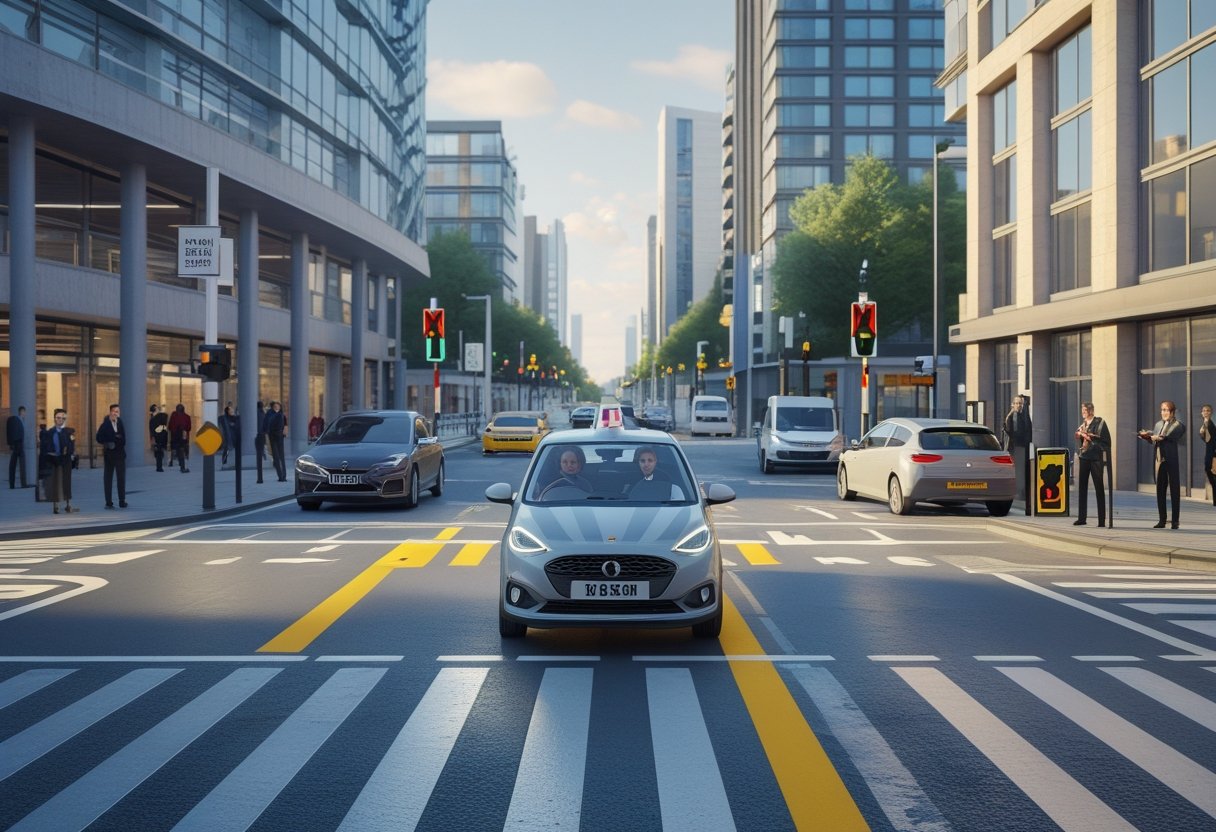
The key to conquering city-centre driving tests lies in understanding the unique challenges they present and developing specific techniques to handle them confidently. Urban test routes typically include roundabouts, one-way systems, pedestrian crossings, and parallel parking on busy roads. These elements require different skills compared to quieter suburban areas, but they’re absolutely manageable once you know what to expect.
We’ve gathered proven strategies that work for real learners facing real city-centre tests. From route planning and stress management to mastering tight manoeuvres, these techniques will help you approach your test with genuine confidence rather than just hoping for the best.
Key Takeaways
- Understanding common city-centre challenges like complex junctions and tight spaces helps you prepare more effectively for your test
- Practising specific urban driving techniques and route planning builds the skills you need to handle busy streets confidently
- Managing test-day nerves through targeted preparation and stress-reduction strategies significantly improves your chances of success
Understanding City Centre Driving Test Challenges
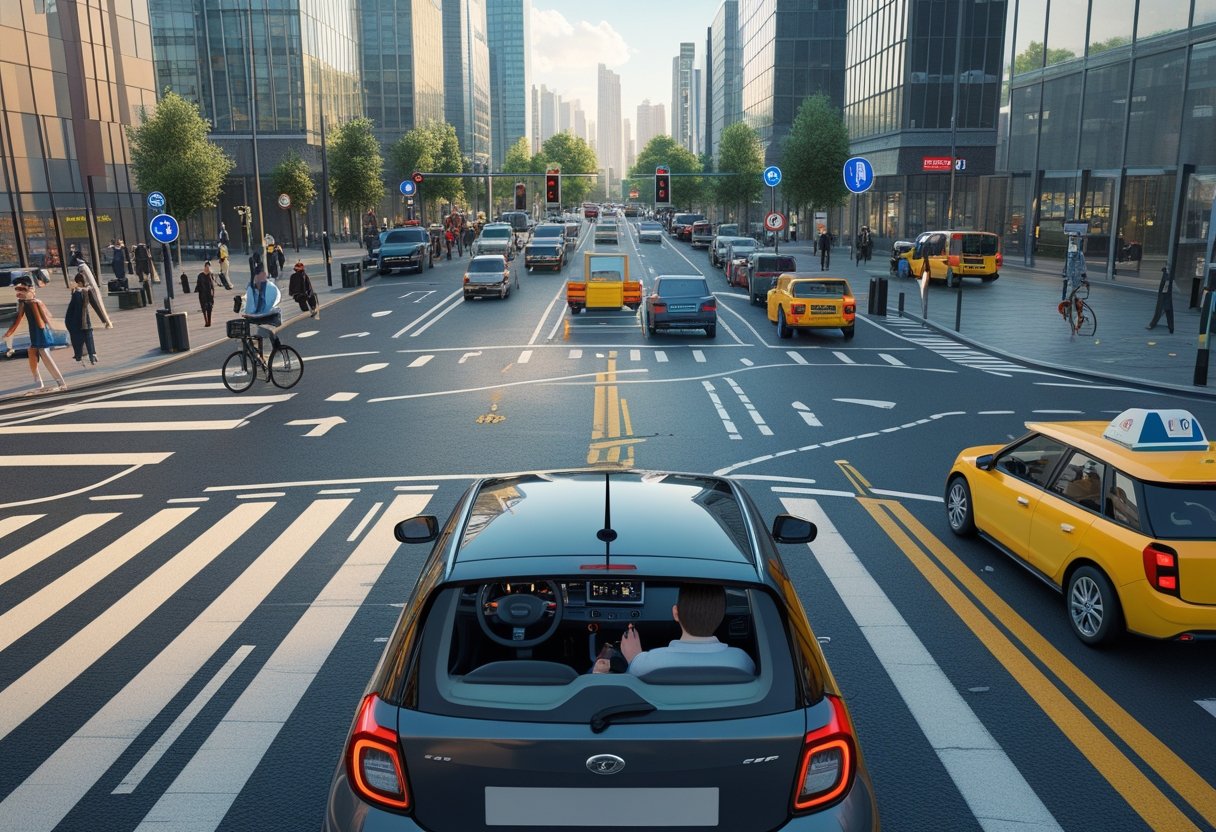
City centre driving tests present a completely different experience from suburban or rural routes. You’ll face heavier traffic, complex road layouts, and time pressures that require sharp focus and quick decision-making skills.
Unique Features of Urban Test Routes
Urban test routes throw curveballs that you simply won’t encounter in quieter areas. Multi-lane roundabouts become the norm rather than the exception. These roundabouts often feature three or four lanes with confusing lane markings that can trip up even confident drivers.
Bus lanes create another layer of complexity. You’ll need to spot the operating times instantly and know when you can legally use them. Missing these signs during your test could result in an automatic failure.
Complex junction types dominate city routes:
- Box junctions with yellow hatching
- Traffic light controlled crossings every few hundred metres
- Filter lanes that appear suddenly
- Pedestrian crossings in unexpected locations
One-way systems snake through most city centres. These require constant attention to street signs and advance planning for your next move. Getting caught in the wrong lane means potentially missing your intended route completely.
Parking challenges multiply in urban areas. You might face parallel parking between two cars on a busy main road, or reverse bay parking in a cramped multi-storey car park with concrete pillars just inches away.
Common Hazards in Busy Centres
Pedestrians pose the biggest unpredictable element in city centre driving. They step out between parked cars, cross against traffic lights, and often have their attention buried in mobile phones rather than watching traffic.
Cyclists weave through traffic and appear in your blind spots without warning. They use cycle lanes that suddenly merge with regular traffic lanes. During driving lessons, practise checking mirrors more frequently to spot cyclists approaching from behind.
Traffic congestion creates its own set of problems:
- Stop-start traffic that tests your clutch control
- Impatient drivers who tailgate or change lanes aggressively
- Delivery lorries blocking lanes while unloading
- Emergency vehicles needing right of way
Road works seem permanent fixtures in most city centres. Temporary traffic lights, lane closures, and diversion signs appear regularly. These situations test your ability to follow instructions and adapt quickly to changing conditions.
Parking can become a major distraction. Other drivers cruise slowly looking for spaces, stop suddenly when they spot one, or reverse out of bays without proper observation. Stay alert for these unpredictable movements.
Mindset for Tackling City Driving
Building confidence starts with accepting that city driving feels overwhelming at first. Every new driver experiences this sensation, so don’t let initial nerves convince you that you’re not ready. The key lies in developing a systematic approach to processing information quickly.
Mental preparation techniques make a real difference:
- Visualise successful navigation through complex junctions
- Practice commentary driving to verbalise your observations
- Accept that you’ll make mistakes during learning
Patience becomes your greatest asset in city traffic. Rushing decisions leads to errors and dangerous situations. Instead, give yourself extra time and space to react to unexpected situations.
We recommend treating every city centre driving lesson as valuable preparation. The more exposure you get to urban traffic patterns, the more natural these challenging conditions become. Your instructor can guide you through the most demanding routes gradually.
Staying calm under pressure requires practice. When traffic backs up or other drivers become impatient, focus on your own driving rather than external pressures. Remember that examiners understand city driving challenges and won’t penalise you for cautious, safe driving decisions.
Building Essential Techniques for Urban Driving Success
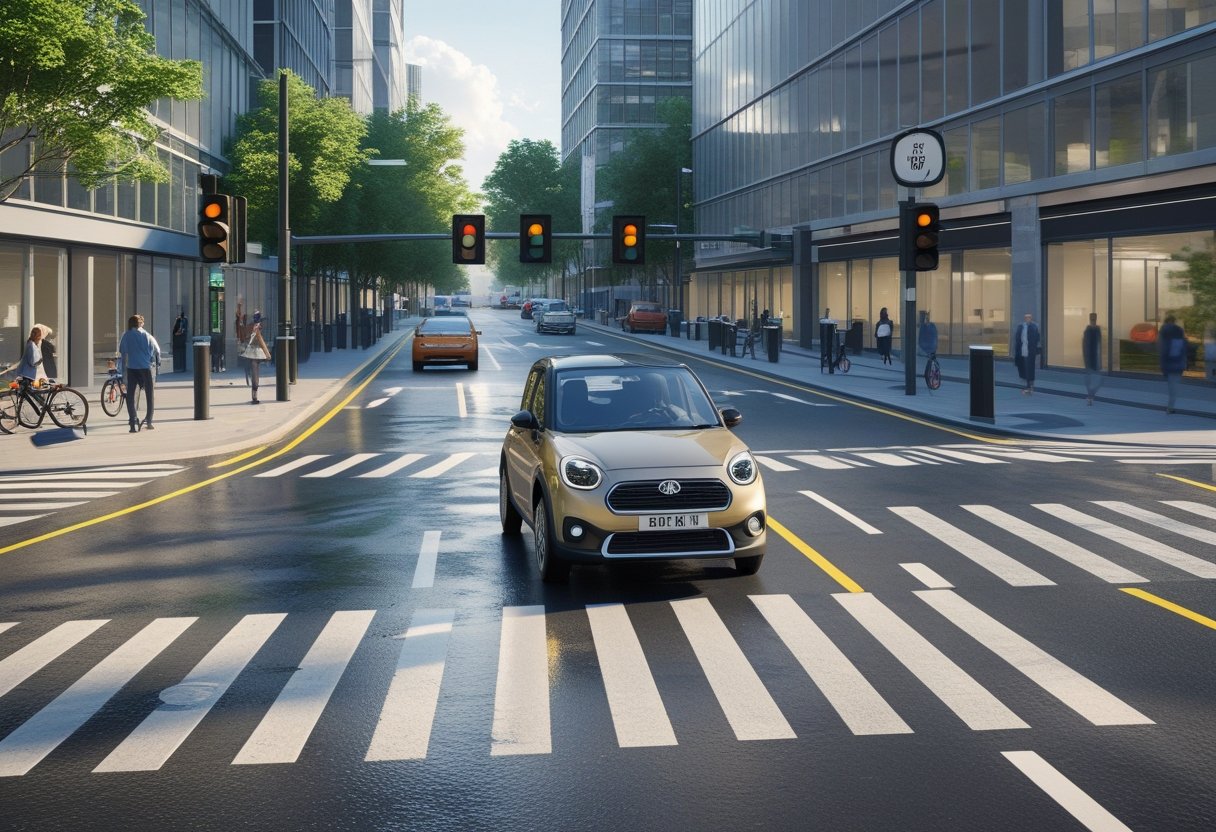
Success in city centre driving tests depends on three crucial skill sets: sharp observation abilities, smooth traffic navigation, and quick adaptation to local patterns. Each skill builds upon the other to create confident urban drivers who can handle any challenge the test throws their way.
Observational Skills and Hazard Awareness
We need to develop razor-sharp observation skills for urban environments. City centres are bustling with activity that changes every second.
Scanning techniques form the backbone of safe city driving. We should constantly sweep our eyes across mirrors, blind spots, and ahead of us. This isn’t just a quick glance, it’s an active search for potential problems.
Pedestrians pop out from between parked cars without warning. Cyclists weave through traffic gaps. Public transport vehicles make sudden stops to collect passengers.
Our peripheral vision becomes critical here. We train ourselves to notice movement in our side vision whilst maintaining focus ahead.
Key hazards to watch for:
- Pedestrians stepping into the road near bus stops
- Car doors opening unexpectedly
- Delivery vehicles double-parked
- Traffic light changes in busy junctions
- Emergency vehicles approaching
Practice sessions with a driving school help us develop these scanning patterns. Instructors point out hazards we might miss initially.
The secret lies in predicting what might happen next. We look at body language of pedestrians and positioning of other vehicles.
Navigating Congestion and Traffic Flow
Traffic flow in city centres follows certain patterns we can learn to read and use to our advantage.
Lane positioning becomes crucial in heavy traffic. We need to choose the correct lane early to avoid last-minute changes. This means reading road signs well in advance.
Following distances shrink naturally in slow-moving traffic, but we maintain enough space to stop safely. A good rule is keeping space to see the tyres of the car ahead touching the road.
Traffic light timing varies between locations. Some lights change quickly whilst others give longer crossing times. We observe these patterns during practice drives.
Managing stop-start movement:
- Keep engine revs steady to avoid stalling
- Use clutch control for smooth progress
- Anticipate gaps opening ahead
- Signal intentions clearly and early
Public transport lanes require special attention. Buses and trams have priority in many city centres. We stay alert for lane restrictions that apply during different hours.
Roundabouts in congested areas need patience. We wait for clear gaps rather than forcing our way in. Rush hour demands extra caution as frustration levels rise.
Adjusting to Local Driving Patterns
Every city centre has its own character and driving culture. What works in one location might not suit another.
One-way systems create unique flow patterns. Some cities have complex networks that funnel traffic in specific directions. We study these routes during our driving school lessons.
Local drivers develop habits that visitors might find surprising. Some areas have faster-moving traffic whilst others crawl along. We adapt our speed and following distance accordingly.
Parking challenges vary enormously between locations. Some city centres have angled parking, others use parallel spaces exclusively. Bay parking in shopping areas often has tight dimensions.
Common local variations include:
- Different roundabout etiquette
- Varying use of indicators
- Speed through residential areas
- Courtesy levels at pedestrian crossings
City centre driving often involves dealing with delivery schedules. Early mornings see lots of commercial vehicles. Lunch times bring different challenges with increased pedestrian activity.
We build familiarity through repeated practice in the same area. This helps us anticipate junction layouts and traffic light sequences that might catch us off-guard during the test.
Route Planning and Preparation Strategies
Good preparation makes all the difference when you’re facing a driving test in busy city centres. We’ll show you how to research test areas thoroughly, make the most of digital tools, and choose the perfect timing for your test.
Familiarising Yourself with Test Areas
Getting to know your test area before the big day is one of the smartest moves you can make. We recommend visiting the test centre at least twice before your actual test.
Start by driving around the area with your instructor or a qualified driver. Pay close attention to the road layouts, traffic patterns, and any tricky junctions you might encounter.
Key areas to focus on:
- Multi-lane roundabouts and their approach lanes
- One-way streets and restricted access roads
- Bus lanes and their operating times
- Parking restrictions and loading bays
Take note of common pedestrian crossing points, especially near shopping areas or transport hubs. City centres often have unexpected crossing points where people dash between shops.
Look out for road signs that might catch you off guard during your test. Urban areas love their complex signage systems, and missing a “No Entry” sign could end your test quickly.
We suggest practising during different times of day if possible. Morning rush hour presents different challenges compared to quieter afternoon periods.
Using Sat Navs and Digital Maps Effectively
Modern driving tests often include sat nav sections, so getting comfortable with this technology is essential. We recommend practising with the same type of device your test centre uses.
Before your test:
- Download offline maps to avoid signal issues
- Practise following directions while maintaining road awareness
- Learn to glance quickly at the screen without losing focus
Don’t rely entirely on technology during your preparation phase. Use digital maps to study routes beforehand, but make sure you can navigate without constant guidance.
Google Street View becomes your best friend here. Walk through potential test routes virtually, spotting hazards and planning your approach to difficult junctions.
Top preparation tips:
- Screenshot complex junctions for later study
- Note alternative routes in case of roadworks
- Mark locations of common test manoeuvres
Remember that sat navs sometimes suggest unsuitable routes for learner drivers. Always cross-reference with local knowledge and your instructor’s advice.
Timing Your Test to Avoid Peak Traffic
Choosing the right time slot can make your city centre test much more manageable. We’ve found that certain times offer distinct advantages for nervous test takers.
Best times for city centre tests:
- Mid-morning (10:00-11:30 AM)
- Early afternoon (1:30-3:00 PM)
- Late morning on weekends
Avoid booking during school run times if your test route passes near educational facilities. The 8:30 AM and 3:30 PM slots often coincide with chaotic school traffic.
Lunch hours can be surprisingly busy in city centres, with delivery vehicles and shoppers creating additional challenges. However, some learners prefer this as traffic moves more slowly.
Consider these factors:
- Local market days and events
- Construction schedules (often quieter mid-week)
- Weather conditions affecting traffic flow
Friday afternoons tend to be particularly hectic as people rush to finish weekend shopping or leave work early. Thursday mornings often provide the calmest conditions.
We always advise checking local traffic patterns for your specific test centre area. Some cities have unique rush hour timings that don’t follow typical patterns.
Plan to arrive 15 minutes early regardless of your chosen time slot. This buffer helps you settle nerves and adjust to current traffic conditions.
Navigating Key Urban Road Elements
City centres present unique road features that require special attention and understanding. Bus lanes operate under strict rules that vary by location, one-way systems can confuse even experienced drivers, and pedestrian crossings demand precise knowledge of priority rules.
Understanding Bus Lanes and Road Markings
Bus lanes are one of the most critical elements we encounter during city-centre driving tests. These dedicated lanes keep public transport moving efficiently, but they come with strict rules that can catch learners off guard.
Most bus lanes operate during specific hours, typically marked on blue signs. Always check the times carefully – some run 24 hours, whilst others might only apply during rush hours like 7-10am and 4-7pm.
The markings themselves tell us everything we need to know. Look for:
- Solid white lines with “BUS LANE” painted on the road
- Blue circular signs showing permitted vehicles and times
- Dashed lines indicating where we can enter or exit the lane
Remember that taxis, motorcycles, and cyclists often share these lanes with buses. We can usually drive across bus lanes to turn left or right, but we cannot travel along them unless specifically permitted.
Red route markings are equally important. These double red lines mean no stopping at any time, even for a quick drop-off.
One-Way Systems and Roundabouts
One-way systems can feel like puzzles during our driving test, but they follow logical patterns once we understand them. City planners design these systems to reduce congestion and improve traffic flow through narrow streets.
Blue circular signs with white arrows show us the permitted direction. We’ll often see “No Entry” signs with red circles facing the opposite direction.
Watch for lane markings that guide us towards our intended exit. Get into the correct lane early, as changing lanes in busy one-way systems can be tricky.
Mini-roundabouts are everywhere in city centres. These small circular markings require the same rules as larger roundabouts:
- Give way to traffic from the right
- Signal appropriately for your exit
- Check mirrors before changing lanes
Spiral roundabouts with multiple lanes need extra care. Follow the lane markings and road signs rather than trying to remember complex rules.
Pedestrian Crossings and Priority Rules
Pedestrian crossings demand our full attention during city-centre tests. Each type has specific rules that examiners expect us to follow precisely.
Zebra crossings give pedestrians absolute priority once they step onto the crossing. We must stop and wait, even if they’re moving slowly.
Traffic light controlled crossings seem straightforward, but watch for:
- Amber lights – stop unless it’s unsafe to do so
- Pedestrians still crossing when our light turns green
- Cyclists using toucan crossings alongside pedestrians
Pelican crossings have that distinctive flashing amber phase. We can proceed if the crossing is clear, but pedestrians still have priority if they’re crossing.
School crossing patrols deserve special mention. Stop completely when the lollipop person steps into the road, regardless of whether children are visible.
Bus stops create another priority situation. Give way to buses pulling out from stops when it’s safe and practical to do so.
Mastering Manoeuvres and Parking in Tight Spaces
City centre driving tests demand precision when space is at a premium, and examiners will assess your ability to handle challenging parallel parking between closely positioned vehicles, navigate cramped car parks with confidence, and execute turns where every centimetre counts.
Parallel Parking on Busy Streets
We know parallel parking feels daunting when traffic flows around you and pedestrians watch from the pavement. The key is staying calm and trusting your reference points.
Position your car alongside the front vehicle. Your wing mirrors should align roughly. Check your left mirror until you can see the entire rear of the car beside you, then begin reversing whilst turning the steering wheel fully to the left.
Watch for the critical moment when the rear car appears in your right mirror. Straighten the wheel and continue reversing until your car sits at roughly 45 degrees to the kerb.
Turn the wheel fully right and reverse slowly. Your car should glide neatly into the space. Don’t rush this final phase.
Traffic won’t wait forever, but examiners understand city centre pressures. They’d rather see you take your time and park safely than hurry and make mistakes.
Practice these steps repeatedly until muscle memory takes over. We’ve found that confident parallel parking often separates successful candidates from those who need another attempt.
Bay and On-Road Parking Challenges
City centre car parks present unique obstacles that suburban learners rarely encounter. Narrow bays, concrete pillars, and impatient shoppers create a perfect storm of parking challenges.
Forward bay parking requires different skills than reversing in. You’ll need to judge the turning point precisely, usually when the bay line appears in your side window. Turn the wheel smartly and adjust as needed.
Reversing out demands exceptional observation. Check mirrors constantly and look over your shoulder. Shopping centres bustle with pedestrians who might not see you.
On-street parking in city centres often means squeezing into spaces that seem impossibly small. We recommend:
- Use your indicators early to signal your intentions
- Check for loading restrictions and yellow lines
- Allow extra space for opening doors safely
- Consider how your parking affects other road users
Remember, city centre parking isn’t just about fitting into the space. It’s about doing so safely whilst managing the chaos around you.
Three-Point Turns and U-Turns in Limited Space
Narrow city streets transform simple manoeuvres into precision exercises. We need to work within tight confines whilst staying alert for cyclists, pedestrians, and other vehicles.
The three-point turn (though we often need more than three attempts) starts with positioning close to the left kerb. Turn the wheel fully right and move forward slowly until you approach the opposite kerb.
Full lock left as you reverse, keeping the car slow and controlled. You might need several attempts, particularly on narrow streets. Don’t feel embarrassed if it takes five or six movements.
U-turns require different considerations in city centres. Check for “No U-turn” signs and ensure you have adequate space. Bus lanes, cycle lanes, and parked cars all affect your turning circle.
Watch for vulnerable road users who might not expect your manoeuvre. Motorcyclists often appear in blind spots, and cyclists might continue alongside your car as you turn.
Practice these manoeuvres on quiet residential streets before attempting them in busy city centres. Confidence grows with repetition, and examiners notice candidates who handle tight spaces with composure.
Managing Stress and Staying Confident Under Pressure
City centre driving tests can feel overwhelming, but learning to manage your nerves and maintain composure will help you demonstrate your true abilities. These practical techniques will keep you calm when traffic gets hectic and help you handle unexpected moments with confidence.
Calming Techniques for the Test Day
Deep breathing is your most powerful tool for staying relaxed during your driving test. Try the 4-7-8 technique: breathe in for 4 counts, hold for 7, then exhale for 8. This simple method slows your heart rate and clears your mind.
Start your test day routine early. Wake up with enough time to eat a proper breakfast and avoid rushing. Rushing creates stress before you even reach the test centre.
Practice positive self-talk whilst you wait. Replace “I’m going to fail” with “I’ve prepared well for this.” Your driving lessons have equipped you with the skills you need.
Use progressive muscle relaxation if you feel tense. Tighten your shoulders for 5 seconds, then release. Do the same with your hands and jaw. This releases physical tension that builds up when we’re nervous.
Visualisation works brilliantly for many learners. Picture yourself driving smoothly through busy streets, making confident decisions at roundabouts, and parking perfectly. Your brain responds to positive mental rehearsal.
Handling Road Rage and Unexpected Situations
Other drivers might honk, cut you off, or act aggressively during your test. Remember that their behaviour reflects on them, not you. Stay calm and focused on your own driving.
If someone tailgates you, don’t speed up to please them. Maintain a safe speed and let them pass when it’s safe to do so. Your examiner wants to see that you won’t be pressured into dangerous decisions.
Unexpected situations like road works, emergency vehicles, or pedestrians jaywalking are actually opportunities to shine. They show your examiner how you handle real driving conditions.
When something unexpected happens:
- Stay calm and assess the situation
- Follow the Highway Code rules you’ve practised
- Communicate with indicators and positioning
- Take your time to make safe decisions
Your driving lessons have prepared you for these moments. Trust your training and respond as you’ve been taught.
Knowing When to Pause and Take a Break
During your test, you can ask your examiner if you need a moment to collect yourself. It’s better to pause briefly than to make a rushed decision that could be unsafe.
If you make a mistake, don’t dwell on it. Take a quiet breath and refocus on the road ahead. One error doesn’t mean you’ve failed your test.
Listen to your body. If your hands are shaking or you feel dizzy, tell your examiner. They’re human too and understand that tests create pressure.
After particularly challenging manoeuvres like parallel parking in busy traffic, give yourself a mental reset. Count to three, check your mirrors, and prepare for the next instruction with a clear head.
Remember that confidence builds throughout your test. The first few minutes might feel nerve-wracking, but most learners find they settle into their rhythm once they start driving.
Building Lasting Confidence Through Targeted Practice
Success in city-centre driving tests comes from working with the right instructor and getting plenty of focused practice in busy urban conditions. Regular mock tests help you spot weak areas, while clear goals keep you moving forward at the right pace.
Choosing the Right Driving School or Instructor
Finding a brilliant driving instructor makes all the difference when tackling city-centre tests. We recommend looking for instructors who specialise in urban driving and know your local test centre inside out.
Ask potential instructors these key questions:
- How many years have they taught in city centres?
- What’s their pass rate for busy test centres?
- Do they offer specific city driving lessons?
The best instructors understand that city driving feels overwhelming at first. They’ll start you on quieter streets before gradually building up to busier areas. This approach helps your confidence grow naturally.
Look for these qualities in your instructor:
- Patient teaching style that doesn’t rush you
- Clear explanations of complex junctions
- Positive feedback mixed with helpful corrections
Many driving schools now offer packages designed specifically for city-centre tests. These courses focus extra time on roundabouts, one-way systems, and busy shopping areas.
Don’t be afraid to try a few different instructors. The right match feels comfortable from the first lesson. You’ll know you’ve found someone good when they make tricky manoeuvres feel manageable.
Mock Tests and Feedback in City Traffic
Practice tests in real city conditions show exactly where you need more work. We suggest booking mock tests every few weeks as your test date approaches.
The best mock tests happen during busy periods. Morning rush hour or Saturday shopping times give you genuine city-centre experience. This timing helps you get used to the pressure and noise.
What good mock tests should include:
- Full 40-minute test route
- Written feedback on key areas
- Discussion of any mistakes
- Specific advice for improvement
Your instructor should mark you just like a real examiner would. This honest feedback might feel tough, but it’s exactly what you need to improve.
Pay special attention to feedback about observation and planning ahead. These skills matter most in busy city traffic. If you’re struggling with particular junctions, ask for extra practice there.
Keep a simple log of your mock test results. Write down what went well and what needs work. This record helps you see real progress over time.
Reviewing Progress and Setting Personal Goals
Regular progress reviews keep your city-centre preparation on track. We recommend checking your skills every two weeks with your instructor.
Break your goals into specific areas:
- Roundabout navigation
- Parallel parking in tight spaces
- Managing pedestrian crossings
- Dealing with cyclists and buses
Set small, achievable targets for each lesson. Instead of “get better at roundabouts,” try “confidently navigate the three roundabouts on Test Route A.” These specific goals feel much more manageable.
Track your progress with a simple scoring system. Rate yourself 1-5 on different skills after each lesson. You’ll be amazed how quickly the numbers improve with focused practice.
Weekly goal examples might include:
- Master the tricky junction near the test centre
- Complete three parallel parks without major corrections
- Handle rush hour traffic for 30 minutes confidently
Celebrate the small wins along the way. Successfully navigating a complex junction or smoothly merging into heavy traffic deserves recognition. These moments build the confidence you’ll need on test day.
Frequently Asked Questions
City-centre driving tests bring unique challenges that worry many learners. These common questions cover practical skills like parallel parking in tight spots, handling busy roundabouts, and staying calm when traffic gets heavy.
What are the top tips for mastering parallel parking in busy urban areas?
We know parallel parking feels tricky when cars are whizzing past and pedestrians are watching. The key is finding your reference points and sticking to them, even with distractions around you.
Start by positioning your car alongside the front vehicle. Your wing mirrors should line up roughly. This gives you the perfect starting angle.
Reverse slowly until your car reaches a 45-degree angle. You’ll know you’re there when the rear corner of the front car appears in your passenger side mirror.
Straighten the wheel and continue reversing until your front bumper clears the rear of the front vehicle. Then turn the wheel fully the other way to tuck your rear end into the space.
Practice this sequence until it becomes automatic. When you’re confident with the steps, city noise and movement won’t throw you off track.
How can you effectively navigate roundabouts during a city-centre driving test?
Roundabouts in busy areas can feel overwhelming, but they follow the same basic rules as quieter ones. The secret is reading the road signs early and getting into the correct lane well before you reach the roundabout.
Approach slowly and check your mirrors. Look for gaps in traffic and remember that vehicles already on the roundabout have right of way.
Signal left when you pass the exit before yours. This tells other drivers you’re leaving soon and helps traffic flow smoothly.
Keep checking your mirrors and maintain a steady speed. Don’t rush or hesitate, as this confuses other road users.
If you miss your exit, don’t panic. Simply go around again. Examiners prefer safe driving over perfect navigation.
What’s the best approach for dealing with unpredictable pedestrians and cyclists in town?
City centres are full of people on foot and bikes, and they don’t always follow the rules. We’ve found that staying alert and giving everyone plenty of space works best.
Slow down near bus stops, shops, and pedestrian crossings. People often step out without looking, especially when they’re busy or distracted.
Watch for cyclists filtering through traffic. Check your mirrors extra carefully before turning or changing lanes, as bikes can appear quickly in your blind spots.
Make eye contact with pedestrians when possible. This helps you judge their intentions and shows them you’ve seen them.
Keep a safe following distance from cyclists. They might swerve around potholes or parked cars without warning.
If someone makes an unexpected move, stay calm and adjust your driving accordingly. Getting frustrated won’t help anyone stay safe.
Can you share some techniques for remaining calm in heavy traffic when sitting a driving test?
Heavy traffic during your test can feel stressful, but it’s actually a good chance to show your examiner how well you handle real driving conditions. The trick is controlling your breathing and focusing on one task at a time.
Take deep, steady breaths if you feel tension building. This helps your body relax and keeps your mind clear for making good decisions.
Focus on the vehicle immediately in front of you rather than the long line of traffic ahead. This prevents you from feeling overwhelmed by the situation.
Use the time in traffic jams to check your mirrors and observe what’s happening around you. This shows good hazard awareness and keeps your mind occupied.
Remember that your examiner isn’t timing you. They understand that traffic delays are normal and won’t count against you.
If you make a small mistake, don’t dwell on it. Keep your attention on driving safely and let any errors go.
Could you guide me through the process of understanding complex junctions in urban settings?
Complex junctions with multiple lanes and traffic lights can look confusing at first glance. The key is breaking them down into smaller, manageable parts.
Read the road markings and signs as you approach. Lane arrows show you where each lane goes, and advance direction signs tell you which lane you need.
Get into the correct lane early, even if it means waiting in a longer queue. Last-minute lane changes are dangerous and create problems for other drivers.
Watch the traffic light sequence. Many urban junctions have filter arrows and multiple phases, so make sure you understand which lights apply to your lane.
Take your time to look and assess before moving off. Complex junctions often have pedestrian crossings and cycle lanes that you need to check.
If you’re unsure about the layout, it’s better to ask your instructor during lessons rather than guess on test day.
What steps should I take to prepare for potential hazards unique to city-centre driving tests?
City-centre hazards are different from rural ones, so your preparation needs to cover urban-specific challenges. We recommend practising in the actual test area during busy times.
Book lessons during rush hours and weekends when traffic is heaviest. This exposes you to the real conditions you might face on test day.
Practice near schools, shopping areas, and bus stations. These locations have unique hazards like children running between parked cars or passengers getting off buses.
Learn to spot the early signs of problems. Balls rolling into the road often mean children are about to follow, and people looking at their phones might step out unexpectedly.
Get comfortable with stop-start traffic and frequent gear changes. Urban driving involves lots of clutch control and smooth acceleration.
Study the Highway Code sections about vulnerable road users. Understanding the rules helps you make better decisions when sharing space with pedestrians, cyclists, and motorcyclists.