

Switching from an International Licence to a UK Licence
Moving to the UK and wondering what happens to your driving licence? You’re not alone in feeling a bit overwhelmed by the process. The good news is that many international drivers can make the switch without starting from scratch, and we’re here to guide you through every step of the journey.
If you hold a licence from an EU country, the EEA, or certain designated nations, you can often exchange it directly for a UK licence without retaking your driving test. This straightforward swap saves you time, money, and the stress of going through the entire learning process again. However, the rules vary depending on where your licence was issued and how long you’ve been living in the UK.
We know that navigating DVLA requirements can feel daunting, especially when you’re settling into a new country. That’s why we’ve broken down everything you need to know about recognised countries, required documents, and the step-by-step exchange process. Whether your licence qualifies for direct exchange or you’ll need to take the provisional route, we’ll help you stay legal on UK roads and get back to driving with confidence.
Who Needs to Switch Their International Licence?
Not everyone driving in the UK with a foreign licence needs to make the switch immediately. Your eligibility depends on where your licence comes from, how long you’ve been here, and your residency status.
Determining If You’re Eligible for Exchange
The good news is that many international drivers can exchange their foreign driving licence without retaking tests. We’ve got specific agreements with certain countries that make this process much smoother.
EU and EEA licence holders can typically exchange their licences directly. This includes countries like Germany, France, Spain, and Italy. Your European licence gives you a clear pathway to a UK licence.
Designated country agreements also exist with nations outside Europe. Countries like Australia, Canada, Japan, and New Zealand have arrangements that allow direct exchanges. We recommend checking the official DVLA list, as it includes over 40 countries.
Other foreign licence holders face a different journey. If your country doesn’t have an exchange agreement, you’ll need to start fresh with theory and practical tests. Whilst this might feel daunting, think of it as a chance to master UK driving standards.
Your licence must be valid and in good standing. Any endorsements or restrictions on your original licence will carry over to your UK one.
How Long You Can Drive in the UK on an International Licence
We give you breathing room when you first arrive. You can drive on your international licence for up to 12 months from your arrival date in the UK. This applies whether you’re using your original foreign licence or an International Driving Permit.
This 12-month window starts ticking from day one of your UK residency, not from when you first drive. Keep track of this date carefully – it’s crucial for staying legal on our roads.
After 12 months, your international licence becomes invalid for UK driving. There’s no extension or grace period. If you’re caught driving after this deadline, you’re technically driving without a valid licence.
We strongly suggest starting your exchange process early. Don’t wait until month 11 to begin – applications can take several weeks to process.
Residency Status and Its Impact on Your Licence
Only UK residents can exchange their foreign driving licence. This residency requirement is non-negotiable. You’ll need proper documentation proving you live here permanently or on a long-term basis.
Tourists and short-term visitors follow different rules. If you’re just holidaying or visiting for business, your international licence or IDP covers you for the entire stay (up to that 12-month maximum).
Visa status matters tremendously. Student visas, work visas, and settlement visas all qualify you as a resident. However, visitor visas typically don’t count towards residency for licence exchange purposes.
Your address history plays a role too. The DVLA wants to see that you’ve established genuine residence in the UK. Utility bills, council tax statements, and rental agreements help prove this connection.
Once you’ve established residency, you’re on the clock. That 12-month driving period begins, and you’ll need to plan your licence exchange accordingly.
Recognised Countries and Exchange Categories
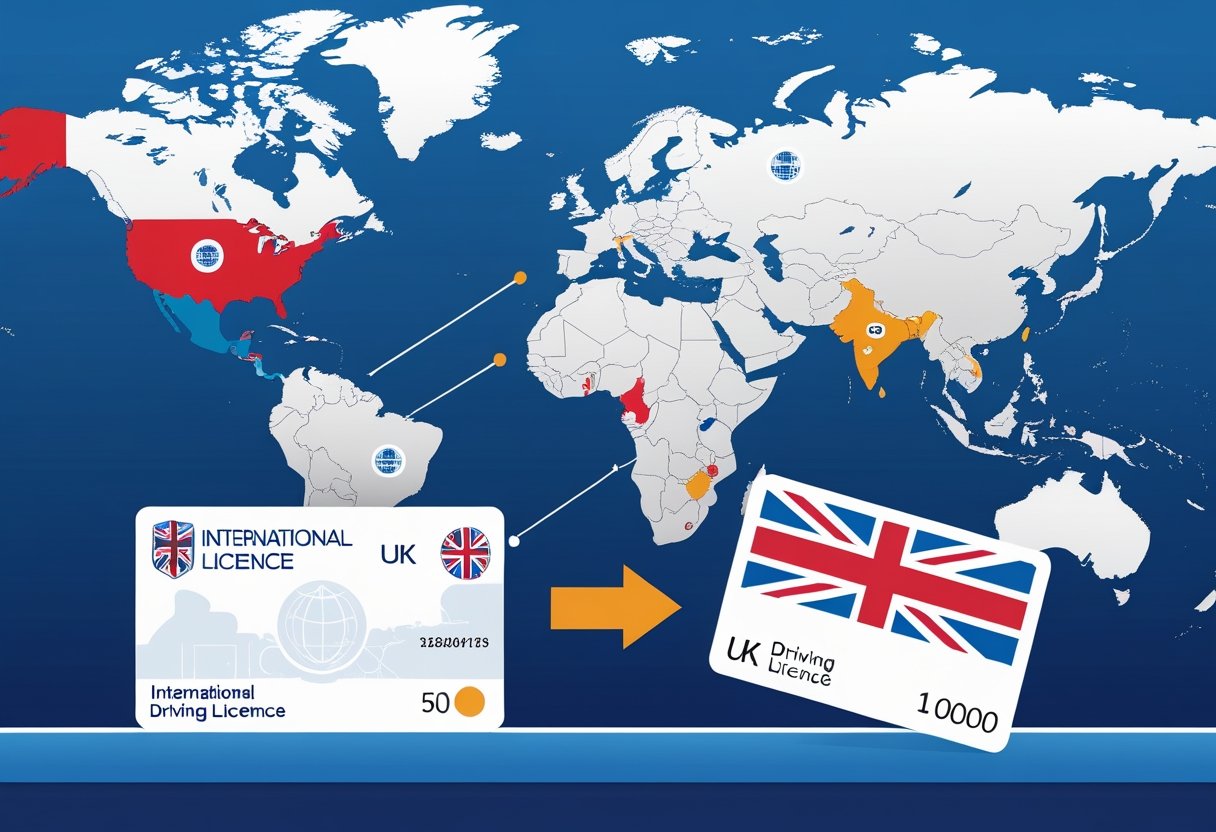
The Driver and Vehicle Licensing Agency (DVLA) sorts foreign driving licences into different groups based on where they were issued. European licences have the smoothest path, whilst others may need additional steps or testing.
EU, EEA, and Designated Country Licences
Your European Union or European Economic Area licence opens the door to straightforward exchange. We’re talking about all 27 EU countries plus Iceland, Norway, and Liechtenstein.
The brilliant news? You won’t need to retake your driving test. Simply swap your existing licence for a shiny new UK one through the DVLA.
Designated countries have special agreements with the UK too. These include:
- Cayman Islands
- North Macedonia
- Taiwan
- Ukraine
- United Arab Emirates
Each designated country has specific rules about which licence categories qualify. Your motorcycle licence might exchange easily, but your lorry licence could need extra steps.
You’ll need to apply within certain time limits after becoming a UK resident. Don’t worry though – the process feels much less daunting than starting from scratch.
Non-Designated and Other International Licences
Countries without exchange agreements follow different rules entirely. Your licence from Australia, Canada, or the United States lets you drive temporarily but won’t convert directly.
Here’s what happens next:
- Drive for up to 12 months on your foreign licence
- Apply for a provisional UK licence before time runs out
- Take both theory and practical tests
We know this sounds overwhelming, but thousands of drivers successfully make this transition every year. Your driving experience still counts – you’re not starting as a complete beginner.
Some countries have partial recognition. Japan, for instance, might require additional testing for certain vehicle categories. Check the DVLA website for your specific country’s requirements.
Special Rules for Crown Dependencies and British Returns
Crown Dependencies (Jersey, Guernsey, and Isle of Man) enjoy unique status. Your licence from these places exchanges without fuss – they’re practically treated as UK licences already.
Returning British citizens face interesting situations too. Lived abroad for years with a foreign licence? You might qualify for simplified exchange depending on your circumstances.
Military personnel stationed overseas often keep their UK licences valid longer. When you return home, updating your address might be all that’s needed.
The DVLA recognises that life takes us on unexpected journeys. Whether you’re coming home after decades abroad or moving from a Crown dependency, there’s usually a sensible path forward for your driving future.
Preparing Your Documents for a UK Licence Exchange
Getting your paperwork sorted is the crucial first step towards swapping your international licence for a UK one. You’ll need proper identity documents, proof you live in the UK, and possibly translations if your licence isn’t in English.
Gathering Proof of Identity and Residency
The DVLA needs solid proof of who you are and where you live before they’ll process your application. This isn’t just red tape – it’s about keeping our roads safe and licences legitimate.
For identity, your current passport is your best bet. It’s the gold standard document that ticks all the boxes. If you don’t have a passport handy, a national identity card from an EU country works just as well.
Residency proof is equally important. We recommend using recent utility bills, bank statements, or council tax bills dated within the last three months. Make sure your name and address match exactly what you’ve written on your D1 application form.
Here’s what the DVLA accepts for residency:
- Gas, electricity, or water bills
- Bank or building society statements
- Council tax bills
- NHS letters
- Payslips from UK employers
Don’t forget you’ll also need a recent passport-style photograph. It needs to meet specific requirements – colour, plain background, and taken within the last month.
What to Do If Your Foreign Licence Isn’t in English
Many international licences come in languages other than English, and that’s perfectly normal. The Driver and Vehicle Licensing Agency simply needs to understand what’s written on your licence.
You’ll need an official translation from a recognised translator or embassy. Don’t attempt to translate it yourself or ask a bilingual friend – the DVLA won’t accept amateur translations, no matter how accurate they might be.
Contact your country’s embassy or consulate in the UK first. Many offer translation services specifically for driving licences, and they understand exactly what the DVLA requires.
Alternatively, use a certified translation service that specialises in official documents. Make sure they provide a signed statement confirming the translation’s accuracy.
Keep your original licence safe throughout this process. You’ll need to send both the original and translation to the DVLA with your D1 application form.
Dealing with Lost or Expired Licences
Lost your foreign driving licence? This happens more often than you’d think, and there are ways around it.
Contact the licensing authority from your home country immediately. Most countries can issue replacement licences or official driving records for citizens living abroad. This process might take several weeks, so start early.
If your licence has expired, you might still be able to exchange it. Some countries allow exchanges within a reasonable period after expiry usually up to three years. Check the DVLA’s country-specific guidance for your situation.
Keep detailed records of your driving history if possible. Insurance certificates, previous licence numbers, and dates can help prove your driving experience if there are any complications.
Some countries offer official driving abstracts or certificates that show your licence history. These can sometimes substitute for a physical licence during the exchange process.
Step-By-Step Process for Exchanging Your International Licence
The good news is that exchanging your international licence doesn’t have to be overwhelming. We’ll walk you through completing the D1 application form, getting your documents to the DVLA, and what happens whilst you wait for your shiny new UK licence to arrive.
Completing the D1 Application Form
The D1 application form is your gateway to getting a UK driving licence, and we’re here to make sure you tackle it with confidence. You can pick up this form from most Post Office branches or download it directly from the DVLA website.
Take your time filling out each section carefully. The form asks for your personal details, address history, and information about your current licence.
Key sections to pay special attention to:
- Your full name exactly as it appears on official documents
- Complete address history for the past three years
- Details of any medical conditions or driving endorsements
- Your current licence number and issuing country
Double-check everything before you sign. A small mistake could delay your application by weeks, and nobody wants that hassle.
If your original licence isn’t in English, you’ll need an official translation. Contact your country’s embassy or consulate to arrange this – they’ll know exactly what’s required.
Submitting Your Documents to DVLA
Now comes the part where you send everything off to the DVLA in Swansea. Getting this right first time saves you weeks of back-and-forth correspondence.
You’ll need to include:
- Your completed D1 form
- Your original international driving licence
- Official translation (if required)
- Identity documents (passport or national ID card)
- Recent passport-style photograph
- The application fee (currently £43 by cheque or postal order)
We strongly recommend using recorded delivery or special delivery when posting these precious documents. Losing your original licence in the post would be an absolute nightmare.
Keep photocopies of everything for your records. The DVLA will keep your original international licence, so those copies might be your only proof whilst you wait.
Waiting for Your UK Licence: What Next?
The waiting game begins once your application reaches the DVLA, but don’t worry – this part requires patience rather than action from you.
Processing typically takes three to four weeks, though it can stretch longer during busy periods. The DVLA will send your new UK driving licence to your registered address.
During this waiting period:
- You can continue driving on your international licence (if it’s still valid)
- Keep your receipt and copies of documents with you when driving
- Don’t book your driving test or apply for other licences
If you haven’t heard anything after six weeks, give the DVLA a ring on 0300 790 6801. They’re usually quite helpful and can track where your application has got to in the system.
Your new UK licence will arrive by post with a letter explaining your driving entitlements. Check all the details carefully and contact the DVLA immediately if anything looks wrong.
Switching from Non-Exchangeable Countries: Provisional Licence Route
If your licence comes from a country like the United States, India, or Australia, you’ll need to start fresh with a UK provisional licence and pass both theory and practical tests. This route takes more time and effort, but it’s absolutely achievable with the right preparation and mindset.
Applying for a UK Provisional Licence
Getting your UK provisional licence is the essential first step on your driving journey. You can apply online through the DVLA website or by post using the D1 application form, which you’ll find at most Post Office branches.
Online applications typically cost £34 and process faster than postal ones. You’ll need a valid passport or other accepted identity documents, plus your current address details.
Postal applications using the D1 form cost £43 and take longer to process. We recommend the online route unless you don’t have the required digital documents ready.
Make sure you meet the basic requirements: you must be at least 17 years old and able to read a number plate from 20 metres away. Your provisional licence will arrive within a few weeks, giving you legal permission to practise driving in the UK with a qualified instructor or supervisor.
Taking the Theory and Practical Driving Tests
Once you’ve got your provisional licence sorted, you’ll tackle two separate tests that assess different aspects of driving in the UK. Both tests focus specifically on British road rules, signs, and driving conditions.
The theory test comes first and covers the Highway Code, hazard perception, and UK-specific traffic laws. You’ll face 50 multiple-choice questions and need to score at least 43 to pass.
The hazard perception section shows video clips where you’ll click when you spot developing dangers. This part can feel tricky at first, but practice makes perfect.
The practical test lasts about 40 minutes and includes an eyesight check, vehicle safety questions, and independent driving. Your examiner will assess your ability to drive safely in real UK traffic conditions.
You might find some differences from your home country’s driving style, especially if you’re used to right-hand traffic. Don’t worry – thousands of international drivers successfully pass these tests every year.
Tips for Preparing and Practising in the UK
Getting comfortable with UK roads and driving standards takes practice, but you’re already ahead of complete beginners thanks to your existing driving experience. Focus on the differences rather than learning everything from scratch.
Book lessons with a qualified instructor who understands the challenges faced by experienced drivers from other countries. They’ll help you adapt your skills rather than teaching you basic car control.
Study the Highway Code thoroughly, it’s different from your home country’s rules and covers essential UK-specific situations like roundabouts, box junctions, and motorway regulations.
Practise in different conditions including wet weather, busy city centres, and rural roads. UK weather can be unpredictable, so experience in various conditions builds confidence.
Use official DVLA apps and practice tests to familiarise yourself with the theory test format. The hazard perception clips use actual UK road footage, so they’re invaluable for understanding what examiners expect.
Remember, your previous driving experience is an advantage, you just need to adapt it to British roads and regulations.
Staying Legal and Safe on UK Roads After the Switch
Getting your new UK driving licence is just the beginning of your journey. You’ll need to understand British road laws, sort out proper insurance coverage, and know how to keep your licence in good standing with the DVLA.
Understanding UK Driving Laws and Road Signs
British roads have their own unique character, and we want you to feel confident navigating them safely. The Highway Code serves as your essential guide to driving in the United Kingdom, covering everything from traffic signals to priority rules.
Key differences you’ll notice:
- We drive on the left side of the road
- Roundabouts are everywhere and have specific rules
- Speed limits vary: 30mph in built-up areas, 60mph on single carriageways, 70mph on dual carriageways and motorways
Road signs might look different from what you’re used to. Blue circular signs show mandatory instructions, whilst red circular signs indicate prohibitions. Triangular signs warn of hazards ahead.
Priority rules matter greatly here. At junctions, traffic from the right usually has priority unless signs indicate otherwise. Pedestrians always have right of way at zebra crossings.
Mobile phone use whilst driving is strictly forbidden. You can face six penalty points and a £200 fine for using a handheld device. New drivers who accumulate six points within two years of passing lose their licence entirely.
Arranging Insurance with Your New Licence
Your fresh UK driving licence opens doors to British car insurance, but we know the process can feel overwhelming at first. Don’t worry, we’re here to help you understand what you need.
Motor insurance is legally required for driving in the United Kingdom. Third-party cover is the minimum legal requirement, but comprehensive policies offer better protection for you and your vehicle.
Your previous driving experience matters enormously to insurers. Gather documentation from your home country showing your claims history and years of driving experience. This no-claims bonus can significantly reduce your premiums.
Shop around for quotes from multiple insurers. Comparison websites make this easier, but also contact insurers directly. Some companies specialise in covering international drivers and understand your unique circumstances.
Consider these factors that affect your premium:
- Your postcode and where you park overnight
- Annual mileage estimates
- The type and age of your vehicle
- Whether you’ll be the main driver
Important Rules for Keeping Your Licence Valid
Your new UK licence comes with responsibilities, and we want you to keep it for years to come. The DVLA maintains strict standards for all drivers, but following these guidelines keeps you safely on the road.
Penalty points accumulate for various offences. Speeding, careless driving, and traffic light violations all add points to your licence. Accumulating 12 points typically results in disqualification.
Renew your licence on time. UK driving licences expire when you turn 70, then every three years afterwards. The DVLA sends renewal reminders, but keeping track yourself prevents any lapses.
Medical conditions must be reported to the DVLA if they affect your driving ability. This includes vision problems, epilepsy, diabetes, and heart conditions. Failing to report relevant conditions can invalidate your licence and insurance.
Keep your address updated with the DVLA within 28 days of moving. This ensures you receive important correspondence about your licence, insurance renewals, and any penalty notices.
Your licence photograph needs updating every 10 years. The DVLA accepts digital photos meeting their specific requirements, making renewal straightforward through their online service.
Frequently Asked Questions
The process of switching to a UK driving licence raises many practical questions about timelines, paperwork, and testing requirements. Each situation depends on your country of origin and how long you plan to stay in the UK.
What’s the process for converting my international driving permit into a full UK driver’s licence?
Converting your international licence depends entirely on which country issued your original licence. If you’re from an EU country or designated nation like Australia, Canada, or Japan, you’ll complete form D1 and submit it with your documents and £43 fee.
We recommend starting this process well before your 12-month deadline expires. You won’t need to take any tests if your country has an exchange agreement with the UK.
For countries without exchange agreements, you’ll need to apply for a provisional UK licence first. Then you’ll take both theory and practical driving tests to earn your full UK licence.
Can you guide me through the paperwork I’d need to assemble for a UK driving licence application when I hold a licence from another country?
Gathering the right documents makes your application smooth and stress-free. You’ll need form D1, which you can download online or collect from most post offices.
Your original foreign driving licence must be included with your application. We also require proof of identity, such as your passport, and evidence of your UK address like utility bills or bank statements.
Don’t forget passport-sized photographs and the £43 application fee. If your licence isn’t in English, you’ll need an official translation from an approved translator.
How long can I drive on my existing international licence in the UK before I must switch to a UK licence?
You can legally drive on your foreign licence for up to 12 months from when you become a UK resident. This gives you plenty of time to settle in and handle your licence conversion without rushing.
The clock starts ticking from your residency date, not your arrival date for visits. If you’re just visiting the UK temporarily, different rules apply and you might drive longer on your home licence.
We strongly suggest starting your application at least 6-8 weeks before your deadline. This buffer time prevents any worry about processing delays affecting your ability to drive legally.
Are there specific countries whose driving licences are directly exchangeable for a UK licence without requiring a test?
Yes, drivers from many countries can swap their licences without taking UK tests. All EU and EEA countries have direct exchange agreements with the UK.
Beyond Europe, designated countries include Australia, New Zealand, Canada, South Africa, Japan, South Korea, Hong Kong, Singapore, and the United Arab Emirates. Switzerland, Taiwan, and several Caribbean nations also qualify.
Crown dependencies like Jersey, Guernsey, and the Isle of Man have automatic exchange rights too. If your country isn’t on this list, you’ll need to take UK driving tests after your 12-month period expires.
What steps should I take if my international licence is not in English or does not have a photograph?
Licences without English text need official translations before you can apply. Contact a certified translator who’s approved by UK authorities to handle driving licence documents.
The translation must include all information from your original licence. Both your original licence and the certified translation go with your D1 application form.
If your licence lacks a photograph, don’t worry. You’ll simply include passport-style photos with your application, just like other applicants do. This is quite common and won’t delay your application.
After moving to the UK, what driving tests might I need to pass to obtain a UK driving licence?
If your country doesn’t have an exchange agreement with the UK, you’ll take the same tests as new UK drivers. This includes both theory and practical driving tests.
The theory test covers UK road rules, traffic signs, and hazard perception. You’ll study the Highway Code to prepare for multiple-choice questions about driving laws and safety.
Your practical test involves driving with a DVSA examiner for about 40 minutes. While you might be an experienced driver, we recommend taking some UK lessons to learn local driving habits and test requirements.