

Tips for Staying Calm at Roundabouts: Master Every Manoeuvre
Roundabouts can make even confident drivers feel a bit wobbly at the knees. Whether you’re a learner driver facing your first multi-lane junction or someone who still grips the steering wheel a little tighter when approaching those circular challenges, you’re definitely not alone in feeling overwhelmed.

The secret to mastering roundabouts lies in understanding that staying calm isn’t just about deep breathing (though that helps too), it’s about having a clear plan and trusting your preparation. When we know what to expect and have practiced the right techniques, that anxious flutter in our stomach transforms into quiet confidence. It’s remarkable how much easier everything becomes when we’re not fighting our own nerves.
We’ll walk you through everything from understanding why these junctions feel so intimidating in the first place to mastering the art of smooth navigation, even when faced with complex multi-lane scenarios. You’ll discover practical techniques for staying focused under pressure, learn how to communicate effectively with other road users, and pick up insider knowledge about avoiding those common slip-ups that catch so many drivers off guard.
Understanding Why Roundabouts Feel Intimidating
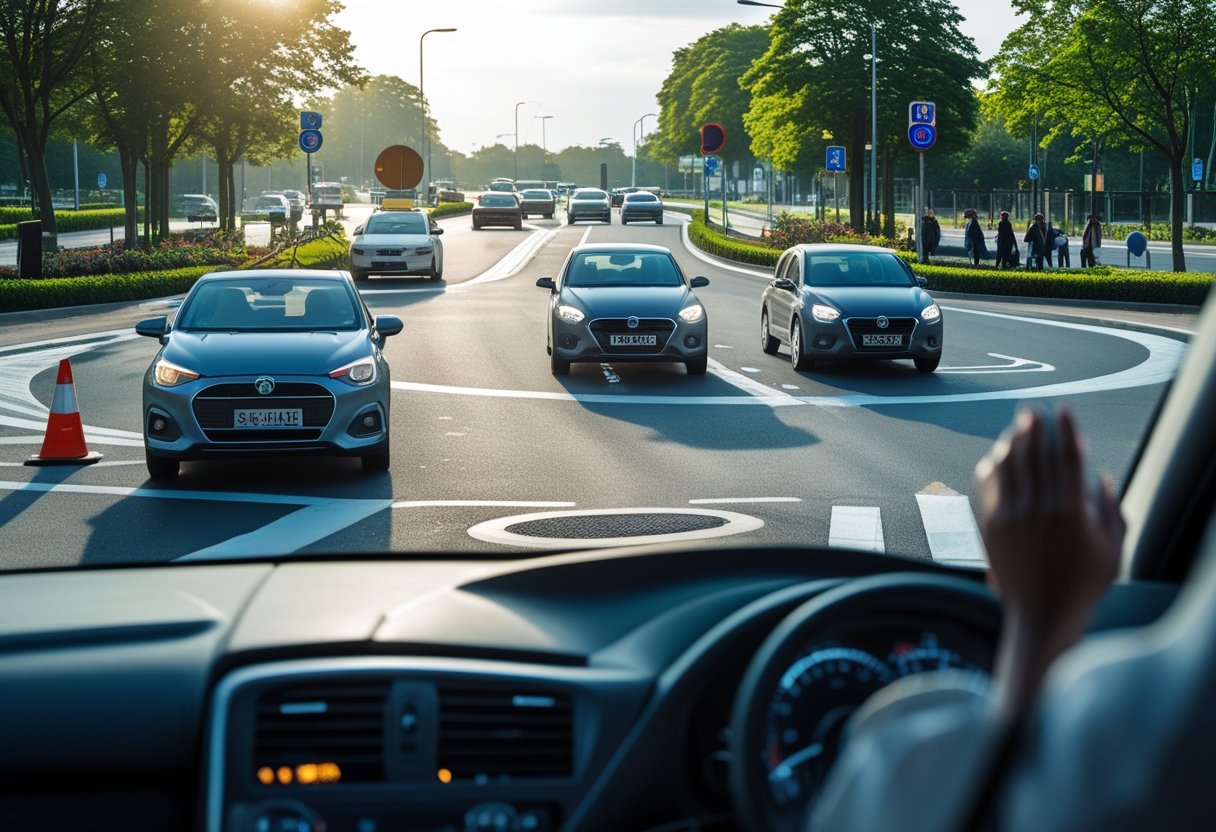
Many of us feel anxious about roundabouts because they work differently from regular crossroads. We’re dealing with continuous traffic, multiple lanes, and split-second decisions about when to enter safely.
Common Worries for New Drivers
New drivers often worry about timing their entry into roundabouts correctly. We need to judge gaps in traffic whilst other cars approach from our right at various speeds. This feels overwhelming when we’re still building confidence.
Lane positioning creates another major concern. We might panic about being in the wrong lane or getting stuck as traffic moves around us. The fear of missing our exit adds extra pressure.
Signalling properly causes stress too. We need to indicate left when leaving, but knowing exactly when to signal takes practice. Getting it wrong feels embarrassing with other drivers waiting.
Speed control worries many learners. We’re told to maintain steady speed, but judging how fast to go feels tricky. Going too slow annoys others, whilst going too fast feels dangerous.
The continuous flow of traffic makes some of us feel trapped once we’re inside. Unlike traffic lights where everyone stops, roundabouts keep moving. This constant motion can feel chaotic until we understand the rhythm.
How Roundabouts Improve Traffic Flow
Roundabouts actually make traffic move more smoothly than traditional junctions. They reduce stop-and-go patterns because traffic flows continuously in one direction. We don’t sit waiting at red lights.
Fewer conflict points exist at roundabouts. At a four-way crossroads, vehicles can collide from eight different directions. Roundabouts reduce this to just four potential conflict areas.
Traffic moves at slower, more consistent speeds through roundabouts. This creates more predictable gaps for us to enter safely. The circular design naturally reduces speeds without needing traffic lights.
Queue lengths stay shorter because traffic keeps flowing. Even during busy periods, we rarely wait as long as we would at traffic lights during peak times.
Studies show roundabouts reduce accidents by up to 75% compared to traditional intersections. The slower speeds and clearer traffic patterns create safer conditions for everyone, including pedestrians and cyclists.
Roundabouts Versus Traffic Circles
We often confuse roundabouts with traffic circles, but they work quite differently. Traffic circles are much larger and allow higher speeds. They often have traffic lights inside and multiple lanes that weave together.
Modern roundabouts prioritise entering traffic giving way to vehicles already inside. Traffic circles sometimes give priority to entering vehicles instead. This creates confusion about who has right of way.
Speed differences matter significantly. Roundabouts keep us moving at 15-25 mph, whilst traffic circles permit much faster speeds. This makes roundabouts feel less intimidating once we understand the pace.
Roundabouts use clearer lane markings and simpler rules. Traffic circles often have complex lane changes and signals that make navigation harder. British roundabouts follow consistent principles nationwide.
The size factor affects our confidence too. Roundabouts are compact and easy to see across, helping us spot our exit quickly. Large traffic circles can feel overwhelming because we can’t see the entire junction at once.
Essential Preparations Before Approaching a Roundabout
Getting ready before you reach a roundabout makes all the difference between feeling panicked and staying composed. We need to read the signs early, pick our lane with confidence, and know exactly what’s happening around our vehicle.
Reading Road Signs and Markings
Road signs become our best friends when we’re heading towards a roundabout. They tell us everything we need to know well before we get there.
Look for the blue circular signs with white arrows. These show us which lanes go where. The arrows point to different exits, so we can plan our route early.
Key signs to watch for:
- Direction signs (usually blue or white)
- Lane markings on the road surface
- Exit numbers or place names
- Give way signs at the entrance
White painted arrows on the road surface are just as important as the overhead signs. They guide us into the right position before we even think about entering the roundabout.
We should spot these signs at least 100 metres before the roundabout. This gives us plenty of time to process the information without rushing.
Distance matters here. The earlier we read these signs, the calmer we’ll feel when we actually reach the junction.
Choosing the Correct Lane
Lane choice sets us up for success or stress. Getting this right early means we won’t need to change lanes at the last minute.
For different exits:
- Left turn (1st exit): Use the left lane
- Straight ahead (2nd exit): Usually the left lane, sometimes either
- Right turn or beyond: Use the right lane
Multi-lane roundabouts need extra attention. The road markings will show us exactly where each lane leads. Trust these markings completely.
If we’re unsure which lane to use, the left lane is often the safer choice for most exits. We can always go around again if we miss our turning.
Getting into position early reduces stress massively. We should be in our chosen lane at least 50 metres before the roundabout entrance.
Never try to change lanes once we’re committed to approaching the give way line. This creates dangerous situations for everyone.
Checking Your Mirrors and Blind Spots
Mirror checks keep us aware of what’s happening around our car. This awareness helps us make better decisions about when to enter the roundabout.
Start with the interior mirror to see following traffic. Then check the left mirror to know what’s beside us. The right mirror shows us any vehicles in the right lane.
Mirror check sequence:
- Interior mirror first
- Left door mirror
- Right door mirror
- Quick shoulder check if changing lanes
Blind spots can hide motorcycles and cyclists. A quick glance over our shoulder catches anything our mirrors might miss.
We should check our mirrors again just before entering the roundabout. Other drivers might have moved position while we were looking ahead.
The key is building a complete picture of traffic around us. This knowledge helps us stay calm because we know exactly what’s happening in every direction.
Regular mirror checks become automatic with practice. Soon we’ll do them without even thinking about it.
Confident Techniques for Navigating Roundabouts
The secret to confident roundabout navigation lies in three fundamental skills: controlling your approach speed, timing your entry perfectly, and blending smoothly with traffic flow. These techniques work together to transform what feels like chaos into a manageable, predictable process.
Slowing Down Calmly on Approach
We can’t stress enough how much easier roundabouts become when you approach them at the right speed. Racing towards a roundabout only creates panic and forces rushed decisions.
Start reducing speed early – ideally 100 metres before the roundabout. This gives you precious time to scan the traffic and spot your gap. Your car should feel comfortable and controlled, not hurried.
Watch for the warning signs and road markings that tell you which lane to choose. Use these visual cues as natural reminders to ease off the accelerator. The painted arrows on the road surface are there to help, not confuse you.
Key approach speeds:
- Urban roundabouts: 15-20 mph
- Mini roundabouts: 10-15 mph
- Large multi-lane roundabouts: 20-25 mph
Remember, slowing down doesn’t mean crawling. We want smooth, progressive deceleration that feels natural. Check your mirrors as you slow down so other drivers behind you can adjust accordingly.
Giving Way and Reading Gaps
Understanding how to give way properly is the cornerstone of safe roundabout navigation. In the UK, we always yield to traffic approaching from the right that’s already on the roundabout.
Look for gaps that feel comfortable, not just barely adequate. A good gap means you won’t force anyone to brake or change their speed. Count “one Mississippi, two Mississippi” – if you can fit that count in, the gap is probably safe.
What makes a safe gap:
- 3-4 seconds between you and approaching traffic
- The approaching vehicle isn’t accelerating towards you
- You can enter the roundabout without causing others to slow down
Don’t just look at the first vehicle you see. Scan further around the roundabout for motorcycles or faster-moving traffic that might not be immediately obvious. This wider awareness helps you make better decisions about when it’s truly safe to proceed.
Merging Gracefully with Ongoing Traffic
Once you’ve spotted your gap, commit to it with confidence. Hesitation at this moment creates confusion for everyone. Accelerate smoothly as you enter, matching the speed of traffic already circulating.
Position your car properly in your chosen lane and maintain steady progress. Avoid sudden steering movements or speed changes that might surprise other drivers. Navigating roundabouts successfully means becoming part of the traffic flow, not fighting against it.
Signal clearly when you’re ready to exit. Give other road users at least two car lengths’ notice of your intentions. This helps traffic entering behind you and reassures drivers in other lanes.
Keep scanning ahead for your exit whilst staying aware of vehicles beside you. Some drivers change lanes unexpectedly, so maintain a safe buffer space around your car whenever possible.
Staying Focused and Composed in the Moment
When you’re navigating a roundabout, keeping your cool becomes absolutely crucial for making safe decisions. We’ll explore how to manage those split-second moments of uncertainty, deal with aggressive drivers around you, and bounce back gracefully when things don’t go to plan.
Managing Hesitation
Hesitating at roundabouts happens to everyone, especially when we’re learning. The key is recognising when you’re unsure and responding calmly rather than panicking.
Take a breath and assess the situation. When you feel that moment of uncertainty creeping in, slow down slightly and give yourself time to read the traffic flow. There’s no shame in taking an extra second to make sure you understand which lane you need.
We find it helpful to focus on one decision at a time. Are you safe to enter? Which exit do you need? Where should you position your car? Breaking it down stops your mind from feeling overwhelmed.
Don’t rush because of pressure from behind. Other drivers might seem impatient, but it’s better to hesitate briefly than to make a dangerous move. Your safety comes first, always.
If you’ve missed your exit, stay calm and go round again. We’ve all done it, and it’s perfectly normal. The roundabout isn’t going anywhere, and neither are you.
Handling Impatient Drivers
Unfortunately, some drivers lose their patience around roundabouts. Here’s how we stay calm and focused when dealing with aggressive behaviour.
Keep your attention on the road, not on other drivers’ reactions. When someone’s flashing their lights or gesturing behind you, resist the urge to look in your mirrors constantly. Your primary job is navigating safely.
Maintain steady, predictable movements. Don’t speed up or change your behaviour dramatically because someone’s being pushy. Erratic movements create more danger for everyone involved.
We recommend staying in your lane and following your planned route. Don’t let impatient drivers pressure you into changing lanes suddenly or taking the wrong exit. Stick to your guns.
Use your indicators clearly and early to show other drivers your intentions. Clear signalling often reduces frustration because people know what you’re planning to do.
Remember that their impatience usually isn’t personal. They might be late, stressed, or having a difficult day. Don’t let their mood affect your driving confidence.
Keeping Calm After Mistakes
Making mistakes at roundabouts feels mortifying, but how we handle them matters more than the mistake itself.
Acknowledge what happened without dwelling on it. We all take wrong exits, choose incorrect lanes, or signal late sometimes. Accept it happened and focus on correcting your course safely.
Don’t let embarrassment cloud your judgement. That hot, flustered feeling after making an error can lead to more mistakes if you’re not careful. Take a moment to reset your focus.
Use mistakes as learning opportunities. What caused the confusion? Was it poor lane positioning, late decision-making, or unfamiliarity with the roundabout layout? Understanding why helps prevent repeat errors.
Stay calm and focused on your next move. If you’ve gone the wrong way, plan your route correction calmly. Don’t make sudden, dangerous manoeuvres to “fix” the situation quickly.
We always tell our students that mistakes are part of learning. Even experienced drivers occasionally mess up roundabouts, especially unfamiliar ones. What matters is handling the situation safely and learning from the experience.
Using Indicators and Signals Effectively
Good signalling makes roundabouts easier for everyone. When you signal your intent clearly, other drivers know what you’re planning to do, and you’ll feel more confident knowing you’re communicating properly.
Signalling Your Intent When Entering
Your indicators tell other drivers which direction you’re heading before you even reach the roundabout. This early communication helps traffic flow smoothly.
For left turns (first exit), switch on your left indicator as you approach the roundabout. Keep it on until you’ve completed your exit. This lets everyone know you’ll be leaving quickly.
When going straight ahead (second exit), don’t indicate on approach. Wait until you pass the first exit, then signal left to show you’re leaving at the next one.
For right turns or continuing around, use your right indicator from the start. This warns drivers you’ll be staying on the roundabout longer than they might expect.
Never forget that your indicators work both ways. They tell others what you’re doing, but they also remind you to stick to your plan. Once you’ve signalled, follow through confidently.
Signalling to Exit Properly
The exit signal is just as important as your entry signal. It tells drivers behind you and those waiting to enter that you’re about to leave.
Signal left before your exit in every situation, regardless of which direction you entered from. This universal rule keeps things simple and predictable for everyone.
Start signalling left just after you pass the exit before yours. If you’re taking the third exit, signal left after passing the second one. This timing gives other drivers enough notice without confusing them.
Check your mirrors as you signal to exit. Motorcycles and cyclists might be alongside you, and they need to know your intentions too.
Keep your exit signal on until you’ve completely left the roundabout. Don’t cancel it too early, as this might confuse drivers who are still watching your movements.
Navigating Multi-Lane Roundabouts and Complex Scenarios
Multi-lane roundabouts can feel overwhelming, but proper lane selection and positioning make them manageable. The key is staying alert for unexpected movements from other drivers while maintaining your chosen lane throughout the roundabout.
Identifying Multi-Lane Roundabouts
We can spot multi-lane roundabouts well before reaching them by watching for specific road signs and markings. Look for overhead signs showing lane directions about 100 metres before the roundabout entrance.
Road markings on the approach lanes tell us exactly where each lane leads. White arrows painted on the tarmac show which exits each lane serves. Left lanes typically serve the first and second exits, whilst right lanes handle the third exit and beyond.
Key identification features:
- Multiple approach lanes with directional arrows
- Overhead gantry signs showing lane destinations
- Larger diameter than standard roundabouts
- Often found at major road junctions
We should slow down early to read these signs properly. Rushing past them without understanding the layout creates unnecessary stress once we’re committed to a lane.
Some multi-lane roundabouts have three or even four approach lanes. The middle lanes often serve straight-ahead traffic or specific exits. Always trust the road markings over general roundabout rules in these situations.
Safe Lane Changes Inside the Roundabout
Stay in your lane once you’ve entered a multi-lane roundabout. Lane changes inside roundabouts create dangerous situations and often catch other drivers off guard.
If we’ve chosen the wrong lane, it’s safer to continue around and exit where our lane leads us. We can then rejoin the roundabout from the correct lane for our intended destination.
When lane changes become absolutely necessary, we must check mirrors thoroughly and signal clearly. Other drivers expect us to maintain our lane position, so any movement requires extra caution.
Essential safety checks:
- Interior mirror first
- Relevant door mirror second
- Quick shoulder check for blind spots
- Signal intention clearly
- Move gradually, not suddenly
The outside lane moves slower than inside lanes on multi-lane roundabouts. Inside lane traffic often travels faster, making sudden lane changes particularly risky.
We should never change lanes just before our exit. This creates confusion for other drivers and increases accident risk significantly.
Dealing with Blind Spots and Unexpected Situations
Blind spots become more dangerous on multi-lane roundabouts because of increased traffic density. Large vehicles like lorries and buses create substantial blind areas that can hide entire cars.
We need to position ourselves where other drivers can see us clearly. Sitting in another vehicle’s blind spot whilst navigating a roundabout puts us at serious risk.
Check blind spots frequently using door mirrors and brief shoulder glances. Motorcyclists and cyclists often appear in these hidden areas without warning.
Managing unexpected situations:
- Tourist drivers may change lanes suddenly
- Delivery vehicles might exit unexpectedly
- Emergency vehicles require immediate space
- Weather conditions reduce visibility
When other drivers make unexpected moves, we should slow down rather than speed up. Creating space gives everyone more time to react safely.
If someone cuts across our path, resist the urge to sound the horn aggressively. Stay calm and adjust our position to maintain safe following distances.
Emergency vehicles approaching from behind need clear passage. We should continue to our exit if safe, then pull over immediately after leaving the roundabout.
Sharing the Space: Cyclists and Other Road Users
Roundabouts bring together different types of road users, and we need to pay extra attention to those who are most vulnerable. Cyclists can appear quickly from unexpected angles, whilst pedestrians rely on us to create safe crossing opportunities.
Watching Out for Cyclists and Motorcyclists
Cyclists at roundabouts deserve our special attention because they’re harder to spot and more vulnerable than car drivers. They might be travelling faster than we expect, especially when approaching from our left or right.
We should check our mirrors frequently. Cyclists can appear in our blind spots without warning.
Give cyclists plenty of room when we’re both navigating the roundabout. They need at least 1.5 metres of space, but more is always better. Never squeeze past a cyclist in the same lane.
Before we enter the roundabout, we need to look carefully for:
- Cyclists already on the roundabout
- Motorcyclists approaching from other directions
- Anyone filtering between lanes
Wait patiently if a cyclist is ahead of us. They have every right to use the roundabout and might need to position themselves in the centre of the lane for safety. This isn’t them being awkward – it’s them staying alive.
When exiting, we must check our left mirror and blind spot. Cyclists often continue straight whilst we turn left, creating a dangerous situation if we’re not careful.
Supporting Safe Crossings for Pedestrians
Pedestrians around roundabouts face unique challenges because traffic comes from multiple directions. We can help by being predictable and giving them clear signals about our intentions.
Always yield to pedestrians at crossing points near roundabout entrances and exits. Come to a complete stop rather than creeping forward, which can intimidate people trying to cross.
Use our indicators properly to help pedestrians understand where we’re going. Early signalling lets them know whether we’re likely to cross their path or turn away from them.
We should watch for:
- Parents with pushchairs who need extra time
- Elderly people who might move more slowly
- Anyone with mobility aids or guide dogs
Make eye contact when possible. A friendly nod or wave can reassure pedestrians that we’ve seen them and they’re safe to cross.
If we’re stopped in traffic, avoid blocking pedestrian crossing points. Leave space for people to cross safely, even if it means stopping a bit further back than we’d normally choose.
Typical Mistakes to Avoid on Roundabouts
The most common roundabout errors involve failing to give way to traffic already circulating, picking the wrong lane, hesitating when you should proceed, and forgetting to signal your intentions clearly.
Failing to Give Way
This mistake causes more roundabout accidents than any other error. We must always give way to traffic already on the roundabout, particularly vehicles approaching from our right.
Many learner drivers struggle with timing. They either pull out when it’s not safe or wait too long when there’s a clear gap. The key is understanding that traffic on the roundabout has absolute priority.
Watch for these situations:
- Cars approaching quickly from your right
- Large vehicles that need extra space
- Motorcycles that might be harder to spot
Some drivers make the error of assuming they can “squeeze in” if they’re quick enough. This creates dangerous situations and often leads to emergency braking or collisions.
Practice judging safe gaps during quieter periods. A safe gap means you can enter and reach your exit without forcing other drivers to slow down or change their path.
Incorrect Lane Usage
Choosing the wrong lane creates confusion and forces dangerous last-minute lane changes. We need to select our lane based on which exit we’re taking, not which lane looks shortest.
General lane rules:
- Left lane: first exit (turning left)
- Any lane: straight ahead (second exit)
- Right lane: turning right or going beyond straight ahead
Multi-lane roundabouts require extra attention. Always check the road markings and overhead signs before entering. These show exactly which lanes serve which exits.
Never change lanes inside the roundabout unless absolutely necessary. If you’re in the wrong lane, continue to a safe exit and find another route to your destination.
The biggest error we see is drivers staying in the right lane when going straight ahead, then cutting across traffic to exit. This puts everyone at risk.
Unnecessary Hesitating or Stopping
Hesitating at roundabouts disrupts traffic flow and creates rear-end collision risks. Once we’ve committed to entering, we must follow through decisively.
Many learners hesitate because they’re unsure about gaps or exits. This uncertainty leads to stopping when they should proceed or creeping forward without clear intent.
Common hesitation triggers:
- Overthinking whether a gap is large enough
- Panic about missing the correct exit
- Confusion about lane positions
The solution involves better preparation before reaching the roundabout. Know your exit in advance and approach with confidence in your lane choice.
If you do need to stop, make it a complete stop rather than rolling slowly forward. Other drivers can predict and react to a clear stop much easier than uncertain creeping movements.
Remember that confident, smooth entries keep traffic flowing safely for everyone.
Forgetting to Signal
Poor signalling confuses other drivers and makes roundabouts unpredictable. We must signal our intentions clearly to help others anticipate our movements.
Correct signalling sequence:
- Signal left when taking the first exit
- No signal when going straight (until ready to exit)
- Signal right when turning right or beyond straight ahead
The most critical moment is signalling left as we pass the exit before ours. This tells drivers waiting to enter that we’re leaving soon.
Many drivers forget to cancel their right signal after entering. This makes other road users think we’re continuing around rather than taking the next exit.
On mini-roundabouts, signals become even more important because everything happens quickly. Clear, timely signals prevent confusion in these compact spaces.
Practice your signalling routine until it becomes automatic. Good signalling habits make you a predictable, safer driver that others can trust and anticipate.
Frequently Asked Questions
These questions tackle the most common worries that pop up when learners face roundabouts. From managing nerves to building real confidence behind the wheel, we’ve got practical answers that actually work.
What are some effective breathing techniques to maintain calmness when approaching a roundabout?
Try the 4-7-8 technique as you spot the roundabout ahead. Breathe in for 4 counts, hold for 7, then exhale slowly for 8 counts.
This simple method slows your heart rate and clears your mind. Start the breathing pattern about 100 metres before the roundabout to give yourself time to settle.
Box breathing works brilliantly too. Inhale for 4 counts, hold for 4, exhale for 4, then pause for 4 before repeating.
Keep your shoulders relaxed whilst breathing. Tension creeps up when we’re anxious, making everything feel harder than it needs to be.
Can you share some practical strategies for reducing anxiety when navigating multiple lanes at a busy roundabout?
Choose your lane early by reading the road signs well in advance. This removes the pressure of last-minute decisions when traffic gets heavy.
Stick to the left lane if you’re unsure about your exit. It’s usually the safest option for beginners, even if it means going around again.
Focus on one car at a time rather than trying to track every vehicle. Watch the car immediately to your right as you approach.
Use your mirrors regularly but don’t get overwhelmed by constant checking. Quick glances every few seconds work better than staring.
Remember that other drivers expect some hesitation from learners. Most people are patient and understanding when they see L plates.
What’s the best way to familiarise oneself with roundabout rules without getting overwhelmed?
Start with the basic rule: give way to traffic from the right. Master this one concept before adding anything else to your mental checklist.
Practice the MSM routine (Mirror, Signal, Manoeuvre) on quiet roundabouts first. This builds muscle memory without the stress of heavy traffic.
Learn one type of roundabout at a time. Begin with simple single-lane roundabouts before tackling complex multi-lane ones.
Use online videos and diagrams to study different roundabout layouts at home. Visual learning helps when you’re not under driving pressure.
Ask your instructor to explain the specific roundabouts on your test route. Knowing what to expect removes much of the anxiety.
How could someone build confidence in timing their entry onto a roundabout, especially during peak traffic hours?
Practice the “count to three” method when you see a gap. If you can count to three before the approaching car reaches you, it’s usually safe to go.
Start with quieter times of day to build your gap judgement skills. Early morning practice sessions work wonderfully for building confidence.
Remember that hesitation is better than rushing. Other drivers would rather wait a few extra seconds than deal with an accident.
Watch traffic patterns during busy periods. You’ll notice that gaps appear naturally, even in heavy traffic.
Trust your instructor’s guidance about when to go. They can see things you might miss and will help build your timing instincts.
Could you suggest methods for a driver to remain focused and avoid panic when faced with an unexpected situation at a roundabout?
Keep your speed steady and avoid sudden movements. Panic often leads to jerky steering or harsh braking that makes things worse.
Talk yourself through what’s happening out loud. Saying “car on the right, waiting for gap” helps maintain focus and calm thinking.
If you miss your exit, simply go around again. This happens to experienced drivers too, and it’s perfectly normal.
Stay in your lane and let other drivers sort themselves out. Don’t try to fix every situation you encounter.
Remember that most “unexpected” situations aren’t actually dangerous. A car changing lanes or someone signalling late rarely creates real hazards.
What are some tips for new drivers to stay composed and make clear decisions when exiting a roundabout?
Signal left after passing the exit before yours. This simple rule works for every roundabout, making decisions automatic rather than stressful.
Check your left mirror before exiting to spot any cyclists or motorcycles. A quick glance prevents most exit-related problems.
Slow down slightly as you approach your exit. This gives you more time to react and makes the turn feel more controlled.
Keep your hands steady on the wheel during the exit turn. New drivers often oversteer, which creates unnecessary drama.
Look where you want to go rather than staring at potential hazards. Your car naturally follows your eye line, making exits smoother and more confident.