

Understanding Automatic Licence Restrictions: A Complete Guide for UK Drivers
Getting an automatic licence opens doors to driving freedom, but it also comes with specific rules you need to understand. If your driving licence shows restriction code 78, you can only drive vehicles with automatic transmission and cannot legally operate manual cars. This restriction affects millions of UK drivers, yet many people feel confused about what it actually means for their day-to-day driving experiences.

We often hear questions from drivers who worry that choosing an automatic licence will limit their options too much. The truth is, automatic licences work perfectly well for most people’s needs, but understanding the legal boundaries and practical implications helps you make informed decisions about your driving future. Whether you’re considering an automatic test or already hold this type of licence, knowing these restrictions inside and out keeps you safe and legal on the roads.
Throughout this guide, we’ll walk you through everything from the basics of how these restrictions work in real situations to special circumstances that might affect your driving privileges. You’ll discover the legal requirements, learn about vehicle adaptations, and get clear answers to the questions that matter most to your driving journey.
What Are Automatic Licence Restrictions?
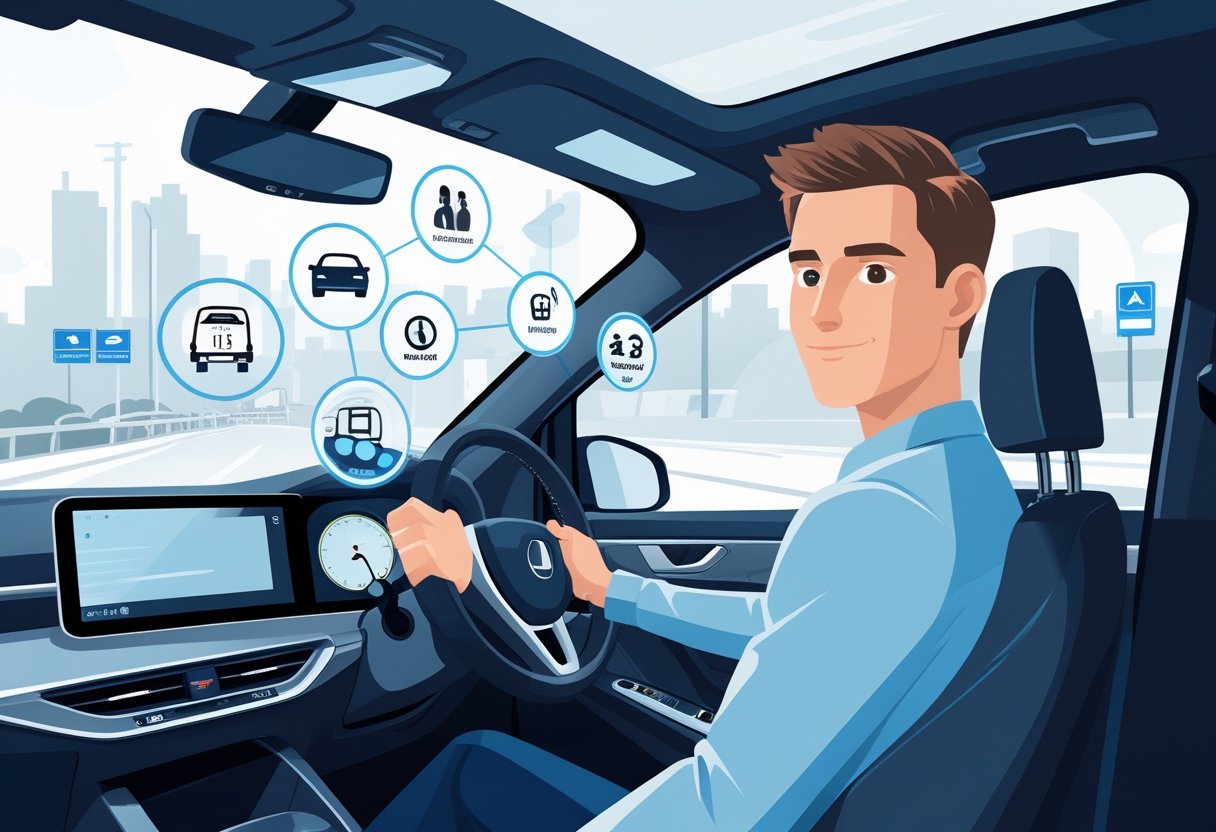
Automatic licence restrictions prevent drivers from operating manual vehicles, limiting them to cars with automatic transmission only. These restrictions appear as specific codes on your licence and determine which vehicles you can legally drive based on how you took your driving test.
Defining Automatic and Manual Licences
When we pass our driving test in a manual car, we receive what’s called a full driving licence. This gives us complete freedom to drive any Category B vehicle on UK roads, whether it has manual or automatic transmission.
However, if we take our test in an automatic car, our licence comes with built-in restrictions. An automatic licence only permits us to drive vehicles with automatic transmission.
Manual cars require us to:
- Operate a clutch pedal with our left foot
- Change gears manually using a gear stick
- Coordinate clutch, accelerator, and gear changes
Automatic cars handle gear changes for us:
- No clutch pedal to operate
- Gears change automatically based on speed and acceleration
- We only use accelerator and brake pedals
The DVLA makes this distinction because manual driving requires additional skills that aren’t tested during an automatic driving test.
The Purpose of Automatic-Only Restrictions
These restrictions exist to ensure road safety and maintain driving standards across the UK. When we take our test in an automatic car, we don’t demonstrate the skills needed for manual transmission.
Manual driving involves complex coordination between clutch control, gear selection, and smooth acceleration. Without testing these abilities, the DVLA cannot verify that we’re competent to drive manual vehicles safely.
The restrictions also protect other road users. Imagine someone with only automatic experience suddenly stalling at a busy junction or rolling backwards on a hill because they haven’t mastered clutch control.
Key safety considerations include:
- Hill starts without rolling backwards
- Smooth clutch control in traffic
- Proper gear selection for different driving conditions
- Understanding engine braking and gear management
These skills take practice and proper instruction, which is why the DVLA maintains clear boundaries between licence types.
Licence Codes That Signal Restrictions
The most important restriction code we need to know is Code 78. This appears on the back of our driving licence and restricts us to vehicles with automatic transmission only.
Code 78 specifically means we can only drive “a vehicle with no clutch pedal or lever operated manually.” This definition comes directly from EU legislation that the UK still follows.
Other related codes include:
- Code 10: Modified transmission (allows some adaptations)
- Code 15: Adapted clutch systems
- Code 20: Modified braking systems
- Code 25: Modified accelerator systems
If we have Code 78, we cannot drive vehicles that require any manual gear operation. This includes cars with hand-operated gear levers or adapted manual systems.
However, codes 10 and 15 are different. These allow us to drive standard automatic cars even though they relate to transmission adaptations.
Key Terms: Automatic, Manual, and Category B Explained
Understanding these terms helps us navigate licence restrictions with confidence. Category B covers most cars we’ll encounter on UK roads, including saloons, hatchbacks, estates, and small vans up to 3,500kg.
Automatic transmission means the car’s computer system manages gear changes for us. We select Drive, Reverse, or Park, and the vehicle does the rest. Modern automatics include CVT, dual-clutch, and traditional torque converter systems.
Manual transmission requires us to operate a clutch and select gears ourselves. This includes traditional manual gearboxes and some semi-automatic systems where we still control gear timing.
The DVLA considers any vehicle with a manually operated clutch as manual transmission, regardless of how the gears are selected. This means paddle-shift cars without clutch pedals count as automatic, while cars with clutch pedals but automatic gear selection still count as manual.
These definitions matter because they determine exactly which vehicles we can legally drive with our particular licence type.
How Automatic Licence Restrictions Work in Practice
When you pass your test in an automatic car, specific codes appear on your licence that determine exactly which vehicles you can legally drive. These restrictions affect everything from daily commuting choices to car rentals and future vehicle purchases.
Licence Categories and Vehicle Types
Your driving licence shows different categories that match specific vehicle types. Category B covers most standard cars, including both automatic cars and manual cars when you hold a full manual licence.
If you passed your test in an automatic vehicle, you’ll see restriction code 78 on your licence. This code means you can only drive vehicles with automatic transmission.
The restriction applies to all Category B vehicles. You cannot drive any manual car, regardless of its size or engine type. This includes small city cars, family hatchbacks, and larger estate vehicles with manual gearboxes.
Category C covers larger commercial vehicles like lorries. The same automatic restriction applies here too. If you later gain Category C entitlement, code 78 will restrict you to automatic commercial vehicles only.
Some people think automatic licences prevent driving larger vehicles altogether. This isn’t true. You can drive automatic vehicles in any category you’re qualified for, including vans and trucks with automatic transmission.
How Restrictions Affect Your Driving Choices
Living with an automatic licence shapes many practical decisions about transport and vehicle ownership. Most modern cars offer automatic versions, but your choices remain more limited than manual licence holders.
Car buying becomes more focused on automatic vehicles. You’ll find automatic cars across all price ranges, from budget-friendly models to luxury vehicles. However, automatic versions often cost slightly more than their manual equivalents.
Rental cars present some limitations. Most major rental companies stock plenty of automatic vehicles, especially in popular tourist areas. However, you should always specify your requirement when booking to avoid disappointment.
Company car schemes usually accommodate automatic licence holders well. Many fleet vehicles come with automatic transmission anyway, particularly executive and premium models.
Driving abroad requires extra planning. Some countries have fewer automatic vehicles available for rent. You’ll need to research your destination’s car rental market beforehand.
Emergency situations might limit your options. If you need to borrow someone’s car urgently, it must have automatic transmission. This restriction could affect your flexibility in unexpected circumstances.
Reading Your Licence: Where to Spot the Codes
The back of your driving licence contains all the important restriction information. Look for a section showing licence categories with corresponding codes and dates.
Code 78 appears in small print next to your Category B entitlement. It might show as “78” or “78 – Restricted to vehicles with automatic transmission” depending on your licence format.
Check both the category column and the restriction codes column. Some licences show codes separately, whilst others integrate them directly with the category information.
Valid from dates appear alongside each category. This shows when you first gained that particular entitlement and any associated restrictions.
Compare your licence with a manual licence holder’s document if you’re unsure. Manual licences typically show Category B without any restriction codes, or they might show different codes entirely.
Additional codes might appear for other restrictions like wearing glasses (code 01) or modified controls. These work independently of your automatic restriction and address separate requirements for safe driving.
Legal and Practical Implications of Driving with an Automatic Licence
When you pass your test in an automatic car, your Category B licence comes with specific restrictions that affect what vehicles you can legally drive and the consequences of stepping outside these boundaries. Understanding these limitations helps you avoid serious legal trouble and costly insurance issues.
Which Vehicles You Can and Cannot Drive
Your automatic transmission only licence gives you the freedom to drive any vehicle with an automatic gearbox. This includes traditional automatics, electric cars, and most hybrid vehicles.
What you can drive:
- All electric vehicles (EVs)
- Conventional automatic cars
- Most hybrid vehicles
- Automatic vans up to 3.5 tonnes
What you cannot drive:
- Any vehicle with a manual gearbox
- Semi-automatic cars that require clutch operation
- Older hybrid vehicles with manual transmissions
The key thing to remember is that your licence specifically restricts you to automatic transmission only. Even if you feel confident about your driving skills, the law doesn’t care about your ability. It only cares about your certificate of competence.
Many drivers underestimate how serious these restrictions are. We’ve seen cases where people assume they can “just try” driving a manual car. That’s a costly mistake.
The Consequences of Driving a Manual on an Automatic Licence
Driving a manual vehicle with an automatic licence isn’t just bending the rules. It’s breaking them completely. The penalties can seriously damage your finances and driving record.
Legal consequences include:
- Fines up to £1,000
- 3 to 6 penalty points on your licence
- Possible vehicle seizure by police
- Court appearance in serious cases
Your insurance becomes worthless the moment you drive illegally. If you have an accident whilst driving a manual car, your insurer can refuse to pay out. This leaves you personally liable for all damages.
Imagine crashing into an expensive car or, worse, injuring someone. You could face bills running into tens of thousands of pounds. No amount of confidence in your driving skills is worth that risk.
The police treat this as driving otherwise than in accordance with a licence under Section 87 of the Road Traffic Act 1988. It’s not a minor technicality.
Upgrading from Automatic to Manual: What’s Involved?
The good news is that upgrading to a manual licence is straightforward. You don’t need to start from scratch or retake your theory test (as long as it’s still valid).
The upgrade process:
- Book a practical test in a manual vehicle
- Pass the manual driving test
- Update your photocard licence with the DVLA
Your existing driving skills give you a massive head start. You already understand traffic rules, hazard perception, and vehicle control. Learning to operate a clutch and gearstick is the main challenge.
Most automatic licence holders find manual lessons easier than complete beginners. You’re not learning to drive. You’re just learning different controls.
The test itself follows exactly the same format as your original automatic test. The examiner looks for the same standards of safety and control. The only difference is demonstrating competence with manual transmission.
Once you pass, you’ll receive an unrestricted manual driving licence. This allows you to drive both manual and automatic vehicles for life.
Adapting Vehicles: When and Why Restrictions May Apply
Vehicle adaptations help drivers with medical conditions or disabilities stay safely on the road. The DVLA uses specific codes to track these modifications, ensuring each driver operates vehicles suited to their needs.
Codes for Vehicle Modifications and Adaptations
When we receive a driving licence with adaptations, specific codes appear that tell us exactly which modifications we need. These codes protect us and other road users by ensuring we only drive vehicles we can safely control.
Code 78 restricts us to automatic transmission vehicles only. This means we cannot drive cars with manual clutches or gear changes.
Code 10 allows modified transmission systems. We might use automatic gear selection or adapted gear selectors like button controls instead of traditional gear sticks.
Code 15 covers adapted clutch systems. This includes hand-operated clutches or modified clutch controls that help us change gears more easily.
The key difference is important: if we have Code 78, we cannot use Code 15 adaptations because hand-operated clutches still count as manual transmission.
Some drivers need multiple codes. For example, we might have both Code 78 and Code 10 if we need automatic transmission plus special gear selection buttons.
Physical and Medical Reasons for Specific Restrictions
Medical conditions affect our ability to operate standard vehicle controls safely. The DVLA evaluates each case individually to determine which adaptations we need.
Upper limb weakness or limited arm movement often requires modified transmission controls. We might struggle with traditional gear changes or clutch operation.
Lower limb issues can affect our ability to use standard pedals effectively. Conditions like paralysis, arthritis, or amputations may require alternative control methods.
Visual impairments might need enhanced mirror systems or additional viewing aids. Even with eyesight correction like glasses or contact lenses, we sometimes need extra support for safe driving.
Neurological conditions can impact our coordination or reaction times. These situations often require multiple adaptations working together.
The goal is always maintaining our independence whilst ensuring road safety. Medical assessments help determine the right combination of restrictions and adaptations for our specific needs.
Common Adaptations: Transmission, Pedals, and Steering
Transmission modifications help us control gear changes safely. Automatic transmissions eliminate clutch pedals entirely. Button selectors let us change gears without traditional gear sticks.
Modified clutch systems use hand controls instead of foot pedals. These adaptations work well for drivers with leg mobility issues.
Pedal adaptations come in several forms:
- Left-foot accelerators for right leg problems
- Hand-operated brake and accelerator controls
- Extension pedals for shorter drivers
- Pedal guards preventing accidental activation
Modified steering helps us maintain vehicle control. Larger steering wheels provide better grip. Spinner knobs allow one-handed steering.
Some drivers use joystick controls that combine steering, acceleration, and braking in one device.
Additional adaptations include repositioned mirrors for better visibility and adapted switches for indicators and lights. These modifications ensure we can access all necessary controls without taking our hands off the steering wheel.
The right combination of adaptations transforms challenging driving situations into manageable ones, keeping us mobile and independent.
Automatic vs Manual: Pros, Cons, and Flexibility
Your choice between automatic and manual driving lessons shapes your future driving opportunities and determines which vehicles you can legally operate. A manual licence opens doors to both transmission types, whilst an automatic licence limits you to vehicles without a clutch pedal.
Driving Flexibility: The Freedom of a Manual Licence
Learning to drive with a manual transmission gives you the broadest range of driving flexibility for years to come. When you pass your test in a manual car, your licence allows you to drive both manual vehicles and automatic vehicles legally.
This flexibility becomes invaluable when you need to borrow a friend’s car, rent vehicles abroad, or consider different car purchases. Most rental fleets worldwide still feature manual transmissions, especially in Europe and budget categories.
Manual vehicles also dominate the used car market, giving you more choice and often better value. You’ll find cheaper insurance premiums and lower maintenance costs with many manual models.
The skills you develop during manual lessons, particularly clutch control, enhance your overall understanding of how cars work. These driving skills make you a more confident driver in challenging situations like hill starts or slow-speed manoeuvring.
However, learning manual transmission requires more lessons on average. The coordination between clutch, accelerator, and gear changes takes time to master, which can increase your total learning costs.
Ease of Use: Why Some Choose Automatic
Automatic vehicles remove the complexity of clutch operation and gear changes, letting you focus purely on steering, observation, and road positioning. This simplification often leads to fewer required lessons and potentially lower initial learning costs.
Many learners find automatic lessons less stressful, especially in busy traffic or on steep hills. Without worrying about stalling or clutch control, you can concentrate on developing essential driving skills like hazard perception and spatial awareness.
Modern automatic vehicles offer smooth acceleration and can be more comfortable for daily commuting. They’re particularly helpful if you have physical limitations that make clutch operation difficult or painful.
The downside is clear: your licence restricts you to automatic cars only. This limitation affects your vehicle choices and can increase running costs, as automatics typically consume more fuel and cost more to purchase.
If you later want to drive manual cars, you’ll need to retake your driving test in a manual vehicle, adding time and expense to your driving journey.
Career and Travel Considerations
Certain careers benefit significantly from manual driving qualifications. Delivery drivers, tradespeople, and those considering commercial vehicle licences often need manual driving skills as a foundation.
Many company car fleets and job requirements specify manual licence holders, particularly in logistics, construction, and emergency services. Having manual qualifications keeps these career paths open.
International travel becomes simpler with a manual licence. Rental cars in many countries default to manual transmission, and converting your UK licence abroad often requires you to have passed in a manual vehicle originally.
Driving flexibility proves especially valuable during emergencies or unexpected situations. Being able to drive any available vehicle, regardless of transmission type, provides genuine peace of mind.
Consider your long-term plans carefully. Whilst electric vehicles are increasingly automatic, the transition will take years, and manual skills remain valuable for the foreseeable future.
Special Cases and Further Considerations
Beyond the standard code 78 restriction for automatic transmissions, several other licence codes affect what you can drive and under which circumstances. These include specific rules for towing trailers, operating unique vehicles like motor tricycles, commercial driving restrictions, and age-related requirements.
Towing and Trailers: What Your Licence Permits
Your automatic licence doesn’t prevent you from towing, but specific weight limits apply. We need to understand these rules to stay legal on the road.
Code 96 appears on licences when you’re qualified to tow heavier combinations. This allows you to drive a vehicle and trailer where the trailer weighs at least 750kg. The combined weight of both vehicle and trailer must be between 3,500kg and 4,250kg.
Without code 96, you can still tow lighter trailers. Your standard Category B licence permits towing when the combined weight stays under 3,500kg total.
For Category C vehicles (lorries over 3,500kg), you’ll need separate training and testing. These commercial licences have their own automatic transmission restrictions. Code 106 restricts Category C vehicles to automatic transmissions only.
Code 102 means “drawbar trailers only” if this restriction applies to your licence. This limits the type of trailer coupling you can use legally.
The key point here is weight, not transmission type. Your automatic restriction doesn’t affect towing eligibility, but weight limits definitely do.
Driving Motor Tricycles and Other Unique Vehicles
Motor tricycles fall under specific rules that interact with automatic licence restrictions. Code 79(3) restricts you to tricycles only if this appears on your licence.
Three-wheeled vehicles over 15kW require a Category A licence normally. However, if you passed your car test before 19th January 2013, you can ride motor tricycles automatically.
Code 125 also relates to tricycles but only applies to licences issued before 29th June 2014. This shows how regulations have evolved over time.
Your automatic restriction (code 78) still applies to these vehicles. You can only drive automatic tricycles, not manual transmission ones.
Code 46 restricts some drivers to tricycles only, again for licences issued before specific dates. We see this on older licences where different rules applied.
The important thing to remember is that vehicle type restrictions combine with transmission restrictions. Both must be satisfied legally.
Not for Hire or Reward and Other Key Licence Codes
Code 101 states “not for hire or reward” and prevents you from driving commercially for profit. This appears when you haven’t passed commercial driving standards.
This restriction affects taxi driving, delivery work, or any paid driving services. You cannot legally earn money from driving with this code active.
Code 103 requires a “certificate of competence” before driving certain vehicles. This usually applies to specialised or commercial vehicles needing extra qualifications.
Code 121 means you’re “restricted to conditions specified in the Secretary of State’s notice.” This covers unusual or specific circumstances unique to individual cases.
These codes often appear alongside your automatic restriction. Multiple restrictions can apply simultaneously to the same licence.
The “hire or reward” distinction is crucial for anyone considering driving as income. We must remove this restriction before taking paid driving work legally.
Minimum Age Requirements and Licensing for Younger Drivers
Code 108 indicates “subject to minimum age requirements” for certain vehicle categories. Different vehicle types have varying minimum ages legally.
Category B (cars) requires age 17 minimum, or 16 with Enhanced Rate mobility allowance. Your automatic restriction applies regardless of age.
Code 118 shows “start date is for earliest entitlement” when different age rules created confusion historically. This clarifies when your entitlement actually began.
Code 122 appears for moped training completion. It states “valid on successful completion: Basic Moped Training Course” but doesn’t apply to trial e-scooters.
Younger drivers often start with automatic licences due to easier learning. The age requirements don’t change based on transmission type chosen.
Age restrictions combine with other codes naturally. A 17-year-old with code 78 can drive automatic cars but faces the same basic legal requirements as manual licence holders.
Frequently Asked Questions
These common questions address practical concerns about removing automatic restrictions, preparing for driving tests, legal implications of licence violations, insurance complications, and the upgrade process to full manual licensing.
What steps should I take if I want to remove the automatic transmission restriction from my driving licence?
Removing your automatic restriction starts with contacting the Driver and Vehicle Licensing Agency (DVLA) to understand the specific requirements. You’ll need to complete the proper application forms and provide documentation showing your current licence status.
The most crucial step involves taking lessons with a qualified driving instructor who specialises in manual transmission vehicles. We recommend booking at least 10-15 hours of professional tuition to master clutch control and gear changes properly.
You’ll then need to pass a full driving test in a manual vehicle. This isn’t just a quick assessment, it’s a complete practical examination that covers all aspects of manual driving skills.
Once you pass, the DVLA will issue you a new licence without the automatic restriction code. This process typically takes 2-3 weeks after passing your test.
How does an automatic transmission restriction affect my driving test and what can I do to prepare accordingly?
Your driving test must be taken in a vehicle that matches your intended licence type. If you want full manual privileges, you cannot take your test in an automatic car, as this will result in the restriction code being added.
During preparation, focus heavily on clutch control and smooth gear transitions. These skills require significant practice time, often double what automatic learners need for basic vehicle control.
Hill starts present the biggest challenge for manual test candidates. We suggest practising on various gradients until you can complete them confidently without rolling backwards.
Consider taking intensive driving courses specifically designed for manual transmission. These concentrated programmes help you develop muscle memory faster than spread-out lessons.
Is it possible to drive a manual vehicle if my licence only covers automatic cars, and what are the implications?
No, driving a manual vehicle with an automatic-only licence is strictly prohibited under UK law. Your licence restriction code 78 specifically prevents you from operating any vehicle with a manual clutch system.
The legal consequences include immediate fines, penalty points on your licence, and potential disqualification from driving. Police can stop you at any time and check your licence against the vehicle you’re operating.
Beyond legal troubles, you’re also putting yourself and others at risk. Manual vehicles require specific skills for safe operation, particularly in emergency situations where quick gear changes matter.
If caught, your vehicle may be impounded until someone with the correct licence can collect it. This creates additional costs and significant inconvenience.
What are the insurance implications for driving a manual car with an automatic licence restriction?
Your insurance becomes completely invalid the moment you drive a manual vehicle with an automatic-only licence. Insurance companies require drivers to hold appropriate licensing for the vehicles they operate.
In case of an accident, your insurer will refuse to pay any claims, leaving you personally liable for all damages. This could result in thousands of pounds in costs for vehicle repairs, medical expenses, and third-party claims.
Future insurance premiums will increase dramatically once insurers discover you’ve driven without proper licensing. This violation stays on your record and affects quote calculations for years.
Some insurance companies may refuse to provide coverage altogether after such violations. This makes finding affordable insurance much more difficult in the future.
How long does the automatic licence restriction remain on my driving record, and can it be changed later on?
The automatic restriction code remains on your licence permanently unless you take specific action to remove it. It doesn’t expire or disappear with time, regardless of how long you’ve held your licence.
You can change this restriction at any point by passing a manual driving test. There’s no time limit or waiting period, though we recommend gaining sufficient manual driving experience first.
Many drivers successfully remove their restriction years after initially passing their automatic test. Age isn’t a barrier, though older drivers may need more practice time to develop manual skills.
The restriction applies to all vehicle categories on your licence. Even if you later qualify for larger vehicle categories, the automatic restriction carries over unless specifically addressed.
Could you guide me through the process of upgrading from an automatic licence restriction to a full, unrestricted driving licence?
Begin by booking lessons with a DVLA-approved driving instructor who has experience teaching manual skills to existing licence holders. Your learning curve will be shorter than complete beginners, but expect 15-20 hours of professional tuition.
Submit your driving test application through the official DVLA website or by phone. You’ll need your current licence number and must specify that you’re taking the test to remove automatic restrictions.
During your preparation period, practise regularly in different manual vehicles if possible. Various cars have different clutch feels and biting points, so broader experience helps.
On test day, arrive early and ensure the vehicle you’re using meets all DVLA requirements for the driving test. Your instructor will typically provide an appropriate manual car with dual controls.
After passing, you’ll receive a new licence without restriction codes within a few weeks. Keep your old licence as proof of your original pass date for insurance purposes.