

What Counts as a Good Hazard‑Perception Score? Your Guide to Passing with Confidence
Many learner drivers wonder about their chances of success when facing the hazard perception test, and the answer might surprise you. A good hazard perception score ranges from 44 points (the minimum pass mark) to 75 points maximum, but scoring between 50-60 points shows you’re well-prepared for real-world driving situations. Whilst you only need 44 points to pass, aiming higher demonstrates stronger awareness skills that will serve you brilliantly once you’re on the roads independently.
The beauty of understanding what constitutes a strong score lies in how it transforms your approach to preparation. Rather than simply aiming to scrape through, you’ll discover the specific types of hazards that appear most frequently, learn proven strategies that boost your reaction times, and develop the keen observation skills that make you a safer driver overall.
We’ll walk you through everything from recognising different hazard categories to mastering practice techniques that genuinely improve your performance. You’ll also learn how this test connects directly to real driving scenarios, giving you confidence that goes far beyond simply passing an exam. Whether you’re taking the test for the first time or need to resit, this guide will help you achieve a score you can feel proud of.
Understanding the Hazard Perception Test
The hazard perception test forms a crucial part of your driving theory test, requiring you to watch video clips and identify potential dangers on the road. This assessment measures your ability to spot developing hazards quickly and respond appropriately, serving as the second component of the DVSA theory test that all learner drivers must complete.
Purpose of the Hazard Perception Assessment
The hazard perception test evaluates your ability to recognise and react to potential dangers whilst driving. This isn’t just about spotting obvious risks like a car pulling out in front of you.
The test measures how well you can identify developing hazards before they become serious problems. We’re talking about situations where you might need to slow down, change direction, or signal to other road users.
Think of it as training your brain to be constantly alert. The DVSA designed this assessment to ensure new drivers develop the crucial skill of anticipating trouble before it happens.
Common hazards you’ll encounter include pedestrians stepping between parked cars, cyclists with limited space to manoeuvre, or children near schools. Animals appearing on rural roads and vehicles reversing from driveways also feature regularly.
The test uses realistic scenarios you’ll face as a qualified driver. By practising hazard recognition now, you’re building habits that could prevent accidents later.
Role within the Theory Test
The hazard perception component works alongside the multiple-choice section to form your complete driving theory test. You cannot pass one section and fail the other.
Both parts must be completed successfully to receive your theory test certificate. If you fail either section, you’ll need to retake the entire test, including both components.
Learner drivers need 44 out of 75 points to pass the hazard perception section. This represents roughly 59% of the available marks, which might sound manageable.
However, many candidates find this section more challenging than the multiple-choice questions. The pass rate reflects this difficulty, with fewer people succeeding on their first attempt.
Your theory test certificate is essential before booking your practical driving test. Without it, you cannot progress to the final stage of gaining your full driving licence.
Structure and Video Clips Explained
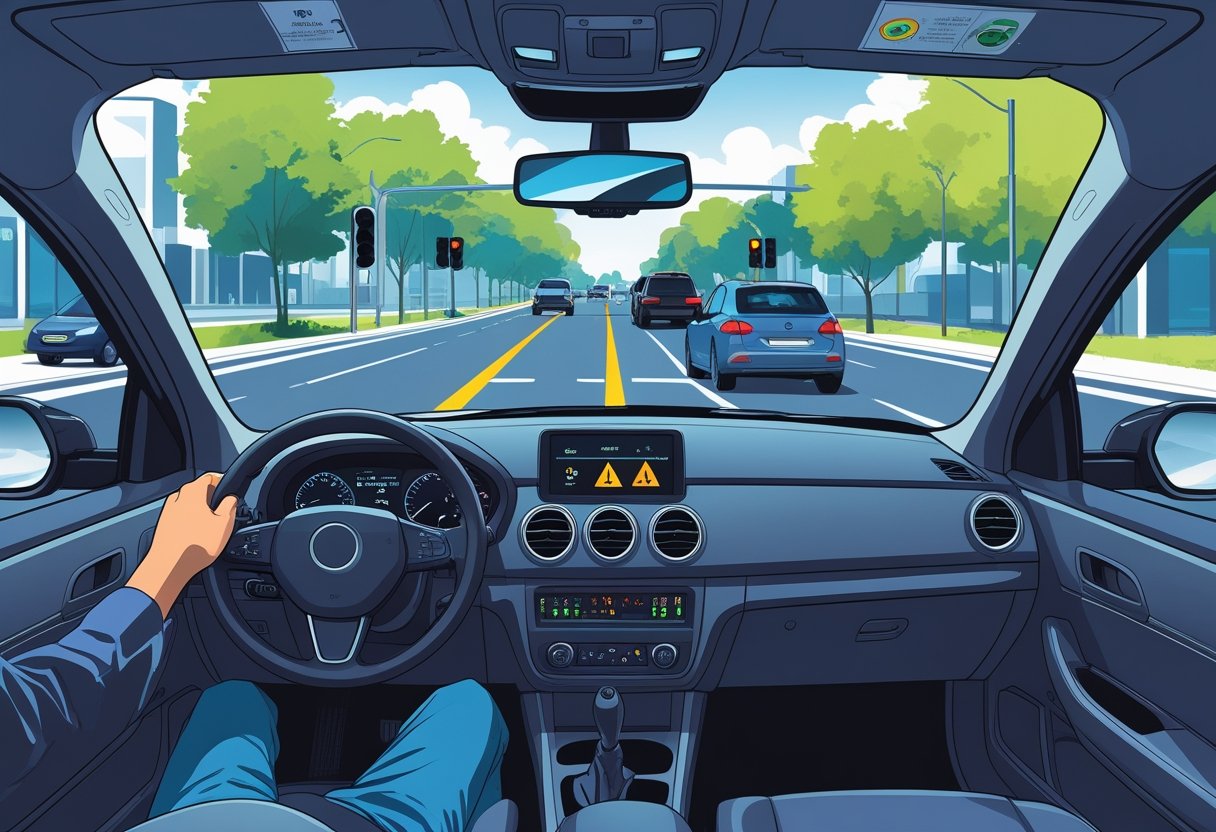
The test consists of 14 video clips, each showing real driving scenarios from the driver’s perspective. These clips use CGI technology but accurately represent typical road situations.
Thirteen clips contain one developing hazard each, whilst one clip features two hazards. You won’t know which clip has the double hazard, as they appear in random order.
Each hazard can score you up to five points, depending on how quickly you click when the danger starts developing. The faster your response, the higher your score.
| Clip Type | Number of Clips | Hazards per Clip | Maximum Points |
|---|---|---|---|
| Single hazard | 13 | 1 | 65 points |
| Double hazard | 1 | 2 | 10 points |
| Total | 14 | 15 | 75 points |
Don’t try to cheat by clicking randomly or following patterns. The system detects this behaviour and automatically awards zero points for that clip.
The clips show everyday situations: busy high streets, country lanes, residential areas, and dual carriageways. Each video lasts around one minute, giving you time to scan for potential dangers.
What Is a Good Hazard-Perception Score?

The DVSA hazard perception test requires you to score at least 44 points out of 75 to pass. Understanding how the scoring works and what constitutes strong performance helps you prepare effectively and know what to expect on test day.
Minimum Pass Mark and Scoring System
You need to score at least 44 points out of 75 to pass the hazard perception test. This represents roughly 59% of the total available marks.
The test includes 14 video clips, with most containing one developing hazard worth up to 5 points. One clip contains two hazards, bringing the total possible score to 75 points.
Scoring bands work as follows:
- 0-43 points: Fail
- 44-75 points: Pass
You don’t need to spot every single hazard to pass. This gives you some breathing room if you miss a few during the test.
The earlier you click when a hazard develops, the more points you’ll earn. However, clicking too early or too frequently can result in zero points for that clip.
How Scores Are Calculated for Each Hazard
Each hazard has a scoring window that opens when the hazard begins to develop. The DVSA awards points based on when you click within this window.
Point allocation per hazard:
- 5 points: Very early response
- 4 points: Early response
- 3 points: Moderate response
- 2 points: Late response
- 1 point: Very late response
- 0 points: No response or clicking outside the window
The system tracks your mouse clicks throughout each video clip. If you click before the hazard starts developing, you won’t score any points for that particular hazard.
Pattern clicking (clicking repeatedly or at regular intervals) triggers an automatic zero score for that clip. The system easily detects this behaviour, so avoid the temptation to click constantly.
One clip contains two developing hazards instead of one. This means you can potentially earn up to 10 points from that single video.
Interpreting Your Test Results
Your results appear immediately after completing the test. The screen shows your total score and whether you’ve passed or failed the hazard perception section.
Score ranges and what they indicate:
- 44-50 points: Solid pass, room for improvement
- 51-60 points: Good performance, well-prepared
- 61-70 points: Excellent awareness and timing
- 71-75 points: Outstanding performance
We find that most successful candidates score between 50-65 points. Achieving the maximum 75 points is quite rare and not necessary for passing.
If you fail with a score below 44, you’ll need to wait at least three working days before retaking the entire theory test. The official DVSA materials provide excellent practice opportunities to improve your performance.
Remember that your hazard perception score doesn’t affect your multiple-choice theory test results. Both sections must be passed in the same sitting, but they’re marked separately.
Types of Hazards You Need to Spot
Understanding what to look for during your hazard perception test makes all the difference between a passing score and disappointment. We’ll break down the key categories of hazards, from developing situations that require immediate action to environmental challenges that can catch you off guard.
Developing Hazards vs. Potential Hazards
The most crucial distinction we need to grasp is between a developing hazard and a potential one. This difference determines when you should click during your test.
A developing hazard is actively unfolding and requires you to take action. Think of it as something that’s happening right now. For example, a pedestrian stepping into the road or a car suddenly braking ahead of you.
A potential hazard is something that could become dangerous but isn’t yet requiring action. A parked car is potential. Children playing near the roadside are potential.
Most experts recommend clicking up to three times as the hazard develops to avoid missing the scoring window. The key is patience.
Wait for that moment when potential becomes actual. When the pedestrian moves from the pavement onto the road. When brake lights flash ahead. That’s your cue to click.
Common Examples: Pedestrians, Cyclists, and Vehicles
Pedestrians create some of the most frequent hazards we encounter. Watch for people near bus stops, outside schools, or crossing at traffic lights.
Look for subtle signs before they step out. Someone looking towards the road. A person with shopping bags approaching a crossing. These moments often signal what’s coming next.
Cyclists present unique challenges because they’re smaller and can appear quickly. They might swerve around potholes, signal turns, or filter through traffic.
Pay special attention to cycle lanes and junctions. Cyclists often change position without much warning, especially when avoiding obstacles or turning.
Vehicle hazards include sudden braking, lane changes without signalling, and cars pulling out from side roads. Emergency vehicles also create developing situations.
Watch for brake lights in traffic queues. Notice cars waiting at junctions that might pull out. These situations develop rapidly and need quick recognition.
Environmental Factors: Roadworks and Road Conditions
Roadworks create multiple hazard opportunities during your test. Look for temporary traffic lights, lane closures, and workers near the carriageway.
Construction areas often feature:
- Narrow lanes forcing vehicles closer together
- Temporary barriers reducing visibility
- Heavy machinery entering or leaving work zones
- Changed road surfaces affecting vehicle behaviour
Road conditions include weather-related hazards like standing water, icy patches, or reduced visibility. Poor road surfaces can cause vehicles to behave unexpectedly.
Wet roads make stopping distances longer. Potholes can cause cyclists to swerve suddenly. Leaves on the road create slippery conditions that affect braking.
These environmental factors often combine with other hazards. A cyclist avoiding a pothole in wet conditions creates a developing situation requiring immediate awareness and potential action.
Top Strategies to Achieve a High Score
Getting those precious extra points on your hazard perception test comes down to three key areas: timing your clicks perfectly when spotting hazards, steering clear of penalties that drag your score down, and mastering the art of efficient clicking technique.
Spotting Hazards Early and Reacting Efficiently
The secret to maximizing your score during practice sessions lies in recognizing developing hazards the moment they start unfolding. We’re talking about that split second when a pedestrian steps towards the kerb or when a car ahead begins to slow down.
Watch for these early warning signs:
- Pedestrians looking towards the road
- Children playing near traffic
- Cars indicating or positioning to change lanes
- Brake lights appearing ahead
Your reaction time makes all the difference here. Click within half a second of spotting a developing hazard, and you’ll bag the full five points. Wait too long, and those points start slipping away fast.
We recommend scanning continuously from left to right across your screen. Don’t get tunnel vision focusing on one area. Real hazards often develop in your peripheral vision whilst you’re watching something else entirely.
Practice with licensed DVSA materials to train your eye. The more clips you watch, the better you’ll become at anticipating when situations might turn dangerous.
Avoiding Over-clicking and Other Common Mistakes
Over-clicking is the fastest way to tank your score. The system penalises excessive clicking, so resist the urge to tap frantically throughout each clip.
Common clicking mistakes that cost points:
- Clicking on static hazards (parked cars, road signs)
- Multiple clicks for the same hazard
- Clicking when nothing is actually developing
- Random clicking out of nerves
We’ve seen learners click on every single car they spot, thinking quantity beats quality. That’s not how it works. Only developing hazards count, not potential ones.
Avoiding over-clicking means staying calm and clicking with purpose. Ask yourself: “Is this situation actually changing right now?” If the answer is no, keep watching.
Some clips contain no scoreable hazards at all. Don’t panic if you haven’t clicked anything by the end. It’s better to score zero than get penalised for random clicking.
Improving Your Clicking Technique
Your physical clicking technique matters more than you might think. We suggest using your mouse rather than touchscreen if given the choice, as it offers better precision and response time.
Position your finger ready to click throughout each video. Don’t rest your hand away from the mouse between clips. Those milliseconds count when you’re chasing top scores.
Optimal clicking approach:
- Single, deliberate clicks
- Click the moment you identify a developing hazard
- Don’t second-guess yourself
- Maintain steady hand position
Effective clicking strategies involve trusting your instincts. If something catches your attention as potentially dangerous, click straightaway. Hesitation costs points.
Practice your clicking timing with official test materials. The more familiar you become with how quickly hazards develop in the test clips, the better your instinctive timing becomes.
Remember, confidence in your clicking technique comes from thorough preparation, not luck.
Effective Practice Tips for Boosting Your Performance
Regular practice with the right approach makes all the difference in achieving a strong hazard perception score. Focusing on quality practice materials, realistic test conditions, and strategic preparation will give you the confidence to spot hazards quickly and accurately.
Making the Most of Hazard Perception Practice
Consistency beats cramming every time. We recommend practicing for 15-20 minutes daily rather than marathon sessions once a week. This approach helps your brain develop the pattern recognition skills needed for quick hazard spotting.
The 3-click method proves highly effective for maximising your scores. Click when you first spot a potential hazard, click again when you’d naturally react as a driver, then click once more a second later for good measure.
Don’t worry about clicking on hazards that don’t develop into actual dangers. There’s no penalty for false positives, so it’s better to be cautious than miss a scoring opportunity.
Focus on your peripheral vision during practice sessions. Real driving requires awareness of your entire field of view, not just the centre of the screen. Train yourself to notice movement and changes in all areas of the video clips.
Keep a practice diary noting which types of hazards you struggle with most. Common challenging scenarios include:
- Pedestrians stepping into the road
- Cyclists appearing from blind spots
- Cars pulling out of side roads
- Animals near roadways
Using Official and Updated CGI Practice Tests
DVSA-approved practice materials give you the most accurate preparation. The official computer-generated imagery matches exactly what you’ll see on test day, helping eliminate surprises and boost confidence.
Many free practice tests use outdated video quality or scoring systems. Whilst these can help with basic preparation, investing in current materials ensures you’re practicing with the most relevant content available.
Updated CGI practice tests reflect recent changes to test scenarios and scoring algorithms. The DVSA regularly refreshes their question bank, so using current practice materials keeps you aligned with their latest standards.
Track your progress systematically using practice test scores. Most official platforms provide detailed feedback showing which hazards you missed and when you clicked. This data helps identify specific areas needing improvement.
Look for practice platforms offering varied difficulty levels. Start with easier clips to build confidence, then progress to more challenging scenarios as your skills develop.
Benefits of Realistic Testing Environments
Recreating actual test conditions during practice builds mental resilience. Sit at a proper desk, use a computer mouse instead of a trackpad, and eliminate distractions like mobile phones or background noise.
Time yourself during practice sessions to simulate test pressure. The real hazard perception test feels different from casual practice, so conditioning yourself to perform under time constraints proves invaluable.
Practice with unfamiliar clips regularly. Once you’ve memorised specific practice videos, they lose their training value. Rotate through different question banks to maintain the element of surprise that mirrors actual testing conditions.
Set up your practice space with similar lighting and seating arrangements you’ll encounter at the test centre. These small environmental factors can affect concentration and performance more than many learners realise.
Analysing your performance on mock tests helps identify improvement areas before test day. Review clips where you scored poorly and understand why certain hazards caught you off guard.
How Hazard Perception Prepares You for Real-world Driving
The skills you develop whilst preparing for your hazard perception test create a strong foundation for safe driving habits. These abilities help you spot potential dangers quickly and respond appropriately when you’re out on actual roads with real traffic.
Applying Test Skills on the Road
The scanning techniques you practise during hazard perception test preparation translate directly into better road awareness. Instead of staring straight ahead, you’ll naturally check pavements, side roads, and parked cars for movement.
Key skills that transfer include:
- Visual scanning patterns from left to right
- Early hazard recognition before situations become dangerous
- Quick decision-making about speed and direction changes
When you’re driving, these habits become automatic. You’ll spot a child near a school crossing before they step out. You’ll notice a car edging forward at a junction whilst you’re still approaching.
The clicking response from the test transforms into real actions. Your foot moves towards the brake pedal. Your hands adjust the steering wheel slightly. These reactions happen faster because you’ve trained your brain to recognise patterns.
Building Awareness of the Highway Code
Hazard perception clips reinforce many Highway Code principles through practical scenarios. You see why certain road signs matter and how traffic rules protect everyone.
Common Highway Code connections include:
- Pedestrian crossings and right of way rules
- Junction priorities and giving way requirements
- Speed limits in different areas and conditions
The test shows you situations where multiple road users interact. A bus indicating to pull out combines rules about bus lanes, indicating, and safe following distances. A cyclist near parked cars highlights vulnerable road user protection.
Weather conditions in test clips demonstrate how rain or poor visibility affects stopping distances. These scenarios help you understand why the Highway Code sets specific rules for different road conditions.
Transferring Hazard Spotting to Everyday Journeys
Real-world hazard spotting builds on test foundations but includes more complex situations. Traffic flows differently than in test clips. Multiple hazards can develop simultaneously during busy periods.
Everyday hazard recognition involves:
- Anticipating driver behaviour at rush hour
- Spotting multiple pedestrians near shops or schools
- Reading body language of other road users
The test clips show individual scenarios clearly. Actual driving requires you to process several potential hazards whilst managing your own vehicle. A pedestrian might be crossing whilst a van reverses and traffic lights change.
Your test preparation teaches you the fundamentals. Real experience helps you apply these skills in varied road conditions, from quiet country lanes to busy city centres. Each journey strengthens your ability to stay safe and keep others protected too.
Frequently Asked Questions
Many learner drivers wonder about the best strategies for tackling hazard perception and how to know when they’re truly prepared. The key lies in understanding proper timing, recognising your progress, and managing test day nerves effectively.
What’s the secret to acing the hazard perception part of the driving test?
The secret isn’t actually a secret at all: it’s all about timing and staying alert. We need to click as soon as we spot a hazard developing, not when it’s already happening.
Practice makes perfect here. The more clips we watch, the better we become at spotting those subtle early signs. A car’s brake lights flickering on, a pedestrian stepping closer to the kerb, or a cyclist wobbling slightly are all early warning signs.
We shouldn’t click randomly or in patterns. The system detects this behaviour and awards zero points for that clip. Instead, we should watch carefully and only click when we genuinely spot something developing.
How can I tell if my hazard perception reactions are on the mark?
Our reaction timing is spot-on when we’re consistently scoring 4 to 5 points per hazard during practice sessions. This means we’re clicking at just the right moment.
If we’re getting 1 or 2 points regularly, we’re clicking too late. The hazard has already fully developed by the time we react. We need to look for those earlier warning signs.
Getting 0 points usually means we’ve either missed the hazard completely or clicked too early before anything was actually happening. Both scenarios tell us we need more practice.
Are there any insider tips for boosting my hazard perception techniques?
One brilliant technique is to imagine we’re actually driving the car in the video. This helps us stay engaged and think like a real driver rather than just watching passively.
We should focus on scanning the entire screen, not just the centre. Hazards often develop at the edges of our vision, just like in real driving situations.
Another top tip is to look for changes in movement or behaviour. Static objects rarely become hazards, but when something starts moving or changing direction, that’s when we need to pay attention.
What do instructors recommend for improving hazard perception reflexes?
Most driving instructors suggest we practice little and often rather than cramming. Fifteen minutes of daily practice works better than one long session at the weekend.
They also recommend we practise using official DVSA materials to ensure we’re seeing the same quality and style of clips as the real test.
Many instructors tell us to narrate what we’re seeing during practice. Speaking out loud about potential hazards helps train our brain to spot them more quickly.
How do I know I’m ready for the hazard perception test?
We’re ready when we can consistently achieve scores of 50 or above during practice sessions. This gives us a comfortable buffer above the 44-point pass mark.
Our confidence levels matter too. If we’re feeling anxious about spotting hazards, we probably need more practice time before booking our test.
We should also be able to explain why something is a hazard. Understanding the reasoning behind our clicks shows we truly grasp what makes situations dangerous.
What techniques can I use to stay calm and focused during the hazard perception exam?
Deep breathing between clips works wonders for maintaining focus. We get a few seconds between each video, so we can use this time to reset and prepare mentally.
We shouldn’t worry about clips we think we’ve done poorly on. Each clip is separate, and dwelling on past mistakes can distract us from the current video.
Keeping our hand relaxed on the mouse helps too. Tension makes us more likely to click at the wrong moment or miss subtle movements on screen.