

What Documents Must Be In The Car During Lessons? Essential Legal Guidance
Learning to drive brings so much excitement, but it also comes with important legal responsibilities. One question that catches many learners off guard is knowing exactly which documents need to be in the car during lessons.
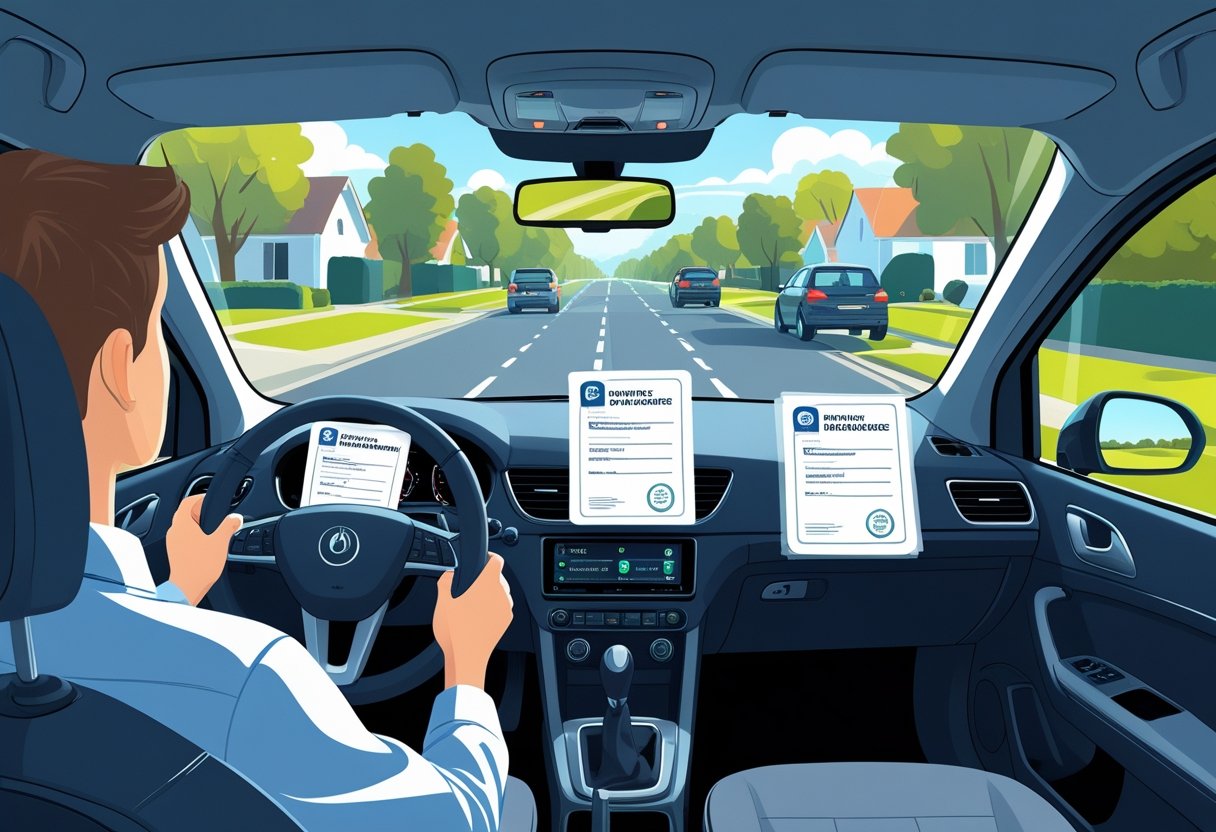
Your car must have valid insurance, MOT certificate (if over three years old), road tax, and proper L-plates displayed during all driving lessons. Beyond these essentials, there are additional documents that can make your learning journey smoother and keep you prepared for any situation on the road.
We’ll walk you through everything from mandatory legal requirements to smart organisational tips that’ll help you stay confident and compliant. Whether you’re taking lessons with an instructor or practising with family, understanding these document requirements will give you one less thing to worry about as you work towards passing your test.
Legal Requirements: Documents Needed for Driving Lessons
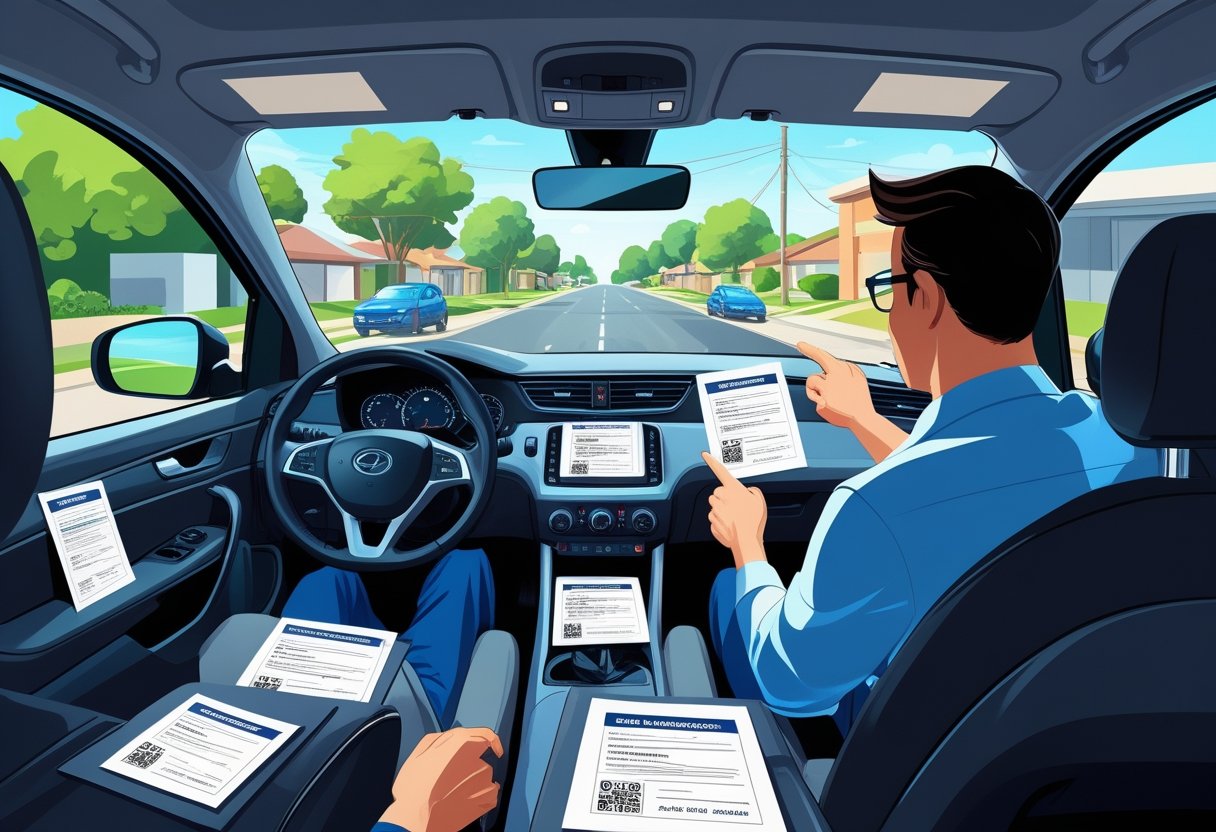
Having the correct paperwork ready before your first driving lesson keeps you legally compliant and prevents any awkward delays. We’ll walk through the three essential documents that must be present during every lesson to ensure you’re properly covered.
Provisional Driving Licence Essentials
Your provisional driving licence is the most crucial document you’ll need for driving lessons. This isn’t just a piece of paper, it’s your legal permission to learn on UK roads.
You can apply for your provisional licence when you’re 15 years and 9 months old. However, you can’t actually start driving lessons until you turn 17 (or 16 if you receive Personal Independence Payment).
Key requirements for your provisional licence:
- Must be valid and not expired
- Should be the physical paper licence or digital version on the DVLA app
- Must match your current address details
- Should be carried by you (the learner) during every lesson
Keep your licence safe but accessible. Many driving instructors will want to see it before your first lesson starts. It’s worth noting that photocopies aren’t acceptable, you need the genuine article.
If you’ve lost your provisional licence, you can get a replacement online through the DVLA website. Don’t book any lessons until you have a valid licence in your possession.
Car Insurance Documentation and Proof
Car insurance coverage during driving lessons can feel complicated, but it’s absolutely essential for legal road use. The vehicle you’re learning in must have valid insurance that covers learner drivers.
Two main insurance scenarios apply:
- Driving school car: Your instructor’s vehicle will have commercial insurance covering learners
- Private car: The owner needs to add learner driver coverage to their policy
When using a family car or friend’s vehicle, we strongly recommend checking the insurance policy beforehand. Many standard policies don’t automatically cover learners, even with supervision.
Temporary learner insurance is available if the main policy doesn’t include learner coverage. These short-term policies can cover you for anything from one hour to several months.
Insurance documents to carry:
- Valid insurance certificate
- Policy schedule showing learner driver coverage
- Temporary insurance documents (if applicable)
The supervising driver should also carry their full driving licence as proof they meet the legal requirements to supervise learners.
Valid MOT Certificate and Vehicle Condition
Any car used for driving lessons must be roadworthy and legally compliant. This means having a valid MOT certificate if the vehicle is over three years old.
MOT requirements for lesson vehicles:
- Current MOT certificate (for cars over 3 years old)
- Valid road tax (can be checked digitally)
- All lights, indicators, and mirrors working properly
- Tyres with legal tread depth (minimum 1.6mm)
If you’re using a private car for lessons, the owner should ensure all safety equipment functions correctly. Broken mirrors, faulty lights, or worn tyres could result in penalties or invalidate insurance coverage.
L-plates are mandatory and must be clearly displayed on the front and rear of the vehicle. These magnetic or adhesive plates should be removed when a qualified driver uses the car without learners.
We recommend doing a quick vehicle check before each lesson. Look for any obvious damage, ensure all lights work, and confirm the handbrake operates effectively. Your safety depends on the car being in proper working order.
Supervision and Instructor Credentials
Both approved driving instructors and private supervisors must meet specific legal requirements when supervising learner drivers. These credentials ensure proper oversight during lessons whilst protecting everyone on the road.
Rules for Supervising Drivers and Instructors
When supervising a learner driver, we need to meet strict eligibility requirements. The supervisor must be at least 21 years old and hold a full driving licence for the same type of vehicle being used.
Most importantly, we must have held our full driving licence for at least three years. This applies to licences from the UK, EU, Switzerland, Norway, Iceland, or Liechtenstein.
Key supervisor requirements:
- Must not be currently banned from driving
- Cannot accept any payment (including petrol money)
- Must know and apply all Highway Code rules
- Should sit in the front passenger seat at all times
The person learning must have a valid provisional licence and be at least 17 years old. They must also meet minimum eyesight standards before getting behind the wheel.
We’re legally responsible for the vehicle whilst supervising. This means staying alert, thinking ahead, and being ready to take control if needed.
Approved Driving Instructor Identification
Approved driving instructors must display their credentials clearly during lessons. We should look for their ADI certificate, which shows their qualification level and photo identification.
ADI badges come in different colours:
- Green badge: Fully qualified instructor
- Pink badge: Trainee instructor (PDI)
- Red badge: Instructor under review
The badge must be displayed on the windscreen or dashboard where it’s easily visible. This helps us verify we’re learning with a legitimate professional.
Trainee instructors can teach independently but with limitations. They must complete additional training and supervision requirements before becoming fully qualified.
Difference Between Paid and Private Lessons
Only approved driving instructors and trainee instructors can legally accept payment for driving lessons. This includes any form of compensation, even contributions towards fuel costs.
Private supervisors (family or friends) cannot charge anything for their time or expenses. Breaking this rule is illegal and can result in prosecution.
Paid lessons offer:
- Professional instruction techniques
- Structured learning programmes
- Dual-control vehicles for safety
- Access to motorway lessons
Private practice sessions complement professional lessons perfectly. We get more road time and can focus on specific skills between instructor sessions.
The combination works brilliantly. Professional lessons build foundational skills, whilst private practice helps consolidate what we’ve learned in real-world conditions.
Recommended Documents to Keep in the Car
While you’re not legally required to carry physical documents in your car, keeping copies of key paperwork can save you time and stress during driving lessons. Having emergency contact details and breakdown cover information readily available helps you handle unexpected situations with confidence.
Copies of Essential Paperwork
We recommend keeping photocopies of your most important documents in your car’s glove compartment. This includes a copy of your car insurance certificate and your MOT certificate if your vehicle needs one.
Your insurance photocopy should show all the essential details clearly. Keep the original document safe at home, but having a copy means you can quickly provide proof if asked by police or your instructor.
For the MOT certificate, a clear photocopy works perfectly during lessons. This shows your car has passed its annual safety check and meets roadworthiness standards.
Store these copies in a protective plastic folder to prevent damage from moisture or wear. Replace them whenever you renew your insurance or get a new MOT certificate.
Never keep original documents in your car. If someone steals your vehicle, they could misuse your personal information. Photocopies provide all the proof you need whilst keeping your originals secure.
Emergency Contact and Breakdown Documents
Your breakdown cover information deserves a permanent spot in your car. Keep the contact phone number somewhere you can find it quickly if your car breaks down during a lesson.
Write down your policy number and keep it with the contact details. This speeds up the process when you ring for help and ensures the operator can access your account immediately.
We suggest creating a simple emergency contact card with your breakdown provider’s number, your policy details, and a backup contact person’s number. Laminate this card so it stays readable even if it gets wet.
Some breakdown services offer mobile apps, but having physical backup information proves invaluable when your phone battery dies. Keep this information updated whenever you change providers or renew your policy.
Your driving instructor should also have their own emergency procedures, but being prepared shows maturity and responsibility as a learner driver.
What To Show Police or Officials If Stopped
When police stop you during lessons, they’ll ask for three essential documents: your driving licence, car insurance certificate, and MOT certificate. Don’t panic if you haven’t got them with you, as there’s a seven-day grace period to produce them at a police station.
Producing the Right Evidence
Police have the legal right to stop any vehicle at any time under the Road Traffic Act 1988. They don’t need to suspect you’ve done anything wrong.
When they ask for documents, you’ll need to show:
- Your driving licence (provisional or full)
- Valid car insurance certificate
- MOT certificate (if the car is over three years old)
Your instructor should carry the insurance documents for their vehicle. Make sure you’ve got your provisional licence with you at all times during lessons.
The police officer will check these documents to verify you’re legally allowed to drive and the car meets safety standards. They might also ask for your instructor’s driving licence if they’re supervising.
Keep these documents easily accessible in the car. We recommend storing them in the glove compartment or door pocket where you can reach them quickly.
Dealing with Missing Documents
If you can’t produce the documents immediately, don’t worry. The police will issue you with a “producer” notice, giving you seven days to take the required paperwork to any police station.
This seven-day rule applies to all three documents. You won’t face penalties as long as you present valid documentation within this timeframe.
Important: Failing to show the requested documents within seven days is against the law. Set a reminder on your phone and visit the police station as soon as possible.
If your instructor has forgotten the insurance certificate, they’ll also receive a producer notice. Make sure both of you understand what documents need to be shown and when.
Contact your driving instructor immediately if this happens. They can help you gather the correct paperwork and guide you through the process.
Best Practices for Organising Car Documents
Smart organisation keeps your driving licence, car insurance papers, and other vital documents both secure and within reach when you need them most. Modern drivers have brilliant options for storage, from traditional filing systems to clever digital solutions.
Keeping Documents Safe and Accessible
We recommend creating a dedicated folder or envelope specifically for your car paperwork. Keep your driving licence, insurance certificate, and MOT documents together in one secure spot at home.
Never leave personal documents in your car permanently. Thieves can steal your identity if they pinch items like bank statements or your full driving licence from your vehicle. Instead, carry your licence in your wallet or purse where you can protect it properly.
Create a simple checklist of essential documents and tick them off monthly. This habit prevents nasty surprises when police officers or driving instructors ask to see your papers.
Keep photocopies at home of your insurance certificate and driving licence. Store originals separately from copies so you’re covered if something goes missing.
Consider using a small, waterproof document holder for papers you occasionally need in the car. These protective sleeves prevent damage from spills or weather whilst keeping everything organised.
Digital vs Paper: Modern Storage Options
Digital storage offers fantastic backup options for your car documents. Photograph or scan your driving licence, insurance papers, and MOT certificate using your smartphone.
Store digital copies in secure cloud services or password-protected folders on your phone. Many insurance companies now accept digital proof, making this approach incredibly practical for modern drivers.
Paper documents still matter for official situations. Some driving instructors and police officers prefer seeing physical copies, especially during lessons or roadside checks.
Create a hybrid system that works brilliantly for most drivers. Keep physical originals safely at home, carry photocopies when needed, and maintain digital backups on your device.
Update your digital files immediately when you renew insurance or receive new documents. Set phone reminders for renewal dates so you never drive with expired paperwork.
Additional Study and Preparation for Learner Drivers
Learning to drive requires more than just getting behind the wheel and hoping for the best. We recommend combining proper study of the Highway Code with practical preparation before each lesson to build your confidence and make real progress.
Using the Highway Code for Confidence
The Highway Code isn’t just something we memorise for the theory test and then forget. It’s our roadmap to becoming confident, knowledgeable drivers who understand the rules properly.
Reading through the Highway Code regularly helps us recognise road signs, understand right of way rules, and know what to expect in different driving situations. When we’re familiar with these basics, we spend less time during lessons feeling confused and more time actually practising our skills.
We suggest focusing on sections that relate to what you’ll be learning in upcoming lessons. If you’re about to tackle roundabouts, read that section beforehand. Planning to practise parking? Review the guidance on different parking techniques.
Key areas to study regularly:
- Road signs and markings
- Rules of the road
- Stopping distances
- Vulnerable road users
Many learners find it helpful to read a few pages each evening rather than trying to absorb everything at once. This steady approach helps the information stick better.
Checklist Before Each Lesson
Arriving prepared for each lesson helps us make the most of our time and money. We recommend creating a simple routine that becomes second nature.
Essential items to check:
- Valid provisional licence
- Appropriate footwear (flat shoes work best)
- Glasses or contact lenses if needed
- Comfortable clothes that don’t restrict movement
We should also mentally prepare by thinking about what we struggled with in the previous lesson. This helps our instructor plan the session effectively and address specific areas where we need more practice.
It’s worth having a quick chat with our instructor about what we’ll be covering. This conversation helps set clear goals for the lesson and keeps us focused on making progress rather than just driving around aimlessly.
Frequently Asked Questions
Getting your paperwork sorted for driving lessons can feel overwhelming, but knowing exactly what to carry makes everything smoother. We’ve covered the essential documents you need, from your provisional licence to insurance papers and identification requirements.
What essential paperwork should I bring along for my driving lessons?
Your provisional licence is the absolute must-have document for every lesson. This pink paper licence or photocard proves you’re legally allowed to learn. Without it, your lesson can’t go ahead.
We also recommend bringing a form of photo ID if your provisional is the old paper version. Your passport or another official document with your photo works perfectly.
Don’t forget your theory test certificate if you’ve already passed. Many instructors like to see this during lessons to track your progress.
Are there specific documents required by law to have in the vehicle while I’m learning to drive?
Yes, there are legal requirements that protect both you and your instructor. The car must display valid insurance documents that cover you as a learner driver. Your instructor should have these ready to show if needed.
The vehicle needs a current MOT certificate if it’s over three years old. This proves the car is roadworthy and safe for lessons.
L-plates must be properly displayed on the front and back of the vehicle. These aren’t documents, but they’re legally required and your instructor handles this.
Could you tell me which identification proofs are necessary when I’m behind the wheel as a learner?
Your provisional driving licence serves as your primary identification while learning. This document contains all the personal details police or officials need if they stop you.
If you have the older paper provisional licence, we strongly suggest carrying photo ID too. A passport, photo driving licence from another country, or official ID card works well.
Some driving instructors ask for additional ID during your first lesson. This helps them confirm your identity and keeps their records accurate.
What’s the scoop on insurance documentation for learner drivers – what do I need to have with me?
Your driving instructor’s car insurance must cover you as a learner driver. The instructor keeps these insurance documents in the vehicle and can show them if requested by police.
If you’re practising in your own car or a family member’s vehicle, you need proper learner insurance. Keep your insurance certificate with you during these practice sessions.
We recommend taking photos of insurance documents on your phone as backup. This gives you quick access to policy numbers and contact details if needed.
Can you walk me through the must-have items I should keep in my car during driving tuition sessions?
Your provisional licence always comes first on this list. Pop it in your wallet or bag so you never forget it. This single document covers most legal requirements for learner drivers.
Bring your mobile phone with emergency contacts saved. Your instructor’s number should be easily accessible in case plans change or emergencies arise.
Keep some cash or cards for parking fees during lessons. Many instructors choose practice locations with paid parking, and you’ll need coins for meters.
Apart from my provisional licence, what other documents should I not leave home without during driving practice?
Your theory test pass certificate becomes increasingly important as you approach your practical test. Some instructors use this to tailor lessons around areas you might need extra practice with.
Photo identification gives you backup if there are any questions about your provisional licence. This proves especially helpful if you have the older paper version.
Emergency contact details written down separately from your phone help if technology fails. Include your instructor’s number, family contacts, and your insurance company’s emergency line.