

What to Do If You Encounter Temporary Road Works During Your Test: Essential Guidance for Learner Drivers
Picture this: you’re cruising along during your driving test, feeling confident about your performance, when suddenly those familiar orange signs appear ahead. Temporary road works can catch any driver off guard, but they don’t have to derail your test success. Whether you’re facing lane closures, reduced speed limits, or construction vehicles, knowing how to handle these situations properly can actually showcase your driving skills to your examiner.
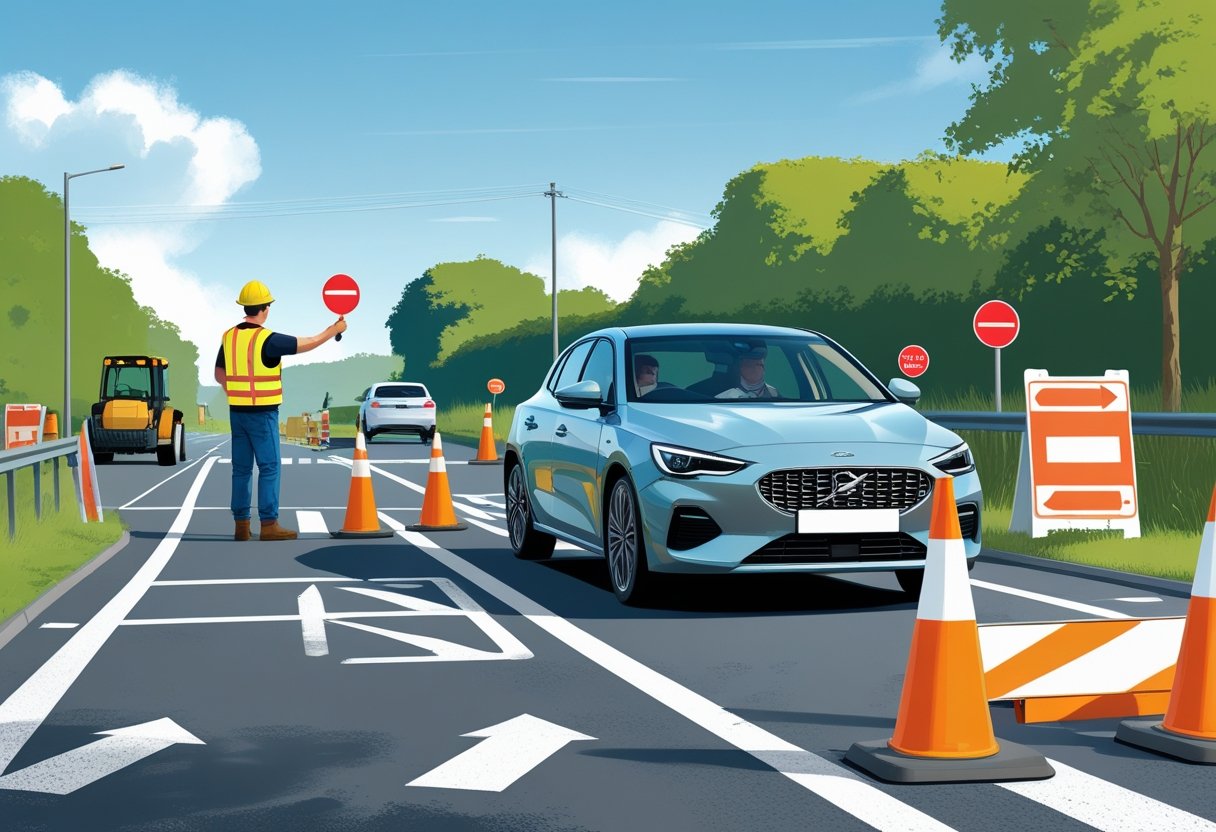
The key to managing road works during your test is staying calm, following all temporary signage, and demonstrating safe, courteous driving behaviour throughout the work zone. Your examiner will be watching how you adapt to changing road conditions, so this becomes an opportunity to prove you’re a thoughtful, responsible driver who can handle real-world challenges.
We’ll walk you through everything from spotting the first warning signs to navigating complex motorway diversions, plus we’ll cover the legal requirements you absolutely must follow. You’ll also discover how to handle tricky situations like stationary traffic, unexpected incidents, and even level crossings near construction areas, giving you the confidence to tackle any road works scenario that comes your way.
Spotting Temporary Road Works During Your Driving Test
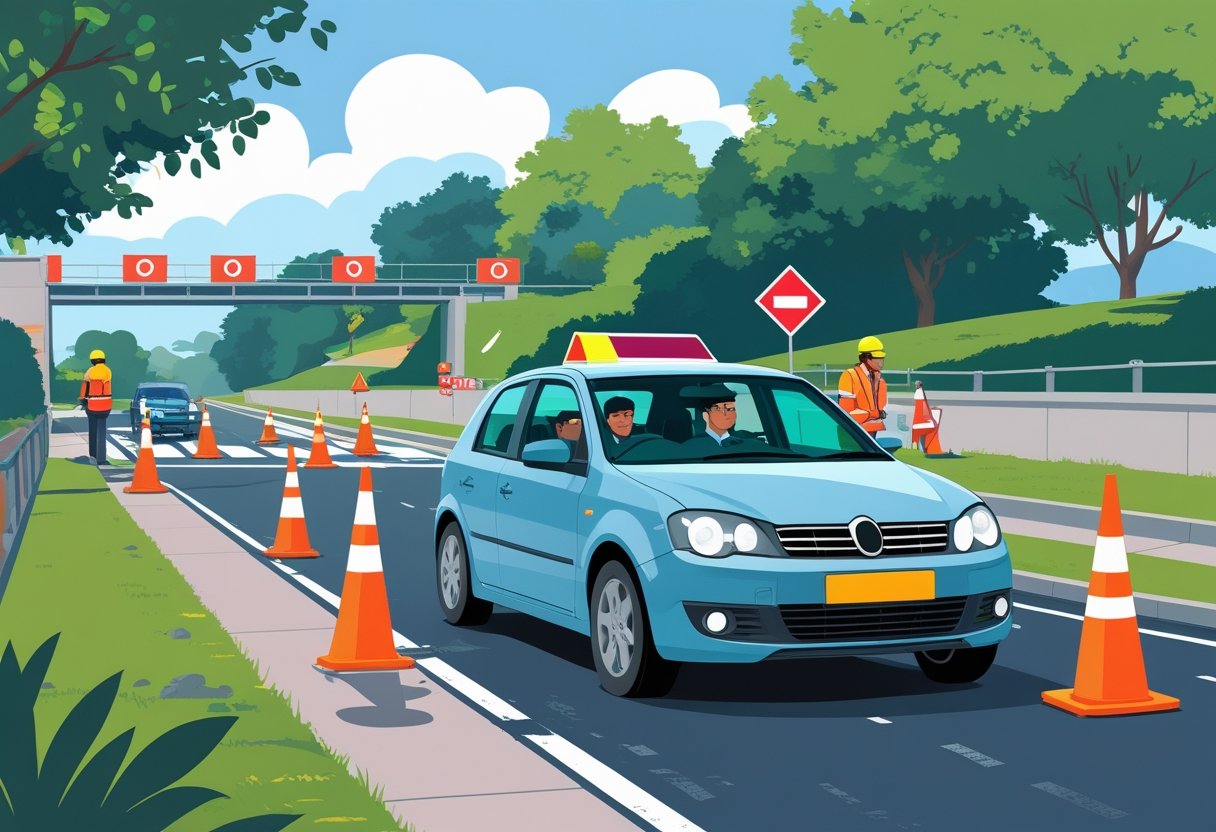
Early detection of road works gives you precious time to prepare and react safely. We need to watch for advance warning signs, use our mirrors effectively to spot hazards, and understand the meaning behind different markings and cone arrangements.
Recognising Road Works Ahead and Advance Warning Signs
The triangular “Road Works Ahead” sign is our first clue that changes lie ahead. This yellow warning sign typically appears well before the actual work zone.
We should look for white plates beneath these signs. They tell us important details like distance to the works or what type of work is happening.
Key signs to watch for:
- Yellow triangular warning signs
- Distance markers (usually 100-800 yards ahead)
- Speed limit changes
- Lane closure notices
Temporary traffic lights often follow these warning signs. We must treat them exactly like permanent traffic lights during our test.
The “When Red Light Shows Wait Here” sign means we need to stop and wait. Running these lights can result in an instant test failure.
On dual carriageways and motorways, yellow overhead signs give us advance notice. These signs show which lanes are closing and when.
Using Mirrors Effectively for Early Hazard Detection
Our mirrors become extra important when approaching road works. We need to check them regularly to spot hazards and plan our movements.
Check your rear-view mirror first when you see warning signs. This helps you understand what traffic is doing behind you.
Use your wing mirrors to monitor vehicles alongside you. Other drivers might suddenly change lanes near road works.
Mirror check sequence:
- Rear-view mirror for following traffic
- Left wing mirror for nearside traffic
- Right wing mirror for overtaking vehicles
- Quick glance over shoulder if changing lanes
Signal early when you need to change lanes. This gives other drivers time to react and shows your examiner you’re planning ahead.
We should increase our mirror checks as we get closer to the works. Traffic patterns change quickly in these areas.
Understanding Road Work Markings and Traffic Cones
Traffic cones create temporary lane boundaries that we must respect during our test. Orange cones typically mark the work area edges.
Single cones often indicate minor hazards. Rows of cones usually mean lane closures or diversions ahead.
Common cone arrangements:
- Single line: Lane closure or edge marking
- Curved line: Traffic diversion around obstacles
- Double rows: Contra-flow traffic separation
- Gaps in cones: Entry or exit points
White lines on the road might be temporarily painted over. Follow the cone guidance instead of permanent road markings in these situations.
Red and white striped barriers mean no entry. We must not drive into these areas under any circumstances.
Temporary road markings often appear as white paint or plastic strips. These override permanent markings while the works are active.
Watch for workers in high-visibility clothing. They might be directing traffic or working close to moving vehicles.
Immediate Steps to Take When Approaching Road Works
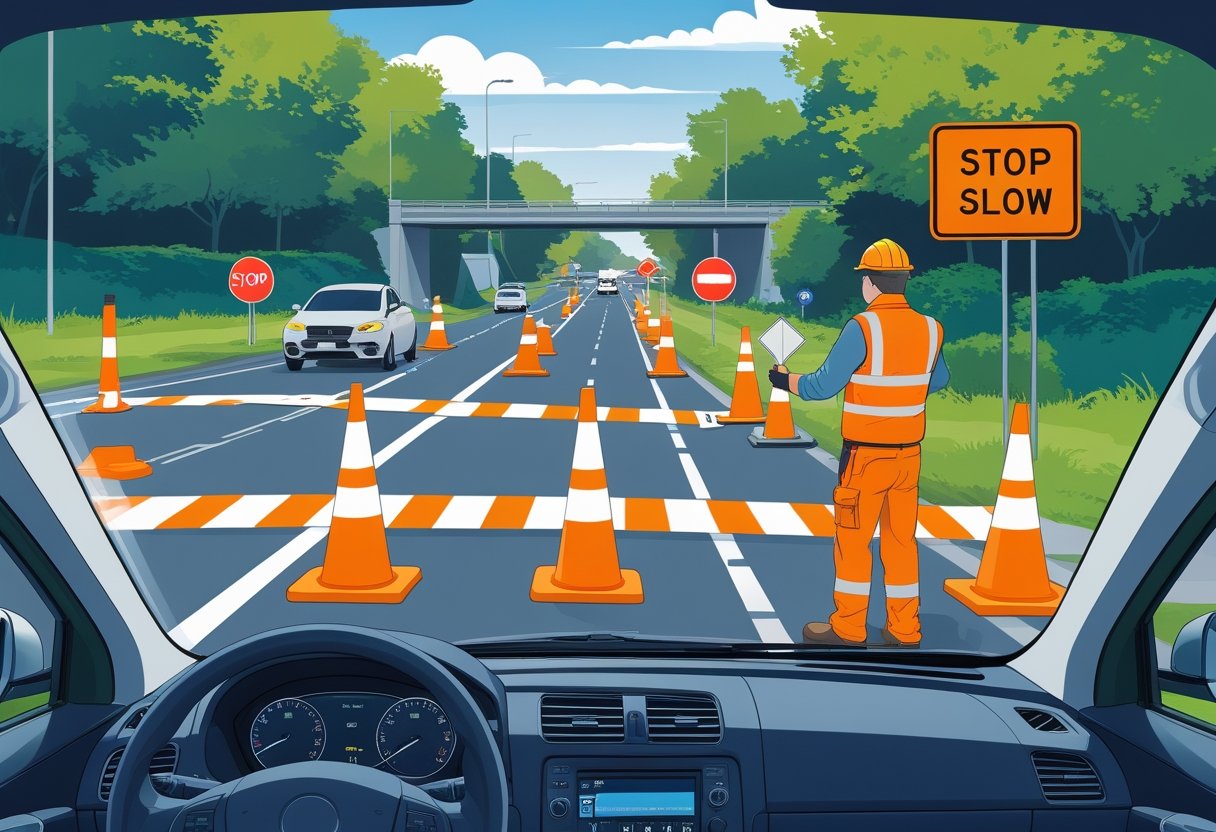
When you spot those orange signs ahead, it’s time to shift into extra-alert mode and follow three crucial steps. You’ll need to adjust your speed according to any temporary limits, position yourself in the right lane early, and apply proper merging techniques whilst maintaining safe distances.
Adjusting Your Speed and Obeying Temporary Speed Limits
The moment you see a temporary maximum speed limit sign, we need to slow down immediately. These aren’t suggestions, they’re legal requirements that carry the same weight as permanent speed limits.
Temporary speed limits exist for brilliant reasons. They protect road workers, account for narrower lanes, and help manage traffic flow through construction zones. You might see limits drop from 70mph to 50mph or even 40mph on motorways.
Keep your eyes peeled for electronic signs displaying changing speeds. Weather conditions or work activities can trigger different limits throughout the day. Some zones use average speed cameras, so maintaining consistent speeds matters more than quick adjustments.
During your test, your examiner will expect smooth speed transitions. Brake gently and progressively rather than making sudden stops. Check your speedometer regularly, especially when signs indicate multiple speed changes ahead.
Never exceed these limits, even if traffic around you seems to be moving faster. Stick to what the signs tell you, not what other drivers are doing.
Selecting the Correct Lane in Good Time
Lane selection makes or breaks your road works navigation. We should start moving into the correct lane as soon as we spot the first warning signs, typically placed well before the actual works begin.
Look for lane closure signs showing which lanes will be blocked ahead. These often appear 1-2 miles before the restriction starts, giving you plenty of time to position yourself safely.
Use your mirrors frequently and signal early when changing lanes. Don’t wait until the last moment when queuing traffic forces you into a difficult merge. Early lane changes reduce stress for everyone and keep traffic flowing smoothly.
Avoid switching lanes to overtake once you’re in the works area. This creates dangerous situations and can lead to test failures. Choose your lane and stick with it until you’re clear of the construction zone.
Watch for signs indicating which lanes suit different vehicle types. Some works reserve specific lanes for lorries or specify routes for particular destinations.
Observing Merge in Turn and Safe Distance Rules
Merge in turn becomes absolutely crucial when lanes narrow or close completely. This means taking turns with other vehicles rather than trying to push ahead or block late mergers.
Position yourself so one car from your lane goes, then one from the merging lane, creating a zip-like pattern. This system works brilliantly when everyone participates and keeps traffic moving efficiently.
Maintain safe distance from the vehicle ahead, even if this means larger gaps than usual. Road works often hide unexpected obstacles, slow-moving machinery, or sudden stops in queuing traffic.
Double your normal following distance in these areas. Poor road surfaces, debris, or construction equipment can appear suddenly, requiring extra stopping time.
Be particularly patient with cyclists and motorcyclists, who might struggle with loose gravel or uneven surfaces. Give them extra space and avoid rushing past them in narrow lanes.
Remember, courtesy and patience during merging situations demonstrate the considerate driving attitude your examiner wants to see.
Navigating Through Road Works Safely and Legally
When you encounter road works during your test, the key is staying alert to changing conditions and following temporary traffic management exactly as directed. You’ll need to read signs carefully, respect lane restrictions, and resist any urge to overtake or change lanes unnecessarily.
Following Instructions from Road Signs and Markings
Road works areas use a variety of temporary signs that override normal road rules. When you spot the initial “Road Works Ahead” warning sign, we recommend immediately becoming more vigilant and scanning for additional instructions.
Temporary speed limits are mandatory, not suggestions. These red circle signs with lower speed limits (often 30mph or 40mph) protect both you and the workers. Breaking these limits during your test will result in serious or dangerous faults.
You’ll encounter several types of guidance:
- Information signs (blue rectangles) showing lane closures ahead
- Mandatory instruction signs (red circles) with speed limits
- Warning signs (red triangles) alerting you to hazards
- Direction signs showing which lanes to use
Flashing light arrows are particularly important. These bright amber lights guide you into the correct lane and indicate where traffic should merge. When you see these flashing arrows pointing left or right, start moving into the indicated lane early and smoothly.
Temporary road markings often appear as white cones or bright yellow lines. These take priority over permanent road markings during the works period.
Respecting Lane Closures and Directional Arrows
Lane closures create bottlenecks that require patience and planning. We always advise getting into the correct lane as soon as it’s safe to do so, rather than rushing to the front of queues.
The “merge in turn” principle applies when lanes close ahead. This means using both lanes until the merge point, then alternating like a zip. One car from the left lane, then one from the right lane, and so on.
Don’t feel pressured to move over immediately when you see the first signs. Traffic management systems are designed with plenty of advance warning. Use this distance to:
- Check your mirrors regularly
- Signal early when changing lanes
- Leave appropriate gaps for other vehicles
- Maintain a steady, predictable course
Contraflow systems sometimes operate where traffic from both directions shares fewer lanes than normal. These require extra concentration as oncoming traffic may be closer than usual. Temporary barriers or cones separate the directions, but margins for error are smaller.
Avoiding Overtaking and Keeping in Lane
Road works zones are absolutely not places for overtaking manoeuvres. The Highway Code’s Rule 288 specifically prohibits switching lanes to overtake queuing traffic in these areas.
Why overtaking is dangerous here:
- Limited visibility around temporary barriers
- Unpredictable traffic patterns
- Workers and vehicles entering or leaving the site
- Reduced lane widths
- Potential debris on road surfaces
Your examiner will expect you to resist any temptation to “make progress” by changing lanes frequently. Instead, choose your lane early and stick with it. This shows maturity and proper risk assessment.
If traffic is moving slowly, maintain a safe following distance and stay patient. Road works often create stop-start conditions, so leaving space helps traffic flow more smoothly for everyone.
Be especially considerate of motorcyclists and cyclists in these areas. They’re more vulnerable to skidding on loose surfaces or getting squeezed by narrow lanes. Give them extra room and avoid sudden movements that might startle them.
Special Considerations for Motorways and Dual Carriageways
Road works on high-speed roads like motorways and dual carriageways require extra caution due to faster traffic speeds and more complex lane management systems. We’ll need to master speed adjustments, recognise works vehicles, and navigate contraflow arrangements safely.
Managing Speed and Lane Changes on High-Speed Roads
Speed control becomes absolutely critical when we encounter road works on motorways and dual carriageways. Traffic typically flows at 70mph on these roads, but temporary speed limits often drop to 50mph or even 40mph through work zones.
Watch for electronic signs that display reduced speed limits well before reaching the works area. These aren’t suggestions – they’re legally enforceable limits that help protect both road workers and drivers.
Lane changes require extra planning on high-speed roads. We should:
- Check mirrors and signal early when lanes merge ahead
- Maintain safe following distances as traffic may brake suddenly
- Avoid last-minute lane switches which can cause dangerous situations
The key difference from normal driving is that everyone around us is adjusting to changing conditions. Some drivers might not react quickly enough to speed limit changes, whilst others may brake harder than expected.
Remember: On dual carriageways, we might encounter temporary speed limits as low as 10mph for convoy working. This dramatic speed reduction helps protect workers and ensures everyone travels through safely together.
Staying Alert for Works Vehicles and Lane Closures
Works vehicles on motorways and dual carriageways use distinctive warning systems that we must recognise immediately. These vehicles often move slowly or remain stationary whilst protecting active work zones.
Look for these key warning signs:
- Large ‘Keep Left’ or ‘Keep Right’ signs mounted on vehicle backs
- Flashing amber lights in pairs from top to bottom
- Light arrows that flash alternately with amber warning lights
- Red and white signs marking entry and exit points to work sites
Lane closures happen frequently on high-speed roads. Electronic overhead signs show us which lanes remain open using clear symbols. A black vertical line indicates the hard shoulder, whilst white downward arrows show contraflow lanes.
We should never follow works vehicles into the actual work site. These vehicles need to enter and exit through breaks in the cone lines, and following them could put us in serious danger.
Mobile lane closures use multiple vehicles to protect the work area. We’ll see these during activities like line painting or minor repairs. The vehicles create a moving protected zone that travels along the carriageway.
Dealing with Contraflow Systems
Contraflow systems temporarily redirect traffic into lanes that normally carry traffic in the opposite direction. These systems are common on motorways and dual carriageways during major road works projects.
White downward-pointing arrows on blue signs indicate contraflow lanes separated by traffic cones. When we see these arrows, we’re driving in a lane that’s been borrowed from the opposite carriageway.
The separation between opposing traffic flows varies depending on the setup:
- Traffic cones provide basic separation
- Physical barriers offer stronger protection
- Buffer lanes (closed empty lanes) create additional safety space
Key contraflow rules:
- Stick to our designated lane – crossing into opposing traffic is extremely dangerous
- Maintain reduced speeds as shown on temporary signs
- Keep extra distance from the vehicle ahead
- Stay alert for lane width restrictions
Signs throughout contraflow sections show us the distance over which the system continues. These appear roughly every half mile, helping us understand how long we’ll remain in the temporary arrangement.
Exit junctions within contraflow areas use special signage. We might see exits available from within the works area, marked with clear junction numbers and route information adapted for the temporary layout.
Handling Delays, Stationary Traffic, and Unexpected Incidents
When temporary roadworks create delays or unexpected situations during your driving test, knowing how to respond calmly and appropriately will demonstrate your competence as a safe driver. These challenging moments actually provide excellent opportunities to showcase your patience, observation skills, and adherence to proper driving procedures.
Responding to Queuing and Stationary Traffic
Approaching stationary or slow-moving traffic requires careful judgement and smooth vehicle control. We need to reduce speed gradually whilst checking our mirrors frequently to monitor following vehicles.
Key actions for queuing traffic:
- Apply gentle, progressive braking rather than sudden stops
- Leave adequate stopping distance (typically 2-3 metres in stationary conditions)
- Keep the engine running and remain in gear when stopped briefly
- Use handbrake for longer stops to rest your foot and show control
When traffic begins moving again, we should match the pace of surrounding vehicles. Avoid rushing to close gaps or accelerating harshly, as this creates an accordion effect behind us.
The Highway Code emphasises maintaining safe following distances even when frustrated by delays. Your examiner will notice how well you manage these situations without showing impatience through aggressive driving behaviours.
Mirror checks become crucial during stop-start conditions. We should glance at rear and side mirrors every 8-10 seconds to stay aware of motorcyclists, cyclists, or emergency vehicles approaching.
What to Do in Case of Incidents or Breakdowns
If we encounter an incident or breakdown during our test, staying composed whilst following proper procedures will impress the examiner. Pull over safely when possible, using hazard warning lights to alert other road users.
Immediate safety steps:
- Move to the nearside lane or hard shoulder if available
- Switch on hazard lights immediately
- Turn wheels away from traffic if stopped on a slope
- Keep seatbelts fastened until safe to exit
The examiner will likely take control of the situation, but demonstrating awareness of proper protocols shows maturity. We should avoid leaving the vehicle unnecessarily, especially on busy roads where this poses significant danger.
If the test vehicle experiences problems, remain calm and follow the examiner’s instructions. They’re trained to handle these situations professionally, and mechanical issues won’t negatively impact your test result.
Emergency vehicles approaching require immediate attention. We must safely move aside, even if this means mounting kerbs slightly (with the examiner’s guidance). Never panic or make sudden manoeuvres that could cause accidents.
Staying Patient and Focused Under Pressure
Maintaining composure during unexpected delays demonstrates the mature attitude examiners look for in new drivers. We can use these moments to showcase our ability to remain alert whilst managing stress effectively.
Techniques for staying focused:
- Take steady, controlled breaths to manage anxiety
- Continue scanning mirrors and surroundings regularly
- Resist the urge to check your phone or become distracted
- Keep both hands positioned correctly on the steering wheel
Delays often make learners worry about test timing, but examiners account for roadworks when planning routes. We shouldn’t rush dangerous manoeuvres to “make up time” as this creates unnecessary risks.
Use waiting periods constructively by mentally reviewing upcoming procedures or observing other drivers’ behaviours. This shows continued engagement with the driving environment rather than switching off mentally.
Remember that challenging conditions actually provide excellent opportunities to demonstrate advanced driving skills. Examiners appreciate candidates who handle unexpected situations with patience and good judgement, as these qualities indicate long-term driving success beyond the test environment.
Level Crossings and Tramway Hazards Near Road Works
When road works coincide with level crossings or tramway systems, you’ll face unique challenges that require extra attention. These situations combine the hazards of temporary traffic management with railway safety protocols and tram operations.
Approaching Level Crossings Safely
Level crossings become particularly tricky when combined with road works. The usual visual cues we rely on might be obscured by temporary signs or construction equipment.
Always reduce your speed well before reaching any level crossing near road works. Construction debris, loose gravel, or temporary road surfaces can affect your braking distance significantly.
Never assume the crossing is clear simply because traffic appears to be moving. Road works can create queues that extend beyond the crossing, and you must never enter unless you can see the exit is completely clear.
Watch for temporary traffic lights that might be controlling flow near the crossing. These often work independently from the railway signals, creating a dual-signal system you’ll need to navigate.
If workers are present, they may be directing traffic manually. Always follow their instructions, but remember that railway signals take absolute priority over any other direction.
Keep extra distance from the vehicle ahead. Construction vehicles or workers’ equipment might need to stop suddenly, and you don’t want to be caught on the tracks.
Dealing with Controlled Crossings and Traffic Light Signals
Controlled crossings with road works present a complex web of signals and signs. You’ll encounter both railway warning lights and temporary traffic management signals working together.
The flashing red railway lights always take priority over any temporary traffic signals. Even if construction traffic lights show green, you must stop if the crossing signals are active.
Here’s what to watch for at controlled crossings:
- Amber railway light: Stop unless you’ve already crossed the white line
- Flashing red lights: Complete stop required, regardless of other signals
- Continued flashing after a train: Another train is approaching soon
- Temporary traffic lights: May control queuing but don’t override railway signals
Road works often mean the usual stopping positions are marked differently. Look for temporary white lines or cones indicating where to stop, but never position yourself closer to the tracks than the original white line.
If barriers are present, never attempt to weave around them, even if construction traffic is being directed through. Half-barriers lower automatically when trains approach, regardless of ongoing road works.
Understanding Tram Lanes, Signals, and Tram Stops
Tram systems near road works create unique navigation challenges. Construction often forces temporary changes to normal traffic patterns around tramway lines.
Never enter tram lanes, even if road works seem to direct you there. These reserved routes are marked by white lines, yellow dots, or different road surfaces that remain off-limits regardless of construction.
Tram signals use diamond-shaped signs and white lights that control tram movements independently. These aren’t affected by temporary road work signals, so trams might move when other traffic cannot.
At tram stops near construction zones, extra caution is essential:
- Passengers may be boarding from different positions due to temporary barriers
- Visibility around stopped trams might be reduced by construction equipment
- Temporary walkways might direct pedestrians into unexpected areas
Give trams plenty of space as they cannot steer around obstacles like construction cones or temporary barriers. Their stopping distance is much longer than cars, especially on wet rails common around construction sites.
Watch for track crossings where the tramway line switches sides of the road. Construction work can obscure the usual warning signs, making these transitions more dangerous than usual.
Legal Requirements and Relevant Regulations
When you encounter temporary road works during your test, specific legal frameworks govern how you should behave. The Road Traffic Regulation Act 1984 and Highway Code establish clear rules, and breaking these can lead to serious consequences for new drivers.
Key Highway Code Rules for Road Works
Rule 288 is your main guide when approaching road works. It tells us to use our mirrors and get into the correct lane early.
We must reduce speed in good time. This shows the examiner we’re thinking ahead and staying safe.
Never overtake the lead vehicle or speed up to beat temporary traffic lights. The examiner will mark this as a serious fault.
Keep a safe following distance from the vehicle ahead. Road surfaces near works can be uneven or loose.
Watch for these important signs:
- Red and white striped boards – mark the edge of works
- Temporary speed limits – always mandatory, not advisory
- Lane closure signs – give us time to move over safely
Workers might be present even when we can’t see them clearly. We should always assume people are working nearby.
If temporary traffic lights control the flow, we must wait for green before proceeding. Jumping red lights here carries the same penalties as normal traffic lights.
Overview of Road Traffic Regulation Act 1984: Section 16
Section 16 gives traffic authorities legal power to restrict road use when works are happening. These aren’t suggestions – they’re legally binding orders.
Temporary Traffic Regulation Orders (TTROs) create enforceable speed limits and restrictions. Breaking these rules means we’re breaking the law, not just driving poorly.
The Act covers several key areas:
- Speed limit reductions near active work zones
- Lane closures and traffic diversions
- Vehicle restrictions for certain road types
- Pedestrian controls around major works
During your test, the examiner expects you to follow these temporary measures perfectly. They’re watching how you adapt to changing road conditions.
Construction companies must display proper signage under this legislation. However, poor signs don’t excuse us from following visible restrictions.
Police can enforce these temporary rules just like permanent ones. Fixed cameras often monitor work zones too.
Consequences of Not Following Temporary Road Works Rules
Speeding through road works typically results in higher penalties than normal speeding fines. Courts view this as more dangerous driving.
New drivers face particular risks here. Our two-year probation period means six points revoke our licence completely.
Common penalties include:
- £100 fixed penalty and 3 points for minor speed violations
- Up to £1,000 fine for serious breaches in Magistrates’ Court
- Dangerous driving charges for reckless behaviour near workers
During your driving test, breaking road works rules usually means an immediate fail. Examiners consider this a serious safety issue.
Insurance companies often increase premiums significantly after road works violations. They see these as indicators of risky driving habits.
Some work zones use average speed cameras across several miles. We can’t slow down just for camera points – we need consistent compliance.
Workers’ safety depends on our behaviour. Remember that behind every sign and barrier, real people are doing dangerous jobs near fast-moving traffic.
Frequently Asked Questions
Understanding proper roadworks procedures during your driving test can make the difference between passing and failing. These common questions address the key skills examiners look for when you encounter unexpected construction zones.
How should you safely navigate your vehicle around unexpected roadworks during your driving exam?
When we encounter unexpected roadworks, our first priority is staying calm and observant. Look ahead for warning signs and traffic management measures that will guide us through the area safely.
We need to check our mirrors early and position ourselves in the correct lane as directed by the signs. Getting into the right lane with plenty of time shows the examiner we’re thinking ahead.
Never switch lanes suddenly or try to overtake queuing traffic in roadworks areas. The examiner wants to see patient, considerate driving that puts safety first.
Keep extra distance from the vehicle ahead. Construction zones often have slower moving or stationary traffic that can catch us off guard.
In the driving test, what’s the correct procedure for reacting to signs indicating temporary roadworks ahead?
As soon as we spot a ‘Road Works Ahead’ sign, we should begin scanning for additional signs with specific instructions. These signs are there for our safety and the safety of road workers.
We must immediately check our speed and ensure we’re not exceeding any temporary speed limits displayed. Ignoring these limits is a serious fault that could result in test failure.
Use the MSM routine (mirrors, signal, manoeuvre) to get into the correct lane early. The examiner will be watching to see if we follow the signs’ directions properly.
Stay alert for cyclists and motorcyclists who might be struggling with loose surfaces or debris. Showing awareness of vulnerable road users demonstrates advanced driving skills.
What are the examiner’s expectations for a learner driver approaching temporary traffic lights at roadworks?
We need to treat temporary traffic lights exactly like permanent ones, following the same rules and procedures. Approach at a safe speed that allows us to stop if the lights change.
When the lights turn amber, we should only proceed if stopping would be dangerous. The examiner expects us to make this judgement confidently and safely.
If we’re stopped at red lights, keep a reasonable distance from any vehicles ahead. This gives us space to move if needed and shows good observation skills.
Watch for workers or machinery that might be operating near the roadway. The examiner values candidates who show awareness of the working environment around them.
During the practical test, how can you demonstrate proper speed control when driving through temporary road works?
We should reduce our speed well before entering the roadworks area, not just when we see the temporary speed limit signs. This proactive approach impresses examiners.
Maintain a steady, appropriate speed throughout the construction zone. Avoid sudden acceleration or braking that could unsettle our vehicle or other road users.
Keep checking our speedometer to ensure we’re staying within the temporary limits. These restrictions are legally enforceable and exceeding them shows poor judgement.
If traffic is moving slowly, match the flow rather than trying to maintain higher speeds. The examiner wants to see us adapting to changing road conditions smoothly.
Can you talk me through the steps I should take if I come across road repairs without prior warning during my test?
First, we should slow down gradually and increase our following distance to give ourselves more thinking time. Sudden roadworks can be challenging, but staying composed is key.
Look for any temporary signs, cones, or barriers that indicate which route we should take. These visual cues will guide us safely around the work area.
Check our mirrors and signal if we need to change lanes or alter our path. Other drivers might be making similar adjustments, so clear communication is essential.
If workers are present, give them plenty of space and avoid being distracted by what they’re doing. Keep our focus on the road ahead and our driving.
What would be the best way to handle any potential hazards created by road works while I’m on my driving examination?
We should scan continuously for loose surfaces, debris, or uneven road surfaces that could affect our vehicle’s handling. Adjusting our driving to suit these conditions shows skill.
Watch out for other vehicles that might be confused by the temporary arrangements. Some drivers make poor decisions in roadworks, so we need to anticipate their actions.
Be particularly careful of any narrow lanes or reduced road width. Position our vehicle carefully to maintain safe clearance from barriers and other traffic.
If visibility is reduced by dust or construction activity, we might need to use our headlights during daylight hours. The examiner appreciates candidates who adapt to challenging conditions.