

What to Take with You on Driving Test Day: The Definitive UK Checklist
Your driving test day marks a big step towards independence, and being properly prepared can make all the difference between success and disappointment. You must bring your UK driving licence, your theory test pass certificate (if you have it), and an appropriate vehicle that meets DVSA requirements, or your test will be cancelled without a refund. It’s frustrating to know that over 1,000 tests get cancelled each month simply because learners forget essential items or don’t understand what they need.
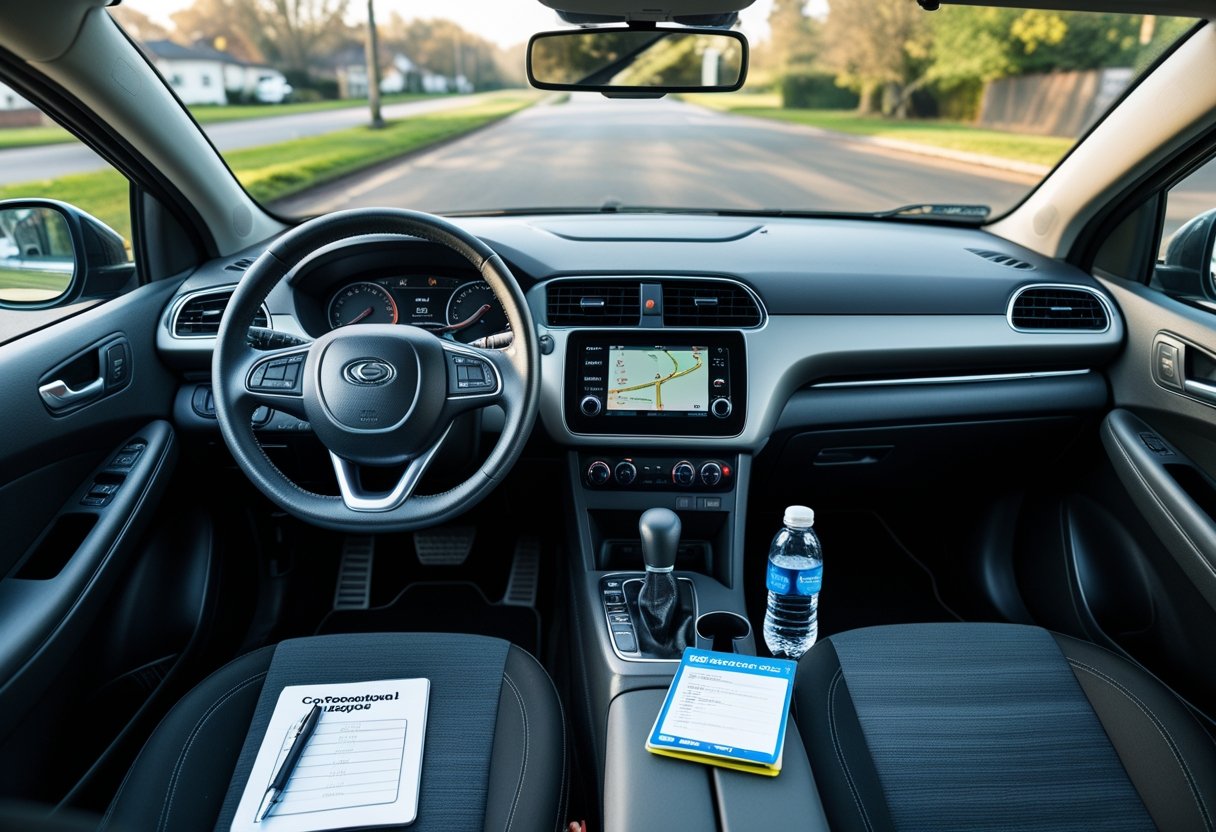
We know test day nerves are completely normal, but having everything sorted beforehand helps you focus on what really matters: showing off those driving skills you’ve been practising. Getting the paperwork right is just the beginning though.
From choosing the right car to mental preparation techniques, we’ll walk you through everything you need to know for a smooth test day experience. You’ll discover which documents are absolutely essential, what personal items can help you stay comfortable and confident, and exactly what happens from the moment you arrive at the test centre until you hopefully walk away with that coveted pink licence.
Essential Documents for Driving Test Day
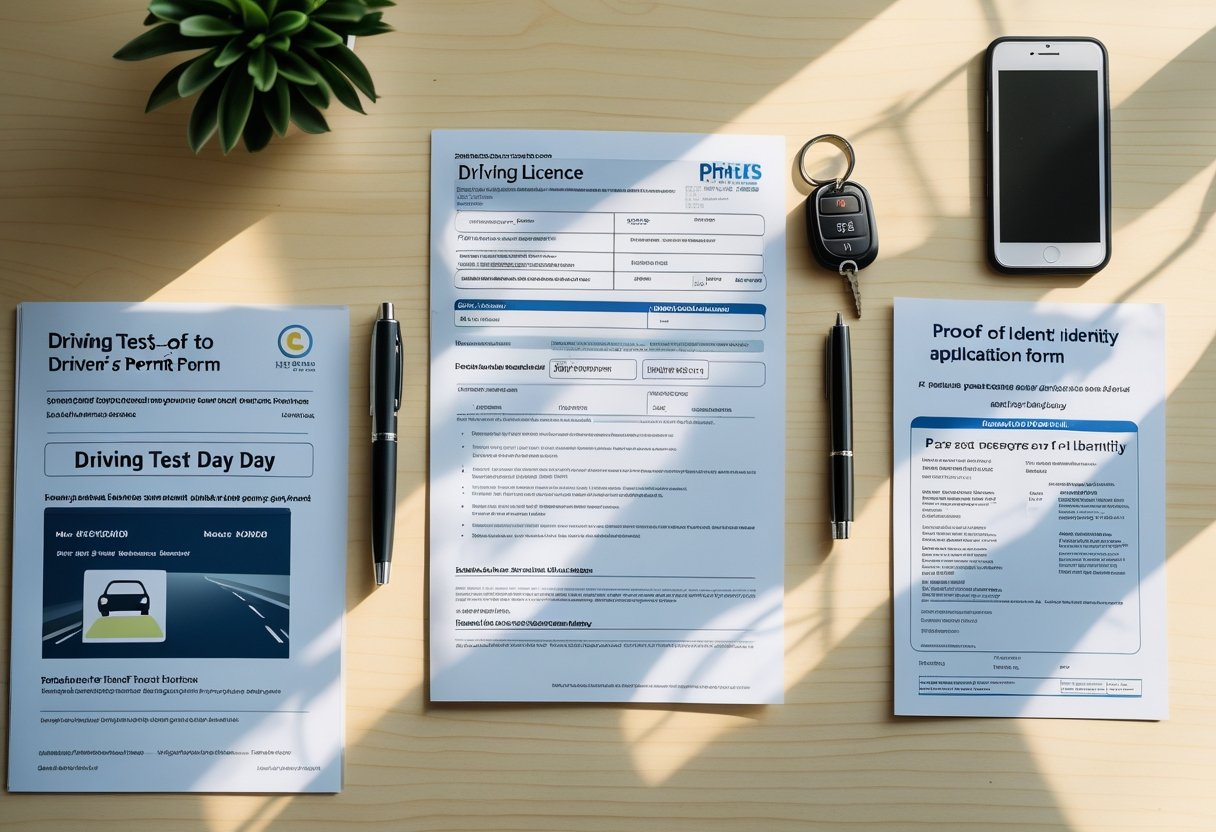
Getting your documents sorted properly is absolutely crucial for test day success. You’ll need your provisional driving licence, theory test pass certificate, proper photo identification, and your booking confirmation to avoid any last-minute stress.
Provisional Driving Licence Requirements
Your provisional driving licence is the most important document you’ll bring on test day. Without it, your test will be cancelled immediately, and you won’t get your money back.
If you have a photocard licence, this single document covers everything you need. Make sure the photo clearly shows your face and that you’re easily recognisable. The DVLA doesn’t require you to update photos for minor changes like hair colour or facial hair, but major changes might need a new photo.
For paper licence holders, you’ll need both parts of your driving licence. Bring your paper counterpart along with valid photo identification, such as a passport.
If you’ve lost your provisional licence, apply for a replacement straight away. The DVLA can take up to 15 days to process replacements, so don’t leave this to the last minute.
Northern Ireland licence holders must bring both their photocard and paper counterpart, as the system works differently there.
Theory Test Pass Certificate Details
Your theory test certificate proves you’ve passed the theoretical part of your driving requirements. Most test centres can check your theory test results electronically, but having your certificate provides backup proof.
Don’t panic if you’ve misplaced your theory test certificate. The driving examiner can verify your theory test pass through their computer system before your practical driving test begins.
Keep in mind that theory test passes expire after two years. If your certificate has expired, you’ll need to retake both the theory and hazard perception tests before booking your practical test.
We recommend bringing your certificate anyway, as it speeds up the check-in process and gives you extra confidence knowing everything’s in order.
Photo Identification Options
Proper photo identification ensures the test centre can confirm your identity quickly and accurately. Your photocard licence usually covers this requirement perfectly.
If you don’t have a photocard licence, bring a valid passport alongside your paper driving licence. These are the two main forms of photo ID that test centres accept.
Make sure your photo identification hasn’t expired. An out-of-date passport won’t be accepted, even if the photo clearly shows it’s you.
Student ID cards, work passes, or other forms of identification typically aren’t accepted for driving tests. Stick to official government-issued photo documents to avoid disappointment.
The photo should show a clear image of your face without heavy shadows or obstructions. If you’re wearing glasses in your daily life but not in the photo (or vice versa), that’s usually fine.
Booking Confirmation and Test Reference
Your booking confirmation contains vital information about your test appointment, including your unique reference number. Print this out or save it clearly on your phone.
Key details on your confirmation include:
- Test date and time
- Test centre address and directions
- Your reference number
- Any special requirements you’ve requested
Double-check that all personal details match your driving licence exactly. Even small spelling differences can cause problems on test day.
If you’ve rescheduled your test recently, make sure you’re working from the most recent confirmation. Using old booking details could mean turning up on the wrong day or at the wrong time.
Keep your reference number handy throughout test day. The administrative staff will need this to check you in and locate your examiner assignment.
Choosing and Preparing Your Car
The car you bring to your driving test must meet specific safety and legal requirements. You’ll need to decide between using your driving instructor‘s vehicle or bringing your own, ensure the car passes basic safety checks, and display L-plates correctly.
Using Your Own Car vs. Instructor’s Car
Most learner drivers use their driving instructor’s car for good reason. These vehicles are specifically set up for lessons and tests, with dual controls that help you feel more confident. Your instructor knows their car inside and out, which means fewer surprises on test day.
If you choose your own car, it must meet strict DVLA requirements. The vehicle needs valid MOT, insurance that covers you for driving tests, and road tax. You’ll also need someone aged 21 or over who’s held a full licence for at least three years to accompany you to the test centre.
Your own car might feel more comfortable since you’ve practised in it. However, it won’t have dual controls, which means the examiner cannot help if something goes wrong. This puts extra pressure on you to perform perfectly.
Consider the practical side too. If you fail your test in your instructor’s car, you can still get home easily. With your own car, you’ll need to arrange alternative transport if you’re not confident driving alone afterwards.
Ensuring Car Safety and Legality
Every car used for driving tests must pass basic safety checks. We recommend checking these essential items the day before your test:
Essential Safety Checks:
- All lights working (headlights, indicators, brake lights, hazard lights)
- Tyres have adequate tread depth and correct pressure
- Mirrors clean and properly adjusted
- Windscreen wipers and washers functioning
- Handbrake working effectively
- Seat belts in good condition
The examiner will ask you to demonstrate some of these during the vehicle safety questions part of your test. This section covers topics from the Highway Code about basic car maintenance. You’ll need to show you can check things like oil levels, tyre condition, and light functionality.
Make sure your car has enough fuel for the test. Running out of petrol is embarrassing and could result in an automatic fail. We suggest filling up the tank beforehand to avoid any worries.
Your insurance must specifically cover driving tests. Standard learner insurance might not include test coverage, so check with your provider. The DVLA can refuse to conduct your test if insurance documents aren’t in order.
Displaying L-Plates Correctly
L-plates must be clearly visible on both the front and rear of your vehicle. Many learner drivers get this wrong, which can delay or even cancel their test. The plates should be clean, undamaged, and properly attached.
Position L-plates where they won’t obstruct your view or important vehicle features like lights or number plates. Magnetic L-plates work well but check they’re securely attached, especially on windy days. Poorly fitted plates that fall off during your test create unnecessary stress.
Remove L-plates immediately after passing your test if you hold a full licence. However, if you’re taking an automatic test but plan to drive manual cars later, you’ll need to keep displaying them until you pass a manual test.
Some driving instructors use their own L-plates that attach to specific points on their cars. If you’re using your instructor’s vehicle, they’ll handle this preparation. Just double-check the plates are secure and clearly visible when you arrive at the test centre.
Personal Essentials You Must Not Forget
Beyond your paperwork and the car itself, there are several personal items that can make or break your test day experience. Your vision needs to be properly corrected, your clothing shouldn’t hinder your driving, and having comfort items can help keep those nerves in check.
Glasses or Contact Lenses for the Eyesight Check
Your driving test begins with an eyesight check, and this is where many candidates stumble before they’ve even started the engine. If you normally wear glasses or contact lenses whilst driving, you absolutely must bring them to your test.
The examiner will ask you to read a number plate from about 20 metres away. This isn’t optional – if you can’t pass this simple check, your test ends immediately, and you’ll lose your fee.
Make sure your glasses are clean and your contact lenses are comfortable before you arrive. We’ve seen too many learners panic when they realise their glasses are smudged or their contacts are irritating their eyes.
If you’ve recently changed your prescription, bring your glasses as a backup even if you prefer contacts. Your test day isn’t the time to discover that your new lenses aren’t quite right yet.
Suitable Footwear and Clothing
What you wear can genuinely affect your driving performance, so choose wisely. Avoid high heels, flip-flops, or thick-soled boots that might slip off the pedals or make it difficult to feel the clutch bite point.
Trainers or flat shoes with a thin, flexible sole work best. You want to feel connected to the pedals, especially if you’re taking your test in a manual car.
Your clothing should allow you to move freely and check your mirrors comfortably. Tight jackets or restrictive clothing can limit your shoulder movement when doing reversing manoeuvres.
Dress in layers if possible. Test centres can be warm or cold, and you want to feel comfortable during your wait and whilst driving.
Water, Snacks, and Comfort Items
Test day nerves can leave your mouth dry and your energy levels low. Bringing a small bottle of water can help you stay hydrated and give you something to focus on if you’re feeling anxious.
Light snacks like a banana or a cereal bar can help maintain your blood sugar levels, especially if your test is later in the day. Avoid anything too heavy that might make you feel sluggish or uncomfortable.
Leave valuable items at home or with someone you trust. You don’t want to worry about your expensive watch or jewellery during the test.
Consider bringing tissues and any personal items that help you feel calm, like a small good luck charm. These little touches can provide comfort when you need it most.
Final Practice and Mental Preparation
Getting your mind and skills ready in the final hours before your driving test can make all the difference between passing and needing to rebook. We’ll focus on smart revision strategies, proven breathing techniques to calm those pre-test jitters, and powerful visualisation methods that build genuine confidence behind the wheel.
Revision Materials and Last-Minute Tips
The night before your driving test, we recommend doing a quick refresh of the Highway Code rather than cramming new information. Focus on the sections you’ve struggled with most during lessons.
Key areas to review:
- Road signs and markings
- Right of way rules
- Speed limits for different road types
- Stopping distances
Avoid practising complex manoeuvres the day before your test. Instead, have a gentle drive with your instructor to keep your skills sharp without adding pressure.
Essential last-minute checks:
- Your provisional licence is in your bag
- Theory test certificate (if you have the physical copy)
- Comfortable, flat shoes for driving
- Any glasses or contact lenses you need
We suggest putting everything you need in one place the night before. This simple step prevents that horrible sinking feeling when you’re searching for documents on test day morning.
Set multiple alarms and plan to arrive 15 minutes early. Rushing creates unnecessary stress that can affect your performance during the test.
Breathing Exercises for Calming Nerves
Breathing exercises are incredibly powerful for managing driving test nerves. We’ve seen countless learners transform their anxiety using these simple techniques.
The 4-7-8 technique works brilliantly:
- Breathe in through your nose for 4 counts
- Hold your breath for 7 counts
- Exhale slowly through your mouth for 8 counts
- Repeat 3-4 times
Try this breathing exercise the morning of your driving test day. It activates your body’s natural relaxation response and helps clear your mind.
Box breathing is another favourite:
- Inhale for 4 counts
- Hold for 4 counts
- Exhale for 4 counts
- Hold empty for 4 counts
Use box breathing while waiting for your examiner. It keeps your heart rate steady and your hands relaxed on the steering wheel.
Remember that some nerves are completely normal. We tell all our learners that a few butterflies show you care about doing well, which often leads to more careful, attentive driving.
Visualisation and Building Confidence
Mental rehearsal is a secret weapon that many successful test candidates use. We encourage you to spend 10 minutes the night before your test visualising success.
Picture yourself greeting your examiner calmly and confidently. Imagine completing each part of your test smoothly, from the eyesight check to parking manoeuvres.
Effective visualisation steps:
- See yourself adjusting mirrors and seat position calmly
- Visualise smooth gear changes and confident observations
- Picture completing your chosen manoeuvre perfectly
- Imagine your examiner saying “Congratulations, you’ve passed”
Focus on how capable and prepared you feel rather than worrying about potential mistakes. Your mind believes what you repeatedly tell it, so make those thoughts positive and empowering.
We often remind learners that they wouldn’t be taking their test if their instructor didn’t believe they were ready. Trust in your preparation and skills.
On driving test day morning, repeat positive affirmations like “I’m a capable driver” and “I’ve trained well for this moment.” These simple phrases genuinely boost confidence and performance.
What to Expect When You Arrive
When you step into the test centre, you’ll go through a straightforward check-in process before meeting your driving examiner. The atmosphere is typically calm and professional, designed to help you feel as comfortable as possible before your test begins.
Check-In Process and Waiting Area Etiquette
Arriving at Reception
Head straight to the reception desk when you arrive. The staff will ask for your driving licence and confirm your test appointment. They’ll check your details against their system and may ask you to take a seat.
Most test centres have a designated waiting area with chairs and sometimes magazines. Arrive 10-15 minutes early to give yourself time to settle in without feeling rushed.
Waiting Room Behaviour
Keep noise levels down as other learners may be preparing for their tests too. We know you might feel nervous, but try to stay relaxed. Some people find it helpful to review key points mentally, while others prefer to chat quietly with their instructor.
Mobile phones should be on silent. You can use them quietly, but avoid loud conversations or videos that might disturb others.
What Happens Next
Your examiner will collect you from the waiting area when it’s time for your test. They’ll call your name clearly, so listen out for it. Don’t worry if you’re a few minutes past your scheduled time – examiners sometimes run slightly behind schedule, and this won’t affect your test.
Meeting Your Driving Examiner
The Initial Introduction
Your examiner will introduce themselves and shake your hand. They’re trained to put you at ease, so expect a friendly, professional greeting. Most examiners understand you might feel nervous and will speak clearly and calmly.
They’ll ask you to confirm your name and may chat briefly as you walk to your vehicle. This isn’t part of the test – they’re simply helping you feel more comfortable.
First Impressions Matter
Be polite and confident when you meet your examiner. A simple “Good morning” or “Good afternoon” goes a long way. Make eye contact and smile if you can – it shows you’re approachable and ready.
Your examiner will explain what happens next and may ask if you have any questions. Feel free to ask if you’re unsure about anything – they’d rather clarify things now than have confusion during the test.
Setting the Right Tone
Remember, your examiner wants you to succeed. They’re not there to trick you or make things difficult. They’ll give clear instructions throughout the test and speak at a pace you can follow.
Stay positive and treat your examiner with respect. This professional relationship will help create the best possible environment for demonstrating your driving skills.
Inside the Test: Key Components and Preparation
Understanding the test’s structure helps you feel more prepared and confident. The driving test includes vehicle safety checks, navigating independently using sat nav or road signs, and demonstrating essential parking and reversing skills.
Show Me, Tell Me and Vehicle Safety Questions
You’ll face two vehicle safety questions during your test. The examiner asks one “tell me” question before you start driving and one “show me” question whilst you’re on the road.
The “tell me” question happens at the test centre. You might be asked how you’d check your brakes are working or how to ensure your head restraint is correctly adjusted.
During your drive, the examiner will ask you to demonstrate something. This could be showing how to demist your rear windscreen or operating your windscreen wipers.
These questions aren’t meant to trip you up. They’re checking you understand basic vehicle maintenance and safety features.
Common topics include:
- Tyre condition and pressure
- Brake functionality
- Light operations
- Horn and indicators
- Engine oil levels
Getting one vehicle safety question wrong results in one minor driving fault. It won’t automatically fail you, but it’s worth practising these beforehand.
Independent Driving Section
The independent driving portion lasts about 20 minutes of your test. You’ll follow either sat nav directions or traffic signs, and the examiner will tell you which method to use.
Don’t worry about using unfamiliar technology. The examiner sets up their sat nav system for you, so you can’t bring your own device.
If following traffic signs, the examiner will give you a destination and expect you to navigate using road signage. They’ll help if signs are obscured or unclear.
Taking a wrong turn won’t result in driving faults. The examiner will simply guide you back on route without penalty.
This section tests your ability to drive safely whilst processing navigation information. Focus on maintaining good observations and road positioning rather than worrying about perfect route-following.
Stay calm if you miss a turning. The examiner understands that navigating whilst concentrating on driving takes practice.
Essential Manoeuvres and Parking
You’ll complete one reversing manoeuvre during your test. The examiner chooses from parallel parking, bay parking, or reversing on the right-hand side of the road.
Parallel parking involves reversing into a space between two cars. Take your time with observations and don’t rush the process.
For bay parking, you’ll either reverse in and drive out, or drive in and reverse out. The examiner will specify which method to use.
The right-hand reverse requires pulling up on the right side of the road, reversing about two car lengths, then rejoining traffic safely.
During general driving, you might be asked to perform an emergency stop. The examiner will give a specific signal, and you’ll need to stop quickly but safely.
You’ll also practice normal stops, hill starts, and pulling out from behind parked vehicles. These test your clutch control and road awareness.
Remember that accuracy matters more than speed with manoeuvres. Smooth, controlled movements with excellent observations will impress your examiner far more than rushing through the exercise.
Frequently Asked Questions
We’ve gathered the most common questions learner drivers ask about what to bring on test day. These answers cover everything from essential documents to personal comfort items that can help you feel more prepared and confident.
What essential documents are needed for your driving test day?
You must bring your UK driving licence with you to the test centre. Without this, your test will be cancelled and you won’t get your money back.
If you have a photocard licence, that’s all you need for identification. The photo must be recognisable as you, so if you’ve had major changes like plastic surgery, you’ll need to update it first.
For paper licence holders, bring both your paper licence and a valid passport. This combination provides the identification your examiner needs.
Northern Ireland licence holders need to bring both the photocard and paper counterpart together. Don’t forget both parts as they work as a set.
Your theory test pass certificate isn’t required anymore. The examiner can check your theory test pass electronically before your practical test begins.
Which personal items should you bring along for your practical test?
Bring comfortable, flat shoes that give you good pedal control. Avoid flip-flops, high heels, or heavy boots that might slip off or catch on pedals.
Pack any prescription glasses or contact lenses you need for driving. You’ll face an eyesight check at the start, so these are essential if you normally wear them.
Consider bringing a small bottle of water to stay hydrated, especially on warm days. Keep it easily accessible but not where it could roll around whilst driving.
A light jacket or cardigan can help if the test centre is cold or if nerves make you feel chilly. You want to feel comfortable throughout the experience.
Leave your mobile phone switched off or on silent mode in a bag. You won’t need it during the test and it could be distracting if it rings.
How can you best prepare your vehicle for the driving test to avoid any hitches?
Check your mirrors are clean and properly adjusted before setting off. Dirty or misaligned mirrors could affect your safety checks and overall driving performance.
Ensure all lights are working properly, including headlights, brake lights, indicators, and hazard lights. Your examiner will expect these to function correctly throughout the test.
Verify that your handbrake is working effectively and releases smoothly. You’ll use this frequently during manoeuvres and hill starts.
Make sure your seat adjustments work properly so you can find a comfortable driving position quickly. The examiner might need to adjust their seat too.
Top up your fuel tank so you won’t worry about running low during the test. A full tank also shows you’re properly prepared for the appointment.
Can you list the items that you must double-check before leaving for your driving test appointment?
Your driving licence should be the first item on your checklist. Place it somewhere safe where you won’t forget it, like your wallet or a dedicated test day folder.
Confirm your test appointment details, including the time, date, and test centre address. Mix-ups with timing or location can cause unnecessary stress.
Check you have comfortable driving shoes and any vision aids you need. These basics ensure you can perform at your best from the moment you arrive.
Verify your vehicle has enough fuel and is roadworthy if you’re using your own car. Most learners use their instructor’s vehicle, but personal cars need proper preparation.
Set multiple alarms or reminders so you arrive with plenty of time to spare. Rushing never helps performance on such an important day.
What are the recommended comfort items to have with you to ease test day nerves?
Pack some tissues in case nerves make your eyes water or you need them for any reason. Having them handy means one less thing to worry about.
Bring a light snack like a banana or cereal bar to eat beforehand if you’re feeling queasy. Low blood sugar can make nerves feel much worse.
Consider some mints or gum for fresh breath and to keep your mouth from feeling dry. Chewing can also help release nervous tension.
A small stress ball or fidget toy can help in the waiting area before your test begins. Keep your hands busy to channel nervous energy positively.
Wear layers so you can adjust your temperature as needed. Being too hot or cold adds unnecessary discomfort to an already stressful situation.
Could you suggest some ways to stay hydrated or nourished during your test without causing any distractions?
Drink plenty of water in the hours before your test, but avoid overdoing it right beforehand. You don’t want to need the toilet halfway through your driving assessment.
Eat a proper breakfast with protein and complex carbohydrates to maintain steady energy levels. Toast with peanut butter or eggs gives lasting fuel without making you sluggish.
Avoid too much caffeine as it can increase anxiety and make your hands shake. One normal cup of tea or coffee is fine if that’s your usual routine.
Skip sugary snacks right before the test as they can cause energy crashes. Save any treats for after you’ve completed your assessment successfully.
If your test is later in the day, have a light lunch at least an hour beforehand. Choose something familiar that won’t upset your stomach or make you drowsy.