

Why Learner Drivers Must Avoid Motorways (Rules Have Changed) | What You Need to Know
For years, learner drivers in the UK were strictly banned from motorways. These high-speed roads were completely off-limits until you’d passed your test and earned those coveted full driving privileges. But here’s something that might surprise you: since June 2018, learner drivers can actually drive on motorways under specific conditions with an approved instructor.
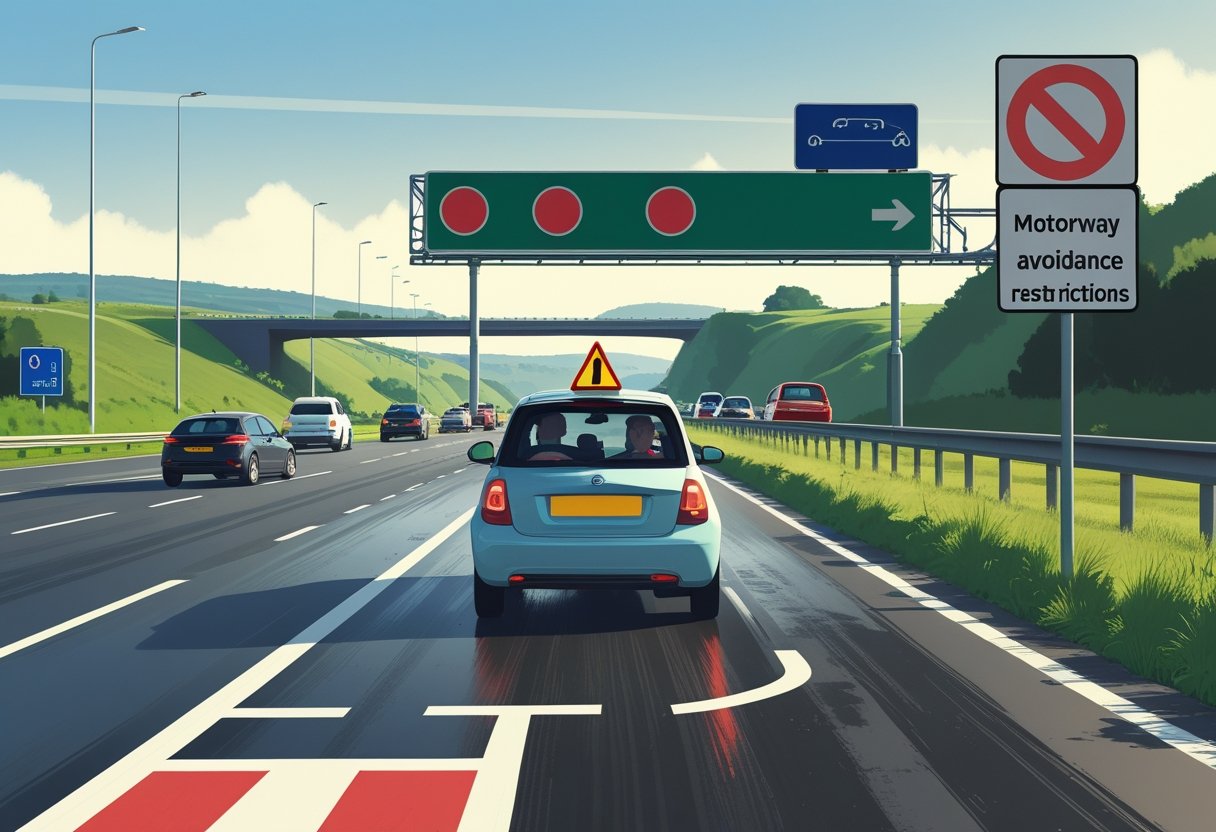
Despite this significant change happening over six years ago, many drivers still don’t realise the rules have shifted. In fact, research shows that half of all drivers remain unaware of this update, which explains why so few learners are spotted on motorways today. The change came about because new drivers often felt terrified of motorways after passing their tests, with some avoiding these crucial roads for months.
We’re here to clear up the confusion and help you understand exactly what’s possible now. Whether you’re wondering who can supervise motorway lessons, what preparations you’ll need, or why some experts still recommend caution, we’ve got the complete picture. This shift in the law opens up exciting new opportunities for building confidence before your test.
How Motorway Rules for Learner Drivers Have Changed
The rules around learner drivers and motorways shifted dramatically in 2018, opening up new opportunities for supervised practice on these high-speed roads. Before this change, your first motorway experience would happen only after passing your test, but now qualified instructors can guide you through this crucial skill during lessons.
What Was the Law Before 2018?
Before June 2018, learner drivers were completely banned from motorways. This meant your very first motorway drive would happen after you’d passed your test – quite a nerve-wracking prospect!
The old system left many new drivers feeling unprepared. You could drive on dual carriageways and A-roads during lessons, but motorways remained off-limits. This created a significant gap in your learning experience.
Many newly qualified drivers turned to the Pass Plus scheme for their first taste of motorway driving. Others simply had to figure it out themselves, which wasn’t ideal for building confidence or developing proper motorway skills.
Key restrictions before 2018:
- No learner drivers allowed on motorways at any time
- First motorway experience happened post-test
- Limited high-speed driving practice available during lessons
- Heavy reliance on voluntary schemes after passing
Why Did the Law Change?
The government recognised that throwing new drivers onto motorways without proper preparation wasn’t working well. Statistics showed that many drivers lacked confidence and skills for safe motorway driving after passing their tests.
Safety was the primary driver behind this change. Giving you the chance to learn motorway skills with a qualified instructor creates much safer conditions than learning alone after your test.
The new rules aimed to provide broader driving experience before your test. You can now practise joining and leaving motorways, lane discipline, and overtaking techniques under expert guidance.
Benefits the law change targeted:
- Better preparation for higher-speed driving
- Improved understanding of motorway-specific signs
- Knowledge of breakdown procedures on motorways
- Enhanced confidence for independent motorway driving
Impact Since the Changes
Since 2018, driving instructors have been able to take learners onto motorways using dual-control vehicles. However, uptake has been slower than expected.
Surprisingly, many drivers remain unaware of this change. Recent surveys show that 50% of drivers don’t know learners can now use motorways, and 83% have never actually seen a learner vehicle on these roads.
The current situation includes:
- Voluntary motorway lessons with approved instructors only
- Dual-control cars required for all motorway practice
- No changes to the actual driving test format
- Learner motorcyclists still prohibited from motorways
Your instructor decides when you’re ready for motorway lessons. These sessions aren’t mandatory, but they’re brilliant preparation for real-world driving after you pass your test.
Who Can Take Learner Drivers on the Motorway?
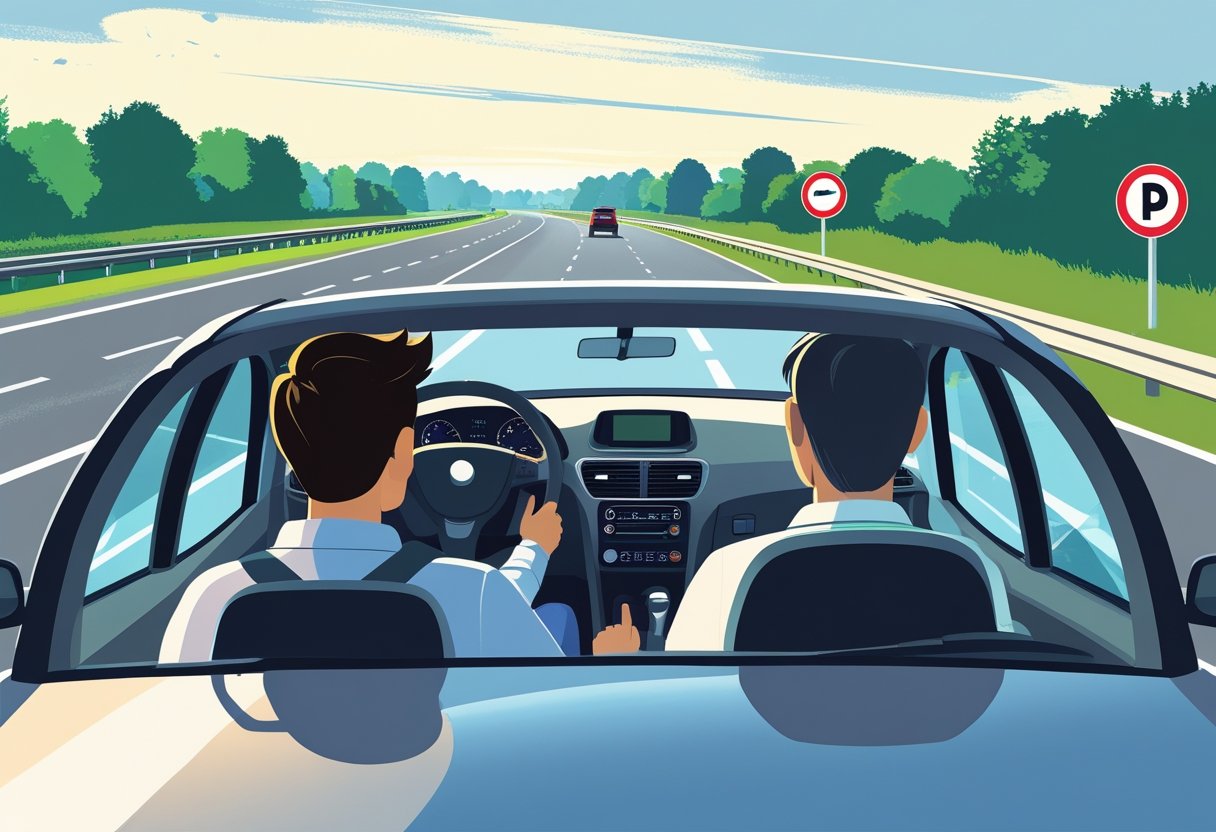
Only approved driving instructors can supervise learner drivers on motorways, and they must use specially equipped dual-control cars. This ensures both safety and proper guidance during these important lessons.
The Role of an Approved Driving Instructor
When it comes to motorway lessons, we need to be clear about who’s qualified to help. Only approved driving instructors (ADIs) can take learner drivers onto motorways. Your mum, dad, or experienced friend simply won’t cut it here.
This rule exists for brilliant reasons. ADIs have undergone rigorous training and testing. They understand motorway dynamics in ways that even the most well-meaning family member doesn’t.
Your instructor will decide when you’re ready for motorway driving. There’s no rush or pressure. They’ll assess your general driving skills first, ensuring you’re comfortable with:
- Speed management and smooth acceleration
- Lane discipline and positioning
- Mirror checks and observation skills
- Confidence in busy traffic situations
Think of your ADI as your motorway mentor. They’ve guided countless learners through their first motorway experience. Their expertise means you’ll learn proper techniques from day one, rather than picking up questionable habits.
Most instructors wait until you’re approaching test standard before suggesting motorway lessons. This timing makes perfect sense – you’ll have the foundational skills needed to handle faster speeds safely.
Why Dual-Control Cars Are Essential
Motorway lessons must happen in dual-control cars. These specially adapted vehicles give your instructor immediate control if needed. It’s like having a safety net whilst you’re learning the ropes.
The instructor’s brake and clutch pedals aren’t just backup systems – they’re peace of mind in action. At 70mph, there’s precious little time to react if something goes wrong. Your instructor can step in instantly, ensuring everyone stays safe.
Dual controls also boost your confidence enormously. Knowing your instructor can help immediately means you’ll feel more relaxed. This relaxed state actually helps you learn faster and more effectively.
We should mention that trainee driving instructors aren’t permitted to supervise motorway lessons. Only fully qualified ADIs can take on this responsibility. This restriction ensures you’re getting guidance from someone with complete training and experience.
The combination of professional instruction and dual-control safety creates the perfect learning environment for motorway driving.
What Are the Current Rules for Learner Drivers on Motorways?
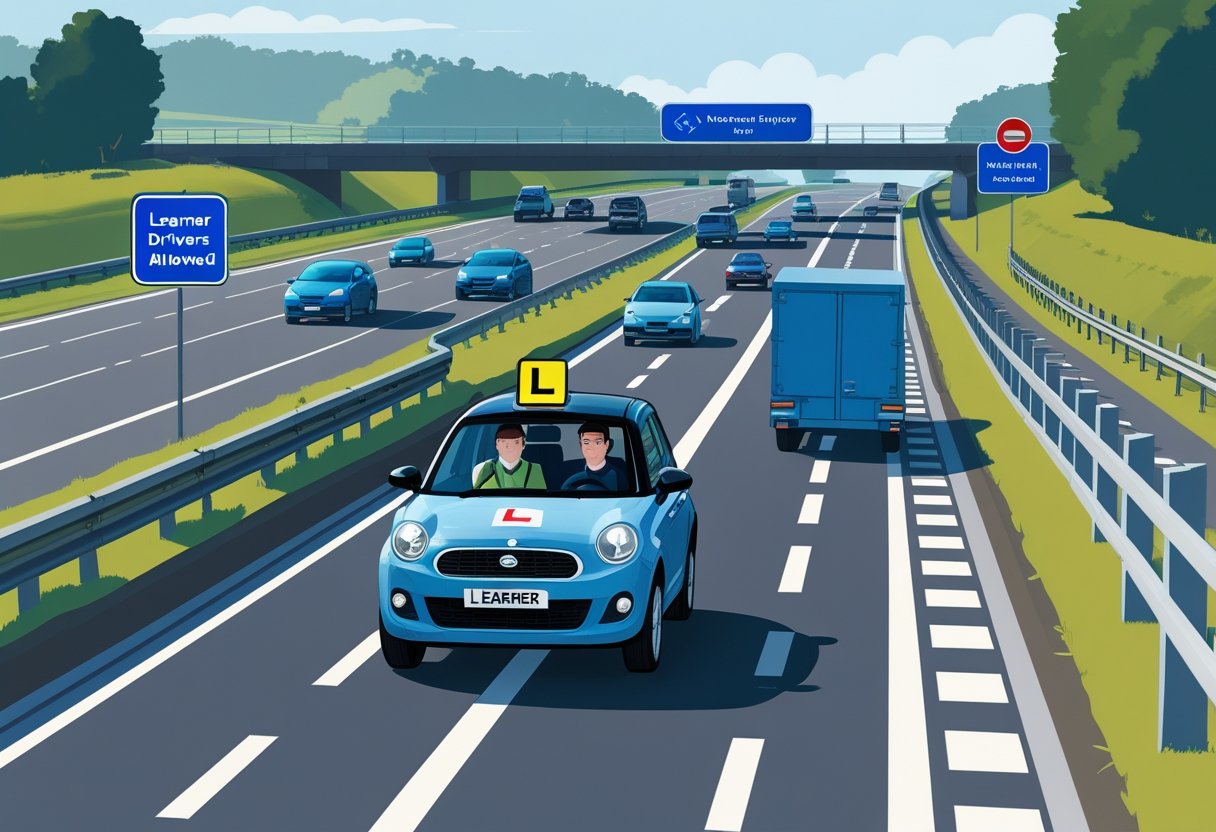
Since June 2018, the rules changed to allow learner drivers on motorways under strict conditions. You’ll need proper supervision, the right vehicle setup, and must follow specific legal requirements to avoid hefty penalties.
Legal Requirements and Conditions
You cannot just hop onto the M25 with your provisional licence whenever you fancy. The law requires several key conditions to be met before you’re legally allowed on any motorway.
First, you must be accompanied by an approved driving instructor in a dual-control vehicle. This means your mate who passed their test last year cannot supervise you on motorways, even if they’re brilliant drivers.
Your L-plates must be clearly displayed on both the front and rear of the vehicle. We know they’re not exactly a fashion statement, but they’re absolutely essential for legal motorway driving.
The vehicle itself needs dual controls – those extra pedals that let your instructor take control if things get hairy. Without these safety features, motorway lessons simply aren’t permitted.
Your learner driver insurance must specifically cover motorway driving with an instructor. Some policies exclude this, so double-check your coverage before booking any high-speed lessons.
When Motorway Lessons Are Allowed
Your driving instructor holds the keys to this decision – quite literally. They’ll assess whether you’re ready for the challenge of three-lane traffic and 70mph speeds.
Most instructors won’t consider motorway lessons until you’ve mastered basic skills like smooth gear changes, confident overtaking, and proper mirror use. Think of it as earning your stripes on quieter roads first.
The instructor evaluates your ability to handle faster speeds, judge distances accurately, and make quick decisions. They’re looking for steady nerves and solid car control before giving you the green light.
Timing matters too. Many instructors prefer daytime lessons when visibility is better and traffic patterns are more predictable. Rush hour motorway lessons? That’s advanced-level stuff.
Weather conditions play a huge role in the decision. Heavy rain, fog, or strong winds might mean postponing your motorway adventure for another day.
Penalties for Breaking the Rules
Getting caught on a motorway without proper supervision can seriously damage your driving future. The penalties are designed to make you think twice about bending the rules.
If you drive on motorways without an approved instructor, you’ll face a £200 fine and six penalty points on your provisional licence. That’s already half the points needed for an automatic ban.
Your learner driver insurance becomes invalid if you break these rules, leaving you potentially liable for thousands of pounds in damages if something goes wrong.
The DVLA takes these violations seriously. Six penalty points on a provisional licence means an automatic disqualification before you’ve even passed your test. You’d need to reapply for a new provisional licence and start over.
Police have the authority to stop learner drivers they suspect are breaking motorway rules. They’ll check your supervision arrangements and vehicle compliance on the spot.
Preparing for Your First Motorway Lesson
Getting ready for your first motorway experience takes proper preparation and the right mindset. We’ll help you build confidence, develop essential skills, and know what to expect when you finally hit those faster roads.
Building Confidence Before You Go
Your driving instructor won’t suggest motorway lessons until you’re truly ready. This usually happens after you’ve mastered dual carriageways and feel comfortable at higher speeds.
Practice these confidence-building exercises first:
- Drive on A-roads with 60mph speed limits
- Get comfortable with overtaking slower vehicles
- Master lane discipline on multi-lane roads
- Practice smooth acceleration and braking
Most learners feel nervous about their first motorway drive. That’s completely normal! The key is building your skills gradually on quieter roads first.
Your instructor will assess whether you can handle busy traffic situations. They’ll also check that you’re confident with observations and can make quick decisions safely.
Don’t rush into motorway lessons. Take time to feel genuinely comfortable with faster driving on other roads first.
Key Skills to Practise
Certain skills become crucial when you’re learning to drive on motorways. We recommend focusing on these areas during your regular lessons.
Essential motorway skills include:
- Merging smoothly – Use slip roads to match traffic speed
- Lane discipline – Stay left unless overtaking
- Safe following distances – Leave extra space at higher speeds
- Mirror checks – Constantly monitor surrounding traffic
Your theory test covers motorway rules extensively. Study the Highway Code sections about motorway driving carefully.
Practice reading road signs quickly. Motorway signs appear fast, so you need to process information rapidly.
Work on maintaining steady speeds. Motorways require consistent pace rather than frequent speed changes.
Advice for Your First Motorway Drive
Your first motorway lesson will feel different from regular driving. We want you to know what to expect so you feel prepared.
Start with quieter motorway sections if possible. Your instructor will choose routes with lighter traffic for your first experience.
Remember these key points:
- Your instructor controls the dual controls if needed
- Focus on smooth, gradual movements
- Don’t worry about other drivers – concentrate on your own driving
- Ask questions throughout the lesson
Most learners find motorways less scary than expected. The traffic flows more predictably than busy town centres.
Your instructor might keep the first lesson short. This prevents information overload and keeps the experience positive.
Take regular breaks if you feel overwhelmed. Learning motorway driving is mentally demanding, especially initially.
Why Some Still Advise Caution on Motorways
Even with the law changes allowing learners on motorways, driving experts and instructors remain divided. High-speed roads present unique challenges that can overwhelm new drivers, particularly when confidence levels are still developing.
The Dangers of Inexperience at High Speeds
Motorways demand split-second decisions that we simply can’t master overnight. When you’re travelling at 70mph, there’s precious little time to think through your next move.
Reaction time becomes critical at these speeds. What feels manageable at 30mph in town becomes genuinely challenging when vehicles are moving more than twice as fast around you.
New drivers often struggle with:
- Lane discipline – staying centred whilst other vehicles pass at speed
- Judging distances between vehicles accurately
- Managing multiple lanes of fast-moving traffic
- Anticipating other drivers’ actions well in advance
We see this reflected in accident statistics. The search results show that drivers face the highest risk during their first few months after passing the driving test. This vulnerable period coincides with when many attempt motorway driving for the first time.
The margin for error shrinks dramatically on motorways. A hesitant merge or sudden lane change can create dangerous situations for everyone involved.
Confidence and Anxiety in New Drivers
Many of us remember that nerve-wracking feeling after passing our driving test. Motorways can feel particularly intimidating, which explains why one in 12 licence holders avoid them for at least six months.
This avoidance often stems from genuine anxiety rather than inability. The psychological pressure of high-speed driving affects different people in various ways.
Some new drivers experience:
- Overwhelming sensory input from multiple lanes of traffic
- Pressure to maintain speed whilst staying safe
- Fear of making mistakes at high speeds
- Difficulty processing information quickly enough
Building confidence takes time. We can’t rush this natural learning process, even with professional instruction available.
The good news? These feelings are completely normal. Every experienced driver once felt uncertain about motorway driving. With proper preparation and gradual exposure, most drivers develop the skills and confidence needed for safe motorway travel.
Benefits of Motorway Lessons for Learner Drivers
Taking motorway lessons whilst you’re still learning gives you real-world experience on Britain’s fastest roads. This preparation builds your confidence and teaches you vital skills that make you a safer driver from day one.
Safer Driving Habits for Life
We know that those first few months after passing your test are the riskiest. Statistics show new drivers face their highest accident rates during this period. Motorway lessons help change that pattern dramatically.
When you practice joining motorways during lessons, you learn proper acceleration techniques. Your instructor guides you through matching traffic speed on slip roads. This skill becomes second nature rather than a scary guessing game.
Key safety skills you develop include:
- Reading traffic patterns at high speeds
- Maintaining safe following distances
- Lane discipline and positioning
- Emergency procedures and hazard awareness
The dual-control car gives you a safety net whilst building real experience. Your instructor can step in if needed, but you’re doing the actual driving. This combination builds genuine confidence rather than false bravado.
Many learners tell us they feel much calmer about motorways after proper lessons. You’re not thrown in at the deep end after passing your test.
Greater Independence After Passing Your Test
Without motorway experience, many new drivers avoid these roads completely. Research shows one in twelve licence holders stay off motorways for at least six months after passing. That’s a massive limitation on your freedom.
Motorway lessons change this picture entirely. You’ll know exactly how to handle merge lanes, overtaking, and exit strategies. These aren’t theoretical concepts anymore, they’re skills you’ve actually practiced.
Your post-test independence includes:
- Confidence on long-distance journeys
- Access to faster, more direct routes
- Reduced journey times for work or leisure
- Freedom to drive anywhere in Britain
We’ve seen countless learners transform from anxious about motorways to genuinely excited about the possibilities they open up. That confidence carries over into all your driving.
The practical benefits are enormous too. Motorways are often the quickest routes between cities. Without this confidence, you’re stuck on slower A-roads, adding hours to longer trips.
Frequently Asked Questions
Learner drivers can now practice on motorways with proper supervision since 2018, though specific conditions apply. Understanding the rules, safety requirements, and preparation steps helps build confidence for this important driving milestone.
What recent updates should I be aware of regarding learner drivers on motorways?
Since June 2018, the law changed to allow learner drivers on motorways in England, Scotland, and Wales. This was a significant shift from the previous rules that completely banned learners from these roads.
You must be with an approved driving instructor in a dual-control car fitted with L-plates. Your instructor needs to decide if you’re ready for this step.
The change doesn’t apply to learner motorcyclists. They still cannot use motorways during their learning period.
This update aims to reduce the anxiety many new drivers feel when first encountering motorways after passing their test. Research showed that one in twelve licence holders avoided motorways for at least six months after getting their full licence.
How can motorway driving benefit my skills as a novice driver?
Motorway lessons give you valuable experience with high-speed driving before you’re on your own. You’ll learn crucial skills like lane discipline and smooth merging techniques.
These lessons help build your confidence for when you pass your test. Many drivers find motorways less intimidating after practising with professional guidance.
You’ll develop better hazard perception at higher speeds. This skill transfers to all your driving, making you a safer road user overall.
The experience also teaches you about maintaining safe following distances. Motorway speeds require different spacing judgements than town driving.
Are there any specific rules for accompanied driving on motorways?
You can only use motorways with an approved driving instructor in a dual-control vehicle. Private practice with family members or friends isn’t allowed on motorways.
Your instructor must assess your competence before taking you onto these roads. They’ll ensure you’re comfortable with basic car control and traffic awareness first.
The car must display L-plates clearly. This alerts other drivers that you’re learning and may need extra patience.
Motorway lessons aren’t compulsory, so you can choose whether to include them in your learning. However, we’d recommend considering them if your instructor suggests you’re ready.
What safety tips should I bear in mind before venturing onto the motorway as a learner?
Always trust your instructor’s judgement about when you’re ready. They have the experience to know if your skills are suitable for motorway conditions.
Start with quieter sections during off-peak times. Your instructor will choose appropriate routes for your first experiences.
Focus on maintaining steady speeds rather than frequent acceleration and braking. Smooth driving is especially important at motorway speeds.
Keep your attention on the road ahead and check mirrors regularly. Motorway conditions change quickly, so constant awareness is essential.
Remember that other drivers should be patient with learners. However, don’t let this pressure you into driving beyond your comfort zone.
Can you outline the preparatory steps a learner should take before their first motorway experience?
Build solid foundation skills on quieter roads first. Your instructor will ensure you’re confident with gear changes, steering, and basic manoeuvres.
Practice dual carriageway driving to get used to higher speeds. This helps bridge the gap between town driving and motorway conditions.
Study the Highway Code sections about motorway rules. Understanding the theory makes the practical experience less overwhelming.
Work on your observation skills and mirror use. Motorways require excellent awareness of traffic around you.
Discuss any concerns with your instructor beforehand. They can address specific worries and tailor the lesson to your needs.
What are the consequences of not adhering to motorway regulations for learner drivers?
Driving on motorways without proper supervision could result in penalty points on your provisional licence. This might affect your ability to take your test.
You could face fines of up to £1,000 for motorway violations. The exact amount depends on the specific offence and circumstances.
Your insurance might not cover incidents if you’re driving illegally on motorways. This could leave you facing significant financial costs.
Breaking motorway rules could delay your progress towards taking your driving test. Instructors need to see responsible behaviour before recommending you for examination.
More importantly, unsupervised motorway driving puts you and others at serious risk. These roads demand skills and experience that develop over time.