

Published 4 November 2025, updated 12 July 2026
Difference Between Independent Instructors and Driving Schools: Your Guide to Picking the Right Path
When you’re ready to start learning to drive, one of your first big decisions is choosing between an independent driving instructor or a driving school. This choice can shape your entire learning experience, from how lessons are structured to what you’ll pay and how much flexibility you’ll have with scheduling.
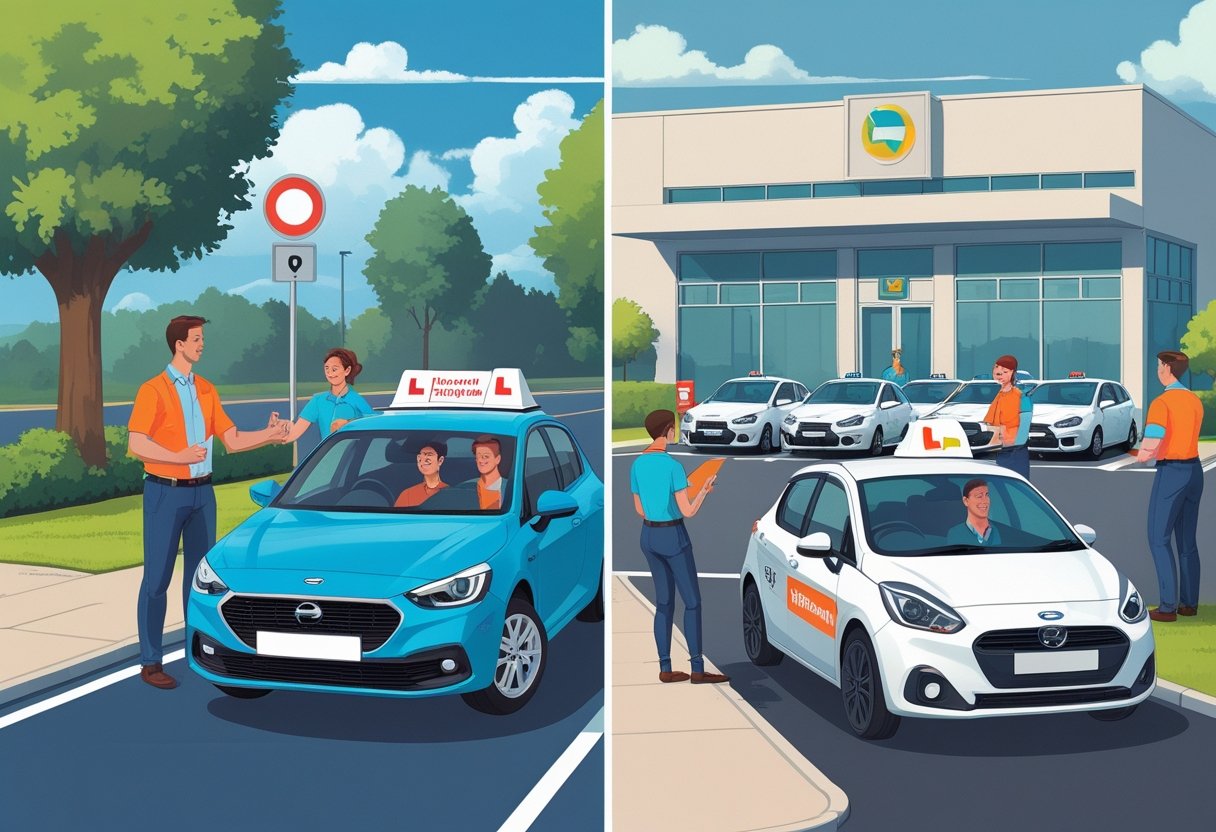
Independent instructors work for themselves and have complete control over their teaching methods, pricing, and schedules, whilst driving schools operate as larger organisations that provide instructors with support, branding, and a steady flow of pupils. Each option comes with distinct advantages that suit different learning styles and preferences.
The good news is that both paths can lead you to passing your test successfully. What matters most is finding the right fit for your personal needs, budget, and learning style. Whether you’re drawn to the personal touch of an independent instructor or prefer the structured approach of an established driving school, understanding these differences will help you make the best choice for your driving journey.
Key Takeaways
- Independent instructors offer more personalised teaching and flexible scheduling, whilst driving schools provide structured support and consistent lesson availability
- Financial considerations vary significantly, with independents potentially offering better value but driving schools sometimes including additional services in their packages
- Your choice should depend on whether you prefer a personal relationship with one instructor or the backing of a larger organisation with standardised teaching methods
Whichever route you prefer, our intensive driving courses with dedicated instructors pair one-to-one teaching with a clear path to test day.
What Sets Independent Instructors and Driving Schools Apart?
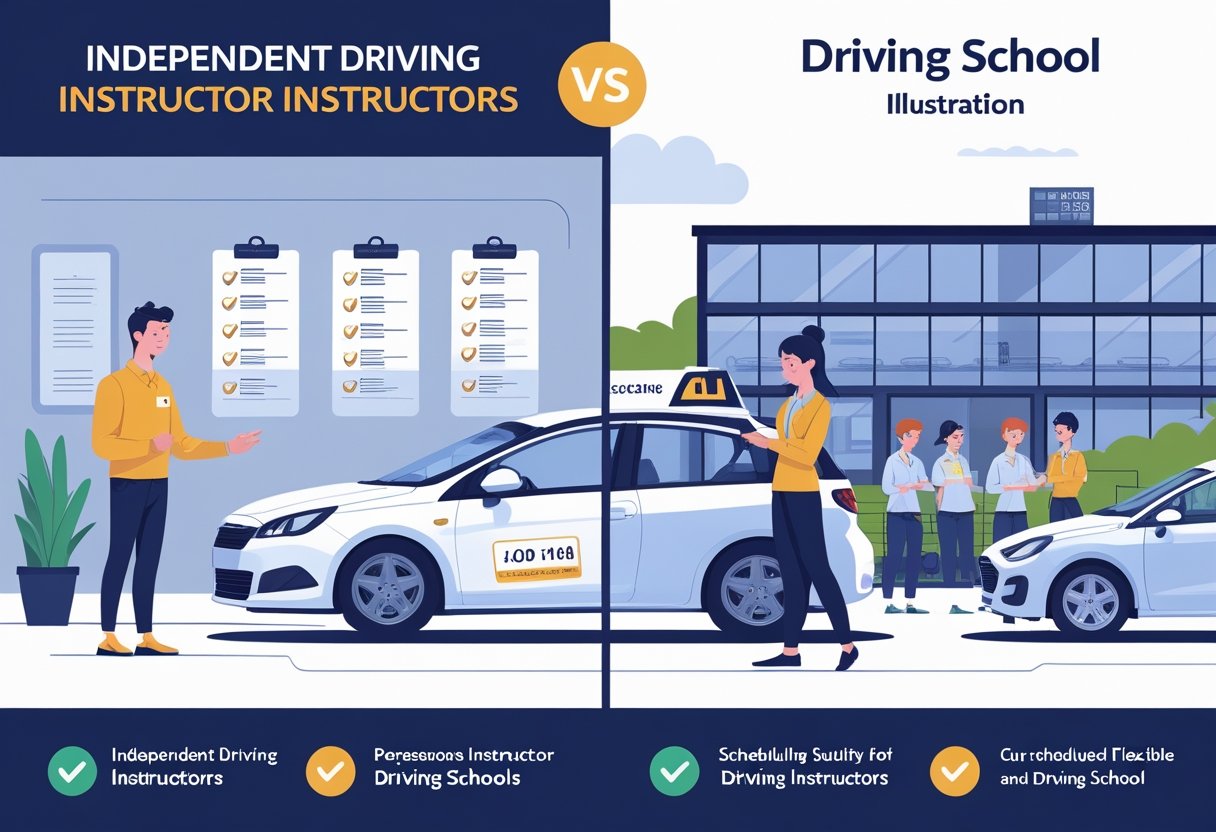
The biggest differences come down to how lessons are structured, what vehicles are used, and how flexible your learning schedule can be. Each option brings unique strengths that might suit your learning style perfectly.
Understanding the Core Differences
When we look at the main differences, it really comes down to structure versus flexibility. Driving schools typically follow a set curriculum that’s been tested with thousands of learners. They’ve got their methods down to a fine art.
Independent driving instructors often take a more personalised approach. We see them adapting their teaching style to match exactly how you learn best. There’s no rigid programme to follow.
Key structural differences:
- Driving schools: Fixed lesson plans and standardised teaching methods
- Independent instructors: Flexible, tailored approaches based on your needs
- Scheduling: Schools often have set time slots, whilst independents usually offer more flexible booking
The vehicles make a big difference too. Most driving schools provide specially equipped cars with dual controls. These safety features let instructors take control during tricky moments.
Many independent instructors also use dual-controlled vehicles, though some might teach in your own car. This can save money but doesn’t offer the same safety backup.
Price structures vary significantly between the two options. Independent driving instructors typically charge between £30 to £45 per hour. In London, rates can reach £50 per hour.
Driving schools often bundle lessons into packages. These might seem pricier upfront but can offer better value when you factor in their comprehensive services.
Role of Approved Driving Instructors (ADIs)
Both driving schools and independent instructors must meet the same professional standards. Every qualified driving instructor needs to be an Approved Driving Instructor with proper certification.
Look for the green badge displayed in the windscreen. This shows your instructor has passed all the required tests and training. A pink badge means they’re still in training as a Potential Driving Instructor.
ADI requirements include:
- Passing three qualifying tests
- Regular standards checks
- Ongoing professional development
- Valid certification renewal
Only about 5% of people who apply actually become qualified driving instructors. Even fewer make it through the complete training programme successfully.
Whether your instructor works independently or for a school, they’ve met these same tough standards. The qualification process ensures consistent quality across the industry.
Independent instructors often bring years of experience from working with different driving schools. They’ve seen what works and what doesn’t. Many choose independence to offer more personalised teaching.
Driving school instructors benefit from ongoing support and training from their employer. They’ve got backup when facing challenging situations or difficult students.
Typical Services Each Offers
Driving schools usually provide more comprehensive packages beyond basic lessons. We often see them offering theory test support, mock tests, and intensive courses.
Many schools employ multilingual instructors. This helps if English isn’t your first language. Some schools offer lessons in Hindi, Punjabi, Urdu, and other languages.
Common driving school services:
- Theory test preparation: Online resources and practice materials
- Intensive courses: Week-long programmes for faster learning
- Pass protection: Additional lessons if you don’t pass first time
- Fleet insurance: Usually cheaper than individual policies
Independent instructors focus mainly on practical driving lessons. They might not offer the same range of additional services. However, their flexibility often makes up for this limitation.
Some independent instructors specialise in particular areas. We see instructors who focus on nervous drivers, refresher courses for experienced drivers, or advanced driving techniques.
Booking systems differ significantly too. Driving schools often use online platforms where you can schedule lessons easily. Independent instructors might prefer phone calls or text messages for arrangements.
The support structure varies as well. With driving schools, you’ve got office staff to handle problems or rescheduling. Independent instructors handle everything themselves, which can mean quicker responses but less backup support.
Support and Structure: Comparing Learning Environments
The level of support and structure you’ll receive varies dramatically between driving schools and independent instructors. Driving school franchises typically offer extensive brand backing and streamlined administrative systems, whilst independent instructors provide more personalised, flexible approaches to your learning journey.
Brand Recognition and Professional Networks
When you choose a driving school franchise, you’re tapping into years of established reputation and marketing power. These organisations have spent considerable resources building their brand presence across communities, which means potential employers and insurance companies often recognise their training standards.
Red Driving School and AA Driving School are prime examples of how brand recognition works in your favour. Their instructors benefit from professional development programmes and standardised teaching methods that create consistency across the network.
Independent instructors, however, build their reputation through word-of-mouth recommendations and personal relationships within local communities. Many have developed specialised teaching techniques over years of experience.
The networking opportunities differ significantly too. Driving school instructors often connect with colleagues through company events and training sessions, sharing best practices and troubleshooting challenges together.
Independent instructors typically build professional networks through local driving instructor associations or informal meetups, which can be equally valuable but require more personal initiative to maintain.
Administrative and Booking Support
Here’s where driving schools really shine in terms of convenience. Most franchises handle the nitty-gritty administrative tasks that can bog down your learning experience.
Booking systems are typically managed centrally, meaning you can easily reschedule lessons through apps or customer service lines. Payment processing, lesson confirmations, and progress tracking are streamlined through professional systems.
Many driving schools also provide:
- Automated reminder systems for upcoming lessons
- Theory test booking assistance
- Practical test scheduling support
- Digital progress reports for parents or guardians
Independent instructors often manage these tasks personally, which can mean more flexible arrangements but potentially less sophisticated systems. You might find yourself texting directly with your instructor or handling payments in cash.
The trade-off is often more personalised attention to your specific scheduling needs, especially if you have unusual availability or specific requirements for your learning programme.
Flexibility and Independence in Teaching
Independent driving instructors enjoy complete autonomy over their teaching methods and business decisions, whilst driving school instructors may face certain restrictions. The level of flexibility varies significantly between these two paths, affecting everything from daily schedules to personalised lesson approaches.
Setting Your Own Schedule and Pricing
As an independent driving instructor, we have total control over when we work and how much we charge. This means setting our own rates based on local demand, our experience, and the quality of service we provide.
Independent instructors can:
- Choose their working hours freely
- Take holidays without seeking approval
- Adjust pricing for peak times or special circumstances
- Block out time for personal commitments
Driving school instructors often face more constraints. Many schools have recommended pricing structures or require approval for rate changes. Some also expect availability during peak hours like evenings and weekends.
The financial freedom is particularly appealing. We keep every pound we earn rather than paying franchise fees that can range from £80 to £200 per week. This difference can significantly impact our annual earnings.
However, this freedom comes with responsibility. We must handle all our own bookings, manage cancellations, and deal with payment collection ourselves.
Freedom to Personalise Learning
Independent driving instructors have complete freedom to adapt their teaching methods to each learner’s needs. We can spend extra time on challenging areas without worrying about standardised lesson plans or company policies.
This flexibility allows us to:
- Use our preferred teaching techniques
- Adjust lesson pace based on individual progress
- Choose our own training routes and practice areas
- Implement creative learning approaches
Driving school instructors may need to follow specific curricula or use company-approved materials. Whilst this provides structure, it can limit our ability to innovate or personalise lessons fully.
The direct relationship we build with learners as independents often leads to better outcomes. We can focus entirely on what works best for each student rather than following rigid guidelines.
Many learners appreciate this personalised approach. They feel more comfortable knowing their instructor has complete flexibility to help them succeed.
Balancing Work-Life Commitments
Independent driving instructors have unparalleled control over their work-life balance. We decide how many lessons to teach each day and can easily accommodate family commitments or personal interests.
This flexibility proves invaluable for:
- Parents managing school runs
- Those with caring responsibilities
- Instructors pursuing additional qualifications
- Anyone wanting to maintain hobbies or interests
Driving school arrangements might involve minimum lesson quotas or expectations about availability. Some schools require instructors to accept learners during specific timeframes, which can clash with personal commitments.
We can also choose our teaching locations more freely as independents. This means avoiding long commutes or focusing on areas close to home, saving both time and fuel costs.
The ability to scale our business up or down based on life circumstances is incredibly valuable. During busy family periods, we can reduce our workload without seeking permission from a driving school manager.
Financial Aspects and Franchise Fees
When we’re weighing up the financial side of things, franchise fees can take a significant bite out of monthly earnings, whilst independent instructors keep every penny but face higher upfront costs. The earning potential varies dramatically depending on which path we choose, and managing marketing budgets becomes a crucial skill for those going solo.
Franchise Costs vs. Solo Business Expenses
Franchise fees typically range from £150 to £400 per month, depending on the driving school franchise we choose. These fees cover branding, marketing support, and pupil referrals.
However, we’re not just paying franchise fees. Most franchises also require:
• Car hire or lease (if we don’t own a dual-control vehicle)
• Insurance contributions
• Fuel costs
• Equipment fees for roof signs and materials
Independent instructors avoid franchise fees entirely. Instead, we face different expenses:
• Website development (minimum £1,500 for decent quality)
• SEO services (around £150 monthly for local coverage)
• Car modifications for dual controls
• Marketing materials and branding costs
The trade-off is clear. Franchises provide instant setup but ongoing costs. Independence means higher initial investment but no monthly franchise payments eating into our profits.
Earning Potential and Take-Home Pay
Independent instructors potentially earn more per hour since there’s no franchise fee reducing our income. With 20-30 regular pupils doing 1-2 hours weekly, we could achieve £40-50K annually.
Franchise instructors typically see 15-25% of their gross earnings going to franchise fees. However, we get consistent pupil flow without the marketing headaches.
The reality is nuanced. New independent instructors often struggle initially, earning less whilst building their client base. Franchise instructors might start earning immediately but plateau due to ongoing fees.
Location matters tremendously. In competitive areas, franchise support becomes more valuable. In quieter regions, independent instructors often thrive more easily.
Managing Your Own Marketing Budget
Independent instructors must master marketing budgets or risk failure. We need realistic expectations about costs and returns.
Monthly marketing expenses typically include:
• Google Ads: £200-500
• Social media management: £100-300
• Website maintenance: £50-100
Most new instructors underestimate these costs. We’re not just teachers anymore – we become small business owners handling everything from answering phones during lessons to updating social media profiles.
The phone management challenge is particularly tricky. Missing calls means losing potential pupils to competitors. Virtual reception services cost extra but might be necessary for busy instructors.
Marketing success takes time. We shouldn’t expect immediate results from our investment, making cash flow management crucial during those early months.
Finding Learners and Marketing Yourself
The way driving lessons are found and booked has changed dramatically in recent years. Independent driving instructors must build their own client base from scratch, while driving schools typically provide a steady stream of learners through established systems.
Learner Allocation Strategies
Driving schools handle learner allocation for their instructors through centralised booking systems. When potential students contact the school, they’re matched with available instructors based on location and schedule preferences.
This approach removes the pressure of constantly seeking new pupils. The school’s reputation and marketing efforts bring in enquiries, which are then distributed amongst their team of instructors.
Independent driving instructors face a different challenge entirely. We must develop our own strategies for attracting learners consistently.
Word-of-mouth referrals become crucial for building a sustainable business. Past pupils who’ve passed their tests often recommend us to friends and family members.
Local partnerships can prove valuable too. Some instructors build relationships with sixth form colleges, universities, or workplace training programmes. These connections can provide regular referrals.
Pricing flexibility gives independents an advantage. We can offer competitive rates, package deals, or loyalty discounts that larger driving schools might not match.
Block booking strategies work well for many independents. Offering discounts for pupils who book multiple lessons upfront helps secure future income whilst providing value.
Using Online Platforms and Social Media
Today’s learner drivers primarily search for driving lessons through Google and social media platforms. This shift has transformed how we need to approach marketing our services.
Website presence has become essential for independent instructors. A professional-looking site with clear contact information, pricing, and testimonials helps build credibility with potential pupils.
Search engine optimisation helps our websites appear when people search for “driving lessons near me” or similar phrases. This involves using relevant keywords and maintaining fresh content.
Social media marketing offers cost-effective ways to reach young drivers. Facebook, Instagram, and TikTok allow us to showcase success stories and connect with our local community.
Google My Business listings provide free visibility in local search results. Encouraging satisfied pupils to leave positive reviews can significantly boost our online reputation.
Online booking systems streamline the enquiry process. Many learners prefer booking lessons through websites rather than making phone calls.
Driving schools typically invest heavily in professional marketing campaigns across multiple platforms. Their established online presence and advertising budgets can dominate local search results.
Building a Local Reputation
Community connections often prove more valuable than expensive advertising campaigns. Building genuine relationships within our local area creates lasting business opportunities.
Personal recommendations carry enormous weight in the driving instruction industry. Parents trust other parents’ experiences when choosing instructors for their teenagers.
Local driving test centres become familiar territory over time. Test examiners and administrative staff often notice instructors with consistently well-prepared pupils.
Community involvement helps establish our presence locally. Attending school career fairs, local events, or sponsoring youth sports teams can increase visibility.
Consistency matters enormously in reputation building. Reliable timekeeping, professional appearance, and patient teaching approaches create positive impressions that spread quickly.
Specialist services can differentiate us from competitors. Some instructors focus on nervous drivers, intensive courses, or specific age groups to build expertise in particular areas.
Maintaining high pass rates becomes a powerful marketing tool. Pupils naturally gravitate towards instructors known for helping students succeed on their driving tests.
Driving schools benefit from established brand recognition that independents must build from nothing. However, personal relationships often prove stronger than corporate branding in this industry.
Choosing What’s Right for You
Your personality and career goals will guide you towards the best fit between independent instruction and driving school employment. Think about whether you thrive with complete autonomy or prefer having structured support systems in place.
Evaluating Your Personality and Priorities
We find that successful driving instructors often know themselves well before making this crucial decision. If you’re someone who loves complete control over your schedule and teaching methods, independent work might suit you perfectly.
Independent instructors handle everything themselves. You’ll book your own students, manage payments, and maintain your vehicle. This freedom comes with responsibility though.
Are you comfortable with:
- Marketing yourself to find new students
- Handling business finances and taxes
- Working without guaranteed income
- Making all decisions alone
Driving schools offer more structure and support. You’ll receive training, marketing help, and often a steady flow of students. The trade-off means following their methods and sharing your earnings.
Driving school benefits include:
- Regular student referrals
- Administrative support
- Branded vehicles with dual controls
- Structured training programmes
Think about your risk tolerance too. Independent instructors face income uncertainty, especially when starting out. Driving schools provide more predictable earnings, though potentially lower overall income.
Career Growth and Long-Term Opportunities
We’ve seen both paths lead to fulfilling careers, but they offer different growth trajectories. Independent approved driving instructors can build their own brands and potentially earn more per lesson.
You might charge £35-45 per hour as an independent instructor. Keep in mind that driving schools typically take a percentage of lesson fees, but they provide the infrastructure you need to succeed.
Independent growth opportunities:
- Build your own client base
- Set your own rates
- Expand into specialized training
- Develop multiple income streams
Driving schools offer structured advancement paths. Some instructors become trainers or area managers. Others use the experience to eventually go independent with better preparation.
The best approved driving instructors often start with schools to learn the business side. You’ll understand how to attract students, handle difficult situations, and manage your time effectively.
Consider your long-term vision. Do you want to own a driving school someday? Independent experience becomes invaluable. Prefer stability and steady work? Staying with an established school might suit you better.
Frequently Asked Questions
Many learner drivers wonder about the practical differences between independent instructors and driving schools, from personalised attention and structured programmes to costs and teaching methods. These common questions help clarify what you can expect from each option.
What advantages can a learner driver expect from a one-on-one session with an independent driving instructor?
Independent instructors typically offer complete flexibility with their teaching approach. They can adapt each lesson specifically to your learning pace and focus extra time on areas where you need more practice.
You’ll often get the same instructor for every lesson. This consistency helps build a strong rapport and means your instructor knows exactly what you’ve covered and what still needs work.
Many independent instructors have more flexible scheduling options. We find they’re often willing to accommodate unusual hours or specific requests that larger driving schools might not offer.
The personal relationship you develop can be invaluable for building confidence. Your instructor gets to know your personality and can tailor their encouragement and teaching style to what works best for you.
How do driving schools create a structured learning environment that could benefit new drivers?
Driving schools usually follow established curricula that cover all essential skills systematically. This structured approach ensures no important topics get missed during your learning journey.
Most driving schools use specially equipped vehicles with dual controls. These safety features can help nervous learners feel more secure during their initial lessons.
You’ll benefit from standardised teaching methods that have been tested with thousands of students. This consistency means the quality of instruction remains reliable across different instructors within the same school.
Many driving schools offer additional resources like online theory materials or practice tests. These supplementary tools can support your learning between practical sessions.
Could you outline the potential cost differences between enrolling in a driving school and hiring an independent instructor?
Independent instructors often have lower overhead costs, which can translate into more competitive lesson prices. They don’t pay franchise fees to larger organisations, so these savings might be passed on to you.
Driving schools sometimes offer package deals or bulk discounts that can reduce the per-lesson cost. However, their individual lesson rates are typically higher than independent alternatives.
We’ve noticed that driving school prices tend to be more standardised across different instructors. Independent rates can vary significantly based on experience, location, and local demand.
Consider the total value rather than just hourly rates. Some driving schools include theory test support or guarantee policies that independent instructors might charge extra for.
What kind of personalised feedback might a student receive from an independent driving instructor, compared to a driving school?
Independent instructors can spend more time discussing your specific progress without following strict corporate procedures. They’re free to adapt their feedback style to match how you best receive and process information.
Your independent instructor might use personalised analogies or examples that relate to your interests or experiences. This tailored approach can make complex driving concepts easier to understand and remember.
Driving schools often use standardised feedback forms and progress tracking systems. While less personal, this systematic approach ensures comprehensive coverage of all required skills.
Independent instructors frequently provide more detailed post-lesson discussions. They can take time to explain exactly what went well and what to focus on for next time without rushing to their next appointment.
In terms of passing the driving test, how do success rates compare between those taught by independent instructors and those who learn at driving schools?
Success rates depend more on the individual instructor’s quality than whether they’re independent or part of a school. Both options can produce excellent results when the teaching is effective.
Driving schools often have access to detailed statistics about local test centres. This data can help them prepare you for specific challenges you might face at your particular testing location.
Independent instructors who’ve been working in the same area for years develop excellent knowledge of local test routes. This familiarity can be incredibly valuable for your preparation.
The key factor is finding an instructor whose teaching style matches your learning preferences. Whether independent or school-affiliated, the right instructor will give you the best chance of passing.
How do the approaches in teaching driving theory differ between independent instructors and established driving schools?
Driving schools typically provide comprehensive theory learning packages with apps, books, and online resources. These materials are often included in lesson packages or available at discounted rates.
Independent instructors might recommend specific theory resources but usually leave you to source these materials yourself. However, they often provide more personalised theory explanations during practical lessons.
Many driving schools integrate theory discussions into practical sessions using structured lesson plans. This systematic approach ensures theory knowledge gets reinforced during hands-on driving practice.
Independent instructors can be more flexible about spending extra time on theory topics you find challenging. They’re not bound by corporate time constraints and can adapt lessons to include more theory discussion when needed.
Ready to pass in weeks, not months?
LPOD Academy runs tailored intensive driving courses from 10 to 50 hours across most of the UK, with your theory and practical test support included.
Compare intensive driving courses
Get a course recommendation
Ready to Book Driving Lessons?
LPOD Academy offers intensive driving courses across the UK. Find your nearest location: