

Published 4 November 2025, updated 3 August 2026
Learning in Winter vs Summer: Seasonal Considerations for Student Success
When we think about learning, the time of year can make a huge difference in how well we absorb new information and stay motivated. The seasons don’t just change the weather outside our windows – they actually shift our energy levels, concentration, and even our mood in ways that directly impact our ability to learn and retain knowledge.

Winter months naturally encourage deeper, more focused indoor study sessions, whilst summer brings higher energy levels but also more distractions that can challenge our concentration. Understanding these seasonal patterns helps us work with our natural rhythms rather than against them. During the shorter, darker days of winter, our bodies produce more melatonin, which can make us feel drowsy but also more reflective and better suited for detailed study work.
The key isn’t fighting these seasonal changes but embracing them as part of our learning journey. When we align our study strategies with what each season offers, we can maximise our potential year-round. Whether it’s taking advantage of winter’s cosy focus or summer’s lively energy for outdoor learning experiences, each season brings unique opportunities to enhance our educational experience.
Key Takeaways
- Winter promotes focused, reflective learning whilst summer offers energetic but potentially distracting study conditions
- Aligning study methods with seasonal changes can significantly improve learning outcomes and retention
- Each season provides distinct opportunities for different types of educational activities and curriculum approaches
Understanding How Seasons Shape Learning
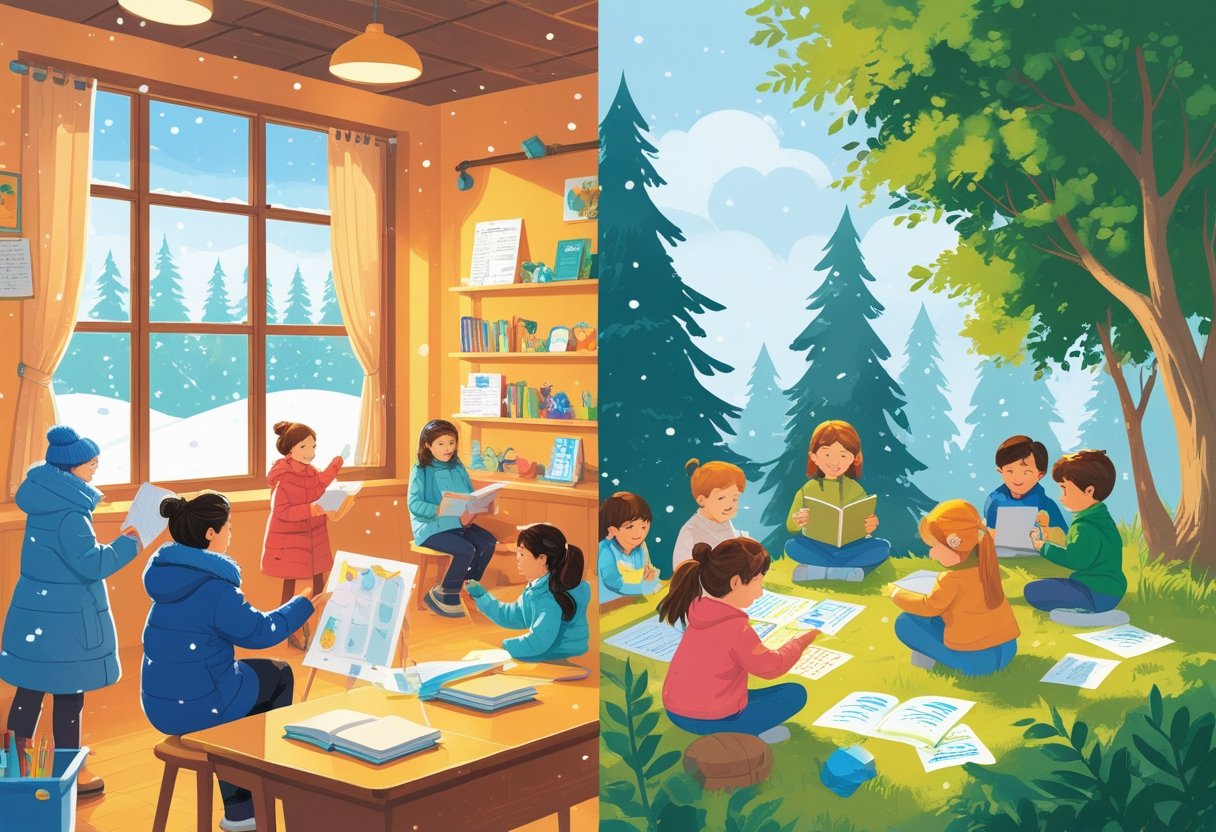
Our brains naturally respond to seasonal rhythms, and these changes create distinct learning environments throughout the year. Weather patterns influence everything from our energy levels to how we process information, whilst nature provides countless teaching moments that shift with each season.
The Science Behind Seasonal Changes
Our bodies follow internal clocks that respond to daylight and temperature shifts. When summer brings longer days, our brains produce more serotonin, which boosts mood and focus. Students often feel more alert and motivated during these bright months.
Winter works differently. Shorter days trigger higher melatonin production, making us naturally sleepier. This isn’t necessarily bad for learning though. The quieter energy of winter months can actually help with focused, reflective tasks.
Key seasonal brain changes:
- Spring: Mental renewal and fresh motivation
- Summer: Peak energy and enhanced memory
- Autumn: Increased creativity and introspection
- Winter: Better concentration for detailed work
Research shows that students’ cognitive patterns shift with changing seasons. We can work with these natural rhythms instead of fighting them.
Impact of Weather Patterns on Daily Life
Weather patterns create ripple effects that touch every part of our learning environment. Rainy days might keep students indoors, creating opportunities for quiet reading or detailed project work. Sunny weather naturally draws us outside, perfect for hands-on science experiments or outdoor maths lessons.
Temperature affects concentration levels too. Extremely hot days can drain mental energy, whilst crisp autumn air often sharpens focus. We’ve all noticed how a fresh spring morning can make everything feel possible.
Weather influences on learning:
- Rainy weather: Better for indoor focus and reflection
- Sunny conditions: Ideal for active, collaborative learning
- Cold temperatures: Enhanced attention to detail
- Warm weather: Increased social interaction and creativity
These patterns help us plan activities that match natural energy levels. When we align our teaching with weather rhythms, students engage more naturally with the material.
Adapting to Nature’s Classroom
Each season offers unique learning opportunities that we can weave into daily lessons. Spring’s growth cycles make biology come alive, whilst winter’s bare branches reveal tree structures more clearly. Seasonal changes provide real-world context for abstract concepts.
Autumn leaves demonstrate colour theory and mathematical patterns. Winter weather introduces physics concepts like friction and insulation. Summer gardens become living laboratories for chemistry and nutrition studies.
Seasonal learning opportunities:
- Seasonal observations: Track weather patterns and daylight changes
- Nature collections: Gather materials for science investigations
- Outdoor activities: Use natural spaces as extended classrooms
- Cultural connections: Explore seasonal traditions and celebrations
We can adapt our indoor environments to match seasonal rhythms too. Brighter lighting during darker months helps maintain energy levels. Seasonal decorations and nature displays bring the outside world into our learning spaces.
The key is flexibility. When we notice students feeling sluggish on grey winter days, we adjust our approach. Perhaps that’s the perfect time for cosy reading corners or detailed art projects that match the season’s contemplative mood.
Academic Performance in Winter Versus Summer
Students experience measurably different levels of focus, motivation, and learning retention between winter and summer months. Light exposure directly impacts cognitive function, whilst seasonal energy shifts affect productivity patterns and the well-known summer learning decline.
Influence of Seasonal Light on Study Focus
Natural light plays a crucial role in our ability to concentrate and process information effectively. During winter months, reduced daylight hours trigger higher melatonin production, which can leave students feeling drowsy and unfocused during traditional study hours.
Research shows that students perform attention-based tasks significantly better during summer when light exposure is optimal. The brain’s ability to maintain focus peaks when we receive adequate natural light, particularly in the morning hours.
Winter’s shorter days can disrupt our natural circadian rhythms. This disruption affects memory consolidation and makes it harder to stay alert during afternoon study sessions. Many students report feeling mentally “foggy” during darker months.
Light exposure strategies for winter studying:
- Position study areas near windows when possible
- Use bright desk lamps with daylight-balanced bulbs
- Take study breaks outdoors, even for brief periods
- Consider light therapy devices for severe winter fatigue
Summer’s abundance of natural light supports better cognitive performance. However, excessive heat can counteract these benefits by reducing mental agility and increasing fatigue.
Motivation and Productivity Fluctuations
Our motivation levels naturally ebb and flow with seasonal changes, directly impacting academic performance. Winter often brings what researchers call “seasonal productivity patterns” that affect how students approach their studies.
Seasonal motivation patterns:
| Season | Energy Level | Focus Quality | Best Study Activities |
|---|---|---|---|
| Winter | Lower | Deep, reflective | Reading, writing, analysis |
| Summer | Higher | Scattered | Group work, creative projects |
During winter months, students typically experience decreased dopamine levels, which affects motivation and reward-seeking behaviour. This biological shift can make it challenging to maintain consistent study routines or feel excited about academic goals.
However, winter’s quieter energy can actually benefit certain types of learning. The season’s natural inclination toward reflection makes it ideal for in-depth study, critical thinking, and complex problem-solving tasks.
Summer brings increased social energy and activity levels. Whilst this can boost motivation for collaborative learning and creative projects, it can also create distractions that interfere with focused study time.
The key lies in working with these natural rhythms rather than against them. We can harness winter’s contemplative energy for deep learning whilst using summer’s dynamic atmosphere for interactive and engaging study methods.
Managing the ‘Summer Slump’
Summer learning loss represents a significant challenge for academic performance, with research showing students can lose up to three months of reading progress during extended breaks. This phenomenon particularly affects students from disadvantaged backgrounds.
The summer slump occurs when academic skills deteriorate due to lack of structured learning activities. Without regular practice, students often return to school having forgotten key concepts and study habits they’d developed during the academic year.
Effective summer learning strategies:
- Maintain regular reading schedules, even with lighter material
- Practice maths skills through real-world applications
- Join summer programmes or learning clubs
- Set small, achievable weekly learning goals
Temperature extremes during summer can also impact cognitive performance. Studies demonstrate that students in non-air-conditioned environments perform worse on tests during heat waves compared to those in cooler conditions.
Creating structure during summer holidays helps maintain academic momentum. This doesn’t mean intensive studying, but rather keeping the mind engaged through educational activities, museum visits, or skill-building hobbies.
We recommend establishing “learning routines” that feel less formal than school but still provide intellectual stimulation. This approach helps bridge the gap between summer relaxation and autumn academic demands.
Mental Health During Different Seasons
Seasonal changes create powerful shifts in our mental wellbeing, affecting everything from mood and energy levels to learning capacity. Students face unique challenges during darker winter months when Seasonal Affective Disorder peaks, whilst summer brings its own mental health considerations that require different support strategies.
Understanding and Managing Seasonal Affective Disorder
Seasonal Affective Disorder (SAD) affects roughly 10% of the population, with symptoms peaking during autumn and winter months. This condition goes far beyond typical winter blues, creating genuine barriers to learning and academic success.
SAD symptoms include persistent low mood, fatigue, difficulty concentrating, and changes in sleep patterns. Students experiencing SAD often struggle with reduced cognitive function and memory problems. These challenges make it harder to absorb new information or maintain focus during lectures and study sessions.
Light exposure plays a crucial role in managing SAD symptoms. We recommend students spend at least 30 minutes outdoors each morning, even on cloudy days. Natural light helps regulate melatonin production and supports healthy sleep cycles.
Light therapy boxes can provide additional support during particularly dark months. These devices deliver 10,000 lux of bright light for 20-30 minutes each morning. Many students find this dramatically improves their mood and concentration levels.
Maintaining regular routines becomes essential during winter months. Consistent sleep schedules, regular meals, and structured study times help combat the disruption SAD causes to natural rhythms. We encourage students to treat these routines as non-negotiable appointments with themselves.
Supporting Student Well-being in Winter
Winter months present specific mental health challenges that directly impact learning outcomes. Shorter daylight hours and colder temperatures can trigger feelings of isolation and reduce motivation for academic work.
Social connections become more important during winter months. We encourage students to join study groups, attend campus activities, or simply maintain regular contact with friends and family. Isolation amplifies winter mental health struggles and creates additional barriers to academic success.
Physical activity provides powerful mental health benefits during darker months. Even brief walks between classes or indoor exercise sessions can boost serotonin levels and improve mood. Students who maintain winter exercise routines report better concentration and higher energy levels.
Vitamin D supplementation deserves serious consideration during winter months. Many students in northern climates develop deficiencies that contribute to low mood and reduced cognitive function. We recommend consulting healthcare providers about appropriate dosage levels.
Creating warm, comfortable study environments helps combat winter’s psychological effects. Good lighting, comfortable temperatures, and pleasant surroundings make learning feel more appealing during cold, dark months.
Promoting Positivity in Summer
Summer brings unique mental health considerations that affect learning capacity. Whilst many students feel more energetic during warmer months, heat stress can impair cognitive function and create different challenges for academic success.
High temperatures reduce concentration and slow reaction times. Students studying in non-air-conditioned environments often experience significant drops in mental performance. We recommend scheduling demanding cognitive tasks during cooler morning hours whenever possible.
Longer daylight hours can disrupt sleep patterns, leading to fatigue and reduced learning capacity. Students should maintain consistent bedtimes despite extended daylight and consider blackout curtains for better sleep quality.
Summer’s social opportunities can create pressure and anxiety for some students. The expectation to be constantly active and social doesn’t suit everyone’s personality or mental health needs. We encourage students to honour their own preferences rather than forcing participation in every summer activity.
Staying hydrated becomes crucial for maintaining mental clarity during hot weather. Even mild dehydration can affect concentration, memory, and mood. Students should aim for regular water intake throughout the day, particularly during outdoor activities or intensive study sessions.
Summer can trigger mood episodes in some individuals with bipolar disorder or other mental health conditions. The increased heat, light exposure, and social stimulation sometimes leads to manic or hypomanic episodes that disrupt learning routines.
Study Habits and Student Engagement Across the Year
Students naturally adjust their learning routines as seasons shift, with winter encouraging focused indoor study whilst summer presents unique challenges for maintaining concentration. We see distinct patterns in how engagement levels fluctuate throughout the year, requiring different approaches to keep learners motivated.
Changing Study Routines with the Seasons
Winter months bring about a natural shift towards more structured study habits. Students tend to spend longer periods indoors, creating opportunities for deep focus sessions.
The shorter daylight hours actually work in favour of concentrated learning. Many students find they develop stronger routines during winter months.
Winter study patterns typically include:
- Earlier evening study sessions (before fatigue sets in)
- Longer indoor study periods
- Increased use of artificial lighting and warm study spaces
However, we must watch for the challenges winter brings. Reduced sunlight exposure can lead to lower energy levels and decreased motivation.
Spring creates a transitional period where study habits begin to shift. Students often experience renewed energy and motivation as daylight hours increase.
The warmer weather encourages outdoor study sessions, which research shows can boost creativity and retention. Parks, gardens, and outdoor spaces become viable study locations again.
Summer completely transforms how students approach their learning routines. The extended daylight hours mean study sessions can happen much later in the evening when temperatures cool down.
Many students switch to early morning study periods during summer. This helps them avoid the afternoon heat whilst taking advantage of their peak energy levels.
Keeping Students Engaged in Summer Months
Summer presents unique engagement challenges that require creative solutions. The warm weather and longer days can make traditional indoor study feel restrictive.
Effective summer engagement strategies include:
- Creating cool, comfortable study environments
- Using natural light from large windows or covered outdoor areas
- Scheduling study sessions during cooler morning hours
- Incorporating more interactive and hands-on learning activities
Students often struggle with motivation during summer because the season feels more suited to relaxation than academic work. We need to acknowledge this natural inclination rather than fight against it.
Short, frequent study sessions work better than long marathon periods during hot weather. Students maintain better concentration when they can take regular breaks.
Visual learning materials become particularly important in summer. Bright, engaging resources help combat the natural tendency for attention to wander towards outdoor activities.
Group study sessions can boost engagement during warmer months. Students feel more motivated when learning becomes a social activity rather than a solitary task.
We’ve found that connecting learning topics to summer activities and experiences helps maintain interest. Real-world applications feel more relevant when students can immediately see connections to their seasonal experiences.
Embracing Seasonal Curriculum Planning
We can transform our teaching by weaving seasonal elements into our daily lessons, helping students connect their learning to the world around them. This approach works particularly well when we focus on weather patterns and natural changes, whilst adapting our subjects to match the energy levels that come with different times of year.
Integrating Weather and Nature into Lessons
We’ve found that weather patterns offer incredible teaching opportunities throughout the year. During winter months, we can explore frost formation in science class or measure temperature changes across different weeks.
Spring brings perfect moments for students to track plant growth. We encourage them to keep daily observation journals. Summer weather creates natural mathematics lessons when we calculate rainfall amounts or chart sunshine hours.
Winter Integration Ideas:
- Ice crystal formation experiments
- Measuring daylight hours
- Weather prediction activities
- Indoor nature observations
Summer Learning Opportunities:
- Outdoor ecosystem studies
- Solar energy experiments
- Garden measurement projects
- Weather data collection
Nature walks work brilliantly in any season. We take students outside to gather leaves in autumn or observe cloud formations during winter. These real-world experiences help students understand concepts better than textbooks alone.
The key is matching our lessons to what’s happening outside our classroom windows. When students see connections between their learning and daily weather, engagement jumps dramatically.
Tailoring Subjects for Maximum Engagement
We adapt each subject to work with seasonal energy patterns. Mathematics becomes more exciting when we use winter sports statistics or summer holiday planning problems.
During colder months, students often have shorter attention spans. We break lessons into smaller chunks and use more hands-on activities. Winter geometry lessons work well with snowflake patterns or Christmas decoration measurements.
Subject Adaptations by Season:
| Subject | Winter Focus | Summer Focus |
|---|---|---|
| Science | Indoor experiments, weather tracking | Outdoor investigations, plant studies |
| Mathematics | Pattern work, data analysis | Measurement, outdoor calculations |
| English | Creative writing, indoor reading | Nature poetry, adventure stories |
Summer brings higher energy levels, perfect for longer projects and outdoor activities. We plan field trips and extended writing assignments during warmer weather.
Language arts flourishes when we connect seasonal curriculum to students’ experiences. Winter stories about cosy nights indoors resonate differently than summer tales of beach adventures.
We’ve learned that fighting against seasonal rhythms exhausts both teachers and students. Instead, we work with these natural patterns to create more effective learning experiences.
Harnessing Seasonal Events for Enriched Learning
Seasonal celebrations and hands-on activities create natural bridges between classroom learning and real-world experiences. These moments transform abstract concepts into tangible, memorable lessons that students carry with them long after the season ends.
Harvest Festivals and Cultural Celebrations
Harvest festivals offer brilliant opportunities to weave multiple subjects into one engaging experience. We can explore mathematics through measuring ingredients, calculating quantities for large groups, and understanding fractions whilst preparing traditional foods.
Science comes alive when students examine different crops, learn about plant life cycles, and discover how weather affects growing seasons. Geography lessons naturally emerge as we trace where various foods originate and how they travel to our tables.
Cultural celebrations throughout winter and summer provide windows into different traditions and histories. Winter festivals like Diwali or Christmas connect students to diverse communities, whilst summer celebrations such as midsummer festivals teach about ancient customs and astronomical events.
These events encourage students to interview family members, research traditions, and present findings to classmates. We’ve found that this personal connection makes learning stick far better than textbook exercises alone.
The social aspect cannot be overlooked either. Planning celebrations builds teamwork skills, develops communication abilities, and creates positive memories that enhance the overall learning environment.
Hands-On Projects by Season
Winter projects thrive indoors with focused, detailed work that matches the season’s quieter energy. We can create weather tracking stations, build simple machines, or develop storytelling projects that capture the season’s contemplative mood.
Winter Project Ideas:
- Indoor garden experiments with grow lights
- Weather prediction charts and data collection
- Historical research projects about winter traditions
- Science investigations into insulation and heat retention
Summer projects burst with outdoor possibilities and active learning experiences. The longer daylight hours and warmer weather open doors to field studies, nature photography, and community-based investigations.
Summer Project Ideas:
- School garden maintenance and harvest documentation
- Local wildlife observation and recording
- Community interviews about summer traditions
- Solar energy experiments and measurements
Each season brings unique materials and inspiration. Autumn leaves become art supplies and science specimens, whilst spring flowers provide perfect subjects for botanical drawings and pollination studies.
The key lies in matching project complexity to students’ seasonal energy levels and available resources.
Frequently Asked Questions
Summer brings longer days and clearer roads, whilst winter presents unique challenges with shorter daylight hours and potentially hazardous conditions. These seasonal differences directly impact your learning experience, motivation levels, and the types of skills you’ll develop behind the wheel.
What are the benefits of starting my driving lessons during the summer months?
Summer offers brilliant conditions for new drivers to build confidence. You’ll have extended daylight hours, which means more time to practise without worrying about driving in the dark.
The weather tends to be more predictable during summer months. Clear, dry roads provide excellent grip and visibility, allowing you to focus purely on mastering fundamental skills like steering, gear changes, and road positioning.
Warmer temperatures mean you won’t need to deal with frosted windows or warming up the car. This removes additional steps from your pre-driving routine, letting you concentrate on the actual driving techniques.
Summer holidays often provide more flexible scheduling options. You can book intensive courses or frequent lessons without school or work commitments getting in the way.
Can the colder weather in winter affect my learning process when mastering driving skills?
Winter conditions absolutely influence how quickly you develop certain driving abilities. Cold weather creates additional challenges that can slow down your initial progress as you adapt to new circumstances.
Your hands might feel less flexible in cold temperatures, affecting your grip on the steering wheel and gear stick. This can make precise movements more difficult until you’ve warmed up properly.
Shorter daylight hours mean you’ll likely encounter darker conditions sooner in your learning journey. Night driving requires different skills and heightened concentration compared to daytime practice.
However, learning in winter does offer advantages. You’ll develop superior hazard awareness and car control skills that summer-only learners might lack when they eventually face challenging conditions.
How does daylight saving time impact driving lessons in the winter season?
The clocks changing in autumn dramatically reduces available daylight for evening lessons. What used to be bright 4 PM sessions suddenly become dusk or nighttime driving practice.
This shift often catches learner drivers off guard. You might find yourself dealing with headlights, street lighting, and reduced visibility much earlier in your learning process than expected.
Many driving instructors adjust their scheduling during winter months. Morning and early afternoon slots become more popular as everyone tries to maximise the limited daylight hours available.
The transition period immediately after the clocks change can be particularly tricky. Your body clock needs time to adjust, which might temporarily affect your concentration and reaction times during lessons.
What should I consider when booking my driving practice sessions, given the seasonal changes?
Winter scheduling requires more strategic thinking than summer booking. We recommend prioritising morning and early afternoon slots to make the most of natural daylight.
Weather flexibility becomes crucial during colder months. Book lessons with instructors who offer reasonable cancellation policies for dangerous conditions like ice, heavy snow, or flooding.
Consider intensive courses during school holidays if you’re learning in winter. February half-term or Easter break can provide excellent opportunities for concentrated practice in improving conditions.
Summer booking fills up quickly due to increased demand from students and holiday schedules. Plan ahead and secure your preferred times well in advance, especially for test dates.
Are there any particular driving challenges I should prepare for when learning in winter conditions?
Ice and frost create the most significant hazards for winter learners. You’ll need to master gentle acceleration, earlier braking, and wider turning circles to maintain control on slippery surfaces.
Reduced visibility from rain, fog, or early darkness requires enhanced observation skills. You’ll learn to use mirrors more frequently and maintain greater following distances behind other vehicles.
Car preparation becomes essential during winter months. You’ll need to understand how to clear windows properly, check tyre pressures in cold weather, and ensure lights work correctly.
Pedestrians and cyclists behave differently in winter conditions too. People wear darker clothing and move more unpredictably around puddles or icy patches, requiring increased vigilance from drivers.
How can I stay motivated and progress with my driving education during the less favourable winter weather?
Setting smaller, achievable goals helps maintain momentum during challenging winter months. Focus on mastering specific skills like smooth gear changes or confident roundabout approaches rather than rushing towards your test.
Use theory study time effectively when weather cancels practical lessons. This keeps you engaged with driving education even when you can’t get behind the wheel.
Remember that winter driving skills make you a more complete driver. The patience and precision you develop during difficult conditions will serve you brilliantly throughout your entire driving career.
Connect with other learner drivers online or through your instructor. Sharing experiences and encouragement helps everyone stay positive during the more demanding winter learning period.
Consider simulator sessions or driving apps during particularly harsh weather. Whilst they can’t replace real driving experience, they keep your reflexes sharp and maintain your connection to driving skills.
Ready to pass in weeks, not months?
LPOD Academy runs tailored intensive driving courses from 10 to 50 hours across most of the UK, with your theory and practical test support included.
Ready to Book Driving Lessons?
LPOD Academy offers intensive driving courses across the UK. Find your nearest location: