

Published 4 November 2025, updated 3 August 2026
Tips for Learning on Busy Dual Carriageways: Confident, Safe Driving Made Simple
Learning to drive on busy dual carriageways can feel overwhelming when you’re starting out. The combination of high speeds, multiple lanes, and fast-moving traffic creates a challenging environment that tests even confident learners. Many new drivers find themselves gripping the steering wheel tighter as they approach these roads for the first time.
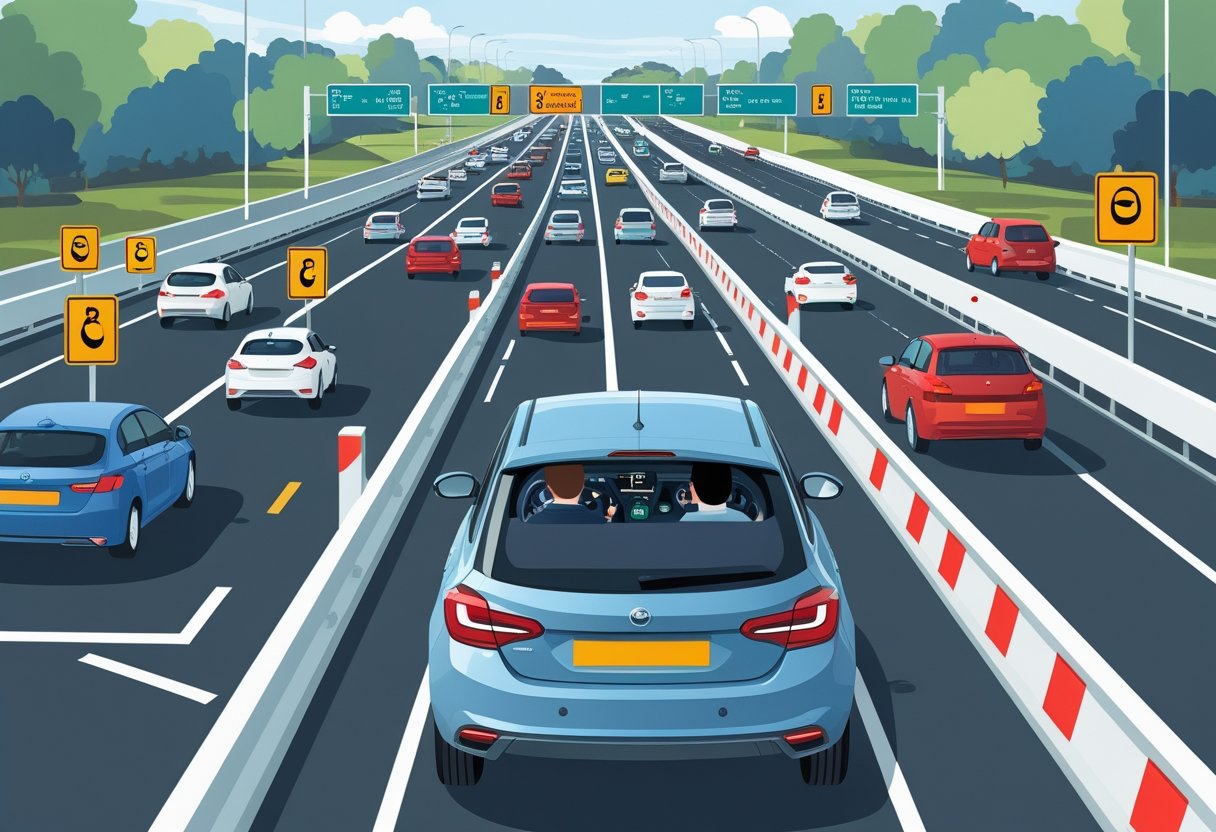
The key to mastering dual carriageways lies in understanding proper lane discipline, maintaining safe following distances, and building your confidence through gradual exposure to busier traffic conditions. With the right techniques and mindset, what initially feels intimidating becomes manageable and routine. We’ve all been there, watching other drivers navigate these roads with apparent ease whilst we wonder how they make it look so effortless.
The good news is that dual carriageways are actually designed to handle large volumes of traffic safely and efficiently. Once you grasp the fundamental rules and develop the right habits, you’ll discover that these roads can be less stressful than navigating busy town centres. Our practical tips will help you approach dual carriageways with growing confidence rather than anxiety.
Key Takeaways
- Master lane discipline by staying left unless overtaking and returning promptly after passing other vehicles
- Maintain proper following distances and use slip roads effectively to join and exit safely
- Build confidence gradually through practice whilst staying alert and calm in busy traffic situations
Faster roads feel manageable once the fundamentals are secure, and an intensive driving course covering dual carriageways builds that assurance quickly.
Understanding Dual Carriageways and Their Rules
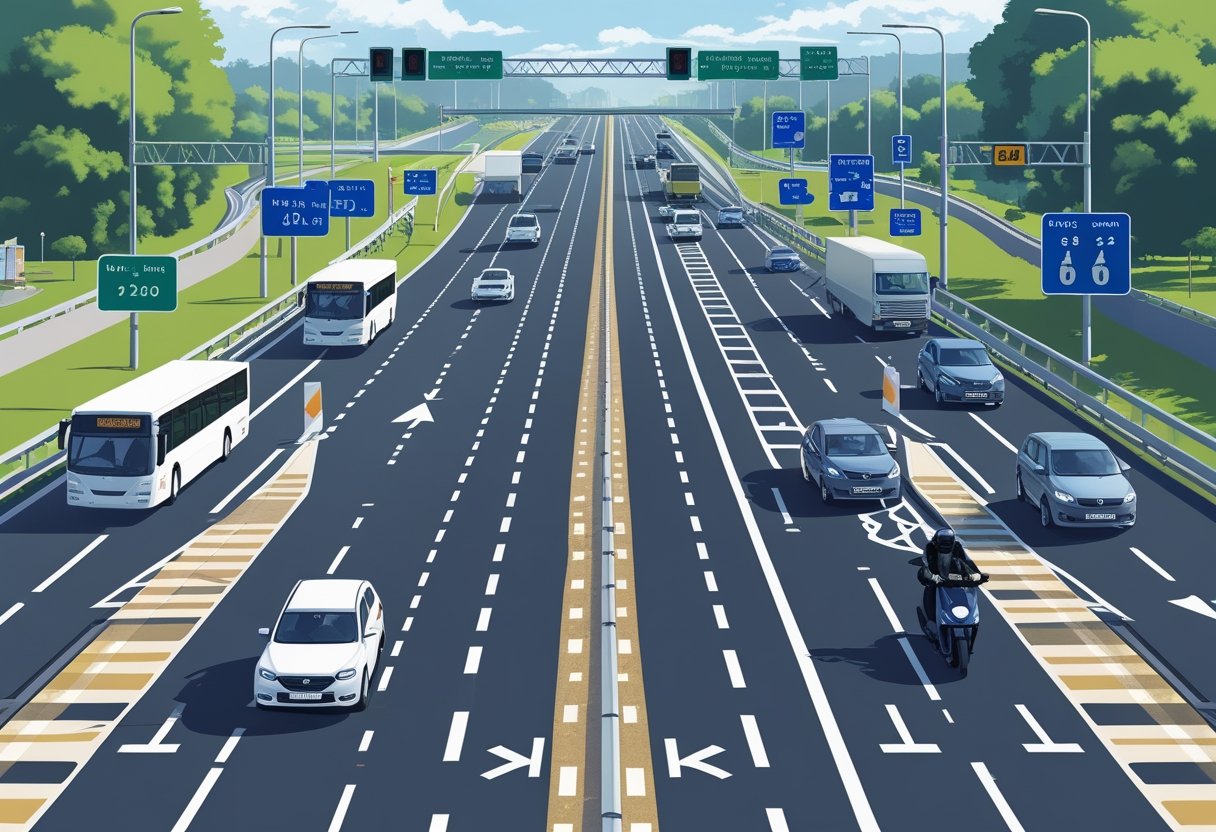
Before we dive into busy traffic situations, let’s establish what dual carriageways are and how they differ from other roads. We’ll cover the fundamental rules that keep everyone safe and the specific distinctions that matter most to new drivers.
Defining Dual Carriageway Roads
A dual carriageway is simply a road where traffic travelling in opposite directions gets separated by a physical barrier. This central reservation might be anything from a strip of grass to concrete barriers or metal railings.
The key point here is separation. Unlike single carriageways where only painted lines divide traffic, dual carriageways have that crucial physical barrier preventing head-on collisions.
Many learners think “dual carriageway” means two lanes each way, but that’s not true. We can have dual carriageways with two, three, or even more lanes in each direction. The defining feature is always that central barrier, not the number of lanes.
Common types include:
- Two-lane dual carriageways (most common)
- Three-lane dual carriageways (busier routes)
- Four or more lanes (major arterial roads)
Key Differences from Motorways
Whilst both dual carriageways and motorways have multiple lanes and central reservations, several important differences affect how we drive on them.
Speed limits differ significantly:
| Road Type | Speed Limit |
|---|---|
| Dual Carriageways | 70mph (cars) |
| Motorways | 70mph (cars) |
The speeds are the same, but dual carriageways often have more variable speed limits and temporary restrictions.
Traffic composition varies greatly. Dual carriageways allow cyclists, pedestrians, and slower vehicles that motorways prohibit. We’ll encounter tractors, horse riders, and local traffic mixing with faster vehicles.
Junction types create different challenges. Motorways only have slip roads and services, but dual carriageways feature roundabouts, traffic lights, and regular junctions. This means more stopping, starting, and merging situations.
Essential Rules for Beginner Drivers
Lane discipline forms the foundation of safe dual carriageway driving. Always use the left lane unless you’re overtaking, then return immediately after passing.
On two-lane dual carriageways, the left lane handles normal traffic whilst the right lane serves for overtaking. On three-lane roads, we use the left for slower traffic, middle for steady speeds, and right primarily for overtaking.
Overtaking rules are straightforward but crucial:
- Only overtake on the right
- Signal clearly before moving
- Check mirrors and blind spots
- Maintain safe distances throughout
- Return to the left when safe
Speed management requires constant attention. The 70mph limit applies to cars, but we must adjust for conditions. Rain, fog, or heavy traffic demands slower speeds regardless of posted limits.
Safe following distances become critical at higher speeds. We recommend the two-second rule in good conditions, doubling this in wet weather. Pick a fixed point ahead and count the gap between the car in front passing it and you reaching the same spot.
Mastering Lane Discipline and Road Positioning
Good lane discipline keeps you safe and helps traffic flow smoothly on dual carriageways. We’ll focus on staying in the correct lane, making safe changes when needed, and avoiding common mistakes that frustrate other drivers.
Staying in the Left-Hand Lane
The left-hand lane is your home base on dual carriageways. This is where you should spend most of your time, especially when you’re learning.
Think of the left-hand lane as the default choice. Unless you’re overtaking or turning right, this is where you belong. Many new drivers feel tempted to use the right lane because it feels less crowded, but this creates problems for faster traffic.
When approaching junctions or slip roads, position yourself slightly towards the right side of the left-hand lane. This gives joining traffic more space and shows you’re aware of what’s happening around you.
Key positioning tips:
- Stay centred within lane markings
- Avoid drifting between lanes
- Keep a steady course without weaving
- Check your mirrors regularly to maintain awareness
If you’re driving slower than the traffic flow, don’t worry about cars behind you. Stay in the left-hand lane and let them overtake safely when they can.
When and How to Change Lanes Safely
Lane changes on dual carriageways need careful planning and execution. We recommend the mirror, signal, manoeuvre routine every time.
Start checking your mirrors well before you need to change lanes. Look in your interior mirror first, then your right wing mirror. Signal early to give other drivers plenty of warning about your intentions.
Check your blind spot with a quick shoulder check before moving. This catches any vehicles your mirrors might have missed. Move gradually into the new lane rather than making sharp movements.
Safe lane changing steps:
- Plan ahead and identify your exit early
- Check mirrors and signal in good time
- Wait for a suitable gap in traffic
- Perform a blind spot check
- Move smoothly into the new lane
Never change lanes at the last minute or force your way into small gaps. If you miss your exit, carry on to the next one rather than making dangerous movements.
Avoiding Lane Hogging
Lane hogging happens when drivers stay in the right lane unnecessarily. This blocks faster traffic and creates dangerous situations as cars try to overtake on the left.
Move back to the left-hand lane as soon as you’ve finished overtaking. Don’t wait until you can see the overtaken vehicle in your interior mirror. Once you can see their headlights in your wing mirror, it’s safe to return.
Some drivers worry about constantly changing lanes, but this is normal on busy dual carriageways. The right lane should only be used for active overtaking, not cruising.
Signs you might be lane hogging:
- Cars are overtaking you on the left
- You’ve been in the right lane for several minutes
- There’s a long clear space in the left lane beside you
- Traffic is building up behind you
Remember, other drivers get frustrated with lane hogging, and it can lead to aggressive behaviour. By keeping left when possible, you help everyone get to their destination safely and efficiently.
Overtaking with Confidence and Safety
Overtaking on dual carriageways requires sharp judgement, precise execution, and a healthy respect for the speeds involved. The key lies in reading traffic patterns, timing your moves perfectly, and never rushing back into your lane.
Judging When It’s Safe to Overtake
Before you even think about moving out, scan the road ahead for at least 200 metres. Look for upcoming slip roads, lane closures, or slower traffic that might affect your overtaking plan.
Check your mirrors thoroughly. The right-hand mirror shows approaching traffic, whilst your rear-view mirror reveals the complete picture behind you. Never rely on mirrors alone though.
Turn your head to check blind spots. That quick shoulder check catches motorcycles or cars that mirrors might miss. It takes a split second but could prevent a serious collision.
Consider the speed difference between you and the vehicle you’re overtaking. If they’re doing 50mph and you’re doing 60mph, you’ll need significant road space to complete the manoeuvre safely.
Weather conditions change everything. Rain, fog, or strong winds mean you need much larger gaps than usual. When visibility drops, wait for clearer conditions rather than taking risks.
Look for vehicles indicating to change lanes ahead. Other drivers might have the same overtaking idea, so watch for early warning signs of their intentions.
Executing Overtaking Manoeuvres
Signal early and clearly. Give other drivers plenty of notice about your intentions, especially faster vehicles approaching from behind who might need to adjust their speed.
Accelerate smoothly but decisively once you’ve committed to the move. Hesitant overtaking creates dangerous situations for everyone involved. Build up speed whilst still in the left lane if possible.
Maintain a safe lateral distance from the vehicle you’re passing. Heavy goods vehicles create air turbulence that can affect your steering, so give them extra space.
Keep checking your mirrors during the overtake. Traffic situations change rapidly at dual carriageway speeds, and you need to stay aware of what’s happening around you.
Don’t get boxed in. If traffic conditions change whilst you’re overtaking, be ready to drop back safely rather than forcing the manoeuvre.
Stay calm if the overtake takes longer than expected. Panicking leads to poor decisions. Complete the move safely rather than rushing.
Returning to Your Lane Smoothly
Wait until you can see the complete front of the overtaken vehicle in your rear-view mirror before indicating left. This ensures adequate braking distance between you and them.
At 70mph, you need roughly 96 metres to stop in good conditions. That’s about 20 car lengths, so don’t cut back in with just two or three car lengths to spare.
Signal left in good time before moving back. Other drivers need to understand your intentions, particularly anyone approaching from behind in the overtaking lane.
Move back gradually rather than sharply jerking the wheel. Sudden movements at high speeds can destabilise your vehicle, especially in crosswinds.
Check your mirrors again as you return to the left lane. Make sure you haven’t misjudged the gap or missed a vehicle that might be affected by your move.
Cancel your indicator once you’ve completed the lane change. It sounds obvious, but it’s easy to forget when you’re concentrating on other aspects of the manoeuvre.
Building Overtaking Confidence
Start with quieter dual carriageways where traffic is lighter and you have more time to think. Practice reading traffic patterns and judging safe gaps without the pressure of heavy congestion.
Work with an experienced driver initially. Having someone guide you through the decision-making process builds confidence much faster than struggling alone.
Focus on one aspect at a time. Master mirror checks and blind spot awareness before worrying about perfect timing. Each skill builds on the previous one.
Don’t feel pressured by other drivers. If someone’s tailgating you in the right lane, complete your overtake safely rather than rushing. Their impatience isn’t your emergency.
Learn to abandon overtakes when conditions change. Pulling back safely shows good judgement, not weakness. The gap will often reappear within a few minutes.
Practice makes permanent, not perfect. The more overtaking experience you gain in safe conditions, the more natural these judgements become in challenging situations.
Navigating Speed Limits and Maintaining Control
The speed limit on most dual carriageways sits at 70 mph, though conditions and signage can change this quickly. Learning to adapt your speed smoothly whilst maintaining steady control helps you blend confidently with faster traffic.
Knowing the 70 mph Rule and Variations
Most dual carriageways across the UK carry a 70 mph speed limit for cars and motorcycles. This matches motorway speeds, which makes dual carriageways excellent practice grounds for faster driving.
However, don’t assume every dual carriageway follows this rule. Some sections drop to 60 mph, 50 mph, or even 40 mph through built-up areas or construction zones.
Key speed variations include:
- Urban dual carriageways: often 40-50 mph
- Temporary restrictions: roadworks or accidents
- Weather-related limits: electronic signs during poor conditions
We always recommend checking overhead gantries and roadside signs every few hundred metres. Speed cameras frequently monitor these zones, and limits can change without much warning.
Different vehicle types face varying restrictions too. Lorries and buses typically stick to 60 mph maximum, whilst cars pulling caravans drop to the same limit.
Adapting to Changing Conditions
Wet roads, fog, or heavy traffic demand immediate speed adjustments, regardless of posted limits. The 70 mph limit represents ideal conditions, not a target to hit in all weather.
Rain reduces grip dramatically. We suggest dropping 10-15 mph below the limit when roads glisten, and even more during heavy downpours.
Fog creates the trickiest conditions. If you can’t see the car ahead clearly, you’re driving too fast for the visibility. Some drivers make the mistake of following rear lights ahead, but this creates dangerous chain reactions when someone brakes suddenly.
Traffic density affects your choices too:
- Heavy traffic: match the flow, usually 50-60 mph
- Light traffic: build up gradually to the speed limit
- Rush hour: expect stop-start conditions despite high limits
Watch for electronic variable speed signs during peak times. These often display temporary limits like 50 mph to manage traffic flow smoothly.
Techniques for Steady Speed
Maintaining consistent speed takes practice, especially when nervous about faster traffic. Cruise control helps enormously if your car has it, but many learner vehicles don’t include this feature.
Without cruise control, focus on gentle accelerator pressure. Rest your right foot lightly and make tiny adjustments rather than lifting off completely.
Practical techniques include:
- Check your speedometer every 10-15 seconds
- Use engine braking on downhill sections
- Anticipate hills and adjust speed gradually
- Keep a light grip on the steering wheel
Many learners struggle with speed fluctuation, unconsciously slowing down when concentrating on other tasks like checking mirrors. This creates frustration for following drivers and disrupts traffic flow.
Practice maintaining 60 mph on quieter A-roads before attempting dual carriageway speeds. This builds muscle memory for steady accelerator control without the pressure of faster surrounding traffic.
Remember that smooth, predictable driving matters more than hitting exact speeds. Other drivers can anticipate your movements when you maintain consistent pace and positioning.
Safe Following Distances and Stopping Strategies
Keeping the right distance from other cars and knowing how to stop safely can make all the difference on busy dual carriageways. We’ll show you how to use the two-second rule properly and handle tricky situations like tailgaters or sudden emergency stops.
Understanding Safe Following Distance
Safe following distance means leaving enough space between your car and the vehicle ahead so you can stop without crashing into them. On dual carriageways where speeds reach 70 mph, this distance becomes absolutely critical for your safety.
The faster you’re travelling, the more space you need. At 30 mph, you might need about three car lengths. But at 70 mph on a dual carriageway, you’ll need much more space to stop safely.
Your stopping distance includes two parts:
- Thinking distance: How far you travel whilst your brain processes what’s happening
- Braking distance: How far your car travels once you hit the brakes
Weather makes everything worse. Rain, ice, or fog can double your stopping distance. We always tell our learners to increase their following distance when conditions aren’t perfect.
Remember that heavy vehicles need even more space to stop than cars. If you’re following a lorry, give them extra room because they can’t stop as quickly as you can.
Applying the Two-Second Rule
The two-second rule is brilliant because it works at any speed. Pick a landmark like a sign or bridge that the car ahead passes. Count “one thousand and one, one thousand and two.” If you pass that same spot before finishing your count, you’re too close.
Here’s how to do it properly. Watch the rear of the car in front as it passes a fixed object. Start counting immediately using the “one thousand and” method to get accurate seconds.
When to increase your following time:
- Poor weather conditions: Use four seconds in rain
- Night driving: Visibility is reduced
- Heavy traffic: More unpredictable stops
- Feeling tired: Your reactions slow down
Practice this technique on quieter roads first. Once it becomes second nature, you’ll find it much easier to judge safe distances on busy dual carriageways.
Some learners worry about other cars cutting in front when they leave proper space. Don’t let this pressure you into following too closely. Your safety matters more than someone else’s impatience.
Dealing with Tailgaters
Tailgaters create dangerous situations, especially on high-speed dual carriageways. When someone follows too closely behind you, resist the urge to speed up or brake suddenly.
Your best strategies include:
- Increase your own following distance: This gives you more time to brake gently
- Move to the left lane: Let aggressive drivers pass safely
- Stay calm: Don’t take their behaviour personally
- Signal early: Give them more warning of your intentions
If you’re in the left lane and can’t move over, maintain steady speed and avoid sudden movements. Gentle, gradual braking gives the tailgater more time to react.
Never brake-check or try to “teach them a lesson.” This creates extremely dangerous situations that could cause serious accidents involving multiple vehicles.
Consider pulling into a service area if someone’s behaviour feels threatening. Your safety always comes first, and there’s no shame in removing yourself from a dangerous situation.
Reacting to Sudden Stops
Emergency stops on dual carriageways happen without warning. A car might brake hard for debris, an animal, or a breakdown ahead. Your reaction needs to be swift but controlled.
Follow this sequence:
- Check your mirrors quickly
- Brake firmly and progressively
- Keep steering straight
- Don’t swerve suddenly
Progressive braking means starting firm and increasing pressure gradually. This technique helps prevent skidding whilst stopping in the shortest distance possible.
Modern cars have ABS brakes that prevent wheel lock-up. If your car has ABS, brake hard and let the system do its work. You’ll feel pulsing through the pedal, which is completely normal.
Always check what’s happening behind you as you brake. If you see a vehicle approaching fast, you might need to ease off slightly to avoid being rear-ended.
Keep both hands firmly on the steering wheel during emergency braking. Avoid the temptation to swerve around obstacles unless you’re absolutely certain it’s safe.
Confident Joining and Leaving via Slip Roads
Slip roads are your gateway to mastering dual carriageway driving, giving you dedicated space to match traffic speeds and merge smoothly. Getting comfortable with these entry and exit points means building speed efficiently, timing your moves perfectly, and reading the road signs that guide your journey.
Using Slip Roads for Merging
The slip road is where everything clicks into place for confident merging. We need to think of it as our acceleration zone, not just a place to dawdle along hoping for a gap.
Build speed early. As soon as we’re on the slip road, we should start building up to match the dual carriageway’s traffic flow. Most dual carriageways have speed limits of 70mph, so we’re aiming to reach that speed (or whatever the traffic is doing) before we need to merge.
Check mirrors constantly. Our interior and right-hand mirrors become our best friends here. We need to know what’s happening behind us and alongside us at all times.
The merge itself requires perfect timing. We look for a suitable gap in the left lane whilst still accelerating. If the first gap doesn’t work, we keep going until we find one that does.
Never stop on a slip road unless traffic ahead forces us to. Stopping makes merging incredibly difficult and dangerous because we lose our speed advantage.
Some drivers make the mistake of trying to merge too early. We should use the full length of the slip road to get our speed right and find the perfect moment to join the traffic flow.
Exiting Dual Carriageways Safely
Getting off a dual carriageway smoothly is just as important as joining it. We need to plan ahead and use the exit slip road properly to keep traffic flowing safely.
Signal early but not too early. We indicate left as we approach our exit, giving other drivers plenty of warning about our intentions. Signalling too soon can confuse drivers if there are multiple exits close together.
Position matters. We should already be in the left lane well before our exit approaches. Last-minute lane changes create dangerous situations for everyone.
Once we’re on the exit slip road, we can start reducing speed gradually. The slip road gives us space to slow down without affecting the main carriageway traffic behind us.
Watch for sharp bends. Many exit slip roads have tight curves with much lower safe speeds than the dual carriageway. We might see warning signs showing recommended speeds of 30mph or 40mph.
Never change our mind halfway down an exit slip road. If we’ve taken the wrong exit, it’s safer to continue and find another route back than to try reversing or cutting back onto the main carriageway.
Reading Road Signs and Markings
Road signs and markings on dual carriageways give us vital information about what’s coming up. Learning to read them quickly helps us make better decisions.
Blue signs indicate we’re on or approaching a motorway or dual carriageway. These signs show destinations and junction numbers, helping us plan our route.
Countdown markers appear before exits, showing three, two, and one diagonal white lines. These help us judge exactly where the slip road begins.
Lane markings show us which lanes lead where. Some lanes might be exit only, while others continue on the main carriageway. We need to read these markings early to get into the correct position.
Advisory speed signs on slip roads are there for good reason. They show the safest speed for tight bends or merging areas.
Distance signs help us prepare for our exit. When we see our destination listed, we know to start thinking about moving to the left lane if we’re not already there.
Overhead gantry signs provide real-time information about traffic conditions, speed limits, or lane closures ahead. These electronic signs can change quickly, so we need to check them regularly.
Staying Calm, Alert, and Empowered in Busy Traffic
Learning to drive on dual carriageways means developing strong mental skills alongside physical driving techniques. We’ll help you manage the stress that comes with high-speed traffic, sharpen your focus when everything feels overwhelming, and tackle those natural nerves that every new driver experiences.
Managing Stress on Busy Dual Carriageways
Dual carriageway stress is completely normal, and we want you to know that every experienced driver felt exactly the same way when they started. The key is recognising when tension creeps in and having practical tools ready.
Physical stress signals include tight shoulders, clenched jaw, or holding your breath. When you notice these, try this simple technique: take three deep breaths whilst keeping your eyes on the road. Release your shoulders on each exhale.
Keep your driving position comfortable. Adjust your seat so your arms have a slight bend when holding the steering wheel. This prevents muscle fatigue during longer journeys.
Music can be your friend on dual carriageways. Choose something calm rather than energetic tracks that might make you feel rushed. Some learners prefer silence to focus better, whilst others find gentle background music soothing.
If stress becomes overwhelming, plan your escape route. Know where the next services or safe exit point is located. Having this mental backup plan often reduces anxiety significantly.
Preparation matters enormously. Check your mirrors are properly positioned before joining fast-moving traffic. Ensure your seat gives you clear visibility. These small checks build confidence from the moment you start driving.
Building Awareness and Focus
Dual carriageway awareness means processing multiple pieces of information simultaneously whilst maintaining smooth control of your vehicle. We recommend developing a scanning pattern that becomes second nature.
Check these areas every 8-10 seconds:
- Mirrors: Rearview, left wing, right wing
- Speedometer: Maintain appropriate speed
- Road ahead: Look 12-15 seconds ahead
- Lane positions: Know who’s beside you
Your peripheral vision becomes crucial on busy dual carriageways. Practice noticing movement in your side vision whilst keeping your main focus ahead. This helps you spot vehicles changing lanes early.
Anticipate other drivers’ actions by watching their positioning. A car drifting towards lane markings might be preparing to change lanes. Lorries often signal earlier than cars, so watch for their indicators.
Avoid tunnel vision during stressful moments. When traffic gets heavy, some learners focus only on the car directly ahead. Instead, keep scanning the full traffic picture around you.
Minimise in-car distractions completely. Put your phone in airplane mode, ask passengers to help navigate rather than chat, and avoid adjusting radio stations whilst driving. Your brain needs all available processing power for traffic awareness.
Dealing with High-Speed Road Nerves
High-speed nerves often stem from feeling out of control or unprepared for the pace of dual carriageway traffic. The solution lies in building your confidence gradually and understanding that nervousness actually sharpens your attention.
Start with quieter dual carriageways during off-peak hours. Sunday mornings or mid-afternoon weekdays typically offer lighter traffic. This allows you to experience higher speeds without the pressure of heavy congestion.
Speed building should happen naturally. Don’t force yourself to reach 70mph immediately. Build up gradually: 50mph, then 60mph, then national speed limit. Your comfort zone will expand with each successful journey.
Remember that other drivers expect predictable behaviour. Maintain steady speeds, signal clearly, and avoid sudden movements. Most drivers are helpful when they can anticipate what you’re doing.
Practice positive self-talk instead of focusing on what could go wrong. Replace “I can’t handle this traffic” with “I’m learning to drive confidently on busy roads.” Your internal dialogue directly affects your stress levels.
Breathing techniques work brilliantly for road nerves. Try the 4-7-8 method: breathe in for 4 seconds, hold for 7, exhale for 8. This activates your body’s calm response whilst keeping you alert and focused on driving safely.
Frequently Asked Questions
Learning on busy dual carriageways brings up loads of questions, from building confidence around fast traffic to mastering safe distances and perfecting your merging technique. Here are the answers to help you tackle these high-speed roads with skill and assurance.
What strategies can help boost confidence when navigating through busy dual carriageways?
We find that starting with quieter dual carriageways during off-peak hours works wonders for building your confidence. Practice the basics when there’s less pressure from heavy traffic.
Familiarise yourself with the road layout before you drive. Use online maps to study slip roads, junctions, and lane arrangements so nothing catches you off guard.
Keep your speed steady and appropriate for conditions. Don’t feel pressured to match the fastest vehicles – driving at a comfortable pace within the speed limit is perfectly fine.
Plan your moves well ahead. Signal early, check mirrors frequently, and give yourself plenty of time to change lanes or exit safely.
Remember that other drivers expect confident, predictable behaviour. Clear signals and smooth movements help everyone around you anticipate your intentions.
Could you share some top tips for maintaining safe following distances amidst the hustle and bustle of heavy dual carriageway traffic?
The two-second rule remains your best friend, even when traffic feels relentless. Pick a fixed point ahead and count “one thousand and one, one thousand and two” after the car in front passes it.
Double this distance in wet or foggy conditions. Poor weather dramatically increases stopping distances, so that four-second gap becomes essential for safety.
Resist the temptation to close gaps when other drivers cut in. Simply ease off the accelerator slightly to rebuild your safe distance rather than hitting the brakes hard.
Watch for brake lights several cars ahead, not just the vehicle directly in front. This early warning system gives you precious extra seconds to react smoothly.
Heavy traffic often means stop-start conditions. Leave extra space so you can roll forward gradually instead of constant braking and accelerating.
How can a learner driver effectively practise lane discipline during peak times on busy dual carriageways?
Start by mastering the “keep left unless overtaking” principle during quieter periods. This fundamental rule becomes second nature with practice before you face rush hour chaos.
Use the left lane as your home base. Return here after every overtaking manoeuvre, even if you plan to overtake again soon.
On three-lane dual carriageways, treat the middle lane as a temporary overtaking space, not a cruising lane. Many learners make this mistake and block faster traffic.
Practice smooth, decisive lane changes rather than hesitant movements. Check mirrors, signal clearly, and move confidently when you have a safe gap.
Watch experienced drivers and learn from their positioning. Notice how they anticipate slow traffic and move lanes early rather than getting stuck behind lorries.
Plan your lane choice based on upcoming exits or junctions. Get into the correct lane well before you need it, especially during busy periods.
What advice would seasoned drivers offer for mastering safe merging and exiting on fast-paced dual carriageways?
Build up speed on slip roads to match the flow of traffic you’re joining. Accelerate decisively rather than crawling onto a 70mph carriageway at 40mph.
Look for gaps early and commit to them. Hesitation creates dangerous situations when traffic is moving quickly behind you.
Use the entire length of the slip road. Don’t try to merge at the first opportunity if it means forcing your way into a tight space.
For exits, signal early and start moving across lanes well before your junction. Last-minute lane changes cause accidents and frustrate other drivers.
Practice the “acceleration lane technique” where you match speeds before attempting to merge. This makes your entry smooth and predictable for other road users.
Remember that other drivers will usually help by adjusting their speed or changing lanes if they can. Clear signalling encourages this cooperation.
How important is it to understand your vehicle’s capabilities, specifically for driving on high-traffic dual carriageways, and how could one improve that knowledge?
Understanding your car’s acceleration and braking capabilities is crucial for safe dual carriageway driving. Every vehicle responds differently to your inputs.
Practice emergency stops in safe environments like empty car parks. Know exactly how your brakes feel under maximum pressure before you need them on a busy road.
Learn your engine’s power delivery. Some cars accelerate quickly from low speeds, while others need higher revs to merge safely with fast traffic.
Test your vehicle’s handling during lane changes at various speeds. This builds confidence in your car’s stability and your ability to control it precisely.
Understand how weather affects your specific vehicle. Front-wheel drive cars behave differently from rear-wheel drive in wet conditions.
Regular maintenance keeps performance predictable. Worn tyres, old brake pads, or engine problems can dramatically change how your car responds in critical moments.
Are there any recommended exercises or techniques for improving observation and awareness on dual carriageways with a constant flow of fast-moving vehicles?
Practice the “commentary drive” technique where you verbalise everything you observe. This trains your brain to process multiple pieces of information simultaneously.
Use the mirror-signal-mirror routine religiously. Check mirrors every few seconds, not just when planning manoeuvres.
Develop your peripheral vision by scanning the entire road scene regularly. Look far ahead, check mirrors, and monitor vehicles in adjacent lanes constantly.
Practice identifying “escape routes” in heavy traffic. Always know where you could move if the vehicle ahead stops suddenly.
Learn to read traffic patterns and anticipate congestion. Notice brake lights appearing in the distance or vehicles changing lanes ahead of bottlenecks.
Work on smooth head movements rather than jerky checks. Fluid observation techniques help you gather information without losing focus on your main driving task.
Ready to pass in weeks, not months?
LPOD Academy runs tailored intensive driving courses from 10 to 50 hours across most of the UK, with your theory and practical test support included.
View our intensive course packages
Find the right course for you
Ready to Book Driving Lessons?
LPOD Academy offers intensive driving courses across the UK. Find your nearest location: