

Published 4 November 2025, updated 3 August 2026
Learning to Drive on Different Surfaces: Urban, Rural & Motorways
Learning to drive brings exciting challenges as you discover how different roads demand unique skills and awareness. Urban streets buzz with pedestrians and cyclists, rural lanes surprise you with sharp bends and narrow passages, whilst motorways test your confidence at higher speeds with heavy traffic flow.
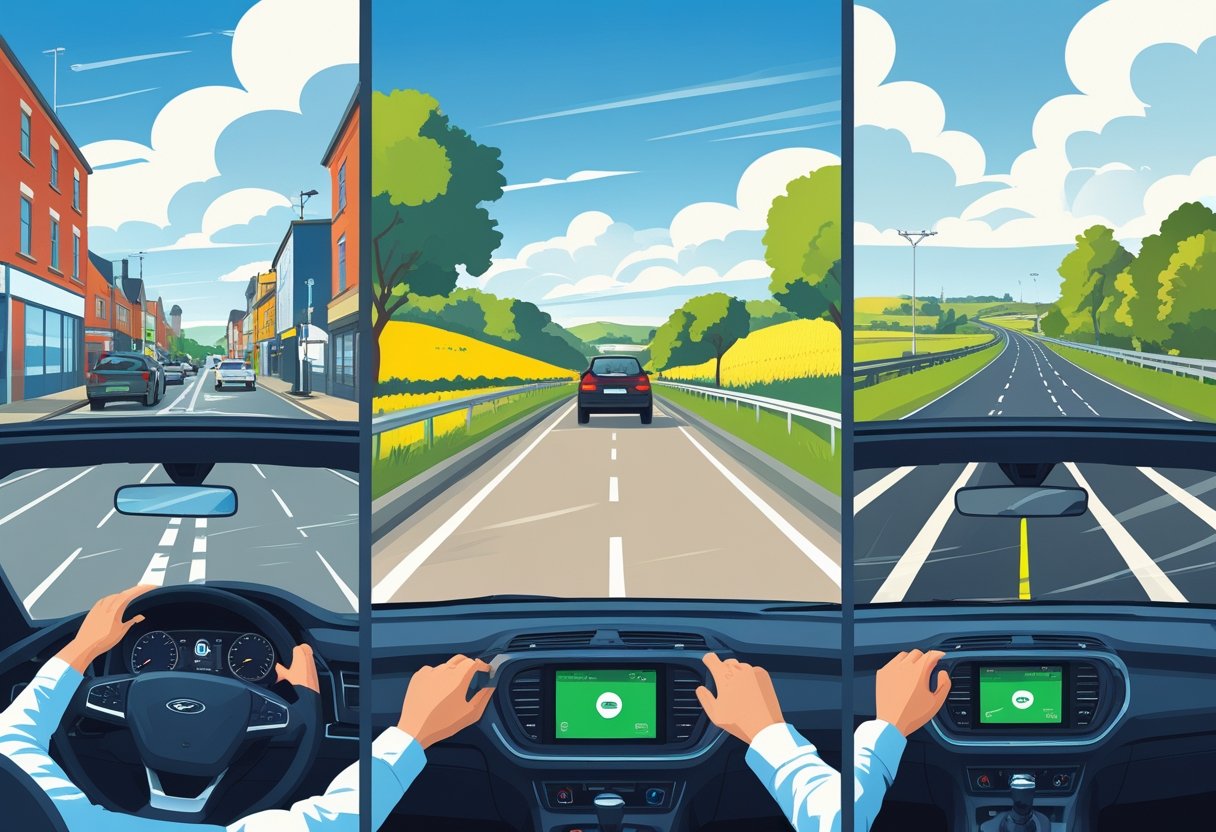
Each road type requires specific techniques and mindset adjustments that transform you from a nervous beginner into a capable, confident driver. We understand that switching between these environments can feel overwhelming at first. The good news is that mastering these different surfaces becomes second nature with proper guidance and practice.
Building your skills across urban areas, country roads, and motorways gives you the complete toolkit for safe driving anywhere in the UK. This comprehensive approach helps you handle whatever the road throws your way, from busy roundabouts to winding country lanes to fast-moving traffic on major routes.
Confidence on every kind of road comes from experiencing them all, so an intensive driving course across varied road types that mixes urban, rural and faster roads leaves you genuinely ready for anything.
Key Takeaways
- Different road types require specific driving techniques and awareness skills that you can learn through focused practice
- Urban roads demand heightened attention to pedestrians and cyclists, whilst rural roads require careful handling of narrow spaces and unexpected hazards
- Motorway driving builds your confidence at higher speeds and teaches you advanced traffic management skills essential for experienced drivers
Getting Started: Your Journey to Becoming a Confident Driver
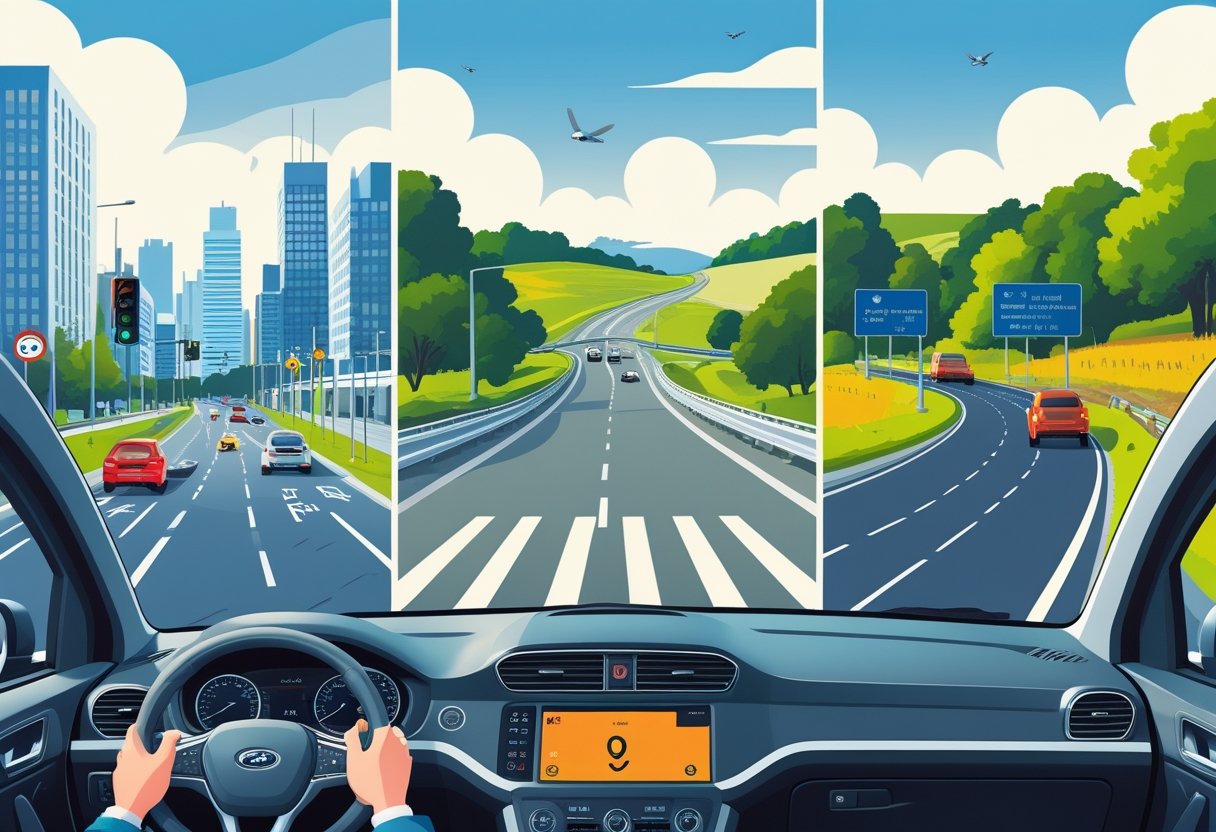
Building confidence behind the wheel starts with solid foundations in driving fundamentals, proper support systems, and making smart choices about your instructor and practice vehicle. These three pillars will set you up for success as you learn to drive across different road types and conditions.
Understanding the Basics of Driving
When we first learn to drive, it’s tempting to focus only on the car’s controls. But true driving confidence comes from understanding how different surfaces affect your vehicle’s behaviour.
Essential Control Skills:
- Smooth acceleration and braking techniques
- Steering wheel positioning and hand placement
- Mirror usage and observation patterns
- Clutch control for manual transmissions
Urban driving presents unique challenges with frequent stops, pedestrian crossings, and tight spaces. We recommend practising in quiet residential areas first, then gradually moving to busier town centres.
Rural roads teach us about varying road surfaces, from smooth tarmac to rough country lanes. These experiences help develop better vehicle feel and hazard awareness.
Motorways require different skills altogether. Speed management, lane discipline, and joining techniques become crucial. Many new drivers find motorways less stressful than expected because traffic flows more predictably.
Practice Progression:
- Car park basics (controls and manoeuvres)
- Quiet residential streets
- Busier urban areas
- Country roads and dual carriageways
- Motorway driving
Each surface type teaches valuable lessons. Urban driving sharpens our reaction times, rural roads improve our hazard spotting, and motorways build our confidence with higher speeds.
Supporting Your Learning Experience
Learning to drive works best when we have multiple support systems in place. Family members and friends can provide valuable practice opportunities between professional lessons.
Building Your Support Network:
- Choose calm, patient practice supervisors
- Set clear goals for each practice session
- Use different vehicles when possible
- Practice in various weather conditions
Many learners benefit from keeping a driving diary. Recording different road types, weather conditions, and personal reflections helps track progress and identify areas needing work.
We strongly recommend the Pass Plus course for newly qualified drivers. This programme covers motorway driving, night driving, and adverse weather conditions that aren’t included in standard driving tests.
Pass Plus Benefits:
- Professional motorway instruction
- Night driving experience
- Bad weather driving techniques
- Potential insurance discounts
Online resources and driving apps can supplement practical learning. However, nothing replaces real-world experience on actual roads with proper supervision.
Some learners find joining online communities helpful for sharing experiences and getting advice from other new drivers.
Choosing the Right Instructor and Vehicle
Your instructor choice significantly impacts your learning experience and confidence development. We recommend interviewing potential instructors before committing to lessons.
Key Instructor Qualities:
- Patience and encouragement: Look for instructors who remain calm under pressure
- Structured approach: Lessons should build skills progressively
- Surface variety: Instructors should expose you to different road types
- Clear communication: Instructions should be easy to understand
Some instructors specialise in nervous drivers or have particular expertise with motorway driving. Don’t hesitate to ask about their experience with different driving environments.
Vehicle Considerations:
- Manual vs automatic transmission
- Car size and visibility
- Modern safety features
- Dual controls for safety
Many driving schools now use cars with parking sensors, automatic emergency braking, and other modern features. While helpful for learning, ensure you also practise in older vehicles to develop fundamental skills.
Questions to Ask Potential Instructors:
- What’s your pass rate?
- Do you cover rural and motorway driving?
- How do you handle nervous students?
- Can you provide references from recent pupils?
The right instructor will gradually introduce different driving surfaces, building your confidence systematically rather than overwhelming you with challenging conditions too early.
Remember, learning to drive is a journey, not a race. The best instructors understand this and will adapt their teaching style to match your learning pace and comfort level.
Urban Roads: Navigating the Hustle and Bustle
Urban driving demands sharp awareness and quick decision-making as you navigate through heavy traffic, respond to constant pedestrian movement, and master the art of tight parking spaces. Success comes from staying alert, planning ahead, and building confidence through practice.
Mastering City Traffic and Congestion
City traffic can feel overwhelming at first, but we promise it becomes second nature with the right approach. The key lies in maintaining awareness of everything happening around you whilst staying calm under pressure.
Traffic flow patterns change dramatically throughout the day. Rush hours typically run from 7-9 AM and 5-7 PM, when roads become packed with commuters. During these times, we recommend leaving extra time for your journey and keeping a safe following distance.
Lane discipline becomes crucial in heavy traffic. Choose your lane early and stick with it rather than constantly switching. This reduces stress and helps maintain smooth traffic flow. Watch for:
- Bus lanes with specific operating hours
- Cycle lanes that may restrict car access
- Taxi ranks where stopping is prohibited
Traffic lights in cities often work in sequences. Once you learn the timing patterns on familiar routes, you’ll find it easier to maintain steady progress. Yellow box junctions require special attention – never enter unless your exit is clear.
Keep your engine running smoothly in stop-start traffic. Use gentle acceleration and braking to conserve fuel and reduce wear on your vehicle.
Identifying Road Signs and Markings
Urban road signs come thick and fast, so developing quick recognition skills is essential for safe city driving. We find that new drivers often miss important information simply because there’s so much to process.
Speed limit signs change frequently in cities. School zones might drop to 20 mph during certain hours, whilst main roads could jump to 40 mph. Always scan ahead for upcoming changes rather than relying on your current speed setting.
Road markings tell important stories about lane usage:
| Marking Type | Meaning | Action Required |
|---|---|---|
| Solid white lines | No overtaking | Stay in lane |
| Broken white lines | Overtaking allowed | Proceed with caution |
| Yellow lines | Parking restrictions | Check nearby signs |
| Hatched areas | Keep clear zones | Avoid unless safe |
Direction signs appear well before junctions, but city traffic often blocks your view. We suggest learning to spot signs early and positioning yourself in the correct lane as soon as possible.
Parking signs deserve special attention. Many areas have complex restrictions based on time, day, and permit requirements. Missing these details can result in hefty fines.
Dealing With Pedestrians and Cyclists
Urban awareness means constantly scanning for people on foot and two wheels. Cities buzz with activity, and pedestrians often behave unpredictably, especially near shops, schools, and transport hubs.
Pedestrian crossings come in several varieties. Zebra crossings give pedestrians absolute right of way once they step onto the crossing. Pelican crossings use traffic lights, whilst puffin crossings have sensors that detect waiting pedestrians.
Always approach crossings slowly, even when lights show green. People sometimes cross against signals, particularly during busy periods. Children and elderly pedestrians may need extra time to cross safely.
Cyclists present unique challenges in city traffic. They’re entitled to use most roads and often move faster than you might expect. When overtaking, leave at least 1.5 metres of space. Be especially careful when:
- Turning left across cycle lanes
- Opening car doors near parked bikes
- Approaching roundabouts where cyclists may take different paths
School zones require heightened awareness. Children can appear suddenly from between parked cars or run into the road without warning. We always recommend reducing speed significantly near schools, even outside official school hours.
Watch for delivery drivers, shoppers with pushchairs, and tourists who might be unfamiliar with local traffic patterns.
Parking and Manoeuvring in Tight Spaces
City parking tests every driver’s skills, but mastering these techniques opens up countless opportunities for convenient travel. We encourage learners to practice these manoeuvres regularly in quiet car parks before tackling busy streets.
Parallel parking is essential for city driving. The key is positioning your car correctly before starting the manoeuvre:
- Pull alongside the front car, leaving about 50cm gap
- Reverse slowly whilst turning the steering wheel fully towards the kerb
- Straighten up when your car reaches 45 degrees
- Continue reversing whilst steering away from the kerb
- Adjust position once fully in the space
Bay parking in shopping centres and car parks requires precision. Always check for height restrictions and choose spaces that give you room to open doors safely.
Multi-storey car parks present their own challenges with tight turns, low ceilings, and confusing layouts. Take your time navigating these spaces and remember where you’ve parked.
Street parking often involves parking meters or mobile payment apps. Familiarise yourself with local systems and always display tickets correctly. Many areas now use number plate recognition, so ensure you’ve entered your registration accurately.
Loading bays and disabled spaces carry serious penalties for misuse. Double-check all signs before leaving your vehicle, even for short stops.
Practice makes perfect with urban parking. The more you experience different situations, the more confident you’ll become at judging spaces and executing precise manoeuvres.
Essential Awareness Skills for Every Road Type
Developing sharp awareness skills forms the foundation of confident driving across all road surfaces. These core abilities help you spot dangers early, maintain concentration despite distractions, and adapt to Mother Nature’s surprises.
Observing Hazards and Anticipating Risks
Scanning ahead becomes your superpower on any road surface. We recommend developing a systematic approach to spotting potential problems before they catch you off guard.
On urban roads, keep your eyes peeled for pedestrians stepping between parked cars, cyclists appearing from blind spots, and delivery lorries blocking your view. Traffic lights change quickly in busy areas, so watch for amber phases well in advance.
Rural roads present different challenges entirely. Hidden driveways, farm vehicles emerging unexpectedly, and wildlife crossing paths require constant vigilance. Sharp bends often conceal oncoming traffic, making it crucial to position yourself correctly and reduce speed.
Motorways demand their own awareness toolkit. We focus on mirror checks every 8-10 seconds, monitoring vehicles several cars ahead for sudden braking, and watching for lane-changers who signal late or not at all.
Key hazard categories to watch:
- Vulnerable road users (pedestrians, cyclists, motorcyclists)
- Commercial vehicles with large blind spots
- Road surface changes (wet patches, loose gravel, painted lines)
- Traffic signal timing and junction approaches
Managing Distractions and Staying Focused
Modern driving throws countless distractions our way, but maintaining laser focus keeps everyone safer. Mobile phones pose the biggest threat to concentration, so we always switch to silent mode before starting the engine.
Internal distractions often catch learners off guard. Chatty passengers, loud music, or even worrying about tomorrow’s exam can split your attention dangerously. We suggest politely asking passengers to keep conversations light during challenging driving sections.
External factors also compete for attention. Roadside advertisements, emergency vehicles, or unusual events naturally draw our eyes away from the road ahead. Practice returning focus quickly to your driving lane and immediate surroundings.
Different road types amplify certain distractions. Urban environments bombard you with shop signs, pedestrian activity, and multiple lanes of traffic. Rural roads might seem peaceful, but scenic views or unusual farm equipment can prove surprisingly distracting.
Concentration techniques that work:
- Commentary driving (speaking your observations aloud)
- Regular mirror checks to maintain scanning rhythm
- Deep breathing at traffic lights to reset focus
- Setting specific observation goals for each journey
Adjusting To Changing Weather Conditions
Weather transforms familiar roads into completely different driving challenges. Rain reduces tyre grip dramatically, particularly on painted road markings and metal drain covers that become skating rinks when wet.
Visibility changes require immediate response adjustments. We always switch headlights on when wipers activate, even during daytime downpours. Fog demands much greater following distances and slower speeds, regardless of whether you’re navigating city streets or country lanes.
Wind affects different vehicles uniquely. High-sided cars feel more buffeting on exposed motorway sections, whilst motorcyclists and cyclists become particularly vulnerable to sudden gusts near bridges or gaps in hedgerows.
Winter conditions multiply awareness demands exponentially. Black ice forms invisibly on shaded road sections, bridge approaches, and areas where water collects. We learn to spot these danger zones before encountering slippery surfaces.
Seasonal awareness checklist:
- Spring: Watch for potholes from winter damage and increased cyclist activity
- Summer: Expect longer braking distances on hot tarmac and sun glare problems
- Autumn: Fallen leaves create slippery surfaces, especially when wet
- Winter: Reduced daylight hours mean more driving in darkness with tired drivers
Each weather change demands recalibrating your awareness priorities whilst maintaining the core skills that keep you safe across all road types.
Rural Roads: Handling the Unexpected
Rural roads demand sharp awareness and quick thinking from drivers. They combine narrow lanes, hidden hazards, and wildlife encounters with constantly changing speed limits that can catch even experienced drivers off guard.
Navigating Narrow Lanes and Bends
Country lanes test our spatial awareness like no other driving environment. We often face roads barely wide enough for two cars, with stone walls or hedgerows pressing in on both sides.
Sharp bends appear without warning on rural routes. We need to reduce speed well before entering corners, especially when we can’t see what’s coming. Many country roads have blind summits too, where the road disappears over a hill.
When meeting oncoming traffic on narrow sections, we should:
- Slow down and look for passing places
- Use field gates or wider verges when safe
- Flash headlights to communicate with other drivers
- Reverse to the nearest passing point if needed
Single-track roads require extra patience. We might encounter tractors, horse riders, or cyclists who need more space and time to move aside. Planning ahead becomes crucial here.
The key is staying alert and keeping speeds reasonable. We can’t assume these quiet roads are empty just because we haven’t seen other vehicles for miles.
Dealing With Limited Visibility and Wildlife
Rural roads throw unexpected challenges at us around every corner. Poor lighting, overgrown vegetation, and wandering animals create a completely different driving experience from urban streets.
Visibility issues plague country roads year-round. Hedgerows block our view at junctions and bends. Morning fog settles in valleys. Rain creates muddy puddles that obscure road markings completely.
We should use dipped headlights during daylight hours when visibility drops. This helps other road users spot us earlier, especially important when approaching blind bends or crests.
Wildlife encounters happen more often than we might expect. Deer, rabbits, and farm animals wander onto roads, particularly at dawn and dusk. Pheasants have a habit of flying into windscreens without warning.
If we spot animals ahead:
- Slow down immediately
- Don’t swerve suddenly
- Use the horn sparingly (it might startle them more)
- Stop completely if large animals block the road
Farm vehicles also appear suddenly from field entrances, often carrying mud onto the road surface. We need constant awareness of these unexpected hazards.
Understanding Variable Speed Limits
Speed limits on rural roads change more frequently than anywhere else, and recognising these changes quickly becomes essential for safe driving.
Most country roads follow the national speed limit of 60 mph, marked by white circular signs with diagonal black lines. However, this doesn’t mean we should always drive at 60 mph. Road conditions often demand much slower speeds.
Speed limit variations catch many drivers out:
- 30 mph zones through villages
- 40 mph sections on winding routes
- 50 mph limits on wider A-roads
- Back to 60 mph on open stretches
We need to watch for repeater signs, especially after junctions where limits might change. Street lighting usually indicates a 30 mph zone, but not always in rural areas.
The posted limit represents the maximum safe speed in perfect conditions. When we encounter narrow lanes, poor surfaces, or limited visibility, we must reduce speed accordingly. Learning to judge appropriate speeds for conditions matters more than simply following signs.
Rural driving rewards those who stay flexible and read the road ahead constantly.
Motorways: Building Confidence on High-Speed Roads
Motorways require precise skills for safe merging, proper lane usage, and heightened awareness of fast-moving traffic around you. Success comes from mastering the timing of joins and exits whilst maintaining proper spacing between vehicles.
Merging and Leaving Safely
The slip road becomes your best friend when joining motorways. We recommend building up speed gradually to match the flow of traffic before attempting to merge.
Check your mirrors constantly during this process. Look for a suitable gap that gives you plenty of space. Don’t force your way into traffic that’s too close together.
Signal early to show other drivers your intentions. This gives them time to adjust their position or speed if needed.
When joining, aim for the left-hand lane first. Never try to merge directly into the middle or outside lanes. That’s asking for trouble.
Leaving requires equal planning. Move into the left-hand lane well before your exit appears. We suggest doing this at least a mile beforehand on busy motorways.
Watch for exit signs and count them down. The blue rectangular signs tell you exactly how far your junction is.
If you would rather pass in one focused block than stretch lessons over many months, the Gold 35 package takes you from your first lesson through to test day.
Use the slip road to slow down gradually after leaving the main carriageway. Trying to brake hard whilst still on the motorway creates dangerous situations for following traffic.
Overtaking and Lane Discipline
Lane discipline keeps motorways flowing smoothly. Stick to the left-hand lane for normal driving. Only move right when you need to overtake slower vehicles.
The “keep left unless overtaking” rule isn’t just a suggestion. It’s how we prevent lane hogging and maintain proper traffic flow.
Before overtaking, check your mirrors and blind spots carefully. Look for vehicles approaching fast from behind. They might be planning the same manoeuvre.
Build up speed before moving out. Don’t pull into the overtaking lane and then start accelerating. This forces faster traffic to brake suddenly behind you.
Signal clearly and move decisively. Hesitation creates confusion for other drivers.
Once you’ve completed the overtake, return to the left-hand lane promptly. Don’t linger in the middle or outside lanes if the left lane is clear.
Be patient with other drivers. Everyone makes mistakes, and aggressive behaviour never improves the situation. Give people space to correct their errors safely.
Driving With Motorway Rules and Etiquette
Speed limits exist for good reasons. The national limit is 70mph, but weather and traffic conditions might require slower speeds. Variable speed limits on smart motorways are mandatory, not suggestions.
Maintain proper following distances using the two-second rule. Pick a fixed point ahead and count the gap between the car in front passing it and you reaching the same spot.
Awareness becomes crucial at motorway speeds. Scan constantly for brake lights, lane changes, and vehicles joining from slip roads. Things happen quickly when everyone’s travelling at 70mph.
Use your indicators properly for every lane change. Other drivers need time to react to your movements.
Never stop on the carriageway except in genuine emergencies. If your car breaks down, try to reach the hard shoulder or emergency area. Switch on hazard lights immediately.
Keep left when using services or rest areas. Plan your stops in advance rather than making sudden decisions at the last moment.
Mobile phones stay put away completely. The temptation to check messages increases on long journeys, but the consequences of losing concentration are severe at these speeds.
Preparation Tips: Succeeding on Any Surface
Success on different road surfaces comes down to smart practice sessions and careful journey planning. These two areas will build your confidence whether you’re tackling busy city streets or quiet country lanes.
Practising With Purpose
When you learn to drive, random practice won’t cut it. You need focused sessions that target each surface type properly.
Start with structured practice blocks. Spend entire lessons on one surface type rather than jumping between them. This helps your brain adapt to each environment’s specific challenges.
Book lessons during different times of day. Urban streets behave differently at rush hour compared to quiet Sunday mornings. Rural roads change dramatically between daylight and darkness.
Create practice goals for each session:
- Urban: Focus on pedestrian awareness and quick decision-making
- Rural: Work on judging narrow spaces and handling blind corners
- Motorways: Practice lane changes and maintaining steady speeds
Ask your instructor to revisit challenging areas multiple times. That tricky roundabout or steep country hill needs repetition until it feels natural.
Keep a practice diary noting what went well and what needs work. This stops you forgetting important lessons between sessions and helps track real progress.
Planning Journeys and Managing Fatigue
Good preparation starts before you turn the key. Smart planning makes every journey smoother and safer.
Check your route beforehand using maps or sat nav. Knowing which junctions and lane changes are coming reduces stress enormously. Look for potential trouble spots like busy roundabouts or narrow bridges.
Plan rest stops on longer journeys. New drivers tire faster than experienced ones, especially on demanding surfaces like motorways or winding rural roads.
Choose your timing wisely:
- Urban driving: Avoid peak hours when learning
- Rural roads: Start in daylight before attempting night driving
- Motorways: Begin during quieter periods, not Friday evenings
Pack essentials like water, phone charger, and emergency contacts. Being prepared boosts confidence and reduces anxiety about potential problems.
Consider weather conditions seriously. Rain makes all surfaces more challenging, but affects rural roads and motorways differently than city streets. Postpone practice sessions in severe weather until you’ve built solid basic skills.
Frequently Asked Questions
Learning to drive across different road types brings unique challenges, from squeezing through tight country lanes to joining fast-moving motorway traffic. Weather conditions add another layer of complexity, while mastering techniques for hills, roundabouts, and night driving requires specific skills and confidence.
What are the best practices for navigating narrow country lanes for the first time?
Country lanes can feel intimidating when you’re starting out, but we’ve got some brilliant strategies to help you tackle them with confidence.
Slow down significantly when approaching bends. Rural roads often have blind corners where you can’t see oncoming traffic until the last second.
Use your horn lightly before sharp bends to alert other drivers of your presence. This simple technique can prevent nasty surprises around corners.
Position yourself slightly towards the centre of the lane when safe to do so. This gives you better visibility around bends and helps you spot oncoming vehicles earlier.
Learn to reverse confidently into passing places or gateways. When you meet another car on a narrow stretch, one of you will need to back up to let the other pass.
Watch for warning signs about farm vehicles, horse riders, or livestock. These signs aren’t just suggestions – they’re preparing you for real hazards you’ll likely encounter.
Keep your windows down when possible. You’ll hear approaching tractors, horses, or other vehicles before you see them, giving you precious extra seconds to react.
Could you offer some top tips for tackling roundabouts on busy urban roads confidently?
Urban roundabouts can seem overwhelming with multiple lanes and heavy traffic, but breaking them down into simple steps makes them much more manageable.
Approach slowly and get into the correct lane early. Most roundabouts have lane markings and signs well before the junction to guide you.
Use the mirror-signal-manoeuvre routine religiously. Check your mirrors, signal your intentions clearly, and then make your move when it’s safe.
Give way to traffic from your right, but don’t panic if you miss your exit. Simply go around again rather than making dangerous last-minute lane changes.
Watch for cyclists and motorcyclists who might be in your blind spots. They can appear quickly, especially during rush hour in busy urban areas.
Practice the three main rules: left lane for left turns and straight ahead, right lane for right turns, and signal left when passing your exit before the one you want.
Stay calm if other drivers seem impatient. Take your time, follow the rules, and remember that confident driving comes with practice.
How should I adjust my driving technique when transitioning from a quiet rural setting to a busy motorway?
Moving from peaceful country roads to busy motorways requires a significant shift in your driving approach and mental preparation.
Build up your speed gradually on the slip road to match the flow of traffic. Don’t try to merge at 40mph when everyone else is doing 70mph.
Use your mirrors constantly and check your blind spots before every lane change. Motorway traffic moves fast, and gaps close quickly.
Increase your following distance to at least three seconds. At motorway speeds, you need much more time to react and stop safely than on slower roads.
Stay alert for different types of vehicles. You’ll encounter lorries, coaches, and cars towing caravans that behave differently than typical rural traffic.
Plan your route beforehand so you know which lane to be in for your exit. Last-minute lane changes on motorways are dangerous and stressful.
Keep your fuel tank well-filled and check your tyres before long motorway journeys. Breakdowns are more serious and dangerous at high speeds.
What are the essential strategies for safe night-time driving on varied road surfaces?
Night driving presents unique challenges that change depending on whether you’re on urban streets, rural roads, or motorways.
Reduce your speed by at least 10mph from your normal daytime pace. Your stopping distance must stay within the range of your headlights.
Use your full beam headlights on rural roads when no other traffic is around. Switch back to dipped beams as soon as you see oncoming vehicles.
Watch for wildlife on country roads, especially deer and badgers. Animals are most active at dawn and dusk, and their eyes often reflect your headlights.
Clean your windscreen and headlights regularly during longer journeys. Even light dirt or condensation can significantly reduce your visibility.
Take frequent breaks to combat fatigue. Night driving is more tiring than daytime driving, and your reaction times slow when you’re tired.
Be extra cautious around pedestrians in urban areas. They’re much harder to spot at night, and some may be wearing dark clothing without reflective strips.
Could you shed some light on the nuances of weather-specific driving tactics for different terrains?
Different weather conditions affect various road types in unique ways, requiring you to adapt your driving technique accordingly.
Rain makes rural roads particularly slippery because of mud, leaves, and oil that don’t get washed away like on busy urban streets. Slow down significantly on wet country lanes.
Fog is most dangerous on motorways where speed differences between vehicles become extreme. Use your fog lights correctly and maintain safe following distances.
Ice forms first on rural bridges and hilltops where cold air circulates underneath and around the road surface. These spots catch many drivers by surprise.
Urban roads often have better drainage, but watch for standing water at pedestrian crossings and bus stops where the road surface gets worn down.
Strong winds affect high-sided vehicles more on motorways, but also watch for crosswinds when emerging from sheltered rural areas onto exposed sections.
Snow can trap you more easily on rural roads where gritting lorries may not have been yet. Carry a shovel, warm clothes, and emergency supplies during winter months.
What advice can you give for ensuring smooth uphill and downhill driving on rural roads?
Hills present specific challenges that require different techniques for safe and confident driving.
Use a lower gear when climbing steep hills to maintain steady power without straining your engine. Don’t be afraid to drop down to third or even second gear.
Build up a bit of extra speed before you start climbing if it’s safe to do so. This momentum helps carry you up the hill more smoothly.
Keep well back from the vehicle in front when going uphill. If they stall or roll back, you need space to react safely.
Use engine braking when descending by selecting a lower gear rather than riding your brakes continuously. This prevents your brakes from overheating.
Watch for cyclists and walkers who move much more slowly uphill. They may need to dismount and push their bikes on particularly steep sections.
Check your mirrors regularly on hills as faster vehicles may want to overtake. Pull over safely when possible to let them pass rather than holding up traffic.
Ready to pass in weeks, not months?
LPOD Academy runs tailored intensive driving courses from 10 to 50 hours across most of the UK, with your theory and practical test support included.
Ready to Book Driving Lessons?
LPOD Academy offers intensive driving courses across the UK. Find your nearest location: