

Published 4 November 2025, updated 12 July 2026
The Role of Eco-Driving Techniques for Learners: Your Path to Greener, Smarter Driving
When we talk about learning to drive, most new drivers focus on mastering the basics: steering, braking, and navigating roundabouts. But there’s another crucial skill that’s often overlooked during those early lessons. Eco-driving techniques aren’t just about being environmentally friendly (though that’s brilliant too). They’re about developing habits that will save you money, reduce wear on your vehicle, and make you a more thoughtful, skilled driver from day one.
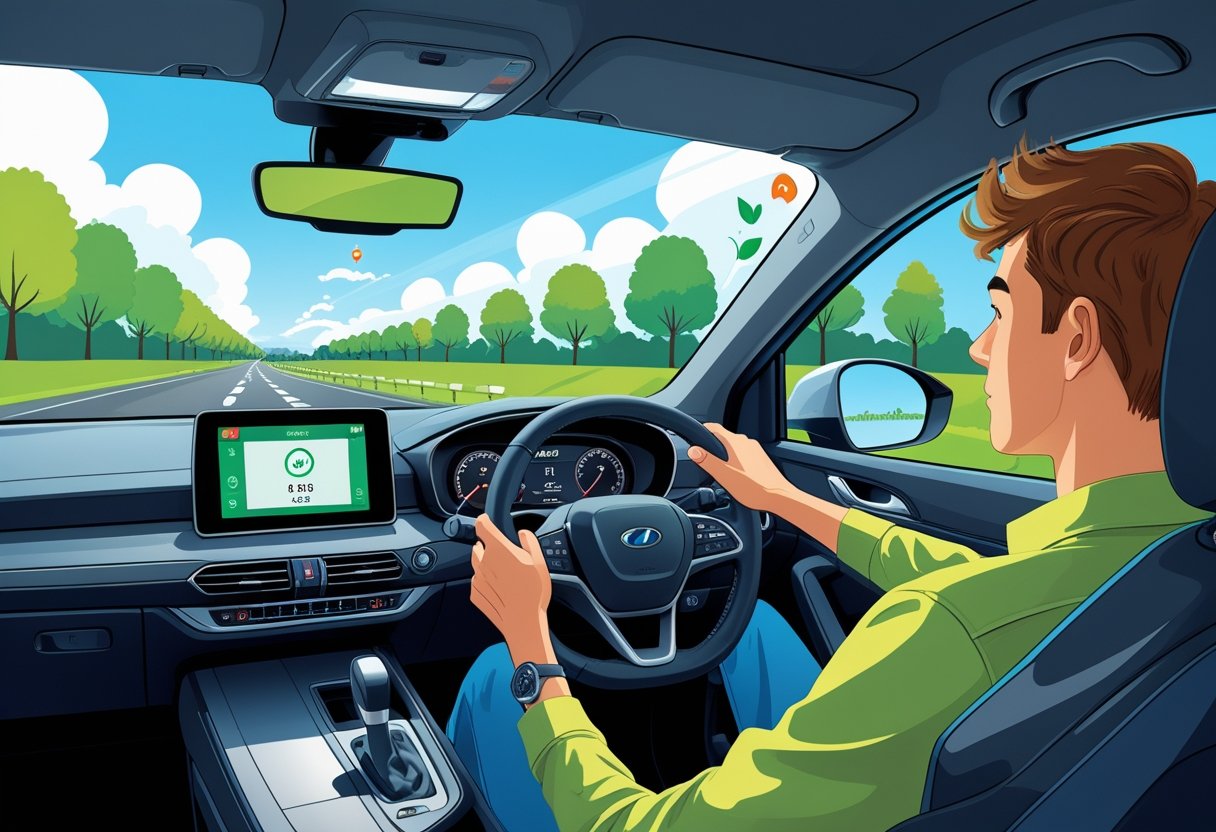
Learning eco-driving techniques as a new driver helps you develop fuel-efficient habits early, potentially saving hundreds of pounds annually whilst building safer, more considerate driving skills. Since 2008, eco-driving has been part of the UK driving test, which means these techniques aren’t optional extras. They’re essential skills that every learner driver needs to master. The beauty of starting with these methods early is that they become second nature, rather than habits you’ll need to unlearn later.
What makes eco-driving particularly valuable for learners is how it naturally encourages better overall driving technique. When you focus on smooth acceleration, gentle braking, and forward planning, you’re not just saving fuel. You’re building the foundation for confident, safe driving that will serve you well throughout your motoring life. Let’s explore how these techniques can transform your approach to learning and make you a more capable driver from the very beginning.
Key Takeaways
- Eco-driving techniques save money on fuel whilst naturally improving overall driving safety and vehicle maintenance
- Learning these methods early helps new drivers develop smooth, thoughtful habits that become automatic over time
- Choosing driving instructors who emphasise sustainable practices creates better drivers and supports environmental responsibility
Smooth, efficient driving is a habit best formed from your first lessons, which is why it makes sense to build eco-driving habits early on an intensive driving course.
Why Eco-Driving Matters for Learner Drivers
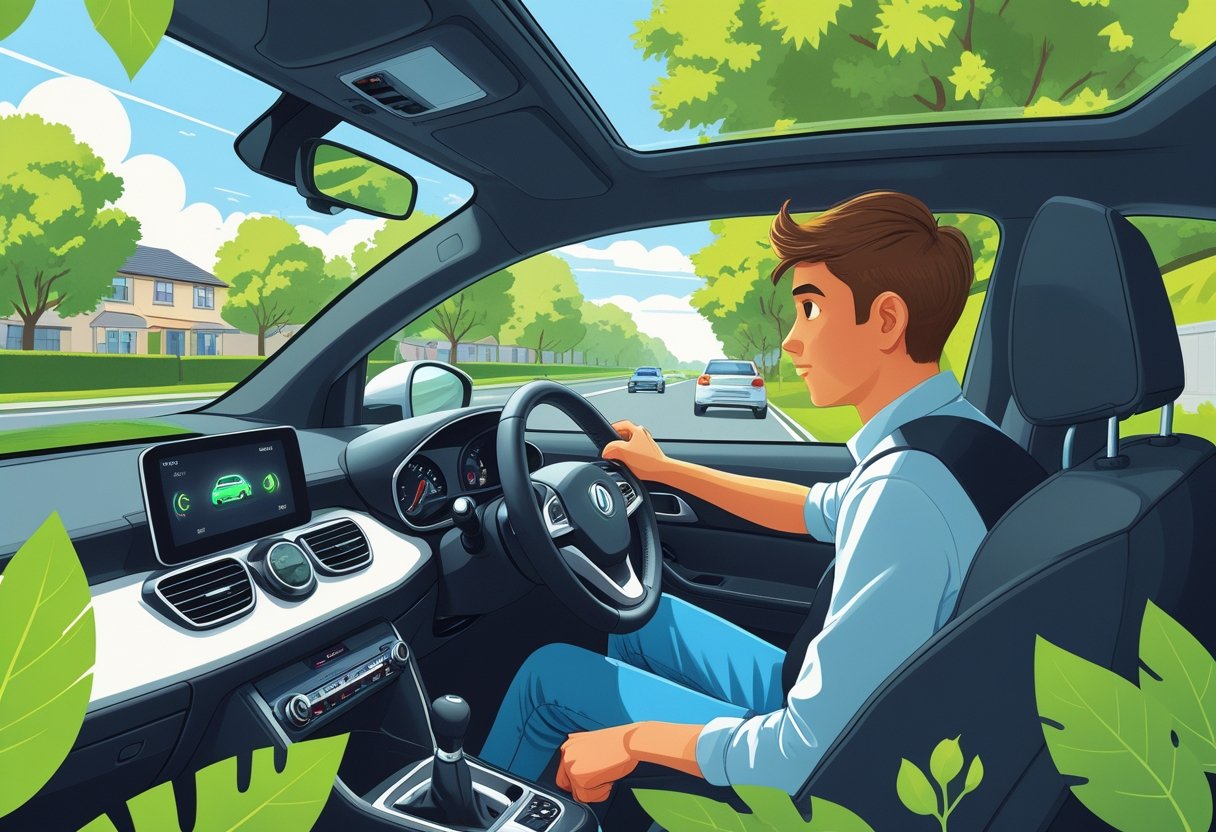
Learning to drive responsibly from day one shapes how we’ll handle cars for decades to come. When we embrace eco-driving techniques early, we’re building habits that protect our planet whilst saving money and creating safer roads for everyone.
Tackling Environmental Impacts from the Start
Starting our driving journey with environmental awareness makes a massive difference. Every time we get behind the wheel, we’re making choices that affect air quality and climate change.
Transport accounts for roughly 24% of the UK’s carbon emissions. That’s a huge chunk we can actually influence through our driving habits. When we learn eco-driving from the beginning, we’re not trying to break bad patterns later.
New drivers who master smooth acceleration and gentle braking reduce their fuel consumption by up to 25%. This isn’t just good for our wallets. It means fewer harmful gases pumped into the atmosphere.
The beauty of learning sustainable driving early is that it becomes second nature. We don’t have to think about it once these techniques are part of our natural driving style.
Key environmental benefits include:
- Lower carbon dioxide emissions
- Reduced air pollution in urban areas
- Less strain on fuel resources
- Decreased noise pollution from aggressive driving
The Link Between Driving Habits and Carbon Emissions
Our driving style directly controls how much fuel we burn and emissions we create. Small changes in how we handle the car add up to significant environmental impact over time.
Harsh acceleration forces engines to work much harder. This burns more petrol and creates extra carbon emissions. When we accelerate smoothly instead, engines run efficiently and produce fewer harmful gases.
Speed matters too. Driving at 80 mph uses about 25% more fuel than cruising at 70 mph. Maintaining steady speeds through proper gear use keeps emissions low.
Idling wastes fuel and pumps unnecessary emissions into the air. A car sitting with the engine running for just 10 seconds uses more fuel than restarting it.
Common habits that increase emissions:
- Sudden acceleration and hard braking
- Excessive speeding
- Poor gear selection
- Leaving engines idling
- Carrying unnecessary weight
Long-Term Benefits for Learners and Communities
Eco-driving techniques create advantages that extend far beyond individual drivers. When we learn these skills early, we contribute to healthier communities and substantial personal savings.
Financial benefits build up quickly. Fuel-efficient driving can save £300-500 annually on petrol costs. Our cars also last longer when we drive smoothly, reducing wear on brakes, tyres, and engines.
Communities benefit when more drivers adopt eco-friendly habits. Air quality improves, especially in busy areas where children walk to school. Traffic flows better when drivers maintain consistent speeds rather than rushing and braking.
Insurance companies often reward safe, efficient drivers with lower premiums. Many now offer telematics policies that track smooth driving patterns and reward eco-conscious behaviour.
Long-term community advantages include:
- Cleaner air in residential areas
- Reduced traffic congestion
- Lower accident rates from calmer driving
- Decreased road maintenance needs
- Better quality of life for residents
Learning these techniques whilst we’re still forming our driving identity means they become automatic responses rather than conscious efforts.
Fundamental Eco-Driving Strategies for New Drivers
Learning to drive with the environment in mind starts with mastering three core techniques that will save you money and protect our planet. These fuel-efficient techniques focus on smooth acceleration and braking, keeping steady speeds, and cutting down on unnecessary engine idling.
Accelerating and Braking Smoothly
The way you handle your accelerator and brake pedals makes a massive difference to your fuel consumption. Think of your right foot as having an invisible egg under it that you don’t want to crack.
Gentle acceleration is one of the most effective eco-driving strategies you can learn. When pulling away from traffic lights or joining faster roads, gradually press the accelerator rather than stamping on it. This approach can reduce fuel usage by up to 20% compared to aggressive acceleration.
Your engine works most efficiently when it’s not being forced to work overtime. Sudden bursts of speed demand extra fuel, whilst smooth acceleration keeps your engine happy and your wallet fuller.
Smart braking goes hand in hand with careful acceleration. Instead of rushing towards red lights or slow traffic, lift off the accelerator early and let your car’s momentum carry you forward. This technique, called engine braking, means you’ll use less fuel and put less wear on your brake pads.
Watch the road ahead like a chess player thinking several moves ahead. If you spot brake lights in the distance or see a roundabout approaching, ease off the accelerator gradually rather than maintaining speed until the last moment.
Maintaining Consistent Speeds
Keeping steady speeds is where fuel-efficient driving really shines. Your car’s engine loves consistency, and so will your fuel gauge.
Cruise control becomes your best friend on motorways and dual carriageways. Most modern cars achieve their best fuel economy between 50-60 mph, and cruise control helps you stay in this sweet spot without the constant speed variations that happen with manual throttle control.
Even without cruise control, you can drive cautiously by maintaining steady speeds. Choose a comfortable speed within the limit and stick to it, rather than constantly speeding up and slowing down with traffic flow.
Reading traffic patterns helps you maintain consistent speeds more effectively. Look well ahead to anticipate when traffic might slow down or speed up. This forward thinking allows you to make gradual speed adjustments rather than sudden changes.
On hills, try to maintain steady accelerator pressure rather than steady speed. Let your car slow slightly uphill and gain speed downhill naturally, which uses less fuel than fighting against gravity.
Avoiding Excessive Idling
Your engine burns fuel even when you’re not moving, so reducing unnecessary idling is a simple way to reduce fuel consumption immediately.
The two-minute rule works brilliantly for most situations. If you’re going to be stationary for more than two minutes, turn off your engine. This includes waiting at level crossings, in car parks, or when picking someone up.
Modern engines don’t need long warm-up periods like older cars did. In winter, 30 seconds of idling is plenty before you can drive away gently. Extended warming up wastes fuel and increases emissions unnecessarily.
Drive-through alternatives can save fuel too. Instead of idling in long drive-through queues, consider parking and walking inside. You’ll often get served faster and definitely use less fuel.
Many newer cars have stop-start technology that automatically turns off the engine at red lights. If your car has this feature, embrace it rather than overriding it. This technology can improve fuel economy by 5-10% in city driving conditions.
Practical Tips to Maximise Fuel Efficiency
Learning fuel-efficient driving techniques early on helps you develop sustainable driving habits that save money and protect our environment. These three key areas can dramatically improve your vehicle’s fuel consumption when mastered properly.
Choosing the Right Gear for the Road
Getting comfortable with gear changes makes a huge difference to your fuel efficiency. We recommend shifting up early, usually between 2,000 and 2,500 RPM for petrol engines, or around 2,000 RPM for diesel vehicles.
Higher gears use less fuel because your engine doesn’t work as hard. Think of it like cycling uphill. You wouldn’t pedal frantically in the lowest gear when you could shift up and cruise more smoothly.
Key gear selection tips:
- Change up before 2,500 RPM when accelerating
- Use the highest gear possible for your speed
- Don’t be afraid to skip gears when safe to do so
- Listen to your engine rather than just watching the speedometer
Many learner drivers stay in lower gears too long because they feel safer. However, this actually wastes fuel and puts unnecessary strain on your engine. Modern cars are designed to run efficiently in higher gears, so trust the process and shift up when appropriate.
Regularly Checking Tyre Pressure
Your tyres have more impact on fuel consumption than you might expect. Under-inflated tyres create extra rolling resistance, forcing your engine to work harder and burn more petrol.
We suggest you check tyre pressure monthly using a reliable pressure gauge. You’ll find the correct pressure listed in your owner’s manual or on a sticker inside the driver’s door frame.
Proper tyre maintenance includes:
- Monthly pressure checks when tyres are cold
- Maintaining manufacturer-recommended PSI levels
- Inspecting for uneven wear patterns
- Replacing worn tyres promptly
Cold tyres give the most accurate readings, so check them before driving or at least three hours after your last journey. Even a 10% drop in pressure can increase fuel consumption by up to 2%.
Keep a portable pressure gauge in your glove box. Many petrol stations have free air pumps, making it easy to top up when needed.
Smart Use of Air Conditioning
Air conditioning affects fuel efficiency more than most learners realise. Running your AC constantly can increase fuel consumption by 10-15%, especially during city driving.
At lower speeds (under 50 mph), opening windows often uses less fuel than air conditioning. However, at motorway speeds, closed windows with AC becomes more efficient because open windows create aerodynamic drag.
Efficient climate control strategies:
- Use AC sparingly during short journeys
- Park in shade when possible to reduce cabin heat
- Ventilate hot air before starting the AC
- Consider using the fan setting instead of full cooling
We’ve found that many new drivers automatically blast the AC without thinking about alternatives. Try using the car’s ventilation system first, or crack windows slightly for fresh air during slower drives.
Gradual temperature adjustments work better than extreme settings. Your engine doesn’t have to work as hard, and you’ll stay comfortable whilst maintaining better fuel-efficient driving techniques.
The Driving Instructor’s Role in Teaching Eco-Driving
Driving instructors play a crucial part in shaping environmentally conscious drivers who understand the importance of fuel efficiency and sustainable practices. Modern driving schools must adapt their teaching methods to include eco-friendly techniques alongside traditional road safety skills.
Integrating Sustainability into Driving Lessons
We believe that eco-driving should become a natural part of every driving lesson, not just an afterthought. Forward-thinking driving schools are already incorporating these techniques into their standard curriculum.
Essential eco-driving elements that instructors should weave throughout lessons include:
- Gentle acceleration techniques from day one
- Proper gear selection timing
- Smooth braking methods
- Engine management skills
Many driving instructor courses now emphasise the importance of teaching sustainability. The Academy of Road Safety has recognised that eco-driving represents the future of responsible driver education.
Practical integration happens when instructors demonstrate fuel-efficient techniques during regular manoeuvres. For example, whilst teaching hill starts, we can explain how proper clutch control saves fuel. During motorway lessons, maintaining steady speeds becomes both a safety and environmental lesson.
Modern learners often arrive with environmental awareness already. They’re eager to learn techniques that reduce their carbon footprint whilst saving money on fuel costs.
Effective Communication with Novice Drivers
Teaching eco-driving requires clear, simple explanations that novice drivers can easily grasp. We’ve found that connecting environmental benefits to immediate financial savings creates stronger motivation.
Key communication strategies include:
- Using visual demonstrations during lessons
- Explaining the why behind each technique
- Providing real-time feedback on fuel-efficient driving
- Celebrating small improvements
New drivers respond well when we explain how gentle acceleration feels smoother and more comfortable. We can show them how anticipating traffic flow reduces stress whilst protecting the environment.
Building confidence comes from praising eco-friendly choices during lessons. When a learner smoothly approaches traffic lights instead of racing towards them, we acknowledge their environmental awareness alongside their improved safety skills.
Regular feedback helps cement these habits early. Many driving schools now track fuel consumption during lessons, giving learners tangible proof of their progress towards becoming eco-conscious drivers.
Choosing a Driving School That Supports Sustainable Habits
Finding the right driving school means looking for instructors who genuinely care about environmental responsibility and can teach you practical eco-driving skills from day one. We’ll help you spot the schools that walk the walk when it comes to green driving practices.
Identifying Environmentally Friendly Driving Schools
When we’re searching for driving schools that truly support sustainable habits, there are clear signs to look for. The best eco-conscious schools use hybrid or electric vehicles for lessons, giving you hands-on experience with low-emission technology right from the start.
Look for schools that actively promote their environmental credentials on their websites. They should mention eco-driving as part of their standard curriculum, not just an add-on service.
Key features of environmentally friendly driving schools:
- Fleet of hybrid or electric training vehicles
- Instructors trained specifically in eco-driving techniques
- Clear commitment to sustainable driving education
- Regular vehicle maintenance programmes to ensure optimal fuel efficiency
We recommend asking potential schools directly about their approach to environmental driving. A truly committed school will be enthusiastic about discussing their green initiatives and teaching methods.
The instructors themselves matter enormously. They should demonstrate smooth driving techniques, proper gear selection, and efficient route planning during your lessons.
The Importance of Accredited Programmes
Accredited eco-driving programmes ensure you’re learning from qualified professionals who understand both safety and sustainability. These programmes follow established standards that have been proven to reduce fuel consumption and emissions effectively.
Since 2008, eco-driving has been part of the UK driving test curriculum. This means legitimate driving schools must incorporate these techniques into their teaching.
Benefits of choosing accredited programmes:
- Structured learning approach based on proven methods
- Instructors with verified eco-driving qualifications
- Consistent teaching standards across all lessons
- Better preparation for modern driving test requirements
We suggest looking for schools affiliated with recognised organisations that specialise in sustainable driving education. These partnerships demonstrate a serious commitment to environmental responsibility.
Accredited programmes also provide measurable results. You’ll learn specific techniques like optimal speed control, efficient gear changes, and strategic route planning that genuinely reduce your environmental impact while saving money on fuel.
The Lasting Impact of Eco-Driving for Modern Learners
Learning eco-driving creates habits that extend far beyond your test day, shaping you into a driver who saves money whilst protecting the environment. These skills become second nature, influencing how you approach transport choices throughout your life.
How Sustainable Driving Prepares You for the Future
When we master eco-driving techniques as learners, we’re building skills for a rapidly changing world. Electric vehicles are becoming mainstream, and understanding energy efficiency gives us a head start with any car we drive.
Fuel costs continue rising, making efficient driving habits more valuable each year. The smooth acceleration and gentle braking techniques we learn today will save hundreds of pounds annually once we’re driving regularly.
Our environmental awareness grows naturally through sustainable driving practice. We start noticing how small changes in our driving style affect fuel consumption and emissions. This mindfulness often spreads to other areas of life.
Future employers increasingly value environmental responsibility. Demonstrating sustainable driving habits shows we think ahead and care about our impact. Many companies now track fleet efficiency, making these skills professionally valuable.
The techniques we learn adapt to new technology too. Whether driving petrol, diesel, hybrid, or electric vehicles, understanding energy conservation principles helps us get the most from any car.
Inspiring Change Beyond the Test
Eco-driving naturally influences those around us, creating positive ripple effects in our families and communities. When we demonstrate calm, efficient driving, passengers notice the smoother journey and often ask about our techniques.
New drivers who embrace sustainable driving habits frequently become advocates for better transport choices. We might encourage family members to combine trips, choose walking or cycling for short journeys, or consider more efficient vehicles.
Our approach to driving reflects broader environmental values. Starting with simple actions like checking tyre pressure and avoiding harsh acceleration builds confidence to tackle bigger environmental challenges.
Young drivers practicing eco-driving often inspire older family members to reconsider their habits. Parents and grandparents see the benefits firsthand and start adopting similar techniques, multiplying our positive impact.
The money we save through efficient driving creates opportunities to invest in other sustainable choices. Lower fuel costs might fund bicycle purchases, public transport passes, or contributions to environmental causes we care about.
Frequently Asked Questions
New drivers often wonder how eco-driving techniques fit into their learning journey and daily habits. These practical approaches help reduce fuel costs, improve safety, and benefit the environment whilst building confidence behind the wheel.
What simple habits can you adopt to enhance fuel efficiency whilst driving?
Building fuel-efficient habits starts with gentle acceleration and smooth braking. We recommend pressing the accelerator pedal gradually rather than making sudden movements. This approach helps your engine work more efficiently.
Maintaining steady speeds whenever possible makes a real difference to your fuel consumption. Using cruise control on motorways helps achieve this consistency.
Planning your journeys can save significant fuel. Combining multiple errands into one trip reduces the number of cold starts your engine needs. Cold engines use more fuel during the first few miles.
Checking your tyre pressure monthly improves fuel efficiency by up to 3%. Under-inflated tyres create extra resistance, forcing your engine to work harder.
Removing unnecessary weight from your car helps too. Every extra 45kg reduces fuel efficiency by about 2%. Clear out your boot regularly and avoid carrying items you don’t need.
How do eco-driving techniques contribute to road safety?
Eco-driving naturally makes you a safer driver because it emphasises anticipation and smooth movements. When you focus on gradual acceleration and gentle braking, you’re automatically paying more attention to traffic patterns ahead.
Maintaining steady speeds reduces the need for sudden lane changes or aggressive overtaking manoeuvres. This creates more predictable driving behaviour for other road users.
Following at safe distances becomes easier when you’re practising eco-driving. You need extra space to coast to a stop rather than braking hard, which gives you better reaction time.
The emphasis on planning ahead means you’re constantly scanning the road for potential hazards. This heightened awareness helps prevent accidents before they happen.
Smooth driving techniques reduce driver fatigue on longer journeys. When you’re less stressed and tired, you make better decisions behind the wheel.
Could you outline the environmental benefits of adopting eco-driving practices?
Eco-driving can reduce your carbon emissions by 10-15% without changing your car or journey patterns. This happens purely through better driving techniques and habits.
Lower fuel consumption means fewer greenhouse gases entering the atmosphere. A typical car produces about 2.3kg of CO2 for every litre of petrol burned.
Reduced engine wear from smooth driving means your car lasts longer. This delays the environmental impact of manufacturing a replacement vehicle.
Less frequent harsh braking preserves your brake pads and tyres. Manufacturing these components requires energy and raw materials, so making them last longer helps the environment.
Encouraging carpooling and combining trips reduces the total number of vehicles on roads. This cuts overall emissions and reduces traffic congestion.
In what ways could mastering eco-driving techniques reduce vehicle maintenance costs?
Gentle acceleration and smooth braking significantly extend your brake pad life. Harsh braking creates excessive heat and wear, requiring replacements every 25,000 miles instead of 50,000 miles.
Steady speeds and gradual acceleration reduce engine stress. This means fewer expensive repairs to components like the clutch, transmission, and engine mounts.
Maintaining proper tyre pressure prevents uneven wear patterns. Well-maintained tyres can last 20,000 miles longer than neglected ones.
Regular maintenance habits that support eco-driving, like clean air filters and fresh oil, help your engine run efficiently. This prevents costly breakdowns and extends engine life.
Avoiding aggressive driving behaviours reduces the risk of accident damage. Even minor collisions can result in expensive bodywork repairs and insurance claims.
Are there any specific eco-driving tips that are particularly beneficial for someone just starting out on their driving journey?
Learning to read traffic flow early in your driving journey sets excellent foundations. Practice looking ahead to anticipate traffic lights, roundabouts, and pedestrian crossings.
Mastering smooth gear changes reduces fuel consumption and engine wear. Take time to learn your car’s optimal shift points during lessons.
Developing a pre-journey routine benefits new drivers enormously. Check your mirrors, seat position, and plan your route before starting the engine.
Learning to use engine braking effectively helps in multiple ways. It saves fuel, reduces brake wear, and gives you better control in various driving conditions.
Starting with good habits around vehicle maintenance creates lifelong benefits. Learn to check tyre pressure, oil levels, and fluid levels regularly from the beginning.
How does the adoption of eco-driving techniques influence insurance premiums for new drivers?
Many insurance companies now offer discounts for drivers who complete eco-driving courses or demonstrate fuel-efficient driving habits. These programmes recognise the safety benefits of smoother driving styles.
Telematics insurance policies monitor your driving behaviour and can reward eco-friendly habits. Gentle acceleration, smooth braking, and steady speeds often result in lower premiums.
Avoiding accidents through safer eco-driving practices protects your no-claims bonus. Even one small accident can increase premiums significantly for new drivers.
Some insurers offer specific green driver discounts for those who drive low-emission vehicles or demonstrate environmental consciousness. Eco-driving certificates can qualify you for these programmes.
Building a reputation as a safe, responsible driver through eco-driving techniques helps when renewing policies. Insurance companies value drivers who show consistent, predictable behaviour patterns.
Ready to pass in weeks, not months?
LPOD Academy runs tailored intensive driving courses from 10 to 50 hours across most of the UK, with your theory and practical test support included.
Ready to Book Driving Lessons?
LPOD Academy offers intensive driving courses across the UK. Find your nearest location: