

Published 6 November 2025, updated 12 July 2026
How Long the Driving Test Lasts & What’s Included: UK Guide
Getting ready for your driving test brings up loads of questions, and one of the biggest ones is simply how much time you’ll actually spend behind the wheel with an examiner. The UK practical driving test lasts approximately 40 minutes, giving you plenty of time to demonstrate your driving skills across five key areas.
When the time comes to sit the test, an intensive course that leaves you genuinely prepared is the surest way to walk in feeling confident.
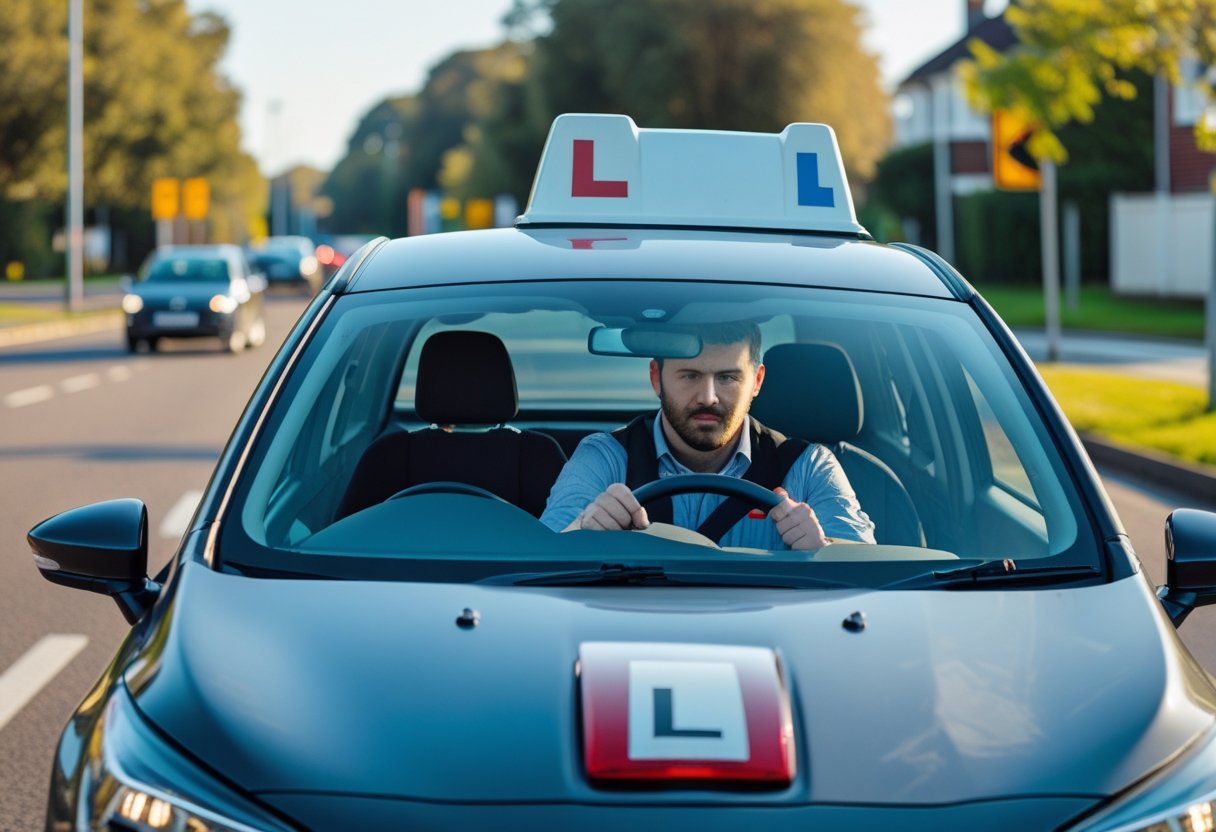
We know that 40 minutes might feel like forever when you’re nervous, or perhaps not nearly long enough to show everything you’ve learnt. The good news is that this timeframe has been carefully designed to give examiners a proper look at your abilities without putting unnecessary pressure on you. During those 40 minutes, you’ll tackle everything from basic vehicle safety checks to navigating real traffic situations.
Understanding what happens during your test can really help calm those pre-test nerves. We’ll walk you through each segment of the driving test, explain how the marking system works, and share practical tips to help you feel confident and prepared. Whether you’re booking your first test or looking to understand what went wrong last time, knowing the structure and timing can make all the difference to your success.
How Long Does the Driving Test Last?
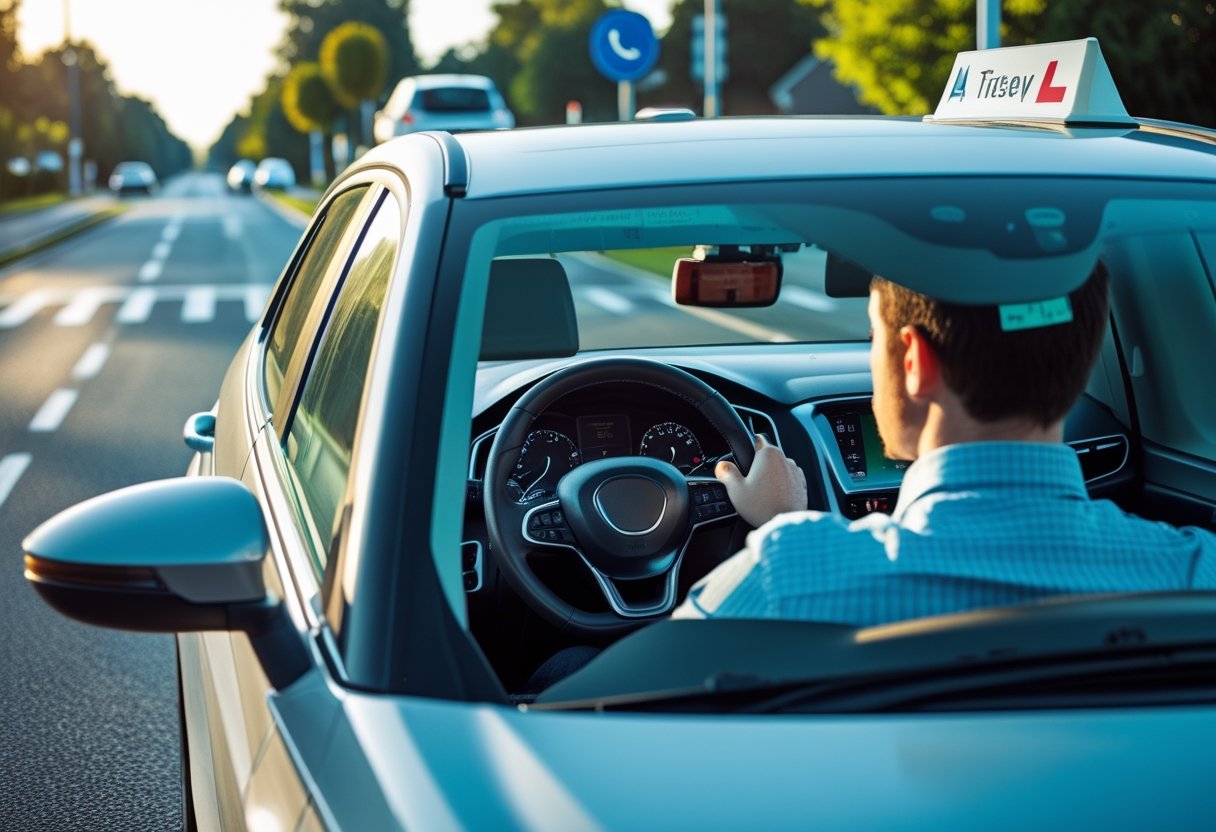
The standard UK practical driving test takes about 40 minutes of actual driving time, though you’ll spend around an hour at the test centre overall. Some drivers need to take an extended test lasting 70 minutes if they’ve been banned from driving previously.
Typical Duration for the Practical Driving Test
Most learner drivers will take the standard practical driving test, which involves 40 minutes behind the wheel. This timing has remained consistent across the UK for years.
What’s included in those 40 minutes:
- 20 minutes of general driving following examiner directions
- 20 minutes of independent driving using sat nav or road signs
- Vehicle safety questions during the test
- One reversing manoeuvre
- Eyesight check before you start
The test begins the moment you start your engine. We find that many learners worry about the time pressure, but 40 minutes gives you plenty of opportunity to demonstrate your driving skills.
Total time at the test centre is typically 60 minutes. This includes arriving, paperwork, the driving portion, and receiving your results and feedback.
Traffic conditions can occasionally extend your test slightly. Don’t worry if this happens – the examiner accounts for delays that are beyond your control.
Extended Driving Test: What to Expect
If you’ve been disqualified from driving, you’ll need to take an extended driving test. This longer assessment lasts 70 minutes instead of the standard 40.
The extended test includes all the same elements as a regular practical driving test. You’ll still complete vehicle safety questions, reversing manoeuvres, and independent driving sections.
Key differences:
- 30 extra minutes of driving time
- More varied road conditions and traffic situations
- Greater focus on demonstrating consistent safe driving
- Same pass requirements as the standard test
We know the extended test can feel daunting, but the extra time actually works in your favour. You get more chances to show the examiner your improved driving skills and road awareness.
The test routes remain unpublished, just like standard tests. You won’t drive on motorways during either version of the practical driving test.
Breakdown of the Test Timings
Understanding how your 40 minutes breaks down helps you prepare mentally for each section of the UK driving test.
Before driving starts (5-10 minutes):
- Eyesight check reading a number plate
- ‘Tell me’ vehicle safety question
- Adjusting mirrors and seat position
During the 40-minute driving portion:
- 20 minutes: General driving with examiner directions
- 20 minutes: Independent driving following sat nav or signs
- Throughout: One ‘show me’ question whilst driving
- Throughout: One reversing exercise (parallel parking, bay parking, or pulling up on the right)
Potential additional elements:
- Emergency stop (if selected for your test)
- Hill starts and pulling away from behind parked cars
- Normal stops at the roadside
After driving ends (10-15 minutes):
- Parking back at the test centre
- Receiving your results and feedback
- Completing paperwork if you pass
We’ve found that learners perform better when they understand this structure. It removes the mystery and helps you pace yourself throughout the assessment.
Key Parts Included in the Driving Test
Before you start the main driving portion, you’ll need to pass an eyesight check and answer two vehicle safety questions. These initial steps ensure you can see properly and understand basic car maintenance.
Eyesight Test at the Start
Your driving test begins with a simple eyesight check that takes less than a minute. You’ll need to read a number plate from a specific distance whilst standing outside the test centre.
The examiner will ask you to read a vehicle registration from 20 metres away for new-style plates or 20.5 metres for older ones. New-style plates start with two letters followed by two numbers, like AB51 ABC.
This test is pass or fail. If you can’t read the number plate clearly, your test ends immediately. There’s no second chance or alternative options.
We recommend checking your eyesight well before test day. If you wear glasses or contact lenses for driving, make sure you have them with you. Your provisional driving licence will show if you need corrective lenses.
Don’t worry if you feel nervous at this stage. Take your time and speak clearly when reading the registration. Most learners pass this check without any problems.
Show Me, Tell Me Vehicle Safety Questions
You’ll face two vehicle safety questions during your test. These questions check your knowledge of basic car maintenance and safety features.
The ‘tell me’ question happens before you start driving. The examiner might ask you to explain how you’d check the oil level or describe what you’d do if the engine overheated.
The ‘show me’ question occurs whilst you’re driving. You could be asked to demonstrate the windscreen wipers, hazard lights, or indicators. Don’t panic if this happens during traffic, just find a safe moment to respond.
These questions won’t fail your entire test, but they count as minor faults if answered incorrectly. Getting both wrong equals one minor fault total.
We suggest practising these questions with your instructor beforehand. They cover practical knowledge every driver should know, from checking tyre pressure to using the handbrake effectively.
Common topics include lights, steering, brakes, and engine checks. Your provisional driving licence journey should include learning these essential safety basics.
Core Driving Skills Assessed
Your driving test examiner will evaluate two main areas of practical driving competence: your general road handling abilities and your precision with vehicle control during reversing situations. These assessments form the heart of your practical test and determine whether you’re ready for independent driving.
General Driving Ability
We’ll spend about 20 minutes of your test demonstrating your everyday driving skills. This portion covers the real-world situations you’ll face as a qualified driver.
Your examiner will guide you through various road conditions and traffic scenarios. You’ll navigate residential streets, busy main roads, and potentially challenging junctions. The key is showing you can adapt your driving to different environments safely.
Essential skills we’ll assess include:
- Following traffic signs and road markings correctly
- Maintaining appropriate speed for conditions
- Safe positioning on the road
- Smooth acceleration, braking, and steering
- Proper use of mirrors and signals
You’ll also handle specific manoeuvres like pulling over safely and moving away from the kerb. These might include normal stops, pulling out from behind parked cars, or completing a hill start.
The examiner may request an emergency stop during this section. Don’t worry if this happens – it’s just another way to demonstrate your vehicle control skills.
Remember, your driving ability shines through consistent, safe decision-making rather than perfect execution of every single action.
Reversing Manoeuvre and Control
During your test, you’ll complete one reversing manoeuvre chosen by your examiner. This section tests your precision, spatial awareness, and vehicle control at slow speeds.
You’ll perform one of these three reversing manoeuvres:
- Parallel parking at the roadside between two cars
- Bay parking in a car park (either reverse in and drive out, or drive in and reverse out)
- Pulling up on the right, reversing two car lengths, then rejoining traffic safely
Each manoeuvre requires different skills, but all test your ability to control the car precisely whilst checking your surroundings constantly.
Take your time during reversing manoeuvres. Smooth, controlled movements impress examiners more than rushing through the task. Use your mirrors effectively and don’t forget those vital all-round observations.
If you need to adjust your position during the manoeuvre, that’s perfectly acceptable. Minor corrections show good judgement rather than poor skill.
Your examiner wants to see confident vehicle control combined with excellent awareness of other road users and pedestrians around you.
Independent Driving Segment Explained
During the independent driving segment, you’ll spend about 20 minutes navigating either by following a sat nav system or reading traffic signs. This portion tests your ability to make safe driving decisions without constant examiner guidance, showing you can handle real-world driving situations confidently.
Following Sat Nav or Road Signs
The examiner will tell you whether you’ll be following sat nav directions or traffic signs during your 20-minute independent segment. Most learner drivers get the sat nav option, whilst about one in five will navigate using road signs instead.
If you’re using sat nav:
- The examiner sets up their own device (you can’t use yours)
- Listen carefully to the voice instructions
- Don’t worry if you miss a turning – the system will recalculate
- Keep your eyes on the road, not the screen
If you’re following traffic signs:
- Look ahead for directional signs well in advance
- The examiner might give you a destination like “follow signs to the town centre”
- If signs are blocked by trees or unclear, the examiner will help guide you
- Take your time to read signs properly
Remember, taking a wrong turn won’t fail you. The examiner will simply help you get back on track without marking it as a fault.
Demonstrating Safe Decision-Making
This segment really shows off your hazard perception skills and independent thinking. We’re looking for smooth, confident driving that proves you can handle the roads without an instructor beside you.
Key areas the examiner watches:
- How you approach junctions and roundabouts
- Your lane positioning and speed control
- Response to other road users and potential hazards
- Following the Highway Code without prompts
Stay calm and drive as you’ve been taught during lessons. Check your mirrors regularly, signal clearly, and maintain safe following distances. The examiner wants to see you’re ready to drive solo.
If you feel unsure about a direction, it’s better to drive safely and miss a turn than rush a dangerous manoeuvre. Your safety awareness matters more than perfect navigation.
Understanding Driving Test Faults and Marks
Your driving examiner will assess every aspect of your driving and record faults using a standardised marking system. There are three distinct types of faults, and knowing exactly how many you’re allowed helps you understand what to expect on test day.
Types of Driving Faults
We need to understand the three categories of faults that examiners record during your test. Each type carries different consequences for your final result.
Driving faults are the mildest category. These aren’t dangerous but show areas where your driving could improve. Think of them as gentle nudges rather than serious concerns.
Serious faults represent potentially dangerous situations. Your examiner marks these when something could have led to danger, even if it didn’t actually happen.
Dangerous faults involve actual danger to you, your examiner, other road users, or property. These are the most severe category and result in immediate test failure.
What’s particularly important to remember is that multiple driving faults in the same area can become a serious fault. If you keep making mirror errors, for example, your examiner might decide there’s a consistent problem with your observation skills.
Pass Mark Criteria
The pass criteria are refreshingly straightforward, and we think you’ll find them quite reasonable when you break them down.
You’ll pass your driving test if you accumulate no more than 15 driving faults and avoid any serious or dangerous faults completely.
Here’s what will result in an automatic fail:
- One or more dangerous faults
- One or more serious faults
- 16 or more driving faults
The good news? Most learners who’ve had proper preparation easily stay within these limits. Your driving examiner isn’t trying to catch you out, they’re simply ensuring you can drive safely and independently.
Remember that examiners consider the spread of your minor faults too. It’s better to have 10 different small mistakes than five repeated errors in one area.
Preparing for Your Driving Test Day
Getting ready for test day means sorting out the paperwork, making sure your car meets requirements, and knowing what to expect when you meet your examiner. We’ll walk you through everything you need to bring and how to choose between using your own vehicle or your instructor’s car.
What to Bring to the Test Centre
Your provisional driving licence is absolutely essential. Don’t even think about leaving home without it.
The examiner needs to check your identity before the test begins. If you’ve got a paper licence, bring your signed passport as well for photo ID.
Make sure your licence is valid and not damaged. A torn or unreadable licence could mean your test gets cancelled on the spot.
Bring these items with you:
- Valid provisional driving licence
- Signed passport (if using paper licence)
- Theory test pass certificate (if requested)
- Glasses or contact lenses (if you need them for driving)
Double-check everything the night before. There’s nothing worse than rushing around on test morning looking for missing documents.
Your test centre will have specific rules about what you can bring inside. Leave bags and phones in the car to avoid any complications.
Vehicle and L Plates Requirements
Your test car must display L plates clearly on the front and back. They should be the standard size and not damaged or faded.
The vehicle needs a valid MOT certificate and insurance that covers you as a learner driver. Your examiner will check these documents before starting.
Essential vehicle requirements:
- Current MOT certificate
- Valid insurance covering learner drivers
- Clean, undamaged L plates (front and rear)
- Working seatbelts for examiner
- Clear view through all windows
- Functioning handbrake accessible to examiner
Make sure the car is clean inside and out. A tidy vehicle shows you take driving seriously and care about safety.
Check that all lights work properly, including indicators and hazard lights. The examiner might test these during the ‘show me’ questions.
Your driving instructor will usually handle these checks if you’re using their car. But it’s worth understanding what’s needed.
Meeting Your Examiner
Your examiner will introduce themselves and check your documents first. They’re there to help you succeed, not catch you out.
Stay calm and friendly when you meet them. A simple “good morning” and a smile go a long way towards starting things positively.
They’ll explain what happens during the test and answer any quick questions you might have. Don’t be afraid to ask if something isn’t clear.
What to expect during introductions:
- Document check and identity verification
- Brief explanation of test structure
- Walk to the test vehicle together
- Final equipment checks
Remember, examiners conduct tests all day long. They want you to pass and drive safely on the roads.
If you’re feeling nervous, take a deep breath and remind yourself that you’re ready for this moment. Your instructor wouldn’t have booked the test if they didn’t believe in you.
Using Your Own Car vs Instructor’s Car
Most learners use their driving instructor’s car because it’s familiar and properly equipped. You’ve learned in this vehicle, so it feels natural on test day.
Instructor cars have dual controls, which gives some learners extra confidence. Though the examiner won’t use them, knowing they’re there can be reassuring.
Benefits of using instructor’s car:
- Familiar controls and feel
- Properly maintained and insured
- Dual controls for peace of mind
- Instructor handles paperwork
Using your own car is perfectly fine if it meets all requirements. Just make sure you’re completely comfortable with every control and feature.
Some learners prefer their own car because they’ve been practising in it with family. The choice depends on where you feel most confident.
Driving test centres see both options regularly. Pick whichever vehicle makes you feel most prepared and relaxed for the big day ahead.
Essential Pre-Test Steps for Success
Before you can tackle that practical driving test, there are two crucial milestones you’ll need to reach first. Passing your theory test opens the door to booking your practical exam, whilst proper driving lessons give you the skills and confidence to succeed on test day.
Completing the Driving Theory Test
You can’t book your practical driving test without first passing the theory test. This essential step proves you understand the Highway Code and can spot hazards on the road.
The theory test has two parts that you must pass on the same day. The multiple-choice section gives you 57 questions, and you need 43 correct answers to pass. You’ll have 57 minutes to complete this portion.
Next comes the hazard perception test. You’ll watch 14 video clips showing real driving situations. Click when you spot developing hazards, and you need to score 44 out of 75 points to pass.
Study materials we recommend:
- Official Highway Code
- DVSA theory test app
- Online mock tests
- Hazard perception practice clips
Book your theory test online through the DVSA website. Most test centres have availability within a few weeks. The test costs £23 and you’ll get your results immediately.
Your theory test certificate stays valid for two years. This gives you plenty of time to pass your practical test without rushing.
Booking and Attending Driving Lessons
Professional driving lessons are your best investment for test success. Most learners need between 20 to 45 hours of lessons, depending on their natural ability and practice between sessions.
Start by finding an Approved Driving Instructor (ADI). Look for the green ADI badge displayed in their car windscreen. This shows they’ve passed strict DVSA standards and can legally teach you to drive.
Your instructor will assess your skills and create a learning plan. They’ll cover all the test requirements, including reversing manoeuvres, independent driving, and vehicle safety checks.
Key lesson topics include:
- Clutch control and gear changes
- Junction navigation and roundabouts
- Parking and reversing exercises
- Emergency stops and hill starts
We suggest taking lessons regularly, ideally once or twice per week. Consistent practice helps you build muscle memory and confidence behind the wheel.
Many instructors offer intensive courses if you need to pass quickly. These work well for motivated learners but aren’t suitable for everyone.
Your instructor will tell you when you’re ready for your test. Trust their judgement, they want you to succeed first time.
Frequently Asked Questions
The practical driving test covers five main sections over roughly 40 minutes, including an eyesight check, safety questions, general driving skills, reversing manoeuvres, and independent navigation. Most learners want to know exactly what they’ll face and how long each part takes.
What can you expect to tackle during the practical driving exam?
Your practical test includes five distinct sections that we’ll guide you through. First, you’ll complete an eyesight check by reading a number plate from 20 metres away (or 20.5 metres for older plates).
Next comes two safety questions called “show me, tell me” questions. You’ll answer one before driving starts and demonstrate the other whilst you’re behind the wheel.
The main driving portion tests your general ability on various roads and traffic conditions. You won’t drive on motorways, but expect different road types and situations.
You’ll also perform one reversing exercise. This could be parallel parking, bay parking, or pulling up on the right side and reversing back two car lengths.
Finally, there’s 20 minutes of independent driving. You’ll follow either sat nav directions or traffic signs, whichever the examiner chooses.
How much time should you plan for when taking the practical test?
Plan for roughly 40 minutes of actual driving time during your standard practical test. However, we recommend allowing at least an hour at the test centre for the complete experience.
This extra time accounts for paperwork, instructions, and your results discussion afterwards. If you’re taking an extended test due to a driving ban, expect around 70 minutes of driving instead.
The independent driving section takes up half your test time at approximately 20 minutes. The remaining 20 minutes covers all other sections including manoeuvres and general driving assessment.
Are there specific manoeuvres you’ll be asked to perform during the test?
Yes, you’ll definitely perform one reversing manoeuvre during your test. The examiner will choose from three possible options on the day.
Parallel parking involves fitting your car into a space between two vehicles at the roadside. Bay parking means either reversing into a parking space and driving out, or driving in and reversing out.
The third option is pulling up on the right-hand side of the road, then reversing for about two car lengths before rejoining traffic safely.
You might also face an emergency stop exercise. This isn’t guaranteed for every test, but it’s worth preparing for just in case.
What’s the format of the typical driving test from start to finish?
Your test begins with document checks and the eyesight test before you even start the engine. If you can’t read the number plate clearly, your test ends immediately.
Once you pass the eyesight check, you’ll answer the first “tell me” question about vehicle safety. Then you’ll start driving whilst the examiner gives you directions.
During the drive, you’ll answer the “show me” question, complete your reversing manoeuvre, and navigate independently for 20 minutes. The examiner observes your driving throughout, noting any faults.
Your test concludes back at the centre where you’ll receive immediate results and feedback. The whole process feels structured but flows naturally from one section to the next.
Could you share insights on the independent driving portion of the test?
The independent driving section lasts about 20 minutes and forms a significant chunk of your test. You’ll either follow sat nav directions or traffic signs, depending on what the examiner decides.
Don’t worry about bringing your own sat nav because the examiner provides and sets up the device. If you’re following traffic signs and can’t see one clearly, the examiner will help guide you.
Taking a wrong turn won’t count as a fault during independent driving. The examiner will simply help you get back on route without penalising you.
This section tests your ability to drive without constant instruction. It shows you can make decisions, navigate effectively, and maintain good driving standards independently.
What are the examiner’s key assessment areas throughout the driving examination?
Your examiner watches how you handle different road and traffic conditions throughout the test. They’re looking for safe, confident driving that follows the Highway Code consistently.
Key areas include your observation skills, use of mirrors, signalling, positioning, and speed control. They also assess your ability to deal with other road users courteously and safely.
During manoeuvres, they focus on your control, accuracy, and awareness of surrounding traffic and pedestrians. The independent section shows whether you can make good decisions without guidance.
Minor faults won’t necessarily fail you, but serious or dangerous mistakes will end your test early. The examiner only stops the test if your driving poses a risk to others.
Ready to pass in weeks, not months?
LPOD Academy runs tailored intensive driving courses from 10 to 50 hours across most of the UK, with your theory and practical test support included.
Compare intensive driving courses
Get a course recommendation
Ready to Book Driving Lessons?
LPOD Academy offers intensive driving courses across the UK. Find your nearest location: