

Published 13 October 2025, updated 3 August 2026
Fast Track Driving Test Guide for Beginners 2025
Ready to get your driving license faster than ever? In 2025, new options are making it easier for beginners to get behind the wheel quickly.
Many first-time drivers face long waits and confusing steps. The fast track driving test is designed to help you skip the queue and start your journey sooner.
This guide will walk you through every step, from checking if you qualify to booking your test, preparing efficiently, and making the most of your chances to pass on the first try.
If you want a simple, up-to-date roadmap for the fastest route to the open road, you’re in the right place.
If you want the fastest realistic route rather than months of weekly lessons, many beginners choose the Gold 40 fast-track intensive course to reach test standard in around a week.
Understanding Fast Track Driving Tests in 2025
Are you wondering what makes a fast track driving test stand out in 2025? This section breaks down everything beginners need to know about these accelerated options, from definitions to eligibility, benefits, drawbacks, and common myths.
What Is a Fast Track Driving Test?
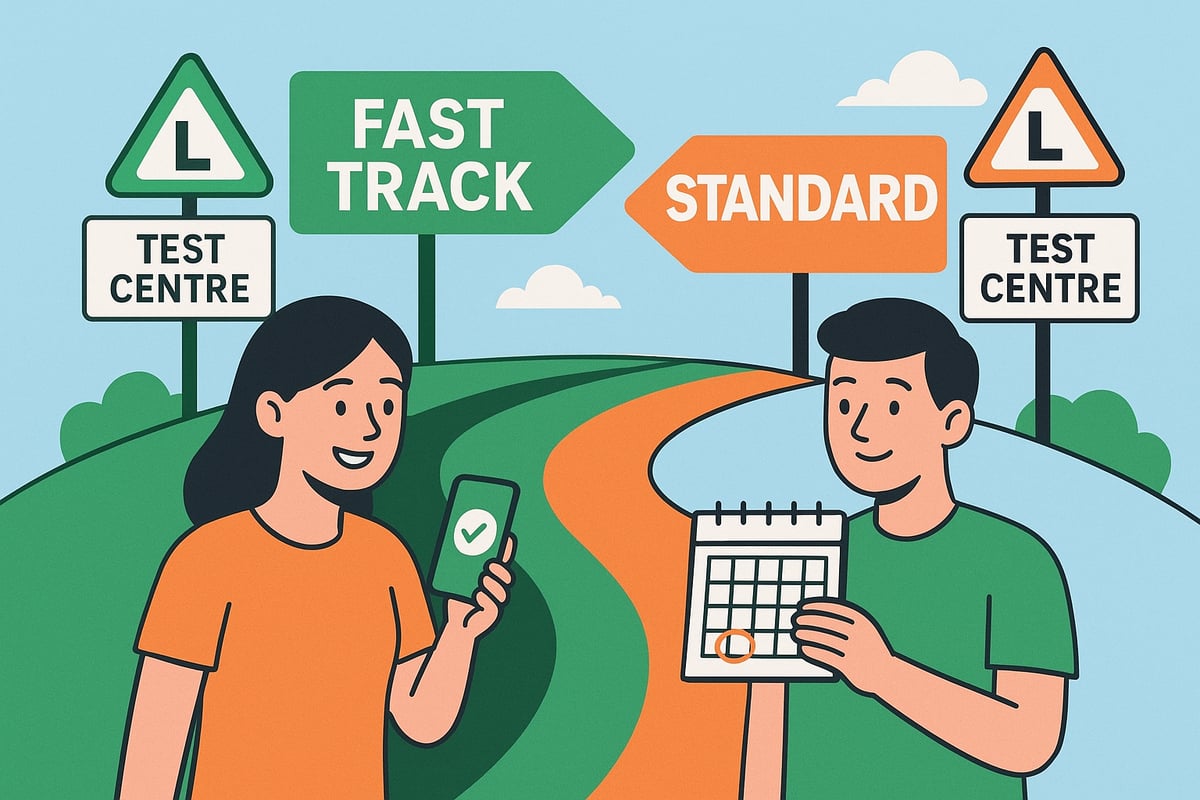
A fast track driving test is a streamlined version of the standard driving test, designed to help learners get their license more quickly. Unlike the traditional route, where waiting times can stretch for months, the fast track driving test offers earlier booking slots and a condensed learning schedule.
Why are so many beginners choosing this path? The main benefits include reduced waiting periods and the ability to learn intensively, which can help you retain skills more effectively. Fast track schemes in the UK, such as special DVSA pilot programs and private intensive courses, make it possible to go from zero experience to test-ready in just a few weeks.
Here’s a quick comparison:
| Feature | Standard Test | Fast Track Driving Test |
|---|---|---|
| Average Wait Time | 8-16 weeks | 2-4 weeks |
| Learning Pace | Weekly | Daily/Intensive |
| Booking Flexibility | Low | High |
For beginners eager to hit the road without long delays, the fast track driving test is quickly becoming the top choice.
Changes to Fast Track Testing in 2025
In 2025, several updates are reshaping the fast track driving test landscape. The DVSA has introduced digital booking enhancements, allowing learners to grab cancellations and early slots more efficiently. The average wait time for a fast track driving test in 2024 was around 6 weeks, but thanks to new policies, it’s expected to drop below 4 weeks in 2025.
Technological upgrades now mean you can track test availability online in real time, making the process smoother for beginners. Pass rates for fast track driving test candidates have also seen a modest increase, with first-time pass rates climbing to nearly 58%.
Want to dive deeper into these updates? Check out the New practical test changes for a detailed look at how the 2025 test format is evolving.
Comparing 2024 to 2025, the booking process is now faster, more transparent, and highly accessible for anyone pursuing a fast track driving test.
Who Is Eligible for Fast Track Driving Tests?
Eligibility for a fast track driving test is straightforward but essential. You must be at least 17 years old and hold a valid provisional license. Beginners and experienced learners can both apply, but fast track programs are designed to help newcomers get up to speed quickly.
Applicants must meet medical standards and typically reside in the UK. Some fast track courses may require a minimum number of lessons before booking your test slot.
Did you know? In 2025, nearly 40% of new drivers are expected to opt for a fast track driving test, reflecting its growing popularity among first-time learners.
Here’s a checklist for eligibility:
- Age 17 or older
- Provisional license holder
- UK residency
- Fit to drive (medical standards)
- Willing to commit to intensive lessons
If you meet these criteria, you’re on track to book your own fast track driving test.
Pros and Cons of Fast Track Options
Choosing a fast track driving test comes with unique advantages and a few challenges. Here’s what to consider:
Pros:
- Speed: Get your license sooner
- Convenience: Fewer booking delays
- Structured Learning: Intensive courses keep you focused
Cons:
- Intensive Schedule: Requires daily commitment
- Upfront Cost: Higher initial investment
- Pressure: Fast pace can be stressful
According to recent data, pass rates for intensive learners hover around 55%, slightly higher than traditional learners at 50%. For example, one recent candidate completed all lessons and passed their fast track driving test in just 12 days, showcasing the potential for rapid progress.
Common Myths and Misconceptions
There are plenty of myths about the fast track driving test. Let’s set the record straight.
Myth: Fast track is only for experienced drivers
Fact: Beginners are the main audience, with tailored programs for new learners.
Myth: The quality of training is worse
Fact: DVSA-approved instructors deliver the same curriculum, just in a shorter time frame.
Survey data from 2025 shows that 83% of learners who completed a fast track driving test felt satisfied with their training and results. The official DVSA stance is clear: fast track options maintain the same standards as traditional tests, simply at a quicker pace.
If you’re considering a fast track driving test, rest assured you’ll receive comprehensive preparation and support.
Step-by-Step Guide to Booking Your Fast Track Driving Test
Ready to book your fast track driving test but unsure where to start? Here is your clear, beginner-friendly guide to securing your spot and maximising your chances of hitting the road in record time. Follow these steps to make the process smooth and stress-free.

Step 1: Obtain Your Provisional License
Before you can book a fast track driving test, you need a valid provisional license. Applicants must be at least 17 years old and provide proof of identity, residency, and a passport-style photo. In 2025, online applications are processed faster, with most approvals arriving within a week.
To ensure you meet all requirements and avoid delays, follow this how to apply for your provisional licence guide, which walks you through every step. Typically, the average wait time for license approval is five working days, so apply early to get started on your journey.
Step 2: Book Your Theory Test
Once you have your provisional license, you can book your theory test as the next step toward your fast track driving test. Register online through the official DVSA portal, where you’ll see available test dates and locations.
Fast track theory test options are available in many areas, often with weekend and evening slots. For the quickest dates, check the portal daily and be flexible with your location. In 2025, first-time pass rates have increased due to improved study resources, so aim for an early slot to keep your momentum going.
Step 3: Prepare for the Theory Test
Preparation is key to passing your theory test and staying on schedule for your fast track driving test. Use up-to-date study materials, such as official DVSA guides and interactive apps. Take multiple practice tests to identify weak spots and track your progress.
Common pitfalls for beginners include underestimating hazard perception and not reviewing road signs. Top-rated resources like Theory Test Pro and Driving Test Success can help you study efficiently. Give yourself at least a week of daily revision to boost your confidence.
Step 4: Book Your Fast Track Practical Test
After passing your theory test, you are eligible to book your fast track driving test practical slot. Use the DVSA’s online booking system to find the earliest available dates. Fast track slots fill up quickly, so check multiple times a day and be ready to book immediately.
The best availability is often found during off-peak months, such as late winter or early spring. Fees for fast track bookings may be slightly higher, and cancellation policies are strict, so double-check your schedule before confirming. The DVSA fast track booking portal is your go-to resource for current openings.
Step 5: Arrange Intensive Driving Lessons
With your practical test date set, arrange intensive driving lessons tailored to your fast track driving test timeline. Choose from various course lengths, such as one-week or two-week programs, to fit your schedule and learning style.
Coordinate your lessons to finish just before your test for maximum retention. Decide whether you want to learn in a manual or automatic car based on your comfort and goals. On average, fast track learners complete 20 to 30 hours of lessons, making every session count toward your success.
Step 6: Confirm Test Details and Prepare Documentation
A week before your fast track driving test, confirm all test details with your instructor and the test center. Prepare a checklist of items to bring, including your provisional license, theory test pass certificate, and confirmation email.
Check your booking status online to ensure there are no last-minute changes. Below is a sample checklist to keep you organised:
| Item | Status |
|---|---|
| Provisional License | ✔️ |
| Theory Test Pass Certificate | ✔️ |
| Test Booking Confirmation | ✔️ |
| Suitable Car (Insured) | ✔️ |
| Instructor Contact Info | ✔️ |
Arriving prepared helps you focus on performing your best and gives you peace of mind on test day.
Preparing for Success: Top Strategies for Beginners
Getting ready for your fast track driving test in 2025 means more than just booking a slot. With a focused approach, the right resources, and a positive mindset, beginners can maximize their chances of passing quickly. Let’s break down the top strategies to help you succeed, from structuring your lessons to managing nerves on test day.

Structuring Your Intensive Lessons
When preparing for your fast track driving test, planning your intensive lessons is crucial. Compressing weeks of learning into just a few days requires a smart approach.
Start by mapping out your week, balancing driving sessions with breaks to avoid burnout. For example, a sample 1-week intensive schedule might look like this:
| Day | Morning | Afternoon | Evening |
|---|---|---|---|
| 1 | Lesson (2 hr) | Theory review | Rest |
| 2 | Lesson (2 hr) | Practice | Feedback session |
| 3 | Mock test | Skills focus | Rest |
Make sure to communicate with your instructor about your goals for the fast track driving test. This will help tailor each session for optimal progress.
Mastering Key Driving Skills Quickly
Success in the fast track driving test depends on mastering essential skills fast. Focus on key areas like maneuvers, hazard perception, and independent driving.
Ask your instructor to concentrate on your weakest points first. Use each lesson to practice real test scenarios, such as parallel parking or emergency stops. Many beginners find that repeating tricky maneuvers builds confidence.
Instructors often note that students who actively seek feedback improve the fastest. Remember, every minute in the car counts toward your fast track driving test success.
Using Technology for Faster Progress
Take advantage of technology when gearing up for your fast track driving test. Top-rated apps and online simulators can accelerate your learning and provide instant feedback.
Apps like Theory Test Pro and driving simulators let you practice from home, helping you master both theory and practical skills. Many learners find digital flashcards and video tutorials especially helpful for visualizing complex maneuvers.
Check reviews to find platforms that match your learning style. Adding these tech resources to your routine can make your fast track driving test preparation smoother and more effective.
Mock Tests and Feedback Loops
Taking mock tests is one of the smartest moves for anyone facing a fast track driving test. These practice runs closely mirror the real exam, helping you get used to the format and timing.
After each mock test, ask your instructor for detailed feedback. Focus on areas where you lost points and work on those skills in your next lesson. Data shows that learners who take at least two mock tests have a significantly higher pass rate.
Use a checklist to track your progress and make sure you’re consistently improving before your fast track driving test.
Managing Test Anxiety and Building Confidence
Feeling nervous before your fast track driving test is perfectly normal. The key is to turn that anxiety into positive energy. Practice mindfulness techniques, such as deep breathing or visualization, to calm your nerves.
Visualization can help you picture a successful test, step by step. If you struggle with anxiety, you might find useful tips in this guide on how to deal with driving test nerves.
Many beginners share stories of overcoming nerves by focusing on small wins and celebrating progress. Confidence is built one step at a time, so trust your preparation and stay positive on test day.
Intensive Driving Courses with LPOD Academy
LPOD Academy offers tailored intensive driving courses to help beginners pass their fast track driving test. Their packages, Platinum, Gold, Silver, and Bronze, are designed to fit different learning needs and schedules.
With LPOD, you get support from booking to test day, including fast-tracked test slots and instructor matching across the UK. Their high pass rates and positive learner testimonials highlight the effectiveness of their approach.
Booking is simple, and beginners can expect structured lessons, ongoing feedback, and a clear path to success with their fast track driving test.
What to Expect on Test Day: The Fast Track Experience
Test day for your fast track driving test is both exciting and nerve-wracking, but knowing what to expect can help you feel more prepared. This section breaks down the journey from arrival to results, so you can walk in with confidence and leave with clarity.
Arriving and Checking In
Arriving early is crucial for your fast track driving test. Plan to get to the test centre at least 15 minutes before your appointment. Bring your provisional license, theory test pass certificate, and a confirmation email for your booking.
At the centre, you’ll check in at reception and wait in a designated area. Staff will verify your documents and answer any last-minute questions. With the DVSA’s recent improvements to test centre logistics, including strategies from DVSA’s 7-Point Plan to Reduce Driving Test Waiting Times, the process is more efficient and less stressful for fast track driving test candidates.
Having your paperwork organized and arriving on time sets the tone for a smooth experience.
The Practical Test Structure in 2025
The 2025 fast track driving test follows an updated format designed to be clear and fair. The test lasts around 40 minutes and includes an eyesight check, two ‘show me, tell me’ vehicle safety questions, and a practical driving segment.
You’ll spend about 20 minutes on independent driving using sat nav or following road signs. Examiners are looking for safe, confident control throughout. According to Driving Test Pass Rates Reach Three-Year High, pass rates have improved, showing that fast track driving test preparation is effective for many learners.
Mistakes are noted, but one or two minor faults won’t mean automatic failure. Staying focused on each section helps you perform at your best.
Common Challenges for Fast Track Beginners
Fast track driving test candidates often feel the pressure of an accelerated timeline. The intensive learning curve can lead to nerves, especially for those who’ve had fewer lessons.
Test day brings its own set of challenges, from managing anxiety to adjusting to unfamiliar test routes. Many beginners worry about making small mistakes, but remember, the examiner is looking for overall safe driving, not perfection.
Real-world stories from learners show that preparation and a calm mindset are key. Practicing mindfulness or deep-breathing techniques can help you navigate the fast track driving test with greater confidence.
Examiner Expectations and Assessment Criteria
During your fast track driving test, examiners look for safe, competent, and legal driving at all times. They assess your ability to make decisions, control the vehicle, and respond to hazards.
Scoring in 2025 is transparent: you can make up to 15 minor driving faults, but any serious or dangerous fault results in a fail. The most common reasons for failure include not checking mirrors, poor lane discipline, and hesitation at junctions.
Understanding these criteria helps you focus your preparation on key areas, making your fast track driving test more manageable.
Navigating Unexpected Situations
Unexpected events can happen during your fast track driving test. You might encounter roadworks, diversions, or even emergency vehicles. If something unusual occurs, stay calm and follow the examiner’s instructions.
Communication is important. If you’re unsure about a direction, ask the examiner to repeat it. The DVSA provides guidance on handling interruptions, so you won’t be penalised for circumstances beyond your control.
By being adaptable and keeping a cool head, you can deal with surprises effectively during your fast track driving test.
Post-Test Procedures and Next Steps
Once your fast track driving test ends, you’ll return to the centre for immediate feedback. The examiner will tell you if you’ve passed or failed and discuss any driving faults.
If you pass, you’ll receive a pass certificate and details about upgrading your license. If you don’t pass, you’ll get tips for improvement and information on how to rebook quickly. Many fast track driving test candidates use this feedback to plan their next steps and keep progressing toward their goal.
Whether you pass or need another attempt, staying positive and proactive helps you make the most of your fast track driving test journey.
Maximizing Your Chances: Tips, Resources, and Common Mistakes
Ready to boost your odds of passing the fast track driving test on your first try? With the right strategies, resources, and a clear plan, you can stay ahead of common pitfalls and approach your test day with confidence. Let’s break down the essentials every beginner needs to know.
Essential Tips for Fast Track Success
Success with the fast track driving test starts with a smart approach. Planning is key, especially when test dates are in high demand. Make a checklist for the week before your test to stay organized:
- Confirm your test date and location.
- Review your lesson notes and practice key maneuvers.
- Double-check all required documents.
Booking early is crucial, so use resources like How to get a quick test date to secure a slot as soon as possible. Remember to keep your nerves in check and visualise your success before stepping into the car.
Leveraging Official and Third-Party Resources
The best way to prepare for your fast track driving test is to use a mix of official and community resources. Start with DVSA’s official study guides and practice apps. Join online forums for beginners where you can share tips, ask questions, and find local support.
Top-rated beginner forums in 2025 include:
- Learner Driver Network
- PassMeFast Community
- The Student Room (Driving Section)
Combining these resources will help you stay informed, motivated, and ready for every aspect of your fast track journey.
Avoiding Common Mistakes
Avoiding the most frequent errors can make all the difference with the fast track driving test. The top 5 reasons for first-time test failures are:
- Inadequate mirror checks
- Poor lane discipline
- Speeding or driving too slowly
- Failing to respond to road signs
- Stalling at junctions
To prevent these issues, ask your instructor for targeted feedback and practice mock tests regularly. Being mindful of these pitfalls will keep your confidence high and your skills sharp.
Financial Planning for Fast Track Tests
Budgeting is essential when pursuing the fast track driving test. Costs can add up quickly, so plan ahead:
| Expense | Average Cost (2025) |
|---|---|
| Provisional License | £34 |
| Theory Test | £23 |
| Fast Track Lessons | £600–£1200 |
| Practical Test | £62 |
| Retake (if needed) | £62 |
Set aside a little extra for unexpected expenses, like last-minute lesson extensions or rescheduling fees. Smart financial planning means you can focus on passing, not your wallet.
Legal and Insurance Considerations
Before taking your fast track driving test, ensure you meet all legal requirements. You’ll need learner driver insurance and must carry your provisional license at all times. After passing, update your policy to reflect your new status.
For the latest changes in 2025, review the DVSA Strategic Plan to 2025, which covers new driver obligations and insurance updates. Staying compliant keeps your journey smooth from learner to licensed driver.
Real-Life Success Stories and Testimonials
Hearing from others who have succeeded with the fast track driving test can be incredibly motivating. Many beginners report high satisfaction with intensive courses, especially when they use structured study plans and mock exams.
For example, recent passers highlight the benefits of keeping a positive mindset and practicing regularly. According to 2025 data, over 85% of fast track learners would recommend the process to friends. Your story could be the next inspiration for future drivers!
Now that you know how fast track driving tests work in 2025 and have tips to boost your chances of passing, why not take the next step toward your license Today, beginners like you are getting on the road faster with LPOD Academy’s tailored intensive courses and supportive instructors across the UK If you’re ready to put these strategies into action and skip the long wait times, let’s find the right course for you Your journey to driving independence can start sooner than you think. Choose A Course That’s Right For You
Ready to pass in weeks, not months?
LPOD Academy runs tailored intensive driving courses from 10 to 50 hours across most of the UK, with your theory and practical test support included.
View our intensive course packages
Find the right course for you
Ready to Book Driving Lessons?
LPOD Academy offers intensive driving courses across the UK. Find your nearest location: