

Published 6 November 2025, updated 12 July 2026
Maintaining Proper Lane Discipline on Multi‑Lane Roads: Your Essential Guide to Safer Driving
Multi-lane roads can feel overwhelming when you’re learning to drive, but mastering them is absolutely essential for safe and confident driving. Proper lane discipline means staying in the correct lane for your intended route, moving over only when necessary, and always returning to the left lane after overtaking. This fundamental skill keeps traffic flowing smoothly and prevents the dangerous situations that cause accidents.
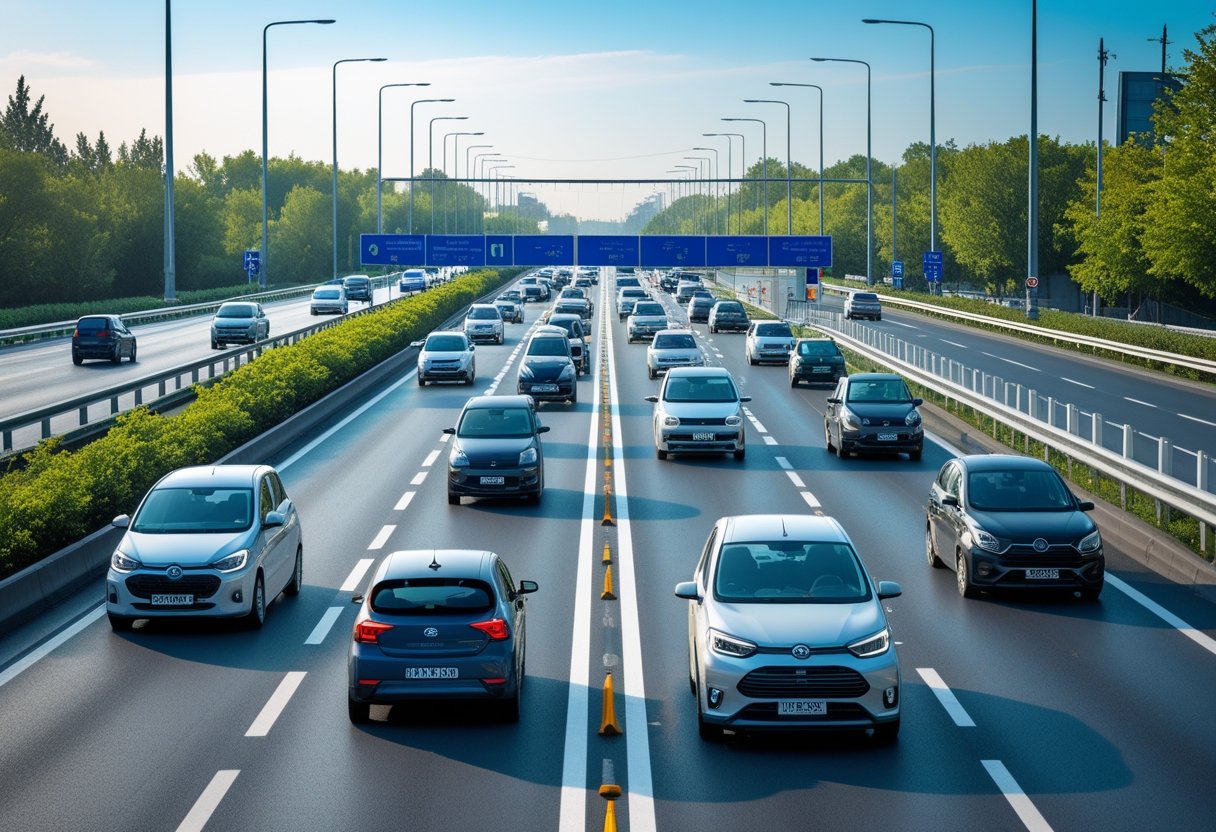
We understand that navigating busy dual carriageways and motorways feels daunting at first. The key lies in understanding how each lane works, when to change position, and how to signal your intentions clearly to other drivers. Every confident driver started exactly where you are now, wondering how they’ll ever manage all those lanes safely.
In this guide, we’ll walk you through everything from basic lane positioning to handling complex roundabouts and overtaking manoeuvres. You’ll discover how to maintain safe distances, execute smooth lane changes, and navigate special situations with confidence. By the end, you’ll have the knowledge and techniques needed to handle any multi-lane road with skill and assurance.
Good lane discipline is a habit built through practice, so an intensive driving course focused on lane discipline with plenty of multi-lane road time will have you positioning confidently well before test day.
Understanding Lane Discipline on Multi-Lane Roads
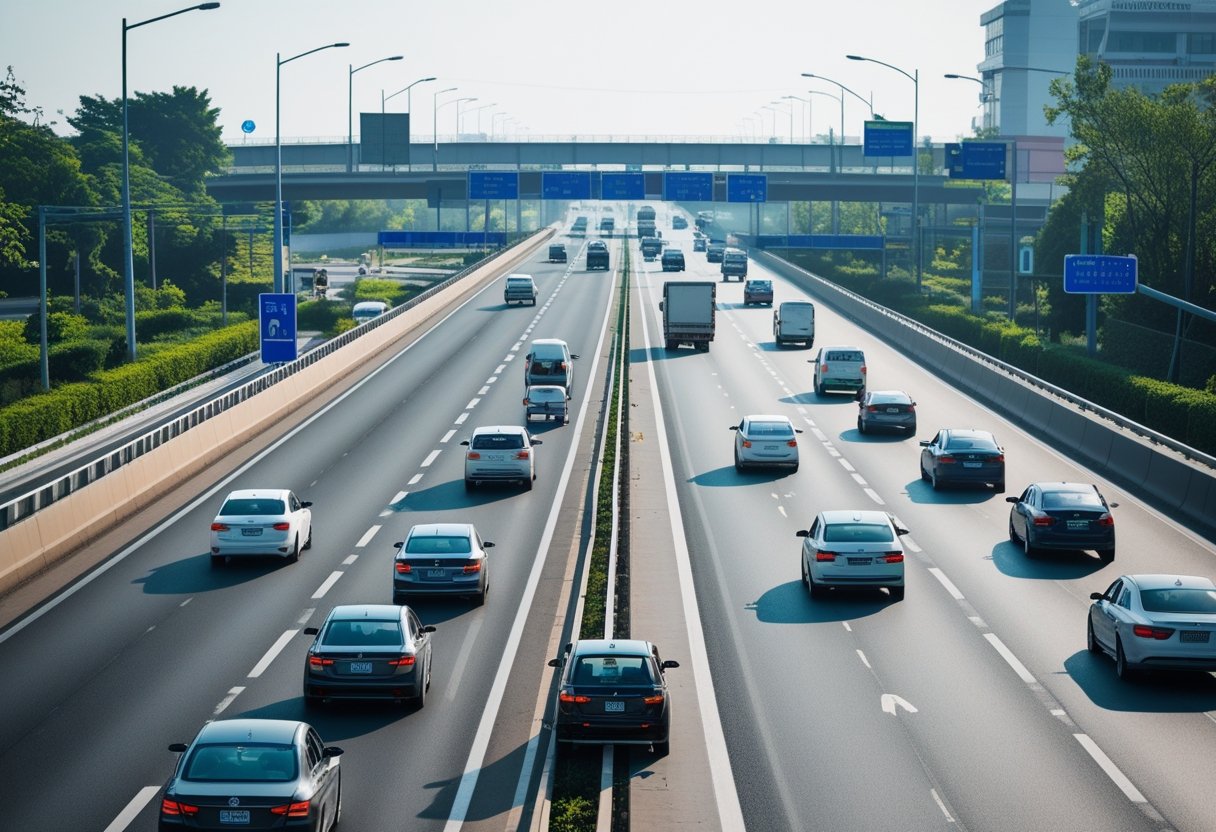
Lane discipline forms the backbone of safe motorway and dual carriageway driving, involving proper lane selection and staying within designated road markings. We’ll explore why it matters for road safety, how choosing the correct lane affects traffic flow, and the essential principles that help new drivers navigate multi-lane roads confidently.
Defining Lane Discipline: Why It Matters
Lane discipline means driving within the boundaries of our chosen lane whilst following the established rules for lane usage. It’s about more than simply staying between the white lines.
What makes good lane discipline:
- Keeping our vehicle centred within lane markings
- Using lanes according to their intended purpose
- Changing lanes safely when necessary
- Returning to the left-hand lane after overtaking
When we maintain proper lane discipline, we create predictable driving patterns that other road users can anticipate. This predictability becomes crucial on busy motorways where vehicles travel at high speeds.
Poor lane discipline creates dangerous situations. Middle-lane hogging forces other drivers to overtake on the right, disrupting natural traffic flow patterns.
The impact on road safety is significant:
- Reduces collision risk by 23% on multi-lane roads
- Prevents dangerous lane-changing manoeuvres
- Maintains consistent traffic speeds
- Creates safer conditions for all road users
New drivers often struggle with lane discipline because they feel overwhelmed by multiple lanes. We can build confidence through practice and understanding the fundamental principles.
The Role of Correct Lane Choice
Choosing the correct lane affects both our journey and everyone else’s driving experience. Each lane on multi-lane roads serves a specific purpose that supports efficient traffic flow.
On motorways, we should drive in the left-hand lane whenever possible. The middle and right lanes are for overtaking slower vehicles, not for continuous travel.
Lane purposes on three-lane motorways:
- Left lane: Normal driving position for most vehicles
- Middle lane: Overtaking slower traffic in the left lane
- Right lane: Overtaking vehicles in the middle lane
Getting into the correct lane early prevents last-minute lane changes. We should check overhead signs and plan our route well before junctions or exits.
Some vehicles have restrictions on lane usage. Lorries over 7.5 tonnes cannot use the right-hand lane on motorways with three or more lanes. This rule keeps the fastest lane clear for overtaking cars.
Benefits of proper lane choice:
- Smoother traffic flow for everyone
- Reduced fuel consumption
- Lower stress levels whilst driving
- Better journey times across the network
Understanding these lane functions helps new drivers make confident decisions about positioning their vehicle correctly.
Core Principles for Safer Journeys
We can master lane discipline by following several key principles that professional drivers use every day. These guidelines work together to create safer, more efficient multi-lane driving.
Keep left when possible is our primary rule. Return to the left-hand lane once we’ve safely overtaken slower vehicles. This keeps middle lanes clear for other drivers who need to overtake.
Plan lane changes early by reading road signs and checking mirrors regularly. Rushing to change lanes at the last moment creates dangerous situations for ourselves and other road users.
Maintain steady positioning within our chosen lane by:
- Keeping equal distance from both lane markings
- Avoiding drifting towards other lanes
- Staying alert to our vehicle’s position
- Making small steering adjustments when needed
Signal intentions clearly before changing lanes. Check mirrors, signal early, and ensure we have sufficient gap before moving. Other drivers need time to react to our movements.
Respect lane restrictions that apply to different vehicle types. We must understand which lanes our vehicle can legally use, especially when towing trailers or driving larger vehicles.
Exit lanes require special attention. Get into the correct lane well before our junction, following overhead direction signs. Never change lanes at the last second to catch an exit.
These principles become natural habits with practice, helping new drivers develop the confidence needed for safe multi-lane driving.
The Fundamentals of Lane Positioning
Proper lane positioning starts with understanding road markings and signs, then choosing the right lane for where you’re heading. We’ll build your confidence by mastering these essential skills that keep you and other drivers safe.
Identifying and Interpreting Lane Markings
Lane markings are your visual guide to staying in the correct position on the road. Solid white lines separate lanes travelling in the same direction and tell us not to cross them unless it’s safe to do so.
Broken white lines allow us to change lanes when we need to overtake or move position. The longer the gaps between the dashes, the safer it is to cross.
Double white lines require extra care. If the line nearest to us is broken, we can overtake when it’s safe. When it’s solid on our side, we must stay put unless we’re passing a cyclist or slow-moving vehicle.
Centre lines help us judge our position perfectly. We should stay roughly one metre from these markings in normal conditions.
Chevron markings create safety zones on busy roads. Never drive through these unless traffic conditions make it unavoidable, and even then, keep your distance from other vehicles.
Hatched markings with solid borders are no-go zones. Those with broken borders can be entered if necessary, but it’s best to avoid them during your driving lessons and beyond.
Recognising and Responding to Traffic Signs
Traffic signs work hand-in-hand with lane markings to guide us into the correct lane. Blue rectangular signs above motorways and dual carriageways show us exactly which lanes serve our destination.
Look for these signs well in advance. They’ll display place names, road numbers, or symbols pointing to specific lanes. Getting into the right lane early prevents last-minute dangerous manoeuvres.
White arrows painted on the road surface confirm which direction each lane serves. Straight arrows mean the lane continues ahead, whilst curved arrows indicate turning lanes.
The Highway Code emphasises planning ahead when we see these signs. We should never wait until the last moment to change lanes, especially during busy periods.
Some signs show lane restrictions too. Bus lanes, cycle lanes, and time-restricted routes all have specific markings. Understanding these prevents us from accidentally breaking traffic rules.
Overhead gantry signs on motorways give us advance warning of lane closures, speed limits, or traffic conditions. These electronic displays help us choose the smoothest path forward.
Selecting the Optimal Lane for Your Journey
Choosing the right lane means thinking ahead about where we’re going. On motorways and dual carriageways, we should always use the left-hand lane unless we’re overtaking or the road ahead is busy.
Plan your route before setting off. Knowing which junction or exit we need helps us position ourselves correctly miles in advance. This forward thinking makes our driving smoother and safer.
For multi-lane roundabouts, we must choose our lane before entering. Left lane for turning left or going straight (unless signs say otherwise), right lane for turning right or going around further.
Urban roads often have multiple lanes serving different purposes. Shopping areas might have right-turn lanes, whilst main routes have through-traffic lanes. Road markings and signs guide these choices.
Consider traffic flow when selecting lanes. Faster-moving traffic typically uses middle or right lanes on multi-lane roads, whilst the left lane suits steady, consistent speeds.
Remember that lane discipline isn’t just about following rules. It’s about being predictable, courteous, and safe. Other drivers need to anticipate our movements, so clear intentions and smooth lane changes matter enormously.
Executing Safe Lane Changes and Overtaking
Safe lane changes and overtaking require careful planning, clear communication with other road users, and precise timing. We need to check our surroundings thoroughly, signal our intentions early, and execute smooth movements that don’t disrupt traffic flow.
Preparing for a Lane Change: Checks and Signals
Before we even think about changing lanes, we must check our mirrors systematically. Start with the interior mirror, then the relevant wing mirror for the direction we’re heading.
Signal early to give others plenty of warning. We should indicate for at least eight seconds on motorways and dual carriageways. This gives faster-moving vehicles time to adjust their speed or position.
The timing of our signal matters enormously. If there’s a vehicle beside us, wait until they’re alongside our car before signaling. This ensures they can actually see our indicator working.
Check for upcoming junctions or slip roads. Other drivers might misinterpret our signal if we indicate too early near these areas. They could think we’re exiting rather than changing lanes.
We must also assess the speed and spacing of traffic in our target lane. Look for a gap that’s at least three car lengths long at motorway speeds.
Never rush this preparation phase. Taking those extra seconds to plan properly prevents dangerous situations and keeps everyone safer on the road.
Managing Blind Spots and Maintaining Visibility
Every vehicle has blind spots where our mirrors can’t show us everything. These hidden areas typically sit just behind our shoulders on both sides of the car.
A quick shoulder check eliminates blind spot risks. Turn your head briefly to check the area your mirrors miss. This physical check catches motorcycles, cyclists, or cars that might be lurking unseen.
Timing this shoulder check correctly takes practice. Do it after checking mirrors but just before starting the lane change movement. Keep it quick so we don’t lose sight of what’s ahead.
Position ourselves to stay visible to others. Avoid lingering in other drivers’ blind spots, especially alongside lorries or large vehicles. If we can’t see their mirrors, they definitely can’t see us.
Consider the weather and lighting conditions too. Rain, fog, or dazzling sun can make us harder to spot. In these conditions, we need extra caution and longer gaps before changing lanes.
Modern cars sometimes have blind spot monitoring systems, but we shouldn’t rely on them entirely. They’re helpful aids, but our own careful observations remain the most reliable method for safe lane changes.
Overtaking with Confidence and Courtesy
Successful overtaking starts with choosing the right moment. We need a clear view ahead and a gap large enough to complete the manoeuvre safely.
Maintain our speed while moving smoothly into the overtaking lane. Don’t accelerate harshly or brake suddenly during the lane change itself. These abrupt movements can unsettle our car’s balance and surprise other drivers.
Once we’re in the overtaking lane, we can increase speed appropriately to pass the slower vehicle. Keep this acceleration steady and controlled rather than aggressive.
Leave plenty of space when passing. We should see the entire vehicle we’re overtaking in our interior mirror before considering a return to the left lane. This ensures we’re completely clear.
Be particularly careful when overtaking lorries or buses. These large vehicles create air turbulence that can affect our car’s handling, especially in windy conditions.
Stay patient if the overtaking takes longer than expected. Forcing the situation by cutting back in too early puts everyone at risk and defeats the purpose of safe driving.
Returning Smoothly After Overtaking
The return to our original lane requires just as much care as the initial lane change. We must signal early and check our mirrors thoroughly once again.
Wait until we can see the overtaken vehicle clearly in our interior mirror. This gives us the safe distance needed and shows courtesy to the driver we’ve just passed.
Cancel our indicator immediately after completing the return movement. Leaving it flashing confuses other road users about our intentions.
Gradually adjust our speed back to appropriate levels for the left lane. If we’ve been travelling faster to complete the overtake, we might need to ease off the accelerator slightly.
Check that our return hasn’t forced anyone to brake or change their plans. A successful overtaking manoeuvre shouldn’t disrupt the flow of traffic or create problems for other drivers.
Remember that on motorways, we should always return to the left-hand lane as soon as it’s safe to do so. The right lanes are for overtaking only, not for cruising at our preferred speed.
Maintaining Appropriate Distance and Speed
Proper spacing and speed control work hand in hand to create safer multi-lane driving conditions. We’ll explore how safe following distances protect you from sudden stops, why matching traffic flow reduces dangerous speed differences, and how smart planning makes lane changes smoother during busy periods.
Practising Safe Following Distances
The three-second rule gives us a reliable starting point for safe following distance. Pick a fixed object ahead, like a bridge or sign post. When the car in front passes it, count “one thousand and one, one thousand and two, one thousand and three.”
If you reach that same spot before finishing your count, you’re too close. Drop back until you can complete the full three seconds comfortably.
Weather changes everything about following distance. Rain, fog, or icy conditions mean doubling or even tripling that gap. Wet roads need much longer stopping distances than dry tarmac.
Speed also affects the gap you need:
- 30 mph: minimum 23 metres (about 6 car lengths)
- 50 mph: minimum 38 metres (about 10 car lengths)
- 70 mph: minimum 53 metres (about 14 car lengths)
Heavy vehicles need extra consideration too. Lorries and buses take longer to stop, so give them more room. If a large vehicle is following you, maintain steady speed to help them judge their own following distance.
Adapting Your Speed to Match Traffic Flow
Matching traffic flow doesn’t mean copying every speed change around you. It means finding a steady pace that works with the general movement of vehicles in your lane.
Watch the traffic patterns ahead. Are cars bunching up or spreading out? This tells you whether to ease off the accelerator or maintain your current speed.
The left lane typically moves slower on multi-lane roads. Use this lane when you’re not overtaking or when traffic is heavy. Middle lanes often flow at moderate speeds, whilst the right lane handles faster-moving traffic.
Speed matching becomes crucial during:
- Peak traffic periods when flow varies frequently
- Merging situations where speed differences create gaps
- Approaching motorway exits where vehicles slow down
Don’t become a rolling roadblock by driving significantly slower than surrounding traffic. This creates dangerous overtaking situations and frustrates other drivers.
Managing Lane Changes in Congested Conditions
Heavy traffic makes lane changes trickier, but planning ahead reduces stress and risk. Start looking for your exit or preferred lane well before you need to move.
Signal early to show your intentions. Other drivers are more likely to create space when they understand what you’re trying to do. A three-second signal gives everyone time to react.
Look for natural gaps rather than forcing your way in. Traffic often moves in waves during congestion. These patterns create opportunities for smoother lane changes.
Follow this sequence for safer moves:
- Check mirrors and blind spots twice
- Signal your intention clearly
- Wait for an adequate gap (at least two car lengths)
- Move decisively but smoothly
- Cancel your signal and adjust speed
Patience pays off in heavy traffic. Missing one gap means waiting for the next one, not squeezing into spaces that are too small. We’ve all seen the chaos that aggressive lane changing creates during rush hour.
Navigating Roundabouts and Special Multi‑Lane Scenarios
Multi‑lane roads present unique challenges when approaching roundabouts and special lane configurations. Success depends on reading road markings correctly, selecting appropriate lanes early, and understanding how different vehicle types use dedicated lanes.
Multi‑Lane Roundabouts: Choosing and Sticking to Lanes
Getting into the right lane before reaching a roundabout makes all the difference. We need to look for overhead signs and road markings well in advance.
Lane Selection Guidelines:
- Left lane: First exit (turning left)
- Middle lane: Going straight ahead or sometimes second exit
- Right lane: Third exit or beyond (turning right)
Road markings often show arrows indicating which exits each lane serves. Some roundabouts have lanes that serve multiple exits, so we must pay close attention to the specific markings.
Once we’ve chosen our lane, staying in it becomes crucial. Changing lanes inside a roundabout creates dangerous situations for other drivers, cyclists, and motorcyclists.
We signal right when approaching if taking the third exit or beyond. For going straight or turning left, no signal is needed until we pass the exit before ours, then we signal left.
Key Points for Safety:
- Enter only when there’s a safe gap from traffic on our right
- Maintain steady speed through the roundabout
- Check mirrors before exiting for cyclists or motorcyclists
- Give way to pedestrians at crossing points
Responding to Road Markings and Signals at Junctions
Road markings and traffic signs provide essential guidance at complex junctions. We must interpret these correctly to maintain proper lane discipline.
Common Junction Markings:
- Solid white lines: Cannot cross between lanes
- Broken white lines: Can change lanes when safe
- Arrow markings: Show permitted directions for each lane
- STOP or GIVE WAY lines: Indicate where to position our vehicle
Traffic lights at junctions often have filter arrows. Green filter arrows allow specific lanes to proceed whilst other traffic waits. We only move when our lane’s signal shows green.
Yellow box junctions require special attention. We can only enter if our exit is clear, even with a green light. This prevents blocking the junction when traffic ahead stops.
Lane discipline becomes vital when approaching traffic-light-controlled junctions. We choose our lane based on our intended direction and stick to it. Late lane changes create confusion and potential accidents.
Some junctions have dedicated turning lanes with their own traffic signals. These lanes help traffic flow but require us to position correctly well before the junction.
Understanding Bus, Cycle, and High‑Occupancy Lanes
Special lanes help different road users travel more efficiently, but we need to understand the rules governing each type.
Bus Lanes:
Bus lanes usually operate during specific hours, shown on blue signs. Outside these hours, we can often use them. Red routes and bus lanes have different rules, so checking signs carefully prevents penalties.
Cycle Lanes:
Cycle lanes come in several forms. Mandatory cycle lanes have solid white lines, and we cannot drive or park in them. Advisory cycle lanes have broken white lines, allowing us to enter when necessary but giving cyclists priority.
We must be especially careful when changing lanes near cycle lanes. Cyclists and motorcyclists can appear quickly, so checking mirrors and blind spots becomes essential.
High‑Occupancy Vehicle Lanes:
Some motorways have lanes for vehicles carrying multiple passengers. These lanes help reduce congestion and encourage car sharing.
Best Practices:
- Check lane signs for operating hours and restrictions
- Give cyclists and motorcyclists extra space when changing lanes
- Never use bus lanes during restricted hours
- Be patient when buses pull out from bus stops
Understanding these special lanes helps us plan our route and maintain good relationships with all road users.
Respecting Vulnerable Road Users and Uncommon Road Situations
Multi-lane roads present unique challenges when sharing space with pedestrians, cyclists, and motorcyclists who need extra protection. Weather conditions and poor visibility add another layer of complexity that requires us to adapt our lane discipline and driving approach.
Sharing Multi-Lane Roads with Pedestrians, Cyclists, and Motorcyclists
Vulnerable road users deserve our utmost attention and respect on busy multi-lane roads. These include pedestrians, cyclists, motorcyclists, and horse riders who face greater risks than car drivers.
When we encounter cyclists on multi-lane roads, we should give them at least as much room as we’d give another car when overtaking. Cyclists often position themselves in the centre of the lane for safety reasons, particularly at junctions or in slower traffic.
We mustn’t rush them or squeeze past in the same lane.
Motorcyclists can be surprisingly difficult to spot, especially when they’re filtering through traffic or sitting in our blind spots. Before changing lanes, we need to check mirrors thoroughly and glance over our shoulder.
They accelerate quickly and might appear faster than expected.
Pedestrians on multi-lane roads require special consideration, particularly near bus stops, shopping areas, or where pavements are closed for repairs. We should slow right down when passing stationary buses, as people might step out unexpectedly.
Children and elderly pedestrians need extra patience. They may misjudge our speed or require more time to cross safely between lanes of traffic.
Adjusting Your Approach During Adverse Weather or Low Visibility
Poor visibility conditions transform multi-lane roads into much more challenging environments. Rain, fog, snow, or darkness make it harder to spot vulnerable road users and judge safe distances between lanes.
We need to increase our following distances significantly and reduce speed to match conditions. This gives us more reaction time if a cyclist swerves to avoid a pothole or a pedestrian appears between parked cars.
In wet weather, motorcyclists and cyclists become even more vulnerable. They have less grip and stability, making sudden movements more likely.
We should allow extra space when overtaking and avoid creating spray that reduces their visibility further.
During foggy conditions, we might not see a cyclist until we’re quite close. Using dipped headlights helps others see us, while fog lights should only be used when visibility drops below 100 metres.
Night driving requires extra caution around vulnerable road users. Pedestrians wearing dark clothing can be nearly invisible, while cyclists might only have small reflectors or lights.
We should scan the road ahead continuously and be ready to slow down or change lanes safely if needed.
Frequently Asked Questions
Learning proper lane discipline takes patience and practice, especially when dealing with busy traffic conditions or complex multi-lane systems. These common questions will help you navigate challenging situations with confidence and maintain safe driving habits.
How can I smoothly transition between lanes without disrupting the flow of traffic?
The key to smooth lane changes lies in planning ahead and giving yourself plenty of time. We recommend checking your mirrors and blind spots at least three seconds before making your move.
Signal early to let other drivers know your intentions. This gives them time to adjust their speed or position if needed.
Match the speed of traffic in your target lane before moving over. If you’re going much slower or faster, you’ll disrupt the natural flow.
Choose your moment wisely. Look for a gap that’s at least three car lengths long, which gives you a comfortable buffer zone.
What are the signs to indicate it’s safe to change lanes on a motorway?
Your mirrors should show clear space behind you in the target lane. Check both your wing mirror and interior mirror for a complete picture.
Take a quick glance over your shoulder to check your blind spot. This brief look catches any vehicles your mirrors might miss.
Look for steady traffic flow rather than stop-and-go conditions. Changing lanes during heavy braking or acceleration can be risky.
Watch for other drivers’ signals. If someone else is indicating to move into the same space, wait for them to complete their manoeuvre first.
In what ways can I ensure I’m not straying from my lane during long journeys?
Keep your hands positioned properly on the steering wheel at the 10 and 2 o’clock positions. This gives you better control and prevents unconscious drifting.
Use the lane markings as your guide. Your car should sit centrally between the white lines with equal space on both sides.
Take regular breaks every two hours to combat fatigue. Tiredness is one of the main causes of lane wandering.
Adjust your seating position so you’re comfortable and can see clearly. Poor posture can lead to steering problems over long distances.
Could you give me some tips for effectively observing my blind spots?
Position your mirrors correctly before you start driving. Your wing mirrors should show just a sliver of your car’s side, with most of the view showing the adjacent lane.
Develop a shoulder check routine. A quick glance over your shoulder takes less than a second but reveals crucial information.
Learn where your blind spots are by practising in a safe area. Have someone walk around your parked car so you can see exactly where they disappear from view.
Be extra cautious around motorcycles and cyclists. These smaller vehicles can easily hide in your blind spots, especially in busy urban areas.
What should I do if I find myself unintentionally drifting between lanes?
Don’t panic or make sudden steering corrections. Gentle, smooth movements will get you back on track safely.
Check your mirrors immediately to see if any vehicles are nearby. You need to know if your drift has affected other drivers.
Signal if you need to move back into your original lane. Other drivers will appreciate knowing your intentions.
Focus on the road ahead and use the lane markings to guide you back to the centre. Look where you want to go, not at the problem.
How do I maintain my lane properly at roundabouts with multiple lanes?
Choose your lane before entering based on your exit. Left lane for turning left or going straight, right lane for turning right or going all the way round.
Follow the road markings and overhead signs. These show you exactly which lane leads to your destination.
Stay in your chosen lane throughout the roundabout. Changing lanes while going round can confuse other drivers and cause accidents.
Keep your speed steady and maintain your position relative to the vehicle beside you. This helps everyone predict what you’re going to do next.
Ready to pass in weeks, not months?
LPOD Academy runs tailored intensive driving courses from 10 to 50 hours across most of the UK, with your theory and practical test support included.
Compare intensive driving courses
Get a course recommendation
Ready to Book Driving Lessons?
LPOD Academy offers intensive driving courses across the UK. Find your nearest location: