

Published 7 November 2025, updated 12 July 2026
Can You Drive Barefoot? Fact vs Myth for UK Motorists
You’ve probably wondered about this at least once: can you actually drive barefoot without breaking the law? Maybe you’ve kicked off uncomfortable heels after a long day, or perhaps you’ve heard someone insist it’s completely illegal. The truth might surprise you.
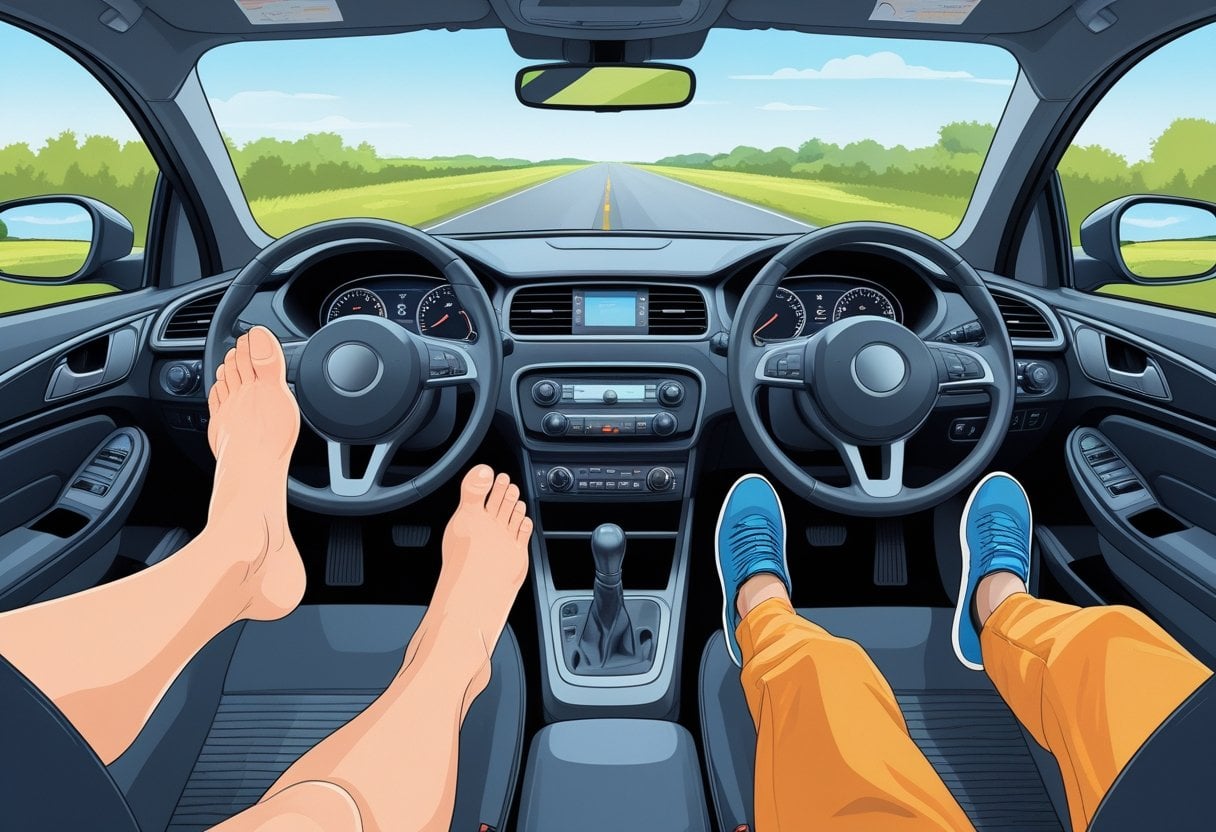
Driving barefoot isn’t illegal in the UK, but that doesn’t necessarily make it the safest choice. There’s no specific law that requires you to wear shoes behind the wheel, yet this myth persists amongst drivers everywhere. We’re here to clear up the confusion and give you the real facts about barefoot driving.
What we’ll explore goes beyond just the legal side of things. We’ll dive into what road safety experts actually recommend, examine the practical risks you might face, and help you understand how different footwear choices could affect your driving. Whether you’re curious about flip-flops, worried about potential legal consequences, or simply want to make informed decisions about safe driving habits, we’ve got the answers you need to drive with confidence.
Footwear myths aside, safe habits are best built under expert guidance, which is exactly what a proper intensive driving course with a qualified instructor gives you from day one.
Is It Really Illegal to Drive Barefoot?
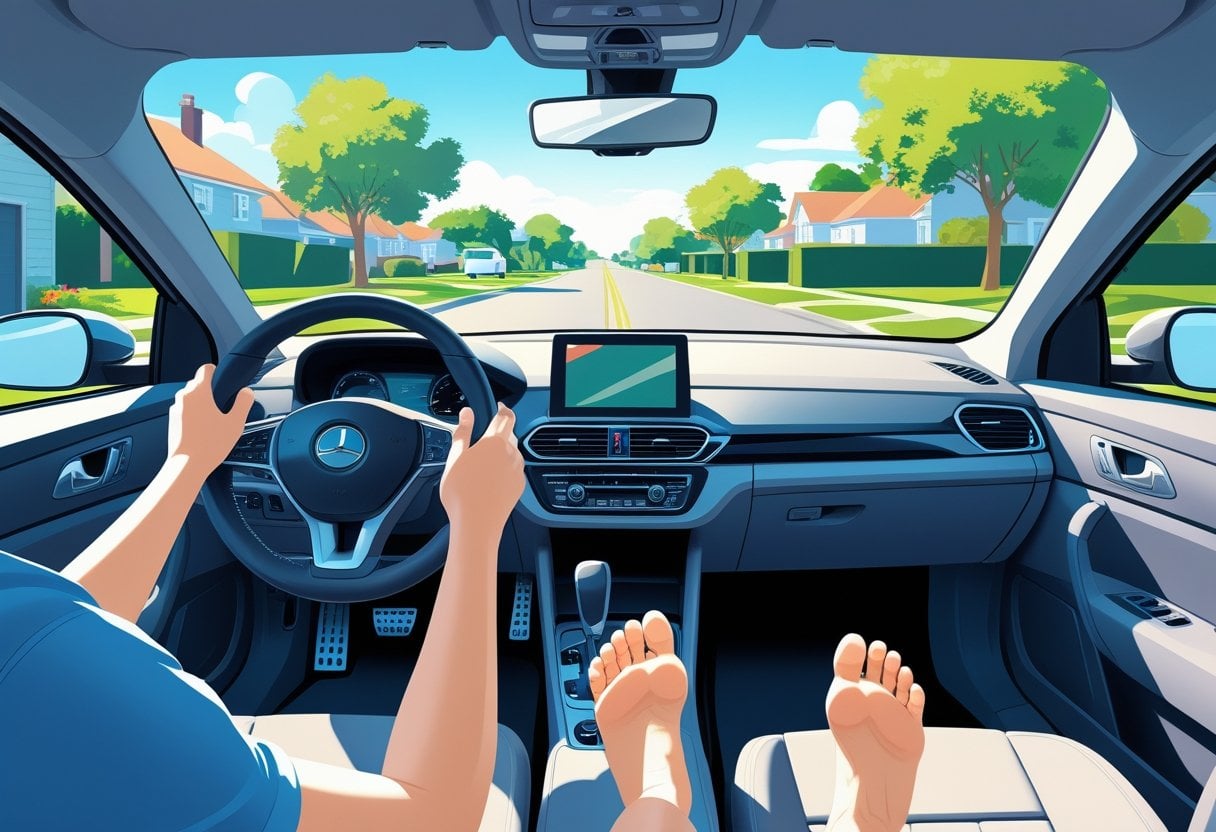
The short answer is no, driving barefoot isn’t actually illegal in the UK, but this widespread myth has confused countless drivers over the years. Let’s clear up what the Highway Code really says and explore why this myth became so popular in the first place.
Understanding the Law in the UK
There’s absolutely no specific law that bans barefoot driving in the UK. The Highway Code doesn’t mention anything about wearing shoes whilst driving.
You can legally get behind the wheel without any footwear at all. The real legal requirement is much simpler: you must be able to control your vehicle safely at all times.
What matters to the law:
- Your ability to operate the pedals effectively
- Maintaining proper control of your vehicle
- Not putting yourself or others at risk
If a police officer believes you’re not in complete control of your car, that’s when problems start. They could charge you with careless driving under section 3 of the Road Traffic Act 1988.
The penalties for careless driving can be serious. You might face fines between £100 and £5,000, plus points on your licence.
However, proving that bare feet caused unsafe driving is quite difficult. The issue isn’t whether you’re wearing shoes, but whether you can drive safely.
Many driving instructors actually keep spare shoes in their cars. This shows how seriously the industry takes proper footwear, even though it’s not legally required.
Common Driving Myths and Where They Come From
The barefoot driving myth is surprisingly popular. Recent data shows searches for “is driving barefoot illegal” have jumped by 83% in just three months.
This myth likely started from genuine safety concerns. Driving instructors and safety experts have long worried about pedal control with bare feet.
Why the myth spread so widely:
- Driving instructors mentioning it during lessons
- Parents passing down incorrect information
- Insurance companies highlighting safety risks
- Social media spreading misinformation
The confusion gets worse because different countries have different rules. Spain actually does ban barefoot driving, whilst it’s legal across all 50 US states.
Some driving myths stick around because they sound logical. Bare feet do provide less grip and force when braking compared to proper shoes.
Insurance companies sometimes fuel these myths too. They might question claims if they think unsafe footwear contributed to an accident.
The Driving Standards Agency recommends against barefoot driving, even though it’s legal. They warn you don’t get the same braking force with bare feet as you do with shoes on.
The Facts: What Road Safety Experts Advise
Driving authorities in the UK have clear guidance on footwear choices for drivers. The Driver and Vehicle Standards Agency and Highway Code provide specific standards that prioritise safety over personal preference.
DVSA and the Highway Code Guidance
The Driver and Vehicle Standards Agency doesn’t beat about the bush when it comes to driving barefoot. They strongly advise against it, explaining that you simply don’t get the same braking force with bare feet as you do with proper shoes.
Rule 97 of the Highway Code states that drivers should wear “footwear and clothing which does not prevent you from using the controls in the correct manner.” This rule puts the responsibility squarely on your shoulders to make sensible choices.
The Highway Code guidance focuses on three key areas:
- Control: Your feet need proper grip on the pedals
- Safety: You must maintain full control at all times
- Responsibility: It’s up to you to choose appropriate footwear
Wet or slippery bare feet create obvious risks. If your foot slides off the brake pedal in an emergency, you could face serious consequences.
Driving Test Standards and Examiner Expectations
During your driving test, examiners expect you to demonstrate safe driving practices. This includes wearing suitable footwear that won’t compromise your ability to control the vehicle.
The Driver and Vehicle Standards Agency sets clear expectations for test candidates. Appropriate driving shoes should have:
- Soles no thicker than 10mm
- Enough grip to prevent slipping
- Narrow width to avoid hitting multiple pedals
- Flexibility for proper ankle movement
Driving instructors regularly remind learners about footwear choices. Many keep spare driving shoes in their cars because flip-flops, high heels, or bare feet simply don’t meet professional driving standards.
If you turn up to your test wearing unsuitable footwear, your examiner might question your judgement before you’ve even started the engine.
Practical Risks of Driving Barefoot
Whilst driving barefoot isn’t against the law, it creates several real safety challenges that could put you and others at risk. Your bare feet might slip on wet pedals, and you’ll likely have less precise control when braking or accelerating in emergency situations.
Pedal Control and Potential Hazards
Pedal control becomes significantly more difficult when you’re driving barefoot. Your bare skin doesn’t grip the pedals as effectively as proper footwear would.
This becomes particularly dangerous during emergency stops. Without shoes, you can’t apply the same braking force that you’d normally manage. The Driving Standards Agency confirms this concern in their official guidance.
Wet conditions make things even trickier. If your feet are damp from rain or perspiration, they might slip right off the brake pedal when you need it most.
There’s also the issue of precision. Bare feet tend to be less accurate when moving between pedals. You might accidentally press both the brake and accelerator together, which could cause a frightening moment behind the wheel.
Key risks include:
- Reduced braking power
- Slipping off pedals when wet
- Less precise pedal movements
- Potential for hitting multiple pedals simultaneously
Weather, Comfort, and Reaction Times
Summer heat can make your feet sweaty, creating a slippery surface against the pedals. This moisture reduces your grip and control significantly.
Cold weather presents different challenges. Your bare feet might become numb or stiff, slowing down your reaction times when you need to respond quickly to road hazards.
Long journeys without shoes can also cause discomfort. Your feet might cramp or become sore from pressing metal pedals directly. This distraction takes your focus away from the road ahead.
Sharp objects on the car floor pose another risk. A loose coin or piece of gravel could cause sudden pain, making you jerk your foot away from the pedals unexpectedly.
We’d recommend keeping a pair of driving shoes in your car if you often wear impractical footwear. This simple solution helps you stay safe whilst maintaining comfort during your journey.
Footwear Choices: Flip-Flops, Slippers, and More
Different types of footwear present unique challenges when driving, from backless sandals that can slip off to heavy boots that reduce pedal sensitivity. Understanding how your shoe choice affects vehicle control helps you make safer decisions behind the wheel.
Why Flip-Flops and Backless Shoes Raise Red Flags
Flip-flops create genuine safety concerns that go beyond simple comfort issues. Without a back strap, they can easily slip off your foot mid-drive or get caught under pedals.
The loose fit means your foot can slide around inside the shoe. This reduces your control when pressing the brake or accelerator. We’ve all experienced that moment when a flip-flop falls off at the worst possible time.
Key problems with backless footwear:
- Can slip off completely whilst driving
- May wedge under pedals, preventing proper use
- Offer little grip between foot and pedal surface
- Create delay in emergency braking situations
Driving in flip-flops isn’t technically illegal. However, if loose footwear contributes to an accident, you could face charges for driving without due care and attention.
The same issues apply to backless sandals, slides, and mules. Any shoe that doesn’t secure properly to your foot poses similar risks.
Socks, Slippers, and Unusual Options
Socks alone provide better pedal feel than flip-flops but lack grip on smooth pedal surfaces. Your foot might slip off the brake pedal when you need it most, especially if the socks are thick or woolly.
Slippers fall into a grey area. Sturdy slippers with proper soles work better than flip-flops. However, loose-fitting bedroom slippers can slip off just as easily as sandals.
Unusual footwear considerations:
- Wellies: Too bulky for precise pedal control
- Steel-toe boots: Heavy and reduce pedal sensitivity
- Crocs: Can slip off but some styles have heel straps
- Dancing shoes: Often too smooth and slippery
House slippers designed for comfort rarely provide the grip and security needed for driving. The soft soles don’t give you the firm contact with pedals that helps with accurate braking and acceleration.
We’d recommend keeping proper driving shoes in your car if you often wear unsuitable footwear.
High Heels, Heavy Boots, and Platform Shoes
High heels create multiple driving hazards that many people don’t consider. The elevated heel can catch on floor mats or get stuck between pedals during quick movements.
Stilettos and thin heels are particularly problematic. They can slip through gaps in some pedal designs or punch holes in rubber pedal covers. The narrow base also makes it harder to apply steady pressure.
Problems with extreme footwear:
| Shoe Type | Main Issues |
|---|---|
| High heels | Catch on mats, unstable base, reduced ankle movement |
| Platform shoes | Poor pedal feel, clumsy movement, height misjudgement |
| Heavy boots | Bulky fit, accidental double-pedal pressing, reduced sensitivity |
| Wedges | Awkward angle, can slip sideways off pedals |
Platform shoes and chunky trainers make it difficult to judge how much pressure you’re applying. The thick soles create distance between your foot and the pedal, reducing your ability to make fine adjustments.
Work boots and hiking boots are often too wide. You might accidentally press two pedals at once, which could cause dangerous acceleration whilst braking.
Can Driving Barefoot Affect Your Legal Standing?
While driving barefoot isn’t directly illegal, it can create serious legal complications if it impacts your ability to drive safely. The key issues revolve around careless driving charges and potential insurance problems.
Careless Driving and Legal Definitions
Driving without due care and attention becomes a real concern when barefoot driving affects your vehicle control. We need to understand that the law focuses on your driving ability rather than what you’re wearing on your feet.
If your bare feet slip off the pedals or you can’t brake properly, you could face charges for careless driving. This carries penalties of up to £100 fine and three points on your licence.
The legal test is straightforward: can you operate the controls safely? Wet feet make this particularly risky. Your feet might slide off the brake pedal in an emergency.
Dangerous driving charges could apply in severe cases. This happens when your footwear choice creates obvious danger to other road users.
Police and courts will examine whether your bare feet contributed to any incident. They’ll consider if proper footwear could have prevented the situation.
Insurance Claims and Liability
Insurance companies scrutinise driving practices during claims investigations. Policy exclusions often cover unsafe driving behaviours that breach your duty of care.
Your insurer might deny a claim if they determine barefoot driving contributed to an accident. This creates significant financial risk beyond any legal penalties.
We’ve seen cases where insurers argue that drivers failed their responsibility to operate vehicles safely. Barefoot driving can become evidence of negligence.
The burden falls on you to prove your bare feet didn’t cause or worsen the incident. This makes defending claims more challenging and expensive.
Always check your insurance terms regarding safe driving requirements. Many policies expect you to take reasonable precautions, which includes appropriate footwear choices.
Stay Safe: Smart Habits for Confident Drivers
Good driving habits begin with the right footwear choices and extend to consistent practices that keep you alert and prepared. Building these routines from the start helps create a foundation for years of safe motoring ahead.
Tips for Choosing the Right Driving Shoes
We recommend keeping a dedicated pair of driving shoes in your car. This simple habit eliminates the guesswork when you’re wearing impractical footwear.
Look for these key features:
- Sole thickness: Between 5-10mm works best
- Good grip: Prevents your foot slipping off pedals
- Ankle support: Allows natural movement without restriction
- Narrow fit: Reduces risk of pressing multiple pedals
Trainers often tick all these boxes perfectly. They provide excellent pedal feel whilst maintaining comfort during longer journeys.
Avoid these common footwear mistakes:
- High heels that catch under pedals
- Flip-flops that slide off your feet
- Heavy boots that limit ankle flexibility
- Thick-soled shoes that reduce pedal sensitivity
Some experienced drivers change shoes before every journey. It might seem excessive, but it becomes second nature quickly.
Keep your driving shoes easily accessible. Store them in your door pocket or under the driver’s seat for convenience.
Building Good Habits for Every Journey
Consistency creates confidence behind the wheel. We encourage new drivers to establish routines that become automatic over time.
Pre-drive checks matter:
- Adjust your seat before starting the engine
- Test your pedal reach whilst stationary
- Ensure nothing rolls under your feet
- Check your mirrors and steering position
Your foot position affects your entire driving posture. Rest your right heel on the floor between the brake and accelerator. This creates a stable pivot point for smoother pedal control.
Practice emergency stops in safe environments. Car parks work well for this. You’ll quickly notice how different shoes affect your braking response.
Build these habits early:
- Keep your driving area tidy and clutter-free
- Maintain consistent pedal pressure techniques
- Stay alert to how fatigue affects your reactions
- Regular breaks help maintain concentration levels
Remember that good habits take time to develop. Be patient with yourself whilst learning, but stay committed to safety standards from day one.
Frequently Asked Questions
Many drivers have questions about barefoot driving, from legal concerns to safety implications. These common queries help clarify the facts surrounding this widespread driving myth.
Is it legal to operate a vehicle without footwear in the UK?
Yes, driving barefoot is completely legal in the UK. There’s no specific law that prevents you from getting behind the wheel without shoes on.
However, we must remember that Rule 97 of the Highway Code requires drivers to ensure their clothing and footwear don’t prevent them from using controls properly. This means whilst barefoot driving isn’t illegal, you could face penalties if it affects your ability to drive safely.
If police determine that driving barefoot contributed to an accident or dangerous driving, you might receive a £100 fine and three points on your licence for careless driving.
What are the potential safety implications of driving without shoes?
Driving barefoot can reduce your grip and control over the pedals. Your bare feet might slip off the brake or accelerator, particularly if they’re wet or sweaty.
Without shoes, you lose the firm connection between your foot and the pedal that proper footwear provides. This can lead to delayed reactions in emergency situations.
The lack of protection also means sharp objects on the car floor could injure your feet. Even small distractions like this can affect your concentration whilst driving.
Could insurance policies be affected by choosing to drive barefoot?
Most insurance policies don’t specifically exclude barefoot driving. However, if driving without shoes contributes to an accident, your insurer might investigate whether this affected your ability to control the vehicle safely.
Insurance companies could potentially reduce payouts if they determine that barefoot driving was a contributing factor to the incident. This would fall under their assessment of whether you were driving with reasonable care.
We recommend checking your policy documents or speaking with your insurer if you have concerns about this aspect of coverage.
In terms of vehicle control, how does driving sans shoes compare to wearing footwear?
Proper footwear provides much better pedal control than bare feet. Flat, thin-soled shoes allow you to feel the pedals clearly whilst maintaining a secure grip and connection.
Bare feet can struggle with the pressure needed for emergency braking. You might not be able to apply maximum force as effectively as you would with appropriate shoes.
The heel of a proper driving shoe also helps create a stable pivot point. This makes it easier to move smoothly between the accelerator and brake pedals.
Are there any specific types of footwear considered unsuitable or dangerous for driving?
High heels are particularly dangerous because they can catch under pedals or make it difficult to apply proper pressure. Flip-flops pose similar risks as they can slip off or get wedged under the brake pedal.
Heavy boots, especially steel-toed varieties, reduce your ability to feel the pedals properly. This makes it harder to judge how much pressure you’re applying.
Shoes with very thick soles also create problems with pedal sensitivity. We recommend flat shoes with thin, flexible soles that stay securely on your feet.
What guidance do driving instructors offer regarding appropriate footwear for driving lessons or tests?
Most driving instructors strongly advise wearing proper driving shoes for lessons and tests. They typically recommend flat shoes with thin soles that allow good pedal feel.
Instructors often keep spare driving shoes in their cars for pupils who arrive in unsuitable footwear. This shows how seriously they take appropriate footwear for safe driving.
During your driving test, examiners expect you to demonstrate full control of the vehicle. Wearing proper shoes helps ensure you can operate all controls confidently and safely.
Ready to pass in weeks, not months?
LPOD Academy runs tailored intensive driving courses from 10 to 50 hours across most of the UK, with your theory and practical test support included.
Ready to Book Driving Lessons?
LPOD Academy offers intensive driving courses across the UK. Find your nearest location: