

Published 24 November 2025, updated 14 August 2026
Mastering Observations at Junctions to Avoid Common Test Faults: Your Confident Guide to Passing
Getting your observation skills right at junctions can make or break your driving test success. For the past decade, poor observation at these critical points has topped the list as the number one reason learners fail their practical driving test with the Driver and Vehicle Standards Agency. It’s frustrating because this skill is completely within your control once you know what to look for.
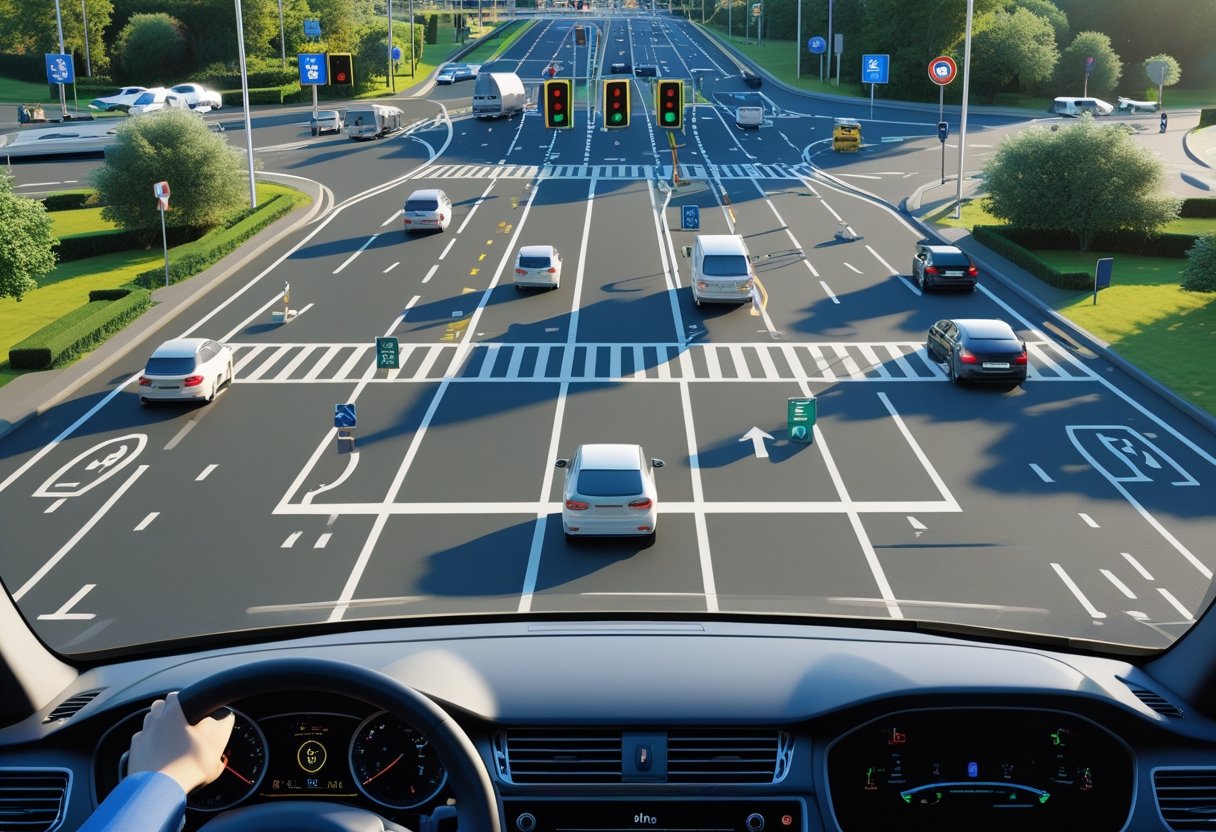
Mastering junction observations means understanding that these busy intersections require a systematic approach to scanning for hazards, assessing timing, and making safe decisions under pressure. We’ve seen countless learners struggle with this exact challenge, but the good news is that with proper technique and practice, you can turn this common weakness into one of your strongest driving skills.
The learners who improve fastest tend to practise these observations intensively, so it is worth comparing our intensive driving course packages if junctions are your sticking point.
Every junction presents a unique puzzle of moving parts: other vehicles, cyclists, pedestrians, and varying road layouts all demanding your attention simultaneously. The key lies not just in looking, but in developing the right sequence of observations that keeps you safe whilst demonstrating to your examiner that you’re a competent, confident driver ready for the road.
Key Takeaways
- Poor junction observation has been the top reason for driving test failures for over ten years running
- Successful junction navigation requires systematic scanning techniques and proper timing rather than rushed decisions
- Developing confident observation skills at junctions transforms a common test weakness into your driving strength
Why Observations at Junctions Matter Most
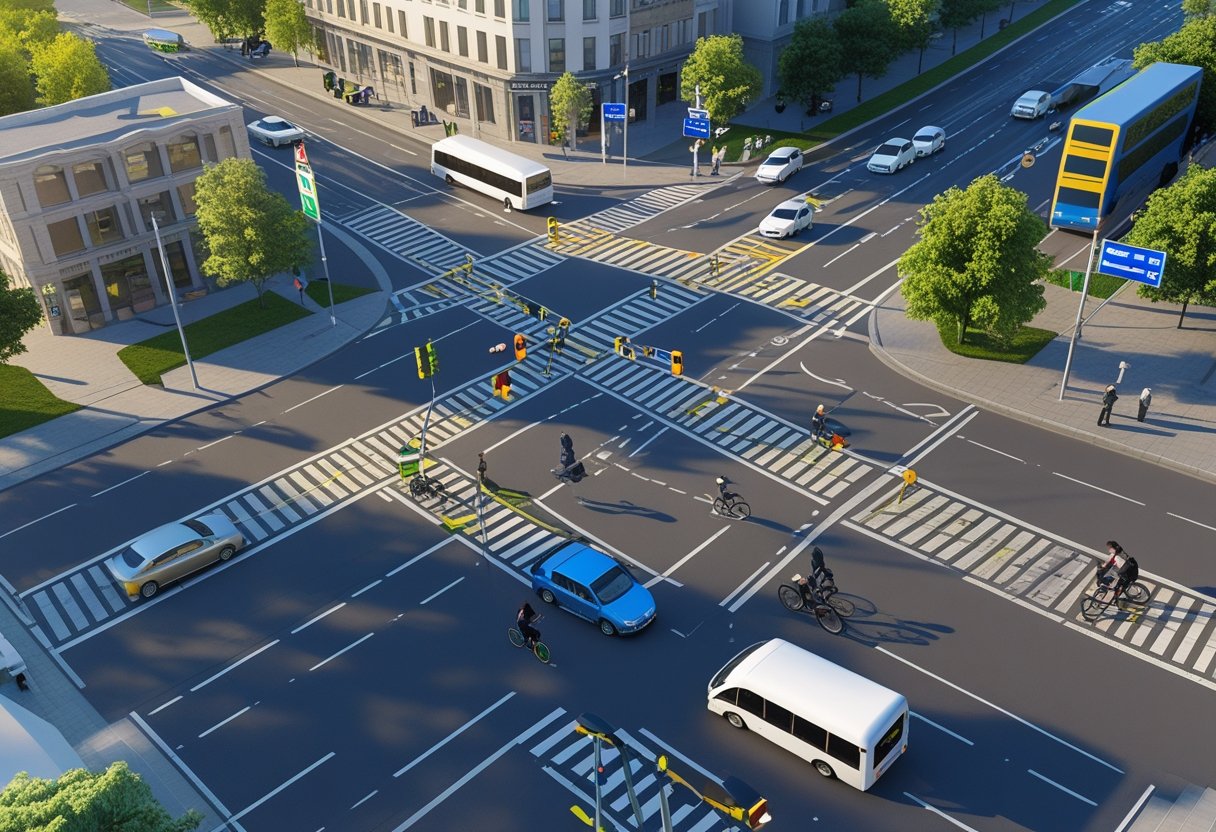
Poor observation at junctions causes more test failures than any other mistake, with over 40% of learners failing for this reason in some areas. This single error carries such weight because it directly links to real-world accident prevention and demonstrates your ability to keep yourself and others safe on Britain’s roads.
Understanding Major and Minor Faults
When we talk about observation faults at junctions, we’re dealing with major faults that result in instant test failure. The DVSA classifies these as serious because they show you’ve endangered yourself, other road users, or property.
A major fault means you’ve created genuine risk. This isn’t about small mistakes like forgetting to check your mirror once. Instead, it’s about pulling out when it’s unsafe or missing a cyclist who’s right there beside you.
Minor faults are different. You can accumulate up to 15 minor faults and still pass your test. However, junction observation errors rarely fall into this category because poor awareness at these critical points almost always creates danger.
The difference comes down to consequences. Did your action put someone at risk? If yes, that’s a major fault and an immediate fail.
The Impact of Insufficient Observation
Insufficient observation at junctions doesn’t just fail driving tests. It creates the conditions for serious accidents on our roads. These junction-related collisions remain one of the biggest risk factors for new drivers.
When you don’t look properly, you might miss pedestrians crossing, cyclists in your blind spot, or oncoming traffic that’s closer than you think. Each of these scenarios can lead to crashes that change lives forever.
The problem often starts with rushing. Many learners approach junctions too quickly, leaving themselves insufficient time to scan properly. Others look but don’t really see what’s happening around them.
Your examiner watches for these patterns because they predict how you’ll drive once you pass. Poor junction awareness during your test suggests you’ll struggle with these situations as a qualified driver.
Role of Observations in Road Safety
Effective observations at junctions form the foundation of safe driving habits that will protect you throughout your driving career. We know that road collisions remain the leading cause of death among young people in Britain.
Good observation skills help you spot hazards early. This extra time lets you respond calmly rather than panic. You’ll notice the child who might step out, the car that’s indicating but hasn’t started turning, or the motorcycle approaching faster than expected.
Your awareness extends beyond just looking. It includes understanding what different road users might do next. Pedestrians near crossings, delivery drivers double-parked, or buses pulling away all create specific risks you need to anticipate.
Building strong observation habits now sets you up for a lifetime of confident, safe driving. These skills become automatic with practice, helping you navigate complex junctions smoothly and safely long after you’ve passed your test.
Types of Junctions You’ll Encounter
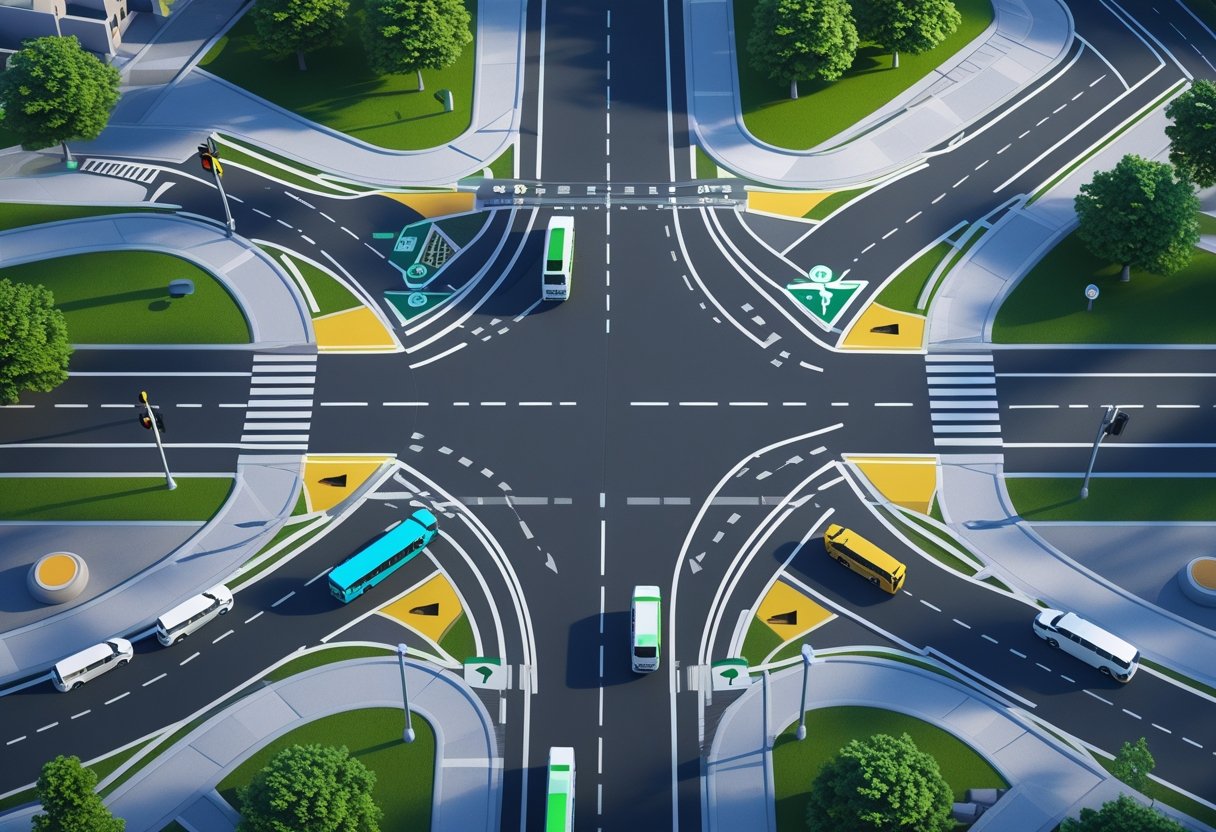
During your driving test, you’ll face several different junction types, each requiring specific observation techniques and approaches. Understanding whether you’re dealing with a T-junction, roundabout, or unmarked crossroads will help you adjust your scanning patterns and decision-making process accordingly.
T-Junctions, Crossroads, and Box Junctions
T-junctions are amongst the most common junctions we encounter during lessons and tests. They form a ‘T’ shape where one road meets another at a right angle.
At T-junctions, you’ll typically be either turning left, turning right, or continuing straight from the main road. When approaching from the minor road, you must give way to traffic on the major road in both directions.
Crossroads present a more complex challenge because traffic can approach from four different directions. These junctions require extra vigilance as you need to observe vehicles that might be turning across your path or continuing straight ahead.
The key with crossroads is systematic observation. Look left, right, then left again before proceeding. Don’t forget to check for pedestrians crossing at each corner of the junction.
Box junctions are marked with yellow criss-cross lines on the road surface. The golden rule here is simple: don’t enter unless your exit is clear.
We often see learners panic at box junctions, but they’re actually straightforward once you understand the principle. You can wait in the box if you’re turning right and only oncoming traffic prevents you from completing the turn.
Marked, Unmarked, Open and Closed Junctions
Marked junctions come with helpful road signs, traffic lights, or road markings that clearly indicate who has priority. These might include:
- Give way signs and road markings
- Stop signs with solid white lines
- Traffic lights controlling the flow
- Yellow box junction markings
These visual cues make decision-making easier because the rules are clearly displayed.
Unmarked junctions can catch learners off guard because there are no signs indicating priority. At these junctions, nobody has automatic right of way, so extra caution is essential.
The safest approach at unmarked junctions is to slow down significantly and be prepared to give way to any traffic that’s already established on the junction.
Open junctions provide clear visibility of the road you’re joining. You can see approaching traffic from both directions, making it easier to judge safe gaps.
Closed junctions have obstructed views due to buildings, hedges, or parked cars. These require the ‘creep and peep’ technique: edge forward slowly until you can see clearly, then make your decision.
Roundabouts and Dual Carriageways
Roundabouts follow a consistent rule: give way to traffic approaching from your right. However, observation becomes more complex because you need to watch multiple lanes and assess the intentions of several drivers simultaneously.
Start your observations early when approaching roundabouts. Check your mirrors, signal appropriately, and position yourself in the correct lane well before reaching the junction.
Multi-lane roundabouts require extra attention. Watch for vehicles that might change lanes without signalling, and always check your blind spots before moving between lanes.
Dual carriageway junctions often involve crossing or joining roads with faster-moving traffic. The observation process becomes more critical because vehicles approach at higher speeds, giving you less time to react.
When joining a dual carriageway, you’ll typically have two stages: crossing the first carriageway and then joining or crossing the second. Treat each stage as a separate junction with its own observation requirements.
The central reservation often provides a safe waiting area, but don’t assume you can always fit your entire vehicle there. Check the width before committing to the manoeuvre.
Perfecting Your Approach: Before You Arrive
Success at junctions starts well before you reach the junction itself. Proper planning, maintaining the right speed, and following a structured routine will set you up for confident observations when it matters most.
Planning and Early Preparation
We need to start thinking about junctions from the moment they appear on our horizon. This means scanning ahead constantly and reading the road signs that tell us what’s coming up.
Look for clues that signal an approaching junction. Road signs, street lights, and changes in the road layout all give us valuable information. We can spot side roads, traffic lights, or roundabouts before we’re right on top of them.
Key planning indicators:
- Road signs showing directions or distances
- Street lighting appearing on rural roads
- Buildings or shops clustered together
- Changes in road markings or lane arrangements
The state of the road also matters enormously. Wet conditions mean we need more stopping distance. Poor visibility requires earlier preparation and slower speeds.
We should identify our intended route early. Are we turning left, right, or going straight ahead? This decision shapes everything that follows, from lane positioning to signal timing.
Correct Speed and Positioning
Getting our speed right is absolutely crucial for safe junction approaches. Too fast, and we can’t react properly to hazards. Too slow, and we frustrate other drivers or show poor judgement.
We need to reduce speed gradually as we approach. This gives us more time to observe and assess the situation properly. The exact speed depends on the junction type and visibility.
Speed guidelines for different junctions:
- T-junctions: Slow enough to stop if needed
- Traffic lights: Match the flow of traffic
- Roundabouts: Reduce to safe turning speed
- Crossroads: Consider all four directions
Road positioning works hand in hand with speed control. We should position ourselves in the correct lane well before reaching the junction. Last-minute lane changes create unnecessary risks.
For left turns, we stay reasonably close to the left kerb. Right turns require positioning closer to the centre line. Going straight ahead means holding our lane position steadily.
Lane discipline shows the examiner we’re planning ahead and thinking about our movements.
Effective Mirror-Signal-Manoeuvre Routine
The mirror-signal-manoeuvre sequence forms the backbone of safe junction approaches. We use this routine consistently, regardless of junction type or traffic conditions.
Mirror checks come first, every single time. We check our rear-view mirror to see what’s behind us. Then we check the relevant wing mirror for the direction we’re planning to move.
Signalling follows our mirror checks. We signal our intentions clearly and early enough for other road users to react. Left signals for left turns, right signals for right turns, and no signal when continuing straight ahead.
Mirror check priorities:
- Rear-view mirror for following traffic
- Left wing mirror before moving left
- Right wing mirror before moving right
- Additional checks for blind spots
The manoeuvre phase involves our actual movement and positioning. We combine steering, speed control, and continued observation as we execute our plan.
Throughout this routine, we keep checking our mirrors. Traffic situations change quickly, and we need to stay updated on what’s happening around us. Regular mirror use demonstrates good awareness and helps us make better decisions.
Mastering Observations at the Junction
Getting your observations spot on at junctions requires knowing exactly where to look, when to check, and what to watch for. The secret lies in timing your mirror checks perfectly, judging other vehicles’ speed accurately, and keeping a sharp eye out for vulnerable road users who might appear from nowhere.
Where and When to Look
Your observation sequence should start well before you reach the junction. Begin with your mirrors about 100 metres back, checking what’s happening behind and alongside you.
As you approach, use the mirror-signal-manoeuvre routine. Check your interior mirror first, then your wing mirrors. Signal your intention early so other road users know your plan.
At the junction itself, follow this pattern:
- Look left first (traffic approaching from your right has right of way)
- Check right
- Look left again before moving off
- Don’t forget your blind spot check over your shoulder
Many learners fail because they’re “not looking left” properly. Turn your head visibly so the examiner can see you’re checking. A quick glance isn’t enough.
For closed junctions where buildings or parked cars block your view, creep forward slowly. Stop frequently to reassess what you can see.
Check your mirrors again once you’ve joined the new road. This confirms you’re positioned safely amongst the traffic flow.
Judging Speed and Distance of Other Vehicles
Accurate judgement of other vehicles’ speed and distance separates confident drivers from hesitant ones. Look for visual clues that help you assess approaching traffic.
Distance indicators include:
- How quickly vehicles appear to grow larger
- The gap between headlights (closer together means further away)
- Road markings passing under approaching cars
Speed assessment comes from watching how fast other vehicles cover ground. A car doing 30mph covers roughly 13 metres per second. If there’s a 50-metre gap, you have less than four seconds.
Practice the “three-second rule” during lessons. Pick a landmark and count how long it takes an approaching vehicle to reach it. This builds your natural sense of timing.
Don’t rush your judgement. If you’re unsure whether there’s enough time, wait. Forcing other drivers to brake or swerve will fail your test instantly.
Modern cars accelerate quickly, but they still need time to reach road speed. Factor in your own acceleration when deciding if a gap is sufficient.
Spotting Hazards: Pedestrians, Cyclists, and More
Pedestrians often appear unexpectedly at junctions. Check pavements on both sides, especially near bus stops, shops, or schools. Look for people approaching zebra crossings or waiting to cross.
Cyclists can be tricky to spot because they’re smaller and quieter than cars. They often filter through traffic or use cycle lanes you might not notice. Check carefully for:
- Cyclists approaching from behind in bus lanes
- Bike riders coming around parked vehicles
- Children on bikes who might behave unpredictably
Motorcyclists travel faster than you’d expect and can appear suddenly. Their narrow profile makes them easy to miss, especially in poor weather or failing light.
Other hazards include delivery drivers stepping out between vans, dog walkers whose pets might dart into the road, and mobility scooter users who move more slowly than pedestrians.
Develop your awareness by scanning constantly rather than fixating on one area. Your eyes should keep moving, building a complete picture of everything around the junction.
Remember that vulnerable road users have just as much right to be there as you do.
Dealing with the Most Challenging Junctions
Some junctions require extra attention and skill to navigate safely. We’ll focus on roundabouts where multiple entry points create complex traffic patterns, crossroads where oncoming traffic poses the biggest risk when turning right, and dual carriageway slip roads where matching speed with fast-moving traffic is essential.
Roundabouts: Navigating with Confidence
Roundabouts can feel overwhelming at first, but they follow clear rules that make them predictable once you understand the system.
Before approaching, we need to identify which exit we’re taking. Look for road signs well in advance. The left lane takes you to exits at 6 o’clock or earlier. The right lane handles exits at 12 o’clock or later.
As we approach, check your mirrors and signal appropriately. Signal left for the first exit, no signal for straight ahead, and signal right for exits past 12 o’clock.
Traffic flow on roundabouts moves clockwise. Give way to traffic already on the roundabout coming from your right. This is where many learners make mistakes during tests.
Watch the road markings carefully as they guide you into the correct lane. Some roundabouts have multiple lanes, so staying in your chosen lane prevents dangerous weaving.
Once you’re on the roundabout, keep checking your mirrors. Signal left as you pass the exit before yours. This tells other drivers where you’re going.
Emergency stops on roundabouts are dangerous, so commit to your decisions. If you miss your exit, continue around again rather than making sudden changes.
Crossroads and Turning Right
Turning right at crossroads requires careful judgment of oncoming traffic speed and distance. This junction type causes many test failures because timing is critical.
Positioning is key when turning right at junctions. Move to the centre of your lane as you approach. This gives you the best view of oncoming traffic and signals your intentions clearly.
At traffic lights, stop at the stop line if the light is amber and you can stop safely. Don’t creep forward into the junction unless you’re certain you can complete the turn safely.
When the way is clear, turn decisively but not hastily. Check for pedestrians crossing the road you’re entering. Look for cyclists who might be in your blind spot.
Give way rules are simple: oncoming traffic has priority. Wait for a safe gap rather than forcing your way through. Hesitation is better than collision during your test.
If traffic is heavy, you might need to wait in the junction. Position your car so the front wheels are straight. If someone hits you from behind, you won’t be pushed into oncoming traffic.
Watch for lane markings that show dedicated turning lanes. Use them correctly to avoid blocking through traffic.
Joining the Dual Carriageway Safely
Dual carriageway slip roads require confident acceleration and precise observation skills. The key is matching the speed of traffic already on the main carriageway.
Use the full length of the slip road to accelerate. Don’t try to merge immediately. Build up speed so you’re travelling at roughly the same pace as the traffic flow on the dual carriageway.
Mirror checks are constant on slip roads. Check your mirrors, look over your shoulder to check blind spots, then mirror check again. Traffic moves fast here, so situations change quickly.
Emerging from a junction onto a dual carriageway requires decisive action. Once you’ve identified a gap, commit to it. Hesitation causes problems for everyone.
Signal early to show your intentions. Keep the signal on until you’ve completed the merge. Other drivers need to know what you’re planning.
Look for road markings that show where the slip road becomes a full lane. Some slip roads are short, others give you plenty of time. Adjust your approach accordingly.
If the dual carriageway is busy, you might need to adjust your speed to slot into a suitable gap. Sometimes this means slowing down rather than speeding up.
Common Mistakes and How to Avoid Them
Most driving test failures happen because learners miss key visual checks or lose control of their vehicle at critical moments. These mistakes often stem from nerves, poor timing, or inadequate preparation for the complex demands of junction navigation.
Late or Missed Observations
Insufficient observation remains the number one reason learners fail their driving tests. We see this happen when drivers approach junctions too quickly or forget to check their mirrors and blind spots before emerging.
The most dangerous mistake is failing to look properly before joining a new road. This creates a major fault because you might pull out in front of oncoming traffic. Your examiner needs to see deliberate head movements as you scan left, right, and left again.
Common observation errors include:
- Checking mirrors only once instead of continuously
- Missing movements of pedestrians and cyclists
- Forgetting to check blind spots before turning
- Looking but not truly processing what you see
Start your observations early. As you approach any junction, begin scanning for traffic, pedestrians, and road signs at least 50 metres before you reach the junction line.
Use the “creep and peep” technique at closed junctions. Edge forward slowly whilst checking both directions repeatedly. This gives you the best view of approaching traffic whilst keeping you safe.
Stalling and Rolling Backward
Stalling at junctions creates multiple problems during your test. When your engine cuts out, you lose precious time and often panic about restarting quickly. This rushed restart usually leads to rolling backward on hills, which can result in an immediate test failure.
Vehicle control issues typically happen when learners:
- Rush the clutch release when moving off
- Forget to apply the handbrake on slopes
- Panic and stall repeatedly at busy junctions
- Use insufficient gas when emerging into traffic
Practice your clutch control on quiet roads before your test. Find your car’s biting point and learn to hold it steadily. On slopes, always use your handbrake to prevent rolling backward.
If you do stall during your test, stay calm. Apply your handbrake immediately, restart your engine methodically, and only move off when it’s safe. Your examiner understands that nerves can cause minor faults, but rolling backward into traffic becomes a serious safety issue.
Incorrect Positioning and Lane Choices
Poor road positioning causes many junction failures because you end up in the wrong place at the wrong time. We often see learners swing wide on right turns, cut corners, or choose inappropriate lanes for their intended direction.
Positioning when turning right requires particular attention. Position your car just left of the centre line, but don’t cut across oncoming traffic’s path. Keep your steering wheel straight until you’re ready to turn.
Common positioning mistakes:
- Approaching in the wrong lane
- Steering control problems during tight turns
- Blocking other traffic unnecessarily
- Poor judgement of space and distance
Check your mirrors before changing position. Signal early and move into the correct lane well before reaching the junction. This gives other drivers time to react and reduces your stress levels.
For left turns, stay close to the kerb but avoid mounting it. For right turns, position yourself to pass door-to-door with oncoming right-turning traffic. Practice these positions during your lessons until they become second nature.
Boosting Your Confidence and Skills
Building strong observation habits during lessons and practising under realistic test conditions will help you feel more prepared. Learning to manage your nerves on test day ensures you can demonstrate the skills you’ve worked hard to develop.
Building Observation Habits in Driving Lessons
We recommend using every driving lesson to strengthen your observation techniques. Your driving instructor can help you identify specific areas where your junction observations need improvement.
Practice the MSPSL routine (Mirrors, Signal, Position, Speed, Look) at every junction. This creates a natural habit that becomes automatic during your practical driving test.
Ask your instructor to take you to different types of junctions:
- T-junctions with limited visibility
- Roundabouts with multiple lanes
- Crossroads in busy town centres
- Mini-roundabouts with tight turns
We suggest spending extra time on junctions that feel challenging. Some learners struggle with left turns, whilst others find right turns more difficult.
Your instructor should point out hazards you might have missed. This feedback helps you recognise what to look for independently.
Try practising the commentary technique where you describe what you see out loud. This helps develop thorough scanning habits and shows your instructor how well you’re observing.
Simulating Test Conditions
We encourage you to practice under conditions that mirror your actual driving test. This preparation helps reduce anxiety and builds confidence in your driving skills.
Book mock tests with your instructor or another qualified professional. These sessions replicate the real test environment and help you get comfortable with examiner-style instructions.
Practice the independent driving section regularly. During this 20-minute portion, you’ll need to make observation decisions without constant guidance from your instructor.
We recommend practising at similar times to your actual test. If your test is at 2pm on a weekday, practice during busy afternoon traffic when possible.
Ask a friend or family member to sit quietly in the car during practice sessions. This simulates having the Driver and Vehicle Standards Agency examiner present without added pressure.
Focus on areas around your test centre. Local roads often have specific challenges that you’ll encounter on test day.
Staying Calm and Focused on Test Day
We understand that test day nerves can affect your observation skills. Learning simple techniques to stay calm helps you demonstrate your safe driving abilities.
Take slow, deep breaths before starting the engine. This helps reduce anxiety that might cause you to rush your observations.
Remind yourself that you’ve practised these skills many times. Your driving lessons have prepared you for this moment.
If you make a small mistake, don’t let it affect your concentration. We’ve seen many learners pass despite minor errors because they continued observing properly at other junctions.
Talk yourself through each junction quietly: “Checking left, checking right, looking left again.” This keeps your mind focused on the task.
Remember that your driving licence depends on demonstrating consistent observation skills. The examiner wants to see that you can drive safely and independently.
We always tell our students to treat the test like another driving lesson. You’re simply showing an examiner the skills you’ve already developed.
Final Tips for Passing with Flying Colours
These crucial final points will cement your junction observation skills and boost your confidence for test day. Proper preparation combined with smart real-world awareness makes all the difference between test nerves and genuine readiness.
Essential Recap: The Golden Rules
Always check multiple times before moving at any junction. One glance simply won’t cut it with DVSA examiners watching your every move.
Start with your mirror, signal, position, speed, look routine well before you reach the junction. This planning gives you time to assess what’s happening around you.
Look left, right, and left again at T-junctions. For crossroads, add that crucial straight-ahead check too. Each direction needs at least two proper looks.
Move your head visibly during observations. Examiners need to see you’re actively checking, not just moving your eyes. Lean forward slightly to look around door pillars if needed.
Check for these often-missed hazards:
- Cyclists tucked behind parked cars
- Motorcycles approaching quickly
- Pedestrians stepping between vehicles
- Cars overtaking on the wrong side
Take your time at closed junctions where buildings or parked cars block your view. Better to pause for proper observation than rush and fail your test.
Getting Ready for Real World Driving
Safe driving habits start during your lessons, not after you pass. Practice these observation skills on every journey until they become second nature.
Build your awareness gradually by practising at quieter junctions first. Once you’re comfortable with the routine, tackle busier roads with more traffic.
Remember that real-world driving demands even more care than your test. You’ll face rushed commuters, delivery drivers, and unexpected situations that require sharp observation skills.
Study your local area before test day. Knowing which junctions have restricted visibility helps you prepare mentally for what’s coming.
The DVSA wants to see drivers who can handle themselves independently. Show them you’re ready by demonstrating calm, methodical observation habits that will keep you safe for years to come.
Frequently Asked Questions
These questions address the specific techniques and strategies you need to master junction observations, from scanning techniques and blind spot awareness to speed control and lane positioning.
What are the key observational techniques I need to master for negotiating junctions effectively?
We recommend developing a systematic scanning pattern that becomes second nature. Start by checking your mirrors early as you approach the junction. This gives you awareness of what’s behind you.
Look left, right, then left again at the junction itself. Don’t just glance quickly. Take time to properly assess what you’re seeing.
Pay attention to pedestrians on pavements and cyclists who might be harder to spot. They often appear in your peripheral vision first.
Use your peripheral vision alongside direct looking. This helps you catch movement that might indicate approaching vehicles or pedestrians.
Practice the “mirror, signal, mirror, manoeuvre” sequence until it feels natural. This systematic approach helps ensure you don’t miss crucial observations.
How can I ensure I don’t miss any blind spots when approaching a junction?
Physical head movement is crucial for eliminating blind spots. Don’t rely solely on your eyes moving. Turn your head to look properly.
Check behind the A-pillars of your car. These thick posts can hide pedestrians and cyclists completely from your view.
Look for feet under parked cars. This often gives you the first warning that someone might step into the road.
Move forward slowly if your view is blocked by parked vehicles or barriers. Creep forward until you can see clearly in both directions.
Position yourself correctly in your lane. Being too close to the kerb or too far right can create unnecessary blind spots.
What’s the best way to gauge a safe gap in traffic at busy junctions?
Count the seconds between vehicles rather than trying to estimate distance. A good rule is needing at least six seconds of clear road.
Watch the speed of approaching traffic carefully. Faster vehicles need much larger gaps than they might initially appear to need.
Consider your car’s acceleration capability. If you’re driving a less powerful car, you’ll need a bigger gap to safely enter traffic.
Look for vehicles that are slowing down or indicating. These might give you a safer opportunity to emerge.
Don’t feel pressured by traffic behind you. It’s better to wait for a genuinely safe gap than to rush into a risky situation.
Can you share some tips for smoothly adjusting speed when approaching junctions?
Begin slowing down well before the junction. Gradual speed reduction looks more controlled and gives you better observation opportunities.
Use engine braking alongside gentle brake pressure. This creates smoother deceleration and shows good car control.
Match your speed to your visibility. If you can’t see clearly into the junction, slow right down or even stop completely.
Avoid harsh braking at the last moment. This suggests poor planning and can catch following drivers off guard.
Practice different approach speeds in various conditions. Wet roads, poor visibility, and busy periods all require different approaches.
What common mistakes should I be aware of when turning at junctions during my test?
Rushing your observations is the biggest error we see. Taking that extra moment to look properly can prevent serious faults.
Approaching too quickly reduces your ability to stop safely if needed. Speed should match your visibility and conditions.
Forgetting to check for pedestrians crossing the road you’re turning into. Many candidates focus only on other vehicles.
Poor positioning before turning can put you in conflict with other road users. Get into the correct lane early.
Not signalling clearly or early enough leaves other road users unsure of your intentions. Clear communication prevents accidents.
How do I maintain proper lane discipline while navigating roundabouts and complex junctions?
Plan your route before you reach the junction. Know which lane you need and get into position early.
Follow road markings and signs rather than other drivers. Other vehicles might be in the wrong position.
Stay in your chosen lane throughout the manoeuvre. Don’t drift between lanes or cut across other traffic.
Use appropriate signals to communicate your intentions clearly. Signal left when leaving roundabouts, even from the left lane.
Keep checking your mirrors and blind spots. Other drivers might try to change lanes or position poorly around you.
Practising the things examiners actually mark
Faults like this are usually fixed by concentrated practice rather than by more reading.
On an LPOD Academy intensive course you work with one instructor for 10 to 50 hours, so a weak area gets revisited the same week instead of a fortnight later.
Our learners pass first time 86% of the time, across a network of more than 500 instructors.
Compare intensive course packages · Find the right number of hours
Ready to pass in weeks, not months?
LPOD Academy runs tailored intensive driving courses from 10 to 50 hours across most of the UK, with your theory and practical test support included.
Ready to Book Driving Lessons?
LPOD Academy offers intensive driving courses across the UK. Find your nearest location: