

Published 24 November 2025, updated 14 August 2026
Correct Positioning When Turning Right At Complex Junctions: A Confident Driver’s Guide
Turning right at complex junctions often feels like solving a puzzle whilst other cars, cyclists, and pedestrians move around you. Many learner drivers struggle with positioning because these junctions combine multiple challenges: busy traffic, confusing lane markings, and split-second decisions about when it’s safe to move.

The key to mastering complex right turns lies in positioning your vehicle just left of the centre line whilst maintaining clear visibility of oncoming traffic and exit routes. This positioning gives you the best view of what’s happening around you and keeps you in the safest spot whilst waiting for your opportunity to turn.
Getting this right takes practice, but once you understand the core principles, even the busiest roundabouts and multi-lane junctions become manageable. We’ll walk you through everything from basic positioning rules to handling tricky scenarios that catch many drivers off guard during their driving test.
Key Takeaways
- Position your car just left of the centre line when turning right to maintain the best visibility and safety
- Use the mirror-signal-manoeuvre routine early and avoid approaching junctions too quickly or cutting corners
- Practice at different junction types builds confidence and helps you handle busy traffic situations safely
Complex junctions feel far less daunting after concentrated tuition, which is exactly where an intensive driving course really pays off for anxious learners.
Understanding Complex Junctions
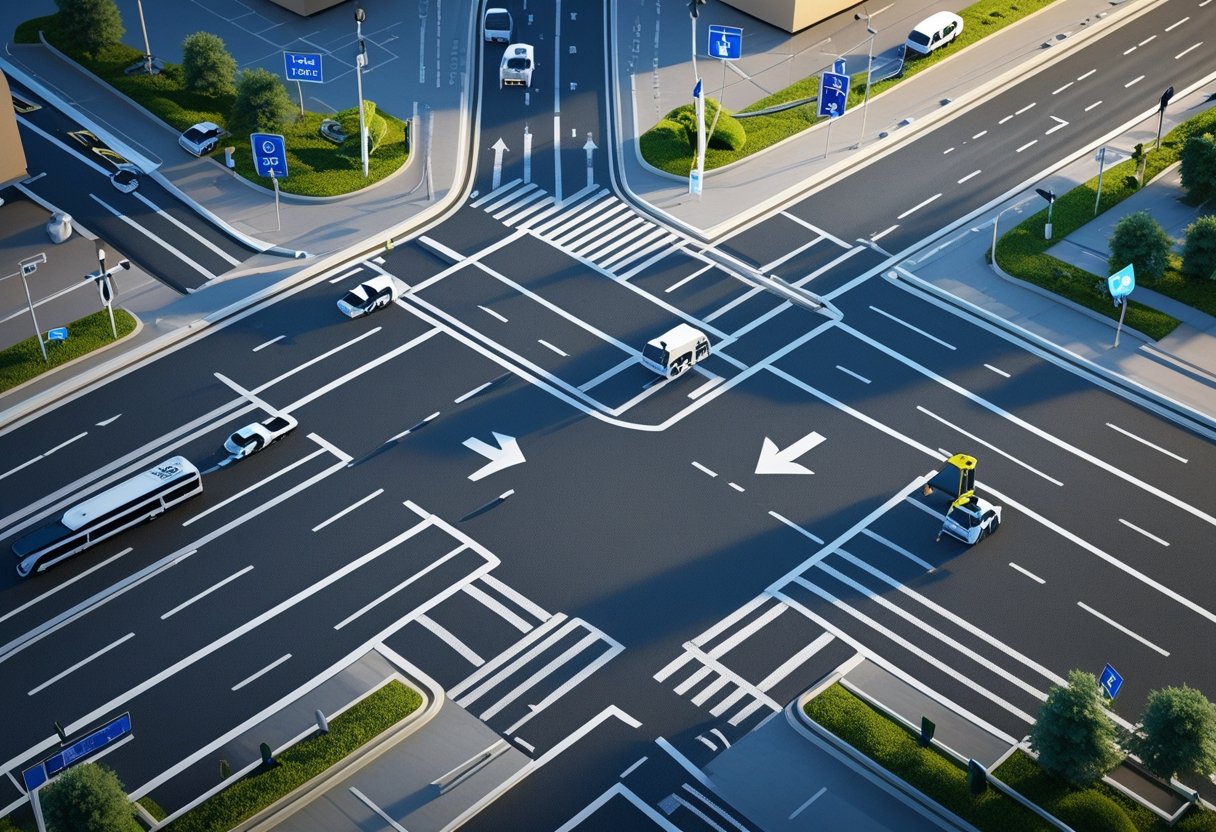
Complex junctions present multiple lane choices and traffic patterns that require precise positioning and careful decision-making. These challenging road layouts demand strong observation skills and proper lane discipline to navigate safely.
Different Types of Junctions and Their Challenges
Roundabouts create the most common positioning headaches for learner drivers. When we’re turning right at a roundabout, we need the right-hand lane on approach. Many drivers mistakenly choose the left lane and cause confusion for following traffic.
Multi-lane crossroads present their own set of puzzles. These junctions often feature multiple turning lanes with specific markings. We must read the road signs early and position ourselves in the correct lane well before reaching the junction.
T-junctions with filter lanes can catch us off guard. Some have dedicated right-turn lanes that keep us separate from straight-ahead traffic. Others require us to wait in the main carriageway whilst oncoming vehicles pass.
One-way street junctions flip our usual positioning rules. When turning right from a one-way street, we position on the right-hand side rather than the centre of the road. Missing this detail often leads to test failures.
Why Road Positioning Matters
Traffic flow depends on correct positioning. When we position too far left whilst waiting to turn right, we block vehicles behind us that want to continue straight or turn left. This creates unnecessary delays and frustration for other road users.
Safety improves with proper lane discipline. Correct positioning gives us better visibility of oncoming traffic and hazards. It also makes our intentions clear to other drivers, reducing the risk of misunderstandings or collisions.
Test success relies on accurate positioning. Examiners specifically watch for positioning errors during right turns. These mistakes fall under the ‘Junctions – Turning right’ fault category and can result in test failure if repeated or deemed dangerous.
Fundamentals of Correct Positioning When Turning Right
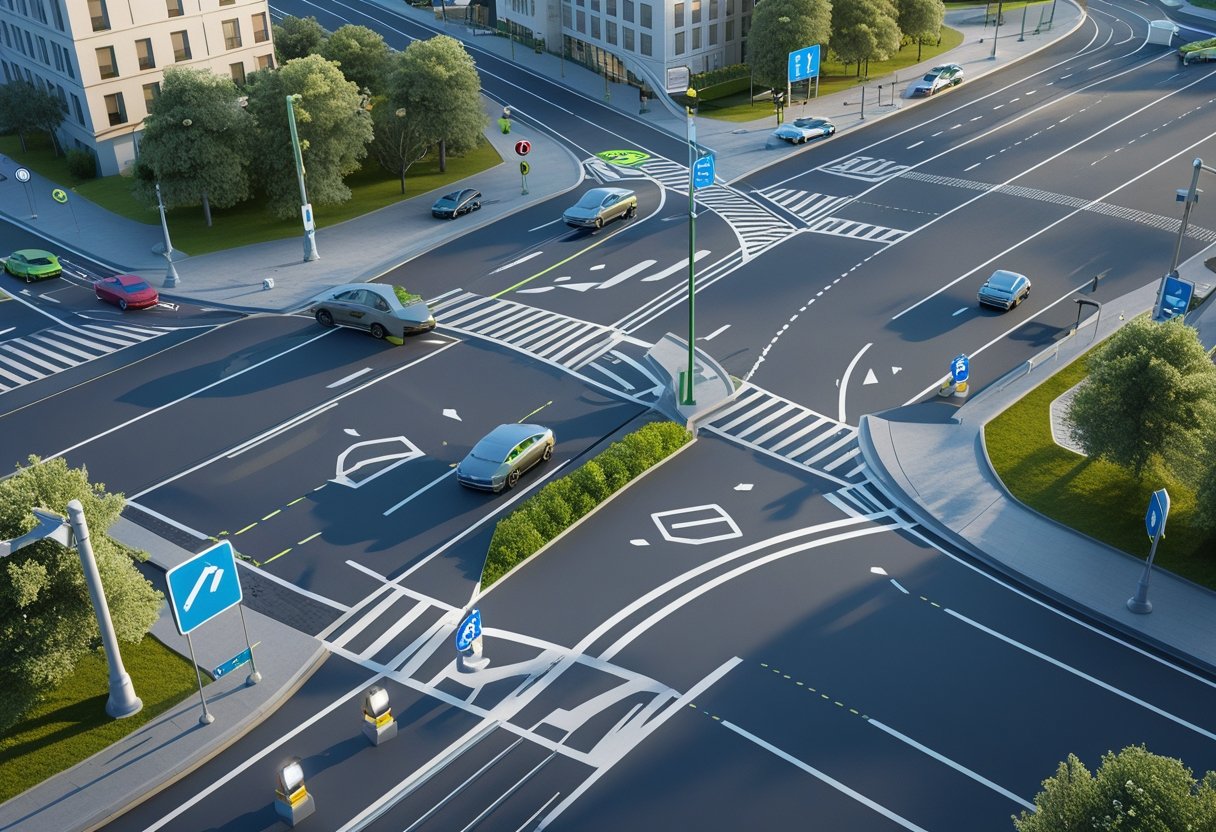
Getting your position right when turning right comes down to three key skills: approaching carefully, placing your car near the centre line, and reading the road properly. These basics will keep you safe and help other drivers understand what you’re doing.
Approaching the Junction Safely
We always start with the mirror-signal-manoeuvre routine well before we reach any junction. This gives us time to check what’s happening around us and lets other road users know our intentions.
Check your mirrors at least three seconds before you signal. Look for cars behind you, cyclists, and pedestrians who might be affected by your turn.
Signal right early but not too early. We want to give clear information without confusing anyone about which junction we’re taking.
Reduce speed gradually as you approach. Harsh braking catches other drivers off guard and can cause problems behind you.
Keep scanning for:
- Oncoming traffic that might affect your turn
- Pedestrians crossing or waiting to cross
- Cyclists in your blind spots
- Road signs showing any restrictions
The key is giving yourself enough time to react. Rushing into a right turn creates dangerous situations for everyone involved.
Positioning Close to the Centre of the Road
Your car needs to sit as close to the centre line as safely possible when turning right. This positioning helps traffic flow and shows other drivers exactly what you’re planning to do.
Move towards the centre line once you’ve signalled and checked it’s safe. Don’t hug the left side of your lane when you’re turning right.
Stop just left of the centre line if you need to wait for oncoming traffic. This lets cars behind you pass on your left if there’s room.
Watch out for:
- Oncoming vehicles that might be turning right too
- The size of your vehicle and any overhang
- Road width and whether positioning is actually safe
Common mistakes include staying too far left and blocking following traffic, or moving too far right and getting in the way of oncoming vehicles.
Remember, we’re trying to be predictable and helpful to other road users while keeping everyone safe.
Identifying Lane Choices and Road Markings
Road markings and signs tell us exactly where we should position our vehicle. Learning to read these correctly makes right turns much easier and safer.
Look for lane markings that show which lanes go where. Right turn lanes often have arrows painted on the road surface.
Follow the road signs positioned above or beside the carriageway. These show you which lane to choose well before you reach the junction.
At roundabouts, right turns usually need the right-hand lane. Using the left lane for right turns causes confusion and can be dangerous.
Key markings to watch for:
- White arrows showing lane directions
- “TURN RIGHT” painted in the lane
- Hatched markings near the centre line
- Stop lines showing where to wait
On unmarked roads, we position towards the centre but stay sensible about it. Wide roads give us more options than narrow country lanes.
Getting familiar with these markings builds your confidence and helps you make smooth, safe turns every time.
Turning Right at Roundabouts: Navigating Multi-Lane Scenarios
Multi-lane roundabouts require precise lane selection from the approach, typically using the right lane when your exit is beyond 12 o’clock. Maintaining your chosen lane whilst signalling clearly helps other drivers predict your movements and keeps traffic flowing safely.
Selecting the Appropriate Lane for a Right Turn
When we’re approaching a multi-lane roundabout for a right turn, our lane choice makes all the difference. The right lane is generally our go-to option when turning right.
Look for road markings and overhead signs as you approach. These will show exactly which lanes serve which exits. If your exit appears past the 12 o’clock position on the roundabout, treat it as a right turn.
Key lane selection tips:
- Use the right lane for exits positioned to the right
- Check road markings for specific lane directions
- Some roundabouts allow the middle lane for right turns
- Never assume – always follow the signage
Pay attention to other vehicles around you. Learner drivers often feel pressured to make quick decisions, but it’s better to slow down and choose correctly than rush into the wrong lane.
If you miss your lane choice, don’t panic. Continue in your current lane and take the next available exit to turn around safely.
Keeping Your Lane and Signalling Clearly
Once we’ve selected our lane, staying in it becomes crucial for everyone’s safety. Lane discipline prevents dangerous weaving and reduces confusion for other road users.
Signal right as you approach the roundabout to show your intention. Keep your indicator on whilst travelling around the roundabout until you pass the exit before yours.
Then switch to signalling left to show you’re leaving. This two-stage signalling process gives other drivers clear information about your movements.
Watch your positioning carefully. The temptation to drift between lanes increases on larger roundabouts, but maintaining your lane keeps you predictable to others.
Essential positioning reminders:
- Stay centred in your chosen lane
- Avoid sudden lane changes
- Keep checking your mirrors
- Signal left when exiting
Remember, other vehicles might be in the left lane planning to go straight ahead or turn left. By staying in our lane, we respect their space and maintain safe distances.
Turning Right at T-Junctions and Unmarked Roads
T-junctions without clear road markings present unique challenges for learner drivers. We need to create our own reference points and position correctly even when the centre line isn’t visible.
Imaginary Centre Lines and Reference Points
When approaching a T-junction without road markings, we must imagine where the centre line would be. This skill becomes second nature with practice.
Look for clues that help us establish the road’s centre. Lamp posts, drain covers, or cats’ eyes often run down the middle of roads. Even worn tarmac patterns can show us where cars typically drive.
Position your car slightly left of this imaginary centre line. This gives other drivers space to turn left whilst we wait to turn right.
On narrow roads, we stay closer to the actual centre. Wide roads allow us to move further right without blocking left-turning traffic.
Key reference points:
- Bonnet centre aligned with imaginary road centre
- Steering wheel positioned over the white line (if faded but still visible)
- Equal space between our car and both kerbs
Practice this positioning on quiet roads first. It builds confidence before tackling busier junctions.
Dealing with Lack of Road Markings
Unmarked junctions require extra caution and slower speeds. We can’t rely on painted lines to guide our positioning.
Approach these junctions at walking pace. The lack of markings often means limited visibility or unusual road layouts. Slower speeds give us time to assess the situation properly.
Watch for subtle ground changes where the centre line should be. Different tarmac colours or textures often mark the road’s middle. Previous road works sometimes leave slight ridges or colour variations.
Essential techniques:
- Edge forward gradually to improve our view
- Use the whole road width to position correctly
- Check both directions multiple times before committing
Some residential roads have no markings by design. These areas expect lower speeds and more careful driving. Trust your judgement about road width and position accordingly.
Remember that other drivers also find these junctions challenging. Give everyone extra space and patience when navigating unmarked roads.
Handling Traffic, Pedestrians, and Cyclists at Busy Junctions
When we’re turning right at complex junctions, we need to keep our eyes peeled for vulnerable road users whilst managing the flow of traffic around us. The key is positioning ourselves so we don’t block other vehicles whilst staying alert for pedestrians and cyclists who might appear unexpectedly.
Watching for Pedestrians and Cyclists When Turning
We must always give way to pedestrians crossing the road we’re turning into. They have right of way, even if they’re crossing slowly or seem distracted.
Check your left mirror before completing the turn. Cyclists often travel close to the kerb and can easily slip into your blind spot. They might be hidden behind larger vehicles, so we need to look twice.
Watch out for pedestrians with their backs to us. They might not have heard our approach and could step into the road without looking. This is especially important near shops, schools, or bus stops.
Here’s what we should scan for:
- Pedestrians waiting to cross or already crossing
- Cyclists approaching from behind or alongside
- Mobility scooters and powered wheelchairs
- Children who might dart into the road unexpectedly
Road markings often show pedestrian crossing points. Look for the white studs or painted lines that indicate where people are likely to cross.
Leaving Space for Passing Traffic
When we position ourselves to turn right, we want to stay close to the centre line without crossing it. This lets traffic behind us pass safely on our left.
Don’t hug the kerb when waiting to turn. This blocks following traffic and forces them to wait unnecessarily. Instead, position yourself about a car’s width from the centre of the road.
On wider roads, our correct positioning allows cars, vans, and motorcycles to filter past whilst we wait for a gap in oncoming traffic. This keeps everyone moving smoothly.
If there are chevrons with broken white lines, we can enter them when turning right. This helps maintain traffic flow behind us. However, avoid chevrons with solid white lines except in emergencies.
Watch for motorcyclists who might try to overtake just as we begin our turn. A quick check of our right mirror can prevent a dangerous situation.
Avoiding Obstruction and Ensuring Flow
We shouldn’t be afraid to stop at the junction if it’s not safe to proceed. It’s better to wait for a proper gap than rush into oncoming traffic.
Don’t cut the corner when turning into the new road. Another vehicle might be approaching the junction from the opposite direction. Keep our turn wide enough to stay in the correct lane.
When the way is clear, we need to move smartly. Hesitating once we’ve decided to go can confuse other drivers and create dangerous situations.
If our view is restricted, use the creep and peep technique. Edge forward gradually to improve our sight lines without entering live traffic lanes. This helps us spot approaching vehicles, cyclists, or pedestrians we couldn’t see before.
Remember that long vehicles like lorries and buses need extra room to turn. They might swing wide or take longer to clear the junction, so we need to be patient and give them plenty of space.
Top Positioning Pitfalls and How to Avoid Them
Many learner drivers struggle with proper road positioning when turning right, particularly at complex junctions where road markings can be confusing. The most frequent errors involve incorrect lane selection and poor vehicle placement during the turning sequence.
Common Driving Test Positioning Errors
Staying too far left is the biggest mistake we see during driving tests. When you’re preparing to turn right, your car needs to move towards the centre line of the road.
Many learners keep their vehicle positioned in the left portion of their lane. This creates unnecessary delays for traffic behind you, especially when other drivers could safely pass on your left.
At roundabouts, choosing the left-hand lane for right turns causes serious problems. We often see this mistake when learners feel uncertain about lane selection.
| Common Error | Why It Happens | Quick Fix |
|---|---|---|
| Positioning left when turning right | Lack of confidence | Move closer to centre line early |
| Wrong lane at roundabouts | Confusion about road markings | Check signs and road markings in advance |
| Blocking following traffic | Poor positioning awareness | Leave space for others to pass |
Road markings provide clear guidance, but some learners ignore them when feeling nervous. At one-way streets, positioning on the left when turning right goes against the marked lanes.
Your driving test examiner will mark these errors under “Junctions – Turning right” faults.
Adapting Techniques for Difficult or Blind Junctions
Blind junctions require extra caution with your positioning approach. We recommend moving into your turning position earlier than usual, giving you more time to assess the junction safely.
When visibility is limited, position your car so you can see around obstacles like parked vehicles or hedges. Sometimes this means adjusting slightly within your lane whilst maintaining safe road positioning.
Narrow junctions present unique challenges for right turns. You might need to position closer to the centre line than feels comfortable, but this prevents your car from cutting the corner.
At multi-lane junctions, follow the road markings precisely. These markings exist because traffic engineers have determined the safest positioning for each movement.
We suggest practising the mirror-signal-manoeuvre routine well before reaching complex junctions. Early preparation allows you to focus on positioning rather than rushing your decisions.
Traffic-heavy junctions often require patience with your positioning. Hold your correct road position even when waiting for gaps in oncoming traffic becomes frustrating.
Building Confidence Through Practice and Feedback
The secret to mastering right turns at complex junctions lies in structured practice combined with continuous feedback from experienced instructors. We’ll help you maximise your learning during driving lessons and strengthen your road awareness through proven techniques.
Making the Most of Driving Lessons
Your driving instructor is your greatest ally when it comes to perfecting junction positioning. Don’t waste precious lesson time by staying quiet about your concerns.
Speak up about specific challenges. Tell your instructor exactly which junctions worry you most. Are you struggling with multi-lane roundabouts? Do T-junctions with heavy traffic make you nervous?
We recommend asking your instructor to repeat challenging manoeuvres until they feel natural. Many learner drivers think they should master something after one attempt, but that’s simply not realistic.
Practice the same junction multiple times. Your instructor can take you to the same complex junction three or four times during a lesson. Each repetition builds muscle memory and confidence.
Use the mirror-signal-manoeuvre routine consistently. Your instructor will watch for proper positioning near the centre line and correct timing of signals. They’ll catch mistakes you might not notice yourself.
Ask for immediate feedback. Don’t wait until the end of your lesson to discuss what went wrong. Request instant corrections when you feel uncertain about your positioning.
Tips and Tools to Strengthen Your Road Awareness
Building road awareness takes time, but we can accelerate your progress with focused techniques. Observation skills are the foundation of safe junction navigation.
Start with mental rehearsal between lessons. Visualise yourself approaching complex junctions and positioning correctly. Picture the centre line, oncoming traffic, and your ideal path through the turn.
Use online resources wisely. Highway Code diagrams and driving theory apps help reinforce proper positioning rules. Study junction layouts before you encounter them in real traffic.
Practice commentary driving with a family member or friend. Describe what you see and your intended actions out loud. This builds awareness and helps identify blind spots in your observation.
Focus on reference points. Learn to use road markings, kerbs, and lane divisions as positioning guides. These visual cues become second nature with practice.
Record your progress. Keep notes about which junctions you’ve mastered and which still need work. This helps you and your instructor plan future lessons effectively.
Frequently Asked Questions
Right turns at complex junctions bring up loads of questions for learner drivers, especially around positioning, timing, and dealing with multiple lanes. Let’s tackle the most common concerns that come up during lessons and tests.
What’s the best strategy for approaching a complex junction when planning to turn right?
Start by spotting the junction early. We want you looking well ahead for give way signs, traffic lights, or any breaks in buildings that signal a junction ahead.
Use the MSPSL routine: mirrors, signal, position, speed, and look. Check your interior mirror first, then your right wing mirror before signalling right.
Begin this routine in plenty of time. Don’t leave it until the last second, as this leads to harsh braking and poor positioning.
Slow down gradually using gentle braking. Complex junctions need more thinking time, so aim for around 5mph in first gear as you approach.
How can I ensure I’m positioned correctly on the road when turning right at a complex junction?
Move towards the centre line of your carriageway. If there’s room for two cars at the junction, position yourself just left of the centre line.
This positioning lets left-turning traffic pull alongside you. Everyone gets to the junction line without waiting unnecessarily.
On narrower roads where only one car fits, stay in the centre of your lane. Don’t hug the centre line too closely, as this makes it tricky for oncoming traffic turning into your road.
Watch for road markings. Many complex junctions have painted arrows or lane markings that show exactly where you should be.
What are the key things to remember about indicating when preparing to turn right at a junction?
Signal right after checking your mirrors, regardless of whether other traffic is visible. The signal isn’t just for cars, it’s for pedestrians and cyclists too.
Keep your indicator on throughout your approach and turn. Only cancel it once you’ve completed the manoeuvre and joined the new road.
Don’t signal too early if there are side roads before your junction. You might confuse other road users about your intentions.
Check your signal is still working as you wait. Sometimes indicators cancel themselves if you’ve been stationary for a while.
Could you provide any tips for judging the timing of a right turn at a busy junction?
Think like a pedestrian. If you wouldn’t feel safe walking across both lanes of the road you want to join, don’t pull out in your car.
Look for natural gaps in traffic rather than trying to squeeze into tight spaces. Patient driving keeps you and others safe.
Watch the speed of approaching vehicles. Cars that look far away but are travelling fast will reach you quicker than you think.
Don’t feel pressured by traffic behind you. It’s better to wait for a proper gap than force your way out and cause problems.
Use the two-second rule. Count the time between when a car passes and when the next one will arrive at the same spot.
How do I deal with multiple lanes at a junction when I need to turn right?
Look for lane markings and overhead signs well before you reach the junction. These tell you which lane serves which direction.
Get into the correct lane early. Don’t leave lane changes until the last minute, as this creates dangerous situations.
If there are two right-turn lanes, choose the most appropriate one for your destination. The left-hand right-turn lane usually serves the first exit, whilst the right-hand one serves roads further around.
Follow the road markings through your turn. Painted lines often guide you safely into the correct part of your destination road.
Stay in your lane throughout the turn. Don’t drift between lanes or cut across other turning traffic.
What should I do if I find myself in the wrong lane while navigating a right turn at a complex junction?
Don’t panic or make sudden lane changes. Follow the lane you’re in, even if it takes you somewhere you didn’t plan to go.
Complete the turn safely in your current lane. You can always find somewhere safe to turn around further ahead.
Never try to cut across other lanes mid-turn. This creates serious collision risks and will definitely fail your driving test.
Use your mirrors and check blind spots before any lane adjustments, but only if you have plenty of space and time.
Remember that getting temporarily lost is much better than causing an accident. Your safety and that of others always comes first.
Getting this right with an instructor beside you
Car control comes from repetition with someone watching and correcting you, which is hard to replicate from an article.
LPOD Academy intensive courses run from 10 to 50 hours with the same instructor throughout, covering around 95% of England, Wales and Scotland.
If you are not sure how many hours you need, the recommendation tool asks a few questions and suggests a package.
Ready to pass in weeks, not months?
LPOD Academy runs tailored intensive driving courses from 10 to 50 hours across most of the UK, with your theory and practical test support included.
Ready to Book Driving Lessons?
LPOD Academy offers intensive driving courses across the UK. Find your nearest location: